REVIEW 4 major objections 4 minor 74 references
Photokinetics of Photothermal Reactions
T0 review · 4 major / 4 minor · reviewed 2026-08-10 · deepseek-v4-flash
Pith's one-line read The paper claims Eq.6 is the first general integrated rate-law that maps any photothermal reaction's kinetic traces under mono- or polychromatic light.
desk verdict A plausible empirical fitting tool for photothermal traces, but the universal-integrated-rate-law claim outruns the evidence — worth refereeing, not worth citing as established. read the letter →
The pith
A machine-rendered reading of the paper's core claim, the machinery that carries it, and where it could break.
The reading
What carries the argument
The load-bearing object is Eq.6, a finite linear combination of a constant, “mono-$\Phi$-order” terms of the form $\omega\,\mathrm{Log}(1+cc\,e^{-kt})$ using the base-10 logarithm, and first-order exponential terms $\omega\,e^{-kt}$. The mono-$\Phi$-order terms encode the photochemical contribution inherited from $\Phi$-order photokinetics; the exponentials encode the thermal steps; differentiation of the fitted trace yields the rate at any time, and evaluation at $t=0$ gives the initial-rate metric that is insensitive to the identifiability problem. Eq.9 is the total-absorbance counterpart, enabling kinetic quantification from a single spectrophotometric trace. The validity of this ansatz is established numerically by fitting Runge-Kutta-generated traces and comparing initial velocities.
What would settle it
Generate a photothermal trace from a mechanism containing a second-order thermal step or a consecutive mechanism with comparable rate constants, fit it with Eq.6, and check whether the number of fitted terms stays within the stated bounds ($i_\Phi \le$ photochemical steps, $i_\Delta \le$ thermal steps) while residuals remain at the noise level.
Extended reading notes
Core claim
The central discovery is that the concentration of any species in an $XY_v(q\Phi,uk)$ photothermal reaction can be mapped as $C_{Y_j}(t) = \omega_j^0 + \sum_i \omega_{ij}^{\Phi} \mathrm{Log}(1 + cc_j^{\Phi} e^{-k_{ij}^{\Phi} t}) + \sum_i \omega_{ij}^{\Delta} e^{-k_{ij}^{\Delta} t}$, where the log-exponential “mono-$\Phi$-order” terms carry the photochemical steps and the exponentials carry the thermal steps. The same functional form, applied to total absorbance, is Eq.9. The paper argues this merges the $\Phi$-order kinetics previously established for pure photoreactions with first-order thermal kinetics, and that it is the first equation in photochemistry able to map photo-, thermal, and photothermal reactions under mono- or polychromatic irradiation. The claim is supported by fits to Runge-Kutta simulated traces with $r^2 > 0.99$, by the coincidence of initial rates computed from the theoretical rate-law, the fitted equation, and the numerics, and by worked applications to initial-concentration effects, spectator molecules, actinometry, and photonic yields. The paper also states that the formulation could not be proven analytically and warns that a good fit does not establish the mechanism because of distinguishability and identifiability problems.
Load-bearing premise
The load-bearing premise is that every photothermal concentration trace can be represented by a short sum of a constant, a few terms shaped like a logarithm of a decaying exponential, and a few ordinary decaying exponentials; this ansatz is introduced by inspection and not derived from the rate laws.
Editorial extensions
If this is right
- Reaction order for photothermal systems can be assigned by counting the mono-$\Phi$-order and first-order terms needed to fit a trace, giving an analogue of 0th, 1st, and 2nd order classification in thermal kinetics.
- Experimentalists can quantify photothermal kinetics from total-absorbance data alone, without knowing the full mechanism or measuring individual species concentrations.
- Photothermal reactions, including photochromic materials, become viable actinometers: the initial velocity is linear in incident light intensity, with the intercept distinguishing thermally inert from thermally active reactants.
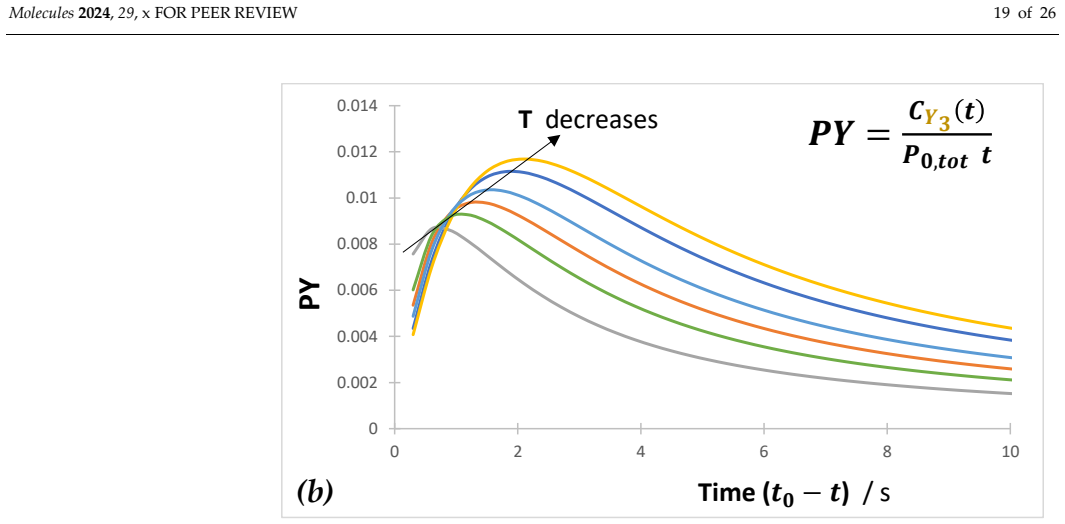
- Photonic yield can be defined for any species and any time interval, not just for the reactant at initial time, and its variability with external conditions is quantitatively captured.
- When monochromatic light and a known mechanism are available, the method solves for absolute absorptivities and quantum yields by linear algebra on absorbance and rate equations.
Reading between the lines
- If the same log-exponential ansatz transfers to bimolecular photothermal reactions, the paper's stated strategy under development would extend the classification to the most common real-world quenching and dimerization systems.
- Because Eq.6 is validated only against Runge-Kutta data and the paper concedes no analytical proof, the safest use of the model is for initial-rate, actinometric, and photonic-yield metrics, not for interpreting the individual fitted $\omega$ and $k$ values as physical rate constants.
- The conjecture that Eq.6 applies to uncollimated light and arbitrary geometries, if tested, would put industrial flow and LED irradiation kinetics on the same footing as collimated laboratory beams.
- Since Eq.9's coefficients depend on observation wavelength and path length, “mechanism-universal” should not be read as “condition-universal”: comparisons across laboratories require matched irradiation, observation, and temperature conditions.
Editorial analysis
A structured set of objections, weighed in public.
Referee Report
Summary. The paper proposes an explicit integrated-rate-law model (Eq.6) for photothermal reactions, combining a constant, a sum of logarithmic terms of the form ω log(1 + cc e^{-kt}), and a sum of first-order exponential terms. The author claims that this model maps the kinetic traces of any photothermal reaction under monochromatic or polychromatic irradiation, and that it provides a general quantification tool including initial-velocity metrics, actinometric calibration, and photonic yields. The model is validated by fitting more than 200 concentration and absorbance traces generated by fourth-order Runge-Kutta (RK-4) simulations of the discretized rate law (Eq.4), and then used to illustrate effects of initial concentration, spectator molecules, and light intensity. A procedure for extracting intrinsic parameters (quantum yields, absorptivities, thermal rate constants) is described for cases where the mechanism is known and irradiation is monochromatic.
Significance. If the claimed universality were established, the paper would offer a widely applicable practical tool for analyzing photothermal kinetics, where integrated rate laws are largely absent. The extensive numerical fits (r² > 0.99 for over 200 simulated traces) and the clear workflow for extracting initial rates from fitted curves are useful contributions. The author also candidly acknowledges the identifiability problem of the fitting parameters, which is an important caveat. However, the central claim that Eq.6 is a proven general integrated rate law is not supported: the model is an ad hoc ansatz, validated only against self-generated simulations, and the author explicitly concedes in the conclusion that it could not be proven analytically. As a result, the paper currently reads as a heuristic fitting tool with overreaching generality claims rather than a validated general law.
major comments (4)
- [§2.2, Eq.6] The central claim is that Eq.6 is a general integrated rate law for any photothermal reaction. This is not derived from Eq.1 or Eq.4, and the author states in Section 4 that 'the formulation of the general model equation could not be proven analytically.' Since the ansatz (a finite sum of a constant, log(1+ce^{-kt}) terms, and exponential terms) is introduced without a completeness argument, the statement in Section 2.3 that Eq.6 is 'the first equation to map out photo-, thermal, and photothermal reactions' is an overclaim that does not follow from the evidence presented.
- [§2.3, validation against RK-4] The validation is performed exclusively by fitting RK-4 simulations of the discretized rate law Eq.4. This is a self-consistency check: the simulated traces are generated from the same photophysical model that Eq.6 is intended to approximate, so the good fits do not demonstrate that the basis functions span the solution space of the full integro-differential equation Eq.1, which contains a continuous wavelength integral and a time-dependent photokinetic factor (1-10^{-A_tot(t)}). No experimental data are fitted. Independent validation on experimental traces or on exact solutions of Eq.1 would be needed to support the claimed universality.
- [§3, scope restriction] Section 3 restricts the method to 'monomolecularly initiated processes' of the type XY_v(qΦ,uk), whereas the abstract and Section 2.2 claim applicability to any photothermal reaction irrespective of mechanism. This is an internal inconsistency: the ansatz of Eq.6 may not hold for bimolecular steps or other network topologies, and the paper does not discuss this limitation. The scope should be aligned with the claims, or the universality claim should be explicitly withdrawn.
- [§2.3, identifiability and parameter interpretation] The author acknowledges in Section 2.3 that a good fit does not determine physical parameters and that multiple parameter sets can fit the same trace. Despite this, the paper uses fitted curves to compute photonic yields (Eqs.19-20) and to support kinactinometric calibrations (Section 2.8). While initial velocities may be insensitive to parameter-set variation, the paper does not rigorously show that r0,A or the time-dependent photonic yields are also free of this ambiguity. The quantitative conclusions in Sections 2.8 and 2.9 would be stronger if this insensitivity were demonstrated or at least clearly stated as an assumption.
minor comments (4)
- [Eq.10] The expression for Fit: r0,A contains an extra factor of 1/ln(10) in the first sum compared with the derivative derived from Eq.7 (compare Eq.8). This appears to be a typographical error and should be corrected, as it would affect numerical implementations.
- [§2.4] The text states 'n_t (n_sp ≤ n_t ≤ 1)', which is logically impossible; the intended inequality is likely n_t ≥ n_sp or a similar condition on the number of time intervals. Please clarify.
- [§2.6] The explanation of the initial-concentration effect appears contradictory: an increase in C_X(0) increases the factor (1-10^{-A}) in Eq.5, which would increase the magnitude of the photochemical rate, yet the text says the initial rate 'will also decrease.' The competing effects (photokinetic factor vs. total absorbance) should be stated more carefully.
- [Fig.3 caption] The regression equation 'Theo:r0 = 1.005 x (-RK,Fit:r0) - 2 10-10' is missing proper scientific notation and superscript formatting; please correct it.
Circularity Check
The universal model Eq.6 is an unproven log-exp ansatz imported from the author's prior fitting literature, and the central initial-rate 'validation' compares the derivative of a curve fitted to RK data with the same RK data; those quantities agree by construction, not as an independent test.
-
fitted input called prediction
[Section 2.3, Eqs.5-11 and Fig.3]
"In this context, it is necessary to confirm that 𝐹𝑖𝑡: 𝑟0𝑌𝑗 = 𝑇ℎ𝑒𝑜: 𝑟0𝑌𝑗 = 𝑅𝐾: 𝑟0𝑌𝑗, as well as 𝐹𝑖𝑡: 𝑟0𝐴 = 𝑇ℎ𝑒𝑜: 𝑟0𝐴, in all situations. ... The linear correlation between the theoretical initial velocity plotted against the other two (Fig.3), attests of both the good correspondence of these quantities and the reliability of the general model equations."
Eq.8 is the t=0 derivative of Eq.6, and Eq.6 was fitted to RK traces generated by Eq.4; Eq.5 is Eq.4 evaluated at t=0, while RK:r0 is the same numerical derivative. The three agree because the fitted curve interpolates the very data used to define the other two quantities. The Fig.3 correlation is therefore a consistency check on the training set, not a prediction from held-out data; presenting it as 'proof of reliability' uses the fitted curve as its own validation.
-
ansatz smuggled in via citation
[Section 2.2, Eq.6 and preceding paragraph]
"Because of the dual photo- and thermal nature of the reaction, it is conjectured that its kinetics will be mapped out by a mix of both Φ-order [45] and exponential type functions ... The general model equation merges the Φ-order character of the photochemical reaction-steps (the 𝑙𝑜𝑔 − 𝑒𝑥𝑝 (𝜔 𝐿𝑜𝑔(1 + 𝑐𝑐 𝑒− 𝑘 𝑡)) functions, labelled by Φ [43-45]), and exponential-type first-order kinetics of the thermal reaction-steps (labelled by ∆)."
The 'Φ-order character' is defined by those log-exp functions, so asserting that photochemical traces have Φ-order character is the same as assuming Eq.6's functional form; it is not derived from Eq.1/Eq.4. The paper imports this basis from the author's earlier fitting-oriented papers [43-45] and then states Eq.6 is the first integrated rate-law for any photothermal reaction, while the Conclusion concedes 'the formulation of the general model equation could not be proven analytically.' The universality claim is thus the ansatz restated rather than a derived result.
full rationale
The paper does contain genuine independent elements: it integrates a concrete rate law (Eq.4) by RK-4, performs many simulations, and solves linear systems for intrinsic parameters; those procedures are not circular by themselves. However, the load-bearing claim that Eq.6/Eq.9 is a universal integrated rate law rests on an unproven log-exp-plus-exponential ansatz adopted from the author's prior work and justified by fitting to the same simulations. The section 2.3 initial-rate agreement (Fit vs Theo vs RK) is the clearest reduction: the fitted curve's derivative is compared with the data that generated the fit, so the agreement is statistically forced. The paper's own admission that no analytic proof exists reinforces that the 'prediction' of universal trace shapes is an input assumption. This is partial circularity rather than a fully forced tautology, so a score of 6 is appropriate.
Assumptions & free parameters
free parameters (3)
- Eq.6 fitting parameters per trace (omega0, omega_i^Phi, omega_i^Delta, cc^Phi, k_i^Phi, k_i^Delta) =
fitted by LMA to each RK trace
- Number of log and exponential terms (i_Phi,j and i_Delta,j) =
chosen per trace, e.g., two log terms plus one exponential in Fig.2
- Simulation input parameters (quantum yields, absorptivities, rate constants, lamp profile) =
arbitrary but literature-inspired values for each XY_v(qPhi,uk) mechanism
assumptions (5)
- ad hoc to paper Every photothermal concentration trace is representable by Eq.6 with finite i_Phi,j and i_Delta,j.
- domain assumption Excited-state concentrations, reflection, emission, and scattering are negligible, and the medium is homogeneous and vigorously stirred.
- domain assumption Beer-Lambert linearity holds and total absorbance at irradiation wavelengths does not exceed 0.5.
- domain assumption The integral over wavelength in Eq.1 can be approximated by a 1-nm sum, giving Eq.4.
- domain assumption RK4 numerical solutions of Eq.4 faithfully represent real photothermal reaction kinetics.
Cite this review
Pith. "Pith review of Photokinetics of Photothermal Reactions." pith.science (2026). https://pith.science/paper/AE32ZC7S
@misc{pith2026250106057,
  author       = {Pith},
  title        = {Pith review of: Photokinetics of Photothermal Reactions},
  year         = {2026},
  howpublished = {\url{https://pith.science/paper/AE32ZC7S}},
  note         = {Machine review of arXiv:2501.06057}
}
read the original abstract
Photothermal reactions, involving both photochemical and thermal reaction-steps, are the most abundant sequences in photochemistry. The derivation of their rate-laws is standardized, but the integration of these rate-laws has not yet been achieved. Indeed, the field still lacks integrated rate-laws for the description of these reactions behavior, and/or identification of their reaction-order. This made a comprehensive account of the photo-kinetics of photothermal reactions to be a gap in the knowledge. This gap is addressed in the present paper by introducing an unprecedented general model equation capable to mapping out the kinetic traces of such reactions when exposed to light or in the dark. The integrated rate-law model equation also applies when the reactive medium is exposed to either monochromatic or polychromatic light irradiation. The validity of the model equation was established against simulated data obtained by a fourth-order Runge-Kutta method. It was then used to describe and quantify several situations of photothermal reactions, such as the effects of initial concentration, spectator molecules, and incident radiation intensity, and the impact of the latter on the photonic yield. The model equation facilitated a general elucidation method to determine the intrinsic reaction parameters (quantum yields and absorptivities of the reactive species) for any photothermal mechanism whose number of species are known. This paper contributes to rationalizing photo-kinetics along the same general guidelines adopted in chemical kinetics.
Figures


Figures from the paper (5 more)


Reference graph
Works this paper leans on
-
[1]
Excitation-wavelength dependent photochemistry
Maafi, M. Excitation-wavelength dependent photochemistry. Photochem. 2024, 4, 233-270. doi. 10.3390/photochem4020015
-
[2]
Mauser, H., Gauglitz, G., Compton, R.G., and Hancock, G. (Eds.). Comprehensive chemical kinetics, photokinetics: theoretical fundamentals and applications. Vol. 36. Elsevier, Amesterdam. 1998. ISBN-13. 978-0444825360
work page 1998
-
[3]
Tonnesen, H.H. (Ed.). Photostability of Drugs and Drug Formulations. CRC Press, Boca Raton. 2004. ISBN. 0-415-30323--0
work page 2004
-
[4]
Griesbeck, A., Oelgemoller, M.; and Ghetti, F. (ed.). Handbook of Organic Photochemistry and Photobiology (3rd Ed.). CRC Press. Boca Raton, New York, London. 2012. ISBN 9781439899335
work page 2012
-
[5]
Deterministic Kinetics in Chemistry and Systems Biology: The Dynamics of Complex Reaction Networks
Lente, G. Deterministic Kinetics in Chemistry and Systems Biology: The Dynamics of Complex Reaction Networks. Springer, Cham, Heidelberg, New York, Dordrecht, London, 2015. doi. 10.1007/978-3-319-15482-4
-
[6]
Yamada, H., and Yagai, S. (ed.). Light -Active Functional Organic Materials. Jenny Stanford Publishing. 2019. ISBN. 9789814800150
work page 2019
-
[7]
Recent advances toward sustainable flow photochemistry
Williams, J.D., and Kappe, C.O. Recent advances toward sustainable flow photochemistry. Current Opinion in Green and Sustain- able Chemistry. 2020, 25, 100351. doi. 10.1016/j.cogsc.2020.05.001
-
[8]
Photochemistry and Photophysics: Concepts, Research, Applications (2nd Ed.)
Balzani, V., Ceroni, P., Juris, A. Photochemistry and Photophysics: Concepts, Research, Applications (2nd Ed.). Wiley -VCH,
Show all 74 references
-
[9]
Naphthopyran molec ular switches and their emergent mechano- chemical reactivity
McFadden, M.E, Barber, R.W., Overholts, A.C., Robb, M.J. Naphthopyran molec ular switches and their emergent mechano- chemical reactivity. Chem. Sci. 2023, 14, 10041-10067. doi. 10.1039/D3SC03729K
2023 doi
-
[10]
Anomalous photochromism and mechanochromism of a linear naphthopyran enabled by a polarizing dialkylamine substituent
Sun, Y., McFadden, M.E., Osler, S.K., Barber, R.W., Robb, M.J. Anomalous photochromism and mechanochromism of a linear naphthopyran enabled by a polarizing dialkylamine substituent. Chem. Sci. 2023, 14, 10494-10499. doi. 10.1039/D3SC03790H
2023 doi
-
[11]
Photo-, thermo-, solvato-, and electrochromic spiroheterocyclic compounds
Minkin, V.I. Photo-, thermo-, solvato-, and electrochromic spiroheterocyclic compounds. Chem. Rev. 2004, 104, 2751–2776. doi. 10.1021/cr020088u
2004 doi
-
[12]
Reversible three -state switching of multicolor fluorescence emission by multiple stimuli modulated FRET processes within thermoresponsive polymeric micelles
Li, C., Zhang, Y., Hu, J., Cheng, J.J., Liu, S.Y. Reversible three -state switching of multicolor fluorescence emission by multiple stimuli modulated FRET processes within thermoresponsive polymeric micelles. Angew. Chem. Int. Ed . 2010, 122, 5246–5250. doi. 10.1002/ange.201002203
2010 doi
-
[13]
Temperature -Dependent Photoisomerization Quantum Yields for Azobenzene - Modified DNA
Samai, S., Bradley, D.J., Choi, T.L.Y., Yan, Y. Temperature -Dependent Photoisomerization Quantum Yields for Azobenzene - Modified DNA. J. Phys. Chem. C. 2017, 121, 6997-7004. doi. 10.1021/acs. jpcc.6b12241
2017 doi
-
[14]
Polymeric assemblies and nanoparticles with stimuli-responsive fluorescence emission characteristics
Li, C., and Liu, S. Polymeric assemblies and nanoparticles with stimuli-responsive fluorescence emission characteristics. Chem. Commun. 2012, 48, 3262–3278. doi. 10.1039/C2CC17695E
2012 doi
-
[15]
, Reglinski, K., Galiani, S., Parker, A.W., Eggeling, C., Anderson, H.L
Xiong, Y., Jentzsch, A.V., Osterrieth, J.W.M., Sezgin, E., Sazanovich, I.V. , Reglinski, K., Galiani, S., Parker, A.W., Eggeling, C., Anderson, H.L. Spironaphthoxazine switchable dyes for biological imaging. Chem. Sci . 2018, 9, 3029 -3040. doi. 10.1039/C8SC00130H
2018 doi
-
[16]
Spiropyran -Based Drug Delivery Systems
Fagan, A., Bartkowski, M, Giordani, S. Spiropyran -Based Drug Delivery Systems. Front. Chem . 2021, 9, 720087. doi. 10.3389/fchem.2021.720087
2021
-
[17]
Accurate measurement of the photon flux received inside two continuous flow microphotoreactors by actinometry
Aillet, T., Loubiere, K., Dechy-Cabaret, O., and Prat, L. Accurate measurement of the photon flux received inside two continuous flow microphotoreactors by actinometry. Int. J. Chem. React. Eng. 2014, 12, 1–13. doi. 10.1515/ijcre-2013-0121
2014 doi
-
[18]
Synthesis and properties of photochromic polymer contain spiro-oxazine induced by ultraviolet light
Su, C.D., Shi, Y.Y., and Gao, J. Synthesis and properties of photochromic polymer contain spiro-oxazine induced by ultraviolet light. Soft Materials. 2023, 21, 1-13. doi. 10.1080/1539445X.2022.2108842
2023
-
[19]
Optical nanoimaging for block copolymer self-assembly
Yan, J., Zhao, L.X., Li, C., Hu, Z., Zhang, G., Chen, Z., Chen, T., Huang, Z., Zhu, J., Zhu, M. Optical nanoimaging for block copolymer self-assembly. J. Am. Chem. Soc. 2015, 137, 2436–2439. doi. 10.1021/ja512189a
2015 doi
-
[20]
Recent development of photochromic polymer cap- sules for smart materials
Bukreeva, T., Barachevsky, V., Venidiktova, O., Krikunova, P., Pallaeva, T. Recent development of photochromic polymer cap- sules for smart materials. Materials Today Communications. 2024, 38, 107769, doi. 10.1016/j.mtcomm.2023.107769
2024
-
[21]
Gain of Function Recyclable Photoswitches: Reversible Simultaneous Substitution and Photochromism Generation
Zitzmann, M., Fröhling, M., Dube, H. Gain of Function Recyclable Photoswitches: Reversible Simultaneous Substitution and Photochromism Generation. Angew. Chem. Int. Ed. Engl. 2024, 63, e202318767. doi. 10.1002/anie.202318767
2024 doi
-
[22]
Polychromatic Light Exposure as a Therapeutic in the Treatment and Management of Parkinson’s Disease: A Controlled Exploratory Trial
Willis, G.L., Boda, J., Freelance, C .B. Polychromatic Light Exposure as a Therapeutic in the Treatment and Management of Parkinson’s Disease: A Controlled Exploratory Trial. Front. Neurol. 2018, 9, 741. doi: 10.3389/fneur.2018.00741
2018
-
[23]
Photochemistry of nanomaterials: environmental impacts
Tarr, M., Zito, P. Photochemistry of nanomaterials: environmental impacts. American Chemical Society Publications, 2022. doi. 10.1021/acsinfocus.7e5012
2022 doi
-
[24]
New insights into the environmental photochemistry of common- use antibiotics in ice and in water: A comparison of kinetics and influencing factors
Ge, L., Wang, S., Halsall, C., Li, X., Bai, D., Cao, S., Zhang, P. New insights into the environmental photochemistry of common- use antibiotics in ice and in water: A comparison of kinetics and influencing factors. Emerging Contaminants. 2024, 10, 100382. doi. 10.1016/j.emcon...
2024
-
[25]
Spiropyran-based photochromic polymer nanoparticles with optically switchable luminescence
Zhu, M.Q.; Zhu, L.; Han, J.J.; Wu, W.; Hurst, J.K.; Li, A.D. Spiropyran-based photochromic polymer nanoparticles with optically switchable luminescence. J. Am. Chem. Soc. 2006, 128, 4303–4309. doi. 10.1021/ja0567642
2006 doi
-
[26]
Light-triggered self-assembly of a spiropyran-functionalized dendron into nano-/micrometer-sized particles and photoresponsive organogel with switchable fluorescence
Chen, Q., Feng, Y., Zhang, D., Zhang, G., Fan, Q., Sun, S., Zhu, D. Light-triggered self-assembly of a spiropyran-functionalized dendron into nano-/micrometer-sized particles and photoresponsive organogel with switchable fluorescence. Adv. Funct. Ma- ter. 2010, 20, 36–42. doi....
2010 doi
-
[27]
Directed self-assembly of nanoparticles
Grzelczak, M.; Vermant, J.; Furst, E.M.; Liz-Marzán, L.M. Directed self-assembly of nanoparticles. ACS Nano. 2010, 4, 3591–3605. doi. 10.1021/nn100869j
2010 doi
-
[28]
Principles of Photocatalysts and Their Different Applications: A Review
Hassaan, M.A., El-Nemr, M.A., Elkatory, M.R., Ragab, S., Nicu lescu, V.C., El Nemr, A. Principles of Photocatalysts and Their Different Applications: A Review. Top. Curr. Chem. (Z). 2023, 381, 31. doi. 10.1007/s41061-023-00444-7
2023 doi
-
[29]
Reversible Photoisomerization of Spiropyran on the Surfaces of Au25 Nanoclusters
Udayabhaskararao, T., Kundu, P.K., Ahrens, J., Klajn, R. Reversible Photoisomerization of Spiropyran on the Surfaces of Au25 Nanoclusters. ChemPhysChem. 2016, 17, 1805-1809. doi. 10.1002/cphc.201500897 Molecules 2024, 29, x FOR PEER REVIEW 25 of 26
2016 doi
-
[30]
4,4′-Dimethylazobenzene as a chemical actinometer
Casimiro, L., Andreoni, L., Groppi, J., Credi, A., Métivier, R., Silvi, S. 4,4′-Dimethylazobenzene as a chemical actinometer. Pho- tochem. Photobiol. Sci. 2022, 21, 825-833. doi. 10.1007/s43630-021-00162-3
2022 doi
-
[31]
Opening the way to greener photochromic and fluorescence studies by using the 6 -NO2- BIPS photoswitch
Zeytoun, H.S., Turcas, I., Lordez, M. Opening the way to greener photochromic and fluorescence studies by using the 6 -NO2- BIPS photoswitch. Emergent Scientist. 2024, 8, 3. doi. 10.1051/emsci/2024001
2024
-
[32]
Modelling the Impact of Mass Transport in a Miniplant photoreactor
Gaulhofer, F., Becker, H., Peschl, A., Ziegenbalg, D. Modelling the Impact of Mass Transport in a Miniplant photoreactor. React. Chem. Eng. 2024, 9, 3231-3247. doi. 10.1039/D4RE00192C
2024 doi
-
[33]
Advances in spiropyrans/spirooxazines and applications based on fluorescence resonance energy transfer (FRET) with fluorescent materials
Xia H, Xie K, Zou G. Advances in spiropyrans/spirooxazines and applications based on fluorescence resonance energy transfer (FRET) with fluorescent materials. Molecules. 2017, 22, 2236. doi. 10.3390/molecules22122236
2017 doi
-
[34]
A., Werker, M., Tobeck, C., Christoffels, R., Schaniel, D., Olthof, S., Meerholz, K
Schwartz, H. A., Werker, M., Tobeck, C., Christoffels, R., Schaniel, D., Olthof, S., Meerholz, K. , Kopacka, H., Huppertz, H., Ruschewitz, U. Novel Photoactive spirooxazine based switch@MOF composite materials. ChemPhotoChem. 2020, 4, 195-206. doi. 10.1002/cptc.201900193
2020 doi
-
[35]
Mattay, J., and Griesbeck , A.G. (Eds.). Photochemical Key Steps in Organic Synthesis: An Experimental Course Book. VCH, Weinheim - New York - Cambridge - Tokyo. 1994
1994
-
[36]
Nakatani, k., Piard, J., Yu, P., Métivier, R., in Tian, H., Zhang, J. (Eds). Photochromic materials: preparation, properties and applications. (1st ed.), Wiley-VCH Verlag GmbH & Co. KGaA; 2016. ISBN: 978-3-527-68372-7
2016
-
[37]
Pianowski, Z. L. (Ed). Molecular photoswitches: chemistry, properties, and applications. Wiley ‐VCH GmbH; 2022. Doi. 10.1002/9783527827626
2022 doi
-
[38]
Photodegradation of novel oral anticoagulants under sunlight irradiation in aqueous matrices
Yassine, M., Fuster, L., Dévier, M.H., Geneste, E., Pardon, P., Grélard, A., Dufourc, E., Al Iskandarani, M., Aït-Aïssa, S., Garric, J., Budzinski, H., Mazellier, P., and Trivella , A.S. Photodegradation of novel oral anticoagulants under sunlight irradiation in aqueous matric...
2018 doi
-
[39]
Photodegradation study of Sertindole by UHPLC-ESI-Q-TOF and influence of some metal oxide excipients on the degradation process
Trawinski, J., and Skibinski, R. Photodegradation study of Sertindole by UHPLC-ESI-Q-TOF and influence of some metal oxide excipients on the degradation process. Pharmaceutics. 2019, 11, 299. doi. 10.3390/pharmaceutics11070299
2019 doi
-
[40]
Development of Novel Silica-Based Formulation of α-Lipoic Acid: Evalu- ation of Photo and Thermal Stability of the Encapsulated Drug
Dolinina, E.S., Akimsheva, E.Y., and Parfenyuk, E.V. Development of Novel Silica-Based Formulation of α-Lipoic Acid: Evalu- ation of Photo and Thermal Stability of the Encapsulated Drug. Pharmaceutics. 2020, 12, 228. doi. 10.3390/pharmaceutics12030228
2020 doi
-
[41]
A., Mazzotta, E., De Luca, M., Garofalo, A., Ioele, G
Grande, F., Ragno, G., Muzzalupo, R., Occhiuzzi, M. A., Mazzotta, E., De Luca, M., Garofalo, A., Ioele, G. Gel formulation of nabumetone and a newly synthesized analog: microemulsion as a photoprotective topical delivery system. Pharmaceutics. 2020, 12, 423. doi. 10.3390/pharm...
2020 doi
-
[42]
Potential Energy Surfaces and Quantum Yields for Photochromic Diarylethene Re- actions
Nakamura, S., Uchida, K., Hatakeyama, M. Potential Energy Surfaces and Quantum Yields for Photochromic Diarylethene Re- actions. Molecules. 2013, 18, 5091 – 5103. doi. 10.3390/molecules18055091
2013 doi
-
[43]
On photokinetics under monochromatic light
Maafi, M. On photokinetics under monochromatic light. Front. Chem. 2023, 11, 1233151. doi. 10.3389/fchem.2023.1233151
2023
-
[44]
On photokinetics under polychromatic light
Maafi, M. On photokinetics under polychromatic light. Front. Chem. 2024, 12, 1367276. doi. 10.3389/fchem.2024.1367276
2024
-
[45]
The kinetic model for AB( 1Φ) systems: A closed-form integration of the differential equation with a variable photokinetic factor
Maafi, M., and Brown, R.G. The kinetic model for AB( 1Φ) systems: A closed-form integration of the differential equation with a variable photokinetic factor. J. Photochem. Photobiol. A. Chem. 2007, 187, 319-324. doi. 10.1016/j.jphotochem.2006.10.030
2007 doi
-
[46]
Volterra integral equations
Brunner, H. Volterra integral equations. Cambridge University Press, 2017. doi. 10.1017/9781316162491
2017 doi
-
[47]
Advanced Mathematics for Engineering Students
Lewis, B.J., Onder, E.N., Prudil, A.A. Advanced Mathematics for Engineering Students. Butterworth-Heinemann, Elsevier, 2022. doi. 10.1016/B978-0-12-823681-9.00002-2
2022 doi
-
[48]
Light -induced multistep redox reactions: The diode -array spectrophotometer as a photoreactor
Fabian, I., and Lente, G. Light -induced multistep redox reactions: The diode -array spectrophotometer as a photoreactor. Pure Appl. Chem. 2010, 82, 1957-1973, 2010. doi:10.1351/PAC-CON-09-11-16
2010 doi
-
[49]
Photophysics and kinetics of naphthopyran derivatives, Part 6: A fundamental system of equations to describe ABC(3k,6Φ) dynamics
Maafi, M., and Brown, R.G. Photophysics and kinetics of naphthopyran derivatives, Part 6: A fundamental system of equations to describe ABC(3k,6Φ) dynamics. A contribution to the elucidation of [2H]-naphthopyran kinetics. Int. J. Chem. Kinet. 2008, 40, 268–281. doi. 10.1002/kin.20306
2008 doi
-
[50]
NMR and kinetic investigations of the multistep photochromism of 3-thienyl-naphthopyrans
Venec, D., Delbaere, S., Micheau, J.C., Frigoli, M., Moustrou, C., Samat, A., Vermeersch, G. NMR and kinetic investigations of the multistep photochromism of 3-thienyl-naphthopyrans. J. Photochem. Photobiol. A: Chem. 2006, 183, 70-78. doi.10.1016/j.jpho- tochem.2006.02.023
2006 doi
-
[51]
Control of the photo -isomerization mechanism in 3H - naphthopyrans to prevent formation of unwanted long -lived photoproducts
Brazevic, S., Nizinski, S., Sliwa, M., Abe, J., Rode, M.F., Burdzinski, G. Control of the photo -isomerization mechanism in 3H - naphthopyrans to prevent formation of unwanted long -lived photoproducts. Int. J. Mol. Sci . 2020, 21, 7825. doi. 10.3390/ijms21217825
2020 doi
-
[52]
Solid-state photochemistry
Cole, J.M., Irie, M. Solid-state photochemistry. CrystEngComm. 2016, 18, 7175-7179. doi. 10.1039/C6CE90146H
2016 doi
-
[53]
Chapter 10 - Photochemical solid-state reactions
Arpavate: W., Roongraung, K., Chuangchote, S. Chapter 10 - Photochemical solid-state reactions. In Boddula, I.R., Asiri, A.M., Rahman, M.M. (Eds.), Green Sustainable Process for Chemical and Environmental Engineering and Science, Elsevier, 2021. ISBN. 9780128197202
2021
-
[54]
Wireless μLED packed beds for scalable continuous multiphasic photochemistry
Lopez, E.D., Musacchio, P.Z., Teixeira, A.R. Wireless μLED packed beds for scalable continuous multiphasic photochemistry. React. Chem. Eng. 2024, 9, 2963-2974. doi. 10.1039/D4RE00241E
2024 doi
-
[55]
Quantitative analysis of the dynamic behaviour of photochromic systems
Delbaere, S., Vermeersch, Micheau, J.C. Quantitative analysis of the dynamic behaviour of photochromic systems. J. Photochem. Photobiol. C Photochem. Rev. 2011, 12, 74-105. doi. 10.1016/j.jphotochemrev.2011.05.004
2011 doi
-
[56]
p -Type photochromism of new helical naphthopyrans: synthesis and photochemical , photophysical and theoretical study
Frigoli, M., Marrot, J., Gentili, P.L., Jacquemin, D., Vagnini, M., Pannacci, D., Ortica, F. p -Type photochromism of new helical naphthopyrans: synthesis and photochemical , photophysical and theoretical study. ChemPhysChem. 2015, 16, 2447-2458. doi. 10.1002/cphc.201500251
2015 doi
-
[57]
Mechanistic insights into photochromic 3H-naphthopyran showing strong photocolor- ation
Gierczyk, B., Rode, M.F., Burdzinski, G. Mechanistic insights into photochromic 3H-naphthopyran showing strong photocolor- ation. Sci. Rep. 2022, 12, 10781. doi. 10.1038/s41598-022-14679-9 Molecules 2024, 29, x FOR PEER REVIEW 26 of 26
2022 doi
-
[58]
Determination of itraconazole and its photodegradation products with kinetic evaluation by ultra -performance liquid chromatography/tandem mass spectrometry
Kryczyk, A.; Zmudzki, P.; Hubicka, U. Determination of itraconazole and its photodegradation products with kinetic evaluation by ultra -performance liquid chromatography/tandem mass spectrometry. Biomed. Chromatogr . 2016, 11, 1733 -1743. doi. 10.1002/bmc.3747
2016 doi
-
[59]
Bidirectional Neuronal Actuation by Uncaging with Violet and Green Light
Sansalone, L., Zhao, J., Nguyen, L.T.B., Gupta, S., Benson, D.L., Abe, M., Ellis-Davies, G.C.R. Bidirectional Neuronal Actuation by Uncaging with Violet and Green Light. Angew. Chem. Int. Ed. 2024, 63, e202315726. doi. 10.1002/anie.202315726
2024 doi
-
[60]
Modelling nifedipine photodegradation, photostability and actinometry properties
Maafi, W., Maafi, M. Modelling nifedipine photodegradation, photostability and actinometry properties. Int. J. Pharm. 2013, 456, 153-164. doi. 10.1016/j.ijpharm.2013.07.075
2013 doi
-
[61]
Quantitative assessment of photostability and photostabilisation of Fluvoxamine and its design for acti- nometry
Maafi, M., Maafi, W. Quantitative assessment of photostability and photostabilisation of Fluvoxamine and its design for acti- nometry. Photochem. Photobiol. Sci. 2015, 14, 982-994. doi. 10.1039/c5pp00022j
2015 doi
-
[62]
X., Penhoat, M., Chausset-Boissarie, L
Roseau, M., De Waele, V., Trivelli, X., Cantrelle, F. X., Penhoat, M., Chausset-Boissarie, L. Azobenzene: a visible-light chemical actinometer for the characterization of fluidic photosystems. Helv. Chim. Acta 2021, 104, e2100071. doi. 10.1002/hlca.202100071
2021 doi
-
[63]
A New Sensitive Ch emical Actinometer
Hatchard, C.G., and Parker, C.A. A New Sensitive Ch emical Actinometer. II. Potassium Ferrioxalate as a Standard Chemical Actinometer. Proceedings of the Royal Society of London. Series A, Math. Phys. Sci . 1956, 235(1203), 518 -536. doi.10.1098/rspa.1956.0102
1956
-
[64]
Handbook of Photochemistry (3rd Ed.)
Montalti, M., Credi , A., Prodi, L., and Gandolfi, M.T. Handbook of Photochemistry (3rd Ed.). CRC Press, 2020. ISBN -10. 0367577909. ISBN-13. 978-0367577902
2020
-
[65]
Glossary of terms used in photochemistry
Braslavsky, S.E. Glossary of terms used in photochemistry. IUPA. Pure Appl . Chem. 2007, 79, 293 -465. doi. 10.1351/pac200779030293
2007 doi
-
[66]
Glossary of terms used in photocatalysis and radiation catalysis (IUPAC Recommendations 2011)
Braslavsky, S.E., Braun, A.M., Cassano, A.E., Emeline, A.V., Litter, M.I., Palmisano, L., Parmon, V.N., and Serpone, N. Glossary of terms used in photocatalysis and radiation catalysis (IUPAC Recommendations 2011). Pure Appl. Chem. 2011, 83, 931-1014. doi. 10.1351/PAC-REC-09-09-36
2011 doi
-
[67]
Photokinetic methods: A mathematical analysis of the rate equations in photochromic systems
Ottavi, G., Ortica, F., Favaro, G. Photokinetic methods: A mathematical analysis of the rate equations in photochromic systems. Int. J. Chem. Kinet. 1999, 31, 303–313. doi. 10.1002/(SICI)1097-4601(1999)31:4<303::AID-KIN8>3.0.CO;2-H
1999 doi
-
[68]
Fulgides for Memories and Switches
Yokoyama, Y. Fulgides for Memories and Switches. ChemInform. 2000. doi. 10.1002/CHIN.200029271
2000 doi
-
[69]
Chromatic and dynamic characteristics of some photochromes in the components of bifunctional photochromic and electro -optical devices
Favaro, G.; Chidichimo, G.; Formoso, P.; Manfredi, S.; Mazzucato, U.; Romani, A. Chromatic and dynamic characteristics of some photochromes in the components of bifunctional photochromic and electro -optical devices. J. Photochem. Photobiol. A: Chem. 2001, 140, 229–236. doi. 1...
2001 doi
-
[70]
An analytical solution for the kinetics of AB(1k,1ϕ) systems and its application to a spirobenzopy- ran
Maafi, M., and Brown, R.G. An analytical solution for the kinetics of AB(1k,1ϕ) systems and its application to a spirobenzopy- ran. Int. J. Chem. Kinet. 2007, 39, 539-545. doi. 10.1002/kin.20267
2007 doi
-
[71]
The photochemical isomerization of azobenzene
Zimmerman, G., Chow, L.-Y., and Paik, U.-J. The photochemical isomerization of azobenzene. J. Am. Chem. Soc. 1958, 80, 3528–
1958
-
[72]
Roseau, M., Chausset-Boissarie, L., Gremetz, S., Roth, P.M.C., Penhoat, M. Multiple wavelength (365–475 nm) complete actino- metric characterization of Corning® Lab Photo Reactor using azobenzene as a highly soluble, cheap and robust chemical acti- nometer. Photochem. Photobio...
2022 doi
-
[2024]
978-3-527-84408-1
ISBN. 978-3-527-84408-1
- [3531]
Reviewed August 10, 2026 · model on record in the stance chip above.
Discussion (0). Continue with ORCID to comment.