REVIEW 3 major objections 6 minor 64 references
Audio-Visual Class-Incremental Learning for Fish Feeding intensity Assessment in Aquaculture
T0 review · 3 major / 6 minor · reviewed 2026-08-16 · deepseek-v4-flash
Pith's one-line read A prototype-based hierarchical audio-visual continual learning method reports 75.92% average accuracy and 9.36% forgetting while storing only about 0.10% of the raw data as feature prototypes.
desk verdict Useful dataset plus a plausible prototype-based CIL method, but the exemplar-baseline memory budget is undefined and the 2.66-point margin over AV-CIL needs error bars. read the letter →
The pith
A machine-rendered reading of the paper's core claim, the machinery that carries it, and where it could break.
The reading
What carries the argument
The central object is HAIL-FFIA, a hierarchical audio-visual class-incremental learning framework. Pre-trained S3D and PANNs encoders extract visual and audio features, which are fused through bidirectional cross-modal attention. A two-level representation then separates a general intensity layer, solved by closed-form ridge regression, from per-species audio and visual classifiers computed the same way. A prototype management system stores k-means cluster centroids, five per intensity level per species, as the only retained memory; prototype-enhanced updates concatenate those prototypes with new features in the closed-form weight update, and an exponential-moving-average step with stability coefficient $\alpha=0.7$ updates the prototypes themselves. Dynamic modality balancing computes per-species, per-intensity audio and visual importance weights and mixes general and species-specific predictions with a confidence-based coefficient.
What would settle it
Re-run the AV-CIL-FFIA benchmark giving each exemplar-based baseline a byte budget equal to the size of HAIL-FFIA's prototype store (about 0.10% of the raw data) and compare average accuracy and forgetting; if iCaRL or AV-CIL then matches or exceeds 75.92% accuracy, the superiority claim collapses. A second check is to reproduce the 75.92% figure from the released code and data using the stated species order and prototype count.
Extended reading notes
Core claim
The paper's central claim is that separating general feeding-intensity knowledge from fish-specific characteristics, stored as compact feature prototypes, lets an audio-visual model add new fish species without catastrophic forgetting. On the new AV-CIL-FFIA benchmark, HAIL-FFIA achieves the highest average accuracy (75.92%) and the lowest forgetting (9.36%) among all compared methods, with a prototype library that stores only about 0.10% of the raw dataset size. The authors attribute the result to three interacting components: a hierarchical representation that isolates shared intensity patterns from species-specific signatures, prototype-enhanced closed-form updates that carry old knowledge into new classifiers without raw data, and a dynamic audio-visual weighting that adapts to feeding conditions.
Load-bearing premise
The comparison against exemplar-based methods assumes the phrase 'same memory budget' has a clear meaning, but the paper never states whether the budget is measured in bytes or in number of stored samples, so the claimed storage-efficiency and accuracy advantage could be an artifact of the comparison.
Editorial extensions
If this is right
- An aquaculture operator could add a new fish species to a monitoring system by storing only a few prototype vectors per feeding intensity, making multi-species deployment feasible on resource-constrained hardware.
- Audio-visual fusion consistently beats single-modality inputs in the incremental setting: HAIL-FFIA gains 5.65% accuracy over audio-only and 3.34% over visual-only, and every baseline shows a similar gap.
- Exemplar-free prototype learning can match or beat exemplar replay on this benchmark (75.92% vs 73.26% for AV-CIL) while avoiding raw clip storage, which also reduces privacy and data-transfer concerns.
- The Oracle upper bound of 86.78% shows a remaining 10.86-point gap between continual learning and full joint training, indicating room for stronger knowledge-preservation mechanisms.
Reading between the lines
- Editorial inference: if the memory budget ambiguity is resolved in favor of bytes, the storage advantage of HAIL-FFIA is real, but the accuracy advantage over exemplar replay should be re-tested under byte-equivalent budgets before generalizing.
- Editorial inference: because the label space stays fixed while only the fish species changes, the setup is closer to domain-incremental learning than classic class-incremental learning; framing it that way could invite stronger baselines not used here.
- Editorial inference: the same hierarchical prototype recipe could transfer to other multimodal continual-learning tasks where categories are shared across domains, such as acoustic scene or animal behaviour recognition.
- Editorial inference: a direct test of the dynamic modality balancing would be to degrade one modality (e.g., turbid water or added noise) and measure whether accuracy drops less than with fixed fusion weights.
Signed reviews
Editorial analysis
A structured set of objections, weighed in public.
Referee Report
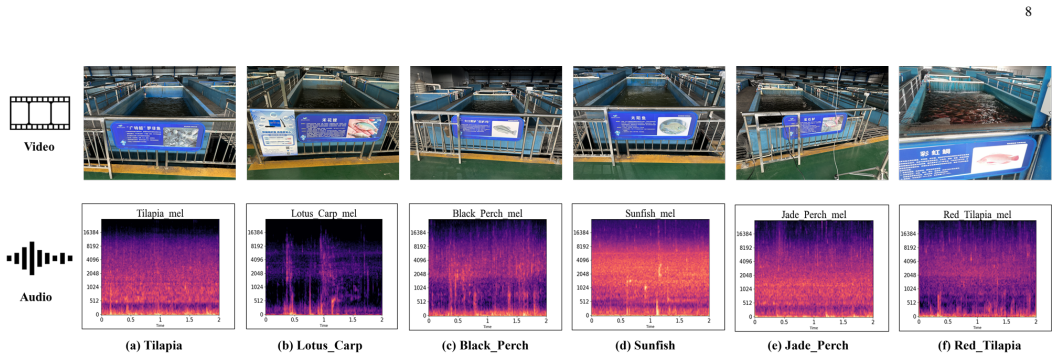
Summary. The paper introduces AV-CIL-FFIA, a new dataset of 81,932 labeled audio-visual feeding clips from six fish species, and proposes HAIL-FFIA, an exemplar-free prototype-based audio-visual class-incremental learning method. The method separates general feeding-intensity knowledge from species-specific knowledge, maintains compact prototypes via k-means clustering with an EMA update, and uses a dynamic audio-visual balancing mechanism. On the new benchmark, the authors report that HAIL-FFIA achieves 75.92% average accuracy and 9.36% average forgetting in the audio-visual setting, outperforming the strongest baseline AV-CIL (73.26% accuracy, 12.48% forgetting) while storing roughly 0.10% of the raw data volume. The paper also benchmarks single-modality and exemplar-based methods and reports ablations isolating the hierarchical representation, prototype management, and dynamic modality balancing components.
Significance. If the reported results hold, the paper makes a useful contribution: it provides the first audio-visual continual-learning benchmark for fish feeding intensity assessment, with a sizable real-world dataset and public code/data commitments. The prototype-based approach is a genuinely interesting middle ground between exemplar-based replay and fully exemplar-free regularization, and the ablation study gives some evidence that each proposed component contributes. The dataset alone is likely to be valuable to the aquaculture and multimodal continual-learning communities. However, the central empirical claims of superiority over exemplar-based methods and of a large storage advantage rest on an underspecified comparison, and the reported accuracy margin is not accompanied by any measure of variability. These issues are load-bearing and need to be resolved before the results can be taken as established.
major comments (3)
- [Section V-D and Section VI-C] The comparison with exemplar-based methods is not reproducible because the memory budget is never defined. Section V-D states that 'all methods use the same memory budget for storing exemplars' but does not specify whether the budget is measured in bytes, in number of raw clips, in number of feature vectors, or in some other unit, nor does it report the budget size. Section VI-C simultaneously claims that HAIL-FFIA stores about 0.10% of the raw dataset while exemplar-based methods 'typically require 5-10%' of the original dataset. These two statements are in tension: if the exemplar-based baselines were run under the same 0.10% budget, they are not operating in their typical 5-10% regime; if they were run in that regime, then the 'same memory budget' statement is false. Since the exemplar count is the primary accuracy/forgetting knob for iCaRL, SS-IL, AFC, and AV-CIL, an arbitrarily small exemplar budget could manufacture the observed margin. The authors should report, for every exemplar-based method, the exact exemplar budget in samples and in bytes, and ideally include a sensitivity sweep showing accuracy as a function of exemplar budget. The 0.10% storage claim should be computed in the same units used for the baselines.
- [Section VI-A, Table I] The central accuracy claim is not statistically supported. The paper states that all results are averaged over 3 independent runs (Section V-C), but Table I and Fig. 4 report only point estimates with no standard deviations, confidence intervals, or significance tests. The reported advantage over AV-CIL in the audio-visual setting is 2.66 percentage points (75.92% vs. 73.26%), which may well be within run-to-run variability for this kind of continual-learning experiment. The authors should report per-run results or error bars for at least the primary comparison, and ideally a paired significance test across the shared random seeds. Without this, the headline claim of consistent superiority over AV-CIL is not fully established.
- [Section V-C and Section III-C] The hyperparameter choices that materially affect the method are reported as empirical findings on the same dataset without a sensitivity analysis or a principled selection procedure. Specifically, the prototype count m=5, the EMA coefficient alpha=0.7, the regularization eta=1.0, the modality-balancing bounds gamma_max=0.8 and gamma_min=0.3, and the similarity floor 0.2 in lambda_p all appear to have been chosen on the validation portion of AV-CIL-FFIA. The only controlled sensitivity study is the prototype-count sweep in Fig. 5. This raises a mild overfitting-to-benchmark concern and makes it harder to assess how much of the margin over baselines comes from the proposed architecture versus from per-dataset tuning. The authors should either justify these values with a more systematic analysis or clearly state which values were fixed a priori and which were tuned on the validation split.
minor comments (6)
- [Table I] The 'Exemplar-free?' column uses the symbols '%' and '!' without a legend, and the assignment is unclear for Fine-tuning and for the Oracle row; please add an explicit legend or replace the symbols with 'Yes'/'No'/'N/A'.
- [Section IV-A vs. Section V-B] The dataset section states that the camera resolution is 1920x1080, while the video processing section says the original resolution is 2560x1440; these numbers should be reconciled.
- [Section III-B.1 and Eq. (7)] The feature expansion layer is described as a '2-layer linear feed-forward network' and Wav_up is said to be randomly initialized and fixed, but the expanded feature dimension dup is never specified; please state the exact output dimension used in the experiments.
- [Section V-D] The text gives URLs for some baselines but not for iCaRL, SS-IL, AFC, and AV-CIL in a uniform way; please provide complete citations and code links for all baselines.
- [Section VI-A, Fig. 4] Figure 4 is described as showing accuracy at each incremental step, but the caption does not say whether these are single-run or averaged values; please state this explicitly and, if averaged, include variability information.
- [Section IV-A] The dataset description does not report the per-species and per-intensity class distribution; since the paper uses a fixed label space with species-specific tasks, class imbalance across species could affect the reported accuracy and forgetting numbers, and a brief class-distribution table would improve the benchmark's utility.
Circularity Check
No significant circularity: HAIL-FFIA is an empirical method paper whose reported results come from held-out test evaluation, not from a derivation that assumes its conclusions.
full rationale
This paper makes an empirical contribution: a new dataset, a prototype-based incremental learning method, and a benchmark comparison. The central claim (75.92% average accuracy, 9.36% forgetting) is obtained by training the proposed classifiers on training features and evaluating on the held-out test split. No equation in Section III defines a predicted quantity in terms of the same quantity used as input: the ridge-regression weights Wav_k are computed from current-species features augmented with previously stored prototypes, and the prototypes themselves are k-means centroids of training features; neither uses test labels or test predictions. Hyperparameters alpha=0.7, eta=1.0, and m=5 are empirical choices tuned via ablations on the same dataset, which is standard practice and does not make the evaluation circular. Self-citations (e.g., Refs. [1], [4], [8], and the MMAL baseline [34]) appear as background and baseline comparisons, but they are not used as the justification for the proposed method's performance. The underspecified `same memory budget` in Section V-D is a genuine experimental-design weakness that could affect the fairness of the comparison with exemplar-based methods, but it is not a circular derivation: the reported advantage is not equivalent to an input by construction. Therefore the circularity score is 0.
Assumptions & free parameters
free parameters (5)
- prototype EMA coefficient alpha =
0.7
- regularization parameter eta =
1.0
- prototypes per intensity level m =
5
- modality balancing schedule gamma_max and gamma_min =
0.8, 0.3
- lambda_p similarity floor =
0.2 floor via max(0.2, similarity)
assumptions (4)
- domain assumption Manual annotations by aquaculture technicians correctly label feeding intensity levels
- domain assumption Pre-trained S3D and PANNs transfer to underwater aquaculture audio-visual data
- ad hoc to paper The fixed-intensity-label, species-incremental protocol is a valid instance of class-incremental learning
- standard math k-means clustering in feature space yields prototypes that capture class structure
Cite this review
Pith. "Pith review of Audio-Visual Class-Incremental Learning for Fish Feeding intensity Assessment in Aquaculture." pith.science (2026). https://pith.science/paper/2LNZ723T
@misc{pith2026250415171,
  author       = {Pith},
  title        = {Pith review of: Audio-Visual Class-Incremental Learning for Fish Feeding intensity Assessment in Aquaculture},
  year         = {2026},
  howpublished = {\url{https://pith.science/paper/2LNZ723T}},
  note         = {Machine review of arXiv:2504.15171}
}
read the original abstract
Fish Feeding Intensity Assessment (FFIA) is crucial in industrial aquaculture management. Recent multi-modal approaches have shown promise in improving FFIA robustness and efficiency. However, these methods face significant challenges when adapting to new fish species or environments due to catastrophic forgetting and the lack of suitable datasets. To address these limitations, we first introduce AV-CIL-FFIA, a new dataset comprising 81,932 labelled audio-visual clips capturing feeding intensities across six different fish species in real aquaculture environments. Then, we pioneer audio-visual class incremental learning (CIL) for FFIA and demonstrate through benchmarking on AV-CIL-FFIA that it significantly outperforms single-modality methods. Existing CIL methods rely heavily on historical data. Exemplar-based approaches store raw samples, creating storage challenges, while exemplar-free methods avoid data storage but struggle to distinguish subtle feeding intensity variations across different fish species. To overcome these limitations, we introduce HAIL-FFIA, a novel audio-visual class-incremental learning framework that bridges this gap with a prototype-based approach that achieves exemplar-free efficiency while preserving essential knowledge through compact feature representations. Specifically, HAIL-FFIA employs hierarchical representation learning with a dual-path knowledge preservation mechanism that separates general intensity knowledge from fish-specific characteristics. Additionally, it features a dynamic modality balancing system that adaptively adjusts the importance of audio versus visual information based on feeding behaviour stages. Experimental results show that HAIL-FFIA is superior to SOTA methods on AV-CIL-FFIA, achieving higher accuracy with lower storage needs while effectively mitigating catastrophic forgetting in incremental fish species learning.
Figures


Figures from the paper (2 more)


Reference graph
Works this paper leans on
-
[1]
Multimodal fish feeding intensity assessment in aquaculture,
M. Cui, X. Liu, H. Liu, Z. Du, T. Chen, G. Lian, D. Li, and W. Wang, “Multimodal fish feeding intensity assessment in aquaculture,” IEEE Transactions on Automation Science and Engineering, vol. 22, pp. 9485– 9497, 2024
work page 2024
-
[2]
Automatic feeding control for dense aquaculture fish tanks,
Y . Atoum, S. Srivastava, and X. Liu, “Automatic feeding control for dense aquaculture fish tanks,” IEEE Signal Processing Letters , vol. 22, no. 8, pp. 1089–1093, 2014
work page 2014
-
[3]
Automatic recognition methods of fish feeding behavior in aquaculture: A review,
D. Li, Z. Wang, S. Wu, Z. Miao, L. Du, and Y . Duan, “Automatic recognition methods of fish feeding behavior in aquaculture: A review,” Aquaculture, vol. 528, p. 735508, 2020
work page 2020
-
[4]
M. Cui, X. Liu, J. Zhao, J. Sun, G. Lian, T. Chen, M. D. Plumbley, D. Li, and W. Wang, “Fish feeding intensity assessment in aquaculture: A new audio dataset affia3k and a deep learning algorithm,” in 2022 IEEE 32nd International Workshop on Machine Learning for Signal Processing (MLSP), pp. 1–6, IEEE, 2022
work page 2022
-
[5]
Feeding intensity assessment of aquaculture fish using mel spectrogram and deep learning algorithms,
Z. Du, M. Cui, Q. Wang, X. Liu, X. Xu, Z. Bai, C. Sun, B. Wang, S. Wang, and D. Li, “Feeding intensity assessment of aquaculture fish using mel spectrogram and deep learning algorithms,” Aquacultural Engineering, vol. 102, p. 102345, 2023
work page 2023
-
[6]
Evaluating fish feeding intensity in aquaculture with convolutional neural networks,
N. Ubina, S. C. Cheng, C. C. Chang, and H. Y . Chen, “Evaluating fish feeding intensity in aquaculture with convolutional neural networks,” Aquacultural Engineering, vol. 94, p. 102178, 2021
work page 2021
-
[7]
A review of aquaculture: From single modality analysis to multimodality fusion,
W. Li, Z. Du, X. Xu, Z. Bai, J. Han, M. Cui, and D. Li, “A review of aquaculture: From single modality analysis to multimodality fusion,” Computers and Electronics in Agriculture , vol. 226, p. 109367, 2024
work page 2024
-
[8]
Harnessing multimodal data fusion to advance accurate identification of fish feeding intensity,
Z. Du, M. Cui, X. Xu, Z. Bai, J. Han, W. Li, J. Yang, X. Liu, C. Wang, and D. Li, “Harnessing multimodal data fusion to advance accurate identification of fish feeding intensity,”Biosystems Engineering, vol. 246, pp. 135–149, 2024
work page 2024
Show all 64 references
-
[9]
Fish tracking, counting, and behaviour analysis in digital aquaculture: A comprehen- sive survey,
M. Cui, X. Liu, H. Liu, J. Zhao, D. Li, and W. Wang, “Fish tracking, counting, and behaviour analysis in digital aquaculture: A comprehen- sive survey,” Reviews in Aquaculture , vol. 17, no. 1, p. e13001, 2025
2025
-
[10]
Continual learning and catastrophic forgetting,
G. M. van de Ven, N. Soures, and D. Kudithipudi, “Continual learning and catastrophic forgetting,” arXiv preprint arXiv:2403.05175 , 2024
2024 arXiv
-
[11]
Overcoming catastrophic forgetting by incremental moment matching,
S. W. Lee, J. H. Kim, J. Jun, J. W. Ha, and B. T. Zhang, “Overcoming catastrophic forgetting by incremental moment matching,” Advances in neural information processing systems , vol. 30, 2017
2017
-
[12]
Deep class-incremental learning: A survey,
D. W. Zhou, Q. W. Wang, Z. H. Qi, H. J. Ye, D. C. Zhan, and Z. Liu, “Deep class-incremental learning: A survey,” arXiv preprint arXiv:2302.03648, vol. 1, no. 2, p. 6, 2023
2023 arXiv
-
[13]
Dynamic residual classifier for class incremen- tal learning,
X. Chen and X. Chang, “Dynamic residual classifier for class incremen- tal learning,” in Proceedings of the IEEE/CVF International Conference on Computer Vision , pp. 18743–18752, 2023
2023
-
[14]
Podnet: Pooled outputs distillation for small-tasks incremental learning,
A. Douillard, M. Cord, C. Ollion, T. Robert, and E. Valle, “Podnet: Pooled outputs distillation for small-tasks incremental learning,” in Computer vision–ECCV 2020: 16th European conference, Glasgow, UK, August 23–28, 2020, proceedings, part XX 16 , pp. 86–102, Springer, 2020
2020
-
[15]
Adaptive aggregation networks for class- incremental learning,
Y . Liu, B. Schiele, and Q. Sun, “Adaptive aggregation networks for class- incremental learning,” in Proceedings of the IEEE/CVF conference on Computer Vision and Pattern Recognition , pp. 2544–2553, 2021
2021
-
[16]
DiffClass: Diffusion-based class incremental learning,
Z. Meng, J. Zhang, C. Yang, Z. Zhan, P. Zhao, and Y . Wang, “DiffClass: Diffusion-based class incremental learning,” in European Conference on Computer Vision, pp. 142–159, Springer, 2024
2024
-
[17]
Fetril: Feature translation for exemplar-free class-incremental learning,
G. Petit, A. Popescu, H. Schindler, D. Picard, and B. Delezoide, “Fetril: Feature translation for exemplar-free class-incremental learning,” in Proceedings of the IEEE/CVF winter conference on applications of computer vision, pp. 3911–3920, 2023
2023
-
[18]
Fecam: Exploiting the heterogeneity of class distributions in exemplar-free continual learning,
D. Goswami, Y . Liu, B. Twardowski, and J. Van De Weijer, “Fecam: Exploiting the heterogeneity of class distributions in exemplar-free continual learning,” Advances in Neural Information Processing Systems, vol. 36, pp. 6582–6595, 2023
2023
-
[19]
Learning without forgetting,
Z. Li and D. Hoiem, “Learning without forgetting,” IEEE Transactions on Pattern Analysis and Machine Intelligence, vol. 40, no. 12, pp. 2935– 2947, 2017
2017
-
[20]
Representation robustness and feature expansion for exemplar-free class-incremental learning,
Y . Luo, H. Ge, Y . Liu, and C. Wu, “Representation robustness and feature expansion for exemplar-free class-incremental learning,” IEEE Transactions on Circuits and Systems for Video Technology , vol. 34, no. 7, pp. 5306–5320, 2023
2023
-
[21]
Multi-granularity knowledge distillation and prototype consistency reg- ularization for class-incremental learning,
Y . Shi, D. Shi, Z. Qiao, Z. Wang, Y . Zhang, S. Yang, and C. Qiu, “Multi-granularity knowledge distillation and prototype consistency reg- ularization for class-incremental learning,” Neural Networks , vol. 164, pp. 617–630, 2023
2023
-
[22]
Adapt your teacher: Improving knowledge distillation for exemplar-free continual learning,
F. Szatkowski, M. Pyla, M. Przewie zlikowski, S. Cygert, B. Twar- dowski, and T. Trzcinski, “Adapt your teacher: Improving knowledge distillation for exemplar-free continual learning,” in Proceedings of the IEEE/CVF Winter Conference on Applications of Computer Vision , pp. 19...
1977
-
[23]
Exemplar- free class incremental learning via discriminative and comparable paral- lel one-class classifiers,
W. Sun, Q. Li, J. Zhang, D. Wang, W. Wang, and Y . a. Geng, “Exemplar- free class incremental learning via discriminative and comparable paral- lel one-class classifiers,” Pattern Recognition, vol. 140, p. 109561, 2023
2023
-
[24]
Class-incremental learning: A survey,
D.-W. Zhou, Q.-W. Wang, Z.-H. Qi, H.-J. Ye, D.-C. Zhan, and Z. Liu, “Class-incremental learning: A survey,” IEEE Transactions on Pattern Analysis and Machine Intelligence , 2024
2024
-
[25]
Learning to prompt for continual learning,
Z. Wang, Z. Zhang, C. Y . Lee, H. Zhang, R. Sun, X. Ren, G. Su, V . Perot, J. Dy, and T. Pfister, “Learning to prompt for continual learning,” in Proceedings of the IEEE/CVF Conference on Computer Vision and Pattern Recognition, pp. 139–149, 2022
2022
-
[26]
Prototype augmen- tation and self-supervision for incremental learning,
F. Zhu, X. Y . Zhang, C. Wang, F. Yin, and C. L. Liu, “Prototype augmen- tation and self-supervision for incremental learning,” in Proceedings of the IEEE/CVF Conference on Computer Vision and Pattern Recognition, pp. 5871–5880, 2021
2021
-
[27]
Few- shot class-incremental learning via training-free prototype calibration,
Q. W. Wang, D. W. Zhou, Y . K. Zhang, D. C. Zhan, and H. J. Ye, “Few- shot class-incremental learning via training-free prototype calibration,” Advances in Neural Information Processing Systems, vol. 36, pp. 15060– 15076, 2023
2023
-
[28]
Few shot class incremental learning via efficient prototype replay and calibration,
W. Zhang and X. Gu, “Few shot class incremental learning via efficient prototype replay and calibration,” Entropy, vol. 25, no. 5, p. 776, 2023
2023
-
[29]
A class-incremental approach with self-training and prototype augmentation for specific emitter identification,
D. Li, J. Qi, S. Hong, P. Deng, and H. Sun, “A class-incremental approach with self-training and prototype augmentation for specific emitter identification,” IEEE Transactions on Information Forensics and Security, vol. 19, pp. 1714–1727, 2023
2023
-
[30]
Prototype enhancement-based incremental evolution learning for urban garbage classification,
H. Han, X. Fan, and F. Li, “Prototype enhancement-based incremental evolution learning for urban garbage classification,” IEEE Transactions on Artificial Intelligence , vol. 5, no. 1, pp. 398–411, 2023
2023
-
[31]
Class-incremental grouping network for continual audio-visual learning,
S. Mo, W. Pian, and Y . Tian, “Class-incremental grouping network for continual audio-visual learning,” in Proceedings of the IEEE/CVF International Conference on Computer Vision , pp. 7788–7798, 2023
2023
-
[32]
Audio-visual class-incremental learning,
W. Pian, S. Mo, Y . Guo, and Y . Tian, “Audio-visual class-incremental learning,” in Proceedings of the IEEE/CVF International Conference on Computer Vision, pp. 7799–7811, 2023
2023
-
[33]
Incremental audio-visual fusion for person recognition in earthquake scene,
S. You, Y . Zuo, H. Yao, and C. Xu, “Incremental audio-visual fusion for person recognition in earthquake scene,” ACM Transactions on Multimedia Computing, Communications and Applications , vol. 20, no. 2, pp. 1–19, 2023
2023
-
[34]
Mmal: Multi-modal analytic learning for exemplar-free audio-visual class incremental tasks,
X. Yue, X. Zhang, Y . Chen, C. Zhang, M. Lao, H. Zhuang, X. Qian, and H. Li, “Mmal: Multi-modal analytic learning for exemplar-free audio-visual class incremental tasks,” in Proceedings of the 32nd ACM International Conference on Multimedia , pp. 2428–2437, 2024
2024
-
[35]
Deep audio- visual learning: A survey,
H. Zhu, M. D. Luo, R. Wang, A. H. Zheng, and R. He, “Deep audio- visual learning: A survey,” International Journal of Automation and Computing, vol. 18, no. 3, pp. 351–376, 2021
2021
-
[36]
Learning in audio-visual context: A review, analysis, and new perspective,
Y . Wei, D. Hu, Y . Tian, and X. Li, “Learning in audio-visual context: A review, analysis, and new perspective,”arXiv preprint arXiv:2208.09579, 2022
2022 arXiv
-
[37]
MMFINet: A multimodal fusion network for accurate fish feeding intensity assessment in recirculating aquaculture systems,
X. Gu, S. Zhao, Y . Duan, Y . Meng, D. Li, and R. Zhao, “MMFINet: A multimodal fusion network for accurate fish feeding intensity assessment in recirculating aquaculture systems,” Computers and Electronics in Agriculture, vol. 232, p. 110138, 2025
2025
-
[38]
Fish behavior recognition based on an audio-visual multimodal interactive fusion network,
Y . Yang, H. Yu, X. Zhang, P. Zhang, W. Tu, and L. Gu, “Fish behavior recognition based on an audio-visual multimodal interactive fusion network,” Aquacultural Engineering, vol. 107, p. 102471, 2024
2024
-
[39]
Intelligent fish feeding based on machine vision: A review,
L. Zhang, B. Li, X. Sun, Q. Hong, and Q. Duan, “Intelligent fish feeding based on machine vision: A review,” Biosystems Engineering, vol. 231, pp. 133–164, 2023
2023
-
[40]
Memory replay with data compression for continual learning,
L. Wang, X. Zhang, K. Yang, L. Yu, C. Li, L. Hong, S. Zhang, Z. Li, Y . Zhong, and J. Zhu, “Memory replay with data compression for continual learning,” arXiv preprint arXiv:2202.06592 , 2022
2022 arXiv
-
[41]
Adaer: An adaptive experience replay approach for continual lifelong learning,
X. Li, B. Tang, and H. Li, “Adaer: An adaptive experience replay approach for continual lifelong learning,” Neurocomputing, vol. 572, p. 127204, 2024. 13
2024
-
[42]
iCaRL: Incremental classifier and representation learning,
S. A. Rebuffi, A. Kolesnikov, G. Sperl, and C. H. Lampert, “iCaRL: Incremental classifier and representation learning,” in Proceedings of the IEEE Conference on Computer Vision and Pattern Recognition , pp. 2001–2010, 2017
2001
-
[43]
Exemplar-supported generative reproduction for class incremental learning.,
C. He, R. Wang, S. Shan, and X. Chen, “Exemplar-supported generative reproduction for class incremental learning.,” in BMVC, vol. 1, p. 2, 2018
2018
-
[44]
Der: Dynamically expandable representation for class incremental learning,
S. Yan, J. Xie, and X. He, “Der: Dynamically expandable representation for class incremental learning,” in Proceedings of the IEEE/CVF Con- ference on Computer Vision and Pattern Recognition , pp. 3014–3023, 2021
2021
-
[45]
Lifelong learning with dynamically expandable networks,
J. Yoon, E. Yang, J. Lee, and S. J. Hwang, “Lifelong learning with dynamically expandable networks,” arXiv preprint arXiv:1708.01547 , 2017
2017 arXiv
-
[46]
An analysis of initial training strategies for exemplar- free class-incremental learning,
G. Petit, M. Soumm, E. Feillet, A. Popescu, B. Delezoide, D. Picard, and C. Hudelot, “An analysis of initial training strategies for exemplar- free class-incremental learning,” in Proceedings of the IEEE/CVF Winter Conference on Applications of Computer Vision , pp. 1837–1847, 2024
2024
-
[47]
Continual learning with knowl- edge distillation: A survey,
S. Li, T. Su, X. Zhang, and Z. Wang, “Continual learning with knowl- edge distillation: A survey,” IEEE Transactions on Neural Networks and Learning Systems, 2024
2024
-
[48]
Overcoming catastrophic forgetting in neural networks,
J. Kirkpatrick, R. Pascanu, N. Rabinowitz, J. Veness, G. Desjardins, A. A. Rusu, K. Milan, J. Quan, T. Ramalho, A. Grabska Barwinska, et al., “Overcoming catastrophic forgetting in neural networks,”Proceed- ings of the National Academy of Sciences , vol. 114, no. 13, pp. 3521–...
2017
-
[49]
Memory aware synapses: Learning what (not) to forget,
R. Aljundi, F. Babiloni, M. Elhoseiny, M. Rohrbach, and T. Tuytelaars, “Memory aware synapses: Learning what (not) to forget,” inProceedings of the European Conference on Computer Vision (ECCV) , pp. 139–154, 2018
2018
-
[50]
Rotate your networks: Better weight consolidation and less catastrophic forgetting,
X. Liu, M. Masana, L. Herranz, J. Van de Weijer, A. M. Lopez, and A. D. Bagdanov, “Rotate your networks: Better weight consolidation and less catastrophic forgetting,” in 2018 24th International Conference on Pattern Recognition (ICPR) , pp. 2262–2268, IEEE, 2018
2018
-
[51]
ACIL: Analytic class-incremental learning with absolute memorization and privacy protection,
H. Zhuang, Z. Weng, H. Wei, R. Xie, K. A. Toh, and Z. Lin, “ACIL: Analytic class-incremental learning with absolute memorization and privacy protection,”Advances in Neural Information Processing Systems, vol. 35, pp. 11602–11614, 2022
2022
-
[52]
DS-AL: A dual-stream analytic learning for exemplar-free class-incremental learn- ing,
H. Zhuang, R. He, K. Tong, Z. Zeng, C. Chen, and Z. Lin, “DS-AL: A dual-stream analytic learning for exemplar-free class-incremental learn- ing,” in Proceedings of the AAAI Conference on Artificial Intelligence , vol. 38, pp. 17237–17244, 2024
2024
-
[53]
Gkeal: Gaussian kernel embedded analytic learning for few-shot class incremental task,
H. Zhuang, Z. Weng, R. He, Z. Lin, and Z. Zeng, “Gkeal: Gaussian kernel embedded analytic learning for few-shot class incremental task,” in Proceedings of the IEEE/CVF Conference on Computer Vision and Pattern Recognition, pp. 7746–7755, 2023
2023
-
[54]
Class incremental learning with self-supervised pre-training and prototype learning,
W. Liu, X. J. Wu, F. Zhu, M. M. Yu, C. Wang, and C. L. Liu, “Class incremental learning with self-supervised pre-training and prototype learning,” Pattern Recognition, vol. 157, p. 110943, 2025
2025
-
[55]
Continual prototype evolution: Learn- ing online from non-stationary data streams,
M. De Lange and T. Tuytelaars, “Continual prototype evolution: Learn- ing online from non-stationary data streams,” in Proceedings of the IEEE/CVF International Conference on Computer Vision , pp. 8250– 8259, 2021
2021
-
[56]
Class-incremental learning: survey and performance evaluation on image classification,
M. Masana, X. Liu, B. Twardowski, M. Menta, A. D. Bagdanov, and J. Van De Weijer, “Class-incremental learning: survey and performance evaluation on image classification,” IEEE Transactions on Pattern Anal- ysis and Machine Intelligence , vol. 45, no. 5, pp. 5513–5533, 2022
2022
-
[57]
Rethinking spa- tiotemporal feature learning: Speed-accuracy trade-offs in video clas- sification,
S. Xie, C. Sun, J. Huang, Z. Tu, and K. Murphy, “Rethinking spa- tiotemporal feature learning: Speed-accuracy trade-offs in video clas- sification,” in Proceedings of the European Conference on Computer Vision (ECCV), pp. 305–321, 2018
2018
-
[58]
PANNs: Large-scale pretrained audio neural networks for audio pattern recognition,
Q. Kong, Y . Cao, T. Iqbal, Y . Wang, W. Wang, and M. D. Plumbley, “PANNs: Large-scale pretrained audio neural networks for audio pattern recognition,” IEEE/ACM Transactions on Audio, Speech and Language Processing, vol. 28, pp. 2880–2894, 2020
2020
-
[59]
Audio set: An ontology and human- labeled dataset for audio events,
J. F. Gemmeke, D. P. Ellis, D. Freedman, A. Jansen, W. Lawrence, R. C. Moore, M. Plakal, and M. Ritter, “Audio set: An ontology and human- labeled dataset for audio events,” in2017 IEEE International Conference on Acoustics, Speech and Signal Processing (ICASSP) , pp. 776–780,...
2017
-
[60]
Specaugment: A simple data augmentation method for automatic speech recognition,
D. S. Park, W. Chan, Y . Zhang, C. C. Chiu, B. Zoph, E. D. Cubuk, and Q. V . Le, “Specaugment: A simple data augmentation method for automatic speech recognition,” arXiv:1904.08779, 2019
1904 arXiv
-
[61]
The kinetics human action video dataset,
W. Kay, J. Carreira, K. Simonyan, B. Zhang, C. Hillier, S. Vijaya- narasimhan, F. Viola, T. Green, T. Back, P. Natsev, et al., “The kinetics human action video dataset,” arXiv preprint arXiv:1705.06950 , 2017
2017 arXiv
-
[62]
Adam: A method for stochastic optimization,
D. P. Kingma and J. Ba, “Adam: A method for stochastic optimization,” arXiv preprint arXiv:1412.6980 , 2014
2014 arXiv
-
[63]
SS- IL: separated softmax for incremental learning,
H. Ahn, J. Kwak, S. Lim, H. Bang, H. Kim, and T. Moon, “SS- IL: separated softmax for incremental learning,” in Proceedings of the IEEE/CVF International Conference on Computer Vision , pp. 824–833, 2021
2021
-
[64]
Class-incremental learning by knowledge distillation with adaptive feature consolidation,
M. Kang, J. Park, and B. Han, “Class-incremental learning by knowledge distillation with adaptive feature consolidation,” in Proceedings of the IEEE/CVF Conference on Computer Vision and Pattern Recognition , pp. 16050–16059, 2022
2022
Reviewed August 16, 2026 · model on record in the stance chip above.
Discussion (0). Continue with ORCID to comment.