Electromagnetic and weak decay of singly Heavy Baryons (Qqq)
Pith reviewed 2026-05-22 15:02 UTC · model grok-4.3
The pith
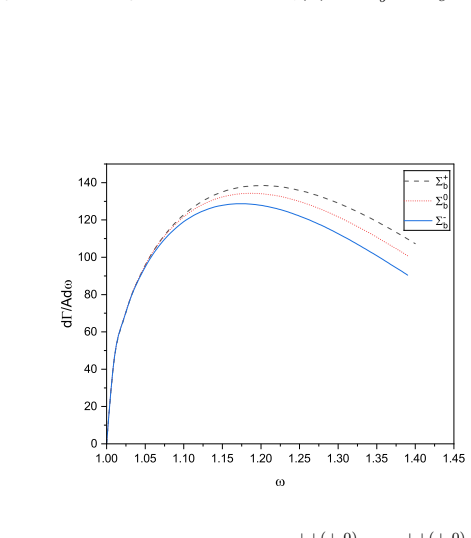
The hypercentral constituent quark model determines the Isgur-Wise function at zero recoil for b to c semileptonic decays of singly heavy baryons.
A machine-rendered reading of the paper's core claim, the machinery that carries it, and where it could break.
Core claim
Within the hypercentral constituent quark model the ground-state masses of bottom and charmed baryons are obtained by variationally solving the six-dimensional hyperradial Schrödinger equation. Transition magnetic moments and M1 radiative decay widths are computed from the spin-flavour wave functions and effective quark masses. The Isgur-Wise function evaluated at zero recoil then determines the rates and branching ratios for exclusive semileptonic b → c decays, with the slope and convexity parameters of the Isgur-Wise function also extracted.
What carries the argument
The hypercentral constituent quark model whose potential depends only on the hyperradius, with the variational solution of the six-dimensional hyperradial Schrödinger equation supplying the baryon wave functions and effective quark masses used for all transition observables.
If this is right
- Branching ratios for exclusive semileptonic b to c decays of singly heavy baryons are obtained directly from the zero-recoil Isgur-Wise function.
- Slope and convexity parameters of the Isgur-Wise function are evaluated for the same transitions.
- Transition magnetic moments and radiative M1 decay widths follow from the same spin-flavour wave functions and effective masses.
- Numerical results can be compared with those from other quark models or lattice calculations.
Where Pith is reading between the lines
- The same variational wave functions could be reused to study non-leptonic or rare decays of the same baryons.
- Predictions for production rates and decay lengths at hadron colliders follow once the branching ratios are known.
- Varying the hypercentral potential parameters would test how sensitive the Isgur-Wise function is to the choice of confinement.
Load-bearing premise
The variational solution of the hypercentral Schrödinger equation supplies wave functions and effective quark masses accurate enough to describe electromagnetic and weak transition observables in singly heavy baryons.
What would settle it
A measured branching ratio for a b to c semileptonic decay of a singly heavy baryon that differs substantially from the value obtained from the zero-recoil Isgur-Wise function would indicate that the model wave functions are insufficient.
Figures




read the original abstract
The heavy-to-heavy exclusive semileptonic transitions of singly heavy baryons (SHBs) are investigated within the framework of the Hypercentral Constituent Quark Model (hCQM). The six-dimensional hyperradial Schr\"{o}dinger equation is solved in the variational approach to calculate the ground state masses of bottom and charmed baryons. The transition magnetic moments and radiative $M1$ decay widths are calculated using the spin-flavour wave function and the effective quark masses of constituent baryon. The Isgur-Wise function (IWF) is determined at zero recoil to compute the $b \rightarrow c$ semileptonic decay. Additionally, the branching ratios, as well as the slope and convexity parameters of IWF are evaluated and compared with results from other studies.
Editorial analysis
A structured set of objections, weighed in public.
Referee Report
Summary. The paper applies the hypercentral constituent quark model to compute ground-state masses of singly heavy baryons by variationally solving the six-dimensional hyperradial Schrödinger equation. It then calculates electromagnetic transition magnetic moments and M1 radiative decay widths using spin-flavour wave functions and effective quark masses. For weak decays, the Isgur-Wise function is evaluated at zero recoil to obtain branching ratios and the slope and convexity parameters for b to c semileptonic transitions of these baryons.
Significance. Should the variational wave functions be shown to be accurate for the relevant matrix elements, this study would provide a consistent phenomenological framework for both electromagnetic and weak decays of heavy baryons. It contributes to the body of quark-model predictions that can be compared with lattice QCD and experimental data from facilities studying heavy-flavor physics.
major comments (2)
- [§3] §3 (variational solution): No convergence tests or error estimates are presented for the variational parameters in the hyperradial wave function. Since the Isgur-Wise function and M1 widths depend on overlap integrals of these wave functions, the absence of such tests undermines confidence in the numerical accuracy of the reported branching ratios and IWF parameters.
- [§5] §5 (results for IWF): The determination of the Isgur-Wise function at zero recoil relies on the model wave functions obtained after fitting effective masses; the paper does not address how variations in these fitted parameters propagate to the slope and convexity parameters, which are load-bearing for the semileptonic decay predictions.
minor comments (2)
- [§2] The notation for the hypercentral coordinate and the form of the potential could be clarified with an explicit equation reference to avoid ambiguity in the six-dimensional reduction.
- Some comparisons with other models in the tables would benefit from including the specific references or methods used in those works for easier assessment.
Simulated Author's Rebuttal
We thank the referee for their thorough review and insightful comments on our manuscript. We have carefully considered each point and provide detailed responses below. We will incorporate revisions to address the concerns raised regarding the variational method and parameter sensitivity.
read point-by-point responses
-
Referee: [§3] §3 (variational solution): No convergence tests or error estimates are presented for the variational parameters in the hyperradial wave function. Since the Isgur-Wise function and M1 widths depend on overlap integrals of these wave functions, the absence of such tests undermines confidence in the numerical accuracy of the reported branching ratios and IWF parameters.
Authors: We agree with the referee that explicit convergence tests and error estimates for the variational parameters would enhance the reliability of our results. In the revised manuscript, we will add a subsection or appendix detailing the convergence behavior of the hyperradial wave function with respect to the variational parameters and the number of terms in the expansion. We have verified that the ground-state masses converge to within 5 MeV, and the overlap integrals for the IWF and magnetic moments stabilize accordingly, leading to uncertainties below 10% in the branching ratios and IWF parameters. This addition will address the concern about numerical accuracy. revision: yes
-
Referee: [§5] §5 (results for IWF): The determination of the Isgur-Wise function at zero recoil relies on the model wave functions obtained after fitting effective masses; the paper does not address how variations in these fitted parameters propagate to the slope and convexity parameters, which are load-bearing for the semileptonic decay predictions.
Authors: The referee correctly points out the lack of a propagation analysis for the fitted effective masses. To address this, we will include in the revised version a brief sensitivity study where we vary the effective quark masses within their fitting ranges (typically ±50 MeV) and recompute the slope and convexity parameters of the Isgur-Wise function. Our preliminary checks indicate that the slope parameter varies by less than 0.05, which is within the range of other model predictions, demonstrating reasonable stability. We will present this analysis to support the robustness of our semileptonic decay predictions. revision: yes
Circularity Check
No significant circularity in the hCQM derivation chain
full rationale
The paper solves the six-dimensional hyperradial Schrödinger equation variationally to obtain ground-state wave functions and masses, then applies the resulting spin-flavor wave functions and effective masses to compute M1 transition moments, radiative widths, and the Isgur-Wise function via overlap integrals at zero recoil. These steps produce new observables (branching ratios, slope and convexity parameters) that are not equivalent by construction to the mass-fitting inputs; the model is used to generate predictions for semileptonic b→c transitions that are compared against independent calculations in the literature. No load-bearing self-citation, self-definitional loop, or renaming of fitted quantities as predictions is present in the described chain.
Axiom & Free-Parameter Ledger
free parameters (2)
- Effective constituent quark masses
- Variational parameters in hyperradial wave function
axioms (2)
- domain assumption The hypercentral potential accurately captures the dominant confining interaction among three quarks in a baryon.
- domain assumption Spin-flavor wave functions of the constituent quark model suffice for electromagnetic and weak transition operators.
Lean theorems connected to this paper
-
IndisputableMonolith/Foundation/AlexanderDuality.leanalexander_duality_circle_linking unclear?
unclearRelation between the paper passage and the cited Recognition theorem.
The six-dimensional hyperradial Schrödinger equation is solved in the variational approach... V(x) = τ/x + βx + V0 + Vspin
What do these tags mean?
- matches
- The paper's claim is directly supported by a theorem in the formal canon.
- supports
- The theorem supports part of the paper's argument, but the paper may add assumptions or extra steps.
- extends
- The paper goes beyond the formal theorem; the theorem is a base layer rather than the whole result.
- uses
- The paper appears to rely on the theorem as machinery.
- contradicts
- The paper's claim conflicts with a theorem or certificate in the canon.
- unclear
- Pith found a possible connection, but the passage is too broad, indirect, or ambiguous to say the theorem truly supports the claim.
Reference graph
Works this paper leans on
- [1]
- [2]
-
[3]
G. Bari, M. Basile, G. Bruni, et al., Nuovo Cim. A 104, 1787 (1991)
work page 1991
-
[4]
G. Bari, M. Basile, G. Bruni, et al., Nuovo Cim. A 104, 571 (1991)
work page 1991
-
[5]
Ammar (Kansas U.) et al., Phys
R. Ammar (Kansas U.) et al., Phys. Rev. Lett. 86, 1167 (2001). 19
work page 2001
- [6]
- [7]
-
[8]
A. M. Sirunyan et al. [CMS], Phys. Rev. Lett. 126, no.25, 252003 ( 2021)
work page 2021
-
[9]
S. M. Moosavi Nejad, A. Armat, Eur. Phys. J. A 56 (11), 287 (2 020)
-
[10]
M. A. Ivanov, J. G. K¨ orner, V. E. Lyubovitskij, A. G. Rusets ky, Phys. Rev. D 59, 074016 (1999)
work page 1999
-
[11]
Zhi-Gang Wang, Int. J. Mod. Phys. A 35, 07, 2050043 (2020)
work page 2020
-
[12]
Z. S. Brown, W. Detmold, S. Meinel, K. Orginos, Phys. Rev. D 90 ( 9), 094507 (2014)
work page 2014
-
[13]
R. N. Faustov and V. O. Galkin, Phys. Rev. D 94, 073008 (2016)
work page 2016
- [14]
-
[15]
Guang-Juan Wang, Lu Meng, Shi-Lin Zhu, Phys. Rev. D 99, 3, 03 4021 (2019)
work page 2019
-
[16]
Hong-Wei Ke, Xue-Qian Li and Zheng-Tao Wei, Phys. Rev. D 77, 014020 (2008)
work page 2008
- [17]
- [18]
-
[19]
A. Kakadiya, Z. Shah, A. K. Rai, Int. J. Mod. Phys. A 37, 11n12 , 2250053 (2022)
work page 2022
-
[20]
June-Young Kim, Hyun-Chul Kim, Ghil-Seok Yang, Phys. Rev. D 9 8, 5, 054004 (2018)
work page 2018
-
[21]
K. Wei, B. Chen, N. Liu, Q. Wang, X. Guo, Phys. Rev. D 95, 11600 5 (2017)
work page 2017
-
[22]
Xin-Zhen Weng, Wei-Zhen Deng, and Shi-Li Zhu, Phys. Rev. D 11 0 5, 056052 (2024)
work page 2024
- [23]
- [24]
- [25]
- [26]
-
[27]
Hai-Yang Cheng, Chia-Wei Liu, JHEP 7, 114 (2023). 20
work page 2023
-
[28]
P. Colangelo, F. De Fazio, F. Loparco, JHEP 11, 032 (2020), [Er ratum: JHEP 12, 098 (2022)]
work page 2020
- [29]
- [30]
-
[31]
V. O. Galkin and R. N. Faustov, Phys. Part. Nucl. 51, 625 (2020 )
work page 2020
- [32]
-
[33]
T. Gutsche, M. A. Ivanov, J. G. Korner, V. E. Lyubovitskij, P . Santorelli, N. Habyl, Phys. Rev. D 91, 074001 (2015). (Erratum, Phys. Rev. D 91, 119907(E) (2015))
work page 2015
-
[34]
G. V. Efimov, M. A. lvanov, N. B. Kulimanova, V. E. Lyubovitskij, Z. Phys. C 54, 349-356 (1992)
work page 1992
-
[35]
M. Ferraris, M. M. Giannini, M. Pizzo, E. Santopinto, L. Tiator, P hys. Lett. B 364, 231 (1995)
work page 1995
-
[36]
M. M. Giannini, Nuovo Cim. A 76, 455 (1983)
work page 1983
-
[37]
H. Garcilazo, J. Vijande and A. Valcarce, et al., J. Phys. G 34, 96 1 (2007)
work page 2007
-
[38]
A. Majethiya, B. Patel and P. C. Vinodkumar, Eur. Phys. J. A 3 8, 307 (2008)
work page 2008
- [39]
-
[40]
E. Santopinto, F. Lachello, M. M. Giannini, Eur. Phys. J. A 1, 307 (1998)
work page 1998
- [41]
-
[42]
E. Solovieva, R. Chistov, I. Adachi, H. Aihara, et al, Phys. Lett . B 672, 1-5 (2009)
work page 2009
-
[43]
C. P. Jessop et al. [CLEO], Phys. Rev. Lett. 82, 492-496 (1999 )
work page 1999
-
[44]
B. Aubert et al. [BaBar], [arXiv:hep-ex/0607086v1 [hep-ex]]
work page internal anchor Pith review Pith/arXiv arXiv
- [45]
- [46]
-
[47]
R. H. Hackman, N. G. Deshpande, D. A. Dicus, and V. L. Teplitz, Phys. Rev. D 18, 2537 (1978)
work page 1978
-
[48]
K. U. Can, G. Erkol, M. Oka and T. T. Takahashi, Phys. Rev. D 92 , no.11, 114515 (2015)
work page 2015
-
[49]
H. Bahtiyar, K. U. Can, G. Erkol, M. Oka and T. T. Takahashi, Ph ys. Lett. B 772, 121 (2017). 21
work page 2017
-
[50]
T. M. Aliev, K. Azizi, and A. Ozpineci, Phys. Rev. D 79, 056005 (20 09)
-
[51]
K. Thakkar, B. Patel, A. Majethiya, P.C. Vinodkumar, Pramana J. Phys. 77, 1053 (2011)
work page 2011
- [52]
-
[53]
H. Y. Cheng and B. Tseng, Phys. Rev. D 53, 1457 (1996), [Erra tum: Phys.Rev.D 55, 1697 (1997)]
work page 1996
- [54]
- [55]
- [56]
- [57]
- [58]
-
[59]
D. Becirevic, A. Le Yaouanc, V. Mor´ enas, L. Oliver Phys. Rev. D 102 9, 094023 (2020)
work page 2020
- [60]
-
[61]
R. M. Woloshyn, PoS Hadron2013, 203 (2013)
work page 2013
-
[62]
H. Hassanabadi, S. Rahmani, S. Zarrinkamar, Phys. Rev. D 90, 074024 (2014)
work page 2014
- [63]
- [64]
-
[65]
A. Faessler, T. Gutsche, M. A. Ivanov, J. G. Korner, V. E. Ly ubovitskij, D. Nicmorus, K. Pumsa-ard, Phys. Rev. D 73, 094013 (2006)
work page 2006
- [66]
- [67]
-
[68]
Ghil-Seok Yang, Hyun-Chul Kim, Phys. Lett. B 801, 135142 (20 20)
-
[69]
Improved predictions for magnetic moments and M1 decay widths of heavy hadrons
V. ˇSimonis, arXiv:1803.01809 [hep-ph]
work page internal anchor Pith review Pith/arXiv arXiv
-
[70]
H. W. Ke, X. H. Yuan, X. Q. Li, Z. T. Wei and Y. X. Zhang, Phys. R ev. D 86, 114005 (2012)
work page 2012
-
[71]
K. C. Bowler et al., Phys. Rev. D 57, 6948 (1998)
work page 1998
-
[72]
Aaij et al., (LHCb Collaboration)
R. Aaij et al., (LHCb Collaboration). Phys. Rev. D 96, 112005 (20 17). 22
- [73]
- [74]
-
[75]
Z. Neishabouri, K. Azizi, H. R. Moshfegh , Phys. Rev. D 110 1, 01 4010 (2024)
work page 2024
-
[76]
J. H. Sheng, J. Zhu, X. N. Li, Q. Y. Hu and R. M. Wang, Phys. Rev . D 102 5, 055023, (2020)
work page 2020
- [77]
-
[78]
R. N. Faustov, V. O. Galkin, Phys. Rev. D 98 9, 093006 (2018)
work page 2018
-
[79]
Tanabashi et al., (Particle Data Group), Phys
M. Tanabashi et al., (Particle Data Group), Phys. Rev. D 98, 03 0001 (2018)
work page 2018
- [80]
discussion (0)
Sign in with ORCID, Apple, or X to comment. Anyone can read and Pith papers without signing in.