REVIEW 2 major objections 4 minor 36 references
Quantum geometric origin of the Meissner effect and superfluid weight marker
T0 review · 2 major / 4 minor · reviewed 2026-08-07 · deepseek-v4-flash
Pith's one-line read The Meissner effect in s-wave superconductors is shown to be governed by the quantum metric of quasihole states, with the diamagnetic superfluid weight equal to the energy-weighted momentum integral of that metric.
desk verdict A correct and useful geometric identity for the diamagnetic superfluid weight, but the disorder comparison with Pippard overreaches because the paramagnetic response is omitted. read the letter →
The pith
A machine-rendered reading of the paper's core claim, the machinery that carries it, and where it could break.
The reading
What carries the argument
The central object is the quasihole quantum metric, defined by the overlap of fully antisymmetric filled quasihole states at neighboring momenta: $|\langle u_h(\mathbf{k})|u_h(\mathbf{k}+\delta\mathbf{k})\rangle| = 1 - \frac12 g_{\mu\nu}(\mathbf{k})\,\delta k_\mu \delta k_\nu$, with $g_{\mu\nu}(\mathbf{k}) = \sum_{nm} \frac12[\langle\partial_\mu n|m\rangle\langle m|\partial_\nu n\rangle + (\mu\leftrightarrow\nu)]$. Its role is to convert the second-derivative expectation value in the diamagnetic superfluid weight, Eq. (13), into a product of energy differences and metric elements, Eq. (14). The momentum integral of the metric defines the fidelity number $G_{\mu\nu}$, whose trace gives the gauge-invariant spread $\Omega_I$ of quasihole Wannier functions. The real-space marker is carried by the projectors $\hat{P} = \sum_{E_n<0}|E_n\rangle\langle E_n|$, $\hat{P}_E = \sum_{E_n<0} E_n|E_n\rangle\langle E_n|$, and the analogous $\hat{Q}$, $\hat{Q}_E$ for positive-energy states, together with the position operator, which replace the momentum-space integral by a trace over lattice eigenstates.
What would settle it
Calculate the full Meissner kernel of a single-band s-wave lattice model by linear response, including the paramagnetic term, and compare it with Eq. (14) evaluated from the same Bogoliubov–de Gennes eigenstates: if the two disagree as disorder is increased, the diamagnetic-only assumption fails. A more direct geometric test would measure the quasihole quantum metric and the superfluid weight independently (for example through a superconducting-state optical or dielectric sum rule, if one is established) and check the energy-weighted integration identity at several gap sizes.
Extended reading notes
Core claim
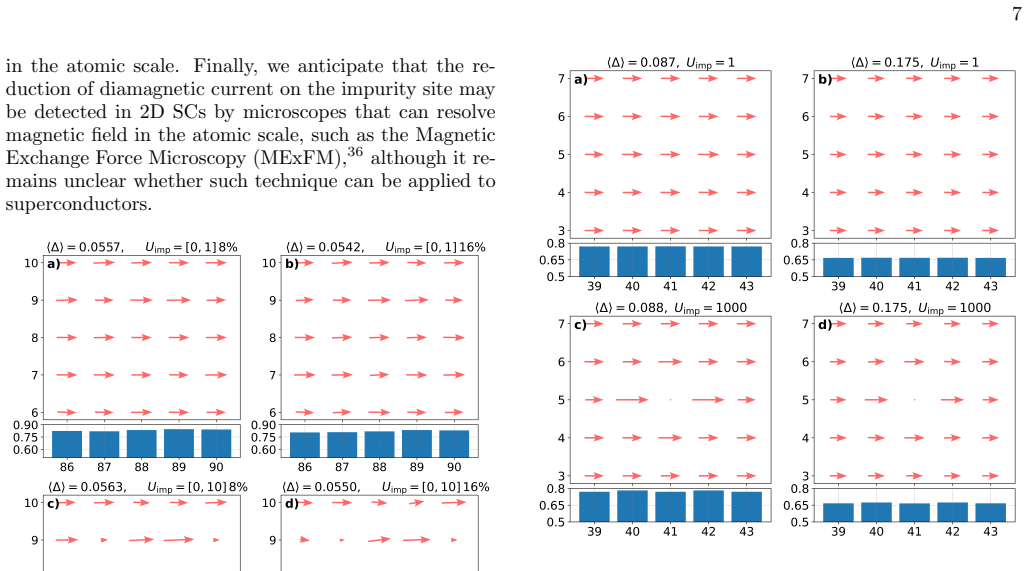
On the paper's own terms, the discovery is that the diamagnetic superfluid weight $D^d_{\mu\nu}$ of a conventional superconductor is not a kinetic, band-dispersion quantity but a geometric one: it is the energy-weighted Brillouin-zone integral of the quasihole quantum metric $g^{nm}_{\mu\nu}$, where $n$ runs over filled quasihole states and $m$ over empty quasiparticle states. Because this quasihole quantum metric is built from the overlap of fully antisymmetric quasihole Bloch states at neighboring momenta, it is present even when the normal-state bands are geometrically trivial, making the Meissner effect a generic quantum-geometric property of all s-wave superconductors. The paper further shows that the momentum integral of the metric, the fidelity number, equals the gauge-invariant part of the spread of quasihole Wannier functions; in parabolic-band models this spread is inversely proportional to the superconducting gap, so a larger gap localizes the quasihole wave function and, in the paper's proposal, stabilizes the superconducting state. Finally, by rewriting the momentum-space formula in terms of lattice projectors and the position operator, the paper obtains a real-space superfluid weight marker $D^d_{\mu\nu}(\mathbf{r})$ that gives the local diamagnetic current at each lattice site, allowing disorder to be included by self-consistently solving the Bogoliubov–de Gennes equations.
Load-bearing premise
The derivation identifies the London penetration depth with the diamagnetic superfluid weight alone, assuming the paramagnetic current is negligible ($D^d \gg \langle D^p\rangle$); the paper itself notes that in highly disordered superconductors the paramagnetic current can become significant and diminish the Meissner effect, so the disorder conclusions depend on this clean-limit dominance holding.
Editorial extensions
If this is right
- If Eq. (14) is correct, the London penetration depth of every s-wave superconductor, including ordinary single-band ones, is set by the quasihole quantum metric, so quantum-geometric superfluid weight is not limited to flat-band materials.
- Because $\lambda_L$ enters the Ginzburg-Landau parameter $\kappa=\lambda_L/\xi_{GL}$, the type-I/type-II boundary is partly controlled by the average magnitude of the energy-weighted quasihole quantum metric: larger geometric weight shortens $\lambda_L$ and pushes the superconductor toward type-II behavior.
- The gauge-invariant quasihole Wannier spread, inversely proportional to the pairing gap in the parabolic-band estimate, gives a geometric criterion for superconducting-state stability: larger gap, more localized quasihole wave function, more stable condensate.
- Disorder, treated self-consistently through the Bogoliubov–de Gennes equations, suppresses the local diamagnetic superfluid weight, makes the local diamagnetic current turbulent and circumventing impurities, and increases the London penetration depth, matching the classic experimental trend.
- The superfluid weight marker provides a site-resolved route to compute the Meissner response in inhomogeneous and disordered superconductors, going beyond the homogeneous clean-limit formulas.
Reading between the lines
- Beyond the paper: if the quasihole quantum metric controls the superfluid weight at $T=0$, it should also regulate phase fluctuations at finite temperature, so a metric-based upper bound on the superconducting transition temperature may exist in low-dimensional s-wave systems, analogous to the flat-band bounds but arising from the superconducting-state geometry.
- Beyond the paper: the paper leaves the paramagnetic current without a real-space marker; constructing such a marker would complete the local Meissner kernel and would allow strong-disorder cases to be checked against the $D^d\gg D^p$ assumption directly.
- Beyond the paper: the predicted local suppression and circumvention of the diamagnetic current around a single nonmagnetic impurity could be probed with atomic-scale magnetic imaging on a clean 2D superconductor, providing a direct spatial test of the marker.
- Beyond the paper: because the quasihole Wannier spread is proposed as a stability measure, one can test it by computing the response of the order parameter to local perturbations (e.g., a magnetic impurity or a phase slip) in lattice Bogoliubov–de Gennes simulations and correlating it with $\Omega_I$.
Editorial analysis
A structured set of objections, weighed in public.
Referee Report
Summary. This paper derives an identity for the diamagnetic superfluid weight D^d_μν of a multiband s-wave superconductor in terms of the quantum metric of the Bogoliubov quasihole states (Eq. 14). It introduces a 'fidelity number' and a quasihole Wannier spread, then constructs a real-space marker D^d_μν(r) using projectors onto positive- and negative-energy BdG eigenstates (Eqs. 16–24). The marker is applied to 2D square and 3D cubic lattices with self-consistently solved BdG equations and nonmagnetic impurities; the authors report that strong impurities suppress and 'turbulently' redirect the diamagnetic current, and that the resulting increase of London penetration depth is consistent with Pippard.
Significance. The central identity is a rigorous analytic rewriting of the second-order vector-potential term; the derivation in Appendix A checks out for momentum-independent s-wave pairing. This provides a clean geometric interpretation of D^d in the clean limit, and the real-space marker is a potentially useful numerical tool for studying local diamagnetic responses. The paper is self-contained analytically and the numerics are presented transparently. However, the experimental claim about penetration-depth increase is based only on D^d; the full Meissner kernel also contains the paramagnetic term D^p, which is not computed. The disordered-system conclusions are therefore not yet established.
major comments (2)
- [Sec. III C, Eq. (21), Figs. 1–4] The replacement of 1/(μ_0 λ_L²) by D^d_μμ assumes D^d ≫ D^p, but the paper's own final paragraph of Sec. III C concedes that in highly disordered superconductors the paramagnetic current 'may contribute significantly and diminish the Meissner effect,' and Appendix A states that D^p contains a γ_z matrix element that prevents a local-marker representation. Since the measured superfluid weight is D^d + D^p and D^p is negative and grows with disorder in dirty s-wave superconductors, a reduction in D^d alone does not establish the Pippard-type increase of λ_L. The abstract and conclusion should either compute the full kernel (e.g., by evaluating D^p via linear response for the same disorder realizations) or explicitly restrict the claim to the diamagnetic component and remove the Pippard consistency statement.
- [Sec. II D, Eq. (19)] The marker is constructed with the position operator diag(1,2,3,...)⊗γ, which is an ad hoc lattice replacement for the true position operator. The total D^d is gauge-invariant, but the local values D^d(r) and the flow patterns in Figs. 1–4 depend on this chosen operator. The authors acknowledge boundary inaccuracy but do not test the robustness of the impurity-induced turbulence to other position-operator conventions. Please add a benchmark using a different, gauge-equivalent position operator (or a shifted unit-cell convention) and discuss the resulting ambiguity of the local marker, or clearly state that the marker is a non-unique local decomposition.
minor comments (4)
- [Sec. III B and Acknowledgments] There are several typos: 'detemrined' after Eq. (31), 'latttice' in Sec. II D, 'suppoort' in the Acknowledgments, and 'the the superfluid weight' in Sec. III B.
- [Sec. II C, after Eq. (15)] The sentence stating that the type of SC is 'directly determined by (D^d_μμ)^{-1/2}' should be qualified, because the Ginzburg-Landau parameter is controlled by the total superfluid kernel, not by the diamagnetic part alone.
- [Eqs. (10) and (27)] The lattice constant a is introduced as a regularization of a parabolic-band integral; the resulting Ω_I depends on a and therefore is a model-dependent estimate rather than an intrinsic material property. This should be stated explicitly where the analytical formulas are presented.
- [Abstract and Sec. II C] The term 'superfluid weight' is used interchangeably with the diamagnetic component D^d. Since the paper does not compute the full superfluid weight, please consistently reserve 'superfluid weight' for D^d + D^p, and call D^d the 'diamagnetic superfluid weight' throughout, or define the shorthand at first use.
Circularity Check
No significant circularity: Eq. (14) is an exact derivation, not a fit; the disorder comparison is incomplete but acknowledged, and self-citations are not load-bearing.
full rationale
The central claim, Eq. (14), is derived in the text and Appendix A from the standard second-order expansion H = H0 + e v·A + (1/2) V_cell D^d A^2. The quasihole quantum metric g^nm is defined from the same BdG eigenstates via <∂μ n|m><m|∂ν n>, and the derivation uses the exact identity <n|∂μ H|m> = (ε_n − ε_m)<∂μ n|m>, so the expression D^d = −(2e^2/V_cell) Σ (ε_n − ε_m) g^nm is a mathematical rewriting of the same object, not a parameter fit or a prediction forced by construction. The marker in Eqs. (16)–(24) is a real-space representation of this same D^d via projectors, so it is also not circular. The comparison with Pippard's experiment is qualitative and uses only the diamagnetic superfluid weight, with the paramagnetic contribution neglected through the assumption D^d >> <D^p>; the authors explicitly concede in Sec. III C that in highly disordered superconductors the paramagnetic current 'may contribute significantly and diminish the Meissner effect.' That is an incompleteness or overclaim concerning the disordered-regime comparison, but it is not a circular step. Self-citations (e.g., ref. 12 for the single-band quantum metric and fidelity number) provide prior analytical expressions, but the central derivation is self-contained and does not rest on those citations; therefore the self-citation is at most minor and non-load-bearing. No step reduces the predicted output to its own input.
Assumptions & free parameters
free parameters (5)
- lattice constant a =
heuristic regularization scale
- chemical potential μ =
-0.2 (in units of t)
- pairing interaction V =
-1.1, -1.4 (2D); -1.6, -1.9 (3D)
- impurity potential U_imp =
1 to 1000 (in units of t)
- impurity density n_imp =
8% to 16%
assumptions (5)
- domain assumption BCS mean-field theory with momentum-independent s-wave pairing
- domain assumption The diamagnetic response is obtained from the second-order term in the minimal coupling expansion of the normal state Hamiltonian (Eq. 12)
- standard math The quasihole bands form an isolated set of bands so the Marzari-Vanderbilt spread formula applies
- ad hoc to paper The position operator is assigned as diag(1,2,3,...)⊗γ in the lattice marker
- domain assumption The total superfluid weight is dominated by the diamagnetic term D^d
invented entities (1)
-
Superfluid weight marker D^d_µν(r)
Cite this review
Pith. "Pith review of Quantum geometric origin of the Meissner effect and superfluid weight marker." pith.science (2026). https://pith.science/paper/73NMLOPI
@misc{pith2026250517349,
  author       = {Pith},
  title        = {Pith review of: Quantum geometric origin of the Meissner effect and superfluid weight marker},
  year         = {2026},
  howpublished = {\url{https://pith.science/paper/73NMLOPI}},
  note         = {Machine review of arXiv:2505.17349}
}
read the original abstract
The momentum space of conventional superconductors is recently recognized to possess a quantum metric defined from the overlap of filled quasihole states at neighboring momenta. For multiband superconductors with arbitrary intraband and interband s-wave pairing, we elaborate that their superfluid weight in London equations is given by the momentum integration of the elements of quantum metric times the quasiparticle energy, indicating the quantum geometric origins of Meissner effect and vortex state. The momentum integration of the quantum metric further yields a spread of quasihole Wannier functions that characterizes the stability of the superconducting state. Our formalism allows the diamagnetic response of conventional superconductors to be mapped to individual lattice sites as a superfluid weight marker, which can incorporate the effect of disorder through self-consistently solving the Bogoliubov-de Gennes equations. Using single-band s-wave superconductors in 2D and 3D as examples, our marker reveals a diamagnetic current that becomes turbulent in the presence of nonmagnetic impurities, and the increase of London penetration depth by disorder that is consistent with experiments.
Figures


Figures from the paper (1 more)

Reference graph
Works this paper leans on
-
[1]
author author W. Meissner \ and\ author R. Ochsenfeld ,\ title title Ein neuer effekt bei eintritt der supraleitf\" a higkeit , \ 10.1007/BF01504252 journal journal Naturwissenschaften \ volume 21 ,\ pages 787--788 ( year 1933 ) NoStop
-
[2]
author author F. London , author H. London , \ and\ author F. A. \ Lindemann ,\ title title The electromagnetic equations of the supraconductor , \ 10.1098/rspa.1935.0048 journal journal Proc. R. Soc. Lond. A Math. Phys. Sci. \ volume 149 ,\ pages 71--88 ( year 1935 ) NoStop
arXiv 1935
-
[3]
author author S. Peotta \ and\ author P. T\"orm\"a ,\ title title Superfluidity in topologically nontrivial flat bands , \ 10.1038/ncomms9944 journal journal Nat. Commun. \ volume 6 ,\ pages 8944 ( year 2015 ) NoStop
-
[4]
author author A. Julku , author S. Peotta , author T. I. \ Vanhala , author D. Kim , \ and\ author P. T\"orm\"a ,\ title title Geometric origin of superfluidity in the lieb-lattice flat band , \ 10.1103/PhysRevLett.117.045303 journal journal Phys. Rev. Lett. \ volume 117 ,\ pages 045303 ( year 2016 ) NoStop
-
[5]
author author L. Liang , author T. I. \ Vanhala , author S. Peotta , author T. Siro , author A. Harju , \ and\ author P. T\"orm\"a ,\ title title Band geometry, berry curvature, and superfluid weight , \ 10.1103/PhysRevB.95.024515 journal journal Phys. Rev. B \ volume 95 ,\ pages 024515 ( year 2017 ) NoStop
-
[6]
author author J. Herzog-Arbeitman , author V. Peri , author F. Schindler , author S. D. \ Huber , \ and\ author B. A. \ Bernevig ,\ title title Superfluid weight bounds from symmetry and quantum geometry in flat bands , \ 10.1103/PhysRevLett.128.087002 journal journal Phys. Rev. Lett. \ volume 128 ,\ pages 087002 ( year 2022 ) NoStop
-
[7]
author author P. T\" o rm\" a , author S. Peotta , \ and\ author B. A. \ Bernevig ,\ title title Superconductivity, superfluidity and quantum geometry in twisted multilayer systems , \ 10.1038/s42254-022-00466-y journal journal Nature Reviews Physics \ volume 4 ,\ pages 528--542 ( year 2022 ) NoStop
-
[8]
author author M. Iskin ,\ title title Extracting quantum-geometric effects from ginzburg-landau theory in a multiband hubbard model , \ 10.1103/PhysRevB.107.224505 journal journal Phys. Rev. B \ volume 107 ,\ pages 224505 ( year 2023 ) NoStop
Show all 36 references
-
[9]
Daido , author T
author author A. Daido , author T. Kitamura , \ and\ author Y. Yanase ,\ title title Quantum geometry encoded to pair potentials , \ 10.1103/PhysRevB.110.094505 journal journal Phys. Rev. B \ volume 110 ,\ pages 094505 ( year 2024 ) NoStop
-
[10]
Kitamura , author A
author author T. Kitamura , author A. Daido , \ and\ author Y. Yanase ,\ title title Spin-triplet superconductivity from quantum-geometry-induced ferromagnetic fluctuation , \ 10.1103/PhysRevLett.132.036001 journal journal Phys. Rev. Lett. \ volume 132 ,\ pages 036001 ( year 2...
-
[11]
Shavit \ and\ author J
author author G. Shavit \ and\ author J. Alicea ,\ title title Quantum geometric kohn-luttinger superconductivity , \ 10.1103/PhysRevLett.134.176001 journal journal Phys. Rev. Lett. \ volume 134 ,\ pages 176001 ( year 2025 ) NoStop
2025 doi
-
[12]
Porlles \ and\ author W
author author D. Porlles \ and\ author W. Chen ,\ title title Quantum geometry of singlet superconductors , \ 10.1103/PhysRevB.108.094508 journal journal Phys. Rev. B \ volume 108 ,\ pages 094508 ( year 2023 ) NoStop
2023 doi
-
[13]
author author V. L. \ Ginzburg \ and\ author L. D. \ Landau ,\ title title On the theory of superconductivity , \ 10.1016/b978-0-08-010586-4.50078-x journal journal JETP \ volume 20 ,\ pages 1064--1082 ( year 1950 ) NoStop
1950 doi
-
[14]
Marzari \ and\ author D
author author N. Marzari \ and\ author D. Vanderbilt ,\ title title Maximally localized generalized wannier functions for composite energy bands , \ 10.1103/PhysRevB.56.12847 journal journal Phys. Rev. B \ volume 56 ,\ pages 12847--12865 ( year 1997 ) NoStop
-
[15]
Souza \ and\ author D
author author I. Souza \ and\ author D. Vanderbilt ,\ title title Dichroic f -sum rule and the orbital magnetization of crystals , \ 10.1103/PhysRevB.77.054438 journal journal Phys. Rev. B \ volume 77 ,\ pages 054438 ( year 2008 ) NoStop
-
[16]
Marzari , author A
author author N. Marzari , author A. A. \ Mostofi , author J. R. \ Yates , author I. Souza , \ and\ author D. Vanderbilt ,\ title title Maximally localized wannier functions: Theory and applications , \ 10.1103/RevModPhys.84.1419 journal journal Rev. Mod. Phys. \ volume 84 ,\ ...
-
[17]
Bianco \ and\ author R
author author R. Bianco \ and\ author R. Resta ,\ title title Mapping topological order in coordinate space , \ 10.1103/PhysRevB.84.241106 journal journal Phys. Rev. B \ volume 84 ,\ pages 241106 ( year 2011 ) NoStop
2011 doi
-
[18]
Prodan , author T
author author E. Prodan , author T. L. \ Hughes , \ and\ author B. A. \ Bernevig ,\ title title Entanglement spectrum of a disordered topological chern insulator , \ 10.1103/PhysRevLett.105.115501 journal journal Phys. Rev. Lett. \ volume 105 ,\ pages 115501 ( year 2010 ) NoStop
-
[19]
Prodan ,\ title title Non-commutative tools for topological insulators , \ 10.1088/1367-2630/12/6/065003 journal journal New J
author author E. Prodan ,\ title title Non-commutative tools for topological insulators , \ 10.1088/1367-2630/12/6/065003 journal journal New J. Phys. \ volume 12 ,\ pages 065003 ( year 2010 ) NoStop
2010 doi
-
[20]
author author T. A. \ Loring \ and\ author M. B. \ Hastings ,\ title title Disordered topological insulators via c ^ -algebras , \ 10.1209/0295-5075/92/67004 journal journal EPL \ volume 92 ,\ pages 67004 ( year 2010 ) NoStop
2010 doi
-
[21]
author author A. B. \ Pippard \ and\ author W. L. \ Bragg ,\ title title An experimental and theoretical study of the relation between magnetic field and current in a superconductor , \ 10.1098/rspa.1953.0040 journal journal Proc. R. Soc. A \ volume 216 ,\ pages 547--568 ( yea...
1953
-
[22]
Matsuura \ and\ author S
author author S. Matsuura \ and\ author S. Ryu ,\ title title Momentum space metric, nonlocal operator, and topological insulators , \ 10.1103/PhysRevB.82.245113 journal journal Phys. Rev. B \ volume 82 ,\ pages 245113 ( year 2010 ) NoStop
-
[23]
von Gersdorff \ and\ author W
author author G. von Gersdorff \ and\ author W. Chen ,\ title title Measurement of topological order based on metric-curvature correspondence , \ 10.1103/PhysRevB.104.195133 journal journal Phys. Rev. B \ volume 104 ,\ pages 195133 ( year 2021 ) NoStop
-
[24]
author author J. P. \ Provost \ and\ author G. Vallee ,\ title title Riemannian structure on manifolds of quantum states , \ https://projecteuclid.org:443/euclid.cmp/1103908308 journal journal Comm. Math. Phys. \ volume 76 ,\ pages 289--301 ( year 1980 ) NoStop
1980
-
[25]
author author M. S. M. \ de Sousa , author A. L. \ Cruz , \ and\ author W. Chen ,\ title title Mapping quantum geometry and quantum phase transitions to real space by a fidelity marker , \ 10.1103/PhysRevB.107.205133 journal journal Phys. Rev. B \ volume 107 ,\ pages 205133 ( ...
-
[26]
author author L. F. \ C\'ardenas-Castillo , author S. Zhang , author F. L. \ Freire , author D. Kochan , \ and\ author W. Chen ,\ title title Detecting the spread of valence-band wannier functions by optical sum rules , \ 10.1103/PhysRevB.110.075203 journal journal Phys. Rev. ...
-
[27]
author author D. J. \ Scalapino , author S. R. \ White , \ and\ author S. C. \ Zhang ,\ title title Superfluid density and the drude weight of the hubbard model , \ 10.1103/PhysRevLett.68.2830 journal journal Phys. Rev. Lett. \ volume 68 ,\ pages 2830--2833 ( year 1992 ) NoStop
-
[28]
author author D. J. \ Scalapino , author S. R. \ White , \ and\ author S. Zhang ,\ title title Insulator, metal, or superconductor: The criteria , \ 10.1103/PhysRevB.47.7995 journal journal Phys. Rev. B \ volume 47 ,\ pages 7995--8007 ( year 1993 ) NoStop
-
[29]
Rossi ,\ title title Quantum metric and correlated states in two-dimensional systems , \ https://doi.org/10.1016/j.cossms.2021.100952 journal journal Curr
author author E. Rossi ,\ title title Quantum metric and correlated states in two-dimensional systems , \ https://doi.org/10.1016/j.cossms.2021.100952 journal journal Curr. Opin. Solid State Mater. Sci. \ volume 25 ,\ pages 100952 ( year 2021 ) NoStop
2021
-
[30]
Ahn , author G.-Y
author author J. Ahn , author G.-Y. \ Guo , author N. Nagaosa , \ and\ author A. Vishwanath ,\ title title Riemannian geometry of resonant optical responses , \ 10.1038/s41567-021-01465-z journal journal Nat. Phys. \ volume 18 ,\ pages 290--295 ( year 2022 ) NoStop
-
[31]
Komissarov , author T
author author I. Komissarov , author T. Holder , \ and\ author R. Queiroz ,\ title title The quantum geometric origin of capacitance in insulators , \ 10.1038/s41467-024-48808-x journal journal Nature Communications \ volume 15 ,\ pages 4621 ( year 2024 ) NoStop
-
[32]
Chen ,\ title title Dielectric and optical markers originating from quantum geometry , \ 10.1103/PhysRevB.111.085202 journal journal Phys
author author W. Chen ,\ title title Dielectric and optical markers originating from quantum geometry , \ 10.1103/PhysRevB.111.085202 journal journal Phys. Rev. B \ volume 111 ,\ pages 085202 ( year 2025 ) NoStop
2025 doi
-
[33]
author author L. P. \ Gor'kov ,\ title title Microscopic derivation of the ginzburg-landau equations in the theory of superconductivity , \ @noop journal journal JETP \ volume 36 ,\ pages 1918--1923 ( year 1959 ) NoStop
1918
-
[34]
author author N. Nagaosa ,\ 10.1007/978-3-662-03774-4 title Quantum Field Theory in Condensed Matter Physics ,\ Theoretical and Mathematical Physics\ ( publisher Springer ,\ address Berlin, Heidelberg ,\ year 1999 ) NoStop
1999 doi
-
[35]
Marrazzo \ and\ author R
author author A. Marrazzo \ and\ author R. Resta ,\ title title Local theory of the insulating state , \ 10.1103/PhysRevLett.122.166602 journal journal Phys. Rev. Lett. \ volume 122 ,\ pages 166602 ( year 2019 ) NoStop
2019 doi
-
[36]
Kaiser , author A
author author U. Kaiser , author A. Schwarz , \ and\ author R. Wiesendanger ,\ title title Magnetic exchange force microscopy with atomic resolution , \ 10.1038/nature05617 journal journal Nature \ volume 446 ,\ pages 522--525 ( year 2007 ) NoStop
Reviewed August 7, 2026 · model on record in the stance chip above.
Discussion (0). Continue with ORCID to comment.