REVIEW 4 major objections 5 minor 107 references
Enabling Secure and Ephemeral AI Workloads in Data Mesh Environments
T0 review · 4 major / 5 minor · reviewed 2026-08-07 · deepseek-v4-flash
Pith's one-line read Pairing an immutable container operating system with infrastructure-as-code, this paper argues, lets enterprises spin up secure, disposable Kubernetes clusters from scratch in under ten minutes, on premises or in any cloud.
desk verdict A coherent and unusually honest architecture blueprint for ephemeral Kubernetes clusters, but the paper's central 'under ten minutes on any cloud' claim rests on a single unverifiable assertion with no logs, code, or timing data. read the letter →
The pith
A machine-rendered reading of the paper's core claim, the machinery that carries it, and where it could break.
The reading
What carries the argument
The central object is sskuba-ctl, a statically compiled, configuration-driven command-line tool that turns a three-section YAML file (metadata, target environment, GitOps repository) into a running Kubernetes cluster. The mechanism that carries the argument is the pairing of immutability with infrastructure-as-code: Talos Linux removes the node as a mutable surface that needs patching, and Pulumi makes the whole environment a versioned expression in a real programming language, so the same logic reproduces the cluster on AWS, Azure, and vSphere. The cluster is then declarative end to end, because FluxCD continuously synchronises it with the state declared in a git repository, while Teleport integrates enterprise identity with short-lived X.509 certificates. The paper's design principles, deploy anywhere, immutable infrastructure, automate aggressively, low-friction enterprise integration, and secure by design, are what motivate each of these component choices.
What would settle it
Run the documented sskuba-ctl apply -f cluster.yaml against an environment the paper names as a goal but does not demonstrate, such as Google Cloud Platform or bare metal, and check whether a cluster comes up without environment-specific code changes; any bespoke networking path, driver, or image that must be added by hand breaks the vendor-neutrality claim. Independently, timing cluster creation from the same invocation on AWS, Azure, and vSphere would directly test the under-ten-minutes claim.
Extended reading notes
Core claim
The paper's central claim is that an ephemeral, secure Kubernetes cluster need not be assembled from a configuration space of fragile choices: the node operating system and the cloud environment can be reduced to two disciplined abstractions. Talos Linux makes every node a minimal, read-only, API-driven artifact with no shell, no SSH, and no package manager, so a cluster cannot silently mutate into an unknown state. Pulumi expresses the entire cluster footprint, virtual networks, load balancers, virtual machines, storage, and security groups, in general-purpose programming languages, so one code path can target different environments. sskuba-ctl, a configuration-driven Go binary, walks these abstractions through a fixed sequence: create a Pulumi stack, provision Talos VMs with freshly generated PKI certificates, bootstrap etcd and Kubernetes, load NVIDIA drivers on GPU nodes, then hand the cluster to FluxCD so its state converges to a git repository, with Teleport issuing short-lived certificates for access. The demonstrated outcome is a working cluster, in AWS, Azure, or vSphere, in under ten minutes, designed to be replaced rather than maintained.
Load-bearing premise
The load-bearing premise is that the Talos Linux and Pulumi abstractions cover every target-environment difference (networking, load balancing, storage, GPU drivers, authentication) with only slight variations; only AWS, Azure, and vSphere have been demonstrated, so the vendor-neutral, any-cloud claim stands or falls on that abstraction not leaking.
Editorial extensions
If this is right
- Decentralised data teams can create and destroy their own AI and data compute platforms without waiting on a central platform team for each cluster.
- Because clusters are replaced rather than patched, configuration drift and long-term attack surface shrink, and the infrastructure stays fully knowable from source code.
- The same cluster-creation path runs on-premises (vSphere) and in hyperscaler clouds, easing interoperability across the mix of modern and legacy infrastructure found in data mesh environments.
- Air-gapped and denied, degraded, intermittent, and limited (DDIL) environments can host lightweight Kubernetes clusters for edge deployments and temporary operations.
- Each cluster ships with a curated set of open-source data and AI tools, so teams can start building on the first day rather than assembling their own stack.
- Consistent integration with enterprise identity, PKI, secrets, and logging across environments supports faster, repeatable security accreditation for AI applications.
Reading between the lines
- A natural test the paper itself does not run: deploy the documented sskuba-ctl configuration to an environment it names but does not demonstrate, such as Google Cloud Platform or bare metal; whether the abstraction holds without new code is the boundary of the vendor-neutrality claim.
- If the approach scales to hundreds of teams as intended, platform-team economics shift from maintaining long-lived shared clusters with hard multi-tenancy to recreating disposable clusters on demand, a trade that only pays off for the stateless, short-lived workloads the paper's own limitations section says sskuba is optimised for.
- The paper's balanced-autonomy governance model could be measured directly: compare how quickly a data product moves from a developer's ephemeral cluster into an accredited production environment against a centralised platform-as-a-service path.
Editorial analysis
A structured set of objections, weighed in public.
Referee Report
Summary. The paper proposes `sskuba`, a prototype platform for self-service, ephemeral Kubernetes clusters targeting AI and data workloads in data mesh environments. The claimed core innovation is a CLI tool `sskuba-ctl` that combines Talos Linux (an immutable container OS), Pulumi (programmatic infrastructure as code), Flux/GitOps, and shared services such as Teleport to create clusters from scratch in under ten minutes across AWS, Azure, and vSphere, with vendor-neutral portability to "any cloud environment." A secondary contribution is a curated set of data and AI tool kits that can be preloaded into each cluster. The manuscript is primarily an architecture/design description with extensive comparisons to alternative technologies and a limitations section, but it does not contain an experimental evaluation, reproducible measurements, a security analysis, or a link to a working artifact.
Significance. If the performance and portability claims were substantiated, this work would offer a useful practical pattern for enterprises that need ephemeral AI infrastructure without managed-PaaS lock-in, particularly in hybrid and data mesh settings. The design choices are sensible and grounded in real, widely used technologies (Talos Linux, Pulumi, Flux, Teleport), and the paper is honest about several design limitations, such as the unsuitability of the approach for long-lived geo-distributed databases. However, the central empirical claims are currently unsupported: the sub-ten-minute cluster creation figure appears only as a one-sentence assertion, and the broad "any cloud" claim is qualified by the paper's own enumeration of target-specific shims. As it stands, the contribution is an architectural proposal rather than a validated system, and its significance depends on future evidence.
major comments (4)
- [Abstract, §4.3] The central performance claim, that `sskuba-ctl` "has been demonstrated to create a sskuba cluster in AWS, Azure and vSphere under ten minutes," is presented without any supporting methodology or data. The text gives no cluster size, node types, network conditions, number of repeated runs, timing breakdown, machine or CI environment, logs, or artifact/repository for reproduction. Since this claim is the main quantitative differentiator from existing Kubernetes installers such as `eksctl`, Kubespray, and Cluster API, it is load-bearing. The paper needs an evaluation section with reproducible measurements, or a clear and prominent statement that the ten-minute figure is anecdotal.
- [Abstract, §4.1, §4.3.2] The abstract's promise of creating clusters "in any cloud environment" is not supported by the demonstrated scope and is further qualified by the details in §4.3.2. Only AWS, Azure, and vSphere are claimed to be demonstrated; GCP, bare metal, edge, and air-gapped modes appear only as goals. Moreover, §4.3.2 lists target-specific OS images (including a separate NVIDIA-driver image), target-specific CSI storage classes, native cloud secret managers versus Vault, native cloud CLI/OIDC authentication, and a vSphere-specific Big-IP load balancer. These are exactly the points where the Pulumi/Talos abstraction can leak environment-specific requirements. The paper should either provide evidence that the parameterized components cover the claimed environments or restrict the portability claim to the demonstrated set.
- [Title, §4.1, §4.2] The title and design principle 5 promise a "secure" platform, but the paper contains no threat model, no security evaluation, and no validation of the security properties invoked, such as Talos immutability, mTLS protection, short-lived certificates, or Teleport integration. The security discussion is limited to feature citations from the underlying tools. A claim that these clusters can be "trusted to operate effectively even in contested cyber environments" requires at least an explicit threat model and ideally a security assessment or a comparison against the enterprise controls the platform is supposed to inherit.
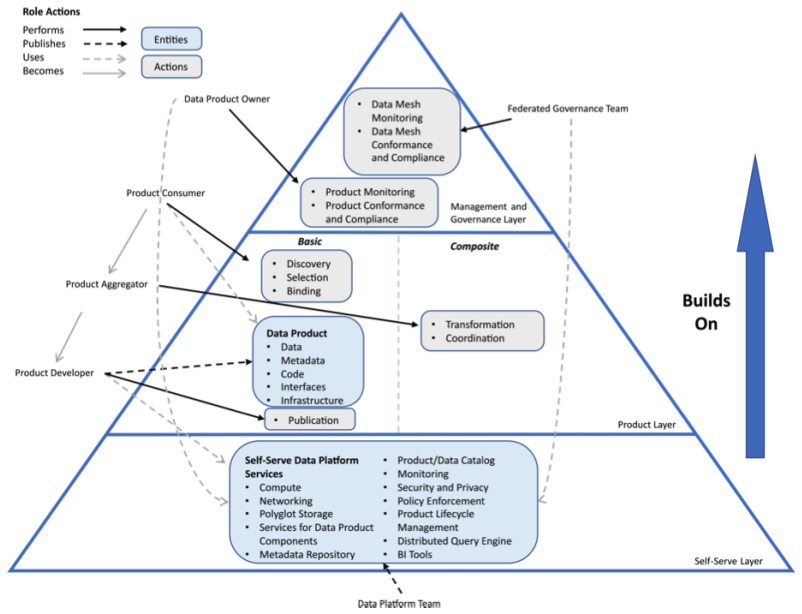
- [§5.2] The reference implementation of the data and AI tool kits is described with a figure and a statement that the authors have used it to "test and build out the integrated architecture of sskuba over multiple use cases," but no use cases, test results, or integration details are provided. If Section 5 is intended to support the claim of a working reference implementation, the paper should describe what was actually built, which components were exercised, and how the tool kits were verified to work inside the ephemeral clusters.
minor comments (5)
- [Throughout] The names `sskuba` and `sskuba-ctl` are frequently run together with adjacent words, for example "Thesskuba," "doessskuba-ctlwork?", and "sskubaclusters." This appears to be a formatting or rendering issue and should be fixed for readability.
- [Figures 2–8] Several figures are referenced in the text but are not present in the submitted manuscript. Please include the actual figures or replace them with complete textual descriptions, since the architecture description depends heavily on them.
- [Appendices A.3–A.5] These appendices state that the comparison text was generated by Perplexity.ai and "checked by the authors." Please provide a clearer methodology for that checking, or shorten the appendices so that the paper does not rely on unverifiable generated content for its comparison narrative.
- [§4.3.1] The text says "The exact steps taken in cluster creation are as follows" but gives no expected duration for any step. Adding a per-step timing breakdown would make the ten-minute claim in §4.3 interpretable and would help identify where the time budget is spent.
- [§4.4.4] The statement that AWS runs serverless functions in single-tenant virtual machines while Azure multiplexes multiple tenants on one kernel in separate containers would benefit from a direct citation to a primary source, since it is used to support a security comparison.
Circularity Check
No significant circularity: the paper makes empirical architecture claims with no derivation chain, fitted parameters, or load-bearing self-citations.
full rationale
The paper is a systems/architecture proposal rather than a mathematical derivation, so the circularity patterns based on equations, fitted parameters, or self-referential definitions do not apply. The central claim is that sskuba-ctl can create Kubernetes clusters in AWS, Azure, and vSphere in under ten minutes and that the approach is vendor-neutral and portable. This is an empirical assertion about a prototype, not a result derived from prior work by the same authors. The self-citations by the authors (e.g., [33], [37], [53], [54]) appear only as background references for topics such as SQL analytics libraries, probabilistic logic, homomorphic encryption, and privacy technologies; they do not supply the load-bearing portability or efficiency claim. The paper contains no fitted parameters and no prediction that reduces by construction to its inputs. The strongest concerns are evidentiary: no timing methodology, logs, or reproducible artifact are provided, and Section 4.3.2 lists target-specific components such as cloud-specific OS images, CSI storage classes, secret managers, and a vSphere-specific load balancer. Those concerns undermine the strength of the empirical and portability claims, but they are issues of verification and correctness risk, not circularity. Under the review rules, an unverified or under-supported empirical claim is not circular, and self-citation becomes circular only when it is load-bearing and unverified. Neither condition is met here.
Assumptions & free parameters
assumptions (4)
- domain assumption Kubernetes is the appropriate substrate for ephemeral AI workloads in data mesh environments.
- domain assumption Immutable, container-specific host OS (Talos Linux) provides security and operational benefits that outweigh its constraints (no SSH, no package manager, no in-place patching) in production enterprise environments.
- domain assumption The data mesh architecture is the correct organizational model, and self-serve ephemeral clusters are the right way to support it.
- domain assumption Commodity cloud primitives (VPC, load balancers, CSI storage) can be abstracted by Pulumi into vendor-neutral clusters with only small per-environment variations.
invented entities (1)
-
sskuba-ctl
Cite this review
Pith. "Pith review of Enabling Secure and Ephemeral AI Workloads in Data Mesh Environments." pith.science (2026). https://pith.science/paper/UAZUGQN4
@misc{pith2026250600352,
  author       = {Pith},
  title        = {Pith review of: Enabling Secure and Ephemeral AI Workloads in Data Mesh Environments},
  year         = {2026},
  howpublished = {\url{https://pith.science/paper/UAZUGQN4}},
  note         = {Machine review of arXiv:2506.00352}
}
read the original abstract
Many large enterprises that operate highly governed and complex ICT environments have no efficient and effective way to support their Data and AI teams in rapidly spinning up and tearing down self-service data and compute infrastructure, to experiment with new data analytic tools, and deploy data products into operational use. This paper proposes a key piece of the solution to the overall problem, in the form of an on-demand self-service data-platform infrastructure to empower de-centralised data teams to build data products on top of centralised templates, policies and governance. The core innovation is an efficient method to leverage immutable container operating systems and infrastructure-as-code methodologies for creating, from scratch, vendor-neutral and short-lived Kubernetes clusters on-premises and in any cloud environment. Our proposed approach can serve as a repeatable, portable and cost-efficient alternative or complement to commercial Platform-as-a-Service (PaaS) offerings, and this is particularly important in supporting interoperability in complex data mesh environments with a mix of modern and legacy compute infrastructure.
Figures


Figures from the paper (9 more)




Reference graph
Works this paper leans on
-
[1]
Firecracker: Lightweight virtualization for serverless applications
Alexandru Agache, Marc Brooker, Alexandra Iordache, Anthony Liguori, Rolf Neugebauer, Phil Piwonka, and Diana-Maria Popa. Firecracker: Lightweight virtualization for serverless applications. In17th USENIX Symposium on Net- worked Systems Design and Implementation, pages 419–434, 2020
2020
-
[2]
Blending containers and virtual machines: a study of Firecracker and gVisor
Anjali, Tyler Caraza-Harter, and Michael M Swift. Blending containers and virtual machines: a study of Firecracker and gVisor. InProceedings of the 16th ACM SIGPLAN/SIGOPS International Conference on Virtual Execution Environments, pages 101–113, 2020
2020
-
[3]
Designing access methods: The RUM conjecture
Manos Athanassoulis, Michael S Kester, Lukas M Maas, Radu Stoica, Stratos Idreos, Anastasia Ailamaki, and Mark Callaghan. Designing access methods: The RUM conjecture. InEDBT, volume 2016, pages 461–466, 2016
2016
-
[4]
Disk encryption on Talos operating system
Parinaz Avaznejad. Disk encryption on Talos operating system. Master’s thesis, Aalto University, 2022
2022
-
[5]
Variational inference: A review for statisticians.Journal of the American Statistical Association, 112(518):859–877, 2017
David M Blei, Alp Kucukelbir, and Jon D McAuliffe. Variational inference: A review for statisticians.Journal of the American Statistical Association, 112(518):859–877, 2017
2017
-
[6]
Towards avoiding the data mess: Industry insights from data mesh implementations
Jan Bode, Niklas Kühl, Dominik Kreuzberger, and Carsten Holtmann. Towards avoiding the data mess: Industry insights from data mesh implementations. IEEE Access, 2024
2024
-
[7]
Immutable operating systems: A survey
Sebastian Bohm and Guido Wirtz. Immutable operating systems: A survey. In CEUR Workshop Proceedings, pages 52–60, 2023
2023
-
[8]
Cambridge University Press, 2004
Stephen Boyd and Lieven Vandenberghe.Convex Optimization. Cambridge University Press, 2004. 32
2004
Show all 107 references
-
[9]
Top Threats to Cloud Computing 2024
Jon-Michael Brook, Randall Brooks, Alex Getsin, Vic Hargrave, Laura Kenner, Michael Morgenstern, Stephen Pieraldi, and Michael Roza. Top Threats to Cloud Computing 2024. Technical report, Cloud Security Alliance, 2024
2024
-
[10]
Kubernetesdeploymentoptionsforon-premclusters.arXiv:2407.01620, 2024
Lincoln Bryant, Robert W Gardner, Fengping Hu, David Jordan, and Ryan P Taylor. Kubernetesdeploymentoptionsforon-premclusters.arXiv:2407.01620, 2024
2024 arXiv
-
[11]
How kubernetes changes operations.;login:, 40, 2015
Brendan Burns. How kubernetes changes operations.;login:, 40, 2015
2015
-
[12]
Borg, Omega, and Kubernetes.Communications of the ACM, 59(5):50– 57, 2016
Brendan Burns, Brian Grant, David Oppenheimer, Eric Brewer, and John Wilkes. Borg, Omega, and Kubernetes.Communications of the ACM, 59(5):50– 57, 2016
2016
-
[13]
Cam- bridge University Press, 2006
NicoloCesa-BianchiandGáborLugosi.Prediction, Learning, and Games. Cam- bridge University Press, 2006
2006
-
[14]
Brian Christian.The Alignment Problem: How can Machines Learn Human Values?Atlantic Books, 2021
2021
-
[15]
How can SMEs benefit from big data? Challenges and a path forward.Quality and Reliability Engineering Interna- tional, 32(6):2151–2164, 2016
Shirley Coleman, Rainer Göb, Giuseppe Manco, Antonio Pievatolo, Xavier Tort-Martorell, and Marco Seabra Reis. How can SMEs benefit from big data? Challenges and a path forward.Quality and Reliability Engineering Interna- tional, 32(6):2151–2164, 2016
2016
-
[16]
Marcombo, 2022
Zhamak Dehghani.Data Mesh. Marcombo, 2022
2022
-
[17]
Ensemble methods in machine learning
Thomas G Dietterich. Ensemble methods in machine learning. InWorkshop on Multiple Classifier Systems, pages 1–15. Springer, 2000
2000
-
[18]
Understandingsoftware-2.0: A studyofmachinelearning library usage and evolution.ACM Transactions on Software Engineering and Methodology, 30(4):1–42, 2021
MalindaDilharaetal. Understandingsoftware-2.0: A studyofmachinelearning library usage and evolution.ACM Transactions on Software Engineering and Methodology, 30(4):1–42, 2021
2021
-
[19]
Revealing information while preserving privacy
Irit Dinur and Kobbi Nissim. Revealing information while preserving privacy. In Proceedings of the ACM Symposium on Principles of Database Systems, pages 202–210, 2003
2003
-
[20]
Wireguard: Next generation kernel network tunnel
Jason A Donenfeld. Wireguard: Next generation kernel network tunnel. In NDSS, pages 1–12, 2017
2017
-
[21]
50 years of data science.Journal of Computational and Graph- ical Statistics, 26(4):745–766, 2017
David Donoho. 50 years of data science.Journal of Computational and Graph- ical Statistics, 26(4):745–766, 2017
2017
-
[22]
Thealgorithmicfoundationsofdifferentialpri- vacy.Foundations and Trends®in Theoretical Computer Science, 9(3–4):211– 407, 2014
CynthiaDworkandAaronRoth. Thealgorithmicfoundationsofdifferentialpri- vacy.Foundations and Trends®in Theoretical Computer Science, 9(3–4):211– 407, 2014. 33
2014
-
[23]
A pragmatic introduc- tion to secure multi-party computation.Foundations and Trends®in Privacy and Security, 2(2-3):70–246, 2018
David Evans, Vladimir Kolesnikov, and Mike Rosulek. A pragmatic introduc- tion to secure multi-party computation.Foundations and Trends®in Privacy and Security, 2(2-3):70–246, 2018
2018
-
[24]
The seven virtues of simple type theory.Journal of Applied Logic, 6(3):267–286, 2008
William M Farmer. The seven virtues of simple type theory.Journal of Applied Logic, 6(3):267–286, 2008
2008
-
[25]
CloudMF: Model-driven management of multi-cloud applications.ACM Transactions on Internet Technology, 18(2):1–24, 2018
Nicolas Ferry, Franck Chauvel, Hui Song, Alessandro Rossini, Maksym Lush- penko, and Arnor Solberg. CloudMF: Model-driven management of multi-cloud applications.ACM Transactions on Internet Technology, 18(2):1–24, 2018
2018
-
[26]
Infrastructure is software too!SSRN 2681904, 2015
Brian Fitzgerald, Nicole Forsgren, Klaas-Jan Stol, Jez Humble, and Brian Doody. Infrastructure is software too!SSRN 2681904, 2015
2015
-
[27]
A decision-theoretic generalization of on- line learning and an application to boosting.Journal of Computer and System Sciences, 55(1):119–139, 1997
Yoav Freund and Robert E Schapire. A decision-theoretic generalization of on- line learning and an application to boosting.Journal of Computer and System Sciences, 55(1):119–139, 1997
1997
-
[28]
Data mesh: a systematic gray literature review.ACM Computing Surveys, 57(1):1–36, 2024
Abel Goedegebuure, Indika Kumara, Stefan Driessen, Willem-Jan Van Den Heuvel, Geert Monsieur, Damian Andrew Tamburri, and Dario Di Nucci. Data mesh: a systematic gray literature review.ACM Computing Surveys, 57(1):1–36, 2024
2024
-
[29]
Learning from the Amazon technology platform
Jim Gray and Werner Vogels. Learning from the Amazon technology platform. ACM Queue, 4, 2006
2006
-
[30]
Adib Habbal, Mohamed Khalif Ali, and Mustafa Ali Abuzaraida. Artificial Intelligence trust, risk and security management (AI trism): Frameworks, ap- plications, challenges and future research directions.Expert Systems with Ap- plications, 240:122442, 2024
2024
-
[31]
Homomorphic encryption
Shai Halevi. Homomorphic encryption. InTutorials on the Foundations of Cryptography: Dedicated to Oded Goldreich, pages 219–276. Springer, 2017
2017
-
[32]
Immutability changes everything.Communications of the ACM, 59(1):64–70, 2015
Pat Helland. Immutability changes everything.Communications of the ACM, 59(1):64–70, 2015
2015
-
[33]
The MADlib analytics library or MAD skills, the SQL
Joseph M Hellerstein, Christoper Ré, Florian Schoppmann, Daisy Zhe Wang, Eugene Fratkin, Aleksander Gorajek, Kee Siong Ng, Caleb Welton, Xixuan Feng, Kun Li, et al. The MADlib analytics library or MAD skills, the SQL. Proceedings of the VLDB Endowment, 5(12), 2012
2012
-
[34]
An overview of multi-cloud computing
Jiangshui Hong, Thomas Dreibholz, Joseph Adam Schenkel, and Jiaxi Alessia Hu. An overview of multi-cloud computing. InWorkshop on Web, Artificial Intelligence and Network Applications, pages 1055–1068. Springer, 2019. 34
2019
-
[35]
Artificial intelligence security: Threats and counter- measures.ACM Computing Surveys, 55(1):1–36, 2021
Yupeng Hu, Wenxin Kuang, Zheng Qin, Kenli Li, Jiliang Zhang, Yansong Gao, Wenjia Li, and Keqin Li. Artificial intelligence security: Threats and counter- measures.ACM Computing Surveys, 55(1):1–36, 2021
2021
-
[36]
Rethinking AI Talent Strategy as Automated Machine Learning Comes of Age
Holger Hürtgen, Jan Kerkhof, and Manuel Möller. Rethinking AI Talent Strategy as Automated Machine Learning Comes of Age. Technical report, McKinsey Analytics, 2020
2020
-
[37]
Probabil- itiesonsentencesinanexpressivelogic.Journal of Applied Logic, 11(4):386–420, 2013
Marcus Hutter, John W Lloyd, Kee Siong Ng, and William TB Uther. Probabil- itiesonsentencesinanexpressivelogic.Journal of Applied Logic, 11(4):386–420, 2013
2013
-
[38]
Machine learning: Trends, perspectives, and prospects.Science, 349(6245):255–260, 2015
Michael I Jordan and Tom M Mitchell. Machine learning: Trends, perspectives, and prospects.Science, 349(6245):255–260, 2015
2015
-
[39]
Choosing the right IaC tool for building reusable cloud infra- structure
Niko Kalliomaa. Choosing the right IaC tool for building reusable cloud infra- structure. Master’s thesis, University of Turku, 2024
2024
-
[40]
REFORMS: Consensus-based recommendations for machine-learning-based science.Science Advances, 10(18):eadk3452, 2024
Sayash Kapoor, Emily M Cantrell, Kenny Peng, Thanh Hien Pham, Chris- topher A Bail, Odd Erik Gundersen, Jake M Hofman, Jessica Hullman, Michael A Lones, Momin M Malik, et al. REFORMS: Consensus-based recommendations for machine-learning-based science.Science Advances, 10(18):e...
2024
-
[41]
Comparison of infrastructure as code frameworks from a de- veloper perspective
Daniel Karlsson. Comparison of infrastructure as code frameworks from a de- veloper perspective. Master’s thesis, Linkoping University, 2023
2023
-
[42]
Assessing the vulnerabilities of the open-source artificial intelligence landscape: A large-scale analysis of the Hugging Face platform
Adhishree Kathikar, Aishwarya Nair, Ben Lazarine, Agrim Sachdeva, and Sagar Samtani. Assessing the vulnerabilities of the open-source artificial intelligence landscape: A large-scale analysis of the Hugging Face platform. InIEEE Inter- national Conference on Intelligence and S...
2023
-
[43]
The impact of platform vulnerabilities in AI systems
Ashley Hyowon Kim. The impact of platform vulnerabilities in AI systems. Master’s thesis, Massachusetts Institute of Technology, 2020
2020
-
[44]
Data scientists in software teams: State of the art and challenges.IEEE Transactions on Software Engineering, 44(11):1024–1038, 2017
Miryung Kim, Thomas Zimmermann, Robert DeLine, and Andrew Begel. Data scientists in software teams: State of the art and challenges.IEEE Transactions on Software Engineering, 44(11):1024–1038, 2017
2017
-
[45]
Kubernetes distributions for the edge: serverless performance evaluation.Journal of Supercomputing, 78(11):13728–13755, 2022
Vojdan Kjorveziroski and Sonja Filiposka. Kubernetes distributions for the edge: serverless performance evaluation.Journal of Supercomputing, 78(11):13728–13755, 2022
2022
-
[46]
The MIT Press, 2009
Daphne Koller and Nir Friedman.Probabilistic Graphical Models: Principles and Techniques. The MIT Press, 2009. 35
2009
-
[47]
Lightweight kubernetes distributions: A performance comparison of microk8s, k3s, k0s, and microshift
Heiko Koziolek and Nafise Eskandani. Lightweight kubernetes distributions: A performance comparison of microk8s, k3s, k0s, and microshift. InProceedings of the 2023 ACM/SPEC International Conference on Performance Engineering, pages 17–29, 2023
2023
-
[48]
The do’s and don’ts of infrastructure code: A systematic gray literature review
Indika Kumara, Martín Garriga, Angel Urbano Romeu, Dario Di Nucci, Fabio Palomba, Damian Andrew Tamburri, and Willem-Jan van den Heuvel. The do’s and don’ts of infrastructure code: A systematic gray literature review. Information and Software Technology, 137:106593, 2021
2021
-
[49]
O’Reilly Media, 2019
Valliappa Lakshmanan and Jordan Tigani.Google BigQuery: The Definitive Guide. O’Reilly Media, 2019
2019
-
[50]
Cambridge University Press, 2020
Tor Lattimore and Csaba Szepesvári.Bandit algorithms. Cambridge University Press, 2020
2020
-
[51]
Deep learning.Nature, 521(7553):436–444, 2015
Yann LeCun, Yoshua Bengio, and Geoffrey Hinton. Deep learning.Nature, 521(7553):436–444, 2015
2015
-
[52]
BigLake: BigQuery’s evolution toward a multi-cloud lakehouse
Justin Levandoski et al. BigLake: BigQuery’s evolution toward a multi-cloud lakehouse. InCompanion of the International Conference on Management of Data, pages 334–346, 2024
2024
-
[53]
A tutorial introduction to lattice- based cryptography and homomorphic encryption.arXiv:2208.08125, 2022
Yang Li, Kee Siong Ng, and Michael Purcell. A tutorial introduction to lattice- based cryptography and homomorphic encryption.arXiv:2208.08125, 2022
2022 arXiv
-
[54]
Privacy technologies for fin- ancial intelligence.arXiv:2408.09935, 2024
Yang Li, Thilina Ranbaduge, and Kee Siong Ng. Privacy technologies for fin- ancial intelligence.arXiv:2408.09935, 2024
2024
-
[55]
John W. Lloyd. Knowledge representation and reasoning in modal higher-order logic. Technical report, Australian National University, 2007
2007
-
[56]
The responsible foundation model development cheat- sheet: A review of tools & resources.arXiv:2406.16746, 2024
Shayne Longpre et al. The responsible foundation model development cheat- sheet: A review of tools & resources.arXiv:2406.16746, 2024
2024 arXiv
-
[57]
Basic lattice cryptography: The concepts behind Kyber (ML-KEM) and Dilithium (ML-DSA).Cryptology ePrint Archive, 2024
Vadim Lyubashevsky. Basic lattice cryptography: The concepts behind Kyber (ML-KEM) and Dilithium (ML-DSA).Cryptology ePrint Archive, 2024
2024
-
[58]
A comparative analysis of container orchestration tools in cloud computing
Anshita Malviya and Rajendra Kumar Dwivedi. A comparative analysis of container orchestration tools in cloud computing. InInternational Conference on Computing for Sustainable Global Development, pages 698–703, 2022
2022
-
[59]
Manifold learning: What, how, and why
Marina Meilă and Hanyu Zhang. Manifold learning: What, how, and why. Annual Review of Statistics and Its Application, 11, 2024. 36
2024
-
[60]
Immutable infra- structure calls for immutable architecture: Deploying a changeless architecture in the cloud
Anders Mikkelsen, Tor-Morten Grønli, and Rick Kazman. Immutable infra- structure calls for immutable architecture: Deploying a changeless architecture in the cloud. InProceedings of the Hawaii International Conference on System Systems, 2019
2019
-
[61]
Human-level control through deep reinforcement learn- ing.Nature, 518(7540):529–533, 2015
Volodymyr Mnih et al. Human-level control through deep reinforcement learn- ing.Nature, 518(7540):529–533, 2015
2015
-
[62]
O’Reilly, 2016
Kief Morris.Infrastructure as code: Managing servers in the cloud. O’Reilly, 2016
2016
-
[63]
Center for Strategic and International Studies, 2022
Nand Mulchandani and John NT Shanahan.Software-defined Warfare: Ar- chitecting the DOD’s Transition to the Digital Age. Center for Strategic and International Studies, 2022
2022
-
[64]
Digital transformation with a lightweight on-premise PaaS.Future Generation Computer Systems, 2024
Din Mušić, Jernej Hribar, and Carolina Fortuna. Digital transformation with a lightweight on-premise PaaS.Future Generation Computer Systems, 2024
2024
-
[65]
An overview of data warehouse and data lake in modern enterprise data management.Big Data and Cognitive Computing, 6(4):132, 2022
Athira Nambiar and Divyansh Mundra. An overview of data warehouse and data lake in modern enterprise data management.Big Data and Cognitive Computing, 6(4):132, 2022
2022
-
[66]
Princeton University Press, 2024
Arvind Narayanan and Sayash Kapoor.AI snake oil: What artificial intelli- gence can do, what it can’t, and how to tell the difference. Princeton University Press, 2024
2024
-
[67]
SecuringphysicalITinfrastructuresthroughimmutability
C-E.Niculicea. SecuringphysicalITinfrastructuresthroughimmutability. Mas- ter’s thesis, Lulea University of Technology, 2019
2019
-
[68]
Springer, 2002
Tobias Nipkow, Markus Wenzel, and Lawrence C Paulson.Isabelle/HOL: a proof assistant for higher-order logic. Springer, 2002
2002
-
[69]
CryptDB: Protecting confidentiality with encrypted query pro- cessing
Raluca Ada Popa, Catherine MS Redfield, Nickolai Zeldovich, and Hari Bal- akrishnan. CryptDB: Protecting confidentiality with encrypted query pro- cessing. InProceedings of the 23rd ACM Symposium on Operating Systems Principles, pages 85–100, 2011
2011
-
[70]
Independent, 2024
Nigel Poulton and Pushkar Joglekar.The Kubernetes Book. Independent, 2024
2024
-
[71]
Data programming: Creating large training sets, quickly.NeurIPS, 29, 2016
Alexander J Ratner, Christopher M De Sa, Sen Wu, Daniel Selsam, and Chris- topher Ré. Data programming: Creating large training sets, quickly.NeurIPS, 29, 2016
2016
-
[72]
The role of massively multi-task and weak supervision in software 2.0
Alexander J Ratner, Braden Hancock, and Christopher Ré. The role of massively multi-task and weak supervision in software 2.0. InCIDR, 2019. 37
2019
-
[73]
O’Reilly Media, 2020
Liz Rice.Container Security: Fundamental Technology Concepts that Protect Containerized Applications. O’Reilly Media, 2020
2020
-
[74]
A survey of data security: Practices from cybersecurity and challenges of machine learning.arXiv:2310.04513, 2023
Padmaksha Roy, Jaganmohan Chandrasekaran, Erin Lanus, Laura Freeman, and Jeremy Werner. A survey of data security: Practices from cybersecurity and challenges of machine learning.arXiv:2310.04513, 2023
2023 arXiv
-
[75]
Simon and Schuster, 2017
Peter Sbarski and Sam Kroonenburg.Serverless architectures on AWS: with examples using AWS Lambda. Simon and Schuster, 2017
2017
-
[76]
MIT press, 2002
Bernhard Scholkopf and Alexander J Smola.Learning with kernels: Support vector machines, regularization, optimization, and beyond. MIT press, 2002
2002
-
[77]
Navigating the Multi-Cloud Maze: Benefits, Challenges, and Future Trends
Dhruv Seth, Harshavardhan Nerella, Madhavi Najana, and Ayisha Tabbassum. Navigating the Multi-Cloud Maze: Benefits, Challenges, and Future Trends. International Journal of Global Innovations and Solutions, 2024
2024
-
[78]
XI commandments of Kubernetes security: A systematization of knowledge related to Kubernetes security practices.IEEE Secure Development, pages 58– 64, 2020
Md Shazibul Islam Shamim, Farzana Ahamed Bhuiyan, and Akond Rahman. XI commandments of Kubernetes security: A systematization of knowledge related to Kubernetes security practices.IEEE Secure Development, pages 58– 64, 2020
2020
-
[79]
Skelton, M
M. Skelton, M. Pais, and R. Malan.Team Topologies: Organizing Business and Technology Teams for Fast Flow. IT Revolution Press, 2019
2019
-
[80]
PhD thesis, University of St
Daniel Sokolowski.Reliable Infrastructure as Code for Decentralized Organiza- tions. PhD thesis, University of St. Gallen, 2024
2024
-
[81]
Application container security guide
Murugiah Souppaya, John Morello, and Karen Scarfone. Application container security guide. Technical Report SP 800-190, NIST, 2017
2017
-
[82]
Evaluating ssh for modern deployments
Thomas Thaulow Stöcklin. Evaluating ssh for modern deployments. Technical report, Noroff University College, 2022
2022
-
[83]
Abadi, Stavros Harizopoulos, Nabil Hachem, and Pat Helland
Michael Stonebraker, Samuel Madden, Daniel J. Abadi, Stavros Harizopoulos, Nabil Hachem, and Pat Helland. The end of an architectural era: it’s time for a complete rewrite. In Michael L. Brodie, editor,Making Databases Work: the Pragmatic Wisdom of Michael Stonebraker, pages 4...
2019
-
[84]
MIT press, 2018
Richard S Sutton and Andrew G Barto.Reinforcement Learning: An Introduc- tion. MIT press, 2018
2018
-
[85]
Understanding security implications of using containers in the cloud
Byungchul Tak, Canturk Isci, Sastry Duri, Nilton Bila, Shripad Nadgowda, and James Doran. Understanding security implications of using containers in the cloud. InUSENIX ATC, pages 313–319, 2017. 38
2017
-
[86]
MLOps, LLMOps, FMOps, and beyond.IEEE Software, 42(01):26–32, 2025
Chakkrit Kla Tantithamthavorn, Fabio Palomba, Foutse Khomh, and Joselito Joey Chua. MLOps, LLMOps, FMOps, and beyond.IEEE Software, 42(01):26–32, 2025
2025
-
[87]
the theory of everything
Max Tegmark. Is “the theory of everything” merely the ultimate ensemble theory?Annals of Physics, 270(1):1–51, 1998
1998
-
[88]
Telenyk, Oleksii Sopov, Eduard Zharikov, and Grzegorz Nowakowski
S. Telenyk, Oleksii Sopov, Eduard Zharikov, and Grzegorz Nowakowski. A com- parison of Kubernetes and Kubernetes-compatible platforms. InInternational Conference on Intelligent Data Acquisition and Advanced Computing Systems, volume 1, pages 313–317, 2021
2021
-
[89]
CRC Press, 2022
Bhavani Thuraisingham, Murat Kantarcioglu, and Latifur Khan.Secure Data Science: Integrating Cyber Security and Data Science. CRC Press, 2022
2022
-
[90]
MIT press, 2014
Johan Van Benthem.Logic in Games. MIT press, 2014
2014
-
[91]
Attention is all you need
Ashish Vaswani, Noam Shazeer, Niki Parmar, Jakob Uszkoreit, Llion Jones, Aidan N Gomez, Łukasz Kaiser, and Illia Polosukhin. Attention is all you need. InAdvances in Neural Information Processing Systems, pages 5998–6008, 2017
2017
-
[92]
Large-scale cluster management at Google with Borg
Abhishek Verma, Luis Pedrosa, Madhukar Korupolu, David Oppenheimer, Eric Tune, and John Wilkes. Large-scale cluster management at Google with Borg. InEuropean Conference on Computer Systems, pages 1–17, 2015
2015
-
[93]
The context- tree weighting method: Basic properties.IEEE Transactions on Information Theory, 41(3):653–664, 1995
Frans MJ Willems, Yuri M Shtarkov, and Tjalling J Tjalkens. The context- tree weighting method: Basic properties.IEEE Transactions on Information Theory, 41(3):653–664, 1995
1995
-
[94]
A comprehensive survey on graph neural networks.IEEE Trans- actions on Neural Networks and Learning Systems, 32(1):4–24, 2020
Zonghan Wu, Shirui Pan, Fengwen Chen, Guodong Long, Chengqi Zhang, and S Yu Philip. A comprehensive survey on graph neural networks.IEEE Trans- actions on Neural Networks and Learning Systems, 32(1):4–24, 2020. 39 A Appendix A.1 Certified Kubernetes Distributions and Installer...
2020
-
[95]
This flexibility allows de- velopers to use familiar languages, making it easier to integrate infra- structure code with application code
Configuration Language •Pulumi: Supports multiple programming languages including Python, JavaScript, TypeScript, Go, C#, and YAML. This flexibility allows de- velopers to use familiar languages, making it easier to integrate infra- structure code with application code. •Terra...
-
[96]
This allows for easier sharing of state across teams and includes features like policy enforcement
State Management •Pulumi: Manages state through its own service by default, which can also be configured to use other cloud services. This allows for easier sharing of state across teams and includes features like policy enforcement. •Terraform: Uses local JSON state files (te...
-
[97]
Pulumi can also utilize Terraform pro- viders, expanding its ecosystem significantly
Community and Ecosystem •Pulumi: While newer, it has been rapidly growing and provides support for over 60 major cloud services. Pulumi can also utilize Terraform pro- viders, expanding its ecosystem significantly. •Terraform: Has a more established community with a vast libra...
-
[98]
This is particularly beneficial for developers needing cutting-edge features quickly
Extensibility •Pulumi: Offers Dynamic Provider Support, allowing it to create new providers and support features faster than Terraform. This is particularly beneficial for developers needing cutting-edge features quickly. •Terraform: While extensible through community plugins,...
-
[99]
•Terraform: Primarilysupportsintegrationtests; unittestingislessstraight- forward due to the nature of HCL being a configuration language rather than a full programming language
Testing and Development Workflow 42 •Pulumi: Beingabletousegeneral-purposeprogramminglanguagesallows developerstoleverageexistingtestingframeworksforunitandintegration testing, enhancing the reliability of their infrastructure code. •Terraform: Primarilysupportsintegrationtest...
-
[100]
•Terraform: Transitioned to a Business Source License (BSL) in August 2023, which may impose restrictions on competitive use unless an agree- ment is signed with HashiCorp
Licensing •Pulumi: Uses the Apache License 2.0, which is permissive and straight- forward for open-source contributions. •Terraform: Transitioned to a Business Source License (BSL) in August 2023, which may impose restrictions on competitive use unless an agree- ment is signed...
2023
-
[101]
It provides a more traditional Linux environment optimized for containers
Architecture and Design •Flatcar Linux is based on CoreOS, which in turn is derived from Gentoo Linux. It provides a more traditional Linux environment optimized for containers. •Talos Linux, on the other hand, is a highly minimalistic and purpose-built OS designed specificall...
-
[102]
•Talos has only 12 unique binaries in the system PATH
System Footprint – Talos Linux has a significantly smaller footprint. •Talos has only 12 unique binaries in the system PATH. •Flatcar has over 2300 binaries in the system PATH. This reduced footprint in Talos minimizes the attack surface and simplifies system maintenance
-
[103]
Talos also implements features like secure boot and a hardened kernel configuration
Immutability and Security – Both systems emphasize immutability, but Talos takes this concept further: •Talos has a more extensively read-only filesystem, with only specific files mounted into configuration paths. Talos also implements features like secure boot and a hardened ...
-
[104]
•Talos employs a gRPC API for all system configuration and management, removing the need for SSH access
Configuration and Management •Flatcar uses a declarative configuration approach with tools like Ignition and cloud-init. •Talos employs a gRPC API for all system configuration and management, removing the need for SSH access. This API-driven approach simplifies automation and ...
-
[105]
•Talos uses a custom update mechanism that is claimed to provide more granular control over updates
Update Mechanism – Both systems use image-based updates: •Flatcar uses an A/B partition scheme inspired by ChromeOS for updates and rollbacks. •Talos uses a custom update mechanism that is claimed to provide more granular control over updates. 44
-
[106]
•Talos is optimised for Kubernetes environments, integrating tightly with Kubernetes and not intended as a general-purpose Linux distribution
Use Case Focus •Flatcar is more versatile and can be used for general container workloads, including but not limited to Kubernetes. •Talos is optimised for Kubernetes environments, integrating tightly with Kubernetes and not intended as a general-purpose Linux distribution
-
[107]
•Flatcar has a larger community, being a direct successor to CoreOS
Community and Support – Both projects emphasize open-source development and community engagement. •Flatcar has a larger community, being a direct successor to CoreOS. •Talos, being newer, has a smaller but growing community. In summary, while both Flatcar and Talos are designe...
Reviewed August 7, 2026 · model on record in the stance chip above.
Discussion (0). Sign in to comment.