REVIEW 4 major objections 6 minor 16 references
Plant Bioelectric Early Warning Systems: A Five-Year Investigation into Human-Plant Electromagnetic Communication
T0 review · 4 major / 6 minor · reviewed 2026-08-07 · deepseek-v4-flash
Pith's one-line read A five-year study claims basil plants generate voltage signals that let a deep-learning classifier read a nearby human's emotional state at 97% accuracy, with shuffled-label controls at 30%.
desk verdict The paper's own Table 1 disproves its headline 97% seven-way emotion decoding, and the rest is a re-analysis of the authors' earlier work with a speculative wrapper. read the letter →
The pith
A machine-rendered reading of the paper's core claim, the machinery that carries it, and where it could break.
The reading
What carries the argument
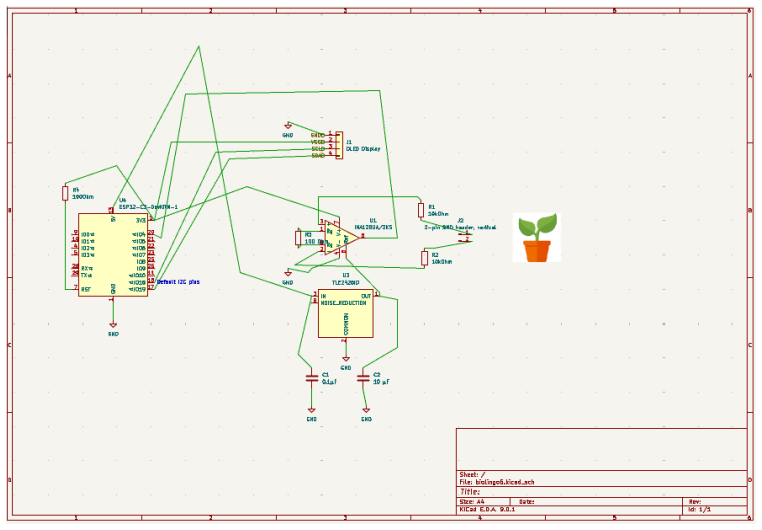
The machinery is a transfer-learning classifier on mel-spectrogram images of plant voltage. A differential amplifier (ESP32 with INA128) records leaf-to-soil voltage at 400 Hz; the signal is bandpass filtered at 0.1–50 Hz, segmented into 20-second windows, and converted into 64-bin mel-spectrograms. A ResNet50 network pretrained on a large general image corpus reuses its visual feature extractors to classify these spectrogram images into seven emotion classes. The mel-spectrogram is the pivotal object: it turns a one-dimensional voltage trace into a two-dimensional image whose time-frequency structure is what the network learns to associate with emotions.
What would settle it
A decisive control would place the participant in an electrically shielded, sound-isolated room with no sightline, no shared air, and no audio or video link to the plant while the same electrode rig records. If classification accuracy stays near 97%, emotion-specific biophysical coupling is supported; if accuracy falls to chance, the classifier was reading concurrent human activity rather than emotional state.
Extended reading notes
Core claim
The central claim is that Ocimum basilicum plants generate bioelectric potential fluctuations that differ systematically with the emotional state of a nearby human, and that these differences are large enough for a machine-learning classifier to read them. The paper reports 97% overall accuracy on a held-out set of 898 spectrogram windows, versus 30% for shuffled labels, and interprets this contrast as evidence that plant voltage patterns contain genuine information about internal human state. It generalizes this into an early-warning hypothesis: plants under strong herbivore pressure evolved the ability to detect approaching animals through bioelectric or other pre-contact cues, allowing defense mobilization before damage occurs. The reported accuracy is not uniform across the seven classes: neutral, sad, and happy dominate the test set and are classified well, while disgusted, fearful, and surprised are never correctly classified, producing a macro F1 of 0.56.
Load-bearing premise
The plant-voltage differences during emotion sessions are caused by the participant's internal emotional state rather than by correlated body movement, breathing, voice, temperature changes, or electrode drift.
Editorial extensions
If this is right
- If the 97% result replicates, plant bioelectric monitoring could offer a non-invasive, continuous window onto human emotional state that works at a distance.
- The early-warning hypothesis predicts that high-palatability species (basil, lettuce, tomato) respond most strongly while defended species (zucchini, corn, orchids) respond weakly; the paper reports exactly this species pattern.
- The same pipeline is claimed to extend to stress prediction above 90% accuracy and to sleep staging, pointing toward health-monitoring applications.
- The paper releases its full code pipeline as open-source software, allowing independent labs to test the method on new data.
- The per-class results imply that real deployments would need many more examples of rare emotions before a seven-way emotion classifier becomes trustworthy.
Reading between the lines
- Editorial inference: The reported dataset cannot rule out that the network is detecting correlated physical activity rather than felt emotion; a blinded, physically separated protocol would separate the two.
- Editorial inference: Taking the per-class results at face value, the practical signal is a coarse calm-versus-aroused or pleasant-versus-unpleasant axis, not fine-grained seven-way emotion recognition.
- Editorial inference: The evolutionary story predicts a testable gradient: strongly defended plant species should show weak or absent responses and should fail the same classifier.
- Editorial inference: The 'electromagnetic' framing is one of several possible channels; voice, breathing, or temperature cues could produce the same data, so targeted occlusion experiments (soundproofing, filtered airflow, blocked sightlines) could identify the actual mechanism.
Editorial analysis
A structured set of objections, weighed in public.
Referee Report
Summary. The paper reports a five-year research program claiming that plants generate bioelectric signals encoding human proximity, identity, movement, voice, stress, and emotion. The central new result is a ResNet50 classifier applied to mel-spectrograms of basil voltage recordings that allegedly achieves 97% accuracy in distinguishing seven human emotional states, with a shuffled-label control reported at 30% accuracy. The authors interpret these results as evidence for an evolved anti-herbivory early warning system and propose applications in agriculture, healthcare, and human-plant interaction. The methods describe an ESP32/INA128 sensor, 20-second spectrogram windows, and transfer learning with ResNet50, with code and data links provided.
Significance. If the 97% emotion-classification result were valid and causally attributable to the participant's internal emotional state, it would be a remarkable finding with implications for plant sensory biology and human-plant interaction. The paper deserves credit for releasing open-source code, for documenting a multi-year research program, and for attempting machine-learning-based analysis of plant bioelectric signals. However, as presented, the central claim is not supported: the confusion matrix shows that three of seven emotion classes are never predicted, macro F1 is 0.56, the shuffled-label control is not a valid chance baseline, and the experimental design does not exclude the most salient confound of concurrent human activity. The significance of the claimed phenomenon is therefore not established by this manuscript.
major comments (4)
- [§4.1, Table 1] The headline 97% accuracy does not represent seven-way emotion classification. In Table 1, Disgusted, Fearful, and Surprised all have precision, recall, and F1 of 0.00, and the macro F1 is 0.56. The two majority classes, Neutral (462) and Sad (261), account for 723 of 898 test samples, so a trivial classifier that always predicts these two classes would achieve 80.5% accuracy. The 97% figure is therefore dominated by majority classes, and the abstract's claim of 'classifying human emotional states' is misleading without reporting per-class metrics and a majority-class baseline.
- [§3.1, §4.4] The experimental design does not control for the most plausible confound: the participant and the plant are in the same room during emotion induction, and the electrode chain is sensitive to low-frequency electrical activity in the 0.1-50 Hz band. No Faraday cage, physical separation, audio masking, or blinded electrode setup is reported for this study; the artifact controls cited in §4.4 are attributed to 'our previous artifact elimination work' and no data are shown here. Under these conditions, the classifier may be detecting speech, facial movement, breathing, body shifts, or electrode drift correlated with the emotion-induction procedure rather than with the participant's internal emotional state. This is a load-bearing internal-validity gap, not a presentation issue.
- [§4.1, Table 2] The shuffled-label control is not a valid null baseline as interpreted. With the reported class frequencies, random guessing according to empirical priors gives an expected accuracy of about 36.5%, and always predicting the majority class gives 51.4%. The shuffled model's 30% accuracy is below both, indicating that the shuffled training run did not implement the same decision rule as the valid model. The contrast '97% versus 30%' therefore does not establish that plant voltage spectrograms contain emotion information; a proper permutation control using the identical pipeline and decision rule is required.
- [§4.4, §6.1] The manuscript asserts 'geographic replication confirmed in laboratories across Europe and North America,' 'seasonal consistency,' and 'rigorous artifact elimination' but provides no data, protocols, or effect sizes for these claims in this paper. Since the Discussion and Conclusions rely on these validations, the unsupported claims cannot be accepted as evidence. In addition, the Limitations section (6.1) acknowledges that the mechanism is unknown but does not acknowledge the confound-control or class-imbalance problems that directly bear on the main claim, making the limitations statement incomplete.
minor comments (6)
- [§3.1] The Methods do not report the number of participants, number of sessions, demographic information, or emotion-induction procedure details; these are needed for reproducibility and for assessing the generalizability of the classifier.
- [§3.3] The 80/20 train/test split is described as stratified, but it is not stated whether the split was performed at the level of individual windows, sessions, or participants. Because segmentation uses 20-second windows with 10-second overlap, a window-level split could leak information from the same session into both training and test sets; this should be clarified.
- [§4.3] The text states that the primary discriminative signal is in the 0.5-10 Hz range, while the preprocessing section reports a 0.1-50 Hz bandpass filter; the paper should clarify whether classification used the full filtered band or a narrower sub-band.
- [Figure 3] The caption states that the system 'achieved 97% confidence in detecting happiness,' which is a face-api.js confidence score for facial expression, not the plant classifier's confidence; the wording should distinguish these two very different quantities.
- [§5.2, Reference [14]] The Codariocalyx motorius acoustic-sensing study is cited as a supporting evidence source, but it is a Master's thesis; the text should describe its methods and controls rather than relying solely on the citation.
- [Throughout] There are several typographical issues, including 'Phase2from2020-2022' in §1.1, 'T raining Protocol' and 'V alidation Strategy' in §3.3, and inconsistent capitalization of 'Codariocalyx motorius' versus 'Codariocalyx Motorius' in §5.2 and reference [14].
Circularity Check
The emotion-classification result is an empirical supervised-learning result with independent code, but its interpretation as genuine plant bioelectric signaling rests on a load-bearing self-citation for Faraday-cage artifact control.
-
self citation load bearing
[Section 4.4 (Environmental and Methodological Validation)]
"Building on our previous artifact elimination work, artifact control results showed effects persisting in Faraday cage conditions and responses maintained on isolation platforms. Temperature and humidity variations did not explain signal patterns, and randomized timing eliminated circadian artifacts."
The paper's central conclusion that the 97% emotion-classification accuracy reflects genuine plant bioelectric early-warning signals, rather than the classifier detecting correlated human activity during emotion induction, depends on ruling out such artifacts. Section 4.4 rules them out by asserting 'artifact control results showed effects persisting in Faraday cage conditions,' but the only justification is 'our previous artifact elimination work'—a self-citation to the authors' prior studies. No Faraday-cage data, protocol, or statistics for the present emotion sessions are shown.
full rationale
The paper's primary new result—97% accuracy in a ResNet50 classifier on held-out plant-voltage spectrograms—is an empirical machine-learning result with open-source code and data availability, and no equation in the paper defines that accuracy in terms of the inputs in a way that would make it circular. The 97% figure is also a reported test-set performance, not a fitted parameter renamed as a prediction. However, the paper's interpretation that this accuracy evidences 'genuine biological phenomena' rather than recording artifacts depends on §4.4, which cites only the authors' previous artifact-elimination work for Faraday-cage and isolation-platform controls; that control evidence is not presented in this paper. This is a load-bearing self-citation, though the central classification result still has independent content. I do not treat the Table 1/Table 2 discrepancies (three emotions never predicted; shuffled-label accuracy below the majority-class baseline) as circularity; those are statistical-validity and reporting concerns, not instances where the derivation reduces to its own inputs by construction.
Assumptions & free parameters
free parameters (2)
- ResNet50 model weights =
trained on 80% of the plant voltage data
- Spectrogram hyperparameters (n_fft=256, hop length=64, n_mels=64) =
hand-chosen
assumptions (3)
- domain assumption The plant electrode setup measures genuine bioelectric signals rather than electrochemical artifacts from the electrodes.
- domain assumption Emotional induction through videos reliably produces the intended discrete emotions in all participants.
- ad hoc to paper The shuffled-label control is a valid baseline for testing information content.
Cite this review
Pith. "Pith review of Plant Bioelectric Early Warning Systems: A Five-Year Investigation into Human-Plant Electromagnetic Communication." pith.science (2026). https://pith.science/paper/UG2HOG22
@misc{pith2026250604132,
  author       = {Pith},
  title        = {Pith review of: Plant Bioelectric Early Warning Systems: A Five-Year Investigation into Human-Plant Electromagnetic Communication},
  year         = {2026},
  howpublished = {\url{https://pith.science/paper/UG2HOG22}},
  note         = {Machine review of arXiv:2506.04132}
}
read the original abstract
We present a comprehensive investigation into plant bioelectric responses to human presence and emotional states, building on five years of systematic research. Using custom-built plant sensors and machine learning classification, we demonstrate that plants generate distinct bioelectric signals correlating with human proximity, emotional states, and physiological conditions. A deep learning model based on ResNet50 architecture achieved 97% accuracy in classifying human emotional states through plant voltage spectrograms, while control models with shuffled labels achieved only 30% accuracy. This study synthesizes findings from multiple experiments spanning 2020-2025, including individual recognition (66% accuracy), eurythmic gesture detection, stress prediction, and responses to human voice and movement. We propose that these phenomena represent evolved anti-herbivory early warning systems, where plants detect approaching animals through bioelectric field changes before physical contact. Our results challenge conventional understanding of plant sensory capabilities and suggest practical applications in agriculture, healthcare, and human-plant interaction research.
Figures


Reference graph
Works this paper leans on
-
[11]
A., Ciechanowski, L., Dupuis, A., Vazquez, I., & Gloor, P
Kruse, J. A., Ciechanowski, L., Dupuis, A., Vazquez, I., & Gloor, P. A. (2024). Leveraging the sensitivity of plants with deep learning to recognize human emotions.Sensors, 24(6), 1917
work page 2024
-
[1]
Bhave, A., Renold, F. K., & Gloor, P. A. (2024). Using plants as biosensors to measure the emotions of jazz musicians. Handbook of Social Computing , 173-188
work page 2024
-
[2]
Burdon-Sanderson, J. (1873). Note on the electrical phenomena which accompany irritation of the leaf of Dionaea muscipula. Proceedings of the Royal Society of London , 21, 495-496. 9
-
[3]
De La Cal, L., Gloor, P. A., & Weinbeer, M. (2023). Can plants sense humans? Using plants as biosensors to detect the presence of eurythmic gestures.Sensors, 23(15), 6971
work page 2023
-
[4]
Duerr, S., van Delden, J., Oezkaya, B., & Gloor, P. A. (2020). Eurythmic dancing with plants– measuring plant response to human body movement in an anthroposophic environment.arXiv preprint arXiv:2012.12978
work page Pith review arXiv 2020
-
[5]
Fromm, J., & Lautner, S. (2007). Electrical signals and their physiological significance in plants.Plant, Cell & Environment , 30(3), 249-257
work page 2007
-
[6]
Fuchs, P., von der Grün, R., Maslatón, C. I., & Gloor, P. A. (2024). Plants as biosensors: tomato plants’ reaction to human voices.Handbook of Social Computing , 294-309
work page 2024
-
[7]
Gagliano, M., Renton, M., Depczynski, M., & Mancuso, S. (2014). Experience teaches plants to learn faster and forget slower in environments where it matters.Oecologia, 175(1), 63-72
work page 2014
Show all 16 references
-
[8]
Gallé, A., Lautner, S., Flexas, J., & Fromm, J. (2015). Environmental stimuli and physiological re- sponses: the current state of the art in plant electrophysiology. Journal of Plant Research , 128(2), 193-209
2015
-
[9]
Geddes, L. A. (1972).Electrodes and the measurement of bioelectric events . Wiley-Interscience
1972
-
[10]
F., Weinbeer, M., & Gloor, P
Gil, A. F., Weinbeer, M., & Gloor, P. A. (2024). Can plants perceive human gestures? Using AI to track eurythmic human–plant interaction.Biomimetics, 9(5), 290
2024
-
[12]
R., Bikson, M., & Jefferys, J
Merrill, D. R., Bikson, M., & Jefferys, J. G. (2005). Electrical stimulation of excitable tissue: design of efficacious and safe protocols.Journal of Neuroscience Methods , 141(2), 171-198
2005
-
[13]
Oezkaya, B., & Gloor, P. A. (2020). Recognizing individuals and their emotions using plants as bio- sensors through electro-static discharge.arXiv preprint arXiv:2005.04591
2020 arXiv
-
[14]
Peter, P. K. (2021). Do Plants sense music? An evaluation of the sensorial abilities of theCodariocalyx Motorius. Masters thesis, Universität zu Köln. Available at: https://kups.ub.uni-koeln.de/53756/
2021
-
[15]
O., & Gloor, P
Smolin, D., Çelik, D. O., & Gloor, P. A. (2025). Predicting human stress and exam performance through variations of the electrical potentials of a basil plant.COINs2025 Proceedings
2025
-
[16]
Tabuenca, B., Uche-Soria, M., Greller, W., Hernández-Leo, D., Balcells-Falgueras, P., Gloor, P., & Gar- bajosa, J. (2024). Greening smart learning environments with Artificial Intelligence of Things.Internet of Things, 25, 101051. 10
2024
Reviewed August 7, 2026 · model on record in the stance chip above.
Discussion (0). Sign in to comment.