REVIEW 4 major objections 5 minor 1 cited by
IQFM A Wireless Foundational Model for I/Q Streams in AI-Native 6G
T0 review · 4 major / 5 minor · reviewed 2026-08-07 · deepseek-v4-flash
Pith's one-line read A single encoder pre-trained without labels on raw multi-antenna IQ samples can classify modulation and angle of arrival with one labeled example per class, then adapt to unseen tasks with low-rank updates.
desk verdict Task-aware augmentation analysis is solid, but the headline few-shot results come from task-specific encoders, not the joint IQFM model; the OOD evidence for a single reusable encoder is much more modest. read the letter →
The pith
A machine-rendered reading of the paper's core claim, the machinery that carries it, and where it could break.
The reading
What carries the argument
The central mechanism is a contrastive self-supervised learning pipeline built on the InfoNCE loss, where each input tensor $X \in \mathbb{R}^{M \times 2 \times T}$ is turned into two augmented views that are encoded and pulled together while other samples are pushed apart. The load-bearing design is the augmentation taxonomy: cyclic time rolling, which shifts the signal along the time axis and, by the Fourier shift theorem, preserves the magnitude spectrum while leaving inter-antenna phase differences intact; channel masking, which zeroes time samples across all antennas and keeps spatial phase relationships at unmasked times; and channel dropping, which zeroes whole antennas and retains modulation structure inside each active channel but destroys the phase differences needed for angle estimation. A joint pre-training run samples from all three, so the encoder learns temporal and spatial structure simultaneously. This analysis of which augmentation preserves which signal feature is what lets the paper predict, before fine-tuning, which tasks each encoder will support.
What would settle it
Pre-train the exact same contrastive pipeline on random Gaussian noise tensors of shape (4,2,256) with the same augmentations and the same LoRA fine-tuning budgets, then evaluate on POWDER, RML2016, and DeepBeam; if the noise-pretrained encoder matches the reported accuracies, the IQ signal content is not what drives the transfer.
Extended reading notes
Core claim
On its own terms, the paper claims that task-aware contrastive self-supervised learning on unlabeled MIMO IQ tensors yields a reusable encoder whose representations separate both modulation and angle-of-arrival information at the same time. With only one labeled sample per class, the task-specific pre-trained encoder reaches 99.67% modulation accuracy and 65.45% AoA accuracy on the testbed, while a fully supervised baseline reaches 14.27% and 0.45%; with ten labels per class, the joint encoder reaches 95.71% and 89.35%. The same frozen encoder, adapted with low-rank updates (LoRA) of roughly 84K parameters, reaches 94.15% on beam prediction, 50.00% on RML2016 modulation classification, and 96.05% on RF fingerprinting at 500 samples per class, matching or slightly exceeding fully supervised training. The paper interprets this as evidence that raw-IQ foundation models are viable building blocks for AI-native 6G systems.
Load-bearing premise
The claim that the model generalizes beyond its pre-training distribution rests on the assumption that the invariances learned on a 5.88 GHz four-antenna testbed still help for single-antenna 2.4 GHz WiFi signals, 128-sample low-SNR modulation records, and 58 GHz beamformed data after missing channels are padded with zeros.
Editorial extensions
If this is right
- On the testbed distribution, one labeled sample per class gives 99.67% modulation accuracy and 65.45% AoA accuracy, versus 14.27% and 0.45% for the supervised baseline.
- With ten labeled samples per class, the joint-task encoder reaches 95.71% modulation and 89.35% AoA, outperforming the fully supervised baseline by over 2.3x and 1.3x.
- LoRA adaptation of the frozen encoder at 500 samples per class reaches 96.05% RF fingerprinting, 94.15% beam prediction, and 50.00% RML2016 modulation accuracy, close to or above supervised training with far fewer updated parameters.
- Ablation of augmentations shows cyclic time rolling is the core transformation; removing it leaves AoA accuracy around 1% and modulation accuracy around 22%, while adding the task-specific channel operations recovers the reported performance.
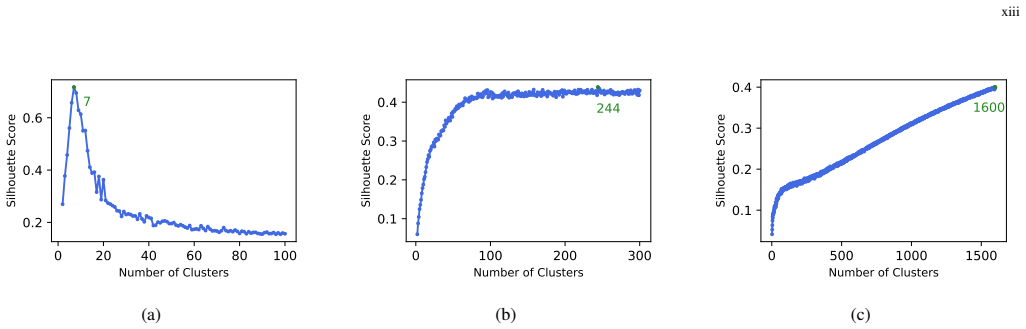
- Silhouette analysis indicates the joint pre-training organizes representations hierarchically: about 7 modulation clusters, about 244 AoA clusters, and about 1600 combined clusters, matching the 7x225 expected class combinations.
Reading between the lines
- If the transferability claim extends to other deployments, a single encoder pretrained on one testbed could be reused across bands and radio hardware without collecting task labels per site; that is the broader 6G payoff the paper points toward.
- The augmentation taxonomy (time rolling as core, masking for spatial tasks, dropping for temporal tasks) is a testable recipe for other signal formats, such as OTFS waveforms or dual-polarized arrays, where the same mathematical analysis of phase and spectral preservation could be repeated.
- A natural follow-up is to pre-train on a deliberately multi-band, mixed-array dataset; if the zero-padding of missing channels then becomes unnecessary, the transfer limitation the paper currently accepts would be removed.
- The near-supervised OOD results obtained with roughly 84K trainable LoRA parameters suggest that frozen encoders plus small adapters, rather than full fine-tuning, are the efficient operating regime; quantizing LoRA or lowering its rank further would test how far that advantage extends.
Editorial analysis
A structured set of objections, weighed in public.
Referee Report
Summary. The paper introduces IQFM, a contrastive self-supervised learning framework for raw MIMO IQ data, with a task-aware augmentation strategy (cyclic time rolling, channel masking, channel dropping) designed to learn temporal and spatial features. The encoder is a lightweight ShuffleNetV2 (0.5x) backbone. In-distribution experiments on a custom 5.88 GHz over-the-air testbed evaluate one-shot/few-shot modulation and AoA classification; out-of-distribution experiments use LoRA and linear probing on POWDER RF fingerprinting, RML2016.10a modulation, and DeepBeam beam prediction. The paper claims to be the first raw-IQ wireless foundational model.
Significance. The mathematical analysis in Section III-D of how cyclic time shifting preserves inter-antenna phase and magnitude spectra, and how channel masking/dropping affect spatial and temporal features, is careful and correct. The paper also contributes a large custom over-the-air multi-antenna dataset. If the joint encoder genuinely generalized across the evaluated tasks, this would be a valuable step toward reusable raw-IQ representations for 6G. However, the headline few-shot results are obtained from task-specific encoders, not the single joint encoder, and the out-of-distribution margins are small and possibly confounded by per-dataset hyperparameter tuning.
major comments (4)
- [Abstract, Table III, Section V-C] The abstract states that 'the lightweight encoder, pre-trained via SSL on over-the-air multi-antenna IQ data' achieves up to 99.67% modulation and 65.45% AoA accuracy with one labeled sample per class, but these numbers are achieved by SSL-Mod and SSL-AoA, two separate encoders pre-trained with task-specific augmentation sets. The joint-task IQFM encoder reaches only 60.48% modulation and 32.42% AoA at one shot (Table III). Since the foundational-model claim rests on a single reusable encoder, the abstract misattributes the task-specific results and should be corrected.
- [Section V-D, Figure 9] The out-of-distribution results that do use the joint IQFM encoder are far less decisive. At 500 samples per class, RF fingerprinting is 96.05% versus 96.64% for supervised (below baseline), RML2016 is 50.0% versus 49.3% (0.7-point margin), and only DeepBeam shows a clear margin (94.15% versus 89.53%). These differences come from what appears to be a single run without error bars or significance tests, so the claim of strong OOD generalization is not yet supported.
- [Section IV-E, Section V-D] Zero-padding missing channels to feed single-channel (1,2,T) inputs to a four-antenna encoder is introduced as a compatibility step without justification. No analysis is provided for why the invariances learned on the 5.88 GHz four-antenna testbed should transfer to 2.4 GHz WiFi, 128-sample low-SNR RML2016, or 58 GHz multi-RF-chain DeepBeam signals. This is a load-bearing assumption for the foundational-model claim.
- [Section V-D, Table II] LoRA scaling factors are tuned per dataset (alpha = 35 for RF fingerprinting, 10 for DeepBeam, 60/50 for RML16) and augmentation probabilities and temperature are chosen separately for each SSL encoder, with no validation protocol or held-out split described. Because these values are selected with knowledge of the target tasks, the reported few-shot and OOD margins may partly reflect test-set selection rather than robust generalization.
minor comments (5)
- [Equation (7)] The denominator appears to have a typo; the sum over negatives should be written explicitly, and the outer sum lacks limits.
- [Introduction, last paragraph] The text says 'Finally, Section V concludes the paper', but the conclusion appears in Section VI; the section reference is inconsistent with the actual structure.
- [Abstract] The phrase 'IQFM supporting diverse tasks' should be 'IQFM supports diverse tasks'.
- [Algorithm 1] The input parameters α, β, γ are used as augmentation probabilities, but their definitions and the per-task values from Table II are not linked in the pseudo-code.
- [Section IV-E] The text '5.88GHz 4' should read '5.88 GHz'; also, 'RML16' is used inconsistently for RML2016 in Section V-D.
Circularity Check
No significant circularity: the SSL pretraining, downstream probing, and OOD adaptation are evaluated on held-out data, and the self-citations are not load-bearing.
full rationale
No circular step could be identified by the paper's own equations or citations. The pretraining pipeline is a standard contrastive SSL procedure (SimCLR/InfoNCE) over unlabeled raw MIMO IQ samples, and all reported accuracies are obtained by training linear probes or LoRA adapters on labeled training subsets and evaluating on a separate test split (the testbed dataset uses a stratified 70/30 split). The task-specific augmentation probabilities in Table II and the LoRA scaling factors are hyperparameters chosen per task or per dataset; although the paper does not describe a validation protocol, these values are not fitted to the test labels and the reported accuracies are not defined in terms of them, so any concern belongs to hyperparameter selection or test-set reuse, not to circular derivation. The self-citations (Refs. [27], [28], [29]) are confined to related-work discussion and are not used to justify the central claims or to forbid alternative methods. The abstract's headline one-shot numbers come from the task-specific SSL encoders rather than the joint IQFM encoder, but the paper explicitly discloses this distinction in Section V-C (e.g., task-specific SSL reaches 65.45% AoA versus 32.42% for the joint model), making this a presentation/attribution weakness rather than a circularity. Overall, the derivation chain is self-contained with respect to its empirical evaluations.
Assumptions & free parameters
free parameters (4)
- Contrastive temperature tau =
tau = 1.5 for SSL-Mod and SSL-AoA; tau = 0.12 for SSL-Joint
- LoRA scaling factors alpha =
alpha = 35 for RF fingerprinting, alpha = 10 for DeepBeam, alpha = 60 for RML16 (reduced to 50 at 200 and 500 samples…
- Augmentation probabilities and strengths =
CD prob 100/0/45, CM length 0/200/40 and prob 0/95/97, TR length 40/120/20 and prob 80/95/95 across…
- Amplitude scaling range and Gaussian noise std =
Uniform [-0.1, 0.1] for amplitude scaling; std 0.09 for Gaussian noise
assumptions (4)
- domain assumption Narrowband, far-field ULA signal model with complex gain alpha and phase term exp(j 2*pi/lambda * p_m sin(theta))
- standard math SimCLR contrastive SSL assumption that two augmented views of a sample form a positive pair and all other samples in the batch are negatives
- domain assumption The invariances learned on the 5.88 GHz testbed transfer to different frequencies, antenna counts, and signal types
- ad hoc to paper Zero-padding missing channels is a valid way to feed single-channel input to a 4-channel encoder
Cite this review
Pith. "Pith review of IQFM A Wireless Foundational Model for I/Q Streams in AI-Native 6G." pith.science (2026). https://pith.science/paper/GPLSYTP2
@misc{pith2026250606718,
  author       = {Pith},
  title        = {Pith review of: IQFM A Wireless Foundational Model for I/Q Streams in AI-Native 6G},
  year         = {2026},
  howpublished = {\url{https://pith.science/paper/GPLSYTP2}},
  note         = {Machine review of arXiv:2506.06718}
}
read the original abstract
Foundational models have shown remarkable potential in natural language processing and computer vision, yet remain in their infancy in wireless communications. While a few efforts have explored image-based modalities such as channel state information (CSI) and frequency spectrograms, foundational models that operate directly on raw IQ data remain largely unexplored. This paper presents, IQFM, the first I/Q signal foundational model for wireless communications. IQFM supporting diverse tasks: modulation classification, angle-of-arrival (AoA), beam prediction, and RF fingerprinting, without heavy preprocessing or handcrafted features. We also introduce a task-aware augmentation strategy that categorizes transformations into core augmentations, such as cyclic time shifting, and task-specific augmentations. This strategy forms the basis for structured, task-dependent representation learning within a contrastive self-supervised learning (SSL) framework. Using this strategy, the lightweight encoder, pre-trained via SSL on over-the-air multi-antenna IQ data, achieves up to 99.67% and 65.45% accuracy on modulation and AoA classification, respectively, using only one labeled sample per class, outperforming supervised baselines by up to 7x and 145x. The model also generalizes to out-of-distribution tasks; when adapted to new tasks using only 500 samples per class and minimal parameter updates via LoRA, the same frozen encoder achieves 94.15% on beam prediction (vs. 89.53% supervised), 50.00% on RML2016a modulation classification (vs. 49.30%), and 96.05% on RF fingerprinting (vs. 96.64%). These results demonstrate the potential of raw IQ-based foundational models as efficient, reusable encoders for multi-task learning in AI-native 6G systems.
Figures


Figures from the paper (7 more)


Forward citations
Cited by 1 Pith paper
-
Towards channel foundation models (CFMs): Motivations, methodologies and opportunities
A survey and position paper proposing channel foundation models, with experiments on two pretrained CSI models showing gains over a vanilla ViT baseline.
Reference graph
Works this paper leans on
-
[27]
Self-supervised radio representation learning: Can we learn multiple tasks?
O. Kanu, A. Eshaghbeigi, and H. Abou-Zeid, “Self-supervised radio representation learning: Can we learn multiple tasks?” in Proceedings of the IEEE International Conference on Communications (ICC) , 2025
work page 2025
-
[1]
Robust automatic modulation classification in low signal to noise ratio,
T. T. An and B. M. Lee, “Robust automatic modulation classification in low signal to noise ratio,” IEEE Access, vol. 11, pp. 7860–7872, 2023
work page 2023
-
[2]
Deep learning-based channel estimation,
M. Soltani, V . Pourahmadi, A. Mirzaei, and H. Sheikhzadeh, “Deep learning-based channel estimation,” IEEE Communications Letters , vol. 23, no. 4, pp. 652–655, 2019
2019
-
[3]
Z.-M. Liu, C. Zhang, and P. S. Yu, “Direction-of-arrival estimation based on deep neural networks with robustness to array imperfections,” IEEE Transactions on Antennas and Propagation , vol. 66, no. 12, pp. 7315– 7327, 2018
work page 2018
-
[4]
Enhancing adaptive beamforming in 3-D space through self-improving neural network techniques,
I. Mallioras, T. V . Yioultsis, N. V . Kantartzis, P. I. Lazaridis, and Z. D. Zaharis, “Enhancing adaptive beamforming in 3-D space through self-improving neural network techniques,” IEEE Open Journal of the Communications Society, vol. 5, pp. 1340–1357, 2024
work page 2024
-
[5]
Advances in machine learning-driven cognitive radio for wireless networks: A survey,
N. A. Khalek, D. H. Tashman, and W. Hamouda, “Advances in machine learning-driven cognitive radio for wireless networks: A survey,” IEEE Communications Surveys and Tutorials , vol. 26, no. 2, pp. 1201–1237, 2024
work page 2024
-
[6]
Artificial general intelligence (AGI)-native wireless systems: A journey beyond 6G,
W. Saad, O. Hashash, C. K. Thomas, C. Chaccour, M. Debbah, N. Man- dayam, and Z. Han, “Artificial general intelligence (AGI)-native wireless systems: A journey beyond 6G,”arXiv preprint arXiv:2405.02336, 2024. xiv
arXiv 2024
-
[7]
Deep learning for B5G open radio access network: Evolution, survey, case studies, and challenges,
B. Brik, K. Boutiba, and A. Ksentini, “Deep learning for B5G open radio access network: Evolution, survey, case studies, and challenges,” IEEE Open Journal of the Communications Society, vol. 3, pp. 228–250, 2022
work page 2022
Show all 35 references
-
[8]
Overcoming data limitations: A few-shot specific emitter identification method using self-supervised learning and adversarial augmentation,
C. Liu, X. Fu, Y . Wang, L. Guo, Y . Liu, Y . Lin, H. Zhao, and G. Gui, “Overcoming data limitations: A few-shot specific emitter identification method using self-supervised learning and adversarial augmentation,” IEEE Transactions on Information Forensics and Security , vol. ...
2024
-
[9]
Self-supervised RF signal representation learning for NextG signal clas- sification with deep learning,
K. Davaslioglu, S. Boztas ¸, M. C. Ertem, Y . E. Sagduyu, and E. Ayanoglu, “Self-supervised RF signal representation learning for NextG signal clas- sification with deep learning,” IEEE Wireless Communications Letters , vol. 12, no. 1, pp. 65–69, 2022
2022
-
[10]
A transformer-based contrastive semi-supervised learning framework for automatic modula- tion recognition,
W. Kong, X. Jiao, Y . Xu, B. Zhang, and Q. Yang, “A transformer-based contrastive semi-supervised learning framework for automatic modula- tion recognition,” IEEE Transactions on Cognitive Communications and Networking, vol. 9, no. 4, pp. 950–962, 2023
2023
-
[11]
Exploring self-supervised learning for radio signal recognition,
X. Yun and X. Zhou, “Exploring self-supervised learning for radio signal recognition,” in 2021 IEEE 23rd Int Conf on High Performance Comput- ing & Communications; 7th Int Conf on Data Science & Systems; 19th Int Conf on Smart City; 7th Int Conf on Dependability in Sensor, Clo...
2021
-
[12]
Robust mmWave beamforming by self- supervised hybrid deep learning,
F. Zhu, B. Wang, Z. Yang, C. Huang, Z. Zhang, G. C. Alexandropoulos, C. Yuen, and M. Debbah, “Robust mmWave beamforming by self- supervised hybrid deep learning,” arXiv preprint arXiv, vol. 2303, 2023
2023
-
[13]
Few-shot specific emitter identification using asymmetric masked auto-encoder,
Z. Yao, X. Fu, L. Guo, Y . Wang, Y . Lin, S. Shi, and G. Gui, “Few-shot specific emitter identification using asymmetric masked auto-encoder,” IEEE Communications Letters , vol. 27, no. 10, pp. 2657–2661, 2023
2023
-
[14]
An image is worth 16x16 words: Transformers for image recognition at scale,
A. Dosovitskiy, L. Beyer, A. Kolesnikov, D. Weissenborn, X. Zhai, T. Unterthiner, M. Dehghani, M. Minderer, G. Heigold, S. Gelly et al., “An image is worth 16x16 words: Transformers for image recognition at scale,” arXiv preprint arXiv:2010.11929 , 2020
2010 arXiv
-
[15]
BERT: Pre-training of deep bidirectional transformers for language understanding,
J. Devlin, M.-W. Chang, K. Lee, and K. Toutanova, “BERT: Pre-training of deep bidirectional transformers for language understanding,” in Pro- ceedings of the 2019 conference of the North American chapter of the association for computational linguistics: human language technolo...
2019
-
[16]
WirelessGPT: A generative pre-trained multi-task learning framework for wireless communication,
T. Yang, P. Zhang, M. Zheng, Y . Shi, L. Jing, J. Huang, and N. Li, “WirelessGPT: A generative pre-trained multi-task learning framework for wireless communication,” arXiv preprint arXiv:2502.06877 , 2025
2025 arXiv
-
[17]
6G WavesFM: A foundation model for sensing, communication, and localization,
A. Aboulfotouh, E. Mohammed, and H. Abou-Zeid, “6G WavesFM: A foundation model for sensing, communication, and localization,” arXiv preprint arXiv:2504.14100, 2025
2025 arXiv
-
[18]
A MIMO wireless channel foundation model via CIR-CSI consistency,
J. Jiang, W. Yu, Y . Li, Y . Gao, and S. Xu, “A MIMO wireless channel foundation model via CIR-CSI consistency,” arXiv preprint arXiv:2502.11965, 2025
2025 arXiv
-
[19]
Self-contrastive learning based semi-supervised radio modulation classification,
D. Liu, P. Wang, T. Wang, and T. Abdelzaher, “Self-contrastive learning based semi-supervised radio modulation classification,” in MILCOM 2021-2021 IEEE Military Communications Conference (MILCOM) . IEEE, 2021, pp. 777–782
2021
-
[20]
MCLHN: Toward automatic modulation classification via masked contrastive learning with hard negatives,
C. Xiao, S. Yang, Z. Feng, and L. Jiao, “MCLHN: Toward automatic modulation classification via masked contrastive learning with hard negatives,” IEEE Transactions on Wireless Communications , 2024
2024
-
[21]
Radar signal modulation recognition with self-supervised contrastive learning,
S. Li, X. Du, G. Cui, X. Chen, J. Zheng, and X. Wan, “Radar signal modulation recognition with self-supervised contrastive learning,” IEEE Geoscience and Remote Sensing Letters , 2024
2024
-
[22]
GAF-MAE: A self- supervised automatic modulation classification method based on gramian angular field and masked autoencoder,
Y . Shi, H. Xu, Y . Zhang, Z. Qi, and D. Wang, “GAF-MAE: A self- supervised automatic modulation classification method based on gramian angular field and masked autoencoder,” IEEE Transactions on Cognitive Communications and Networking , vol. 10, no. 1, pp. 94–106, 2023
2023
-
[23]
Lever- aging self-supervised learning for MIMO-OFDM channel representation and generation,
Z. Liu, J. Chen, Y . Xu, T. Ma, J. Liu, H. Zhou, and D. Niyato, “Lever- aging self-supervised learning for MIMO-OFDM channel representation and generation,” arXiv preprint arXiv:2407.07702 , 2024
2024 arXiv
-
[24]
Self-supervised contrastive learning for joint active and passive beamforming in RIS-assisted MU-MIMO systems,
Z. He, F. H ´eliot, and Y . Ma, “Self-supervised contrastive learning for joint active and passive beamforming in RIS-assisted MU-MIMO systems,” IEEE Transactions on Machine Learning in Communications and Networking, 2024
2024
-
[25]
Self-supervised learning for enhancing angular resolution in automotive MIMO radars,
I. Roldan, F. Fioranelli, and A. Yarovoy, “Self-supervised learning for enhancing angular resolution in automotive MIMO radars,” IEEE Transactions on Vehicular Technology, vol. 72, no. 9, pp. 11 505–11 514, 2023
2023
-
[26]
Multi-task learning approach for mod- ulation and wireless signal classification for 5G and beyond: Edge deployment via model compression,
A. Jagannath and J. Jagannath, “Multi-task learning approach for mod- ulation and wireless signal classification for 5G and beyond: Edge deployment via model compression,” Physical Communication, vol. 54, p. 101793, 2022
2022
-
[28]
Building 6G radio foundation models with transformer architectures,
A. Aboulfotouh, A. Eshaghbeigi, and H. Abou-Zeid, “Building 6G radio foundation models with transformer architectures,” arXiv preprint arXiv:2411.09996, 2024
2024 arXiv
-
[29]
Self-supervised radio pre-training: Toward foundational models for spectrogram learning,
A. Aboulfotouh, A. Eshaghbeigi, D. Karslidis, and H. Abou-Zeid, “Self-supervised radio pre-training: Toward foundational models for spectrogram learning,” in GLOBECOM 2024 - 2024 IEEE Global Communications Conference, 2024, pp. 1269–1274
2024
-
[30]
A simple framework for contrastive learning of visual representations,
T. Chen, S. Kornblith, M. Norouzi, and G. Hinton, “A simple framework for contrastive learning of visual representations,” in International conference on machine learning . PmLR, 2020, pp. 1597–1607
2020
-
[31]
Momentum contrast for unsupervised visual representation learning,
K. He, H. Fan, Y . Wu, S. Xie, and R. Girshick, “Momentum contrast for unsupervised visual representation learning,” in Proceedings of the IEEE/CVF conference on computer vision and pattern recognition, 2020, pp. 9729–9738
2020
-
[32]
Bootstrap your own latent a new approach to self-supervised learning,
J.-B. Grill, F. Strub, F. Altch ´e, C. Tallec, P. Richemond, E. Buchatskaya, C. Doersch, B. Avila Pires, Z. Guo, M. Gheshlaghi Azar et al. , “Bootstrap your own latent a new approach to self-supervised learning,” Advances in neural information processing systems, vol. 33, pp. ...
2020
-
[33]
An introduction to deep learning for the physical layer,
T. O’shea and J. Hoydis, “An introduction to deep learning for the physical layer,” IEEE Transactions on Cognitive Communications and Networking, vol. 3, no. 4, pp. 563–575, 2017
2017
-
[34]
Trust in 5G open RANs through machine learning: RF fingerprinting on the POWDER PAWR platform,
G. Reus-Muns, D. Jaisinghani, K. Sankhe, and K. R. Chowdhury, “Trust in 5G open RANs through machine learning: RF fingerprinting on the POWDER PAWR platform,” in GLOBECOM 2020-2020 IEEE Global Communications Conference. IEEE, 2020, pp. 1–6
2020
-
[35]
DeepBeam: Deep waveform learning for coordination-free beam management in mmWave networks,
M. Polese, F. Restuccia, and T. Melodia, “DeepBeam: Deep waveform learning for coordination-free beam management in mmWave networks,” in Proceedings of the Twenty-second International Symposium on The- ory, Algorithmic Foundations, and Protocol Design for Mobile Networks and M...
2021
Reviewed August 7, 2026 · model on record in the stance chip above.
Discussion (0). Sign in to comment.