REVIEW 4 major objections 6 minor 64 references
Realistic Urban Traffic Generator using Decentralized Federated Learning for the SUMO simulator
T0 review · 4 major / 6 minor · reviewed 2026-08-07 · deepseek-v4-flash
Pith's one-line read This paper claims that per-detector reinforcement-learning agents, trained in a decentralized federation, can generate realistic 24-hour traffic for SUMO and reduce mean absolute count error to 25.88 vehicles/hour, versus 69.32 for SUMO's…
desk verdict A genuinely new decentralized RL traffic generator with public code, but the headline accuracy numbers are not reproducible from the paper as written because Algorithm 1's stopping threshold cannot be satisfied on integer detector counts. read the letter →
The pith
A machine-rendered reading of the paper's core claim, the machinery that carries it, and where it could break.
The reading
What carries the argument
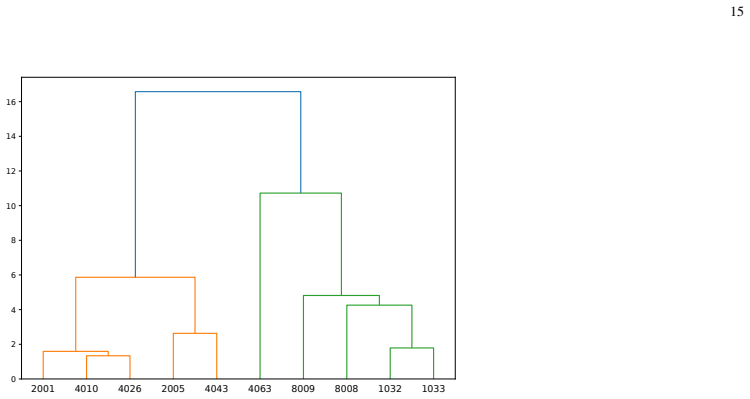
The mechanism that carries the argument is the closed loop between a PPO agent and the SUMO simulator, wrapped in a decentralized federation graph. The state is a normalized count of vehicles scheduled for injection; the action is a multiplicative adjustment factor in the range [-0.1, +0.3]; the observation is the average intensity returned by virtual induction-loop detectors after a one-hour run; and the reward is the negative absolute difference to the target, plus a small per-step penalty and a large bonus once the error drops below $10^{-3}$. To chain hours, each run also returns a 23-hour residual vector of vehicles still on the network, and the next hour's target is reduced by that residual. Decentralization is organized as an undirected graph whose vertices are detectors; after local training each node averages its PPO weights with its neighbors' weights via FedAvg, with three possible neighbor choices: zones sharing a Voronoi boundary, zones with similar traffic volume, or zones with similar standardized 24-hour shapes.
What would settle it
Take the best route file DesRUTGe produces for a Barcelona weekday and measure vehicle counts at induction-loop locations held out from training, or re-aggregate the same run at 15-minute resolution; if the error at unseen detector sites or within-hour scales is no better than routeSampler.py's, the central realism claim would be refuted.
Extended reading notes
Core claim
DesRUTGe is presented as an automatic way to go from one 24-dimensional vector of average hourly vehicle counts per detector to a SUMO route file that reproduces those counts. The discovery claim is that the accuracy of the generated traffic does not require a central coordinator: each detector's Voronoi zone trains its own PPO policy inside the SUMO loop, and after every round of local training the agents average their policy weights only with chosen neighbors, using coordinate-wise averaging. The reported result is a mean MAE of 25.88 vehicles/hour across 10 executions and 10 Barcelona detectors, compared with 69.32 for routeSampler.py, with the largest gains at high-traffic detectors, and a comparison against the prior centralized approach showing that per-zone agents follow each detector's individual profile instead of collapsing toward a city-wide average.
Load-bearing premise
The load-bearing premise is that matching the average number of vehicles per hour at ten fixed detector locations defines 'realistic traffic patterns'; if a route file can match those counts while remaining unrealistic in route distribution, off-detector congestion, or sub-hourly timing, the reported accuracy figures do not establish the realism claim.
Editorial extensions
If this is right
- A complete one-day route file for SUMO can be produced from hourly average counts at loop detectors, without origin-destination matrices or individual vehicle traces.
- Raw mobility measurements stay at the local zone: the only objects crossing the network are neural-network weights.
- Geographic neighbor sharing is the topology the paper recommends, as it converges to lower hourly error faster than volume-based or pattern-based clustering.
- The per-zone design fixes a known failure of the centralized prototype, whose city-wide average target cannot track a low-, medium-, or high-intensity detector individually.
- Because hourly targets are adjusted for residual traffic from earlier hours, vehicles that overflow an hour do not cause double-counting in the next hour's generation.
Reading between the lines
- Editorial inference: the reward loop is agnostic about what the detector counts, so the same controller could be pointed at other demand signals, such as occupancy, emissions, or floating-car speeds, if per-zone targets for those signals were available.
- Editorial inference: since realism is measured only at the ten detectors that define the targets, a natural stress test is to hold out some detectors or measure link flows elsewhere; the reported accuracy does not by itself guarantee that off-detector congestion is realistic.
- Editorial inference: geographic adjacency won in this ten-node Barcelona network, but one could test whether affinity sharing pays off in cities with spatially separated zones of identical land use, where similar traffic patterns are not adjacent.
- Editorial inference: wall-clock training grew from 1.4 hours centralized to 3.34 hours decentralized on the same machine; a testable question is whether gossip-style partial aggregation cuts that gap without erasing the accuracy margin.
Editorial analysis
A structured set of objections, weighed in public.
Referee Report
Summary. The paper proposes DesRUTGe, a decentralized federated learning framework for generating 24-hour urban traffic patterns in the SUMO simulator. Each traffic detector and its Voronoi-based zone run a local PPO agent that repeatedly adjusts the number of injected vehicles in order to match hourly detector-count targets. Local policies are exchanged with selected peers (geographic neighbors or affinity-based clusters) and aggregated with FedAvg, with no central coordinator. The method is evaluated on ten Barcelona detectors using real-world hourly counts, and the authors compare it against SUMO's routeSampler.py and their own earlier centralized RUTGe system. The headline quantitative result is a mean MAE of 25.88 for DesRUTGe versus 69.32 for routeSampler.py over ten executions.
Significance. If the implementation details are clarified, the paper makes a useful contribution: it provides an open-source DFL+DRL pipeline for SUMO, uses only open data (OpenStreetMap and public Barcelona counts), releases code, and reports a quantitative comparison with a standard SUMO tool. The decentralized training architecture is a plausible step toward privacy-preserving and scalable traffic generation, and the comparison against routeSampler.py is a relevant baseline that is often missing in this literature. However, the main accuracy claim currently rests on an underspecified and internally inconsistent stopping rule in Algorithm 1, and the evaluation defines 'realistic traffic' solely by count-matching at ten detectors. The contribution is therefore promising but needs a major revision before the central claims can be accepted.
major comments (4)
- [§IV-B1, Eq. (4), Algorithm 1] The stopping criterion in Algorithm 1 is inconsistent with the data and with the reward definition. The targets are mean hourly vehicle counts (Section V-A), which are generally non-integer values such as 102.3 vehicles/h, while the observed traffic intensity from SUMO induction loops is an integer vehicle count (Section IV-A). The loop condition |observed − target| > 0.001 can therefore never be satisfied for such non-integer targets, and Algorithm 1 contains no maximum-iteration or early-stop rule. The text before Eq. (4) also says the goal is a 'mean squared error' smaller than 0.001, but Eq. (4) uses the absolute error |T−O|. As written, the generation loop cannot terminate, and Table III cannot be reproduced from the paper. Please specify whether the threshold applies to a normalized error, and state the actual termination rule (or early-stop condition) used to produce Table III.
- [§IV-C2, Algorithm 2, Eq. (5)] The residual-subtraction mechanism assumes that the residual traffic vector computed from an isolated one-hour simulation is additive in the final 24-hour route file. The paper does not explain how residual[] is measured in Algorithm 1 (line 9), nor whether the simulation for hour i includes previously generated routes. Since the final route file concatenates all hourly route sets, congestion and route interactions can change the residual that actually appears in hour j, so subtracting the isolated residual from target[j] may systematically bias the generated counts. Please clarify the implementation and provide a validation of the full 24-hour simulation against the target profile, rather than only reporting errors of the concatenated hourly generation procedure.
- [§V-E and §VI-D, Table III] The evaluation defines realism and accuracy solely as matching hourly vehicle counts at the ten detector locations, and Table III reports detector-level MAE. The title and abstract claim generation of 'realistic traffic patterns,' but no route-level, network-level, or sub-hourly temporal metric is reported. Two route sets can produce identical detector counts while having very different trip-length distributions, path choices, or congestion patterns away from detectors. If the claim is limited to count calibration, the paper should state that scope explicitly; if the claim is about realism, additional validation is needed.
- [Table III and §VI-D] The statement that DesRUTGe 'consistently achieves lower deviations' is contradicted by the row for detector 4063, where routeSampler.py achieves a mean MAE of 33.49±8.83 versus 54.71±0.01 for DesRUTGe. The average improvement (25.88 vs 69.32) is still favorable to DesRUTGe, but the claims of consistent superiority and of better performance 'particularly during peak congestion periods' are not supported for this high-intensity detector. Please either qualify the claim or provide an explanation for this exception.
minor comments (6)
- [§IV-B1] The state is first described as a natural number and then as normalized to [0,1], while the action is described as continuous in [−0.1,+0.3]. The PPO implementation for a continuous action space (policy distribution, squashing, and re-normalization after the multiplicative update) is not specified. Please clarify.
- [§V-E, Eq. (6)] The metric named 'Relative Error' is defined as RE = T − D, which is a signed absolute difference, not a relative error (there is no division by T). A different name or a proper relative-error definition would avoid confusion.
- [Table III] Several rows report standard deviations of 0.01 for DesRUTGe (e.g., detectors 4026 and 8009). Please state whether the ten executions are independent training runs or repeated evaluations of the same trained policy, since near-zero standard deviations are surprising for stochastic RL training with SUMO.
- [§V-C] The hyperparameter discussion says the configuration is 'consistent with configurations known to perform well in discrete action spaces,' but the method uses a continuous action range. This sentence should be corrected or reconciled with the action-space description.
- [§VI-C] There is a typo in the figure caption: 'yelow lines' should be 'yellow lines.'
- [§VI-D] The sentence 'This setup ensured parity in simulation effort and exposure between both approaches' is misleading, because routeSampler.py is not a learning method and does not have training episodes; parity of effort is not a meaningful fairness criterion for this baseline.
Circularity Check
No significant circularity: DesRUTGe is a closed-loop calibrator whose reported MAE is an achieved simulator-output error against external target counts, not a quantity equal to its inputs by construction; self-citations are foundational but not load-bearing.
full rationale
DesRUTGe's derivation chain is a DRL-based feedback controller: PPO adjusts vehicle injections, SUMO produces emergent detector counts, and the reward in Eq. (4) penalizes |T-O|; the evaluation MAE in Eq. (8) averages |T_i-D_i| over the day. These are the same target variables, but D_i is the simulator's emergent output, not the target value T_i by construction, so reporting MAE is an honest residual measurement of a calibration procedure rather than a circular prediction. The comparison against routeSampler.py on the same 24-hour target profiles provides independent benchmark content: both methods are given identical inputs, and their residuals are compared. Self-citations to RUTGe [45], STG [3], and DecentralizedFedSim [61] describe the prior framework, inspiration, and simulator used, but the paper specifies the agent, reward, training loop, and modifications in sufficient detail, and no load-bearing uniqueness theorem or ansatz is imported from those citations. The in-sample nature of the historical weekday targets and the apparent mismatch between the 1e-3 termination threshold and integer detector counts are substantive reproducibility and validation concerns, but they are correctness risks, not examples of circular reasoning. Accordingly, no circular step is identified.
Assumptions & free parameters
free parameters (7)
- Step penalty lambda =
0.01
- Goal achievement reward eta =
10.0
- Reward threshold =
0.001
- Action range =
[-0.1, +0.3]
- Clustering cut point =
2000 vehicles/hour
- Training rounds and episodes =
5 rounds x 100 episodes (distributed), 500 episodes (single zone)
- PPO hyperparameters (learning rate, batch, gamma, etc.) =
See Table II
assumptions (5)
- domain assumption SUMO simulation is a faithful proxy for real urban traffic dynamics.
- domain assumption Loop-detector vehicle counts are a sufficient measure of traffic realism.
- domain assumption Voronoi zones give a valid decomposition of the city for independent local learning.
- ad hoc to paper Residual traffic from earlier hours can be linearly subtracted from later targets without accumulating error.
- domain assumption PPO with the listed hyperparameters converges to a policy that maps targets to injection counts.
Cite this review
Pith. "Pith review of Realistic Urban Traffic Generator using Decentralized Federated Learning for the SUMO simulator." pith.science (2026). https://pith.science/paper/MCAAQQH3
@misc{pith2026250607980,
  author       = {Pith},
  title        = {Pith review of: Realistic Urban Traffic Generator using Decentralized Federated Learning for the SUMO simulator},
  year         = {2026},
  howpublished = {\url{https://pith.science/paper/MCAAQQH3}},
  note         = {Machine review of arXiv:2506.07980}
}
read the original abstract
Realistic urban traffic simulation is essential for sustainable urban planning and the development of intelligent transportation systems. However, generating high-fidelity, time-varying traffic profiles that accurately reflect real-world conditions, especially in large-scale scenarios, remains a major challenge. Existing methods often suffer from limitations in accuracy, scalability, or raise privacy concerns due to centralized data processing. This work introduces DesRUTGe (Decentralized Realistic Urban Traffic Generator), a novel framework that integrates Deep Reinforcement Learning (DRL) agents with the SUMO simulator to generate realistic 24-hour traffic patterns. A key innovation of DesRUTGe is its use of Decentralized Federated Learning (DFL), wherein each traffic detector and its corresponding urban zone function as an independent learning node. These nodes train local DRL models using minimal historical data and collaboratively refine their performance by exchanging model parameters with selected peers (e.g., geographically adjacent zones), without requiring a central coordinator. Evaluated using real-world data from the city of Barcelona, DesRUTGe outperforms standard SUMO-based tools such as RouteSampler, as well as other centralized learning approaches, by delivering more accurate and privacy-preserving traffic pattern generation.
Figures


Figures from the paper (4 more)


Reference graph
Works this paper leans on
-
[1]
Microscopic Traffic Simulation using SUMO,
P. A. L ´opez, M. Behrisch, L. Bieker-Walz, J. Erdmann, Y .-P. Fl ¨otter¨od, R. Hilbrich, L. L ¨ucken, J. Rummel, P. Wagner, and E. Wiessner, “Microscopic Traffic Simulation using SUMO,” in2018 21st International Conference on Intelligent Transportation Systems (ITSC), 2018, pp. 2575–2582
work page 2018
-
[2]
SUMO–Simulation of Urban MObility: An overview,
M. Behrisch, L. Bieker, J. Erdmann, and D. Krajzewicz, “SUMO–Simulation of Urban MObility: An overview,”Proceedings of the Third International Conference on Advances in System Simulation (SIMUL), pp. 63–68, 2011
work page 2011
-
[3]
STGT: SUMO-based traffic mobility generation tool for evaluation of vehicular networks,
P. Barbecho Bautista, L. F. Urquiza-Aguiar, and M. Aguilar Igartua, “STGT: SUMO-based traffic mobility generation tool for evaluation of vehicular networks,” inProceedings of the 18th ACM Symposium on Performance Evaluation of Wireless Ad Hoc, Sensor, & Ubiquitous Networks, 2021, pp. 17–24
work page 2021
-
[4]
Advances and open problems in federated learning,
P. Kairouz, H. B. McMahan, B. Avent, A. Bellet, M. Bennis, A. N. Bhagoji, K. Bonawitz, Z. Charles, G. Cormode, R. Cummingset al., “Advances and open problems in federated learning,”Foundations and trends® in machine learning, vol. 14, no. 1–2, pp. 1–210, 2021
2021
-
[5]
Federated learning: Challenges, methods, and future directions,
T. Li, A. K. Sahu, A. Talwalkar, and V . Smith, “Federated learning: Challenges, methods, and future directions,”IEEE signal processing magazine, vol. 37, no. 3, pp. 50–60, 2020
2020
-
[6]
Presslight: Learning max pressure control to coordinate traffic signals in arterial network,
H. Wei, C. Chen, G. Zheng, K. Wu, V . Gayah, K. Xu, and Z. Li, “Presslight: Learning max pressure control to coordinate traffic signals in arterial network,” inProceedings of the 25th ACM SIGKDD international conference on knowledge discovery & data mining, 2019, pp. 1290–1298
work page 2019
-
[7]
Deep reinforcement learning: A brief survey,
K. Arulkumaran, M. P. Deisenroth, M. Brundage, and A. A. Bharath, “Deep reinforcement learning: A brief survey,”IEEE Signal Processing Magazine, vol. 34, no. 6, pp. 26–38, 2017
2017
-
[8]
Communication-efficient learning of deep networks from decentralized data,
B. McMahan, E. Moore, D. Ramage, S. Hampson, and B. A. y Arcas, “Communication-efficient learning of deep networks from decentralized data,” in Artificial intelligence and statistics. PMLR, 2017, pp. 1273–1282
2017
Show all 64 references
-
[9]
Federated learning with cooperating devices: A consensus approach for massive iot networks,
S. Savazzi, M. Nicoli, and V . Rampa, “Federated learning with cooperating devices: A consensus approach for massive iot networks,”IEEE Internet of Things Journal, vol. 7, no. 5, pp. 4641–4654, 2020
2020
-
[10]
OpenStreetMap,
OpenStreetMap contributors, “OpenStreetMap,” http://www.openstreetmap.org (Accessed 2 June 2025), 2012
2025
-
[11]
Recent development and applications of sumo - simulation of urban mobility,
D. Krajzewicz, J. Erdmann, M. Behrisch, and L. Bieker, “Recent development and applications of sumo - simulation of urban mobility,” inInternational Journal On Advances in Systems and Measurements, vol. 5, no. 3&4, 2012, pp. 128–138
2012
-
[12]
Research on car-following model based on SUMO,
J. Song, Y . Wu, Z. Xu, and X. Lin, “Research on car-following model based on SUMO,” inProceedings of 2014 IEEE 7th Int. Conf. on Advanced Infocomm Technology, IEEE/ICAIT 2014, 2015, pp. 47–55. [Online]. Available: https://doi.org/10.1109/ICAIT.2014.7019528 20
2014
-
[13]
Omnet++,
A. Varga, “Omnet++,” inModeling and Tools for Network Simulation. Springer, 2010, pp. 35–59
2010
-
[14]
Reinforcement learning: An introduction. by Richard’s Sutton,
A. G. Barto, “Reinforcement learning: An introduction. by Richard’s Sutton,”SIAM Rev, vol. 6, no. 2, p. 423, 2021
2021
-
[15]
M. L. Puterman,Markov Decision Processes: Discrete Stochastic Dynamic Programming. John Wiley & Sons, 2014
2014
-
[16]
Human-level control through deep reinforcement learning,
V . Mnihet al., “Human-level control through deep reinforcement learning,”Nature, vol. 518, no. 7540, pp. 529–533, 2015
2015
-
[17]
Communication-efficient learning of deep networks from decentralized data,
H. B. McMahan, E. Moore, D. Ramage, S. Hampson, and B. A. y Arcas, “Communication-efficient learning of deep networks from decentralized data,” Proceedings of the 20th International Conference on Artificial Intelligence and Statistics (AISTATS), vol. 54, pp. 1273–1282, 2017
2017
-
[18]
Decentralized federated learning: Fundamentals, state of the art, frameworks, trends, and challenges,
E. T. M. Beltr ´an, M. Q. P ´erez, P. M. S. S´anchez, S. L. Bernal, G. Bovet, M. G. P ´erez, G. M. P ´erez, and A. H. Celdr ´an, “Decentralized federated learning: Fundamentals, state of the art, frameworks, trends, and challenges,”IEEE Communications Surveys & Tutorials, vol....
2023
-
[19]
Decentralized federated learning: Balancing communication and computing costs,
W. Liu, L. Chen, and W. Zhang, “Decentralized federated learning: Balancing communication and computing costs,”IEEE Transactions on Signal and Information Processing over Networks, vol. 8, pp. 131–143, 2022
2022
-
[20]
Vulnerabilities in federated learning,
N. Bouacida and P. Mohapatra, “Vulnerabilities in federated learning,”IEEe Access, vol. 9, pp. 63 229–63 249, 2021
2021
-
[21]
A survey on vulnerability of federated learning: A learning algorithm perspective,
X. Xie, C. Hu, H. Ren, and J. Deng, “A survey on vulnerability of federated learning: A learning algorithm perspective,”Neurocomputing, vol. 573, p. 127225, 2024
2024
-
[22]
Privacy and robustness in federated learning: Attacks and defenses,
L. Lyu, H. Yu, X. Ma, C. Chen, L. Sun, J. Zhao, Q. Yang, and P. S. Yu, “Privacy and robustness in federated learning: Attacks and defenses,”IEEE transactions on neural networks and learning systems, vol. 35, no. 7, pp. 8726–8746, 2022
2022
-
[23]
Challenges and approaches for mitigating byzantine attacks in federated learning,
J. Shi, W. Wan, S. Hu, J. Lu, and L. Y . Zhang, “Challenges and approaches for mitigating byzantine attacks in federated learning,” in2022 IEEE International Conference on Trust, Security and Privacy in Computing and Communications (TrustCom). IEEE, 2022, pp. 139–146
2022
-
[24]
Byzantine-robust decentralized federated learning,
M. Fang, Z. Zhang, Hairi, P. Khanduri, J. Liu, S. Lu, Y . Liu, and N. Gong, “Byzantine-robust decentralized federated learning,” inProceedings of the 2024 on ACM SIGSAC Conference on Computer and Communications Security, 2024, pp. 2874–2888
2024
-
[25]
A blockchain-based decentralized federated learning framework with committee consensus,
Y . Li, C. Chen, N. Liu, H. Huang, Z. Zheng, and Q. Yan, “A blockchain-based decentralized federated learning framework with committee consensus,” IEEE Network, vol. 35, no. 1, pp. 234–241, 2020
2020
-
[26]
A survey on federated learning,
C. Zhang, Y . Xie, H. Bai, B. Yu, W. Li, and Y . Gao, “A survey on federated learning,”Knowledge-Based Systems, vol. 216, p. 106775, 2021
2021
-
[27]
Decision trees in federated learning: Current state and future opportunities,
S. R. Heiyanthuduwage, I. Altas, M. Bewong, M. Z. Islam, and O. B. Deho, “Decision trees in federated learning: Current state and future opportunities,” IEEE Access, 2024
2024
-
[28]
Federated reinforcement learning: Techniques, applications, and open challenges,
H. Zhu, T. Zhouet al., “Federated reinforcement learning: Techniques, applications, and open challenges,”IEEE Transactions on Neural Networks and Learning Systems, vol. 34, no. 2, pp. 585–603, 2023
2023
-
[29]
SUMMIT: A simulator for urban driving in massive mixed traffic,
P. Cai, Y . Lee, Y . Luo, and D. Hsu, “SUMMIT: A simulator for urban driving in massive mixed traffic,” in2020 IEEE International Conference on Robotics and Automation (ICRA). IEEE, 2020, pp. 4023–4029
2020
-
[30]
SceneGen: Learning to Generate Realistic Traffic Scenes ,
S. Tan, K. Wong, S. Wang, S. Manivasagam, M. Ren, and R. Urtasun, “SceneGen: Learning to Generate Realistic Traffic Scenes ,” inProceedings of the IEEE/CVF Conference on Computer Vision and Pattern Recognition, 2021, pp. 892–901
2021
-
[31]
A SUMO based evaluation of road incidents’ impact on traffic congestion level in smart cities,
D. Smith, S. Djahel, and J. Murphy, “A SUMO based evaluation of road incidents’ impact on traffic congestion level in smart cities,” in39th Annual IEEE Conference on Local Computer Networks Workshops. IEEE, 2014, pp. 702–710
2014
-
[32]
Energy-efficient route navigation (eco-routing) for electric vehicles in sumo itin ´eraires de navigation ´eco-´energ´etiques pour les v ´ehicules ´electriques dans sumo,
I. Sagaama, A. Kchiche, W. Trojet, and F. Kamoun, “Energy-efficient route navigation (eco-routing) for electric vehicles in sumo itin ´eraires de navigation ´eco-´energ´etiques pour les v ´ehicules ´electriques dans sumo,”IEEE Canadian Journal of Electrical and Computer Engine...
2024
-
[33]
Realistic traffic model for urban environments based on induction loop data,
J. D. Padr ´on, E. Hern ´andez-Orallo, C. T. Calafate, D. Soler, J.-C. Cano, and P. Manzoni, “Realistic traffic model for urban environments based on induction loop data,”Simulation Modelling Practice and Theory, vol. 125, p. 102742, 2023. [Online]. Available: https: //www.sci...
2023
-
[34]
The Veins simulation framework for vehicular ad hoc networks,
C. Sommer and F. Dressler, “The Veins simulation framework for vehicular ad hoc networks,”Proceedings of the 17th Annual International Conference on Mobile Computing and Networking, pp. 183–184, 2011
2011
-
[35]
[Online]
MathWorks, “Matlab,” 2021, accessed: 2 June 2025. [Online]. Available: https://www.mathworks.com/products/matlab.html
2021
-
[36]
PTV VISSIM,
P. Group, “PTV VISSIM,” 2021, accessed: 2 June 2025. [Online]. Available: https://www.ptvgroup.com/en-us/products/ptv-vissim
2021
-
[37]
Aimsun next,
Aimsun, “Aimsun next,” 2021, accessed: 2 June 2025. [Online]. Available: https://www.aimsun.com/aimsun-next/
2021
-
[38]
Reinforcement learning-based multi-agent system for network traffic signal control,
I. Arel, C. Liu, T. Urbanik, and A. G. Kohls, “Reinforcement learning-based multi-agent system for network traffic signal control,”IET Intelligent Transport Systems, vol. 4, no. 2, pp. 128–135, 2010
2010
-
[39]
Coordinated deep reinforcement learners for traffic light control,
E. Van der Pol and F. A. Oliehoek, “Coordinated deep reinforcement learners for traffic light control,”Proceedings of learning, inference and control of multi-agent systems (at NIPS 2016), vol. 8, pp. 21–38, 2016
2016
-
[40]
Prediction of electric vehicle charging-power demand in realistic urban traffic networks,
M. B. Arias, M. Kim, and S. Bae, “Prediction of electric vehicle charging-power demand in realistic urban traffic networks,”Applied energy, vol. 195, pp. 738–753, 2017
2017
-
[41]
Reinforcement learning with human feedback for realistic traffic simulation,
Y . Cao, B. Ivanovic, C. Xiao, and M. Pavone, “Reinforcement learning with human feedback for realistic traffic simulation,” in2024 IEEE International Conference on Robotics and Automation (ICRA). IEEE, 2024, pp. 14 428–14 434
2024
-
[42]
Navigating occluded intersections with autonomous vehicles using deep reinforcement learning,
D. Isele, R. Rahimi, A. Cosgun, K. Subramanian, and K. Fujimura, “Navigating occluded intersections with autonomous vehicles using deep reinforcement learning,” in2018 IEEE international conference on robotics and automation (ICRA). IEEE, 2018, pp. 2034–2039
2018
-
[43]
Safe, multi-agent, reinforcement learning for autonomous driving,
S. Shalev-Shwartz, S. Shammah, and A. Shashua, “Safe, multi-agent, reinforcement learning for autonomous driving,”arXiv preprint arXiv:1610.03295, 2016
2016 arXiv
-
[44]
Carla: An open urban driving simulator,
A. Dosovitskiy, G. Ros, F. Codevilla, A. Lopez, and V . Koltun, “Carla: An open urban driving simulator,” inConference on robot learning. PMLR, 2017, pp. 1–16
2017
-
[45]
Rutge: Realistic urban traffic generator for urban environments using deep reinforcement learning and sumo simulator,
A. B. Guill ´en, P. A. B. Bautista, and M. A. Igartua, “Rutge: Realistic urban traffic generator for urban environments using deep reinforcement learning and sumo simulator,” 2025
2025
-
[46]
Privacy-preserving traffic flow prediction: A federated learning approach,
Y . Liu, J. J. Q. Yu, J. Kang, D. Niyato, and S. Zhang, “Privacy-preserving traffic flow prediction: A federated learning approach,”IEEE Internet of Things Journal, vol. 7, no. 8, pp. 7751–7763, 2020
2020
-
[47]
A decentralized federated learning-based spatial–temporal model for freight traffic speed forecasting,
X. Shen, J. Chen, S. Zhu, and R. Yan, “A decentralized federated learning-based spatial–temporal model for freight traffic speed forecasting,”Expert Systems with Applications, vol. 238, p. 122302, 2024
2024
-
[48]
Federated learning for traffic flow prediction with synthetic data augmentation,
F. Orozco, P. P. B. de Gusm ˜ao, H. Wen, J. Wahlstr ¨om, and M. Luo, “Federated learning for traffic flow prediction with synthetic data augmentation,” arXiv preprint arXiv:2412.08460, 2024
2024 arXiv
-
[49]
Trafficgen: Learning to generate diverse and realistic traffic scenarios,
L. Feng, Q. Li, Z. Peng, S. Tan, and B. Zhou, “Trafficgen: Learning to generate diverse and realistic traffic scenarios,” in2023 IEEE international conference on robotics and automation (ICRA). IEEE, 2023, pp. 3567–3575
2023
-
[50]
Fedlight: Federated reinforcement learning for autonomous multi-intersection traffic signal control,
Y . Ye, W. Zhao, T. Wei, S. Hu, and M. Chen, “Fedlight: Federated reinforcement learning for autonomous multi-intersection traffic signal control,” in 2021 58th ACM/IEEE design automation conference (DAC). IEEE, 2021, pp. 847–852
2021
-
[51]
Federated hierarchical reinforcement learning for adaptive traffic signal control,
Y . Fu, L. Zhong, Z. Li, and X. Di, “Federated hierarchical reinforcement learning for adaptive traffic signal control,”arXiv preprint arXiv:2504.05553, 2025
2025
-
[52]
Privacy-preserving blockchain-based federated learning for traffic flow prediction,
Y . Qi, M. S. Hossain, J. Nie, and X. Li, “Privacy-preserving blockchain-based federated learning for traffic flow prediction,”Future Generation Computer Systems, vol. 117, pp. 328–337, 2021
2021
-
[53]
Personalized federated learning for cross-city traffic prediction,
Y . Zhang, H. Lu, N. Liu, Y . Xu, Q. Li, and L. Cui, “Personalized federated learning for cross-city traffic prediction,” in33rd International Joint Conference on Artificial Intelligence, IJCAI, 2024, pp. 5526–5534
2024
-
[54]
Federated learning for generating synthetic data: a scoping review,
C. Little, M. Elliot, and R. Allmendinger, “Federated learning for generating synthetic data: a scoping review,”International Journal of Population Data Science, vol. 8, no. 1, p. 2158, 2023. 21
2023
-
[55]
Decentralized federated learning through proxy model sharing,
S. Kalra, J. Wen, J. C. Cresswell, M. V olkovs, and H. R. Tizhoosh, “Decentralized federated learning through proxy model sharing,”Nature communications, vol. 14, no. 1, p. 2899, 2023
2023
-
[56]
Proximal policy optimization algorithms,
J. Schulman, F. Wolski, P. Dhariwal, A. Radford, and O. Klimov, “Proximal policy optimization algorithms,”arXiv preprint arXiv:1707.06347, 2017
2017 arXiv
-
[57]
Tomtom traffic index 2021,
TomTom International BV, “Tomtom traffic index 2021,” https://www.tomtom.com/en gb/traffic-index/, 2021, accessed: 2025-05-20
2021
-
[58]
V oronoi diagrams—a survey of a fundamental geometric data structure,
F. Aurenhammer, “V oronoi diagrams—a survey of a fundamental geometric data structure,”ACM computing surveys (CSUR), vol. 23, no. 3, pp. 345–405, 1991
1991
-
[59]
Decentralized federated learning: Fundamentals, state of the art, frameworks, trends, and challenges,
E. T. Mart ´ınez Beltr ´an, M. Q. P ´erez, P. M. S. S ´anchez, S. L. Bernal, G. Bovet, M. G. P ´erez, G. M. P ´erez, and A. H. Celdr ´an, “Decentralized federated learning: Fundamentals, state of the art, frameworks, trends, and challenges,”IEEE Communications Surveys and Tuto...
2023
-
[60]
Open-source federated learning frameworks for IoT: A comparative review and analysis,
I. Kholod, E. Yanaki, D. Fomichev, E. Shalugin, E. Novikova, E. Filippov, and M. Nordlund, “Open-source federated learning frameworks for IoT: A comparative review and analysis,”Sensors, vol. 21, no. 1, p. 167, 2020
2020
-
[61]
Byzantine-robust aggregation for securing decentralized federated learning,
D. Cajaraville-Aboy, A. Fern ´andez-Vilas, R. P. D´ıaz-Redondo, and M. Fern´andez-Veiga, “Byzantine-robust aggregation for securing decentralized federated learning,”arXiv preprint arXiv:2409.17754, 2024
2024 arXiv
-
[62]
Stable baselines3,
A. Raffin, A. Hill, A. Ernestus, A. Gleave, A. Kanervisto, and N. Dormann, “Stable baselines3,” https://github.com/DLR-RM/stable-baselines3, 2021
2021
-
[63]
High-dimensional continuous control using generalized advantage estimation,
J. Schulman, P. Moritz, S. Levine, M. Jordan, and P. Abbeel, “High-dimensional continuous control using generalized advantage estimation,”arXiv preprint arXiv:1506.02438, 2015
2015 arXiv
-
[64]
Ward method of hierarchical clustering for non-euclidean similarity measures,
S. Miyamoto, R. Abe, Y . Endo, and J.-i. Takeshita, “Ward method of hierarchical clustering for non-euclidean similarity measures,” in2015 7th International Conference of Soft Computing and Pattern Recognition (SoCPaR), 2015, pp. 60–63
2015
Reviewed August 7, 2026 · model on record in the stance chip above.
Discussion (0). Sign in to comment.