REVIEW 3 major objections 5 minor 61 references
Federated Learning Inspired Fuzzy Systems: Decentralized Rule Updating for Privacy and Scalable Decision Making
T0 review · 3 major / 5 minor · reviewed 2026-08-06 · deepseek-v4-flash
Pith's one-line read This paper argues that fuzzy systems can improve over time by borrowing federated learning's update loop, sending improved rule sets to a central server, and pairing the system with a locally trained machine-learning assistant.
desk verdict A clear but thin position statement whose central idea—aggregating fuzzy rule sets—is never made concrete; desk-reject material, not a research contribution. read the letter →
The pith
A machine-rendered reading of the paper's core claim, the machinery that carries it, and where it could break.
The reading
What carries the argument
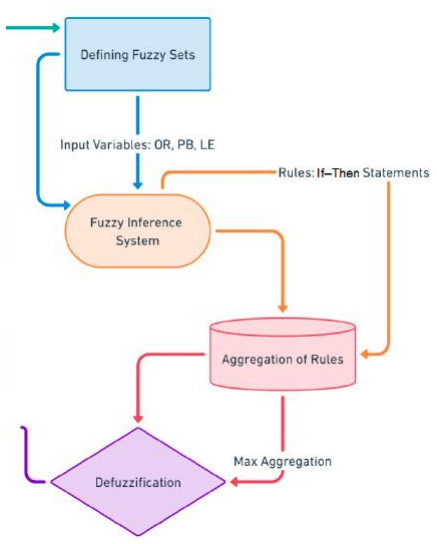
The central object is the fuzzy rule base: the collection of IF-THEN statements inside the inference engine that maps fuzzified inputs to fuzzy outputs. The proposal treats those symbolic rules as the updatable component, mirroring how federated learning treats model weights, and adds a second machinery piece: a machine-learning model, typically a neural network, attached after the fuzzy inference step, with its weights updated by federated aggregation.
What would settle it
A concrete test would be to run two deployments of the same fuzzy system on different data, let each update its rule set, and check whether any specified aggregation rule yields a combined rule base that beats both local rule bases on unseen data; if no such aggregation operation can be defined and demonstrated, the proposed benefit cannot be realized.
Extended reading notes
Core claim
On the paper's own terms, the central claim is that two federated-learning ideas transfer to fuzzy systems. First, the rule base inside the fuzzy inference engine can be treated as the analogue of model weights: updated locally at each deployment, sent to a central server, and used to refresh the rule sets of all deployments. Second, a fuzzy system can be paired with a machine-learning model that takes the fuzzy output as an input, improves on past cases, and is itself trained through federated learning. The paper presents this as a conceptual design with expected benefits, including accuracy gains from accumulating experience, lower network load, and better privacy, rather than as a measured result.
Load-bearing premise
The load-bearing premise is that fuzzy rule sets from different deployments can be meaningfully aggregated and redistributed, but the paper never specifies how conflicting, overlapping, or differently structured rules would be merged into a single improved rule base.
Editorial extensions
If this is right
- If the rule-update mechanism works, every deployed fuzzy system in a fleet can absorb improvements learned elsewhere without sending its raw inputs to a central server.
- Fuzzy systems with multiple inference stages, such as the ship-collision system discussed in the paper, would benefit at each stage from updated rules, potentially amplifying accuracy gains.
- The hybrid fuzzy-plus-machine-learning design would let a fuzzy system produce faster, data-informed decisions while the fuzzy layer retains expert-knowledge control.
- The expected side effects are reduced network load, faster model refresh, and lower privacy risk, which are the stated motivations for borrowing from federated learning.
Reading between the lines
- A natural extension the paper leaves implicit is a formal rule-aggregation operator, for example weighting rule updates by local data size or confidence, with conflict resolution by a consensus metric, which could be tested in simulation.
- The approach would likely face semantic alignment problems, since two devices may learn rules with identical symbolic form but different intended meanings, so a practical implementation would need a shared rule ontology or mapping.
- A testable prediction that follows from the proposal is that fleets of fuzzy systems with more diverse local data produce larger improvements than homogeneous fleets, mirroring federated learning's known behavior.
Editorial analysis
A structured set of objections, weighed in public.
Referee Report
Summary. The paper proposes two ideas inspired by federated learning for improving fuzzy systems: (1) updating fuzzy rules across distributed deployments in a federated manner, and (2) pairing a machine learning model with a fuzzy system and training that model via federated learning. The paper provides background on fuzzy logic and federated learning, a brief methodology section describing these proposals at a high level, a discussion of potential benefits and limitations, and a conclusion that the ideas require further investigation. No formal derivations, algorithms, or empirical experiments are presented.
Significance. If the proposed mechanisms were made concrete and validated, they could potentially enable privacy-preserving, scalable improvement of deployed fuzzy systems. The paper's contributions are purely conceptual, however, and it does not establish the feasibility of the key operation (aggregation of symbolic fuzzy rule bases) or provide any baseline comparison for the claimed benefits. The paper is candid about its limitations, but the absence of any operational specification or evaluation means the central claims are unsubstantiated as they stand.
major comments (3)
- [Methodology (Distributing updated fuzzy rules)] The core of the first proposed idea relies on updating fuzzy rules across deployments in a federated manner, but the manuscript only describes server-to-client propagation ("sending the updated fuzzy rules from the central server to the location of the deployment of the fuzzy system") and never specifies how updated rule sets from different clients are combined at the server, or how conflicts between IF-THEN rules with identical antecedents but different consequents are resolved. In standard federated learning, aggregation of numeric model parameters is well defined (e.g., FedAvg); symbolic rule bases are not numeric parameter vectors, and without a concrete merge operator the proposed mechanism cannot be implemented or evaluated, undermining the paper's central claim.
- [Discussion (paragraphs 1 and 3)] The paper asserts that updating fuzzy rules allows systems to "be more accurate and produce better results over time" and that this leads to "exponential improvement for systems with multiple fuzzy inference systems," but no formal argument, simulation, or real-world case study supports these quantitative claims. Since the paper does not define the aggregation procedure or measure any outcome, these assertions are speculative, and the conclusion (that further investigation is required) is the only well-supported statement in this regard.
- [Methodology (Adding a machine learning model alongside fuzzy system)] The second proposed idea, replacing module 3 of the collision-avoidance framework with a machine learning model and training it via federated learning, is described at a high level only; the architecture connecting the fuzzy system output to the ML model, the training objective, the aggregation strategy for the federated updates, and the expected speed-up relative to the existing case-retrieval system are all unspecified. Consequently, the claimed improvements in decision speed and robustness cannot be tested or verified from the manuscript.
minor comments (5)
- [Abstract] The abstract contains an apparent typo: "Aspects from federated learning could be used to improve federated learning" should likely read "improve fuzzy systems."
- [Methodology] The sentence "The typical use would be at the end of the There have been use cases of a system similar to this one proposed by others" is a grammatically broken fragment that obscures the meaning.
- [Figures] Several figures are reproduced from earlier publications without explicit permissions or licenses, and the text does not clearly explain Figure 2.
- [References] The reference list includes numerous entries that are not cited in the body (e.g., references on construction, consciousness, and DDoS attacks), which inflates the bibliography and detracts from focus.
- [Data Availability] The data availability statement claims all data are included, but no data or experimental results are presented in the manuscript.
Circularity Check
No circularity: the paper makes no derivation, so there is nothing that reduces to an input.
full rationale
The paper is a conceptual proposal rather than a derivation. It describes two ideas, federated updating of fuzzy rules and pairing a fuzzy system with a federated-trained machine learning model, but it provides no equations, no fitted parameters, and no prediction whose value is forced by construction. The closest candidate is the claim that fuzzy rules can be updated across multiple deployments, but the paper never defines the aggregation operator; that is an unsupported assertion, not a circular one. Some cited references include co-author T. H. Teo, but these citations are background examples and are not load-bearing for the two proposals. No uniqueness theorem, ansatz, or known result is renamed or imported from the authors' prior work. The central weakness, an unspecified rule-aggregation mechanism, is a correctness and completeness concern, not a circularity concern. Score 0.
Assumptions & free parameters
assumptions (3)
- domain assumption Fuzzy rule sets can be aggregated across devices in a meaningful way analogous to federated averaging of neural network weights.
- domain assumption A machine learning model trained on historical case data can replace the case-retrieval module with at least equal accuracy and lower latency.
- domain assumption Federated learning's privacy, bandwidth, and latency benefits transfer without loss when applied to fuzzy rule updates and auxiliary ML models.
Cite this review
Pith. "Pith review of Federated Learning Inspired Fuzzy Systems: Decentralized Rule Updating for Privacy and Scalable Decision Making." pith.science (2026). https://pith.science/paper/N2ASTF4Q
@misc{pith2026250706652,
  author       = {Pith},
  title        = {Pith review of: Federated Learning Inspired Fuzzy Systems: Decentralized Rule Updating for Privacy and Scalable Decision Making},
  year         = {2026},
  howpublished = {\url{https://pith.science/paper/N2ASTF4Q}},
  note         = {Machine review of arXiv:2507.06652}
}
read the original abstract
Fuzzy systems are a way to allow machines, systems and frameworks to deal with uncertainty, which is not possible in binary systems that most computers use. These systems have already been deployed for certain use cases, and fuzzy systems could be further improved as proposed in this paper. Such technologies to draw inspiration from include machine learning and federated learning. Machine learning is one of the recent breakthroughs of technology and could be applied to fuzzy systems to further improve the results it produces. Federated learning is also one of the recent technologies that have huge potential, which allows machine learning training to improve by reducing privacy risk, reducing burden on networking infrastructure, and reducing latency of the latest model. Aspects from federated learning could be used to improve federated learning, such as applying the idea of updating the fuzzy rules that make up a key part of fuzzy systems, to further improve it over time. This paper discusses how these improvements would be implemented in fuzzy systems, and how it would improve fuzzy systems. It also discusses certain limitations on the potential improvements. It concludes that these proposed ideas and improvements require further investigation to see how far the improvements are, but the potential is there to improve fuzzy systems.
Figures


Figures from the paper (1 more)

Reference graph
Works this paper leans on
-
[1]
Almseidin, M.; Alzubi, M.; Al -Sawwa, J.; Alkasassbeh, M.; Alfraheed, M. A Threefold Approach for Enhancing Fuzzy In -terpolative Reasoning: Case Study on Phishing Attack Detection Using Sparse Rule Bases. Computers 2024, 13, 291. https://doi.org/10.3390/computers13110291
-
[2]
Cyber Security System Using Fuzzy Logic
Mynuddin, M.; Hossain, M.I.; Khan, S.U.; Islam, M.A.; Ahad, D.M.A.; Tanvir, M.S. Cyber Security System Using Fuzzy Logic. In Proceedings of the 2023 3rd International Conference on Electrical, Computer, Communications and Mechatronics Engi-neering (ICECCME), Tenerife, Spain, 19–21 July 2023; pp. 1–6
work page 2023
-
[3]
Ruiz, M.D.; Gómez-Romero, J.; Martin-Bautista, M.J.; Vila, M.A.; Delgado, M. Fuzzy meta-association rules. In Proceedings of the 2015 Conference of the International Fuzzy Systems Association and the European Society for Fuzzy Logic and Technology (IFSA-EUSFLAT-15), Gijón, Spain, 30 June 2015; pp. 247–254. [Google Scholar]
work page 2015
-
[4]
Foundations and Trends in Multimodal Machine Learning: Principles, Challenges, and Open Questions
Liang, P .P .; Zadeh, A.; Morency, L.P . Foundations and Trends in Multimodal Machine Learning: Principles, Challenges, and Open Questions. arXiv 2022, arXiv:2209.03430
arXiv 2022
-
[5]
SDN and application layer DDoS attacks detection in IoT devices by attention -based Bi -LSTM-CNN
Priyadarshini, I.; Mohanty, P .; Alkhayyat, A.; Sharma, R.; Kumar, S. SDN and application layer DDoS attacks detection in IoT devices by attention -based Bi -LSTM-CNN. Trans. Emerg. Telecommun. Technol. 2023, 34, e4758
work page 2023
-
[6]
Ugural, M.N.; Aghili, S.; Burgan, H.I. Adoption of Lean Construction and AI/IoT Technologies in Iran’s Public Construc-tion Sector: A Mixed-Methods Approach Using Fuzzy Logic. Buildings 2024, 14, 3317. https://doi.org/10.3390/buildings14103317
-
[7]
Lin, J.; Shang, C.; Shen, Q. Towards Dynamic Fuzzy Rule Interpolation via Density -Based Rule Promotion from Interpolated Outcomes. Mathematics 2024, 12, 402
work page 2024
-
[8]
Cyber -Phishing Website Detection Using Fuzzy Rule Interpolation
Almseidin, M.; Alkasassbeh, M.; Alzubi, M.; Al -Sawwa, J. Cyber -Phishing Website Detection Using Fuzzy Rule Interpolation. Cryptography 2022, 6, 24.Shen, S.; Li, J.; Chen, Y .; Lv, J. Fuzzy Extended State Observer-Based Sliding Mode Control for an Agricultural Unmanned Helicopter. Agriculture 2025, 15, 306. https://doi.org/10.3390/agriculture15030306
Show all 61 references
-
[9]
A Fuzzy Fusion Method for Multi -Ship Collision Avoidance Decision-Making with Merchant and Fishing Vessels
Gai, X.; Zhang, Q.; Hu, Y .; Wang, G. A Fuzzy Fusion Method for Multi -Ship Collision Avoidance Decision-Making with Merchant and Fishing Vessels. J. Mar. Sci. Eng. 2024, 12, 1822. https://doi.org/10.3390/jmse12101822
2024 doi
-
[10]
Robust Federated Learning for Mitigating Advanced Persistent Threats in Cyber-Physical Systems
Hallaji, E.; Razavi -Far, R.; Saif, M. Robust Federated Learning for Mitigating Advanced Persistent Threats in Cyber-Physical Systems. Appl. Sci. 2024, 14, 8840. https://doi.org/10.3390/app14198840
2024 doi
-
[11]
Fractional Fuzzy Neural System: Fractional Differential-Based Compen-sation Prediction for Reputation Infringement Cases
Zhang, N.; Zhu, W .-Y .; Jin, P .; Huang, G.; Pu, Y .-F. Fractional Fuzzy Neural System: Fractional Differential-Based Compen-sation Prediction for Reputation Infringement Cases. Fractal Fract. 2024, 8, 172. https://doi.org/10.3390/fractalfract8030172
2024 doi
-
[12]
Intrusion detection system based ongenetic algorithm for detection of distribution denial of service attacksin manets,
A. Chaudhary and G. Shrimal, “Intrusion detection system based ongenetic algorithm for detection of distribution denial of service attacksin manets,” in Proceedings of International Conference on 10/13 SustainableComputing in Science, Technology and Management (SUSCOM), AmityU...
2019
-
[13]
Ondetecting distributed denial of service attacks using fuzzy inferencesystem,
M. Almseidin, J. Al -Sawwa, M. Alkasassbeh, and M. Alweshah, “Ondetecting distributed denial of service attacks using fuzzy inferencesystem,” Cluster Computing, vol. 26, no. 2, pp. 1337–1351, 2023
2023
-
[14]
FedADC: Federated Average Knowledge Distilled Mutual Conditional Learning (Fe-dADC) for Waste Classification,
A. Ghosh and P . Krishnamoorthy, "FedADC: Federated Average Knowledge Distilled Mutual Conditional Learning (Fe-dADC) for Waste Classification," in IEEE Access, vol. 12, pp. 135040-135062, 2024, doi: 10.1109/ACCESS.2024.3462171
2024
-
[15]
Privacy-Preserving On-Screen Activity Tracking and Classification in E-Learning Using Federated Learning,
D. Mistry, M. F. Mridha, M. Safran, S. Alfarhood, A. K. Saha and D. Che, "Privacy-Preserving On-Screen Activity Tracking and Classification in E-Learning Using Federated Learning," in IEEE Access, vol. 11, pp. 79315-79329, 2023, doi: 10.1109/ACCESS.2023.3299331
2023
-
[16]
Federated Active Learning (F -AL): An Efficient Annotation Strategy for Federated Learning,
J. -H. Ahn, Y . Ma, S. Park and C. You, "Federated Active Learning (F -AL): An Efficient Annotation Strategy for Federated Learning," in IEEE Access, vol. 12, pp. 39261 -39269, 2024, doi: 10.1109/ACCESS.2024.3376746
2024
-
[17]
Fuzzy inference based intrusion detection system: Fi -snort,
N. Naik, “Fuzzy inference based intrusion detection system: Fi -snort,”in 2015 IEEE International Conference on Computer and InformationTechnology; Ubiquitous Computing and Communications; Dependable,Autonomic and Secure Computing; Pervasive Intelligence an d Comput-ing, pp. 2...
2015
-
[18]
Privacy -Preserving Hybrid Federated Learning Frame -work for Mental Healthcare Applications: Clustered and Quantum Approaches,
A. Gupta, M. Kumar Maurya, K. Dhere and V. Kumar Chaurasiya, "Privacy -Preserving Hybrid Federated Learning Frame -work for Mental Healthcare Applications: Clustered and Quantum Approaches," in IEEE Access, vol. 12, pp. 145054-145068, 2024, doi: 10.1109/ACCESS.2024.3464240
2024
-
[19]
Secure Federated Learning for Parkinson’s Disease: Non -IID Data Partitioning and Homomorphic Encryption Strategies,
S. A. Tanim, A. R. Aurnob, M. F. Mridha, M. Safran, S. Alfarhood and D. Che, "Secure Federated Learning for Parkinson’s Disease: Non -IID Data Partitioning and Homomorphic Encryption Strategies," in IEEE Access, vol. 12, pp. 127309-127327, 2024, doi: 10.1109/ACCESS.2024.3454690
2024
-
[20]
Design and Testing of an Intramedullary Nail Implant Enhanced with Active Feedback and Wireless Connectivity for Precise Limb Lengthening
Kok, C.L.; Tan, T.C.; Koh, Y .Y .; Lee, T.K.; Chai, J.P . Design and Testing of an Intramedullary Nail Implant Enhanced with Active Feedback and Wireless Connectivity for Precise Limb Lengthening. Electronics 2024, 13, 1519. doi: 10.3390/electronics13081519
2024 doi
-
[21]
FedArtML: A Tool to Facilitate the Generation of Non -IID Datasets in a Controlled Way to Support Federated Learning Research,
D. M. J. Gutierrez, A. Anagnostopoulos, I. Chatzigiannakis and A. Vitaletti, "FedArtML: A Tool to Facilitate the Generation of Non -IID Datasets in a Controlled Way to Support Federated Learning Research," in IEEE Access, vol. 12, pp. 81004-81016, 2024, doi: 10.1109/ACCESS.202...
2024
-
[22]
Fuzzy inference based intrusion detection system: Fi -snort,
N. Naik, “Fuzzy inference based intrusion detection system: Fi -snort,”in 2015 IEEE International Conference on Computer and InformationTechnology; Ubiquitous Computing and Communications; Dependable,Autonomic and Secure Computing; Pervasive Intelligence and Comput -ing, pp. 2...
2015
-
[23]
Hassan Akbari, Liangzhe Yuan, Rui Qian, et al. 2021. Vatt: Transformers for multimodal self - supervised learning from raw video, audio and text. arXiv preprint arXiv:2104.11178 (2021)
2021 arXiv
-
[24]
John Arevalo, Thamar Solorio, Manuel Montes -y Gómez, and Fabio A González. 2017. Gated multimodal units for information fusion. arXiv preprint arXiv:1702.01992 (2017)
2017 arXiv
-
[25]
A DC-DC Converter with Switched -Capacitor Delay Deadtime Controller and Enhanced Unbalanced -Input Pair Zero -Current Detector to Boost Power Efficiency
Kok, C.L.; Tang, H.; Teo, T.H.; Koh, Y .Y . A DC-DC Converter with Switched -Capacitor Delay Deadtime Controller and Enhanced Unbalanced -Input Pair Zero -Current Detector to Boost Power Efficiency. Electronics 2024, 13, 1237. doi: 10.3390/electronics13071237 11/13
2024 doi
-
[26]
Artificial intelligence and machine learning applications in the project lifecycle of the construction industry: A comprehensive review
Datta, S.D.; Islam, M.; Sobuz, M.H.R.; Ahmed, S.; Kar, M. Artificial intelligence and machine learning applications in the project lifecycle of the construction industry: A comprehensive review. Heliyon 2024, 10, e26888
2024
-
[27]
DDoS attacks detection in 5G networks: hybrid model with statistical and higher -order statistical features
Dahiya D. DDoS attacks detection in 5G networks: hybrid model with statistical and higher -order statistical features. Cybern Syst. 2022: 1-26
2022
-
[28]
Shai Ben-David, John Blitzer, Koby Crammer, and Fernando Pereira. 2006. Analysis of representations for domain adaptation. NeurIPS 19 (2006)
2006
-
[29]
Development and Evaluation of an IoT- Driven Auto -Infusion System with Advanced Monitoring and Alarm Functionalities,
C. L. Kok, T. H. Teo, Y . Y . Koh, Y . Dai, B. K. Ang and J. P . Chai, "Development and Evaluation of an IoT- Driven Auto -Infusion System with Advanced Monitoring and Alarm Functionalities," 2024 IEEE International Symposium on Circuits and Systems (ISCAS), Singapore, Singapo...
2024
-
[30]
Lenore Blum and Manuel Blum. 2022. A theory of consciousness from a theoretical computer science perspective: Insights from the Conscious Turing Machine. Proceedings of the National Academy of Sciences (2022)
2022
-
[31]
Investigating the barriers to the adoption of blockchain technology in sustainable construction projects
Kumar Singh, A.; Kumar, V.R.P .; Dehdasht, G.; Mohandes, S.R.; Manu, P .; Rahimian, F.P . Investigating the barriers to the adoption of blockchain technology in sustainable construction projects. J. Clean. Prod. 2023, 403, 136840
2023
-
[32]
Implementing lean construction techniques and management methods in chinese projects: A case study in Suzhou, China
Xing, W.; Hao, J.L.; Qian, L.; Tam, V.W.Y .; Sikora, K.S. Implementing lean construction techniques and management methods in chinese projects: A case study in Suzhou, China. J. Clean. Prod. 2021, 286, 124944
2021
-
[33]
Enhanced method of ANN based model for detection of DDoS attacks on multimedia Internet of Things
Gopi R, Sathiyamoorthi V, Selvakumar S, et al. Enhanced method of ANN based model for detection of DDoS attacks on multimedia Internet of Things. Multimed Tools Appl. 2022; 81(19): 26739-26757
2022
-
[34]
Juan C Caicedo and Fabio A González. 2012. Online matrix factorization for multimodal image retrieval. In Iberoamerican Congress on Pattern Recognition. Springer, 340–347
2012
-
[35]
A Novel Predictive Modeling for Student Attrition Utilizing Machine Learning and Sustainable Big Data Analytics
Kok, C.L.; Ho, C.K.; Chen, L.; Koh, Y .Y .; Tian, B. A Novel Predictive Modeling for Student Attrition Utilizing Machine Learning and Sustainable Big Data Analytics. Appl. Sci. 2024, 14, 9633. https://doi.org/10.3390/app14219633
2024 doi
-
[36]
Khyathi Raghavi Chandu, Yonatan Bisk, and Alan W Black. 2021. Grounding ‘Grounding’in NLP . In Findings of the Association for Computational Linguistics: ACL-IJCNLP 2021. 4283–4305
2021
-
[37]
Construction automation and robotics for high - rise buildings: Development priorities and key challenges
Cai, S.; Ma, Z.; Skibniewski, M.J.; Bao, S.; Wang, H. Construction automation and robotics for high - rise buildings: Development priorities and key challenges. J. Constr. Eng. Manag. 2020, 146, 04020096
2020
-
[38]
A novel resource oriented DMA framework for internet of medical things devices in 5G network
Hasan MK, Islam S, Memon I, et al. A novel resource oriented DMA framework for internet of medical things devices in 5G network. IEEE Trans Ind Inform. 2022; 18(12): 8895-8904
2022
-
[39]
A time -efficient approach toward DDoS attack detection in IoT network using SDN
Bhayo J, Jafaq R, Ahmed A, Hameed S, Shah SA. A time -efficient approach toward DDoS attack detection in IoT network using SDN. IEEE Internet Things J. 2021; 9(5): 3612-3630
2021
-
[40]
A Novel Low-Cost Capacitance Sensor Solution for Real -Time Bubble Monitoring in Medical Infusion Devices
Kok, C.L.; Dai, Y .; Lee, T.K.; Koh, Y .Y .; Teo, T.H.; Chai, J.P . A Novel Low-Cost Capacitance Sensor Solution for Real -Time Bubble Monitoring in Medical Infusion Devices. Electronics 2024, 13, 1111. doi: 10.3390/electronics13061111 12/13
2024 doi
-
[41]
Blockchain based solutions to mitigate Distributed Denial of Service (DDoS) attacks in the Internet of Things (IoT): a survey
Shah Z, Ullah I, Li H, Levula A, Khurshid K. Blockchain based solutions to mitigate Distributed Denial of Service (DDoS) attacks in the Internet of Things (IoT): a survey. Sensors. 2022; 22(3):1094
2022
-
[42]
Convolutional neural network based on attention mechanism and Bi-LSTM for bearing remaining life prediction
Luo J, Zhang X. Convolutional neural network based on attention mechanism and Bi-LSTM for bearing remaining life prediction. Appl Intell. 2022; 52(1): 1076-1091
2022
-
[43]
Sustainability through lean construction approach: A literature review
Marhani, M.A.; Jaapar, A.; Bari, N.A.A.; Zawawi, M. Sustainability through lean construction approach: A literature review. Procedia—Soc. Behav. Sci. 2013, 101, 90–99
2013
-
[44]
A Novel Implementation of a Social Robot for Sustainable Human Engagement in Homecare Services for Ageing Populations
Kok, C.L.; Ho, C.K.; Teo, T.H.; Kato, K.; Koh, Y .Y . A Novel Implementation of a Social Robot for Sustainable Human Engagement in Homecare Services for Ageing Populations. Sensors 2024, 24,
2024
-
[45]
Comparative analysis of planning with the critical path method, last planner system, and location -based techniques in brazil, finland, and the united states
Scala, N.M.; Schiavone, V.; Olivieri, H.; Seppänen, O.; Alves, T.D.C.L.; Liu, M.; Granja, A.D. Comparative analysis of planning with the critical path method, last planner system, and location -based techniques in brazil, finland, and the united states. Eng. Manag. J. 2022, 35...
2022
-
[46]
Augmented and virtual reality in construction: Drivers and limitations for industry adoption
Davila Delgado, J.M.; Oyedele, L.; Beach, T.; Demian, P . Augmented and virtual reality in construction: Drivers and limitations for industry adoption. J. Constr. Eng. Manag. 2020, 146, 04020079
2020
-
[47]
Jaemin Cho, Abhay Zala, and Mohit Bansal. 2022. Dall -eval: Probing the reasoning skills and social biases of text-to-image generative transformers. arXiv preprint arXiv:2202.04053 (2022)
2022 arXiv
-
[48]
ML -DDoS: a blockchain -based multilevel DDoS mitigation mechanism for IoT environments
Hayat RF, Aurangzeb S, Aleem M, Srivastava G, Lin JCW. ML -DDoS: a blockchain -based multilevel DDoS mitigation mechanism for IoT environments. IEEE Trans Eng Manag. 2022: 1 -14. doi: 10.1109/TEM.2022.3170519
2022
-
[49]
Influence of lean construction wastes on the transformation -flow- value process of construction
Igwe, C.; Hammad, A.; Nasiri, F. Influence of lean construction wastes on the transformation -flow- value process of construction. Int. J. Constr. Manag. 2020, 22, 2598–2604
2020
-
[50]
Hierarchical fuzzy expert system for organizational performance assessment in the construction industry
Rathore, Z.; Elwakil, E. Hierarchical fuzzy expert system for organizational performance assessment in the construction industry. Algorithms 2020, 13, 205
2020
-
[51]
Smart construction: Remote and adaptable management of construction sites through iot
Bucchiarone, A.; Sanctis, M.D.; Hevesi, P .; Hirsch, M.; Abancens, F.J.R.; Vivanco, P .F.; Amiraslanov, O.; Lukowicz, P . Smart construction: Remote and adaptable management of construction sites through iot. IEEE Internet Things Mag. 2019, 2, 38–45
2019
-
[52]
Enhancing space management through digital twin: A case study of the lazio region headquarters
Piras, G.; FMuzi; Tiburcio, V.A. Enhancing space management through digital twin: A case study of the lazio region headquarters. Appl. Sci. 2024, 14, 7463
2024
-
[53]
Nexus among government digital development, resource dependence, and carbon emissions in china
Tang, Y .; Zhao, Q.; Ren, Y . Nexus among government digital development, resource dependence, and carbon emissions in china. Resour. Policy 2024, 95, 105186
2024
-
[54]
A 9 -bit body-biased vernier ring time -to-digital converter in 65 nm CMOS technology,
J. Kong, L. Siek and C. L. Kok, "A 9 -bit body-biased vernier ring time -to-digital converter in 65 nm CMOS technology," 2015 IEEE International Symposium on Circuits and Systems (ISCAS), Lisbon, Portugal, 2015, pp. 1650-1653, doi: 10.1109/ISCAS.2015.7168967
2015
-
[55]
Research on the characteristics of collision accidents between merchant ships and fishing vessels within the waters of China
Dong, C.; Wang, X.; Gong, Y . Research on the characteristics of collision accidents between merchant ships and fishing vessels within the waters of China. In Advances in Maritime Technology and Engineering; CRC Press: Boca Raton, FL, USA, 2024; pp. 253–258
2024
-
[56]
Analysis of fishing vessel accidents with Bayesian network and Chi-square methods
Uğurlu, F.; Yıldız, S.; Boran, M.; Uğurlu, Ö.; Wang, J. Analysis of fishing vessel accidents with Bayesian network and Chi-square methods. Ocean Eng. 2020, 198, 106956. 13/13
2020
-
[57]
New frontiers in the risk assessment of ship collision
Marino, M.; Cavallaro, L.; Castro, E.; Musumeci, R.E.; Martignoni, M.; Roman, F.; Foti, E. New frontiers in the risk assessment of ship collision. Ocean Eng. 2023, 274, 113999
2023
-
[58]
A Decision-Making Method for Ship Collision Avoidance Based on Improved Cultural Particle Swarm
Zheng, Y .; Zhang, X.; Shang, Z.; Guo, S.; Du, Y . A Decision-Making Method for Ship Collision Avoidance Based on Improved Cultural Particle Swarm. J. Adv. Transp. 2021, 1, 8898507
2021
-
[59]
Automatic collision avoidance of multiple ships based on deep Q-learning
Shen, H.; Hashimoto, H.; Matsuda, A.; Taniguchi, Y .; Terada, D.; Guo, C. Automatic collision avoidance of multiple ships based on deep Q-learning. Appl. Ocean Res. 2019, 86, 268–288
2019
-
[60]
Collision risk inference system for maritime autonomous surface ships using COLREGs rules compliant collision avoidance
Namgung, H.; Kim, J.S. Collision risk inference system for maritime autonomous surface ships using COLREGs rules compliant collision avoidance. IEEE Access 2021, 9, 7823–7835. Data Availability All data generated or analysed during this study are included in this published article
2021
-
[4466]
doi: 10.3390/s24144466
Reviewed August 6, 2026 · model on record in the stance chip above.
Discussion (0). Sign in to comment.