REVIEW 4 major objections 5 minor 154 references
Improving Data and Parameter Efficiency of Neural Language Models Using Representation Analysis
T0 review · 4 major / 5 minor · reviewed 2026-08-06 · deepseek-v4-flash
Pith's one-line read This thesis argues that representation smoothness is the lever: regularizing the Jacobian and Hessian norms of transformer layers improves generalization, calibration, and data and parameter efficiency of neural language models.
desk verdict JACHESS is a genuine and promising regularization method backed by unusually careful GLUE experiments, but the Hutchinson estimator details and dev-set tuning leave the smoothness mechanism underdetermined. read the letter →
The pith
A machine-rendered reading of the paper's core claim, the machinery that carries it, and where it could break.
The reading
What carries the argument
The load-bearing object is the layer-wise Jacobian-Hessian regularization term of JACHESS, Eq. (4.1): $\sum_{k=1}^{K}\big(\lambda^{(k)}_1 \|J^{(k)}\|_F + \lambda^{(k)}_2 \sum_{d\in D^{(k)}} \|H^{(k)}_d\|_F\big)$. Here the Jacobian $J^{(k)}$ is the derivative of a transformer layer's output with respect to its input token embeddings and $H^{(k)}_d$ is the Hessian of one output dimension; bounding their Frobenius norms acts as a surrogate for Lipschitz smoothness of the representation map. Hutchinson's estimator replaces the intractable full matrices with Monte Carlo estimates from random normal vectors, and a dual-mode procedure alternates the task loss on labeled data with smoothness-only minimization on a separate unlabeled pool, which the experiments report as the strongest configuration.
What would settle it
Take a small transformer where the full Jacobian and Hessian matrices are computable, fine-tune it with JACHESS, and check whether the true Frobenius norms actually decrease and whether average GLUE gains track that decrease; if the gains persist while the true norms stay flat or rise, the smoothness mechanism is not the operative cause. Similarly, BEAST's stopping decisions can be compared against oracle stopping on a held-out set: if the Besov-index stopping points consistently diverge from the validation-optimal points, the smoothness proxy is not carrying the argument.
Extended reading notes
Core claim
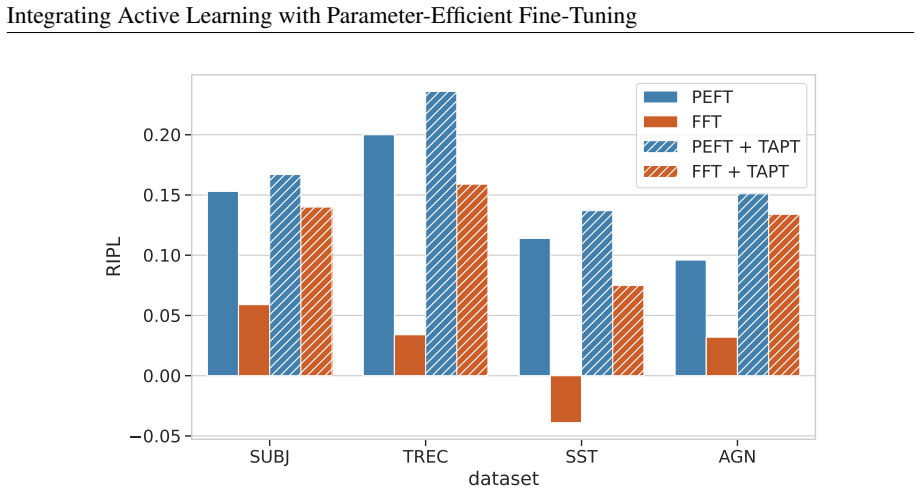
The paper's central claim is that enforcing smoothness in the hidden representations of transformer language models improves generalization and calibration without sacrificing in-distribution accuracy. JACHESS implements this by adding, for each layer, a penalty on the Frobenius norms of the layer's input-output Jacobian and Hessian matrices, estimated with Hutchinson's random projections and with a random subset of output dimensions for the Hessian; the regularization factors are set in proportion to the base model's own pre-fine-tuning layer smoothness. Trained in a dual mode that alternates the supervised loss with regularization on a separate unlabeled pool, JACHESS is reported to beat standard fine-tuning, L2, TAPT, SAM, Jacobian regularization, and Cross-Hölder regularization on average GLUE scores by 2 to 4.5 percentage points, with the largest gains on OPT-6.7B and Llama-2-7B, and to lower Brier score and expected calibration error across binary GLUE tasks. The thesis then carries the same smoothness concept into efficiency: Besov-measured smoothness drives BEAST early stopping without labeled validation data, and the integration of active learning with parameter-efficient fine-tuning shows that PEFT methods outperform full fine-tuning in low-resource active-learning settings while preferring moderately hard examples and staying closer to the pretrained model.
Load-bearing premise
The load-bearing premise is that Hutchinson's estimator, with a small number of random projections and sampled output dimensions, estimates the Jacobian and Hessian Frobenius norms accurately enough that minimizing those estimates genuinely enforces representation smoothness, so the reported gains in generalization and calibration are due to smoothness and not to artifacts of the stochastic approximation.
Editorial extensions
If this is right
- If JACHESS works as reported, fine-tuning a transformer language model with smoothness penalties becomes a cheap add-on: with 1000 unlabeled instances the reported training-cost increase is about 1.22x, while the average GLUE score rises.
- Validation-free Besov early stopping would remove the labeled held-out set from fine-tuning and active-learning pipelines, which matters for privacy-sensitive and low-resource tasks.
- Active learning with parameter-efficient fine-tuning should reach a given accuracy with fewer annotated examples and fewer updated parameters than full fine-tuning, because PEFT keeps representations closer to the pretrained model.
- WILDA-style weak supervision converts in-context demonstrations into knowledge stored in adapter modules, so demonstrations do not have to be repeated inside every prompt.
- Better calibration from smoothness would make confidence scores of fine-tuned models usable for selective prediction and deferral in high-stakes NLP applications.
Reading between the lines
- A testable extension the thesis leaves open is applying the same Jacobian-Hessian penalty during pre-training rather than fine-tuning; the reported experiments only cover fine-tuning on GLUE-sized data, so whether smoothness regularization helps at pre-training scale is unknown.
- The comparison between JACHESS train and JACHESS unlab hints that part of the gain may come from the extra unlabeled-data passes rather than from the smoothness penalty itself; a clean ablation would keep the dual-mode training while replacing the norm penalty with a dummy loss.
- The paper's smoothness-guided active-learning stopping could be transferred to batch active learning for larger decoder-only models, where the Besov index might also serve as a cheap monitor of distribution shift during iterative querying.
Editorial analysis
A structured set of objections, weighed in public.
Referee Report
Summary. The thesis proposes representation-analysis-based techniques to improve data and parameter efficiency of neural language models. The main contribution is JACHESS, a regularization method that penalizes Jacobian and Hessian Frobenius norms of intermediate transformer layers, estimated via Hutchinson's estimator, with the aim of enforcing representation smoothness and thereby improving generalization, robustness, and calibration. Secondary contributions include BEAST, an early-stopping method based on Besov smoothness that avoids labeled validation sets; a study combining active learning with parameter-efficient fine-tuning; and WILDA, a weak-supervision framework for in-context learning. The empirical evaluation centers on GLUE benchmark results for BERT, OPT, and Llama models, reporting average-score gains of 2% to 4.5% for JACHESS over standard fine-tuning.
Significance. If the results hold, the thesis provides a conceptually clean mechanism—enforcing representation smoothness—for improving both generalization and calibration of transformer language models, with a dual-mode training recipe that leverages unlabeled data. The manuscript has several strengths: it reports five-seed experiments, uses Mann-Whitney U tests with Holm-Bonferroni correction for the main comparisons, spans multiple model families and scales, and combines three orthogonal efficiency levers (regularization, active learning, and weak supervision). However, the central smoothness mechanism rests on the accuracy of the Hutchinson estimator, which is not adequately characterized, and the design choices for JACHESS are tuned on the same GLUE development sets used for the headline results. These issues must be addressed before the causal claim that smoothness drives the observed gains can be accepted.
major comments (4)
- [Section 3.4 / Eq. (3.7)-(3.8) and Section 4.1 / Eq. (4.1)] The manuscript never reports the number of Hutchinson projections p used for the Jacobian and Hessian estimates, and Eq. (4.1) is an unnormalized sum over a random subset D(k) of output dimensions. Because the expected value of the Hessian term scales linearly with |D(k)|, the results in Table 4.7 (which vary the sampled dimensions from 0 to 50) are confounded with the effective regularization strength λ_2; the observed optimum at 10 dimensions therefore does not demonstrate estimation fidelity, only that a particular effective penalty is helpful. To support the claim that minimizing the estimated norms enforces smoothness, the authors should report p, normalize the dimension sum (e.g., divide by |D(k)|), and provide a sensitivity analysis over p or variance diagnostics for the estimator.
- [Section 4.5 / Tables 4.6, 4.7 and Figure 4.3] The regularization-factor strategy, the number of sampled Hessian dimensions, and the size of the unlabeled set are all selected on the GLUE development sets, which are also the evaluation sets for the headline results in Tables 4.2 and 4.3. This constitutes tuning on the test data for the central empirical claim, and the Holm-Bonferroni-corrected p-values in Tables 4.2 and 4.3 do not account for this selection. The authors should either evaluate on held-out test sets (e.g., via the official GLUE benchmark or an internal train/validation/test split) or clearly separate model selection from evaluation and report the selection procedure.
- [Section 4.3.3 / Tables 4.2 and 4.3] The text claims that JACHESS 'significantly' outperforms standard fine-tuning and other regularization methods, but the significance indicators (†) only mark comparisons between JACHESS variants and the BASE model. No pairwise significance tests are reported against L2, TAPT, SAM, Jacobian regularization, or Cross-Hölder regularization. Given that the average-score improvements over Cross-Hölder unlab are often small (e.g., BERT .783 vs. .762, OPT-1.3B .846 vs. .837), the claim of superiority over other regularization methods is unsupported by the reported statistics. Pairwise tests against all baselines, or a more cautious wording, are needed.
- [Section 6.2 / Section 3.5] BEAST, the proposed early-stopping method, relies entirely on the Besov smoothness index estimated through the wavelet random-forest approximation of Elisha and Dekel [68], but the manuscript does not specify the number of wavelets M, the least-squares fitting procedure, or any validation of the estimated index against actual generalization performance. Since the stopping decision is driven by this proxy, a systematic mis-estimate would invalidate the method. The authors should provide the algorithmic details and an evaluation of the estimator's reliability (e.g., correlation with validation accuracy on held-out data).
minor comments (5)
- [Section 4.1.1] The notation for regularization factors is confusing: λ_i is introduced as a vector across layers, but the text later states 'λ 1 = λ 2 = λ' without clarifying whether this is a scalar shared across layers or a per-layer vector. Please disambiguate.
- [Table 4.1] The column header says 'Token corruption [%]' but the first column lists values 5, 10, 15, 20, while the main text states corruption is 'varied between 10%, 15%, and 20%.' Either include 5% in the text or remove it from the table.
- [Section 3.4] In Eqs (3.7) and (3.8), the dimensionality of the random vector v is not stated; specify that v∈R^d where d is the output dimension of the relevant layer, and clarify whether the same vector is reused across the sampled dimensions.
- [Section 4.5 / Figure 4.3] The sentence 'Without any unlabeled data, the setup corresponds to the BASE model' appears to be imprecise, because JACHESS train also exists and uses labeled data; clarify which variant is being compared.
- [Section 4.3.3] The captions of Tables 4.2 and 4.3 mention that the second-highest scores are underlined, but the body text never interprets the underlined values; either remove the underlining or add a sentence discussing the second-best methods.
Circularity Check
No significant circularity: JACHESS, the design-choice analyses, and the efficiency claims are derived from explicit definitions and evaluated on external GLUE/IMDb benchmarks, not from fitted inputs or self-citations.
full rationale
The derivation chain is self-contained. JACHESS is defined by Eq. (4.1) as a weighted sum of estimated Jacobian and Hessian Frobenius norms, with the estimator given in Eqs. (3.7)-(3.8); the regularization target is therefore stated explicitly and does not presuppose the reported GLUE improvements. The claim of 2-4.5% average GLUE gains is an empirical comparison to BASE, L2, TAPT, SAM, Jacobian, and Cross-Hölder baselines on held-out development sets, so it is not a fitted quantity renamed as a prediction. The only self-reference is citation [71] for the JACHESS method, but Section 4.1 re-derives the method in full, so the citation is provenance rather than load-bearing. Hyperparameters such as lambda, number of sampled Hessian dimensions, and unlabeled-data pool size are selected on the development sets, which is standard model selection and not definitional circularity. The Hutchinson-estimator noise concern raised by the skeptical reader is a correctness and approximation risk, not a case where the conclusion is equivalent to the input by construction. No step in the available text reduces a predicted quantity to the quantity it was fitted from.
Assumptions & free parameters
free parameters (5)
- JACHESS regularization factors lambda_1 and lambda_2 per layer =
softmax-normalized proportional to pre-fine-tuning smoothness, exact values not reported
- Number of sampled Hessian output dimensions per layer D(k) =
10
- Number of Hutchinson random projections p =
not reported
- Number of unlabeled instances for JACHESS unlab =
1000
- Besov smoothness estimation parameters (number of wavelets M and least-squares fit) =
not reported
assumptions (5)
- standard math Hutchinson's estimator provides an unbiased estimate of the trace via E[v^T B v] = Tr(B) for v ~ N(0,I).
- domain assumption Minimizing the Frobenius norm of Jacobian and Hessian matrices reduces the Lipschitz constant and enforces representation smoothness.
- ad hoc to paper The wavelet-based random forest approximation from Elisha and Dekel [68] yields a valid Besov smoothness index for PLM hidden states.
- domain assumption Smoothness of representations is causally linked to generalization, calibration, and data efficiency in PLMs.
- domain assumption Active learning query strategies and pseudo-label correction mechanisms used in WILDA improve performance under weak supervision.
Cite this review
Pith. "Pith review of Improving Data and Parameter Efficiency of Neural Language Models Using Representation Analysis." pith.science (2026). https://pith.science/paper/S2IAQFJN
@misc{pith2026250712004,
  author       = {Pith},
  title        = {Pith review of: Improving Data and Parameter Efficiency of Neural Language Models Using Representation Analysis},
  year         = {2026},
  howpublished = {\url{https://pith.science/paper/S2IAQFJN}},
  note         = {Machine review of arXiv:2507.12004}
}
read the original abstract
This thesis addresses challenges related to data and parameter efficiency in neural language models, with a focus on representation analysis and the introduction of new optimization techniques. The first part examines the properties and dynamics of language representations within neural models, emphasizing their significance in enhancing robustness and generalization. It proposes innovative approaches based on representation smoothness, including regularization strategies that utilize Jacobian and Hessian matrices to stabilize training and mitigate sensitivity to input perturbations. The second part focuses on methods to significantly enhance data and parameter efficiency by integrating active learning strategies with parameter-efficient fine-tuning, guided by insights from representation smoothness analysis. It presents smoothness-informed early-stopping techniques designed to eliminate the need for labeled validation sets and proposes innovative combinations of active learning and parameter-efficient fine-tuning to reduce labeling efforts and computational resources. Extensive experimental evaluations across various NLP tasks demonstrate that these combined approaches substantially outperform traditional methods in terms of performance, stability, and efficiency. The third part explores weak supervision techniques enhanced by in-context learning to effectively utilize unlabeled data, further reducing dependence on extensive labeling. It shows that using in-context learning as a mechanism for weak supervision enables models to better generalize from limited labeled data by leveraging unlabeled examples more effectively during training. Comprehensive empirical evaluations confirm significant gains in model accuracy, adaptability, and robustness, especially in low-resource settings and dynamic data environments.
Figures


Figures from the paper (43 more)




Reference graph
Works this paper leans on
-
[68]
W., (ur.), Vol
Suzuki, T., Nitanda, A., ``Deep learning is adaptive to intrinsic dimensionality of model smoothness in anisotropic B esov space'', in Advances in Neural Information Processing Systems, Ranzato, M., Beygelzimer, A., Dauphin, Y., Liang, P., Vaughan, J. W., (ur.), Vol. 34. Curran Associates, Inc., 2021, str. 3609--3621, https://proceedings.neurips.cc/paper/...
2021
-
[1]
write newline
" write newline "" initialize.prev.this.status FUNCTION begin.bib " write newline preamble empty 'skip preamble write newline if " thebibliography " longest.label * " " * write newline " [1] #1 " write newline " url@samestyle " write newline " " write newline " [2] #2 " write newline " =0pt " write newline " " ALTinterwordstretchfactor * " " * write newli...
-
[2]
S., ``Distributional structure'', Word, Vol
Harris, Z. S., ``Distributional structure'', Word, Vol. 10, No. 2-3, 1954, str. 146--162
1954
-
[3]
R., ``A synopsis of linguistic theory, 1930-1955'', Studies in linguistic analysis, 1957
Firth, J. R., ``A synopsis of linguistic theory, 1930-1955'', Studies in linguistic analysis, 1957
1930
-
[4]
D., Pantel, P., ``From frequency to meaning: Vector space models of semantics'', Journal of artificial intelligence research, Vol
Turney, P. D., Pantel, P., ``From frequency to meaning: Vector space models of semantics'', Journal of artificial intelligence research, Vol. 37, 2010, str. 141--188
2010
-
[5]
160--167
Collobert, R., Weston, J., ``A unified architecture for natural language processing: Deep neural networks with multitask learning'', in Proceedings of the 25th international conference on Machine learning, 2008, str. 160--167
2008
-
[6]
Frege, G., ``The thought: A logical inquiry'', Mind, Vol. 65, No. 259, 1956, str. 289--311
1956
-
[7]
Brown, T., Mann, B., Ryder, N., Subbiah, M., Kaplan, J. D., Dhariwal, P., Neelakantan, A., Shyam, P., Sastry, G., Askell, A., Agarwal, S., Herbert-Voss, A., Krueger, G., Henighan, T., Child, R., Ramesh, A., Ziegler, D., Wu, J., Winter, C., Hesse, C., Chen, M., Sigler, E., Litwin, M., Gray, S., Chess, B., Clark, J., Berner, C., McCandlish, S., Radford, A.,...
2020
Show all 154 references
-
[8]
B., Chess, B., Child, R., Gray, S., Radford, A., Wu, J., Amodei, D., ``Scaling laws for neural language models'', arXiv preprint arXiv:2001.08361, 2020
Kaplan, J., McCandlish, S., Henighan, T., Brown, T. B., Chess, B., Child, R., Gray, S., Radford, A., Wu, J., Amodei, D., ``Scaling laws for neural language models'', arXiv preprint arXiv:2001.08361, 2020
2001 arXiv
-
[9]
A., Welbl, J., Clark, A., Hennigan, T., Noland, E., Millican, K., van den Driessche, G., Damoc, B., Guy, A., Osindero, S., Simonyan, K., Elsen, E., Vinyals, O., Rae, J
Hoffmann, J., Borgeaud, S., Mensch, A., Buchatskaya, E., Cai, T., Rutherford, E., de las Casas, D., Hendricks, L. A., Welbl, J., Clark, A., Hennigan, T., Noland, E., Millican, K., van den Driessche, G., Damoc, B., Guy, A., Osindero, S., Simonyan, K., Elsen, E., Vinyals, O., Ra...
2022
-
[10]
Settles, B., ``Active learning literature survey'', Computer Sciences Technical Report, 2009, http://axon.cs.byu.edu/ martinez/classes/778/Papers/settles.activelearning.pdf
2009
-
[11]
Zhang, J., Hsieh, C.-Y., Yu, Y., Zhang, C., Ratner, A., ``A survey on programmatic weak supervision'', arXiv preprint arXiv:2202.05433, 2022
2022 arXiv
-
[12]
U., Qiu, S., Saqib, M., Anwar, S., Usman, M., Akhtar, N., Barnes, N., Mian, A., ``A comprehensive overview of large language models'', arXiv preprint arXiv:2307.06435, 2023
Naveed, H., Khan, A. U., Qiu, S., Saqib, M., Anwar, S., Usman, M., Akhtar, N., Barnes, N., Mian, A., ``A comprehensive overview of large language models'', arXiv preprint arXiv:2307.06435, 2023
2023 arXiv
-
[13]
A., Introduction to formal language theory
Harrison, M. A., Introduction to formal language theory. Addison-Wesley Longman Publishing Co., Inc., 1978
1978
-
[14]
Pad \'o , S., Lapata, M., ``Dependency-based construction of semantic space models'', Computational Linguistics, Vol. 33, No. 2, 2007, str. 161--199, https://aclanthology.org/J07-2002/
2007
-
[15]
T., Furnas, G
Deerwester, S., Dumais, S. T., Furnas, G. W., Landauer, T. K., Harshman, R., ``Indexing by latent semantic analysis'', Journal of the American society for information science, Vol. 41, No. 6, 1990, str. 391--407
1990
-
[16]
K., Foltz, P
Landauer, T. K., Foltz, P. W., Laham, D., ``An introduction to latent semantic analysis'', Discourse processes, Vol. 25, No. 2-3, 1998, str. 259--284
1998
-
[17]
S., Dean, J., ``Distributed representations of words and phrases and their compositionality'', in Advances in neural information processing systems, 2013, str
Mikolov, T., Sutskever, I., Chen, K., Corrado, G. S., Dean, J., ``Distributed representations of words and phrases and their compositionality'', in Advances in neural information processing systems, 2013, str. 3111--3119
2013
-
[18]
D., `` GloVe : Global vectors for word representation'', in Proceedings of the 2014 conference on empirical methods in natural language processing (EMNLP), 2014, str
Pennington, J., Socher, R., Manning, C. D., `` GloVe : Global vectors for word representation'', in Proceedings of the 2014 conference on empirical methods in natural language processing (EMNLP), 2014, str. 1532--1543
2014
-
[19]
Mikolov, T., Chen, K., Corrado, G., Dean, J., ``Efficient estimation of word representations in vector space'', arXiv preprint arXiv:1301.3781, 2013
2013 arXiv
-
[20]
F., Della Pietra, V
Brown, P. F., Della Pietra, V. J., Desouza, P. V., Lai, J. C., Mercer, R. L., ``Class-based n-gram models of natural language'', Computational linguistics, Vol. 18, No. 4, 1992, str. 467--480
1992
-
[21]
E., Hinton, G
Rumelhart, D. E., Hinton, G. E., Williams, R. J., ``Learning internal representations by error propagation, parallel distributed processing, explorations in the microstructure of cognition, ed. de rumelhart and j. mcclelland. vol. 1. 1986'', Biometrika, Vol. 71, No. 599-607, 1...
1986
-
[22]
technical report, june 1985-march 1986'', California Univ., San Diego, La Jolla (USA)
Jordan, M., ``Serial order: a parallel distributed processing approach. technical report, june 1985-march 1986'', California Univ., San Diego, La Jolla (USA). Inst. for Cognitive Science, Tech. Rep., 1986
1985
-
[23]
Hochreiter, S., Schmidhuber, J., ``Long short-term memory'', Neural computation, Vol. 9, No. 8, 1997, str. 1735--1780
1997
-
[24]
Cho, K., Van Merri \"e nboer, B., Gulcehre, C., Bahdanau, D., Bougares, F., Schwenk, H., Bengio, Y., ``Learning phrase representations using rnn encoder-decoder for statistical machine translation'', arXiv preprint arXiv:1406.1078, 2014
2014 arXiv
-
[25]
N., Kaiser, ., Polosukhin, I., ``Attention is all you need'', Advances in neural information processing systems, Vol
Vaswani, A., Shazeer, N., Parmar, N., Uszkoreit, J., Jones, L., Gomez, A. N., Kaiser, ., Polosukhin, I., ``Attention is all you need'', Advances in neural information processing systems, Vol. 30, 2017
2017
-
[26]
Bahdanau, D., Cho, K., Bengio, Y., ``Neural machine translation by jointly learning to align and translate'', arXiv preprint arXiv:1409.0473, 2014
2014 arXiv
-
[27]
D., ``Effective approaches to attention-based neural machine translation'', in Proceedings of the 2015 Conference on Empirical Methods in Natural Language Processing
Luong, T., Pham, H., Manning, C. D., ``Effective approaches to attention-based neural machine translation'', in Proceedings of the 2015 Conference on Empirical Methods in Natural Language Processing. Lisbon, Portugal: Association for Computational Linguistics, Sep. 2015, str. ...
2015
-
[28]
Robbins, H., Monro, S., `` A Stochastic Approximation Method '', The Annals of Mathematical Statistics, Vol. 22, No. 3, 1951, str. 400 -- 407, https://doi.org/10.1214/aoms/1177729586
1951
-
[29]
Kingma, D. P., Ba, J., ``Adam: A method for stochastic optimization'', in 3rd International Conference on Learning Representations, ICLR 2015, San Diego, CA, USA, May 7-9, 2015, Conference Track Proceedings, Bengio, Y., LeCun, Y., (ur.), 2015, http://arxiv.org/abs/1412.6980
2015 arXiv
-
[30]
Loshchilov, I., Hutter, F., ``Decoupled weight decay regularization'', in International Conference on Learning Representations, 2018
2018
-
[31]
Qiu, X., Sun, T., Xu, Y., Shao, Y., Dai, N., Huang, X., ``Pre-trained models for natural language processing: A survey'', Science China technological sciences, Vol. 63, No. 10, 2020, str. 1872--1897
2020
-
[32]
A., ``Don ' t stop pretraining: Adapt language models to domains and tasks'', in Proceedings of the 58th Annual Meeting of the Association for Computational Linguistics
Gururangan, S., Marasovi \'c , A., Swayamdipta, S., Lo, K., Beltagy, I., Downey, D., Smith, N. A., ``Don ' t stop pretraining: Adapt language models to domains and tasks'', in Proceedings of the 58th Annual Meeting of the Association for Computational Linguistics. Online: Asso...
2020
-
[33]
Minneapolis, Minnesota: Association for Computational Linguistics, Jun
Devlin, J., Chang, M.-W., Lee, K., Toutanova, K., `` BERT : Pre-training of deep bidirectional transformers for language understanding'', in Proceedings of the 2019 Conference of the North A merican Chapter of the Association for Computational Linguistics: Human Language Techn...
2019
-
[34]
V., Manning, C
Clark, K., Luong, M.-T., Le, Q. V., Manning, C. D., `` ELECTRA : Pre-training text encoders as discriminators rather than generators'', in ICLR, 2020, https://openreview.net/pdf?id=r1xMH1BtvB
2020
-
[35]
Radford, A., Wu, J., Child, R., Luan, D., Amodei, D., Sutskever, I., ``Language models are unsupervised multitask learners'', 2019, https://api.semanticscholar.org/CorpusID:160025533
2019
-
[36]
J., ``Exploring the limits of transfer learning with a unified text-to-text transformer'', Journal of machine learning research, Vol
Raffel, C., Shazeer, N., Roberts, A., Lee, K., Narang, S., Matena, M., Zhou, Y., Li, W., Liu, P. J., ``Exploring the limits of transfer learning with a unified text-to-text transformer'', Journal of machine learning research, Vol. 21, No. 140, 2020, str. 1--67
2020
-
[37]
Yang, J., Jin, H., Tang, R., Han, X., Feng, Q., Jiang, H., Zhong, S., Yin, B., Hu, X., ``Harnessing the power of llms in practice: A survey on chatgpt and beyond'', ACM Transactions on Knowledge Discovery from Data, Vol. 18, No. 6, 2024, str. 1--32
2024
-
[38]
Zhang, S., Roller, S., Goyal, N., Artetxe, M., Chen, M., Chen, S., Dewan, C., Diab, M., Li, X., Lin, X. V. et al., `` OPT : Open pre-trained transformer language models'', arXiv preprint arXiv:2205.01068, 2022
2022 arXiv
-
[40]
F., ``The L lama 3 herd of models'', https://arxiv.org/abs/2407.21783 2024
Dubey, A., Jauhri, A., Pandey, A., Kadian, A., Al-Dahle, A., Letman, A., Mathur, A., Schelten, A., Yang, A., et al., A. F., ``The L lama 3 herd of models'', https://arxiv.org/abs/2407.21783 2024
2024 arXiv
-
[41]
A., Bach, N., Bahree, A., Bakhtiari, A., Bao, J., et al., H
Abdin, M., Aneja, J., Awadalla, H., Awadallah, A., Awan, A. A., Bach, N., Bahree, A., Bakhtiari, A., Bao, J., et al., H. B., ``Phi-3 technical report: A highly capable language model locally on your phone'', https://arxiv.org/abs/2404.14219 2024
2024 arXiv
-
[42]
Jawahar, G., Sagot, B., Seddah, D., ``What does bert learn about the structure of language?'', in ACL 2019-57th Annual Meeting of the Association for Computational Linguistics, 2019
2019
-
[43]
Florence, Italy: Association for Computational Linguistics, Jul
Tenney, I., Das, D., Pavlick, E., `` BERT rediscovers the classical NLP pipeline'', in Proceedings of the 57th Annual Meeting of the Association for Computational Linguistics. Florence, Italy: Association for Computational Linguistics, Jul. 2019, str. 4593--4601, https://aclan...
2019
-
[44]
Singapore: Association for Computational Linguistics, Dec
Liu, G., Xue, Z., Zhang, X., Johnson, K., Wang, R., `` PAC -tuning: Fine-tuning pre-trained language models with PAC -driven perturbed gradient descent'', in Proceedings of the 2023 Conference on Empirical Methods in Natural Language Processing, Bouamor, H., Pino, J., Bali, K....
2023
-
[45]
Srivastava, N., Hinton, G., Krizhevsky, A., Sutskever, I., Salakhutdinov, R., ``Dropout: A simple way to prevent neural networks from overfitting'', Journal of Machine Learning Research, Vol. 15, No. 56, 2014, str. 1929--1958, http://jmlr.org/papers/v15/srivastava14a.html
2014
-
[46]
Online: Association for Computational Linguistics, Jun
Yu, Y., Zuo, S., Jiang, H., Ren, W., Zhao, T., Zhang, C., ``Fine-tuning pre-trained language model with weak supervision: A contrastive-regularized self-training approach'', in Proceedings of the 2021 Conference of the North American Chapter of the Association for Computationa...
2021
-
[47]
Dublin, Ireland: Association for Computational Linguistics, May 2022, str
Okimura, I., Reid, M., Kawano, M., Matsuo, Y., ``On the impact of data augmentation on downstream performance in natural language processing'', in Proceedings of the Third Workshop on Insights from Negative Results in NLP. Dublin, Ireland: Association for Computational Linguis...
2022
-
[48]
Zhou, J., Zheng, Y., Tang, J., Li, J., Yang, Z., ``Flipda: Effective and robust data augmentation for few-shot learning'', arXiv preprint arXiv:2108.06332, 2021
2021 arXiv
-
[49]
A., Yaida, S., ``Robust learning with J acobian regularization'', arXiv preprint arXiv:1908.02729, 2019
Hoffman, J., Roberts, D. A., Yaida, S., ``Robust learning with J acobian regularization'', arXiv preprint arXiv:1908.02729, 2019
1908 arXiv
-
[50]
A., Kloft, M., ``Input H essian regularization of neural networks'', arXiv preprint arXiv:2009.06571, 2020
Mustafa, W., Vandermeulen, R. A., Kloft, M., ``Input H essian regularization of neural networks'', arXiv preprint arXiv:2009.06571, 2020
2009 arXiv
-
[51]
M., Osindero, S., Jaderberg, M., Swirszcz, G., Pascanu, R., ``Sobolev training for neural networks'', Advances in neural information processing systems, Vol
Czarnecki, W. M., Osindero, S., Jaderberg, M., Swirszcz, G., Pascanu, R., ``Sobolev training for neural networks'', Advances in neural information processing systems, Vol. 30, 2017
2017
-
[52]
R., ``Robust large margin deep neural networks'', IEEE Transactions on Signal Processing, Vol
Sokoli \'c , J., Giryes, R., Sapiro, G., Rodrigues, M. R., ``Robust large margin deep neural networks'', IEEE Transactions on Signal Processing, Vol. 65, No. 16, 2017, str. 4265--4280
2017
-
[53]
Drucker, H., Le Cun, Y., ``Improving generalization performance using double backpropagation'', IEEE transactions on neural networks, Vol. 3, No. 6, 1992, str. 991--997
1992
-
[54]
L., Foster, D
Bartlett, P. L., Foster, D. J., Telgarsky, M. J., ``Spectrally-normalized margin bounds for neural networks'', in Advances in Neural Information Processing Systems, Guyon, I., Luxburg, U. V., Bengio, S., Wallach, H., Fergus, R., Vishwanathan, S., Garnett, R., (ur.), Vol. 30. C...
2017
-
[55]
Q., ``On calibration of modern neural networks'', in International conference on machine learning
Guo, C., Pleiss, G., Sun, Y., Weinberger, K. Q., ``On calibration of modern neural networks'', in International conference on machine learning. PMLR, 2017, str. 1321--1330
2017
-
[56]
W., ``Verification of forecasts expressed in terms of probability'', Monthly weather review, Vol
Brier, G. W., ``Verification of forecasts expressed in terms of probability'', Monthly weather review, Vol. 78, No. 1, 1950, str. 1--3
1950
-
[57]
H., Fienberg, S
DeGroot, M. H., Fienberg, S. E., ``The comparison and evaluation of forecasters'', Journal of the Royal Statistical Society: Series D (The Statistician), Vol. 32, No. 1-2, 1983, str. 12--22
1983
-
[58]
P., Cooper, G., Hauskrecht, M., ``Obtaining well calibrated probabilities using bayesian binning'', in Proceedings of the AAAI conference on artificial intelligence, Vol
Naeini, M. P., Cooper, G., Hauskrecht, M., ``Obtaining well calibrated probabilities using bayesian binning'', in Proceedings of the AAAI conference on artificial intelligence, Vol. 29, No. 1, 2015
2015
-
[59]
et al., Principles of mathematical analysis
Rudin, W. et al., Principles of mathematical analysis. McGraw-hill New York, 1964, Vol. 3
1964
-
[60]
Khromov, G., Singh, S. P., ``Some intriguing aspects about L ipschitz continuity of neural networks'', in The Twelfth International Conference on Learning Representations, 2024, https://openreview.net/forum?id=5jWsW08zUh
2024
-
[61]
Springer Publishing Company, Incorporated, 2014
Nesterov, Y., Introductory Lectures on Convex Optimization: A Basic Course, 1st ed. Springer Publishing Company, Incorporated, 2014
2014
-
[62]
35, 2022, str
Dherin, B., Munn, M., Rosca, M., Barrett, D., ``Why neural networks find simple solutions: The many regularizers of geometric complexity'', Advances in Neural Information Processing Systems, Vol. 35, 2022, str. 2333--2349
2022
-
[63]
Latorre, F., Rolland, P., Cevher, V., ``Lipschitz constant estimation of neural networks via sparse polynomial optimization'', in International Conference on Learning Representations, 2020, https://openreview.net/forum?id=rJe4_xSFDB
2020
-
[64]
F., ``A stochastic estimator of the trace of the influence matrix for L aplacian smoothing splines'', Communications in Statistics-Simulation and Computation, Vol
Hutchinson, M. F., ``A stochastic estimator of the trace of the influence matrix for L aplacian smoothing splines'', Communications in Statistics-Simulation and Computation, Vol. 18, No. 3, 1989, str. 1059--1076
1989
-
[65]
27, 2018, str
Varga, D., Csisz \'a rik, A., Zombori, Z., ``Gradient regularization improves accuracy of discriminative models'', Schedae Informaticae, Vol. 27, 2018, str. 31--45
2018
-
[66]
Monographs in Mathematics
Triebel, H., Theory of Function Spaces, ser. Monographs in Mathematics. Birkhäuser, 1983, Vol. 78
1983
-
[67]
Suzuki, T., ``Adaptivity of deep re LU network for learning in besov and mixed smooth besov spaces: optimal rate and curse of dimensionality'', in International Conference on Learning Representations, 2019, https://openreview.net/forum?id=H1ebTsActm
2019
-
[69]
Elisha, O., Dekel, S., ``Function space analysis of deep learning representation layers'', arXiv preprint arXiv:1710.03263, 2017
2017 arXiv
-
[70]
Stephenson, C., Padhy, S., Ganesh, A., Hui, Y., Tang, H., Chung, S., ``On the geometry of generalization and memorization in deep neural networks'', in International Conference on Learning Representations, 2021, https://openreview.net/forum?id=V8jrrnwGbuc
2021
-
[71]
W., (ur.), Vol
Baldock, R., Maennel, H., Neyshabur, B., ``Deep learning through the lens of example difficulty'', in Advances in Neural Information Processing Systems, Ranzato, M., Beygelzimer, A., Dauphin, Y., Liang, P., Vaughan, J. W., (ur.), Vol. 34. Curran Associates, Inc., 2021, str. 10...
2021
-
[72]
13, 2025, str
Juki \'c , J., S najder, J., ``From robustness to improved generalization and calibration in pre-trained language models'', Transactions of the Association for Computational Linguistics, Vol. 13, 2025, str. 264--280, https://aclanthology.org/2025.tacl-1.13/
2025
-
[73]
et al., ``Pytorch: An imperative style, high-performance deep learning library'', Advances in neural information processing systems, Vol
Paszke, A., Gross, S., Massa, F., Lerer, A., Bradbury, J., Chanan, G., Killeen, T., Lin, Z., Gimelshein, N., Antiga, L. et al., ``Pytorch: An imperative style, high-performance deep learning library'', Advances in neural information processing systems, Vol. 32, 2019
2019
-
[74]
Online: Association for Computational Linguistics, Oct
Wolf, T., Debut, L., Sanh, V., Chaumond, J., Delangue, C., Moi, A., Cistac, P., Rault, T., Louf, R., Funtowicz, M., Davison, J., Shleifer, S., von Platen, P., Ma, C., Jernite, Y., Plu, J., Xu, C., Le Scao, T., Gugger, S., Drame, M., Lhoest, Q., Rush, A., ``Transformers: State-...
2020
-
[75]
Foret, P., Kleiner, A., Mobahi, H., Neyshabur, B., ``Sharpness-aware minimization for efficiently improving generalization'', in International Conference on Learning Representations, 2021, https://openreview.net/forum?id=6Tm1mposlrM
2021
-
[76]
Brussels, Belgium: Association for Computational Linguistics, Nov
Wang, A., Singh, A., Michael, J., Hill, F., Levy, O., Bowman, S., `` GLUE : A multi-task benchmark and analysis platform for natural language understanding'', in Proceedings of the 2018 EMNLP Workshop B lackbox NLP : Analyzing and Interpreting Neural Networks for NLP . Brussel...
2018
-
[77]
PMLR, 2019, str
Houlsby, N., Giurgiu, A., Jastrzebski, S., Morrone, B., De Laroussilhe, Q., Gesmundo, A., Attariyan, M., Gelly, S., ``Parameter-efficient transfer learning for NLP '', in International Conference on Machine Learning. PMLR, 2019, str. 2790--2799
2019
-
[78]
L., Daly, R
Maas, A. L., Daly, R. E., Pham, P. T., Huang, D., Ng, A. Y., Potts, C., ``Learning word vectors for sentiment analysis'', in Proceedings of the 49th Annual Meeting of the Association for Computational Linguistics: Human Language Technologies. Portland, Oregon, USA: Association...
2011
-
[79]
30, 2017
Lakshminarayanan, B., Pritzel, A., Blundell, C., ``Simple and scalable predictive uncertainty estimation using deep ensembles'', Advances in neural information processing systems, Vol. 30, 2017
2017
-
[80]
W., Gal, Y., ``Uncertainty estimation using a single deep deterministic neural network'', in International conference on machine learning
Van Amersfoort, J., Smith, L., Teh, Y. W., Gal, Y., ``Uncertainty estimation using a single deep deterministic neural network'', in International conference on machine learning. PMLR, 2020, str. 9690--9700
2020
-
[81]
Dasgupta, S., ``Two faces of active learning'', Theoretical Computer Science, Vol. 412, No. 19, 2011, str. 1767-1781, algorithmic Learning Theory (ALT 2009), https://www.sciencedirect.com/science/article/pii/S0304397510007620
2011
-
[82]
M., ``Generalization as search'', Artificial intelligence, Vol
Mitchell, T. M., ``Generalization as search'', Artificial intelligence, Vol. 18, No. 2, 1982, str. 203--226
1982
-
[83]
S., Shamir, E., Tishby, N., ``Selective sampling using the query by committee algorithm'', Machine learning, Vol
Freund, Y., Seung, H. S., Shamir, E., Tishby, N., ``Selective sampling using the query by committee algorithm'', Machine learning, Vol. 28, No. 2, 1997, str. 133--168
1997
-
[84]
353--360
Hanneke, S., ``A bound on the label complexity of agnostic active learning'', in Proceedings of the 24th international conference on Machine learning, 2007, str. 353--360
2007
-
[85]
B., ``Optimal aggregation of classifiers in statistical learning'', The Annals of Statistics, Vol
Tsybakov, A. B., ``Optimal aggregation of classifiers in statistical learning'', The Annals of Statistics, Vol. 32, No. 1, 2004, str. 135--166
2004
-
[86]
Balcan, M.-F., Beygelzimer, A., Langford, J., ``Agnostic active learning'', Journal of Computer and System Sciences, Vol. 75, No. 1, 2009, str. 78--89
2009
-
[87]
147, 2015, str
Wang, L., Hu, X., Yuan, B., Lu, J., ``Active learning via query synthesis and nearest neighbour search'', Neurocomputing, Vol. 147, 2015, str. 426--434
2015
-
[88]
Tong, S., Koller, D., ``Support vector machine active learning with applications to text classification'', Journal of machine learning research, Vol. 2, No. Nov, 2001, str. 45--66
2001
-
[89]
Proceedings of Machine Learning Research, Balcan, M
Gal, Y., Ghahramani, Z., ``Dropout as a bayesian approximation: Representing model uncertainty in deep learning'', in Proceedings of The 33rd International Conference on Machine Learning, ser. Proceedings of Machine Learning Research, Balcan, M. F., Weinberger, K. Q., (ur.), V...
2016
-
[90]
Gissin, D., Shalev-Shwartz, S., ``Discriminative active learning'', arXiv preprint arXiv:1907.06347, 2019
1907 arXiv
-
[91]
Attenberg, J., Provost, F., ``Inactive learning? D ifficulties employing active learning in practice'', ACM SIGKDD Explorations Newsletter, Vol. 12, No. 2, 2011, str. 36--41
2011
-
[92]
C., Wallace, B
Lowell, D., Lipton, Z. C., Wallace, B. C., ``Practical obstacles to deploying active learning'', in Proceedings of the 2019 Conference on Empirical Methods in Natural Language Processing and the 9th International Joint Conference on Natural Language Processing (EMNLP-IJCNLP). ...
2019
-
[93]
Vlachos, A., ``A stopping criterion for active learning'', Computer Speech & Language, Vol. 22, No. 3, 2008, str. 295--312
2008
-
[94]
Boulder, Colorado: Association for Computational Linguistics, Jun
Bloodgood, M., Vijay-Shanker, K., ``A method for stopping active learning based on stabilizing predictions and the need for user-adjustable stopping'', in Proceedings of the Thirteenth Conference on Computational Natural Language Learning ( C o NLL -2009). Boulder, Colorado: A...
2009
-
[95]
Mosbach, M., Andriushchenko, M., Klakow, D., ``On the stability of fine-tuning BERT : Misconceptions, explanations, and strong baselines'', in International Conference on Learning Representations, 2021, https://openreview.net/forum?id=nzpLWnVAyah
2021
-
[96]
Dodge, J., Ilharco, G., Schwartz, R., Farhadi, A., Hajishirzi, H., Smith, N., ``Fine-tuning pretrained language models: Weight initializations, data orders, and early stopping'', arXiv preprint arXiv:2002.06305, 2020
2002 arXiv
-
[97]
Florence, Italy: Association for Computational Linguistics, Jul
Kasai, J., Qian, K., Gurajada, S., Li, Y., Popa, L., ``Low-resource deep entity resolution with transfer and active learning'', in Proceedings of the 57th Annual Meeting of the Association for Computational Linguistics. Florence, Italy: Association for Computational Linguistic...
2019
-
[98]
Hong Kong, China: Association for Computational Linguistics, Nov
Prabhu, A., Dognin, C., Singh, M., ``Sampling bias in deep active classification: An empirical study'', in Proceedings of the 2019 Conference on Empirical Methods in Natural Language Processing and the 9th International Joint Conference on Natural Language Processing (EMNLP-IJ...
2019
-
[99]
Online: Association for Computational Linguistics, Nov
Ein-Dor, L., Halfon, A., Gera, A., Shnarch, E., Dankin, L., Choshen, L., Danilevsky, M., Aharonov, R., Katz, Y., Slonim, N., `` A ctive L earning for BERT : A n E mpirical S tudy'', in Proceedings of the 2020 Conference on Empirical Methods in Natural Language Processing (EMNL...
2020
-
[100]
Dublin, Ireland: Association for Computational Linguistics, May 2022, str
Schr \"o der, C., Niekler, A., Potthast, M., ``Revisiting uncertainty-based query strategies for active learning with transformers'', in Findings of the Association for Computational Linguistics: ACL 2022. Dublin, Ireland: Association for Computational Linguistics, May 2022, s...
2022
-
[101]
Online: Association for Computational Linguistics, Nov
Yuan, M., Lin, H.-T., Boyd-Graber, J., ``Cold-start active learning through self-supervised language modeling'', in Proceedings of the 2020 Conference on Empirical Methods in Natural Language Processing (EMNLP). Online: Association for Computational Linguistics, Nov. 2020, str...
2020
-
[102]
Gothenburg, Sweden: Association for Computational Linguistics, Sep
Juki \'c , J., S najder, J., ``Smooth sailing: Improving active learning for pre-trained language models with representation smoothness analysis'', in Proceedings of the 2023 CLASP Conference on Learning with Small Data (LSD). Gothenburg, Sweden: Association for Computational ...
2023
-
[103]
Li, X., Roth, D., ``Learning question classifiers'', in COLING 2002: The 19th International Conference on Computational Linguistics, 2002, https://aclanthology.org/C02-1150
2002
-
[104]
2004, str
Pang, B., Lee, L., ``A sentimental education: Sentiment analysis using subjectivity summarization based on minimum cuts'', in Proceedings of the 42nd Annual Meeting of the Association for Computational Linguistics ( ACL -04), Barcelona, Spain, Jul. 2004, str. 271--278, https:/...
2004
-
[105]
28, 2015
Zhang, X., Zhao, J., LeCun, Y., ``Character-level convolutional networks for text classification'', Advances in neural information processing systems, Vol. 28, 2015
2015
-
[106]
D., Gale, W
Lewis, D. D., Gale, W. A., ``A sequential algorithm for training text classifiers'', in SIGIR’94. Springer, 1994, str. 3--12
1994
-
[107]
Sener, O., Savarese, S., ``Active learning for convolutional neural networks: A core-set approach'', in International Conference on Learning Representations, 2018, https://openreview.net/forum?id=H1aIuk-RW
2018
-
[108]
Elisha, O., Dekel, S., ``Wavelet decompositions of random forests - smoothness analysis, sparse approximation and applications'', Journal of Machine Learning Research, Vol. 17, No. 198, 2016, str. 1--38, http://jmlr.org/papers/v17/15-203.html
2016
-
[109]
H., Agarwal, A., Belgrave, D., Cho, K., (ur.), 2022, https://openreview.net/forum?id=CCahlgHoQG
Bansal, R., Pruthi, D., Belinkov, Y., ``Measures of information reflect memorization patterns'', in Advances in Neural Information Processing Systems, Oh, A. H., Agarwal, A., Belgrave, D., Cho, K., (ur.), 2022, https://openreview.net/forum?id=CCahlgHoQG
2022
-
[110]
M., ``Modular deep learning'', 2024, https://arxiv.org/abs/2302.11529
Pfeiffer, J., Ruder, S., Vulić, I., Ponti, E. M., ``Modular deep learning'', 2024, https://arxiv.org/abs/2302.11529
2024 arXiv
-
[111]
Hu, E. J., Shen, Y., Wallis, P., Allen-Zhu, Z., Li, Y., Wang, S., Wang, L., Chen, W., ``Lo RA : Low-rank adaptation of large language models'', in International Conference on Learning Representations, 2022, https://openreview.net/forum?id=nZeVKeeFYf9
2022
-
[112]
Online and Punta Cana, Dominican Republic: Association for Computational Linguistics, Nov
Lester, B., Al-Rfou, R., Constant, N., ``The power of scale for parameter-efficient prompt tuning'', in Proceedings of the 2021 Conference on Empirical Methods in Natural Language Processing. Online and Punta Cana, Dominican Republic: Association for Computational Linguistics,...
2021
-
[113]
Li, X. L., Liang, P., ``Prefix-tuning: Optimizing continuous prompts for generation'', in Proceedings of the 59th Annual Meeting of the Association for Computational Linguistics and the 11th International Joint Conference on Natural Language Processing (Volume 1: Long Papers)....
2021
-
[114]
Dublin, Ireland: Association for Computational Linguistics, May 2022, str
Mao, Y., Mathias, L., Hou, R., Almahairi, A., Ma, H., Han, J., Yih, S., Khabsa, M., `` U ni PELT : A unified framework for parameter-efficient language model tuning'', in Proceedings of the 60th Annual Meeting of the Association for Computational Linguistics (Volume 1: Long Pa...
2022
-
[115]
Cai, W., Jiang, J., Wang, F., Tang, J., Kim, S., Huang, J., ``A survey on mixture of experts'', arXiv preprint arXiv:2407.06204, 2024
2024 arXiv
-
[116]
Singapore: Association for Computational Linguistics, Dec
Juki \'c , J., S najder, J., ``Parameter-efficient language model tuning with active learning in low-resource settings'', in Proceedings of the 2023 Conference on Empirical Methods in Natural Language Processing, Bouamor, H., Pino, J., Bali, K., (ur.). Singapore: Association f...
2023
-
[117]
D., Ng, A
Socher, R., Bauer, J., Manning, C. D., Ng, A. Y., ``Parsing with compositional vector grammars'', in Proceedings of the 51st Annual Meeting of the Association for Computational Linguistics (Volume 1: Long Papers). Sofia, Bulgaria: Association for Computational Linguistics, Aug...
2013
-
[118]
Online: Association for Computational Linguistics, Aug
He, R., Liu, L., Ye, H., Tan, Q., Ding, B., Cheng, L., Low, J., Bing, L., Si, L., ``On the effectiveness of adapter-based tuning for pretrained language model adaptation'', in Proceedings of the 59th Annual Meeting of the Association for Computational Linguistics and the 11th ...
2021
-
[119]
T., Trischler, A., Bengio, Y., Gordon, G
Toneva, M., Sordoni, A., des Combes, R. T., Trischler, A., Bengio, Y., Gordon, G. J., ``An empirical study of example forgetting during deep neural network learning'', in International Conference on Learning Representations, 2019, https://openreview.net/forum?id=BJlxm30cKm
2019
-
[120]
Online: Association for Computational Linguistics, Aug
Karamcheti, S., Krishna, R., Fei-Fei, L., Manning, C., ``Mind your outliers! investigating the negative impact of outliers on active learning for visual question answering'', in Proceedings of the 59th Annual Meeting of the Association for Computational Linguistics and the 11t...
2021
-
[121]
PMLR, 2019, str
Kornblith, S., Norouzi, M., Lee, H., Hinton, G., ``Similarity of neural network representations revisited'', in International Conference on Machine Learning. PMLR, 2019, str. 3519--3529
2019
-
[122]
Dong, Q., Li, L., Dai, D., Zheng, C., Ma, J., Li, R., Xia, H., Xu, J., Wu, Z., Chang, B., Sun, X., Li, L., Sui, Z., ``A survey on in-context learning'', https://arxiv.org/abs/2301.00234 2024
2024 arXiv
-
[123]
Abu Dhabi, United Arab Emirates: Association for Computational Linguistics, Dec
Min, S., Lyu, X., Holtzman, A., Artetxe, M., Lewis, M., Hajishirzi, H., Zettlemoyer, L., ``Rethinking the role of demonstrations: What makes in-context learning work?'', in Proceedings of the 2022 Conference on Empirical Methods in Natural Language Processing, Goldberg, Y., Ko...
2022
-
[124]
Wies, N., Levine, Y., Shashua, A., ``The learnability of in-context learning'', in Thirty-seventh Conference on Neural Information Processing Systems, 2023, https://openreview.net/forum?id=f3JNQd7CHM
2023
-
[125]
Hoogland, J., Wang, G., Farrugia-Roberts, M., Carroll, L., Wei, S., Murfet, D., ``The developmental landscape of in-context learning'', arXiv preprint arXiv:2402.02364, 2024
2024 arXiv
-
[126]
E., Papailiopoulos, D., Oymak, S., ``Transformers as algorithms: G eneralization and stability in in-context learning'', in International Conference on Machine Learning
Li, Y., Ildiz, M. E., Papailiopoulos, D., Oymak, S., ``Transformers as algorithms: G eneralization and stability in in-context learning'', in International Conference on Machine Learning. PMLR, 2023, str. 19\,565--19\,594
2023
-
[127]
et al., ``Debiasing in-context learning by instructing LLM s how to follow demonstrations'', in Findings of the Association for Computational Linguistics ACL 2024, 2024, str
Li, L., Chen, J., Lu, X., Lu, Y., Lin, H., Zhou, S., Zhu, H., Wang, W., Liu, Z., Han, X. et al., ``Debiasing in-context learning by instructing LLM s how to follow demonstrations'', in Findings of the Association for Computational Linguistics ACL 2024, 2024, str. 7203--7215
2024
-
[128]
Lu, Y., Bartolo, M., Moore, A., Riedel, S., Stenetorp, P., ``Fantastically ordered prompts and where to find them: Overcoming few-shot prompt order sensitivity'', arXiv preprint arXiv:2104.08786, 2021
2021 arXiv
-
[129]
Liu, N. F., Lin, K., Hewitt, J., Paranjape, A., Bevilacqua, M., Petroni, F., Liang, P., `` Lost in the Middle: How Language Models Use Long Contexts '', Transactions of the Association for Computational Linguistics, Vol. 12, 02 2024, str. 157-173, https://doi.org/10.1162/tacl\...
2024 doi
-
[130]
X., Wang, B., Tian, Z., Chen, W., Wen, J.-R., ``Exploring context window of large language models via decomposed positional vectors'', arXiv preprint arXiv:2405.18009, 2024
Dong, Z., Li, J., Men, X., Zhao, W. X., Wang, B., Tian, Z., Chen, W., Wen, J.-R., ``Exploring context window of large language models via decomposed positional vectors'', arXiv preprint arXiv:2405.18009, 2024
2024 arXiv
-
[131]
PMLR, 2021, str
Zhao, Z., Wallace, E., Feng, S., Klein, D., Singh, S., ``Calibrate before use: Improving few-shot performance of language models'', in International conference on machine learning. PMLR, 2021, str. 12\,697--12\,706
2021
-
[132]
Kossen, J., Gal, Y., Rainforth, T., ``In-context learning learns label relationships but is not conventional learning'', in The Twelfth International Conference on Learning Representations, 2024, https://openreview.net/forum?id=YPIA7bgd5y
2024
-
[133]
Online: Association for Computational Linguistics, Apr
Schick, T., Sch \"u tze, H., ``Exploiting cloze-questions for few-shot text classification and natural language inference'', in Proceedings of the 16th Conference of the European Chapter of the Association for Computational Linguistics: Main Volume. Online: Association for Com...
2021
-
[134]
Seattle, United States: Association for Computational Linguistics, Jul
Rubin, O., Herzig, J., Berant, J., ``Learning to retrieve prompts for in-context learning'', in Proceedings of the 2022 Conference of the North American Chapter of the Association for Computational Linguistics: Human Language Technologies. Seattle, United States: Association f...
2022
-
[135]
Singapore: Association for Computational Linguistics, Dec
Hendel, R., Geva, M., Globerson, A., ``In-context learning creates task vectors'', in Findings of the Association for Computational Linguistics: EMNLP 2023, Bouamor, H., Pino, J., Bali, K., (ur.). Singapore: Association for Computational Linguistics, Dec. 2023, str. 9318--9333...
2023
-
[136]
Liu, S., Xing, L., Zou, J., ``In-context vectors: Making in context learning more effective and controllable through latent space steering'', arXiv preprint arXiv:2311.06668, 2023
2023 arXiv
-
[137]
Toronto, Canada: Association for Computational Linguistics, Jul
Dai, D., Sun, Y., Dong, L., Hao, Y., Ma, S., Sui, Z., Wei, F., ``Why can GPT learn in-context? language models secretly perform gradient descent as meta-optimizers'', in Findings of the Association for Computational Linguistics: ACL 2023, Rogers, A., Boyd-Graber, J., Okazaki, ...
2023
-
[138]
S., Mueller, A., Wallace, B
Todd, E., Li, M., Sharma, A. S., Mueller, A., Wallace, B. C., Bau, D., ``Function vectors in large language models'', in The Twelfth International Conference on Learning Representations, 2024, https://openreview.net/forum?id=AwyxtyMwaG
2024
-
[139]
Zhang, K., Lv, A., Chen, Y., Ha, H., Xu, T., Yan, R., ``Batch- ICL : E ffective, efficient, and order-agnostic in-context learning'', arXiv preprint arXiv:2401.06469, 2024
2024 arXiv
-
[140]
25, 1964, str
Aizerman, A., ``Theoretical foundations of the potential function method in pattern recognition learning'', Automation and remote control, Vol. 25, 1964, str. 821--837
1964
-
[141]
PMLR, 2022, str
Irie, K., Csord \'a s, R., Schmidhuber, J., ``The dual form of neural networks revisited: Connecting test time predictions to training patterns via spotlights of attention'', in International Conference on Machine Learning. PMLR, 2022, str. 9639--9659
2022
-
[142]
Lang, H., Sontag, D., Vijayaraghavan, A., ``Theoretical analysis of weak-to-strong generalization'', arXiv preprint arXiv:2405.16043, 2024
2024 arXiv
-
[143]
Singapore: Association for Computational Linguistics, Dec
Huang, J., Gu, S., Hou, L., Wu, Y., Wang, X., Yu, H., Han, J., ``Large language models can self-improve'', in Proceedings of the 2023 Conference on Empirical Methods in Natural Language Processing, Bouamor, H., Pino, J., Bali, K., (ur.). Singapore: Association for Computationa...
2023
-
[144]
Qu, Y., Zhang, T., Garg, N., Kumar, A., ``Recursive introspection: Teaching foundation model agents how to self-improve'', in Automated Reinforcement Learning: E xploring Meta-Learning, AutoML, and LLM s, 2024, https://openreview.net/forum?id=qDXdmdBLhR
2024
-
[145]
Y., Fazel-Zarandi, M., Weston, J., Li, X., ``Self-taught evaluators'', arXiv preprint arXiv:2408.02666, 2024
Wang, T., Kulikov, I., Golovneva, O., Yu, P., Yuan, W., Dwivedi-Yu, J., Pang, R. Y., Fazel-Zarandi, M., Weston, J., Li, X., ``Self-taught evaluators'', arXiv preprint arXiv:2408.02666, 2024
2024 arXiv
-
[146]
Amini, M.-R., Feofanov, V., Pauletto, L., Hadjadj, L., Devijver, E., Maximov, Y., ``Self-training: A survey'', arXiv preprint arXiv:2202.12040, 2022
2022 arXiv
-
[147]
Wei, C., Shen, K., Chen, Y., Ma, T., ``Theoretical analysis of self-training with deep networks on unlabeled data'', in International Conference on Learning Representations, 2021, https://openreview.net/forum?id=rC8sJ4i6kaH
2021
-
[148]
B., ``Llama 2: O pen foundation and fine-tuned chat models'', https://arxiv.org/abs/2307.09288 2023
Touvron, H., Martin, L., Stone, K., Albert, P., Almahairi, A., Babaei, Y., Bashlykov, N., Batra, S., Bhargava, P., et al., S. B., ``Llama 2: O pen foundation and fine-tuned chat models'', https://arxiv.org/abs/2307.09288 2023
2023 arXiv
-
[149]
Hendrycks, D., Burns, C., Basart, S., Zou, A., Mazeika, M., Song, D., Steinhardt, J., ``Measuring massive multitask language understanding'', in International Conference on Learning Representations, 2021, https://openreview.net/forum?id=d7KBjmI3GmQ
2021
-
[150]
Loshchilov, I., Hutter, F., ``Decoupled weight decay regularization'', in International Conference on Learning Representations, 2019
2019
-
[151]
Chitale, R., Vaidya, A., Kane, A., Ghotkar, A. S., ``Task arithmetic with L o RA for continual learning'', in Workshop on Advancing Neural Network Training: Computational Efficiency, Scalability, and Resource Optimization (WANT@NeurIPS 2023), 2023, https://openreview.net/forum...
2023
-
[152]
Wan, F., Huang, X., Cai, D., Quan, X., Bi, W., Shi, S., ``Knowledge fusion of large language models'', in The Twelfth International Conference on Learning Representations, 2024, https://openreview.net/forum?id=jiDsk12qcz
2024
-
[153]
Ilharco, G., Ribeiro, M. T., Wortsman, M., Schmidt, L., Hajishirzi, H., Farhadi, A., ``Editing models with task arithmetic'', in The Eleventh International Conference on Learning Representations, 2023, https://openreview.net/forum?id=6t0Kwf8-jrj
2023
-
[154]
Ortiz-Jimenez, G., Favero, A., Frossard, P., ``Task arithmetic in the tangent space: Improved editing of pre-trained models'', in Thirty-seventh Conference on Neural Information Processing Systems, 2023, https://openreview.net/forum?id=0A9f2jZDGW
2023
-
[155]
Q., Artzi, Y., `` BERTS core: Evaluating text generation with BERT '', in International Conference on Learning Representations, 2020, https://openreview.net/forum?id=SkeHuCVFDr
Zhang, T., Kishore, V., Wu, F., Weinberger, K. Q., Artzi, Y., `` BERTS core: Evaluating text generation with BERT '', in International Conference on Learning Representations, 2020, https://openreview.net/forum?id=SkeHuCVFDr
2020
Reviewed August 6, 2026 · model on record in the stance chip above.
Discussion (0). Sign in to comment.