A Refinement of the Spanning Surface Defect in 3 and 4 Dimensions
Pith reviewed 2026-05-22 10:41 UTC · model grok-4.3
The pith
Refining the spanning surface defect extends its definition from the 3-sphere to the 4-ball and yields a connected sum formula.
A machine-rendered reading of the paper's core claim, the machinery that carries it, and where it could break.
Core claim
The spanning surface defect can be refined by extending its definition to take into account surfaces in the 4-ball; the resulting invariant supports comparisons between 3D and 4D knot data, reframes non-orientable slice-torus bounds on the non-orientable 4-genus, and satisfies a connected sum formula.
What carries the argument
The refined spanning surface defect, obtained by incorporating information from spanning surfaces in the 4-ball to extend the original 3-sphere measure of distance from alternateness.
If this is right
- The refined defect permits explicit comparisons between the three-dimensional and four-dimensional settings.
- Non-orientable slice-torus bounds on the non-orientable 4-genus can be reframed using the refined defect.
- The refined defect satisfies a connected sum formula.
Where Pith is reading between the lines
- The dimensional comparisons may reveal previously hidden relationships between alternation properties in 3D and slice properties in 4D.
- The additivity property suggests the defect could serve as a tool for studying the structure of the knot concordance group in four dimensions.
Load-bearing premise
The refined defect defined via spanning surfaces in the 4-ball interacts with 3-dimensional knot data in a way that preserves the comparisons, reframing, and additivity properties claimed in the abstract.
What would settle it
A concrete knot K such that the refined defect of K#K differs from twice the defect of K would falsify the connected sum formula.
Figures




read the original abstract
The spanning surface defect uses spanning surfaces of a knot in the $3$-sphere to measure how far a knot is from being alternating. We refine the spanning surface defect and extend the definition to take into account surfaces in the $4$-ball. We use these extensions to make comparisons between the $3$- and $4$-dimensional settings, to reframe non-orientable slice-torus bounds on the non-orientable $4$-genus, and to prove a connected sum formula.
Editorial analysis
A structured set of objections, weighed in public.
Referee Report
Summary. The paper refines the spanning surface defect, originally defined using spanning surfaces of a knot in the 3-sphere to measure deviation from alternateness, by extending the definition to incorporate surfaces in the 4-ball. These extensions are applied to compare the 3- and 4-dimensional settings, reframe non-orientable slice-torus bounds on the non-orientable 4-genus, and establish a connected sum formula.
Significance. If the central claims hold, the work supplies a dimension-bridging refinement of an existing knot invariant, with explicit gluing and projection arguments that support the stated comparisons, reframing, and additivity. This contributes a concrete tool for studying non-orientable genera and slice properties in low-dimensional topology.
major comments (1)
- [§3.2] §3.2, Definition 3.4 and Theorem 3.7: the extension of the defect to 4-ball surfaces is claimed to preserve comparisons with 3D knot data via explicit gluing; however, the argument does not address whether the minimal surface choice in the 4-ball can increase the defect value for certain non-alternating knots, which would undermine the reframing of slice-torus bounds.
minor comments (2)
- [§1] §1: the introduction references the original spanning surface defect without recalling its precise definition or key properties, which would aid readers unfamiliar with the prior work.
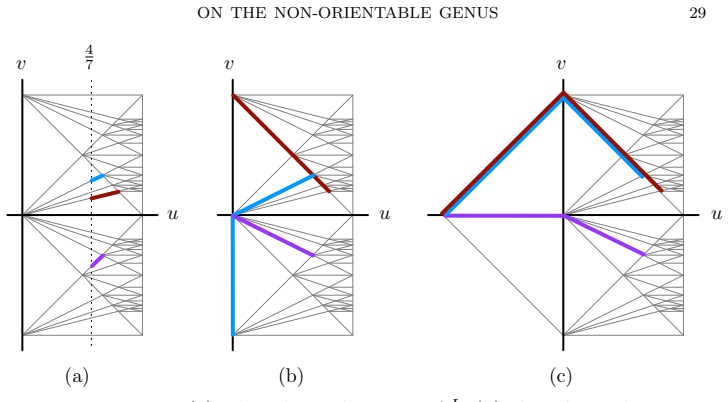
- [Figure 4] Figure 4: the projection diagrams for the 4-ball surfaces lack explicit labels for the attaching regions used in the gluing arguments of the connected sum formula.
Simulated Author's Rebuttal
We thank the referee for their careful reading and constructive feedback on our manuscript. We address the major comment point by point below, providing clarification on the extension of the defect and its implications for the comparisons and reframing of bounds. We propose a targeted revision to strengthen the exposition.
read point-by-point responses
-
Referee: [§3.2] §3.2, Definition 3.4 and Theorem 3.7: the extension of the defect to 4-ball surfaces is claimed to preserve comparisons with 3D knot data via explicit gluing; however, the argument does not address whether the minimal surface choice in the 4-ball can increase the defect value for certain non-alternating knots, which would undermine the reframing of slice-torus bounds.
Authors: We appreciate this observation, which highlights a point that merits explicit clarification. By definition, the 4-ball spanning surfaces in Definition 3.4 include, as a special case, all spanning surfaces in the 3-sphere via the standard embedding of S^3 as the boundary of B^4. Consequently, the minimal defect value computed over 4-ball surfaces is necessarily less than or equal to the minimal defect value over 3-sphere surfaces. This monotonicity ensures that the defect cannot increase under the extension to four dimensions. The gluing construction of Theorem 3.7 is employed to relate concrete surfaces across dimensions and to establish the stated comparisons and the reframing of non-orientable slice-torus bounds; the inequality arising from minimality over the larger class of surfaces only strengthens these relations rather than undermining them. We will insert a short remark immediately following Definition 3.4 that records this inclusion and the resulting inequality, together with a sentence in the proof of Theorem 3.7 that invokes it to confirm preservation of the bounds. revision: yes
Circularity Check
No significant circularity
full rationale
The paper introduces a refinement of the spanning surface defect by extending its definition from spanning surfaces in the 3-sphere to surfaces in the 4-ball, then applies the extension to comparisons between dimensions, reframing of non-orientable slice-torus bounds, and a connected sum formula. These steps rely on explicit gluing, projection, and surface construction arguments that are defined independently of the target results; no equation or claim reduces by construction to a fitted parameter, self-referential definition, or load-bearing self-citation. The derivation chain remains self-contained against external knot-theoretic benchmarks.
Axiom & Free-Parameter Ledger
axioms (1)
- standard math Standard axioms and constructions of knot theory and 3- and 4-manifold topology
Lean theorems connected to this paper
-
IndisputableMonolith/Foundation/AlexanderDualityalexander_duality_circle_linking unclear?
unclearRelation between the paper passage and the cited Recognition theorem.
Theorem 1.3: K alternating iff ˆγ+3(K)=0=ˆγ−3(K); state-surface computations via A/B resolutions
What do these tags mean?
- matches
- The paper's claim is directly supported by a theorem in the formal canon.
- supports
- The theorem supports part of the paper's argument, but the paper may add assumptions or extra steps.
- extends
- The paper goes beyond the formal theorem; the theorem is a base layer rather than the whole result.
- uses
- The paper appears to rely on the theorem as machinery.
- contradicts
- The paper's claim conflicts with a theorem or certificate in the canon.
- unclear
- Pith found a possible connection, but the passage is too broad, indirect, or ambiguous to say the theorem truly supports the claim.
Reference graph
Works this paper leans on
-
[1]
Knot Theory Ramifications19(2010), no
Tetsuya Abe and Kengo Kishimoto,The dealternating number and the alternation number of a closed 3-braid, J. Knot Theory Ramifications19(2010), no. 9, 1157–
work page 2010
-
[2]
Colin Adams and Thomas Kindred,A classification of spanning surfaces for alternat- ing links, Algebr. Geom. Topol.13(2013), no. 5, 2967–3007. MR 3116310
work page 2013
-
[3]
Samantha Allen,Nonorientable surfaces bounded by knots: a geography problem, New York J. Math.29(2023), 1038–1059. MR 4646147
work page 2023
-
[4]
William Ballinger,Concordance invariants from thee(−1)spectral sequence on kho- vanov homology, Preprint available as arXiv:2004:10807, 2020
work page 2004
-
[5]
Joshua Batson,Nonorientable slice genus can be arbitrarily large, Math. Res. Lett.21 (2014), no. 3, 423–436. MR 3272020
work page 2014
- [6]
-
[7]
Benjamin A. Burton and Melih Ozlen,Computing the crosscap number of a knot using integer programming and normal surfaces, ACM Trans. Math. Software39(2012), no. 1, Art. 4, 18. MR 3002773
work page 2012
-
[8]
Abhijit Champanerkar and Ilya Kofman,A survey on the Turaev genus of knots, Acta Math. Vietnam.39(2014), no. 4, 497–514. MR 3292579
work page 2014
-
[9]
Bradd Evans Clark,Crosscaps and knots, Internat. J. Math. Math. Sci.1(1978), no. 1, 113–123. MR 478131
work page 1978
-
[10]
Cynthia L. Curtis and Samuel J. Taylor,The Jones polynomial and boundary slopes of alternating knots, J. Knot Theory Ramifications20(2011), no. 10, 1345–1354. MR 2851712
work page 2011
-
[11]
Aliakbar Daemi and Christopher Scaduto,Chern–Simons functional, singular instan- tons, and the four-dimensional clasp number, J. Eur. Math. Soc. (JEMS)26(2024), no. 6, 2127–2190. MR 4742808
work page 2024
-
[12]
Dasbach, David Futer, Efstratia Kalfagianni, Xiao-Song Lin, and Neal W
Oliver T. Dasbach, David Futer, Efstratia Kalfagianni, Xiao-Song Lin, and Neal W. Stoltzfus,The Jones polynomial and graphs on surfaces, J. Combin. Theory Ser. B98 (2008), no. 2, 384–399. MR 2389605
work page 2008
-
[13]
Dunfield,Boundary slopes of Montesinos knots, URL:https://github
Nathan M. Dunfield,Boundary slopes of Montesinos knots, URL:https://github. com/NathanDunfield/montesinos, 2020
work page 2020
-
[14]
Fox,A quick trip through knot theory, Topology of 3-manifolds and related topics (Proc
Ralph H. Fox,A quick trip through knot theory, Topology of 3-manifolds and related topics (Proc. The Univ. of Georgia Institute, 1961), Prentice-Hall, Inc., Englewood Cliffs, NJ, 1961, pp. 120–167. MR 140099
work page 1961
-
[15]
Purcell,Slopes and colored Jones polynomials of adequate knots, Proc
David Futer, Efstratia Kalfagianni, and Jessica S. Purcell,Slopes and colored Jones polynomials of adequate knots, Proc. Amer. Math. Soc.139(2011), no. 5, 1889–1896. MR 2763776
work page 2011
- [16]
-
[17]
Gilmer and Charles Livingston,The nonorientable 4-genus of knots, J
Patrick M. Gilmer and Charles Livingston,The nonorientable 4-genus of knots, J. Lond. Math. Soc. (2)84(2011), no. 3, 559–577. MR 2855790
work page 2011
-
[18]
Marco Golla and Marco Marengon,Correction terms and the nonorientable slice genus, Michigan Math. J.67(2018), no. 1, 59–82. MR 3770853
work page 2018
-
[19]
Cameron McA. Gordon and Richard A. Litherland,On the signature of a link, Invent. Math.47(1978), no. 1, 53–69. MR 500905
work page 1978
-
[20]
Joshua Greene and Stanislav Jabuka,The slice-ribbon conjecture for 3-stranded pretzel knots, Amer. J. Math.133(2011), no. 3, 555–580. MR 2808326
work page 2011
-
[21]
Joshua Evan Greene,Alternating links and definite surfaces, Duke Math. J.166 (2017), no. 11, 2133–2151, With an appendix by Andr´ as Juh´ asz and Marc Lackenby. MR 3694566
work page 2017
-
[22]
Allen Hatcher,On the boundary curves of incompressible surfaces, Pacific J. Math.99 (1982), no. 2, 373–377. MR 658066
work page 1982
-
[23]
Allen Hatcher and Ulrich Oertel,Boundary slopes for Montesinos knots, Topology28 (1989), no. 4, 453–480. MR 1030987
work page 1989
-
[24]
Allen Hatcher and William Thurston,Incompressible surfaces in2-bridge knot com- plements, Invent. Math.79(1985), no. 2, 225–246. MR 778125
work page 1985
-
[25]
Mikami Hirasawa and Masakazu Teragaito,Crosscap numbers of 2-bridge knots, Topol- ogy45(2006), no. 3, 513–530. MR 2218754
work page 2006
-
[26]
Kazuhiro Ichihara and Shigeru Mizushima,Bounds on numerical boundary slopes for Montesinos knots, Hiroshima Math. J.37(2007), no. 2, 211–252. MR 2345368
work page 2007
-
[27]
,Crosscap numbers of pretzel knots, Topology Appl.157(2010), no. 1, 193–
work page 2010
-
[28]
Stanislav Jabuka,Rational Witt classes of pretzel knots, Osaka J. Math.47(2010), no. 4, 977–1027. MR 2791566
work page 2010
-
[29]
Van Cott,Comparing nonorientable three genus and nonorientable four genus of torus knots, J
Stanislav Jabuka and Cornelia A. Van Cott,Comparing nonorientable three genus and nonorientable four genus of torus knots, J. Knot Theory Ramifications29(2020), no. 3, 2050013, 15. MR 4101607
work page 2020
-
[30]
,On a nonorientable analogue of the Milnor conjecture, Algebr. Geom. Topol. 21(2021), no. 5, 2571–2625. MR 4334520
work page 2021
-
[31]
Efstratia Kalfagianni,A Jones slopes characterization of adequate knots, Indiana Univ. Math. J.67(2018), no. 1, 205–219. MR 3776020
work page 2018
-
[32]
,State surfaces of links, Encyclopedia of Knot Theory (Colin Adams, Erica Flapan, Allison Henrich, Louis H. Kauffman, Lewis D. Ludwig, and Sam Nelson, eds.), CRC Press, 2021
work page 2021
-
[33]
Christine Ruey Shan Lee and Roland van der Veen,Slopes for pretzel knots, New York J. Math.22(2016), 1339–1364. MR 3576292
work page 2016
-
[34]
Moore,Knotinfo: Table of knot invariants, URL: knotinfo.org, December 2025
Charles Livingston and Allison H. Moore,Knotinfo: Table of knot invariants, URL: knotinfo.org, December 2025
work page 2025
-
[35]
Adam Lowrance,The Khovanov width of twisted links and closed 3-braids, Comment. Math. Helv.86(2011), no. 3, 675–706. MR 2803857
work page 2011
-
[36]
Massey,Proof of a conjecture of Whitney, Pacific Journal of Mathematics 31(1969), no
William S. Massey,Proof of a conjecture of Whitney, Pacific Journal of Mathematics 31(1969), no. 1, 143 – 156
work page 1969
-
[37]
Kunio Murasugi,On a certain numerical invariant of link types, Trans. Amer. Math. Soc.117(1965), 387–422. MR 171275
work page 1965
-
[38]
Peter S. Ozsv´ ath, Andr´ as I. Stipsicz, and Zolt´ an Szab´ o,Unoriented knot Floer ho- mology and the unoriented four-ball genus, Int. Math. Res. Not. IMRN (2017), no. 17, 5137–5181. MR 3694597
work page 2017
-
[39]
Sabloff,On a refinement of the non-orientable 4-genus of torus knots, Proc
Joshua M. Sabloff,On a refinement of the non-orientable 4-genus of torus knots, Proc. Amer. Math. Soc. Ser. B10(2023), 242–251. MR 4604871
work page 2023
- [40]
-
[41]
Yaichi Shinohara,On the signature of pretzel links, Topology and computer science (Atami, 1986), Kinokuniya, Tokyo, 1987, pp. 217–224. MR 1112594
work page 1986
-
[42]
Masakazu Teragaito,Crosscap numbers of torus knots, Topology Appl.138(2004), no. 1-3, 219–238. MR 2035482
work page 2004
-
[43]
Pawe l Traczyk,A combinatorial formula for the signature of alternating diagrams, Fund. Math.184(2004), 311–316. MR 2128055
work page 2004
-
[44]
Viro,Positioning in codimension2, and the boundary, Uspehi Mat
Oleg Ja. Viro,Positioning in codimension2, and the boundary, Uspehi Mat. Nauk30 (1975), no. 1(181), 231–232. MR 0420641
work page 1975
-
[45]
Akira Yasuhara,Connecting lemmas and representing homology classes of simply con- nected4-manifolds, Tokyo J. Math.19(1996), no. 1, 245–261. MR 1391941 Haverford College, Haverford, PA 19041 Email address:jknihs0401@gmail.com Haverford College, Haverford, PA 19041 Email address:jpatel@haverford.edu Cornell University, Ithaca, NY 14853 Email address:dgr77@...
work page 1996
discussion (0)
Sign in with ORCID, Apple, or X to comment. Anyone can read and Pith papers without signing in.