Recognition: 2 theorem links
· Lean TheoremConstraining Lyman-Werner Feedback from Velocity Acoustic Oscillations in the Cosmic Dawn 21 cm Signal
Pith reviewed 2026-05-13 23:11 UTC · model grok-4.3
The pith
Velocity acoustic oscillations in the cosmic dawn 21 cm signal can constrain Lyman-Werner feedback efficiency from the first stars.
A machine-rendered reading of the paper's core claim, the machinery that carries it, and where it could break.
Core claim
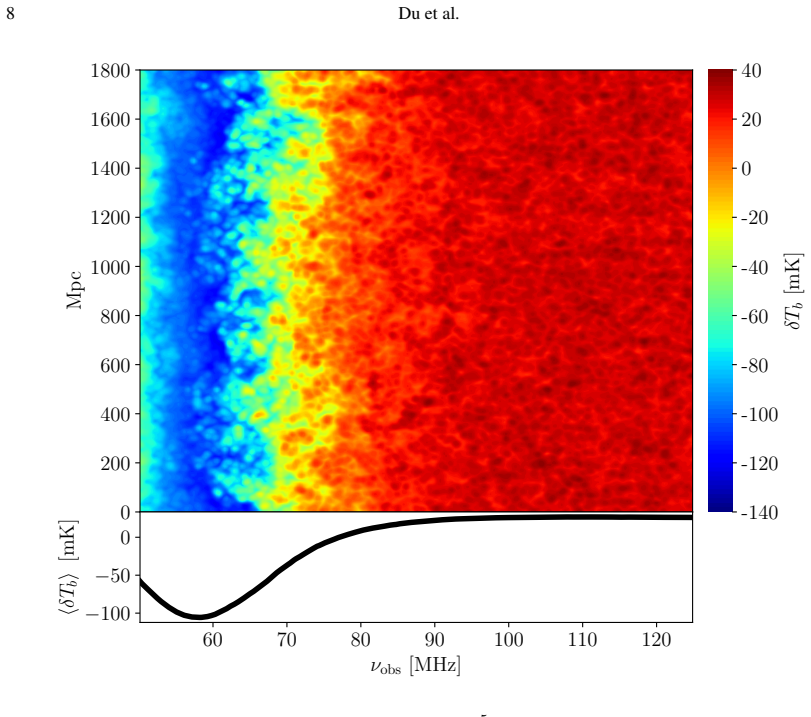
The VAO features arise because dark matter-baryon relative streaming velocity suppresses star formation in low-mass halos and imprints characteristic oscillations in the 21 cm power spectrum; these oscillations are suppressed once Lyman-Werner feedback raises the cooling threshold mass above the streaming-sensitive regime, and multi-frequency angular power spectra extracted from semi-numerical 21 cm lightcone simulations allow a CNN to recover the LW feedback efficiency and baseline cooling threshold accurately in the absence of instrumental noise.
What carries the argument
Velocity acoustic oscillation (VAO) features in the 21 cm power spectrum, whose amplitude depends on whether the Lyman-Werner-regulated cooling threshold mass lies inside or outside the range affected by dark matter-baryon streaming velocities.
If this is right
- The LW feedback efficiency parameter can be recovered to high accuracy from the VAO wiggles when instrumental noise is absent.
- Raising the cooling threshold mass above the streaming-velocity regime strongly damps the VAO amplitude, providing a direct link between feedback strength and observable 21 cm features.
- For the SKA-low AA* configuration, meaningful constraints on LW feedback require integration times exceeding 10,000 hours under optimistic foreground-removal assumptions.
- The VAO wiggles constitute a physically motivated signature that is robust to many modeling uncertainties in the underlying star-formation physics.
Where Pith is reading between the lines
- Combining VAO-based constraints with other 21 cm statistics could help break degeneracies between feedback strength and the timing of reionization.
- If the method works, it would supply an independent check on models of Population III star formation that currently rely only on theoretical cooling curves.
- Future instruments with lower noise floors could shorten the required integration time and make the probe practical for SKA-era observations.
Load-bearing premise
The semi-numerical 21 cm lightcone simulations correctly capture how Lyman-Werner feedback changes the halo cooling threshold and thereby suppresses the VAO features.
What would settle it
A measurement of the 21 cm power spectrum at cosmic dawn frequencies that shows the expected VAO wiggles persisting at full strength even when independent probes indicate strong Lyman-Werner feedback, or conversely shows complete suppression when feedback is expected to be weak.
Figures






read the original abstract
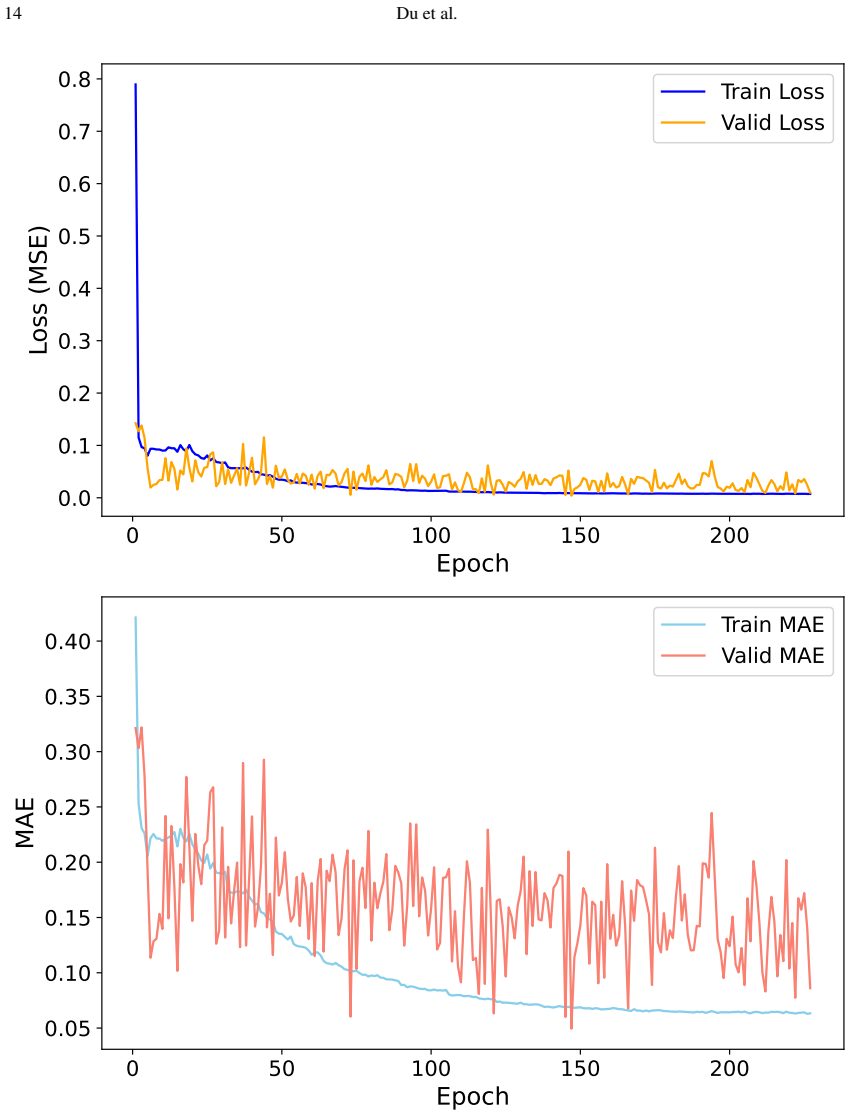
During Cosmic Dawn, Pop III stars could be formed in minihalos through molecular hydrogen (H$_2$) cooling. The minimum halo mass required for H$_2$ cooling is highly sensitive to Lyman-Werner (LW) radiation, which dissociates H$_2$ and regulates star formation. However, the efficiency of LW feedback remains poorly constrained due to the lack of direct observations of Pop III stars. The dark matter-baryon relative streaming velocity suppresses star formation in low-mass halos and imprints characteristic Velocity Acoustic Oscillation (VAO) features in the 21 cm power spectrum. These features are particularly sensitive to the cooling threshold mass: if LW feedback raises the minimum halo mass above the streaming-sensitive regime, the VAO signal is strongly suppressed. This makes the VAO wiggles a promising indirect probe of LW feedback during Cosmic Dawn. We investigate the feasibility of constraining LW feedback parameters using semi-numerical 21 cm lightcone simulations. We compute the multi-frequency angular power spectrum (MAPS) to isolate the VAO features and train a Convolutional Neural Network (CNN) to infer the LW feedback efficiency and the baseline cooling threshold. We find that in the absence of instrumental noise, the LW feedback efficiency can be accurately recovered from the VAO features. However, for the SKA-low AA* configuration, meaningful constraints require integration times exceeding $10^4$ hours under optimistic foreground assumptions. Nonetheless, our results demonstrate that VAO features provide a physically robust and potentially powerful probe of LW feedback at Cosmic Dawn.
Editorial analysis
A structured set of objections, weighed in public.
Referee Report
Summary. The paper claims that Velocity Acoustic Oscillation (VAO) features imprinted by dark matter-baryon streaming velocities in the Cosmic Dawn 21 cm signal can be used to constrain Lyman-Werner (LW) feedback efficiency. Semi-numerical 21 cm lightcone simulations are used to compute the multi-frequency angular power spectrum (MAPS), isolating the VAO wiggles; a Convolutional Neural Network (CNN) is then trained to recover the LW feedback efficiency and baseline cooling threshold. The abstract reports accurate recovery of the LW feedback efficiency in the zero-noise limit, while SKA-low observations would require integration times exceeding 10^4 hours under optimistic foreground assumptions.
Significance. If the central result holds, the work identifies a physically motivated, indirect probe of LW feedback during Cosmic Dawn that exploits the sensitivity of the cooling threshold mass to the suppression of VAO features. This could provide a new observational handle on Pop III star formation efficiency in the absence of direct detections.
major comments (2)
- [Abstract] Abstract: the claim that the CNN recovers LW feedback efficiency accurately in the noise-free case is unsupported by any description of the training/validation sets, error propagation, robustness tests against simulation variations, or comparison to full-physics runs, leaving the central inference claim without load-bearing evidence.
- [Abstract] Abstract: training and testing the CNN exclusively on data generated from the same semi-numerical model whose parameters are being inferred creates a circularity risk; the reported recovery demonstrates sensitivity within the assumed framework rather than independent validation of the LW feedback modeling.
minor comments (1)
- The abstract refers to 'optimistic foreground assumptions' for SKA-low without defining the specific foreground removal model or residual levels assumed.
Simulated Author's Rebuttal
We thank the referee for their careful and constructive comments on our manuscript. We address each major comment point by point below.
read point-by-point responses
-
Referee: [Abstract] Abstract: the claim that the CNN recovers LW feedback efficiency accurately in the noise-free case is unsupported by any description of the training/validation sets, error propagation, robustness tests against simulation variations, or comparison to full-physics runs, leaving the central inference claim without load-bearing evidence.
Authors: Abstracts are concise by design and do not contain the full methodological details. The main text describes the semi-numerical lightcone simulations, the generation of training and validation sets from multiple realizations, the CNN architecture and training protocol, quantitative recovery metrics in the zero-noise limit, and robustness checks against variations in streaming velocity and cooling threshold. Parameter uncertainties are obtained from the network output distributions. Direct comparison to full-physics runs is not performed here, as the work focuses on the semi-numerical framework; this modeling limitation is discussed explicitly. We will revise the abstract to include a brief reference to the validation procedure. revision: yes
-
Referee: [Abstract] Abstract: training and testing the CNN exclusively on data generated from the same semi-numerical model whose parameters are being inferred creates a circularity risk; the reported recovery demonstrates sensitivity within the assumed framework rather than independent validation of the LW feedback modeling.
Authors: We agree that this constitutes a demonstration of information content and sensitivity within the adopted modeling framework rather than an external validation. Such simulation-based inference is standard for establishing the constraining power of a new observable before real-data application. The manuscript discusses the underlying assumptions and potential biases of the semi-numerical model. We will clarify this scope in the revised abstract and discussion to avoid any implication of model-independent validation. revision: partial
Circularity Check
No significant circularity detected
full rationale
The abstract describes a standard simulation-based feasibility study: semi-numerical 21 cm lightcone simulations generate MAPS containing VAO features, a CNN is trained on those simulations to recover LW feedback efficiency, and recovery is demonstrated in the zero-noise limit. This shows information content within the model rather than any derivation that reduces by construction to its inputs. No equations, self-citations, or load-bearing steps are present in the available text that match the enumerated circularity patterns; the result is not equivalent to the inputs by definition and remains a self-contained demonstration against the internal benchmarks of the simulations.
Axiom & Free-Parameter Ledger
free parameters (2)
- Lyman-Werner feedback efficiency
- baseline cooling threshold
axioms (3)
- domain assumption The minimum halo mass required for H2 cooling is highly sensitive to LW radiation.
- domain assumption VAO features are strongly suppressed if LW feedback raises the minimum halo mass above the streaming-sensitive regime.
- domain assumption Semi-numerical lightcone simulations accurately model the 21 cm signal including streaming velocity and LW effects.
Lean theorems connected to this paper
-
IndisputableMonolith/Cost/FunctionalEquation.leanwashburn_uniqueness_aczel unclear?
unclearRelation between the paper passage and the cited Recognition theorem.
We employ a two-parameter formula ... Mcool1 = Mcool0 [1 + α_LW (4π J_LW)^0.47] ... train a Convolutional Neural Network (CNN) to infer the LW feedback efficiency and the baseline cooling threshold.
-
IndisputableMonolith/Foundation/DimensionForcing.leanalexander_duality_circle_linking unclear?
unclearRelation between the paper passage and the cited Recognition theorem.
We compute the multi-frequency angular power spectrum (MAPS) to isolate the VAO features
What do these tags mean?
- matches
- The paper's claim is directly supported by a theorem in the formal canon.
- supports
- The theorem supports part of the paper's argument, but the paper may add assumptions or extra steps.
- extends
- The paper goes beyond the formal theorem; the theorem is a base layer rather than the whole result.
- uses
- The paper appears to rely on the theorem as machinery.
- contradicts
- The paper's claim conflicts with a theorem or certificate in the canon.
- unclear
- Pith found a possible connection, but the passage is too broad, indirect, or ambiguous to say the theorem truly supports the claim.
Reference graph
Works this paper leans on
-
[1]
Abel, T., Bryan, G. L., & Norman, M. L. 2000, The Astrophysical Journal, 540, 39 4 Ali-Ha¨ımoud, Y ., Meerburg, P. D., & Yuan, S. 2014, Physical Review D, 89, 083506 2
work page 2000
-
[2]
2001, Physics Reports, 349, 125 2, 4
Barkana, R., & Loeb, A. 2001, Physics Reports, 349, 125 2, 4
work page 2001
-
[3]
Bera, A., Ghara, R., Chatterjee, A., Datta, K. K., & Samui, S. 2023, Journal of Astrophysics and Astronomy, 44, 10 7
work page 2023
-
[4]
Bevins, H. T. J., Fialkov, A., De Lera Acedo, E., et al. 2022, Nature Astronomy, 6, 1473 2
work page 2022
-
[5]
Binnie, T., Zhao, X., Pritchard, J. R., & Mao, Y . 2025, arXiv e-prints, arXiv:2502.08152 11
-
[6]
Bromm, V ., Yoshida, N., Hernquist, L., & McKee, C. F. 2009, Nature, 459, 49 2
work page 2009
-
[7]
2008, The Astrophysical Journal, 684, 18 2
Chen, X., & Miralda-Escud´e, J. 2008, The Astrophysical Journal, 684, 18 2
work page 2008
-
[8]
Fisher Matrices and Confidence Ellipses: A Quick-Start Guide and Software
Coe, D. 2009, arXiv e-prints, arXiv:0906.4123 29
work page internal anchor Pith review Pith/arXiv arXiv 2009
-
[9]
Cohen, A., Fialkov, A., Barkana, R., & Monsalve, R. A. 2020, Monthly Notices of the Royal Astronomical Society, 495, 4845 7
work page 2020
-
[10]
Cruz, H. A. G., Mu˜noz, J. B., Sabti, N., & Kamionkowski, M. 2025, Physical Review D, 111, 083503 2
work page 2025
-
[11]
2010, Journal of Cosmology and Astroparticle Physics, 2010, 007 2
Dalal, N., Pen, U.-L., & Seljak, U. 2010, Journal of Cosmology and Astroparticle Physics, 2010, 007 2
work page 2010
-
[12]
Datta, A., Bowman, J. D., & Carilli, C. L. 2010, The Astrophysical Journal, 724, 526 23
work page 2010
-
[13]
Datta, K. K., Choudhury, T. R., & Bharadwaj, S. 2007, Monthly Notices of the Royal Astronomical Society, 378, 119 7
work page 2007
-
[14]
K., Mellema, G., Mao, Y ., et al
Datta, K. K., Mellema, G., Mao, Y ., et al. 2012, Monthly Notices of the Royal Astronomical Society, 424, 1877 7
work page 2012
-
[15]
Davies, J. E., Mesinger, A., & Murray, S. G. 2025, Astronomy & Astrophysics, 701, A236 3
work page 2025
-
[16]
Dewdney, P., Labate, M. G., Swart, G., et al. 2022, SKA1 Design Baseline Description, Tech. rep., SKAO 7
work page 2022
-
[17]
2025, Monthly Notices of the Royal Astronomical Society, 542, 2292 2
Dhandha, J., Fialkov, A., Gessey-Jones, T., et al. 2025, Monthly Notices of the Royal Astronomical Society, 542, 2292 2
work page 2025
-
[18]
Fialkov, A., Barkana, R., Tseliakhovich, D., & Hirata, C. M. 2012, Monthly Notices of the Royal Astronomical Society, 424, 1335 2, 4, 20
work page 2012
-
[19]
Fialkov, A., Barkana, R., Visbal, E., Tseliakhovich, D., & Hirata, C. M. 2013, Monthly Notices of the Royal Astronomical Society, 432, 2909 3, 4
work page 2013
-
[20]
Field, G. B., Somerville, W. B., & Dressler, K. 1966, Annual Review of Astronomy and Astrophysics, 4, 207 2
work page 1966
-
[21]
Furlanetto, S. R., Peng Oh, S., & Briggs, F. H. 2006, Physics Reports, 433, 181 2
work page 2006
-
[22]
Gessey-Jones, T., Sartorio, N. S., Bevins, H. T. J., et al. 2025, Nature Astronomy, 9, 1268 2
work page 2025
-
[23]
2024, Monthly Notices of the Royal Astronomical Society, 530, 191 7
Ghara, R., Bag, S., Zaroubi, S., & Majumdar, S. 2024, Monthly Notices of the Royal Astronomical Society, 530, 191 7
work page 2024
-
[24]
Ghara, R., Datta, K. K., & Choudhury, T. R. 2015, Monthly Notices of the Royal Astronomical Society, 453, 3144 7
work page 2015
-
[25]
2013, in Astrophysics and Space Science Library, V ol
Glover, S. 2013, in Astrophysics and Space Science Library, V ol. 396, The First Galaxies, ed. T. Wiklind, B. Mobasher, & V . Bromm, 103 2, 3 32 Du et al
work page 2013
-
[26]
Glover, S. C. O., Clark, P. C., Greif, T. H., et al. 2008, Proceedings of the International Astronomical Union, 4, 3 2
work page 2008
-
[27]
Greif, T. H., White, S. D. M., Klessen, R. S., & Springel, V . 2011, The Astrophysical Journal, 736, 147 2
work page 2011
-
[28]
2018, Monthly Notices of the Royal Astronomical Society, 477, 3217 7
Greig, B., & Mesinger, A. 2018, Monthly Notices of the Royal Astronomical Society, 477, 3217 7
work page 2018
-
[29]
Hotinli, S. C., Binnie, T., Mu˜noz, J. B., Dinda, B. R., & Kamionkowski, M. 2021, Physical Review D, 104, 063536 2
work page 2021
-
[30]
Hotinli, S. C., Marsh, D. J. E., & Kamionkowski, M. 2022, Physical Review D, 106, 043529 2
work page 2022
-
[31]
2016, Monthly Notices of the Royal Astronomical Society, 456, 66 23
Jensen, H., Majumdar, S., Mellema, G., et al. 2016, Monthly Notices of the Royal Astronomical Society, 456, 66 23
work page 2016
-
[32]
Kashlinsky, A., & Rees, M. J. 1983, Monthly Notices of the Royal Astronomical Society, 205, 955 3
work page 1983
-
[33]
Klessen, R. S., & Glover, S. C. 2023, Annual Review of Astronomy and Astrophysics, 61, 65 2
work page 2023
-
[34]
Kulkarni, M., Visbal, E., & Bryan, G. L. 2021, The Astrophysical Journal, 917, 40 2, 3, 22
work page 2021
-
[35]
Liu, A., Parsons, A. R., & Trott, C. M. 2014, Physical Review D, 90, 023018 23
work page 2014
-
[36]
Machacek, M. E., Bryan, G. L., & Abel, T. 2001, The Astrophysical Journal, 548, 509 3, 4, 20
work page 2001
-
[37]
2025, arXiv e-prints, arXiv:2509.22561 11
Marx, E., Chatterjee, D., Desai, M., et al. 2025, arXiv e-prints, arXiv:2509.22561 11
-
[38]
McQuinn, M., & O’Leary, R. M. 2012, The Astrophysical Journal, 760, 3 2
work page 2012
-
[39]
2011, Monthly Notices of the Royal Astronomical Society, 411, 955 3
Mesinger, A., Furlanetto, S., & Cen, R. 2011, Monthly Notices of the Royal Astronomical Society, 411, 955 3
work page 2011
-
[40]
Mirocha, J., Mebane, R. H., Furlanetto, S. R., Singal, K., & Trinh, D. 2018, Monthly Notices of the Royal Astronomical Society, 478, 5591 2
work page 2018
-
[41]
Mondal, R., Mellema, G., Murray, S. G., & Greig, B. 2022, Monthly Notices of the Royal Astronomical Society: Letters, 514, L31 7
work page 2022
-
[42]
Mondal, R., Shaw, A. K., Iliev, I. T., et al. 2020, Monthly Notices of the Royal Astronomical Society, 494, 4043 7
work page 2020
-
[43]
F., Hazelton, B., Sullivan, I., & Beardsley, A
Morales, M. F., Hazelton, B., Sullivan, I., & Beardsley, A. 2012, The Astrophysical Journal, 752, 137 23 Mu˜noz, J. B. 2019a, Physical Review D, 100, 063538 2, 8 Mu˜noz, J. B. 2019b, Physical Review Letters 2, 7, 8 Mu˜noz, J. B., Qin, Y ., Mesinger, A., et al. 2022, Monthly Notices of the Royal Astronomical Society, 511, 3657 7
work page 2012
-
[44]
2020, The Journal of Open Source Software, 5, 2582 3
Murray, S., Greig, B., Mesinger, A., et al. 2020, The Journal of Open Source Software, 5, 2582 3
work page 2020
-
[45]
2024, The Journal of Open Source Software, 9, 6501 23 O’Shea, B
Murray, S., Pober, J., & Kolopanis, M. 2024, The Journal of Open Source Software, 9, 6501 23 O’Shea, B. W., & Norman, M. L. 2008, The Astrophysical Journal, 673, 14 3 Planck Collaboration, Ade, P. A. R., Aghanim, N., et al. 2016, Astronomy & Astrophysics, 594, A13 3
work page 2024
-
[46]
Pober, J. C., Parsons, A. R., DeBoer, D. R., et al. 2013, The Astronomical Journal, 145, 65 23
work page 2013
-
[47]
Pober, J. C., Liu, A., Dillon, J. S., et al. 2014, The Astrophysical Journal, 782, 66 23
work page 2014
-
[48]
Prole, L. R., Schauer, A. T. P., Clark, P. C., et al. 2023, Monthly Notices of the Royal Astronomical Society, 520, 2081 2
work page 2023
-
[49]
2012, Monthly Notices of the Royal Astronomical Society, 426, 1159 2 LW feedback & V AO 33
Safranek-Shrader, C., Agarwal, M., Federrath, C., et al. 2012, Monthly Notices of the Royal Astronomical Society, 426, 1159 2 LW feedback & V AO 33
work page 2012
-
[50]
Santos, M. G., Cooray, A., & Knox, L. 2005, The Astrophysical Journal, 625, 575 7
work page 2005
-
[51]
Sarkar, D., & Kovetz, E. D. 2023, Physical Review D, 107, 023524 2, 7, 8
work page 2023
-
[52]
Schauer, A. T. P., Boylan-Kolchin, M., Colston, K., et al. 2023, The Astrophysical Journal, 950, 20 2
work page 2023
-
[53]
Schauer, A. T. P., Glover, S. C. O., Klessen, R. S., & Clark, P. 2021, Monthly Notices of the Royal Astronomical Society, 507, 1775 3, 22
work page 2021
-
[54]
K., Ghara, R., Zaroubi, S., et al
Shaw, A. K., Ghara, R., Zaroubi, S., et al. 2023, Monthly Notices of the Royal Astronomical Society, 522, 2188 7
work page 2023
- [55]
-
[56]
Stecher, T. P., & Williams, D. A. 1967, The Astrophysical Journal, 149, L29 2
work page 1967
-
[57]
2025, Communications Physics, 8, 220 11
Sun, T.-Y ., Shao, Y ., Li, Y ., et al. 2025, Communications Physics, 8, 220 11
work page 2025
-
[58]
2021, Monthly Notices of the Royal Astronomical Society, 502, 463 2
Tanaka, T., & Hasegawa, K. 2021, Monthly Notices of the Royal Astronomical Society, 502, 463 2
work page 2021
-
[59]
Tanaka, T. L., Li, M., & Haiman, Z. 2013, Monthly Notices of the Royal Astronomical Society, 435, 3559 2
work page 2013
- [60]
-
[61]
Ting, Y .-S. 2025, arXiv e-prints, arXiv:2510.10713 11
work page internal anchor Pith review Pith/arXiv arXiv 2025
-
[62]
2024, SKA-Low Substation Templates, Tech
Trott, C., Breen, s., Green, J., & Pearcey, S. 2024, SKA-Low Substation Templates, Tech. rep., SKAO 7
work page 2024
-
[63]
M., Mondal, R., Mellema, G., et al
Trott, C. M., Mondal, R., Mellema, G., et al. 2022, Astronomy & Astrophysics, 666, A106 7
work page 2022
-
[64]
Tseliakhovich, D., Barkana, R., & Hirata, C. M. 2011, Monthly Notices of the Royal Astronomical Society, 418, 906 2
work page 2011
-
[65]
2010, Physical Review D, 82, 083520 2, 3
Tseliakhovich, D., & Hirata, C. 2010, Physical Review D, 82, 083520 2, 3
work page 2010
-
[66]
M., Qin, Y ., Balu, S., & Wyithe, J
Ventura, E. M., Qin, Y ., Balu, S., & Wyithe, J. S. B. 2025, Monthly Notices of the Royal Astronomical Society, 540, 483 2
work page 2025
-
[67]
M., Trinca, A., Schneider, R., et al
Ventura, E. M., Trinca, A., Schneider, R., et al. 2023, Monthly Notices of the Royal Astronomical Society, 520, 3609 2
work page 2023
-
[68]
Visbal, E., Barkana, R., Fialkov, A., Tseliakhovich, D., & Hirata, C. M. 2012, Nature, 487, 70 7
work page 2012
-
[69]
Visbal, E., Haiman, Z., Terrazas, B., Bryan, G. L., & Barkana, R. 2014, Monthly Notices of the Royal Astronomical Society, 445, 107 3, 4, 5, 20
work page 2014
-
[70]
E., Naoz, S., Yoshida, N., et al
Williams, C. E., Naoz, S., Yoshida, N., et al. 2026, The Astrophysical Journal, 997, 202 2
work page 2026
- [71]
-
[72]
Xu, H., Norman, M. L., O’Shea, B. W., & Wise, J. H. 2016, The Astrophysical Journal, 823, 140 2
work page 2016
-
[73]
2003, The Astrophysical Journal, 592, 645 4
Yoshida, N., Abel, T., Hernquist, L., & Sugiyama, N. 2003, The Astrophysical Journal, 592, 645 4
work page 2003
-
[74]
2024, The Astrophysical Journal, 964, 62 2, 3, 5, 7
Zhang, X., Lin, H., Zhang, M., et al. 2024, The Astrophysical Journal, 964, 62 2, 3, 5, 7
work page 2024
-
[75]
Zhao, X., Mao, Y ., Cheng, C., & Wandelt, B. D. 2022, The Astrophysical Journal, 926, 151 11
work page 2022
discussion (0)
Sign in with ORCID, Apple, or X to comment. Anyone can read and Pith papers without signing in.