Recognition: unknown
Rapid and Highly Efficient Synergistic Sonophotocatalytic Degradation of Methyl Orange with CuDoped LaFeO3 Perovskite Nanoparticles
Pith reviewed 2026-05-10 17:14 UTC · model grok-4.3
The pith
Cu-doped LaFeO3 nanoparticles completely degrade methyl orange in 120 minutes using combined ultrasound and light.
A machine-rendered reading of the paper's core claim, the machinery that carries it, and where it could break.
Core claim
The Cu-doped LaFeO3 perovskite nanoparticles demonstrate excellent sonophotocatalytic performance for methyl orange degradation, with a rate of 0.0455 min-1 and complete removal within 120 minutes under combined ultrasonic and light irradiation. A synergy index of approximately 10 is observed, indicating enhanced interaction between the two processes. The catalyst remains stable over four cycles, and scavenger experiments show that hydroxyl radicals and photogenerated holes are the main active species driving the degradation.
What carries the argument
Cu-doped LaFeO3 perovskite nanoparticles that enable synergistic sonophotocatalysis by improving charge carrier separation and promoting the generation of reactive oxygen species under simultaneous ultrasound and visible light exposure.
Load-bearing premise
The high degradation rate and synergy result from the Cu doping enabling better interaction between sonication and photocatalysis, rather than from unmeasured effects like local heating or changes in the solution environment.
What would settle it
Performing parallel tests of sonocatalysis alone, photocatalysis alone, and the combined process under identical conditions including temperature control would reveal whether the synergy index of 10 holds or if other factors contribute.
Figures
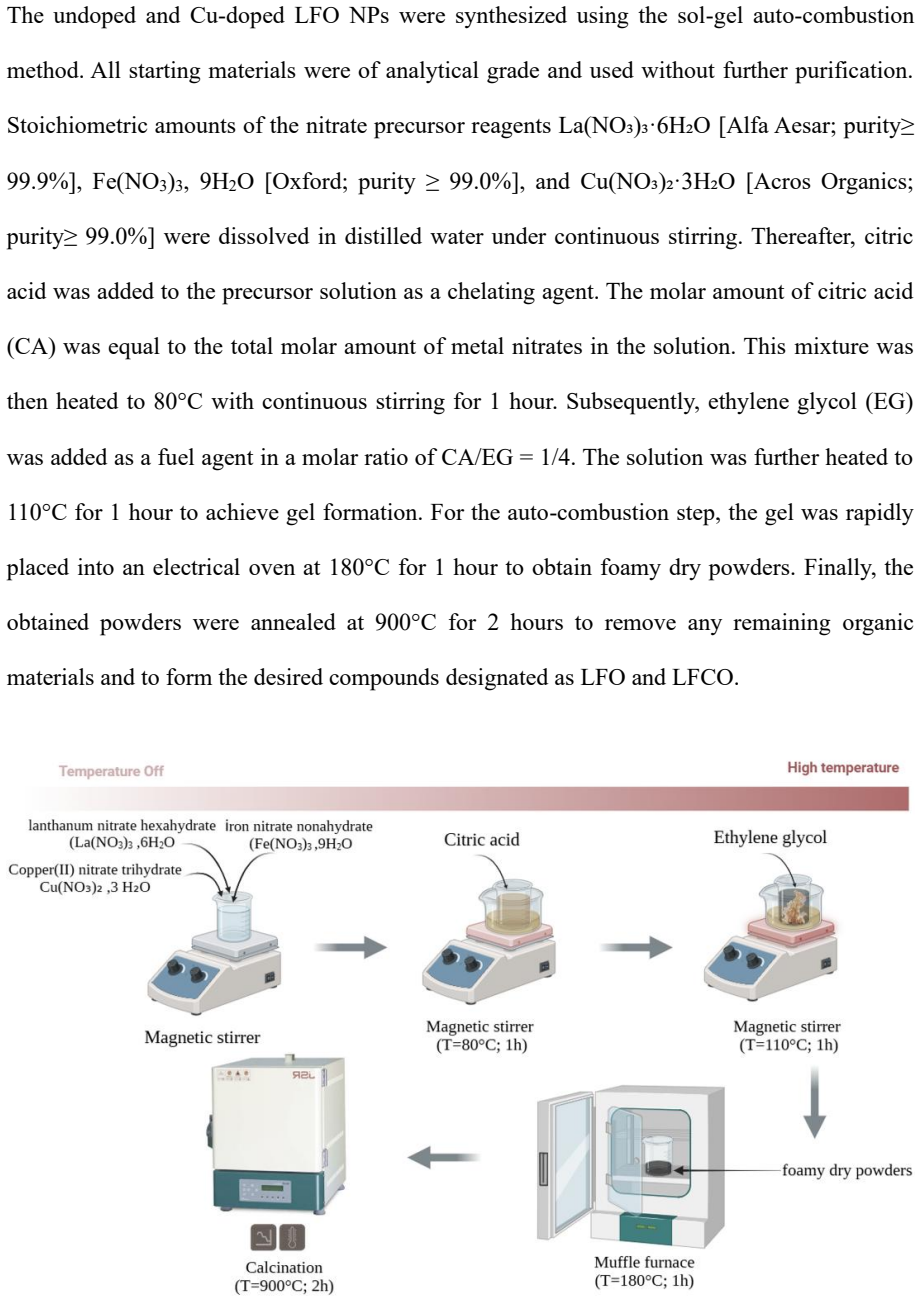
read the original abstract
The integration of sonocatalysis with photocatalysis offers a powerful strategy for advanced wastewater treatment by overcoming rapid charge carrier recombination in conventional photocatalytic systems. Although these processes are often treated separately due to their distinct mechanisms, their combination creates a highly efficient synergistic system. In this study, we investigate the sonophotocatalytic degradation of methyl orange (MO) using Cu-doped LaFeO3 perovskite nanoparticles. The Cu doped catalyst demonstrated excellent performance, achieving a degradation rate of 0.0455 min-1 and complete removal of MO within 120 minutes under combined ultrasonic and light irradiation. A strong synergistic effect was observed, with a synergy index of approximately 10, highlighting the enhanced interaction between sonocatalysis and photocatalysis. The catalyst also exhibited good stability and reusability, maintaining high efficiency over four consecutive cycles. Mechanistic studies using scavenger experiments revealed that hydroxyl radicals and photogenerated holes are the main reactive species responsible for degradation. A plausible reaction pathway is proposed based on these findings. Overall, Cu doped LaFeO3 shows superior sonophotocatalytic activity compared to the undoped material, demonstrating the potential of synergistic sonophotocatalytic processes for efficient pollutant removal.
Editorial analysis
A structured set of objections, weighed in public.
Referee Report
Summary. The manuscript reports synthesis of Cu-doped LaFeO3 perovskite nanoparticles and their application to sonophotocatalytic degradation of methyl orange (MO). It claims a pseudo-first-order rate constant of 0.0455 min^{-1} with complete MO removal in 120 min under simultaneous ultrasonic and light irradiation, a synergy index of approximately 10, identification of hydroxyl radicals and holes as dominant species via scavenger tests, and good reusability over four cycles. The central claim is that Cu doping enables enhanced charge separation and radical generation responsible for the observed synergy.
Significance. If the reported rate, complete degradation, and high synergy index are robustly attributable to the doped perovskite rather than experimental artifacts, the work would be of interest for advanced oxidation processes in wastewater treatment. Sonophotocatalysis with perovskites is an active area, and a synergy index near 10 would represent a strong demonstration of combined US-light effects if properly controlled.
major comments (3)
- [Materials and Methods] Materials and Methods section: no description of active temperature monitoring or control during sonication is provided. Cavitation-induced local heating is a known confounder that can accelerate MO degradation independently of photocatalysis or sonocatalysis; without explicit reporting of isothermal conditions or cooling, the rate constant 0.0455 min^{-1} and synergy index cannot be confidently assigned to Cu-doped LaFeO3.
- [Results] Results section (kinetic data and synergy calculation): absence of error bars, replicate numbers (n), or raw time-course plots for the individual US, light, and combined runs. The synergy index of ~10 is computed from these rates; without statistical robustness or full data, the central performance claim rests on summarized values whose reproducibility cannot be assessed.
- [Results] Results section (control experiments): insufficient blank runs are described (e.g., US-only with no catalyst at matched power, light-only with pH-matched solutions, or catalyst-free combined irradiation). The abstract states comparison of separate versus combined irradiation, but without these controls the observed complete removal in 120 min and synergy cannot be distinguished from non-specific effects such as improved mass transfer, pH drift, or heating.
minor comments (3)
- [Title] Title: 'CuDoped' should be written as 'Cu-Doped' for standard chemical nomenclature.
- [Abstract] Abstract: the exact formula or individual rate constants used to compute the synergy index of 'approximately 10' are not stated, making the value difficult to reproduce from the given data.
- [Figures] Figure captions and text: kinetic plots (if present) lack labels for error bars or replicate overlays; this reduces clarity of the performance claims.
Simulated Author's Rebuttal
We thank the referee for their detailed and constructive comments, which highlight important aspects of experimental rigor in our study on Cu-doped LaFeO3 for sonophotocatalytic degradation of methyl orange. We address each major comment point by point below, indicating revisions that will be incorporated to strengthen the manuscript.
read point-by-point responses
-
Referee: [Materials and Methods] Materials and Methods section: no description of active temperature monitoring or control during sonication is provided. Cavitation-induced local heating is a known confounder that can accelerate MO degradation independently of photocatalysis or sonocatalysis; without explicit reporting of isothermal conditions or cooling, the rate constant 0.0455 min^{-1} and synergy index cannot be confidently assigned to Cu-doped LaFeO3.
Authors: We acknowledge the referee's concern about potential thermal effects from cavitation. Although the original manuscript did not explicitly detail this, experiments were performed in a temperature-controlled ultrasonic bath maintained at 25 °C using a cooling jacket and periodic thermometer checks to minimize heating. We will revise the Materials and Methods section to include a full description of the temperature monitoring protocol and confirm isothermal conditions, thereby supporting attribution of the observed kinetics to the sonophotocatalytic mechanism rather than thermal artifacts. revision: yes
-
Referee: [Results] Results section (kinetic data and synergy calculation): absence of error bars, replicate numbers (n), or raw time-course plots for the individual US, light, and combined runs. The synergy index of ~10 is computed from these rates; without statistical robustness or full data, the central performance claim rests on summarized values whose reproducibility cannot be assessed.
Authors: We agree that statistical details are necessary to substantiate the reported rate constant and synergy index. The kinetic data were collected from triplicate independent runs, with 0.0455 min^{-1} representing the average. In the revised manuscript, we will add error bars to all kinetic plots, explicitly state n=3 for each condition (US-only, light-only, and combined), and include or reference the raw time-course data. This will allow clear evaluation of reproducibility and the basis for the synergy calculation. revision: yes
-
Referee: [Results] Results section (control experiments): insufficient blank runs are described (e.g., US-only with no catalyst at matched power, light-only with pH-matched solutions, or catalyst-free combined irradiation). The abstract states comparison of separate versus combined irradiation, but without these controls the observed complete removal in 120 min and synergy cannot be distinguished from non-specific effects such as improved mass transfer, pH drift, or heating.
Authors: The referee rightly emphasizes the need for comprehensive blanks to isolate catalyst-specific effects. Our study included catalyst-free controls under separate US and light irradiation showing negligible MO degradation, along with pH monitoring, but combined irradiation without catalyst was not fully detailed. We will revise the Results section to explicitly present all control data, including catalyst-free sonophotocatalysis at matched conditions, and confirm pH stability. Additional experiments will be performed if needed to fully address non-specific contributions. revision: partial
Circularity Check
No circularity: all claims are direct experimental measurements
full rationale
The paper reports synthesis of Cu-doped LaFeO3 nanoparticles followed by batch degradation experiments measuring MO concentration vs. time under separate and combined US+light conditions. The reported rate constant (0.0455 min^{-1}) and synergy index (~10) are computed arithmetically from those independent kinetic runs; scavenger tests and reusability cycles are likewise empirical observations. No equations, fitted parameters, self-citations for uniqueness theorems, or ansatzes appear in the derivation chain. The central claims therefore do not reduce to their own inputs by construction and remain falsifiable by external replication.
Axiom & Free-Parameter Ledger
axioms (1)
- domain assumption Hydroxyl radicals and photogenerated holes are the dominant reactive species in sonophotocatalytic dye degradation.
Reference graph
Works this paper leans on
-
[1]
Riaz N, Chong FK, Dutta BK, Man ZB, Khan MS, Nurlaela E. Photodegradation of Orange II under visible light using Cu–Ni/TiO2: Effect of calcination temperature. Chem Eng J. 2012;185-186:108-119. doi:10.1016/j.cej.2012.01.052
-
[2]
Dutta S, Adhikary S, Bhattacharya S, et al. Contamination of textile dyes in aquatic environment: Adverse impacts on aquatic ecosystem and human health, and its management using bioremediation. J Environ Manage. 2024;353:120103. doi:10.1016/j.jenvman.2024.120103
-
[3]
Ball-milling synthesized Bi2VO5.5 for piezo- photocatalytic assessment
Kumar M, Vaish R, Kebaili I, et al. Ball-milling synthesized Bi2VO5.5 for piezo- photocatalytic assessment. Sci Rep. 2023;13(1):8188. doi:10.1038/s41598-023-33658-2
-
[4]
Liang Y, Tu Z, Wu Q, et al. Degradation of printing and dyeing wastewater pollutant reactive black 5 via pyrite activated persulfate: Efficacy and application impact assessment. J Water Process Eng. 2025;70:107082. doi:10.1016/j.jwpe.2025.107082
-
[5]
Pirsaheb M, Moradi N. A systematic review of the sonophotocatalytic process for the decolorization of dyes in aqueous solution: Synergistic mechanisms, degradation pathways, and process optimization. J Water Process Eng. 2021;44:102314. doi:10.1016/j.jwpe.2021.102314
-
[6]
He Y, Grieser F, Ashokkumar M. The mechanism of sonophotocatalytic degradation of methyl orange and its products in aqueous solutions. Ultrason Sonochem. 2011;18(5):974-980. doi:10.1016/j.ultsonch.2011.03.017
-
[7]
Khorram AG, Fallah N. Treatment of textile dyeing factory wastewater by electrocoagulation with low sludge settling time: Optimization of operating parameters by RSM. J Environ Chem Eng. 2018;6(1):635-642. doi:10.1016/j.jece.2017.12.054
-
[8]
A review on advanced physico-chemical and biological textile dye wastewater treatment techniques
Donkadokula NY, Kola AK, Naz I, Saroj D. A review on advanced physico-chemical and biological textile dye wastewater treatment techniques. Rev Environ Sci Bio/Technology. 2020;19(3):543-560. doi:10.1007/s11157-020-09543-z
-
[9]
Biological methods for textile dyes removal from wastewaters
Sahoo AK, Dahiya A, Patel BK. Biological methods for textile dyes removal from wastewaters. In: Development in Wastewater Treatment Research and Processes. Elsevier; 2022:127-151. doi:10.1016/B978-0-323-85657-7.00009-2
-
[10]
Lops C, Ancona A, Di Cesare K, et al. Sonophotocatalytic degradation mechanisms of Rhodamine B dye via radicals generation by micro- and nano-particles of ZnO. Appl Catal B Environ. 2019;243:629-640. doi:10.1016/j.apcatb.2018.10.078
-
[12]
Liang Z, Yan CF, Rtimi S, Bandara J. Piezoelectric materials for catalytic/photocatalytic removal of pollutants: Recent advances and outlook. Appl Catal B Environ. 2019;241:256-269. doi:10.1016/j.apcatb.2018.09.028
-
[13]
Perovskite-type lanthanum ferrite based photocatalysts: Preparation, properties, and applications
Humayun M, Ullah H, Usman M, et al. Perovskite-type lanthanum ferrite based photocatalysts: Preparation, properties, and applications. J Energy Chem. 2022;66:314-
2022
-
[14]
doi:10.1016/j.jechem.2021.08.023
-
[15]
Sonocatalytic degradation of RhB over LuFeO 3 particles under ultrasonic irradiation
Zhou M, Yang H, Xian T, Li RS, Zhang HM, Wang XX. Sonocatalytic degradation of RhB over LuFeO 3 particles under ultrasonic irradiation. J Hazard Mater. 2015;289:149-157. doi:10.1016/j.jhazmat.2015.02.054
-
[16]
Sonocatalytic degradation of RB-5 dye using ZnO nanoparticles doped with transition metals
Rodríguez-Flores T, Hernández-Pérez I, de la Huerta-Hernández GE, Suárez-Parra R, Haro-Pérez C. Sonocatalytic degradation of RB-5 dye using ZnO nanoparticles doped with transition metals. Environ Sci Pollut Res. Published online December 20, 2024. doi:10.1007/s11356-024-35776-4
-
[17]
Bayode AA, Osti A, Glisenti A. Sonophotocatalytic degradation of sulfamethoxazole using lanthanum ferrite perovskite oxide anchored on an ultrasonically exfoliated porous graphitic carbon nitride nanosheet. RSC Adv. 2024;14(31):22063-22075. doi:10.1039/D4RA03096F
-
[18]
Chakma S, Moholkar VS. Investigation in mechanistic issues of sonocatalysis and sonophotocatalysis using pure and doped photocatalysts. Ultrason Sonochem. 2015;22:287-299. doi:10.1016/j.ultsonch.2014.06.008
-
[19]
Choi Y, Lee D, Hong S, et al. Investigation of the Synergistic Effect of Sonolysis and Photocatalysis of Titanium Dioxide for Organic Dye Degradation. Catalysts. 2020;10(5):500. doi:10.3390/catal10050500
-
[21]
Sonolytic, photocatalytic and sonophotocatalytic degradation of malachite green in aqueous solutions
Berberidou C, Poulios I, Xekoukoulotakis NP, Mantzavinos D. Sonolytic, photocatalytic and sonophotocatalytic degradation of malachite green in aqueous solutions. Appl Catal B Environ. 2007;74(1-2):63-72. doi:10.1016/j.apcatb.2007.01.013
-
[22]
Abdurahman MH, Abdullah AZ, Shoparwe NF. A comprehensive review on sonocatalytic, photocatalytic, and sonophotocatalytic processes for the degradation of antibiotics in water: Synergistic mechanism and degradation pathway. Chem Eng J. 2021;413:127412. doi:10.1016/j.cej.2020.127412
-
[23]
Perovskite Oxide Catalysts for Advanced Oxidation Reactions
Wang K, Han C, Shao Z, Qiu J, Wang S, Liu S. Perovskite Oxide Catalysts for Advanced Oxidation Reactions. Adv Funct Mater. 2021;31(30). doi:10.1002/adfm.202102089
-
[24]
A Review: Recent Advances of Piezoelectric Photocatalysis in the Environmental Fields
Ye Z, Zheng R, Li S, et al. A Review: Recent Advances of Piezoelectric Photocatalysis in the Environmental Fields. Nanomaterials. 2024;14(20):1641. doi:10.3390/nano14201641
-
[25]
Cheng Y, Zhang Y, Wang Z, Guo R, You J, Zhang H. Review of Bi-based catalysts in piezocatalytic, photocatalytic and piezo-photocatalytic degradation of organic pollutants. Nanoscale. 2023;15(46):18571-18580. doi:10.1039/d3nr05016e
-
[26]
Hashemi Hosseini B, Paszkiewicz-Gawron M, Varma RS, Xu YJ, Hsu HY, Colmenares Quintero JC. Sono-photocatalysis for continuous-flow intensification: A disruptive strategy for lignocellulose valorization. Appl Catal O Open. 2024;193:206973. doi:10.1016/j.apcato.2024.206973
-
[27]
Sonophotocatalysis with Photoactive Nanomaterials for Wastewater Treatment and Bacteria Disinfection
Moradi S, Rodriguez-Seco C, Hayati F, Ma D. Sonophotocatalysis with Photoactive Nanomaterials for Wastewater Treatment and Bacteria Disinfection. ACS Nanosci Au. 2023;3(2):103-129. doi:10.1021/acsnanoscienceau.2c00058
-
[28]
Benomara A, Guenfoud F, Mokhtari M, Boudjemaa A. Sonolytic, sonocatalytic and sonophotocatalytic degradation of a methyl violet 2B using iron-based catalyst. React Kinet Mech Catal. 2021;132(1):513-528. doi:10.1007/s11144-020-01902-9
-
[29]
Mohanty R, Mansingh S, Parida K, Parida K. Boosting sluggish photocatalytic hydrogen evolution through piezo-stimulated polarization: a critical review. Mater Horizons. 2022;9(5):1332-1355. doi:10.1039/D1MH01899J
-
[30]
Amdouni W, Fricaudet M, Otoničar M, et al. BiFeO 3 Nanoparticles: The “Holy‐Grail” of Piezo‐Photocatalysts? Adv Mater. 2023;35(31). doi:10.1002/adma.202301841
-
[31]
Abazari R, Sanati S, Morsali A, Kirillov AM. Instantaneous Sonophotocatalytic Degradation of Tetracycline over NU-1000@ZnIn 2 S 4 Core–Shell Nanorods as a Robust and Eco-friendly Catalyst. Inorg Chem. 2021;60(13):9660-9672. doi:10.1021/acs.inorgchem.1c00951
-
[32]
Future perspectives in green hydrogen production by catalyzed sono-photolysis of water
Domenighini P, Costantino F, Gentili PL, et al. Future perspectives in green hydrogen production by catalyzed sono-photolysis of water. Sustain Energy Fuels. 2024;8(14):3001-3014. doi:10.1039/D4SE00277F
-
[33]
ZnO nanostructures based piezo-photocatalytic degradation enhancement of steroid hormones
Bettini S, Pagano R, Valli D, et al. ZnO nanostructures based piezo-photocatalytic degradation enhancement of steroid hormones. Surfaces and Interfaces. 2023;36:102581. doi:10.1016/j.surfin.2022.102581
-
[34]
Surface and interface engineering of BiOCl nanomaterials and their photocatalytic applications
Wang S, Song D, Liao L, Li M, Li Z, Zhou W. Surface and interface engineering of BiOCl nanomaterials and their photocatalytic applications. Adv Colloid Interface Sci. 2024;324(November 2023):103088. doi:10.1016/j.cis.2024.103088
-
[35]
Hasmin HF, Imawan C, Fauzia V. The Role of Temperature in the Hydrothermal Synthesis on the Structural and Morphological Properties of MoS2. J Phys Conf Ser. 2021;1951(1). doi:10.1088/1742-6596/1951/1/012014
-
[36]
Sono-photo-Fenton oxidation of bisphenol-A over a LaFeO3 perovskite catalyst
Dükkancı M. Sono-photo-Fenton oxidation of bisphenol-A over a LaFeO3 perovskite catalyst. Ultrason Sonochem. 2018;40(September 2016):110-116. doi:10.1016/j.ultsonch.2017.04.040
-
[37]
High-pressure phase transitions in the rare-earth orthoferrite LaFeO 3
Etter M, Müller M, Hanfland M, Dinnebier RE. High-pressure phase transitions in the rare-earth orthoferrite LaFeO 3. Acta Crystallogr Sect B Struct Sci Cryst Eng Mater. 2014;70(3):452-458. doi:10.1107/S2052520614007379
-
[38]
Sustainable Synthesis Strategies: A Comparative Life Cycle Perspective on LaFeO 3 Nanoparticles
Nandikes G, Pandey N, Pathak P, Singh L. Sustainable Synthesis Strategies: A Comparative Life Cycle Perspective on LaFeO 3 Nanoparticles. ACS Sustain Chem Eng. 2024;12(19):7603-7615. doi:10.1021/acssuschemeng.4c01930
-
[39]
Structural, optical and magnetic properties of perovskite (La1-xSrx)(Fe1-xNix)O3, (x = 0.0, 0.1 & 0
Saad AA, Khan W, Dhiman P, Naqvi AH, Singh M. Structural, optical and magnetic properties of perovskite (La1-xSrx)(Fe1-xNix)O3, (x = 0.0, 0.1 & 0. 2) nanoparticles. Electron Mater Lett. 2013;9(1):77-81. doi:10.1007/s13391-012-2103-1
-
[40]
Assessment of the Arsenic Removal From Water Using Lanthanum Ferrite
García FE, Litter MI, Sora IN. Assessment of the Arsenic Removal From Water Using Lanthanum Ferrite. ChemistryOpen. 2021;10(8):790-797. doi:10.1002/open.202100065
-
[41]
Preparation of Monolithic LaFeO3 and Catalytic Oxidation of Toluene
Han S, Tao Y, Liu Y, Lu Y, Pan Z. Preparation of Monolithic LaFeO3 and Catalytic Oxidation of Toluene. Materials (Basel). 2023;16(11). doi:10.3390/ma16113948
-
[42]
Synthesis of highly crystalline LaFeO3nanospheres for phenoxazinone synthase mimicking activity
Khairy M, Mahmoud AH, Khalil KMS. Synthesis of highly crystalline LaFeO3nanospheres for phenoxazinone synthase mimicking activity. RSC Adv. 2021;11(29):17746-17754. doi:10.1039/d1ra02295d
-
[43]
Synthesis and evaluation of LaFeO 3-based catalysts for photo-Fenton degradation of dyes under visible light
To T, Phan N. Synthesis and evaluation of LaFeO 3-based catalysts for photo-Fenton degradation of dyes under visible light. 2019;(March)
2019
-
[44]
Cui J, Xu C, Jin Z, Liu H, Hu R, Liu F. Visible light photocatalysis: efficient Z-scheme LaFeO3/g-C3N4/ZnO photocatalyst for phenol degradation. Environ Sci Pollut Res. 2023;30(43):96875-96890. doi:10.1007/s11356-023-29199-w
-
[46]
Oxygen evolution reaction over copper and zinc co- doped LaFeO3 perovskite oxides
Omari E, Omari M, Barkat D. Oxygen evolution reaction over copper and zinc co- doped LaFeO3 perovskite oxides. Polyhedron. 2018;156:116-122. doi:10.1016/j.poly.2018.09.031
-
[47]
Bolognino I, Pelosato R, Marcì G, Natali Sora I. Comparison of Ten Metal-Doped LaFeO3 Samples on Photocatalytic Degradation of Antibiotics in Water under Visible Light: Role of Surface Area and Aqueous Phosphate Ions. Molecules. 2023;28(9):3807. doi:10.3390/molecules28093807
-
[48]
Peng Q, Shan B, Wen Y, Chen R. Enhanced charge transport of LaFeO3 via transition metal (Mn, Co, Cu) doping for visible light photoelectrochemical water oxidation. Int J Hydrogen Energy. 2015;40(45):15423-15431. doi:10.1016/j.ijhydene.2015.09.072
-
[49]
Kurra S, Venkataswamy P, Ravi G, Sudhakar Reddy C, Jaganmohan Reddy B, Vithal M. Enhancement of Photocatalytic Activity of Sodium Bismuth Titanate by Doping with Copper, Silver, and Tin Ions. Zeitschrift für Anorg und Allg Chemie. 2019;645(5):529-536. doi:10.1002/zaac.201800337
-
[50]
Visible light active Cu2+ doped TiO2 for simultaneous removal of Rhodamine-B and Cr (VI)
Phyu Cho P, Phyu Mon P, Ashok Kumar KV, et al. Visible light active Cu2+ doped TiO2 for simultaneous removal of Rhodamine-B and Cr (VI). Inorg Chem Commun. 2023;156:111147. doi:10.1016/j.inoche.2023.111147
-
[51]
Wu J, Dacquin JP, Djelal N, Cordier C, Dujardin C, Granger P. Manuscript for Submission to the Journal Applied Catalysis B Calcium and Copper Substitution in Stoichiometric and La-Deficient LaFeO 3 Compositions: A Starting Point in next Generation of Three-Way-Catalysts for Gasoline Engines.; 2020
2020
-
[52]
Synthesis and physicochemical characterization of LaCr1−xCuxO3
Adaika K, Omari M. Synthesis and physicochemical characterization of LaCr1−xCuxO3. J Sol-Gel Sci Technol. 2015;75(2):298-304. doi:10.1007/s10971-015- 3699-z
-
[53]
Reduction of NO by CO over nanoscale LaCo1−xCuxO3 and LaMn1−xCuxO3 perovskites
Zhang R, Villanueva A, Alamdari H, Kaliaguine S. Reduction of NO by CO over nanoscale LaCo1−xCuxO3 and LaMn1−xCuxO3 perovskites. J Mol Catal A Chem. 2006;258(1-2):22-34. doi:10.1016/j.molcata.2006.05.008
-
[54]
Li H, Shang J, Yang Z, Shen W, Ai Z, Zhang L. Oxygen Vacancy Associated Surface Fenton Chemistry: Surface Structure Dependent Hydroxyl Radicals Generation and Substrate Dependent Reactivity. Environ Sci Technol. 2017;51(10):5685-5694. doi:10.1021/acs.est.7b00040
-
[55]
Wang H, Zhang L, Hu C, Wang X, Lyu L, Sheng G. Enhanced degradation of organic pollutants over Cu-doped LaAlO3 perovskite through heterogeneous Fenton-like reactions. Chem Eng J. 2018;332:572-581. doi:10.1016/j.cej.2017.09.058
-
[56]
Ghazi S, Rhouta B, Tendero C, Maury F. Synthesis, characterization and properties of sulfate-modified silver carbonate with enhanced visible light photocatalytic performance. RSC Adv. 2023;13(33):23076-23086. doi:10.1039/D3RA03120A
-
[57]
Touili S, Ghazi S, Amjoud M, et al. Role of Bi3+ ion substitution on the piezocatalytic degradation performance of lead-free BaTi0·89Sn0·11O3 at low vibrational energy. Ceram Int. 2024;50(17):29437-29447. doi:10.1016/j.ceramint.2024.05.238
-
[58]
Yin XT, Huang H, Xie JL, et al. High-performance visible-light active Sr-doped porous LaFeO3 semiconductor prepared via sol–gel method. Green Chem Lett Rev. 2022;15(3):546-556. doi:10.1080/17518253.2022.2112093
-
[59]
Magnetoelectricity at room temperature in the LaFeO3/BiFeO3 heterostructures
Ranieri MG, Amoresi RAC, Ramirez MA, et al. Magnetoelectricity at room temperature in the LaFeO3/BiFeO3 heterostructures. J Mater Sci Mater Electron. 2016;27(9):9325-9334. doi:10.1007/s10854-016-4972-9
-
[60]
Pan K, Yang C, Hu J, et al. Oxygen vacancy mediated surface charge redistribution of Cu-substituted LaFeO3 for degradation of bisphenol A by efficient decomposition of H2O2. J Hazard Mater. 2020;389:122072. doi:10.1016/j.jhazmat.2020.122072
-
[61]
Caronna T, Fontana F, Sora IN, Pelosato R. Chemical synthesis and structural characterization of the substitution compound LaFe1−Cu O3 (x= 0–0.40). Mater Chem Phys. 2009;116(2-3):645-648. doi:10.1016/j.matchemphys.2009.05.020
-
[62]
Zhu Y, Zhou W, Yu J, Chen Y, Liu M, Shao Z. Enhancing Electrocatalytic Activity of Perovskite Oxides by Tuning Cation Deficiency for Oxygen Reduction and Evolution Reactions. Chem Mater. 2016;28(6):1691-1697. doi:10.1021/acs.chemmater.5b04457
-
[63]
Influence of Cr substitution on structural, magnetic and electrical conductivity spectra of LaFeO3
Paul Blessington Selvadurai A, Pazhanivelu V, Jagadeeshwaran C, Murugaraj R, Panneer Muthuselvam I, Chou FC. Influence of Cr substitution on structural, magnetic and electrical conductivity spectra of LaFeO3. J Alloys Compd. 2015;646:924-931. doi:10.1016/j.jallcom.2015.05.213
-
[64]
Nandy S, Theingi M, Ghosh S, Chae KH, Sudakar C. Influence of local structure and metal-oxygen hybridization on the electrical and magnetic properties of alkaline earth metal (Mg2+, Ca2+, Sr2+) substituted LaFeO3 ceramics. J Appl Phys. 2024;136(10). doi:10.1063/5.0222233
-
[65]
Subtle Structural Changes in LaFeO 3 at High Pressure
Capone M, Ridley CJ, Funnell NP, Guthrie M, Bull CL. Subtle Structural Changes in LaFeO 3 at High Pressure. Phys status solidi. 2021;258(2). doi:10.1002/pssb.202000413
-
[66]
Copper Delafossites under High Pressure—A Brief Review of XRD and Raman Spectroscopic Studies
Garg AB, Rao R. Copper Delafossites under High Pressure—A Brief Review of XRD and Raman Spectroscopic Studies. Crystals. 2018;8(6):255. doi:10.3390/cryst8060255
-
[67]
Dong Z, Mi Z, Shi W, Jiang H, Zheng Y, Yang K. High pressure effects on hydrate Cu- BTC investigated by vibrational spectroscopy and synchrotron X-ray diffraction. RSC Adv. 2017;7(87):55504-55512. doi:10.1039/C7RA11843K
-
[68]
Defect generation, d-d transition, and band gap reduction in Cu-doped TiO2 nanoparticles
Choudhury B, Dey M, Choudhury A. Defect generation, d-d transition, and band gap reduction in Cu-doped TiO2 nanoparticles. Int Nano Lett. 2013;3(1):25. doi:10.1186/2228-5326-3-25
-
[69]
Amutha A, Vigneswari M, Amirthapandian S, Panigrahi BK, Thangadurai P. Facile Synthesis and Characterization of Microstructure and Optical Properties of Pure and Zn Doped SnO2 Nanorods. J Clust Sci. 2022;33(5):1857-1863. doi:10.1007/s10876-021- 02089-2
-
[70]
Cu-doped LaFe1-xCuxO3 perovskites nano-crystallites for enhanced VOCs detection
Derakhshi Z, Baghshahi S, Khodadadi AA, Tamizifar M. Cu-doped LaFe1-xCuxO3 perovskites nano-crystallites for enhanced VOCs detection. Ceram Int. 2024;50(13):23175-23187. doi:10.1016/j.ceramint.2024.04.041
-
[71]
Makuła P, Pacia M, Macyk W. How To Correctly Determine the Band Gap Energy of Modified Semiconductor Photocatalysts Based on UV–Vis Spectra. J Phys Chem Lett. 2018;9(23):6814-6817. doi:10.1021/acs.jpclett.8b02892
-
[72]
Photocatalytic activities of LaFe1−xZnxO3 nanocrystals prepared by sol–gel auto-combustion method
Dong S, Xu K, Tian G. Photocatalytic activities of LaFe1−xZnxO3 nanocrystals prepared by sol–gel auto-combustion method. J Mater Sci. 2009;44(10):2548-2552. doi:10.1007/s10853-009-3332-z
-
[73]
Development of Yttrium-Doped BaTiO 3 for Next-Generation Multilayer Ceramic Capacitors
Tihtih M, Ibrahim JEFM, Basyooni MA, et al. Development of Yttrium-Doped BaTiO 3 for Next-Generation Multilayer Ceramic Capacitors. ACS Omega. 2023;8(9):8448-
2023
-
[74]
doi:10.1021/acsomega.2c07497
-
[75]
Absolute electronegativity and hardness: application to inorganic chemistry
Pearson RG. Absolute electronegativity and hardness: application to inorganic chemistry. Inorg Chem. 1988;27(4):734-740. doi:10.1021/ic00277a030
-
[76]
Pan K, Hou H, Hu J, et al. Ca and Cu doped LaFeO3 to promote coupling of photon carriers and redox cycling for facile photo-Fenton degradation of bisphenol A. Chemosphere. 2022;308:136325. doi:10.1016/j.chemosphere.2022.136325
-
[77]
Jin X, Kim IY, Jo YK, et al. A Crucial Role of Bond Covalency Competition in Determining the Bandgap and Photocatalytic Performance of Silver Oxosalts. J Phys Chem C. 2013;117(50):26509-26516. doi:10.1021/jp4101784
-
[78]
Jing Q, Liu Z, Cheng X, et al. Boosting piezo-photocatalytic activity of BiVO4/BiFeO3 heterojunctions through built-in polarization field tailoring carrier transfer performances. Chem Eng J. 2023;464:142617. doi:10.1016/j.cej.2023.142617
-
[79]
Wheeler GP, Baltazar VU, Smart TJ, Radmilovic A, Ping Y, Choi KS. Combined Theoretical and Experimental Investigations of Atomic Doping To Enhance Photon Absorption and Carrier Transport of LaFeO 3 Photocathodes. Chem Mater. 2019;31(15):5890-5899. doi:10.1021/acs.chemmater.9b02141
-
[80]
Mesoporous zinc ferrite: Synthesis, characterization, and photocatalytic activity with H2O2/visible light
Su M, He C, Sharma VK, et al. Mesoporous zinc ferrite: Synthesis, characterization, and photocatalytic activity with H2O2/visible light. J Hazard Mater. 2012;211-212:95-
2012
-
[81]
doi:10.1016/j.jhazmat.2011.10.006
-
[82]
Phan TTN, Nikoloski AN, Bahri PA, Li D. Heterogeneous photo-Fenton degradation of organics using highly efficient Cu-doped LaFeO3 under visible light. J Ind Eng Chem. 2018;61:53-64. doi:10.1016/j.jiec.2017.11.046
-
[83]
Bahnemann W, Muneer M, Haque MM. Titanium dioxide-mediated photocatalysed degradation of few selected organic pollutants in aqueous suspensions. Catal Today. 2007;124(3-4):133-148. doi:10.1016/j.cattod.2007.03.031
discussion (0)
Sign in with ORCID, Apple, or X to comment. Anyone can read and Pith papers without signing in.