Recognition: unknown
Relocation of compact sets in mathbb{R}^n by diffeomorphisms and linear separability of datasets in mathbb{R}^n
Pith reviewed 2026-05-09 22:28 UTC · model grok-4.3
The pith
Finite compact sets in R^n can be relocated to arbitrary targets by diffeomorphisms and embedded into R^{n+1} to become linearly separable.
A machine-rendered reading of the paper's core claim, the machinery that carries it, and where it could break.
Core claim
For any finite collection of compact sets in R^n there exist diffeomorphisms of R^n mapping each set into any prescribed target domain in R^n, and there exists a differentiable embedding of R^n into R^{n+1} such that the images of the sets are linearly separable.
What carries the argument
Diffeomorphisms of R^n that relocate compact sets to target domains, together with differentiable embeddings into R^{n+1} that achieve linear separability of the images.
Load-bearing premise
The sets must be compact and finite in number with suitable target domains existing for the diffeomorphisms; for the neural network results the activations must be exactly Leaky-ReLU, ELU or SELU and the datasets must satisfy a mild condition.
What would settle it
A concrete finite collection of compact sets in R^2 that no diffeomorphism can map into two prescribed disjoint open disks, or whose images cannot be made linearly separable by any differentiable embedding into R^3.
Figures


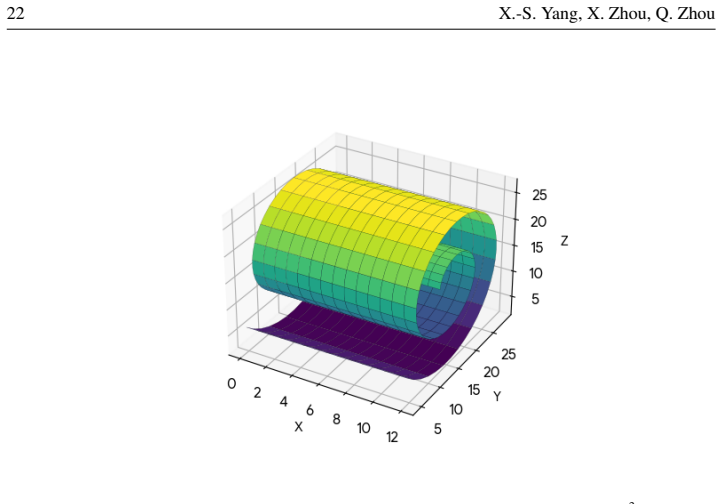
read the original abstract
Relocation of compact sets in an $n$-dimensional manifold by self-diffeomorphism is of its own interest as well as significant potential applications to data classification in data science. This paper presents a theory for relocating a finite number of compact sets in $\mathbb{R}^n$ to be relocated to arbitrary target domains in $\mathbb{R}^n$ by diffeomorphisms of $\mathbb{R}^n$. Furthermore, we prove that for any such collection, there exists a differentiable embedding into $\mathbb{R}^{n+1}$ such that their images become linearly separable. As applications of the established theory, we show that a finite number of compact datasets in $\mathbb{R}^n$ can be made linearly separable by width-$n$ deep neural networks (DNNs) with Leaky-ReLU, ELU, or SELU activation functions, under a mild condition. In addition, we show that any finite number of mutually disjoint compact datasets in $\mathbb{R}^n$ can be made linearly separable in $\mathbb{R}^{n+1}$ by a width-$(n+1)$ DNN.
Editorial analysis
A structured set of objections, weighed in public.
Referee Report
Summary. The paper develops a theory showing that any finite collection of disjoint compact sets in R^n can be relocated to suitable target domains in R^n by diffeomorphisms of R^n. It further proves existence of a differentiable embedding into R^{n+1} rendering the images linearly separable by a smooth function taking distinct constant values on each set. Applications establish that compact datasets satisfying a mild disjointness condition can be made linearly separable by width-n DNNs using Leaky-ReLU, ELU or SELU activations, and that mutually disjoint compact datasets can be separated by width-(n+1) DNNs.
Significance. If the results hold, the work supplies a rigorous topological foundation for the linear-separability power of specific DNN architectures on compact data, connecting differential topology to machine-learning expressivity. The derivations rest on standard, parameter-free constructions from differential topology rather than ad-hoc assumptions or fitted parameters, which strengthens the claims.
minor comments (2)
- Abstract: the phrasing 'arbitrary target domains' should be qualified (e.g., 'suitable' or 'topologically compatible') since the constructions explicitly require compatibility conditions; this would prevent potential misreading while the body already makes the restrictions clear.
- The transition paragraph linking the embedding result to the DNN activation claims would benefit from one additional sentence explicitly naming the mild disjointness condition and confirming that the listed activations (Leaky-ReLU, ELU, SELU) suffice to realize the required smooth separating function.
Simulated Author's Rebuttal
We thank the referee for their positive summary, significance assessment, and recommendation of minor revision. The report does not list any specific major comments, so we have no point-by-point responses to provide at this time.
Circularity Check
No significant circularity
full rationale
The paper's central claims are existence theorems: for any finite collection of disjoint compact sets in R^n there exist diffeomorphisms of R^n relocating them to suitable target domains, and there exists a differentiable embedding into R^{n+1} making the images linearly separable by a smooth function taking distinct constant values on each set. These rest on standard constructions in differential topology (extensions of maps, tubular neighborhoods, and smooth partitions of unity) rather than any fitted parameters, self-definitional loops, or load-bearing self-citations. The DNN applications follow immediately from the topological results once the activations (Leaky-ReLU, ELU, SELU) are known to realize the required piecewise-linear or smooth maps under the stated disjointness condition. No step reduces the claimed result to its own inputs by construction.
Axiom & Free-Parameter Ledger
axioms (2)
- domain assumption Diffeomorphisms of R^n exist that can relocate any finite collection of compact sets to prescribed target domains
- domain assumption Compact subsets of R^n admit differentiable embeddings into R^{n+1} that render their images linearly separable
Reference graph
Works this paper leans on
-
[1]
Springer, Cham (2020)
Braga-Neto, U.: Fundamentals of Pattern Recognition and Machine Learning. Springer, Cham (2020)
2020
-
[2]
D., Sompolinsky, H.: Separability and geometry of object manifolds in deep neural networks
Cohen, U., Chung, S., Lee, D. D., Sompolinsky, H.: Separability and geometry of object manifolds in deep neural networks. Nat. Commun. 11, 746 (2020)
2020
-
[3]
K., Shatek, S
Grootswagers, T., Robinson, A. K., Shatek, S. M., Carlson, T. A.: Untangling featural and conceptual object representations. NeuroImage 202, 116083 (2019)
2019
-
[4]
Approximating continuous functions by relu nets of minimal width.arXiv:1710.11278, 2017
Hanin, B., Sellke, M.: Approximating continuous functions by ReLU nets of minimal width. arXiv preprint arXiv:1710.11278 (2017)
-
[5]
In: Advances in Neural Information Processing Systems, 38 (2025)
Hwang, G.: Minimum width for deep, narrow MLP : A diffeomorphism approach. In: Advances in Neural Information Processing Systems, 38 (2025)
2025
-
[6]
Conference on Learning Theory 2306--2327 (2020)
Kidger, P., Lyons, T.: Universal approximation with deep narrow networks. Conference on Learning Theory 2306--2327 (2020)
2020
-
[7]
M.: Introduction to Smooth Manifolds
Lee, J. M.: Introduction to Smooth Manifolds. Second ed., Graduate Texts in Mathematics 218, Springer, New York (2013)
2013
-
[8]
S.: Extending diffeomorphisms
Palais, R. S.: Extending diffeomorphisms. Proceedings of the American Mathematical Society 11, 274--277 (1960)
1960
-
[9]
Advances in Neural Information Processing Systems 33, 3362--3373 (2020)
Teshima, T., Ishikawa, I., Tojo, K., Oono, K., Ikeda, M., Sugiyama, M.: Coupling-based invertible neural networks are universal diffeomorphism approximators. Advances in Neural Information Processing Systems 33, 3362--3373 (2020)
2020
-
[11]
Proceedings of the American Mathematical Society , volume=
Extending Diffeomorphisms , author=. Proceedings of the American Mathematical Society , volume=. 1960 , month=
1960
-
[12]
Minimum width for deep, narrow
Hwang, Geonho , booktitle=. Minimum width for deep, narrow
-
[13]
2013 , publisher=
Introduction to Smooth Manifolds , author=. 2013 , publisher=
2013
-
[14]
2020 , publisher=
Fundamentals of Pattern Recognition and Machine Learning , author=. 2020 , publisher=
2020
-
[15]
Separability and geometry of object manifolds in deep neural networks , author=. Nat. Commun. , volume=. 2020 , publisher=
2020
-
[16]
NeuroImage , volume=
Untangling featural and conceptual object representations , author=. NeuroImage , volume=. 2019 , publisher=
2019
-
[17]
arXiv preprint arXiv:2511.06837 , year=
Minimum Width of Deep Narrow Networks for Universal Approximation , author=. arXiv preprint arXiv:2511.06837 , year=
-
[18]
Approximating continuous functions by
Hanin, Boris and Sellke, Mark , journal=. Approximating continuous functions by. 2017 , url=
2017
-
[19]
Conference on Learning Theory , pages=
Universal approximation with deep narrow networks , author=. Conference on Learning Theory , pages=. 2020 , organization=
2020
-
[20]
Advances in Neural Information Processing Systems , volume=
Coupling-based invertible neural networks are universal diffeomorphism approximators , author=. Advances in Neural Information Processing Systems , volume=. 2020 , url=
2020
discussion (0)
Sign in with ORCID, Apple, or X to comment. Anyone can read and Pith papers without signing in.