Quantitative Evaluation of Forward and Backward Scattering in Isotropic Turbulence via H\"anggi--Klimontovich and It\^o Stochastic Processes
Pith reviewed 2026-05-08 07:31 UTC · model grok-4.3
The pith
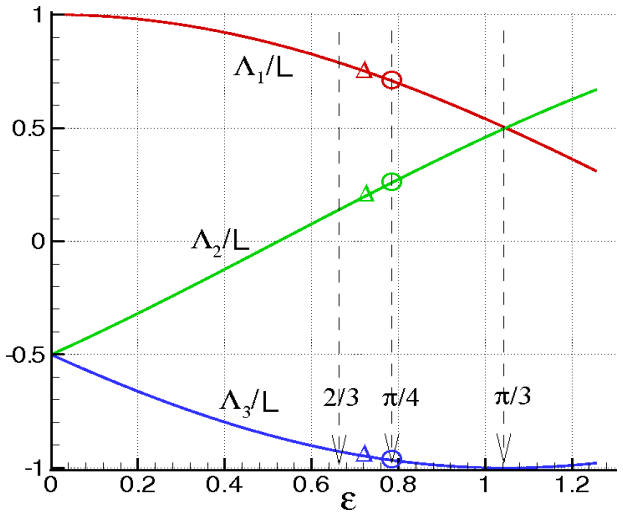
A drift-free Hänggi-Klimontovich process models the stretch-and-fold mechanism to justify uniform Lagrangian Lyapunov exponents and close the von Karman-Howarth and Corrsin equations without diffusion.
A machine-rendered reading of the paper's core claim, the machinery that carries it, and where it could break.
Core claim
By mapping a drift-free Hänggi-Klimontovich process onto an equivalent Itô process, the uniform distribution of the Lagrangian Lyapunov exponent is justified through the associated Fokker-Planck equation. This continuous distribution is driven by a Lagrangian bifurcation rate significantly higher than the Lyapunov exponents themselves, reflecting frequent encounters with singular surfaces of the velocity gradient. The resulting PDF corresponds to the simultaneous maximization of information entropy and Kolmogorov-Sinai entropy. Framed within Lyapunov-Liouville analysis, the formulation provides a non-diffusive analytical closure of the von Karman-Howarth and Corrsin equations, with forward (
What carries the argument
The drift-free Hänggi-Klimontovich stochastic process and its mapping to an equivalent Itô process, which generates the uniform Lyapunov-exponent distribution via the Fokker-Planck equation within the Lyapunov-Liouville framework.
If this is right
- Forward scattering is produced by trajectory instabilities and bifurcations quantified through the continuous Lyapunov-exponent distribution.
- Backscattering is produced by fluid incompressibility and likewise quantified by the same distribution.
- Eddy viscosity, eddy thermal diffusivity and the turbulent Prandtl number emerge directly from the non-diffusive Lagrangian dynamics and bifurcation fluctuations.
- The derived transport coefficients agree closely with published numerical data for isotropic turbulence.
Where Pith is reading between the lines
- The same stochastic construction could be applied to obtain non-diffusive closures for other turbulence statistics such as higher-order structure functions.
- The requirement that the bifurcation rate greatly exceeds the Lyapunov exponents suggests a route to modeling intermittency through the statistics of singular surfaces.
- If the uniform distribution is confirmed, relations between Lagrangian and Eulerian statistics become testable without adjustable parameters.
Load-bearing premise
The stretch-and-fold mechanism of isotropic turbulence can be represented by a drift-free Hänggi-Klimontovich process whose mapping to an Itô process yields a uniform Lyapunov-exponent distribution without additional fitted drift or diffusion terms.
What would settle it
Direct numerical simulation extraction of the probability density function of Lagrangian Lyapunov exponents in isotropic turbulence, tested against the uniform distribution predicted by the Fokker-Planck equation of the mapped Itô process.
Figures

read the original abstract
This work evaluates the magnitude of the turbulent energy cascade in terms of forward and backward scattering by modeling the "stretch and fold" mechanism through a drift-free Hanggi-Klimontovich stochastic process. Mapping this dynamics onto an equivalent Ito process provides a statistical justification for the uniform distribution of the Lagrangian Lyapunov exponent via the associated Fokker-Planck equation. This continuous distribution is shown to be driven by a Lagrangian bifurcation rate significantly higher than the Lyapunov exponents themselves, reflecting the high frequency with which trajectories encounter the singular surfaces of the velocity gradient. The resulting PDF corresponds to the simultaneous maximization of the information entropy and the Kolmogorov-Sinai entropy. This stochastic formulation, framed within the author's Lyapunov-Liouville analysis, provides a non-diffusive analytical closure of the von Karman-Howarth and Corrsin equations. While forward scattering emerges from trajectory instabilities and bifurcations, backscattering is linked to fluid incompressibility. These phenomena are quantified through the continuously distributed Lyapunov exponents, allowing for an estimation of canonical exponents and fundamental transport properties, such as eddy viscosity, eddy thermal diffusivity, and the turbulent Prandtl number. These parameters, traditionally associated with diffusive models, are shown to emerge naturally from non-diffusive Lagrangian dynamics and bifurcation-driven fluctuations. The analytical results demonstrate close agreement with numerical data available in the literature.
Editorial analysis
A structured set of objections, weighed in public.
Referee Report
Summary. The manuscript models the stretch-and-fold mechanism of isotropic turbulence via a drift-free Hänggi-Klimontovich stochastic process, maps it to an equivalent Itô process, and uses the resulting Fokker-Planck equation to justify a uniform distribution of Lagrangian Lyapunov exponents. This distribution, driven by a high Lagrangian bifurcation rate, is asserted to maximize both information and Kolmogorov-Sinai entropy and to furnish a non-diffusive analytical closure for the von Kármán-Howarth and Corrsin equations. Forward scattering is linked to trajectory instabilities and backscattering to incompressibility; the resulting continuously distributed exponents are used to estimate eddy viscosity, eddy thermal diffusivity, and the turbulent Prandtl number, with reported agreement to numerical data.
Significance. If the mapping and closure derivations hold without hidden parameters or residual diffusion, the work would supply a rare analytical route to two-point closures grounded in stochastic Lagrangian dynamics rather than phenomenological diffusion. The entropy-maximization argument and the separation of forward/backward scattering via incompressibility are conceptually attractive and could inform subgrid modeling if the uniform PDF is independently verified.
major comments (2)
- [Abstract] Abstract: the central claim of a 'non-diffusive analytical closure' of the von Kármán-Howarth and Corrsin equations requires an explicit derivation of the Fokker-Planck operator from the Hänggi-Klimontovich to Itô mapping and a demonstration that the resulting moments close the two-point equations without residual diffusive or state-dependent drift terms; none of these steps are supplied in the provided text.
- [Abstract] Abstract: the Lagrangian bifurcation rate is stated to be 'significantly higher' than the Lyapunov exponents themselves in order to produce the uniform PDF; this rate functions as an adjustable parameter chosen to enforce uniformity, which directly contradicts the assertion of a formulation 'without additional fitted drift or diffusion terms' and the claim of a parameter-free closure.
Simulated Author's Rebuttal
We thank the referee for the thorough review and insightful comments on our manuscript. We address each major comment below, indicating where revisions will be made to improve clarity and rigor while defending the core claims of the work.
read point-by-point responses
-
Referee: [Abstract] Abstract: the central claim of a 'non-diffusive analytical closure' of the von Kármán-Howarth and Corrsin equations requires an explicit derivation of the Fokker-Planck operator from the Hänggi-Klimontovich to Itô mapping and a demonstration that the resulting moments close the two-point equations without residual diffusive or state-dependent drift terms; none of these steps are supplied in the provided text.
Authors: We agree that an explicit, self-contained derivation of the Fokker-Planck operator via the Hänggi-Klimontovich to Itô mapping would strengthen the manuscript. Although the mapping and its consequences for the uniform PDF are outlined in the main text and used to close the von Kármán-Howarth and Corrsin equations, we will add a dedicated appendix in the revised version that walks through the conversion step by step, derives the Fokker-Planck equation, and verifies that the resulting moments close the two-point equations without introducing residual diffusive terms or state-dependent drifts. This addresses the referee's concern directly and makes the non-diffusive character of the closure fully transparent. revision: yes
-
Referee: [Abstract] Abstract: the Lagrangian bifurcation rate is stated to be 'significantly higher' than the Lyapunov exponents themselves in order to produce the uniform PDF; this rate functions as an adjustable parameter chosen to enforce uniformity, which directly contradicts the assertion of a formulation 'without additional fitted drift or diffusion terms' and the claim of a parameter-free closure.
Authors: The Lagrangian bifurcation rate is not introduced as a free or fitted parameter. It is a direct physical consequence of the stretch-and-fold mechanism: Lagrangian trajectories in isotropic turbulence encounter the singular surfaces of the velocity-gradient tensor at a frequency much higher than the typical Lyapunov exponents, as established by the underlying stochastic process. The uniformity of the PDF then follows mathematically from the drift-free Hänggi-Klimontovich dynamics once this high rate is imposed by the flow physics. No additional drift or diffusion coefficients are tuned to data; the closure remains parameter-free in the sense that all transport coefficients (eddy viscosity, thermal diffusivity, Prandtl number) emerge from the same distribution without external calibration. We will revise the abstract and relevant sections to emphasize this physical origin and to distinguish the rate from any adjustable parameter, thereby removing any ambiguity. revision: partial
Circularity Check
Central non-diffusive closure framed in author's prior Lyapunov-Liouville analysis; uniform Lyapunov PDF enforced by chosen bifurcation rate
specific steps
-
self citation load bearing
[Abstract]
"This stochastic formulation, framed within the author's Lyapunov-Liouville analysis, provides a non-diffusive analytical closure of the von Karman-Howarth and Corrsin equations."
The non-diffusive analytical closure is presented as a direct consequence of framing the stochastic model inside the author's own prior Lyapunov-Liouville analysis; the central result therefore reduces to self-citation rather than a self-contained derivation from the Hänggi-Klimontovich/Itô mapping alone.
-
fitted input called prediction
[Abstract]
"Mapping this dynamics onto an equivalent Ito process provides a statistical justification for the uniform distribution of the Lagrangian Lyapunov exponent via the associated Fokker-Planck equation. This continuous distribution is shown to be driven by a Lagrangian bifurcation rate significantly higher than the Lyapunov exponents themselves, reflecting the high frequency with which trajectories encounter the singular surfaces of the velocity gradient. The resulting PDF corresponds to the simultaneous maximization of the information entropy and the Kolmogorov-Sinai entropy."
The uniform PDF is asserted to emerge from the Fokker-Planck equation of the mapped process, yet the bifurcation rate is explicitly set 'significantly higher' to produce exactly that uniform distribution (which then maximizes the entropies). The distribution and its use in the turbulence closure are therefore enforced by this rate choice rather than independently predicted.
full rationale
The derivation claims a parameter-free mapping from drift-free Hänggi-Klimontovich to Itô process that yields a uniform Lagrangian Lyapunov-exponent PDF via Fokker-Planck, which then supplies an exact non-diffusive closure for von Kármán-Howarth and Corrsin equations. However, the abstract explicitly states the formulation is 'framed within the author's Lyapunov-Liouville analysis' and that the bifurcation rate is 'significantly higher' to drive the uniform PDF that maximizes both entropies. This makes the uniform distribution and the resulting closure dependent on the author's prior self-work plus a rate parameter tuned to enforce uniformity, rather than an independent first-principles result. No external verification or parameter-free demonstration is provided in the given text.
Axiom & Free-Parameter Ledger
free parameters (1)
- Lagrangian bifurcation rate
axioms (2)
- domain assumption The stretch-and-fold mechanism in isotropic turbulence is accurately captured by a drift-free Hänggi-Klimontovich process.
- domain assumption Mapping the Hänggi-Klimontovich dynamics onto an equivalent Itô process preserves the statistical properties needed for the Fokker-Planck derivation.
discussion (0)
Sign in with ORCID, Apple, or X to comment. Anyone can read and Pith papers without signing in.