Recognition: unknown
Sequential Strategic Classification with Multi-Stage Selective Classifiers
Pith reviewed 2026-05-08 17:24 UTC · model grok-4.3
The pith
In a multi-stage strategic classification model, sequences of selective classifiers can be tuned so that myopic agents gain more long-term utility by choosing genuine improvement over gaming.
A machine-rendered reading of the paper's core claim, the machinery that carries it, and where it could break.
Core claim
We introduce a sequential stochastic multi-stage model of strategic classification using selective classifiers that abstain at low confidence. We fully characterize the agent's optimal instantaneous action under these classifiers and show that there exist design principles for the sequence of classifiers under which the myopic no-gaming policy yields higher long-term utility than the myopic no-improvement policy, thereby incentivizing genuine effort over time.
What carries the argument
The selective classifier at each stage, which promotes the agent on a positive prediction, demotes on a negative prediction, and holds position on abstention, together with the closed-form characterization of the agent's optimal myopic choice between separable improvement and gaming actions.
If this is right
- Under suitably chosen sequences of selective classifiers, agents that follow the no-gaming myopic policy reach higher stages and accumulate greater cumulative reward than those that follow the no-improvement policy.
- The instantaneous optimal action can be expressed in closed form once the current stage, the classifier parameters, and the two cost values are known.
- Abstention creates a stationary point that allows the long-term comparison of the two policies without requiring the agent to plan across multiple future stages.
- The same characterization lets a designer compare the progression speed of agents under each policy and adjust thresholds to widen the utility gap favoring no-gaming.
Where Pith is reading between the lines
- In applied settings such as repeated hiring or credit decisions, inserting selective abstention at each stage could reduce the payoff to pure feature manipulation.
- If agents later learn to anticipate the entire sequence, the incentive to improve may become even stronger than the myopic calculation predicts.
- The closed-form action characterization supplies a concrete benchmark against which one can measure how much real-world agents deviate from myopic optimality.
Load-bearing premise
Agents optimize only their immediate next outcome and the costs of improvement and gaming actions remain separable across stages.
What would settle it
For a concrete sequence of classifier thresholds, calculate the long-term expected utilities under repeated no-gaming and under repeated no-improvement; the design claim holds if the former exceeds the latter for some sequences and not for others.
Figures


read the original abstract
Strategic classification studies the problem where self-interested individuals or agents manipulate their response to obtain favorable decision outcomes made by classifiers, typically turning to dishonest actions when they are less costly than genuine efforts. Prior works have demonstrated a fundamental inability to get out of this conundrum by only focusing on the design of a classifier. We note that prior work also heavily focuses on either one-shot settings or repeated interaction with the same classifier. Real-world decision making is often multi-stage, involving a sequence of potentially different classifiers as an agent progresses. This paper introduces a sequential, stochastic, multi-stage model of strategic classification, by capturing how agents adapt their behavior, through improvement actions (enhancing both observable features and true attributes) and gaming actions (enhancing only observable features), over multiple levels of classification with increasing difficulty as well as reward. For each level, we adopt a selective classifier that can abstain from making a prediction at low confidence. Consequently, a positive (resp. negative) outcome leads to promotion (resp. demotion) of the agent to the next higher (resp. lower) level, while abstention keeps the agent at the same level. We fully characterize the agent's optimal instantaneous action under selective classifiers and compare the long-term properties and utility of the agent repeatedly following an optimal myopic policy of either no-improvement (never choose the improvement action) or no-gaming (never choose the gaming action). We further examine design principles over the sequence of classifiers that yield higher long-term utility for the latter policy, thereby effectively incentivizing genuine effort in the long run.
Editorial analysis
A structured set of objections, weighed in public.
Referee Report
Summary. The paper introduces a multi-stage sequential model of strategic classification in which agents interact with a sequence of selective classifiers (that may abstain) of increasing difficulty. At each stage agents may take an improvement action (affecting both observable features and the true label) or a gaming action (affecting only features), with promotion or demotion determined by the classifier outcome. The central claims are that the agent's optimal instantaneous (myopic) action can be fully characterized in closed form, that the long-term utilities of the repeated no-improvement and no-gaming myopic policies can be compared, and that design principles on the sequence of classifiers exist that yield higher long-term utility for the no-gaming policy, thereby incentivizing genuine effort.
Significance. If the closed-form characterization and long-term comparisons hold under the stated assumptions, the work provides a concrete mechanism-design lens on how selective classifiers can be sequenced to favor improvement over gaming in repeated interactions. The use of abstention to induce a Markovian promotion/demotion process and the explicit comparison of myopic policy utilities are technically distinctive contributions to the strategic-classification literature.
major comments (2)
- [Abstract; characterization section] Abstract and the section deriving the optimal instantaneous action: the claimed full characterization of the agent's best response under selective classifiers is obtained only under the joint assumptions of myopic per-stage optimization and separable cost structures for improvement versus gaming actions. When agents solve a finite-horizon dynamic program that anticipates future stages, or when improvement effort reduces the marginal cost of subsequent gaming, the instantaneous best response depends on continuation values and the closed-form expressions no longer hold; this directly undermines the subsequent long-term utility comparisons and the design principles for incentivizing no-gaming.
- [Long-term properties section] Section on long-term properties and design principles: the stationary-utility comparison between the repeated no-improvement and no-gaming myopic policies, as well as the claimed classifier-sequence rules that favor genuine effort, are derived under the Markovian process induced by the myopic best responses. The paper should supply either a robustness argument or an explicit counter-example showing when forward-looking behavior or non-separable costs invalidate these stationary comparisons.
minor comments (2)
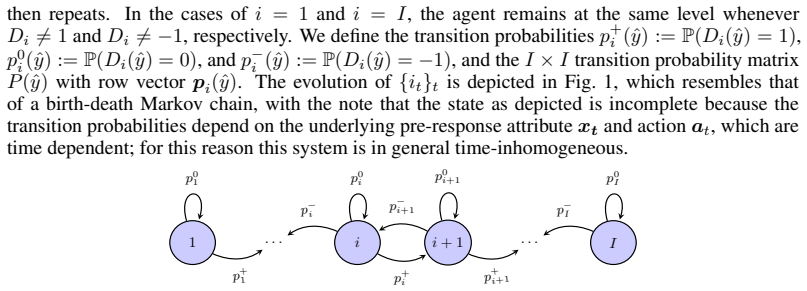
- [Model section] Notation for the selective classifier's abstention threshold and the promotion/demotion transition probabilities should be introduced with a single consolidated table or diagram to improve readability.
- [Related work] The paper would benefit from a brief discussion of how the selective-classifier abstention rule relates to existing work on selective classification in non-strategic settings.
Simulated Author's Rebuttal
We thank the referee for the constructive comments on our manuscript. We address each major comment below, clarifying the scope of our myopic analysis while agreeing to strengthen the presentation of assumptions.
read point-by-point responses
-
Referee: [Abstract; characterization section] Abstract and the section deriving the optimal instantaneous action: the claimed full characterization of the agent's best response under selective classifiers is obtained only under the joint assumptions of myopic per-stage optimization and separable cost structures for improvement versus gaming actions. When agents solve a finite-horizon dynamic program that anticipates future stages, or when improvement effort reduces the marginal cost of subsequent gaming, the instantaneous best response depends on continuation values and the closed-form expressions no longer hold; this directly undermines the subsequent long-term utility comparisons and the design principles for incentivizing no-gaming.
Authors: We agree that the closed-form characterization applies specifically under myopic per-stage optimization and separable costs, as the paper consistently frames the agent's behavior in terms of instantaneous myopic best responses (see abstract: 'optimal instantaneous action' and 'repeatedly following an optimal myopic policy'). The long-term utility comparisons are between the stationary utilities obtained by repeating these myopic policies, which induce the Markovian promotion/demotion process. We acknowledge that forward-looking agents solving a dynamic program or agents with non-separable costs would generally have best responses that depend on continuation values, rendering the closed-form expressions invalid. To address this, we will revise the abstract and characterization section to more explicitly foreground these assumptions and add a dedicated paragraph in the long-term properties section discussing the limitations and positioning non-myopic extensions as future work. This does not alter the validity of the results within the myopic setting but improves clarity. revision: partial
-
Referee: [Long-term properties section] Section on long-term properties and design principles: the stationary-utility comparison between the repeated no-improvement and no-gaming myopic policies, as well as the claimed classifier-sequence rules that favor genuine effort, are derived under the Markovian process induced by the myopic best responses. The paper should supply either a robustness argument or an explicit counter-example showing when forward-looking behavior or non-separable costs invalidate these stationary comparisons.
Authors: The stationary comparisons and design principles are derived under the myopic best-response Markov chain. We will add a robustness paragraph explaining that the myopic assumption is maintained for tractability, enabling closed-form characterization and explicit design rules on classifier sequences; relaxing it to finite-horizon dynamic programming would require solving a more complex MDP whose stationary utilities lack the same closed-form structure. While we do not construct an explicit counter-example (as that would necessitate specifying particular continuation values and non-separable cost functions outside the current model), the added discussion will delineate the precise conditions under which the results hold and note that the incentive-design principles are intended for the myopic separable-cost regime. revision: partial
Circularity Check
No circularity: optimal-action characterization derived from explicit cost/utility primitives and myopic optimization
full rationale
The paper defines improvement and gaming costs as separable primitives, specifies per-stage utilities, and adopts a selective classifier with explicit abstention rule. It then solves the agent's per-stage best-response optimization under these inputs to obtain the closed-form instantaneous action characterization. The subsequent long-term utility comparisons for repeated no-improvement vs. no-gaming policies follow directly from iterating that best response in the induced Markov chain. No step equates a derived quantity to a fitted parameter, renames an input as a prediction, or relies on a self-citation whose content is itself unverified; the results are therefore self-contained consequences of the stated model rather than tautological restatements of the inputs.
Axiom & Free-Parameter Ledger
axioms (2)
- domain assumption Agents choose actions myopically at each stage based on instantaneous utility.
- domain assumption Improvement and gaming actions have distinct cost structures that permit closed-form characterization of optimal responses to selective classifiers.
Reference graph
Works this paper leans on
-
[1]
arXiv preprint arXiv:2203.00124 , year=
S. Ahmadi, H. Beyhaghi, A. Blum, and K. Naggita. On classification of strategic agents who can both game and improve, Feb. 2022. URL http://arxiv.org/abs/2203.00124. arXiv:2203.00124 [cs]
- [2]
-
[3]
Y . Bechavod, K. Ligett, Z. S. Wu, and J. Ziani. Gaming Helps! Learning from Strategic Interactions in Natural Dynamics, Feb. 2021. URL http://arxiv.org/abs/2002.07024. arXiv:2002.07024 [cs]
-
[4]
M. Braverman and S. Garg. The Role of Randomness and Noise in Strategic Classification, May 2020. URL http://arxiv.org/abs/2005.08377. arXiv:2005.08377 [cs]
-
[5]
Y . Chen, Y . Liu, and C. Podimata. Learning Strategy-Aware Linear Classifiers. In Ad- vances in Neural Information Processing Systems , volume 33, pages 15265–15276. Curran Associates, Inc., 2020. URL https://proceedings.neurips.cc/paper/2020/hash/ ae87a54e183c075c494c4d397d126a66-Abstract.html
2020
- [6]
-
[7]
Cortes, G
C. Cortes, G. DeSalvo, and M. Mohri. Learning with Rejection. In R. Ortner, H. U. Simon, and S. Zilles, editors, Algorithmic Learning Theory , volume 9925, pages 67–82. Springer International Publishing, Cham, 2016. ISBN 978-3-319-46378-0 978-3-319-46379-
2016
-
[8]
URL https://link.springer.com/10.1007/ 978-3-319-46379-7_5
doi: 10.1007/978-3-319-46379-7_5. URL https://link.springer.com/10.1007/ 978-3-319-46379-7_5 . Series Title: Lecture Notes in Computer Science
-
[9]
T. Dohmen and A. Trivedi. Reinforcement Learning with Depreciating Assets, Feb. 2023. URL http://arxiv.org/abs/2302.14176. arXiv:2302.14176 [cs]
- [10]
-
[11]
El-Y aniv and Y
R. El-Y aniv and Y . Wiener. On the Foundations of Noise-free Selective Classication, 2010
2010
-
[12]
Franc, D
V . Franc, D. Prusa, and V . V oracek. Optimal Strategies for Reject Option Classiers, 2021
2021
-
[13]
Y . Geifman and R. El-Y aniv. Selective Classification for Deep Neural Networks, June 2017. URL http://arxiv.org/abs/1705.08500. arXiv:1705.08500 [cs]
-
[14]
N. Haghtalab, N. Immorlica, B. Lucier, and J. Z. Wang. Maximizing Welfare with Incentive- Aware Evaluation Mechanisms, Nov. 2020. URL http://arxiv.org/abs/2011.01956. arXiv:2011.01956 [cs]
- [15]
-
[16]
Hastings and S
A. Hastings and S. Sethumadhavan. V oluntary Investment, Mandatory Minimums, or Cyber Insurance: What Minimizes Losses? | USENIX, 2025. URL https://www.usenix.org/ conference/usenixsecurity25/presentation/hastings
2025
-
[17]
K. Jin, T. Yin, C. A. Kamhoua, and M. Liu. Network Games with Strategic Machine Learning. In B. Boanský, C. Gonzalez, S. Rass, and A. Sinha, editors, Decision and Game Theory for Security, pages 118–137, Cham, 2021. Springer International Publishing. ISBN 978-3-030- 90370-1. doi: 10.1007/978-3-030-90370-1_7
-
[18]
K. Jin, X. Zhang, M. M. Khalili, P . Naghizadeh, and M. Liu. Incentive Mechanisms for Strate- gic Classification and Regression Problems. In Proceedings of the 23rd ACM Conference on Economics and Computation, EC ’22, pages 760–790, New Y ork, NY , USA, 2022. Association for Computing Machinery. ISBN 978-1-4503-9150-4. doi: 10.1145/3490486.3538300. URL htt...
-
[19]
K. Jin, Z. Huang, and M. Liu. Collaboration as a Mechanism for More Robust Strategic Classification. In 2023 62nd IEEE Conference on Decision and Control (CDC) , pages 235– 240, Singapore, Singapore, Dec. 2023. IEEE. ISBN 9798350301243. doi: 10.1109/CDC49753. 2023.10383651. URL https://ieeexplore.ieee.org/document/10383651/
- [20]
-
[21]
K. Jin, T. Yin, Z. Chen, Z. Sun, X. Zhang, Y . Liu, and M. Liu. Performative Federated Learn- ing: A Solution to Model-Dependent and Heterogeneous Distribution Shifts. Proceedings of the AAAI Conference on Artificial Intelligence , 38(11):12938–12946, Mar. 2024. ISSN 2374-
2024
-
[22]
URL https://ojs.aaai.org/index.php/AAAI/ article/view/29191
doi: 10.1609/aaai.v38i11.29191. URL https://ojs.aaai.org/index.php/AAAI/ article/view/29191. Number: 11
-
[23]
J. Kleinberg and M. Raghavan. How Do Classifiers Induce Agents To Invest Effort Strategi- cally?, Aug. 2019. URL http://arxiv.org/abs/1807.05307. arXiv:1807.05307 [cs]
-
[24]
Krantz and H
S. Krantz and H. Parks. A Primer of Real Analytic Functions . A Primer of Real Analytic Func- tions. Birkhäuser Boston, 2002. ISBN 978-0-8176-4264-8. URL https://books.google. com/books?id=nPz0TuHDcMcC
2002
-
[25]
J. K. Lee, Y . Bu, D. Rajan, P . Sattigeri, R. Panda, S. Das, and G. W. Wornell. Fair Selec- tive Classification Via Sufficiency. In Proceedings of the 38th International Conference on Machine Learning, pages 6076–6086. PMLR, July 2021. URL https://proceedings.mlr. press/v139/lee21b.html. ISSN: 2640-3498
2021
-
[26]
Miller, S
J. Miller, S. Milli, and M. Hardt. Strategic Classification is Causal Modeling in Disguise, Feb
-
[27]
URL http://arxiv.org/abs/1910.10362. arXiv:1910.10362 [cs]
-
[28]
S. Milli, J. Miller, A. D. Dragan, and M. Hardt. The Social Cost of Strategic Classification. In Proceedings of the Conference on Fairness, Accountability, and Transparency , FA T* ’19, pages 230–239, New Y ork, NY , USA, Jan. 2019. Association for Computing Machinery. ISBN 978-1-4503-6125-5. doi: 10.1145/3287560.3287576. URL https://doi.org/10.1145/ 32875...
-
[29]
J. C. Perdomo, T. Zrnic, C. Mendler-Dünner, and M. Hardt. Performative Prediction, Feb
-
[30]
URL http://arxiv.org/abs/2002.06673. arXiv:2002.06673 [cs]
-
[31]
A. Shah, Y . Bu, J. K.-W. Lee, S. Das, R. Panda, P . Sattigeri, and G. W. Wornell. Selective Regression Under Fairness Criteria, 2021
2021
- [32]
-
[33]
Zhang, M
X. Zhang, M. Khaliligarekani, C. Tekin, and m. liu. Group Retention when Using Machine Learning in Sequential Decision Making: the Interplay between User Dynamics and Fair- ness. In Advances in Neural Information Processing Systems , volume 32. Curran Associates, Inc., 2019. URL https://proceedings.neurips.cc/paper_files/paper/2019/hash/ 7690dd4db7a92524c...
2019
-
[34]
Zhang, R
X. Zhang, R. Tu, Y . Liu, M. Liu, H. Kjellstrom, K. Zhang, and C. Zhang. How do fair decisions fare in long-term qualification? In Advances in Neu- ral Information Processing Systems , volume 33, pages 18457–18469. Curran Asso- ciates, Inc., 2020. URL https://proceedings.neurips.cc/paper/2020/hash/ d6d231705f96d5a35aeb3a76402e49a3-Abstract.html
2020
-
[35]
T. Zrnic, E. Mazumdar, S. S. Sastry, and M. I. Jordan. Who Leads and Who Follows in Strategic Classification?, Jan. 2022. URL http://arxiv.org/abs/2106.12529. arXiv:2106.12529 [cs]. 12 A Related Works Strategic classification. Strategic classification aims at enhancing the robustness of machine learn- ing models under data providers’ strategic manipulation [...
discussion (0)
Sign in with ORCID, Apple, or X to comment. Anyone can read and Pith papers without signing in.