REVIEW 1 major objections 1 minor 37 references
A smoothed directional scattering model approximates specular reflection so that ray tracing stays accurate on noisy 3D reconstructions of real environments.
Reviewed by Pith at T0; open to challenge. T0 means a machine referee read the full paper against a public rubric. the ladder, T0–T4 →
T0 review · grok-4.3
2026-07-01 16:42 UTC pith:VI5IG2IL
load-bearing objection The directional scattering model is the real contribution for handling noisy 3D reconstructions in mmWave ray tracing, but the missing quantitative error bounds on the approximation remain a gap. the 1 major comments →
mmDiff: A Noise-Robust Differentiable Ray-Tracing Framework for mmWave Scene Calibration and Channel Prediction
The pith
A machine-rendered reading of the paper's core claim, the machinery that carries it, and where it could break.
Core claim
The directional scattering model approximates the noise-sensitive specular reflection by smoothly distributing reflected power among nearby ray directions; this approximation is mathematically proven to preserve asymptotic path-gain accuracy and thereby enables a fully differentiable ray-tracing framework for material calibration and channel prediction from sparse measurements on imperfect geometric models.
What carries the argument
The directional scattering model, which replaces a single specular reflection direction with a smooth power distribution over nearby directions while remaining differentiable.
Load-bearing premise
The smoothed scattering distribution remains close enough to true specular reflection for real mmWave frequencies and distances even though it deliberately spreads energy away from the exact bounce angle.
What would settle it
Measure mmWave path loss in a controlled environment with deliberately added surface roughness or holes, then compare simulated path gains using the directional scattering model against both pure specular simulation and the actual measurements; systematic deviation beyond the claimed asymptotic regime would falsify the preservation claim.
If this is right
- Material properties can be calibrated directly from a small number of mmWave measurements without requiring perfect geometry.
- Channel predictions remain usable even when the input 3D model contains typical reconstruction artifacts.
- The same differentiable pipeline supports gradient-based optimization of scene parameters for network planning tasks.
- The framework applies to both real-world captured scenes and synthetic test cases with controlled noise.
Where Pith is reading between the lines
- The approach could let wireless planners build digital twins from inexpensive consumer-grade scans rather than requiring survey-grade geometry.
- Because the model is differentiable end-to-end, it might be combined with neural radiance fields or other learned geometry representations for joint optimization.
- Similar smoothing could be tested in optical or acoustic ray tracing where specular sensitivity to surface noise is also a known issue.
Editorial analysis
A structured set of objections, weighed in public.
Referee Report
Summary. The manuscript introduces mmDiff, an end-to-end differentiable ray-tracing framework for calibrating material properties from sparse mmWave measurements and predicting channels in reconstructed 3D scenes. It replaces pure specular reflection with a differentiable directional scattering model that smoothly distributes reflected power among nearby ray directions to confer robustness against geometric artifacts such as holes and noisy surfaces. The authors claim a mathematical proof that this approximation preserves asymptotic path-gain accuracy and report superior empirical performance over prior pure-specular methods on both real-world and synthetic datasets.
Significance. If the asymptotic preservation result holds with controlled finite-case error, the framework could enable practical wireless digital twins from imperfect LiDAR or photogrammetry reconstructions, reducing sensitivity to noise in mmWave simulation and supporting network planning from limited measurements. The explicit mathematical proof of asymptotic accuracy is a clear strength that distinguishes the contribution from purely empirical robustness claims.
major comments (1)
- [§§3–4 (directional scattering model and asymptotic proof)] The directional scattering model and its proof (central to §§3–4): while the manuscript establishes that the approximation preserves asymptotic path-gain accuracy, it supplies no quantitative bound on the deviation from pure specular behavior (e.g., maximum dB error as a function of wavelength versus surface-artifact scale or scattering width). This bound is load-bearing for the practical claim that the model remains sufficiently accurate for real mmWave propagation; without it, the robustness benefit for channel prediction cannot be assessed beyond the limiting regime.
minor comments (1)
- [Evaluation section] The evaluation section would benefit from an explicit statement of the precise metric definitions and cross-validation protocol used for the real-world dataset to facilitate direct comparison with future work.
Simulated Author's Rebuttal
We thank the referee for the constructive feedback on the directional scattering model. We address the single major comment below.
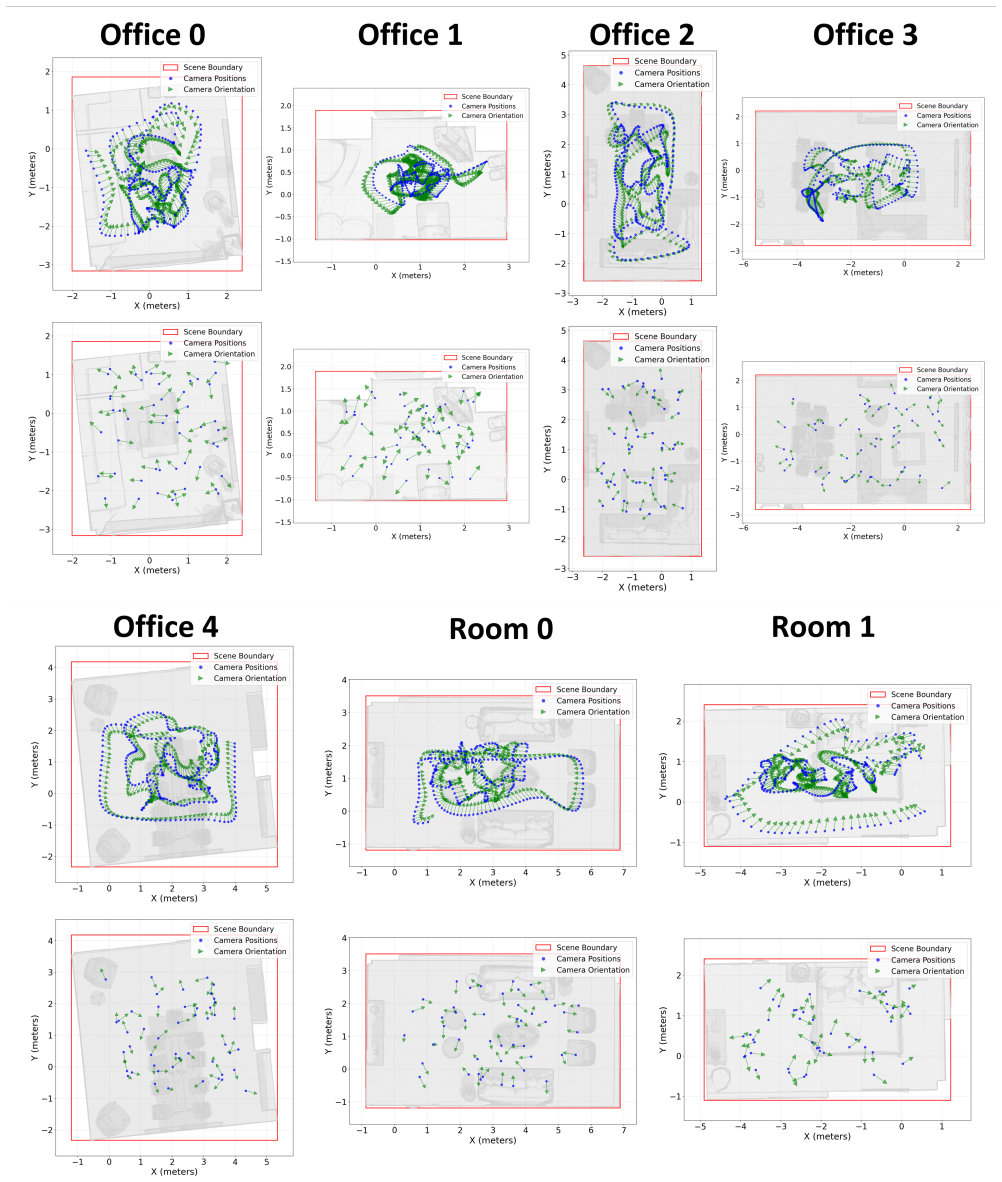
read point-by-point responses
-
Referee: [§§3–4 (directional scattering model and asymptotic proof)] The directional scattering model and its proof (central to §§3–4): while the manuscript establishes that the approximation preserves asymptotic path-gain accuracy, it supplies no quantitative bound on the deviation from pure specular behavior (e.g., maximum dB error as a function of wavelength versus surface-artifact scale or scattering width). This bound is load-bearing for the practical claim that the model remains sufficiently accurate for real mmWave propagation; without it, the robustness benefit for channel prediction cannot be assessed beyond the limiting regime.
Authors: We agree that the manuscript currently provides only the asymptotic preservation result without an explicit finite-error bound. This is a valid observation. In the revision we will add a new subsection deriving a quantitative upper bound on the path-gain deviation (in dB) expressed in terms of scattering width, wavelength, and typical surface-artifact scale, obtained by integrating the directional scattering kernel against the specular delta and bounding the resulting integral remainder. The bound will be stated under the same smoothness assumptions used in the existing proof and will be accompanied by numerical evaluation for representative mmWave parameters (28–60 GHz, 1–5 cm artifacts). revision: yes
Circularity Check
No circularity detected; derivation relies on independent mathematical proof
full rationale
The paper proposes a directional scattering model as an approximation to specular reflection and states that it proves mathematically that the approximation preserves asymptotic path-gain accuracy. This proof is described as a separate mathematical step rather than a re-derivation or fit from the model's own outputs. No equations, self-citations, or fitted parameters are shown reducing the central claim to its inputs by construction. The evaluation on real-world and synthetic datasets is presented as external validation. The derivation chain is therefore self-contained against external benchmarks.
Axiom & Free-Parameter Ledger
invented entities (1)
-
differentiable directional scattering model
no independent evidence
read the original abstract
3D reconstruction techniques such as LiDAR scanning and photogrammetry have made it practical to build detailed geometric models of real-world environments. Such reconstructed models can potentially serve as the foundation for wireless digital twins and support network planning and optimization. The core challenge is that reconstructed models inevitably contain geometric artifacts such as holes and noisy surfaces, and wireless simulation is highly sensitive to such noise. To solve this problem, we propose a differentiable directional scattering model to approximate the noise-sensitive specular reflection. This approximation smoothly distributes reflected power among nearby ray directions, making the simulator inherently robust to local geometric artifacts in the reconstructed model. We prove mathematically that this approximation preserves asymptotic path-gain accuracy. Building on this idea, we propose mmDiff, an end-to-end differentiable framework for calibrating material properties from sparse mmWave measurements and predicting mmWave channels. We evaluate mmDiff on both real-world and synthetic datasets, and demonstrate its superior performance over prior methods using pure specular reflection in noisy reconstructed geometry.
Figures




Reference graph
Works this paper leans on
-
[1]
Zhenlin An, Longfei Shangguan, John Kaewell, Philip Pietraski, and Kyle Jamieson. RadioTwin: A Digital Build- ing Material Twin for Wideband, Cross-link, Cross-band Wireless Channel Prediction. In2025 IEEE International Symposium on Dynamic Spectrum Access Networks (DyS- PAN), pages 1–10, 2025. 1
work page 2025
-
[2]
D. Azinovi ´c, R. Martin-Brualla, D. B. Goldman, M. Nießner, and J. Thies. Neural rgb-d surface reconstruction. InPro- ceedings of the IEEE/CVF Conference on Computer Vision and Pattern Recognition, pages 6290–6301, 2022. 6
work page 2022
-
[3]
Constantine A Balanis.Antenna theory: analysis and design. John wiley & sons, 2016. 3, 5
work page 2016
-
[4]
Romain Charbonnier, Chiehping Lai, Thierry Tenoux, Derek Caudill, Gr ´egory Gougeon, Jelena Senic, Camillo Gentile, Yoann Corre, Jack Chuang, and Nada Golmie. Calibration of Ray-Tracing With Diffuse Scattering Against 28-GHz Di- rectional Urban Channel Measurements.IEEE Transactions on Vehicular Technology, 69(12):14264–14276, 2020. 1
work page 2020
-
[5]
W. Chen, J. Litalien, J. Gao, Z. Wang, C. Fuji Tsang, S. Khamis, O. Litany, and S. Fidler. Dib-r++: learning to pre- dict lighting and material with a hybrid differentiable ren- derer.Advances in Neural Information Processing Systems, 34:22834–22848, 2021. 2
work page 2021
-
[6]
X. Chen, Z. Feng, K. Sun, K. Qian, and X. Zhang. Rfcanvas: Modeling rf channel by fusing visual priors and few-shot rf measurements. InProceedings of the 22nd ACM Conference on Embedded Networked Sensor Systems, pages 464–477,
-
[7]
V . Degli-Esposti, F. Fuschini, E. M. Vitucci, and G. Fal- ciasecca. Measurement and modelling of scattering from buildings.IEEE transactions on antennas and propagation, 55(1):143–153, 2007. 5, 15
work page 2007
-
[8]
Y . Guo, T. Zhang, S. Sun, M. Tao, and R. Gao. Measure- ment and Analysis of Scattering From Building Surfaces at Millimeter-Wave Frequency, 2025. 4
work page 2025
-
[9]
Fast millimeter wave beam alignment
Haitham Hassanieh, Omid Abari, Michael Rodriguez, Mo- hammed Abdelghany, Dina Katabi, and Piotr Indyk. Fast millimeter wave beam alignment. InProceedings of the 2018 Conference of the ACM Special Interest Group on Data Com- munication, page 432–445, New York, NY , USA, 2018. As- sociation for Computing Machinery. 1
work page 2018
-
[10]
Jakob Hoydis, Sebastian Cammerer, Fayc ¸al Ait Aoudia, Merlin Nimier-David, Lorenzo Maggi, Guillermo Mar- cus, Avinash Vem, and Alexander Keller. Sionna, 2022. https://nvlabs.github.io/sionna/. 2, 3, 4, 6
work page 2022
- [11]
-
[12]
Wenzel Jakob, S ´ebastien Speierer, Nicolas Roussel, Merlin Nimier-David, Delio Vicini, Tizian Zeltner, Baptiste Nicolet, Miguel Crespo, Vincent Leroy, and Ziyi Zhang. Mitsuba 3 renderer, 2022. https://mitsuba-renderer.org. 2, 6
work page 2022
- [13]
-
[14]
Neural Reflectance Fields for Radio-Frequency Ray Tracing,
Haifeng Jia, Xinyi Chen, Yichen Wei, Yifei Sun, and Yibo Pi. Neural Reflectance Fields for Radio-Frequency Ray Tracing,
-
[15]
O. Kanhere and T. S. Rappaport. Calibration of NYURay, a 3D mmWave and sub-THz Ray Tracer using Indoor, Out- door, and Factory Channel Measurements, 2023. 2
work page 2023
-
[16]
Bin Li, Zheng Zhou, Weixia Zou, Xuebin Sun, and Guang- long Du. On the efficient beam-forming training for 60ghz wireless personal area networks.IEEE Transactions on Wire- less Communications, 12(2):504–515, 2012. 1
work page 2012
-
[17]
H. Lu, C. Vattheuer, B. Mirzasoleiman, and O. Abari. NeWRF: A deep learning framework for wireless radiation field reconstruction and channel prediction. InProceedings of the 41st International Conference on Machine Learning, pages 33147–33159. PMLR, 2024. 20
work page 2024
-
[18]
B. Mildenhall, P. P. Srinivasan, M. Tancik, J. T. Barron, R. Ramamoorthi, and R. Ng. NeRF: Representing Scenes as Neural Radiance Fields for View Synthesis, 2020. 5
work page 2020
-
[19]
B. Nicolet, A. Jacobson, and W. Jakob. Large steps in inverse rendering of geometry.ACM Transactions on Graphics (Pro- ceedings of SIGGRAPH Asia), 40(6), 2021. 2
work page 2021
-
[20]
T. Orekondy, K. Pratik, S. Kadambi, H. Ye, J. Soriaga, and A. Behboodi. WINERT: TOW ARDS NEURAL RAY TRAC- ING FOR WIRELESS CHANNEL MODELLING AND DIFFEREN- TIABLE SIMULATIONS. 2023. 1
work page 2023
-
[21]
Sebastian Priebe, Martin Jacob, and Thomas K ¨urner. Cal- ibrated broadband ray tracing for the simulation of wave propagation in mm and sub-mm wave indoor communica- tion channels. InEuropean Wireless 2012; 18th European Wireless Conference 2012, pages 1–10, 2012. 2
work page 2012
-
[22]
Rappaport, Yunchou Xing, George R
Theodore S. Rappaport, Yunchou Xing, George R. MacCart- ney, Andreas F. Molisch, Evangelos Mellios, and Jianhua Zhang. Overview of Millimeter Wave Communications for Fifth-Generation (5G) Wireless Networks-with a focus on Propagation Models.IEEE Transactions on Antennas and Propagation, 65(12):6213–6230, 2017. 1
work page 2017
-
[23]
P. Series. Effects of building materials and structures on ra- diowave propagation above about 100 mhz.recommendation itu-r, pages 2040–1, 2015. 6
work page 2040
-
[24]
NeRF-APT: A New NeRF Framework for Wireless Channel Prediction, 2025
Jingzhou Shen, Tianya Zhao, Yanzhao Wu, and Xuyu Wang. NeRF-APT: A New NeRF Framework for Wireless Channel Prediction, 2025. 1
work page 2025
- [25]
-
[26]
The Replica Dataset: A Digital Replica of Indoor Spaces
J. Straub, T. Whelan, L. Ma, Y . Chen, E. Wijmans, S. Green, J. J. Engel, R. Mur-Artal, C. Ren, S. Verma, A. Clarkson, M. Yan, B. Budge, Y . Yan, X. Pan, J. Yon, Y . Zou, K. Leon, N. Carter, J. Briales, T. Gillingham, E. Mueggler, L. Pesqueira, M. Savva, D. Batra, H. M. Strasdat, R. D. Nardi, M. Goesele, S. Lovegrove, and R. Newcombe. The Replica dataset:...
work page internal anchor Pith review Pith/arXiv arXiv 1906
-
[27]
Models for scattering from rough sur- faces.Electromagnetic waves, 10:203–226, 2011
Francesca Ticconi, Luca Pulvirenti, Nazzareno Pierdicca, and V Zhurbenko. Models for scattering from rough sur- faces.Electromagnetic waves, 10:203–226, 2011. 4
work page 2011
-
[28]
Cod- ing the beams: Improving beamforming training in mmwave communication system
Y Ming Tsang, Ada SY Poon, and Sateesh Addepalli. Cod- ing the beams: Improving beamforming training in mmwave communication system. In2011 IEEE Global Telecommu- nications Conference-GLOBECOM 2011, pages 1–6. IEEE,
work page 2011
-
[29]
Yiheng Wang, Ye Xue, Shutao Zhang, and Tsung-Hui Chang. RadSplatter: Extending 3D Gaussian Splatting to Radio Frequencies for Wireless Radiomap Extrapolation,
-
[30]
Wrf-gs: Wireless radiation field reconstruc- tion with 3d gaussian splatting
Chaozheng Wen, Jingwen Tong, Yingdong Hu, Zehong Lin, and Jun Zhang. Wrf-gs: Wireless radiation field reconstruc- tion with 3d gaussian splatting. InIEEE INFOCOM 2025- IEEE Conference on Computer Communications, pages 1–
work page 2025
-
[31]
Chaozheng Wen, Jingwen Tong, Yingdong Hu, Zehong Lin, and Jun Zhang. Neural representation for wireless radiation field reconstruction: A 3d gaussian splatting approach, 2025. 1
work page 2025
-
[32]
T. Woodford, X. Zhang, E. Chai, K. Sundaresan, and A. Kho- jastepour. SpaceBeam: LiDAR-Driven one-shot MmWave beam management. InProceedings of the 19th Annual Inter- national Conference on Mobile Systems, Applications, and Services, pages 389–401, New York, NY , USA, 2021. Asso- ciation for Computing Machinery. 1
work page 2021
-
[33]
GSRF: Complex-Valued 3D Gaussian Splatting for Efficient Radio-Frequency Data Synthesis
Kang Yang, Gaofeng Dong, Sijie Ji, Wan Du, and Mani Sri- vastava. GSRF: Complex-Valued 3D Gaussian Splatting for Efficient Radio-Frequency Data Synthesis. 1
-
[34]
An efficient and low-complexity beam training technique for mmwave communication
Wenfang Yuan, Simon MD Armour, and Angela Doufexi. An efficient and low-complexity beam training technique for mmwave communication. In2015 IEEE 26th Annual Inter- national Symposium on Personal, Indoor, and Mobile Radio Communications (PIMRC), pages 303–308. IEEE, 2015. 1
work page 2015
-
[35]
RF-3DGS: Wireless Channel Modeling with Radio Radiance Field and 3D Gaussian Splat- ting, 2025
Lihao Zhang, Haijian Sun, Samuel Berweger, Camillo Gen- tile, and Rose Qingyang Hu. RF-3DGS: Wireless Channel Modeling with Radio Radiance Field and 3D Gaussian Splat- ting, 2025. 1
work page 2025
-
[36]
X. Zhao, Z. An, Q. Pan, and L. Yang. NeRF2: Neural Radio-Frequency Radiance Fields. InProceedings of the 29th Annual International Conference on Mobile Computing and Networking, pages 1–15, Madrid Spain, 2023. ACM. 1, 8, 17, 20 mmDiff: A Noise-Robust Differentiable Ray-Tracing Framework for mmWave Scene Calibration and Channel Prediction Supplementary Mat...
work page 2023
-
[37]
and train the model for 30,000 iterations to converge. Table 3. Scene Statistics Scene Name Dimensions (m) # Objects # Materials # Test Samples Training Sample Density (#samples/m 3) Office 0 4.4×5.0×3.0 68 10 489 42.4 Office 1 4.3×2.9×2.7 52 8 500 81.1 Office 2 4.0×7.2×2.8 94 8 468 35.3 Office 3 8.0×5.0×3.1 113 7 476 22.6 Office 4 6.5×6.5×2.8 71 7 500 23...
discussion (0)
Sign in with ORCID, Apple, or X to comment. Anyone can read and Pith papers without signing in.