Federated Learning for Multivariate Time Series Anomaly Detection in Industrial Automation
Pith reviewed 2026-06-29 18:42 UTC · model grok-4.3
The pith
A new dataset with cyclic dynamics from repetitive industrial processes enables benchmarking of federated multivariate time series anomaly detection methods.
A machine-rendered reading of the paper's core claim, the machinery that carries it, and where it could break.
Core claim
The central claim is that introducing a dataset designed with cyclic dynamics arising from the repetitive nature of discrete automation processes fills key gaps, allowing selected MTSAD methods to be evaluated under the federated learning paradigm on both the proposed dataset and a public benchmark dataset.
What carries the argument
A dataset incorporating cyclic dynamics from repetitive discrete automation processes, serving as the testbed for federated MTSAD method evaluation.
If this is right
- MTSAD methods can now be tested at larger scale with accurate labels while respecting data privacy constraints of federated learning.
- The influence of cyclic process behavior on anomaly detection accuracy becomes directly measurable.
- Future method comparisons gain a controlled setting that reflects repetitive industrial automation without the documented flaws of prior data.
- Benchmark results on the new dataset provide a baseline for assessing how well methods handle the combination of multivariate series and federated constraints.
Where Pith is reading between the lines
- The dataset could serve as a template for creating similar resources in other repetitive-process domains such as packaging or assembly lines.
- Researchers might test whether adding explicit cycle-length features further boosts detection rates on this data.
- The work implies that privacy-preserving federated training may become standard once representative industrial datasets exist.
Load-bearing premise
That existing datasets cannot simultaneously deliver sufficient scale, accurate labels, and freedom from common flaws for federated MTSAD benchmarking.
What would settle it
If evaluations of the selected MTSAD methods on the new cyclic dataset show no measurable difference in detection performance or benchmarking reliability compared with the public dataset that can be traced to the added scale, labels, or cyclic structure.
Figures
read the original abstract
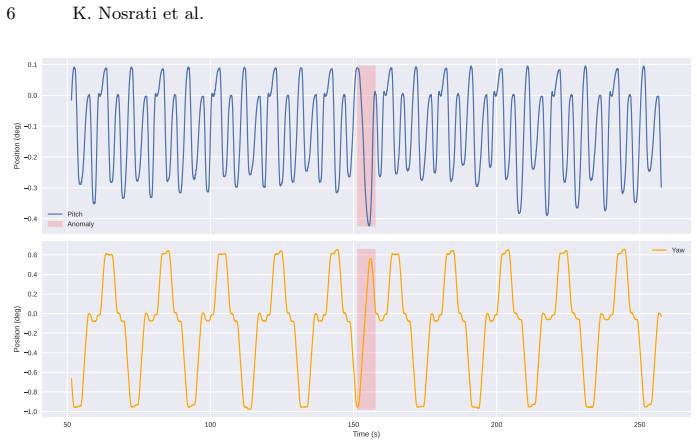
Federated learning (FL) has broadened the horizon for multivariate time series anomaly detection (MTSAD). However, benchmarking such anomaly detection methods within FL paradigm poses data-centric challenges. The existing datasets do not counteract these challenges since they do not simultaneously provide sufficient scale, accurate labels, and freedom from common flaws. In addition, the role of cyclic process behavior, which is common in discrete industrial automation, remains underexplored for MTSAD for the current state of research. This paper aims to shed more light on the literature and address these gaps by introducing a dataset designed with cyclic dynamics arising from the repetitive nature of discrete automation processes and evaluates selected MTSAD methods on both the proposed dataset and a public benchmark dataset.
Editorial analysis
A structured set of objections, weighed in public.
Referee Report
Summary. The paper claims that existing MTSAD datasets fail to simultaneously offer sufficient scale, accurate labels, and freedom from common flaws, while cyclic dynamics from discrete automation remain underexplored in FL settings. It introduces a new dataset incorporating these cyclic properties and evaluates selected MTSAD methods on both the proposed dataset and a public benchmark.
Significance. If the new dataset demonstrably supplies the claimed scale/label/flaw-free combination and the evaluations produce reproducible insights into FL-MTSAD performance under cyclic conditions, the work could strengthen benchmarking practices for industrial anomaly detection. The focus on cyclic process behavior targets a genuine gap if properly validated against prior datasets.
major comments (1)
- [Abstract] Abstract (first paragraph): The assertion that 'the existing datasets do not simultaneously provide sufficient scale, accurate labels, and freedom from common flaws' is stated as fact without any supporting comparison (e.g., a table quantifying scale, label quality, and documented flaws for SWaT, WADI, MSL, SMAP or similar). This premise is load-bearing for the motivation and dataset introduction; absent an explicit, citable section with such quantification, the central claim rests on an unverified premise.
Simulated Author's Rebuttal
We thank the referee for highlighting the need for explicit support of the dataset motivation. We will address this by adding a comparative analysis in the revised manuscript.
read point-by-point responses
-
Referee: [Abstract] Abstract (first paragraph): The assertion that 'the existing datasets do not simultaneously provide sufficient scale, accurate labels, and freedom from common flaws' is stated as fact without any supporting comparison (e.g., a table quantifying scale, label quality, and documented flaws for SWaT, WADI, MSL, SMAP or similar). This premise is load-bearing for the motivation and dataset introduction; absent an explicit, citable section with such quantification, the central claim rests on an unverified premise.
Authors: We agree that the claim requires explicit quantification to be fully substantiated. In the revised manuscript we will add a table (or dedicated subsection) in the introduction or related-work section that compares SWaT, WADI, MSL, SMAP and similar datasets on the three axes mentioned—scale (sample count, feature dimensionality, duration), label quality (source and verification method), and documented flaws (e.g., sensor drift, missing segments, label noise)—with direct citations to the original dataset papers and known limitations reported in the literature. revision: yes
Circularity Check
No circularity: empirical dataset paper with no derivations or fitted quantities
full rationale
The paper introduces a new MTSAD dataset with cyclic dynamics and performs empirical evaluations on it plus a public benchmark. No equations, parameters, or derivations are present in the provided text. The assertion that prior datasets lack scale/labels/flaw-freedom is a factual claim (potentially unsubstantiated) but does not constitute any of the enumerated circularity patterns, as there is no derivation chain that reduces to its own inputs by construction, no self-citation load-bearing on a theorem, and no renaming or ansatz smuggling. This matches the default expectation of no significant circularity for a purely empirical contribution.
Axiom & Free-Parameter Ledger
Reference graph
Works this paper leans on
-
[1]
In: Proceedings of the 27th ACM SIGKDD Conference on Knowledge Discovery and Data Mining
Abdulaal, A., Liu, Z., Lancewicki, T.: Practical approach to asynchronous mul- tivariate time series anomaly detection and localization. In: Proceedings of the 27th ACM SIGKDD Conference on Knowledge Discovery and Data Mining. pp. 2485–2494. KDD ’21, Association for Computing Machinery, New York, NY, USA (2021).https://doi.org/10.1145/3447548.3467174
-
[2]
Sensors24(17) (2024).https:// doi.org/10.3390/s24175492
Alshede, H., Jambi, K., Nassef, L., Alowidi, N., Fadel, E.: Fedavg-p: Performance- based hierarchical federated learning-based anomaly detection system aggregation strategy for advanced metering infrastructure. Sensors24(17) (2024).https:// doi.org/10.3390/s24175492
-
[3]
In: Proceedings of the 26th ACM SIGKDD International Conference on Knowledge Discovery & Data Mining
Audibert, J., Michiardi, P., Guyard, F., Marti, S., Zuluaga, M.A.: USAD: Unsu- pervised anomaly detection on multivariate time series. In: Proceedings of the 26th ACM SIGKDD International Conference on Knowledge Discovery & Data Mining. pp. 3395–3404. KDD ’20, Association for Computing Machinery, New York, NY, USA (2020).https://doi.org/10.1145/3394486.3403392
-
[4]
IEEE Transactions on Neural Networks and Learning Systems33(6), 2508–2517 (2022).https://doi.org/10
Garg,A.,Zhang,W.,Samaran,J.,Savitha,R.,Foo,C.S.:Anevaluationofanomaly detection and diagnosis in multivariate time series. IEEE Transactions on Neural Networks and Learning Systems33(6), 2508–2517 (2022).https://doi.org/10. 1109/TNNLS.2021.3105827 FL for MTSAD in Industrial Automation 11
-
[5]
Deep Learning Scaling is Predictable, Empirically
Hestness, J., Narang, S., Ardalani, N., Diamos, G., Jun, H., Kianinejad, H., Pat- wary, M.M.A., Yang, Y., Zhou, Y.: Deep learning scaling is predictable, empirically. arXiv preprint arXiv:1712.00409 (2017)
work page internal anchor Pith review Pith/arXiv arXiv 2017
-
[6]
Hundman,K.,Constantinou,V.,Laporte,C.,Colwell,I.,Soderstrom,T.:Detecting spacecraftanomaliesusinglstmsandnonparametricdynamicthresholding.In:Pro- ceedings of the 24th ACM SIGKDD International Conference on Knowledge Dis- covery & Data Mining. pp. 387–395. KDD ’18, Association for Computing Machin- ery, New York, NY, USA (2018).https://doi.org/10.1145/3219...
-
[7]
Computers in Industry 132, 103509 (2021).https://doi.org/10.1016/j.compind.2021.103509
Huong, T.T., Bac, T.P., Long, D.M., Luong, T.D., Dan, N.M., Quang, L.A., Cong, L.T., Thang, B.D., Tran, K.P.: Detecting cyberattacks using anomaly detection in industrial control systems: A federated learning approach. Computers in Industry 132, 103509 (2021).https://doi.org/10.1016/j.compind.2021.103509
-
[8]
Jacob, V., Song, F., Stiegler, A., Rad, B., Diao, Y., Tatbul, N.: Exathlon: a bench- mark for explainable anomaly detection over time series. Proc. VLDB Endow. 14(11), 2613–2626 (jul 2021).https://doi.org/10.14778/3476249.3476307
-
[9]
In: Interna- tional conference on artificial neural networks
Li, D., Chen, D., Jin, B., Shi, L., Goh, J., Ng, S.K.: Mad-gan: Multivariate anomaly detection for time series data with generative adversarial networks. In: Interna- tional conference on artificial neural networks. pp. 703–716. Springer (2019)
2019
-
[10]
In: Proceedings of the 27th ACM SIGKDD Conference on Knowledge Discovery & Data Mining
Li, Z., Zhao, Y., Han, J., Su, Y., Jiao, R., Wen, X., Pei, D.: Multivariate time series anomaly detection and interpretation using hierarchical inter-metric and temporal embedding. In: Proceedings of the 27th ACM SIGKDD Conference on Knowledge Discovery & Data Mining. pp. 3220–3230. KDD ’21, Association for Computing Machinery, New York, NY, USA (2021)
2021
-
[11]
In: ICC 2020-2020 IEEE international conference on communications (ICC)
Liu, L., Zhang, J., Song, S., Letaief, K.B.: Client-edge-cloud hierarchical federated learning. In: ICC 2020-2020 IEEE international conference on communications (ICC). pp. 1–6. IEEE (2020)
2020
-
[12]
In: Globerson, A., Mackey, L., Belgrave, D., Fan, A., Paquet, U., Tomczak, J., Zhang, C
Liu, Q., Paparrizos, J.: The elephant in the room: Towards a reliable time-series anomaly detection benchmark. In: Globerson, A., Mackey, L., Belgrave, D., Fan, A., Paquet, U., Tomczak, J., Zhang, C. (eds.) Advances in Neural Information Processing Systems. vol. 37, pp. 108231–108261. Curran Associates, Inc. (2024)
2024
-
[13]
In: Artificial intelligence and statistics
McMahan, B., Moore, E., Ramage, D., Hampson, S., y Arcas, B.A.: Communication-efficient learning of deep networks from decentralized data. In: Artificial intelligence and statistics. pp. 1273–1282. Pmlr (2017)
2017
-
[14]
In: 2018 26th Signal Processing and Commu- nications Applications Conference (SIU)
Mirza, A.H., Cosan, S.: Computer network intrusion detection using sequential lstm neural networks autoencoders. In: 2018 26th Signal Processing and Commu- nications Applications Conference (SIU). pp. 1–4 (2018)
2018
-
[15]
IEEE Access7, 1991– 2005 (2019)
Munir, M., Siddiqui, S.A., Dengel, A., Ahmed, S.: DeepAnT: A deep learning approach for unsupervised anomaly detection in time series. IEEE Access7, 1991– 2005 (2019)
1991
-
[16]
Nosrati, K., Uray, M., Messineo, S., Sassnick, O., Huber, S.: Quanser aero 2 pick-and-place dataset (qappd) (May 2026).https://doi.org/10.5281/zenodo. 20287835
-
[17]
Paparrizos, J., Boniol, P., Palpanas, T., Tsay, R.S., Elmore, A., Franklin, M.J.: Vol- ume under the surface: a new accuracy evaluation measure for time-series anomaly detection. Proc. VLDB Endow.15(11), 2774–2787 (jul 2022)
2022
-
[18]
IEEE Transactions on Machine Learning in Communications and Networking3, 176–194 (2025)
Raeiszadeh, M., Ebrahimzadeh, A., Glitho, R.H., Eker, J., Mini, R.A.: Asyn- chronous real-time federated learning for anomaly detection in microservice cloud applications. IEEE Transactions on Machine Learning in Communications and Networking3, 176–194 (2025)
2025
-
[19]
SN computer science2(6), 1–20 (2021) 12 K
Sarker, I.H.: Deep learning: a comprehensive overview on techniques, taxonomy, applications and research directions. SN computer science2(6), 1–20 (2021) 12 K. Nosrati et al
2021
-
[20]
In: Computer Aided Systems The- ory – EUROCAST 2024
Saßnick, O., Schäfer, G., Rosenstatter, T., Huber, S.: A generative model based honeypot for industrial opc ua communication. In: Computer Aided Systems The- ory – EUROCAST 2024. pp. 320–334. Springer Nature Switzerland, Cham (04 2025).https://doi.org/10.1007/978-3-031-83885-9_29
-
[21]
Data Mining and Knowledge Discovery 38(3), 1027–1068 (2024)
Sørbø, S., Ruocco, M.: Navigating the metric maze: a taxonomy of evaluation met- rics for anomaly detection in time series. Data Mining and Knowledge Discovery 38(3), 1027–1068 (2024)
2024
-
[22]
NIST Special Publication (SP) NIST SP 800-82r3, National Institute of Standards and Technology, Gaithersburg, MD (2023).https://doi.org/10
Stouffer, K., Pease, M., Tang, C.Y., Zimmerman, T., Pillitteri, V., Lightman, S., Hahn, A., Saravia, S., Sherule, A., Thompson, M.: Guide to operational technology (ot) security. NIST Special Publication (SP) NIST SP 800-82r3, National Institute of Standards and Technology, Gaithersburg, MD (2023).https://doi.org/10. 6028/NIST.SP.800-82r3
2023
-
[23]
Su, Y., Zhao, Y., Niu, C., Liu, R., Sun, W., Pei, D.: Robust anomaly detection for multivariate time series through stochastic recurrent neural network. In: Proceed- ings of the 25th ACM SIGKDD International Conference on Knowledge Discovery & Data Mining. pp. 2828–2837. KDD ’19, Association for Computing Machinery, New York, NY, USA (2019).https://doi.or...
-
[24]
Electronics11(16) (2022).https://doi.org/10.3390/electronics11162627
Sun, X., Tang, Z., Du, M., Deng, C., Lin, W., Chen, J., Qi, Q., Zheng, H.: A hierarchical federated learning-based intrusion detection system for 5g smart grids. Electronics11(16) (2022).https://doi.org/10.3390/electronics11162627
-
[25]
Computers in Industry 140, 103692 (2022).https://doi.org/10.1016/j.compind.2022.103692
Truong, H.T., Ta, B.P., Le, Q.A., Nguyen, D.M., Le, C.T., Nguyen, H.X., Do, H.T., Nguyen, H.T., Tran, K.P.: Light-weight federated learning-based anomaly detection for time-series data in industrial control systems. Computers in Industry 140, 103692 (2022).https://doi.org/10.1016/j.compind.2022.103692
-
[26]
Tuli,S.,Casale,G.,Jennings,N.R.:Tranad:deeptransformernetworksforanomaly detection in multivariate time series data. Proc. VLDB Endow.15(6), 1201–1214 (feb 2022).https://doi.org/10.14778/3514061.3514067
-
[27]
Wagner, D., Michels, T., Schulz, F.C.F., Nair, A., Rudolph, M.R., Kloft, M.: Time- sead: Benchmarking deep multivariate time-series anomaly detection. Trans. Mach. Learn. Res.2023(2023)
2023
-
[28]
Security and Communication Networks2022(1), 2913293 (2022).https: //doi.org/10.1155/2022/2913293
Wang, K., Li, J., Wu, W.: An efficient intrusion detection method based on fed- erated transfer learning and an extreme learning machine with privacy preser- vation. Security and Communication Networks2022(1), 2913293 (2022).https: //doi.org/10.1155/2022/2913293
-
[29]
In: 2022 IEEE 38th International Conference on Data Engineering (ICDE)
Wu, R., Keogh, E.J.: Current time series anomaly detection benchmarks are flawed and are creating the illusion of progress (extended abstract). In: 2022 IEEE 38th International Conference on Data Engineering (ICDE). pp. 1479–1480 (2022)
2022
-
[30]
arXiv preprint arXiv:2110.02642 (2021)
Xu, J., Wu, H., Wang, J., Long, M.: Anomaly transformer: Time series anomaly detection with association discrepancy. arXiv preprint arXiv:2110.02642 (2021)
-
[31]
In: 2020 IEEE international conference on data mining (ICDM)
Zhao, H., Wang, Y., Duan, J., Huang, C., Cao, D., Tong, Y., Xu, B., Bai, J., Tong,J.,Zhang,Q.:Multivariatetime-seriesanomalydetectionviagraphattention network. In: 2020 IEEE international conference on data mining (ICDM). pp. 841–
2020
-
[32]
In: 2022 IEEE International Conference on Big Data (Big Data)
Zhu, W., Song, D., Chen, Y., Cheng, W., Zong, B., Mizoguchi, T., Lumezanu, C., Chen, H., Luo, J.: Deep federated anomaly detection for multivariate time series data. In: 2022 IEEE International Conference on Big Data (Big Data). pp. 1–10 (2022).https://doi.org/10.1109/BigData55660.2022.10064694 FL for MTSAD in Industrial Automation 13 Appendix A Detail on...
discussion (0)
Sign in with ORCID, Apple, or X to comment. Anyone can read and Pith papers without signing in.