High Flux Asymptotics and Critical Phenomena for the Magnetic Laplacian
Pith reviewed 2026-06-28 20:39 UTC · model grok-4.3
The pith
The lowest eigenvalue of the Neumann magnetic Laplacian oscillates persistently or becomes monotone depending on how the outer magnetic field scales relative to the inner one in the high-flux limit.
A machine-rendered reading of the paper's core claim, the machinery that carries it, and where it could break.
Core claim
In the high-flux limit the ground-state energy of the magnetic Laplacian with piecewise constant inner and outer fields exhibits persistent oscillations when the outer field is held fixed, with localization in the outer region; the energy becomes eventually monotone for non-circular domains when the outer field grows slower than the inner one, while oscillations may survive on disks; in the critical regime where the fields are of comparable strength geometry and flux distribution decide the behavior, and when the outer field dominates the asymptotics reduce to an effective operator supported on the inner region.
What carries the argument
Asymptotic analysis of the lowest eigenvalue under distinct relative scalings of the inner and outer piecewise constant magnetic fields, with the inner-outer division held fixed.
If this is right
- Persistent oscillations and outer localization occur whenever the outer field remains fixed.
- Eventual monotonicity holds for any non-circular domain once the outer field grows slower than the inner field.
- Disks may retain oscillations even under slow outer-field growth.
- In the critical scaling regime both geometry and flux distribution control whether monotonicity appears.
- When the outer field dominates, the problem reduces asymptotically to an effective operator on the inner region.
Where Pith is reading between the lines
- Domain shape could be used to suppress or preserve spectral oscillations in high-flux magnetic systems.
- The same scaling transitions may appear for magnetic fields that are smooth rather than piecewise constant.
- Numerical eigenvalue tracking for varying inner-outer field ratios would directly test the predicted regime boundaries.
- The critical regime links to other variable-coefficient spectral problems where geometry and coefficient variation interact.
Load-bearing premise
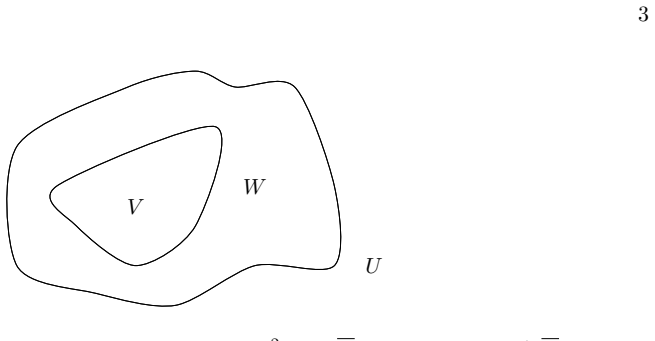
The domain is planar and split into two fixed regions carrying piecewise constant magnetic fields whose relative scalings define the regimes.
What would settle it
Numerical computation of the lowest eigenvalue sequence for a square domain with fixed outer field strength as total flux tends to infinity, checking whether oscillations continue without damping.
Figures
read the original abstract
We study the lowest eigenvalue of the Neumann magnetic Laplacian in a planar domain divided into two regions, with piecewise constant magnetic fields that may scale differently in the inner and outer parts. Our aim is to describe the high-flux limit and determine when the ground-state energy is eventually monotone and when it continues to oscillate. We identify several asymptotic regimes according to the relative strength of the outer field. When the outer field is fixed, the lowest eigenvalue exhibits persistent oscillations and the low-energy states localize in the outer region. When the outer field grows more slowly, the behavior depends strongly on the geometry: it is eventually monotone for non-circular domains, while oscillations may persist for disks. In the critical regime, where the two fields are comparable, geometry and flux distribution both play a decisive role. When the outer field dominates, the problem reduces asymptotically to an effective operator on the inner region. These results show how uneven magnetic scaling, topology, and geometry shape the high-flux spectral behavior.
Editorial analysis
A structured set of objections, weighed in public.
Referee Report
Summary. The manuscript studies the lowest eigenvalue of the Neumann magnetic Laplacian on a planar domain divided into inner and outer regions with piecewise constant magnetic fields of possibly different scalings. It classifies high-flux asymptotic regimes according to the relative growth of the outer field: fixed outer field yields persistent oscillations with outer localization; slower outer-field growth produces geometry-dependent behavior (eventual monotonicity for non-circular domains, possible persistent oscillations for disks); the critical regime depends on both geometry and flux distribution; and dominant outer field reduces the problem to an effective operator on the inner region.
Significance. If the regime distinctions and the reduction to an effective inner operator hold with the required uniformity, the work would clarify how inhomogeneous magnetic scaling interacts with domain geometry to control monotonicity versus oscillations of the ground-state energy. The explicit separation of regimes according to relative field strengths is a concrete contribution to the spectral theory of magnetic Laplacians.
major comments (2)
- [Abstract] Abstract: the assertion that 'when the outer field dominates, the problem reduces asymptotically to an effective operator on the inner region' is load-bearing for the overall regime classification. The reduction requires that the ground-state mass in the outer region vanishes at a rate sufficient for an o(1) error in the eigenvalue, uniformly with respect to domain shape. Interface transmission conditions or vector-potential matching may produce geometry-dependent boundary layers whose contribution does not vanish uniformly; without explicit uniform error estimates independent of geometry, the demarcation between the 'dominates' and 'grows more slowly' regimes is not yet justified.
- [Abstract] Abstract: the distinction between the 'grows more slowly' regime (geometry-dependent monotonicity or oscillations) and the 'dominates' regime is stated qualitatively. The manuscript must supply the precise scaling threshold (e.g., a relation between the inner and outer field strengths) that separates these regimes; without it the classification remains incomplete.
minor comments (2)
- The abstract refers to 'topology' in the final sentence, yet the setting is a planar domain with a fixed inner-outer division; clarify whether this term denotes the division itself or an additional topological feature.
- A schematic figure showing the inner-outer interface together with the two magnetic-field values would improve readability of the regime distinctions.
Simulated Author's Rebuttal
We thank the referee for the careful reading of the manuscript and the detailed comments, which help clarify the presentation of the regime distinctions. We address each major comment below and will incorporate the necessary clarifications into a revised version.
read point-by-point responses
-
Referee: [Abstract] Abstract: the assertion that 'when the outer field dominates, the problem reduces asymptotically to an effective operator on the inner region' is load-bearing for the overall regime classification. The reduction requires that the ground-state mass in the outer region vanishes at a rate sufficient for an o(1) error in the eigenvalue, uniformly with respect to domain shape. Interface transmission conditions or vector-potential matching may produce geometry-dependent boundary layers whose contribution does not vanish uniformly; without explicit uniform error estimates independent of geometry, the demarcation between the 'dominates' and 'grows more slowly' regimes is not yet justified.
Authors: We agree that uniformity of the error estimates with respect to domain geometry is essential to justify the regime separation. The reduction to the effective inner operator is established in Theorem 5.1 via a combination of Agmon estimates controlling the outer mass decay and a variational comparison that incorporates the transmission conditions at the interface. The resulting o(1) error bound depends on the domain only through its diameter and a uniform bound on the C^2 norm of the boundary; for any fixed domain this is sufficient. To make the uniformity explicit across a class of domains, we will add a remark after Theorem 5.1 stating that the constants remain controlled whenever the domains belong to a family with uniformly bounded curvature. This directly addresses the boundary-layer concern and solidifies the demarcation between the 'dominates' and 'grows more slowly' regimes. revision: partial
-
Referee: [Abstract] Abstract: the distinction between the 'grows more slowly' regime (geometry-dependent monotonicity or oscillations) and the 'dominates' regime is stated qualitatively. The manuscript must supply the precise scaling threshold (e.g., a relation between the inner and outer field strengths) that separates these regimes; without it the classification remains incomplete.
Authors: We concur that the abstract would benefit from an explicit scaling relation. The regimes are defined by the asymptotic behavior of the ratio B_out / B_in as the total flux tends to infinity: the 'dominates' regime is the case B_out / B_in → ∞, the 'grows more slowly' regime is B_out → ∞ with B_out = o(B_in), and the critical regime corresponds to B_out ∼ c B_in for a positive constant c. These limits are stated precisely in the hypotheses of Theorems 3.1, 4.1 and 5.1. We will revise the abstract to include a short clause indicating the relevant growth conditions (for example, 'when the outer field grows faster than the inner field'). This change makes the classification complete while preserving the existing mathematical statements. revision: yes
Circularity Check
No significant circularity; derivation self-contained via standard asymptotics
full rationale
The paper performs asymptotic analysis of the lowest eigenvalue of the Neumann magnetic Laplacian under high-flux limits with piecewise constant fields in inner/outer regions. No quoted steps reduce by construction to fitted parameters renamed as predictions, self-definitional relations, or load-bearing self-citations. Regime classifications (fixed outer field, slower growth, critical, dominating) follow from relative scalings and geometric considerations without the target results being presupposed in the inputs. The reduction to an effective inner operator when the outer field dominates is presented as a derived asymptotic statement, not an input. This matches the default expectation for analytic papers relying on external mathematical techniques rather than circular constructions.
Axiom & Free-Parameter Ledger
axioms (2)
- domain assumption The magnetic Laplacian is self-adjoint on the domain with Neumann boundary conditions and the magnetic field is piecewise constant across the inner-outer interface.
- domain assumption The high-flux limit is taken with the inner-outer division and relative scaling rates held fixed.
Reference graph
Works this paper leans on
-
[1]
W. Assaad. The breakdown of superconductivity in the presence of magnetic steps. Commun. Contemp. Math.23 (2021), Article ID 2050005, 53 p
2021
-
[2]
Assaad, E.L
W. Assaad, E.L. Giacomelli. A 3D-Schr¨ odinger operator under magnetic steps with semiclassical applications.Discrete Contin. Dyn. Syst.43 (2023), 619–660
2023
-
[3]
Assaad, B
W. Assaad, B. Helffer, A. Kachmar. Semiclassical eigenvalue estimates under magnetic steps.Anal. PDE17 (2024), 535–585
2024
-
[4]
Assaad, A
W. Assaad, A. Kachmar. Lowest energy band function for magnetic steps.J. Spectr. Theory12 (2022), 813–833
2022
-
[5]
Assaad, A
W. Assaad, A. Kachmar, M.P. Sundqvist. The distribution of superconductivity near a magnetic barrier.Comm. Math. Phys.366 (2019), 269–332
2019
-
[6]
Brenner, L
S.C. Brenner, L. Ridgway Scott:The Mathematical Theory of Finite Element Methods. Springer (2008)
2008
-
[7]
Fournais, B
S. Fournais, B. Helffer, A. Kachmar, N. Raymond. Effective operators on an attractive magnetic edge.J. ´Ec. Polytech., Math.10, 917–944 (2023)
2023
-
[8]
Fournais, B
S. Fournais, B. Helffer.Spectral methods in surface superconductivity.Birkh¨ auser, Basel (2010)
2010
-
[9]
Fournais, B
S. Fournais, B. Helffer. On the third critical field in Ginzburg-Landau theory.Commun. Math. Phys.266 (2006), 153–196
2006
-
[10]
Fournais, M
S. Fournais, M. Persson-Sundqvist. Lack of diamagnetism and the Little-Parks effect. Comm. Math. Phys.337 (2015), 191–224
2015
-
[11]
R.L. Frank. On the asymptotic number of edge states for magnetic Schr¨ odinger operators. Proc. London Math. Soc. (3)95 (2007), 1–19
2007
-
[12]
Frank, A
R.L. Frank, A. Laptev and T. Weidl,Schr¨ odinger operators: eigenvalues and Lieb- Thirring inequalities, Cambridge Studies in Advanced Mathematics, 200, Cambridge Univ. Press, Cambridge, 2023
2023
-
[13]
G. Miranda. Discrete spectrum of the magnetic Laplacian on almost flat magnetic barriers.J. Math. Phys.65 (2024), Article ID 072101, 28 p
2024
-
[14]
Giunti, J.J.L
A. Giunti, J.J.L. Vel´ azquez. Edge States for Generalized Iwatsuka Models: Magnetic Fields Having a Fast Transition Across a Curve.Ann. Henri Poincar´ e24 (2023), 73–105
2023
-
[15]
Helffer, M
B. Helffer, M. Hoffmann-Ostenhof, T. Hoffmann-Ostenhof, M. P. Owen. Nodal sets for groundstates of Schr¨ odinger operators with zero magnetic field in non simply connected domains.Comm. Math. Phys.202 (1999), 629–649
1999
-
[16]
Helffer, A
B. Helffer, A. Kachmar. Thin domain limit and counterexamples to strong diamagnetism. Rev. Math. Phys.33 (2021), paper no. 2150003, 35 pp
2021
-
[17]
Helffer, M.P
B. Helffer, M.P. Sundqvist. On the semi-classical analysis of the ground state energy of the Dirichlet Pauli operator.J. Math. Anal. Appl.449 (2017), 138–153
2017
-
[18]
Kachmar, X.B
A. Kachmar, X.B. Pan. Oscillatory patterns in the Ginzburg-Landau model driven by the Aharonov-Bohm potential.J. Funct. Anal.279 (2020), paper no. 108718, 37 pp
2020
-
[19]
Kachmar, M.P
A. Kachmar, M.P. Sundqvist. Counterexample to strong diamagnetism for the magnetic Robin Laplacian.Math. Phys. Anal. Geom.23 (2020), Paper no. 27, 15 pp. 33
2020
-
[20]
Local strong magnetic fields and the Little-Parks effect
A. Kachmar, M.P. Sundqvist. Local strong magnetic fields and the Little-Parks effect. arXiv:2405.09099 (2024)
work page internal anchor Pith review Pith/arXiv arXiv 2024
-
[21]
Kachmar, M
A. Kachmar, M. Wehbe. Averaging of magnetic fields and applications.Commun. Contemp. Math.25 (2023), Paper No. 2150108, 25 pp
2023
-
[22]
X.B. Pan. Ginzburg-Landau equation and Meissner states of multiply-connected super- conductors.J. Funct. Anal.286 (2024), Article ID 110417, 74 p
2024
-
[23]
Little, R.D
W.A. Little, R.D. Parks. Observation of quantum periodicity in the transition tempera- ture of a superconducting cylinder.Phys. Rev. Lett.9 (1962), 9–12
1962
-
[24]
Marcus, V.J
M. Marcus, V.J. Mizel. A characterization of first order nonlinear partial differential operators on Sobolev spaces.J. Funct. Anal.38 (1980), 118–138
1980
-
[25]
Rubinstein, M
J. Rubinstein, M. Schatzman. Asymptotics for thin superconducting rings.J. Math. Pures Appl.77 (1998), 801–820
1998
-
[26]
Shieh, P
T. Shieh, P. Sternberg. The onset problem for a thin superconducting loop in a large magnetic field.Asymptot. Anal.48 (2006), 55–76
2006
discussion (0)
Sign in with ORCID, Apple, or X to comment. Anyone can read and Pith papers without signing in.