Creating and Probing Spin-Squeezed States of Molecules
Pith reviewed 2026-06-28 11:34 UTC · model grok-4.3
The pith
Spin-squeezed states have been created for the first time in polar molecules using dipolar exchange in an optical tweezer array, producing up to 3 dB metrological gain.
A machine-rendered reading of the paper's core claim, the machinery that carries it, and where it could break.
Core claim
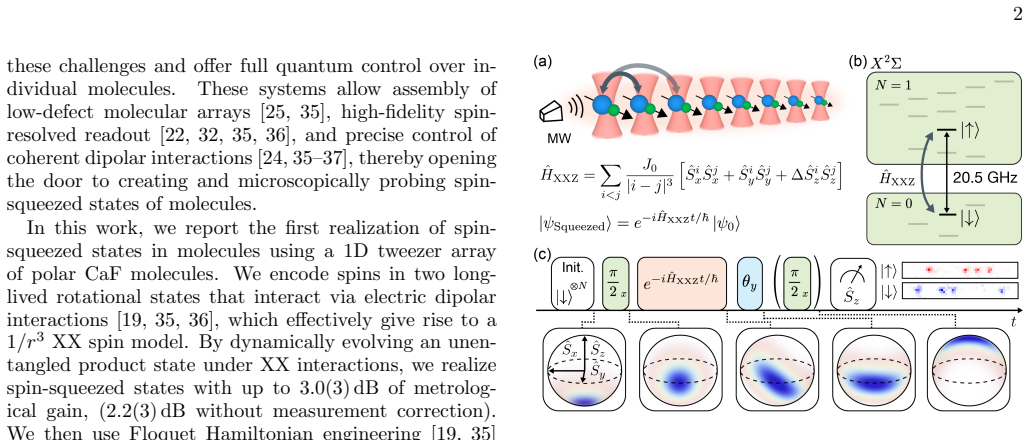
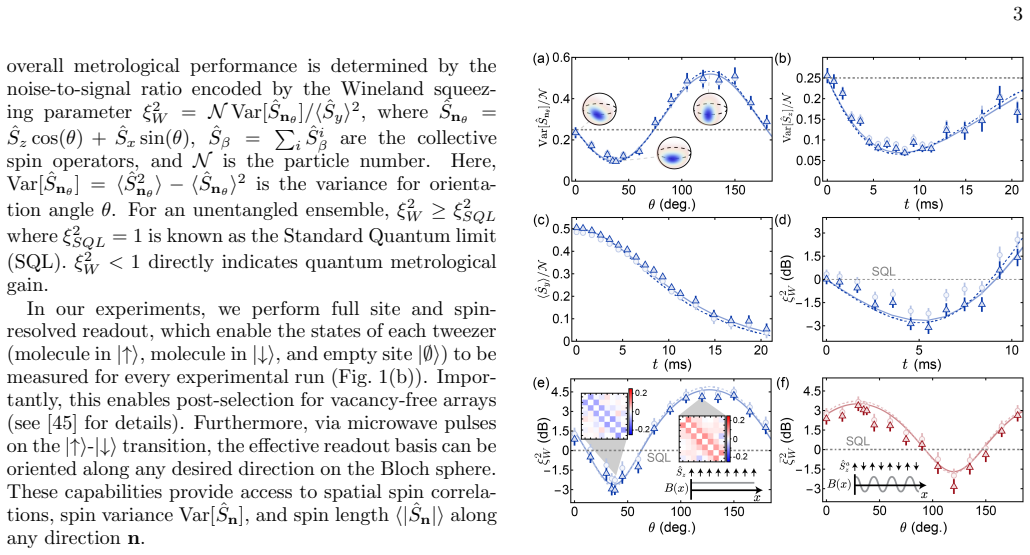
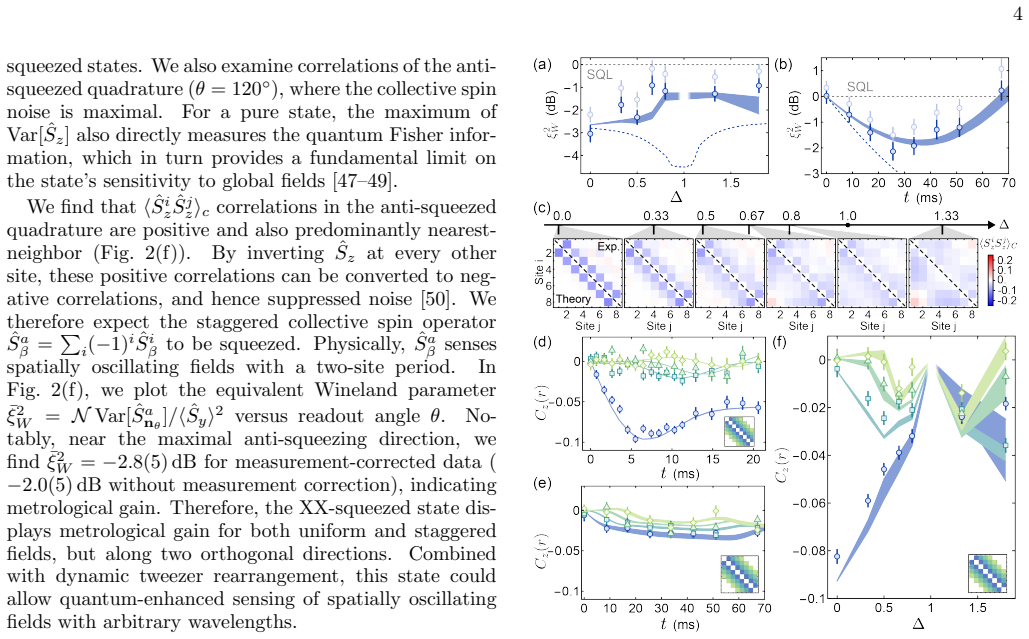
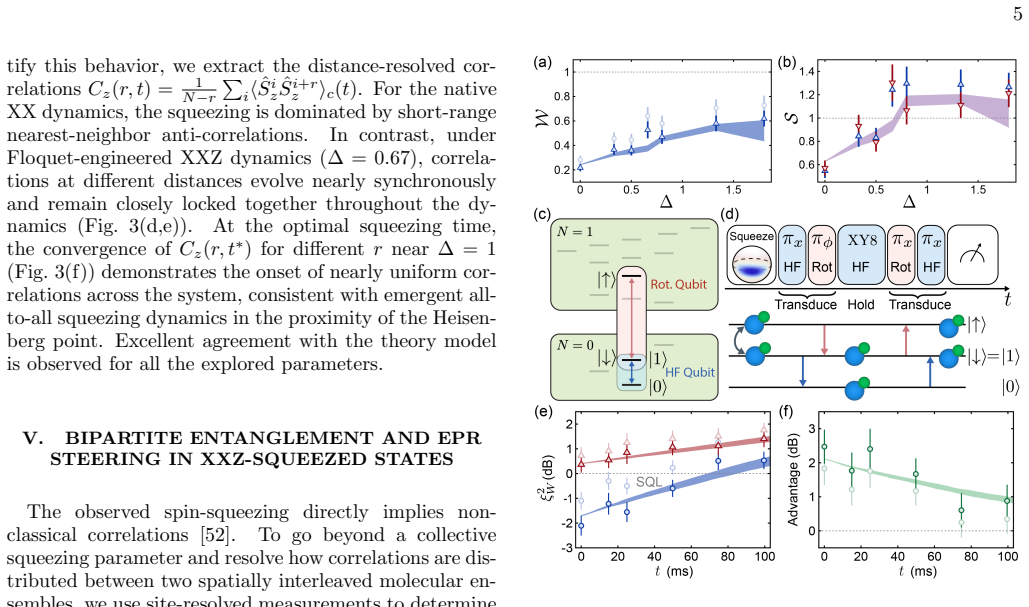
The central discovery is the first creation of metrologically useful spin-squeezed states in polar CaF molecules. The spin is encoded in rotational levels coupled directly by dipolar exchange interactions. Appropriate dynamical decoupling yields up to 3.0(3) dB of metrological gain (2.2(3) dB without correction). Floquet engineering produces richer Hamiltonians that preserve squeezing while building longer-range correlations. Site-resolved measurements confirm enhanced sensitivity to both homogeneous and inhomogeneous fields, bipartite entanglement, and EPR steering. The squeezed states are transferred into long-lived hyperfine levels where the enhancement lasts up to 100 ms.
What carries the argument
Spin-squeezed states produced by dipolar exchange interactions between rotational levels of molecules, isolated and shaped by dynamical decoupling and Floquet engineering.
If this is right
- The entangled states improve sensitivity to both uniform and spatially varying electromagnetic fields.
- Direct measurements reveal bipartite entanglement and Einstein-Podolsky-Rosen steering between molecules.
- The squeezed states can be stored in non-interacting hyperfine levels for up to 100 ms while retaining the metrological advantage.
- Floquet engineering allows the same squeezing to coexist with tunable longer-range quantum correlations.
Where Pith is reading between the lines
- The same decoupling and engineering methods could be applied to other polar species to tailor interactions for specific sensing targets.
- Scaling the tweezer array size while preserving the per-molecule squeezing would test whether molecular platforms can reach the large-N regime needed for practical quantum sensors.
- Transfer into long-lived states opens a route to hybrid molecular-atom or molecular-ion experiments that combine squeezing with different interrogation techniques.
Load-bearing premise
The observed metrological gain arises from quantum spin squeezing rather than residual classical correlations or undetected measurement artifacts.
What would settle it
Repeating the gain measurement after the decoupling sequences are removed or the molecular dipoles are oriented to cancel exchange while all other controls remain identical, and finding no gain, would falsify the claim.
Figures
read the original abstract
Polar molecules are a promising platform for quantum-enhanced sensing and precision tests of fundamental physics, owing to their strong long-range dipolar interactions, broad sensitivity to electromagnetic fields, and sensitivity to potential physics beyond the Standard Model. However, the creation of metrologically useful entangled states in molecular systems has remained elusive. Here, we report the first observation of a class of metrologically useful entangled states - spin-squeezed states - in polar CaF molecules trapped in an optical tweezer array. The spin degree of freedom is encoded in rotational levels which are directly coupled by dipolar exchange interactions. By harnessing appropriate dynamical decoupling schemes we observe up to 3.0(3)dB of metrological gain, (2.2(3)dB without measurement correction) from direct exchange interactions. Using Floquet engineering, we further realize richer Hamiltonians that preserve spin squeezing while enabling the development of longer-range quantum correlations. Using site- and spin-resolved measurements we demonstrate that these entangled states enhance sensitivity to both homogeneous and spatially varying fields, and reveal strong non-classical correlations, including bipartite entanglement and Einstein-Podolsky-Rosen steering. Finally, we transfer the spin-squeezed states into long-lived and non-interacting hyperfine states, where the metrological enhancement persists for up to 100ms. Our results establish molecular optical tweezer arrays as a scalable platform for generating, controlling, characterizing, and storing entangled states of molecules, opening new opportunities for quantum-enhanced sensing and precision tests of fundamental physics.
Editorial analysis
A structured set of objections, weighed in public.
Referee Report
Summary. The manuscript reports the first observation of spin-squeezed states in polar CaF molecules trapped in an optical tweezer array. Spin is encoded in rotational levels coupled by dipolar exchange; dynamical decoupling and Floquet engineering are used to generate up to 3.0(3) dB metrological gain (2.2(3) dB uncorrected). Site- and spin-resolved measurements demonstrate non-classical correlations (bipartite entanglement witnesses, EPR steering), sensitivity to both homogeneous and inhomogeneous fields, and transfer of the squeezed states to long-lived hyperfine levels where the gain persists for ~100 ms.
Significance. If the central claims hold, this establishes molecular tweezer arrays as a viable platform for scalable entangled-state generation and storage. The direct use of dipolar exchange, the quantitative metrological gain with controls, the demonstration of both uniform and spatially varying field sensitivity, and the 100 ms storage time are all load-bearing strengths. The experimental controls (interaction-off sequences, scaling with time/strength, residual decoherence bounds) directly address attribution to squeezing rather than classical effects.
minor comments (2)
- [Abstract] Abstract: the parenthetical '(2.2(3)dB without measurement correction)' should be expanded in the main text to define the correction procedure and its uncertainty budget (e.g., § on data analysis or supplementary methods).
- [Methods / Results] The manuscript should include a concise table or paragraph summarizing the residual decoherence rates measured in the interaction-off control sequences and the corresponding classical gain upper bound.
Simulated Author's Rebuttal
We thank the referee for their positive assessment of our manuscript and their recommendation to accept. We are pleased that the central claims regarding the first observation of spin-squeezed states in polar molecules, the metrological gain, and the storage in long-lived states are viewed as load-bearing strengths.
Circularity Check
No significant circularity
full rationale
This is an experimental paper reporting direct observations of spin-squeezed states and metrological gain in CaF molecules via measured correlations and controls. No derivation chain exists that reduces reported dB values or entanglement witnesses to quantities fitted from the same dataset or to self-citations. The central claims rest on site-resolved measurements, interaction-time scaling, and disabled-interaction controls, all of which are independent of any internal fitting loop. The result is self-contained against external benchmarks.
Axiom & Free-Parameter Ledger
Reference graph
Works this paper leans on
-
[1]
Kitagawa and M
M. Kitagawa and M. Ueda, Squeezed spin states, Phys. Rev. A47, 5138 (1993)
1993
-
[2]
Pezz` e, A
L. Pezz` e, A. Smerzi, M. K. Oberthaler, R. Schmied, and P. Treutlein, Quantum metrology with nonclassical states 7 of atomic ensembles, Rev. Mod. Phys.90, 035005 (2018)
2018
-
[3]
M. Tse, H. Yu, N. Kijbunchoo, A. Fernandez-Galiana, P. Dupej, L. Barsotti, C. Blair, D. Brown, S. e. Dwyer, A. Effler,et al., Quantum-enhanced advanced ligo detec- tors in the era of gravitational-wave astronomy, Physical Review Letters123, 231107 (2019)
2019
-
[4]
I. D. Leroux, M. H. Schleier-Smith, and V. Vuleti´ c, Im- plementation of cavity squeezing of a collective atomic spin, Physical Review Letters104, 073602 (2010)
2010
-
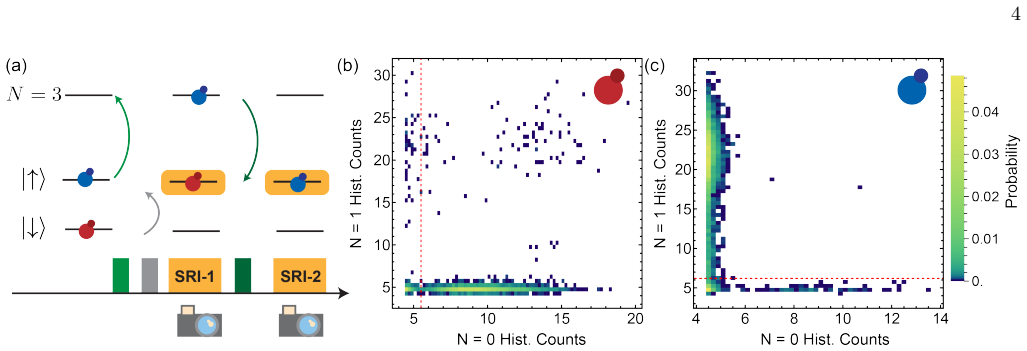
[5]
Hosten, N
O. Hosten, N. J. Engelsen, R. Krishnakumar, and M. A. Kasevich, Measurement noise 100 times lower than the quantum-projection limit using entangled atoms, Nature 529, 505 (2016)
2016
-
[6]
Bornet, G
G. Bornet, G. Emperauger, C. Chen, B. Ye, M. Block, M. Bintz, J. A. Boyd, D. Barredo, T. Comparin, F. Mez- zacapo,et al., Scalable spin squeezing in a dipolar ryd- berg atom array, Nature621, 728 (2023)
2023
-
[7]
J. A. Hines, S. V. Rajagopal, G. L. Moreau, M. D. Wahrman, N. A. Lewis, O. Markovi´ c, and M. Schleier- Smith, Spin squeezing by rydberg dressing in an array of atomic ensembles, Physical Review Letters131, 063401 (2023)
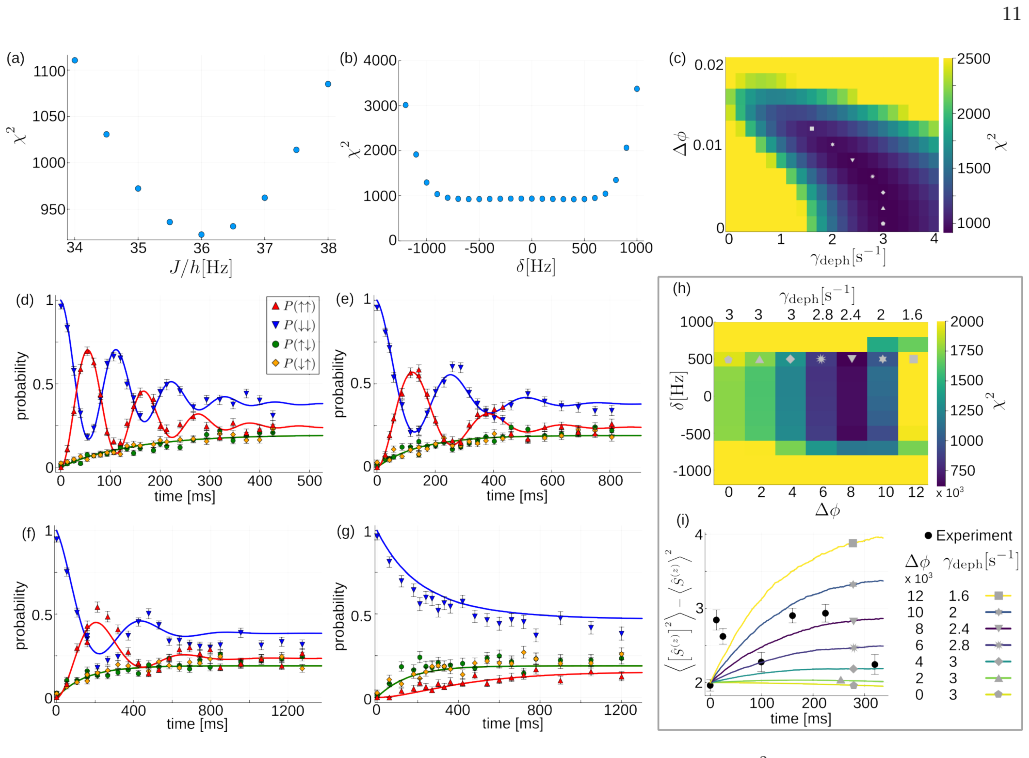
2023
-
[8]
Y. K. Lee, M. Block, H. Lin, V. Fedoseev, P. J. Crow- ley, N. Y. Yao, and W. Ketterle, Observation of spin squeezing with contact interactions in one-and three- dimensional easy-plane magnets, Physical Review Letters 135, 023402 (2025)
2025
-
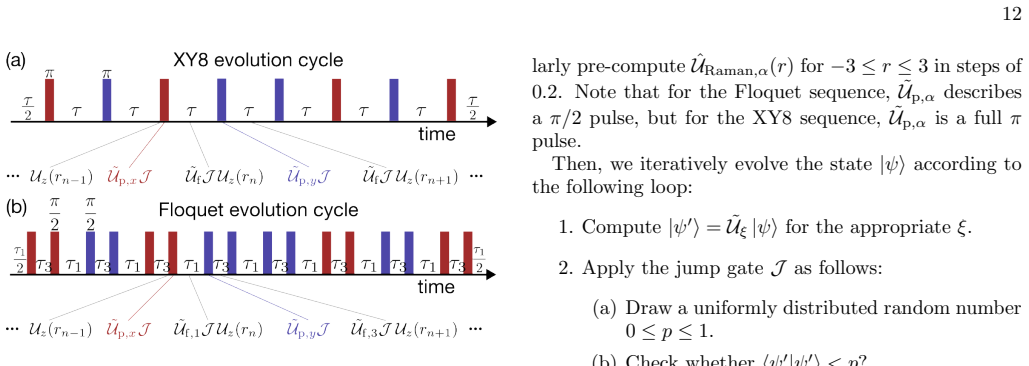
[9]
Douglas, V
A. Douglas, V. Kaxiras, L. Su, M. Szurek, V. Singh, O. Markovi´ c, and M. Greiner, Spin squeezing with itin- erant magnetic dipoles, Physical Review X15, 041021 (2025)
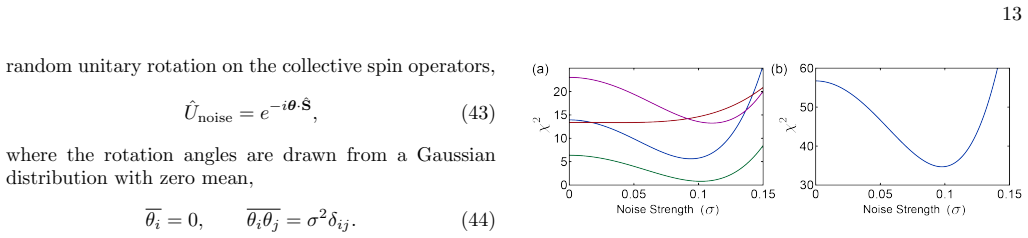
2025
-
[10]
Pedrozo-Pe˜ nafiel, S
E. Pedrozo-Pe˜ nafiel, S. Colombo, C. Shu, A. F. Adiy- atullin, Z. Li, E. Mendez, B. Braverman, A. Kawasaki, D. Akamatsu, Y. Xiao,et al., Entanglement on an optical atomic-clock transition, Nature588, 414 (2020)
2020
-
[11]
W. J. Eckner, N. Darkwah Oppong, A. Cao, A. W. Young, W. R. Milner, J. M. Robinson, J. Ye, and A. M. Kaufman, Realizing spin squeezing with rydberg interac- tions in an optical clock, Nature621, 734 (2023)
2023
-
[12]
Y. Yang, M. Miklos, Y. M. Tso, S. Kraus, J. Hur, and J. Ye, Clock precision beyond the standard quantum limit at 10-18 level, Physical Review Letters135, 193202 (2025)
2025
-
[13]
DeMille, N
D. DeMille, N. R. Hutzler, A. M. Rey, and T. Zelevinsky, Quantum sensing and metrology for fundamental physics with molecules, Nature Physics20, 741 (2024)
2024
-
[15]
Block, B
M. Block, B. Ye, B. Roberts, S. Chern, W. Wu, Z. Wang, L. Pollet, E. J. Davis, B. I. Halperin, and N. Y. Yao, Scal- able spin squeezing from finite-temperature easy-plane magnetism, Nature Physics20, 1575 (2024)
2024
-
[17]
Comparin, F
T. Comparin, F. Mezzacapo, and T. Roscilde, Ro- bust spin squeezing from the tower of states of u(1)- symmetric spin hamiltonians, Physical Review A105, 012625 (2022)
2022
-
[18]
Bilitewski and A
T. Bilitewski and A. M. Rey, Manipulating growth and propagation of correlations in dipolar multilayers: From pair production to bosonic kitaev models, Physical Re- view Letters131, 053001 (2023)
2023
-
[19]
B. Yan, S. A. Moses, B. Gadway, J. P. Covey, K. R. Hazzard, A. M. Rey, D. S. Jin, and J. Ye, Observation of dipolar spin-exchange interactions with lattice-confined polar molecules, Nature501, 521 (2013)
2013
-
[20]
J.-R. Li, K. Matsuda, C. Miller, A. N. Carroll, W. G. Tobias, J. S. Higgins, and J. Ye, Tunable itinerant spin dynamics with polar molecules, Nature614, 70 (2023)
2023
-
[21]
Miller, A
C. Miller, A. N. Carroll, J. Lin, H. Hirzler, H. Gao, H. Zhou, M. D. Lukin, and J. Ye, Two-axis twisting using floquet-engineered xyz spin models with polar molecules, Nature633, 332 (2024)
2024
-
[23]
K.-K. Ni, T. Rosenband, and D. D. Grimes, Dipolar ex- change quantum logic gate with polar molecules, Chem. Sci.9, 6830 (2018)
2018
-
[24]
L. R. Picard, A. J. Park, G. E. Patenotte, S. Gebretsad- kan, D. Wellnitz, A. M. Rey, and K.-K. Ni, Entanglement and iswap gate between molecular qubits, Nature637, 821 (2025)
2025
-
[26]
Robichaud, C
P. Robichaud, C. Hallas, J. Tao, G. Lee, N. B. Vilas, and J. M. Doyle, Parity-doublet coherence times in optically trapped polyatomic molecules, Nature651, 43 (2026)
2026
-
[27]
S. S. Kondov, C.-H. Lee, K. H. Leung, C. Liedl, I. Majew- ska, R. Moszynski, and T. Zelevinsky, Molecular lattice clock with long vibrational coherence, Nature Physics15, 1118 (2019)
2019
-
[28]
J. J. Hudson, D. M. Kara, I. Smallman, B. E. Sauer, M. R. Tarbutt, and E. A. Hinds, Improved measurement of the shape of the electron, Nature473, 493 (2011)
2011
-
[29]
Eckel, P
S. Eckel, P. Hamilton, E. Kirilov, H. W. Smith, and D. DeMille, Search for the electron electric dipole mo- ment using Ω-doublet levels in pbo, Phys. Rev. A87, 052130 (2013)
2013
-
[30]
W. B. Cairncross, D. N. Gresh, M. Grau, K. C. Cossel, T. S. Roussy, Y. Ni, Y. Zhou, J. Ye, and E. A. Cornell, Precision measurement of the electron’s electric dipole moment using trapped molecular ions, Phys. Rev. Lett. 119, 153001 (2017)
2017
-
[31]
Andreev, D
V. Andreev, D. G. Ang, D. DeMille, J. M. Doyle, G. Gabrielse, J. Haefner, N. R. Hutzler, Z. Lasner, C. Meisenhelder, B. R. O’Leary, C. D. Panda, A. D. West, E. P. West, X. Wu, and A. Collaboration, Improved limit on the electric dipole moment of the electron, Na- ture562, 355 (2018)
2018
-
[34]
W. B. Cairncross, J. T. Zhang, L. R. B. Picard, Y. Yu, K. Wang, and K.-K. Ni, Assembly of a rovibrational ground state molecule in an optical tweezer, Phys. Rev. Lett.126, 123402 (2021). 8
2021
-
[36]
Y. Bao, S. S. Yu, L. Anderegg, E. Chae, W. Ketterle, K.-K. Ni, and J. M. Doyle, Dipolar spin-exchange and entanglement between molecules in an optical tweezer ar- ray, Science382, 1138 (2023)
2023
-
[37]
D. K. Ruttley, T. R. Hepworth, A. Guttridge, and S. L. Cornish, Long-lived entanglement of molecules in magic- wavelength optical tweezers, Nature637, 827 (2025)
2025
-
[38]
M. D. Reid, P. D. Drummond, W. P. Bowen, E. G. Cavalcanti, P. K. Lam, H. A. Bachor, U. L. Andersen, and G. Leuchs, Colloquium: The einstein-podolsky-rosen paradox: From concepts to applications, Reviews of Mod- ern Physics81, 1727 (2009)
2009
-
[39]
R. Uola, A. C. S. Costa, H. Q. Nguyen, and O. G¨ uhne, Quantum steering, Reviews of Modern Physics92, 015001 (2020)
2020
-
[40]
Julsgaard, A
B. Julsgaard, A. Kozhekin, and E. S. Polzik, Experimen- tal long-lived entanglement of two macroscopic objects, Nature413, 400 (2001)
2001
-
[41]
Kunkel, M
P. Kunkel, M. Pr¨ ufer, H. Strobel, D. Linnemann, A. Fr¨ olian, T. Gasenzer, M. G¨ arttner, and M. K. Oberthaler, Spatially distributed multipartite entangle- ment enables einstein-podolsky-rosen steering of atomic clouds, Science360, 413 (2018)
2018
-
[42]
A. Rey, L. Jiang, M. Fleischhauer, E. Demler, and M. Lukin, Many-body protected entanglement genera- tion in interacting spin systems, Phys. Rev. A77, 052305 (2008)
2008
-
[43]
M. A. Perlin, C. Qu, and A. M. Rey, Spin squeezing with short-range spin-exchange interactions, Physical Review Letters125, 223401 (2020)
2020
-
[44]
Franke, S
J. Franke, S. R. Muleady, R. Kaubruegger, F. Kranzl, R. Blatt, A. M. Rey, M. K. Joshi, and C. F. Roos, Quantum-enhanced sensing on optical transi- tions through finite-range interactions, Nature621, 740 (2023)
2023
-
[45]
See Supplemental Material
-
[46]
Sørensen, L
A. Sørensen, L. M. Duan, J. I. Cirac, and P. Zoller, Many-particle entanglement with bose–einstein conden- sates, Nature409, 63 (2001)
2001
-
[47]
Hyllus, W
P. Hyllus, W. Laskowski, R. Krischek, C. Schwem- mer, W. Wieczorek, H. Weinfurter, L. Pezz´ e, and A. Smerzi, Fisher information and multiparticle entan- glement, Phys. Rev. A85, 022321 (2012)
2012
-
[48]
T´ oth, Multipartite entanglement and high-precision metrology, Phys
G. T´ oth, Multipartite entanglement and high-precision metrology, Phys. Rev. A85, 022322 (2012)
2012
-
[49]
Pezz´ e and A
L. Pezz´ e and A. Smerzi, Entanglement, nonlinear dy- namics, and the heisenberg limit, Phys. Rev. Lett.102, 100401 (2009)
2009
-
[50]
E. S. Cooper, P. Kunkel, A. Periwal, and M. Schleier- Smith, Graph states of atomic ensembles engineered by photon-mediated entanglement, Nature Physics20, 770 (2024)
2024
-
[51]
A. M. Rey, L. Jiang, M. Fleischhauer, E. Demler, and M. D. Lukin, Many-body protected entanglement genera- tion in interacting spin systems, Phys. Rev. A77, 052305 (2008)
2008
-
[52]
J. Ma, X. Wang, C. P. Sun, and F. Nori, Quantum spin squeezing, Phys. Rep.509, 89 (2011)
2011
-
[54]
L.-M. Duan, G. Giedke, J. I. Cirac, and P. Zoller, Insep- arability criterion for continuous variable systems, Phys- ical Review Letters84, 2722 (2000)
2000
-
[55]
E. G. Cavalcanti, S. J. Jones, H. M. Wiseman, and M. D. Reid, Experimental criteria for steering and the einstein- podolsky-rosen paradox, Phys. Rev. A80, 032112 (2009)
2009
-
[56]
N. U. Koyluoglu, S. V. Rajagopal, G. L. Moreau, J. A. Hines, O. Markovi´ c, and M. Schleier-Smith, Squeezing to- wards the heisenberg limit with locally interacting spins, arXiv preprint arXiv:2506.16973 (2025)
arXiv 2025
-
[57]
J. You, J. M. Doyle, Z. Liu, S. S. Yu, and A. Periwal, Con- trol of dipolar dynamics by geometrical programming, Physical Review Letters135, 253002 (2025)
2025
-
[58]
Creating and Probing Spin Squeezed States of Molecules
S. V. Syzranov, M. L. Wall, V. Gurarie, and A. M. Rey, Spin-orbital dynamics in a system of polar molecules, Na- ture Communications5, 5391 (2014). Supplementary Material for “Creating and Probing Spin Squeezed States of Molecules” Connor M. Holland, 1 Callum L. Welsh, 1 Yukai Lu,1, 2 David Wellnitz,3, 4, 5 Xing-Yan Chen,1 Ana Maria Rey, 5 and Lawrence W....
2014
-
[59]
Correlated Global Rotations 12 ∗ lcheuk@princeton.edu
-
[60]
Theory Predictions for Scalable Squeezing in 2D 13 A
Noise-Modified Theory Curves and Fit Procedure 13 VI. Theory Predictions for Scalable Squeezing in 2D 13 A. Interaction Disorder 14 B. Decoherence 15 VII. Supplementary Data 16 References 16 I. EXPERIMENTAL METHODS The experimental apparatus used to prepare CaF molecules in optical tweezers has previously been de- scribed in Refs. [1–6]. In this work, eac...
-
[61]
A microwave pulse transfers|0⟩molecules to|↑⟩
-
[62]
3.N12 light is applied to shelve molecules from|↑⟩ to theN= 3 manifold
The tweezer depth is increased from the interac- tion depthV 0 to 7V 0 to improve survival during rotational shelving. 3.N12 light is applied to shelve molecules from|↑⟩ to theN= 3 manifold. 0.2 ms of shelving light is applied, much longer than the measured∼20µs 1/eshelving timescale
-
[63]
The tweezer depth is ramped back down toV 0
-
[64]
A microwaveπ-pulse transfers|↓⟩molecules to|↑⟩
-
[65]
The tweezer depth is increased to the full imaging depth≈10V 0 and the magnetic field is set to zero
-
[66]
This is done using 4 ms of Λ-imaging followed by 7 ms of rapid resonant imaging [5]
Molecules inN= 1 are imaged (SRI-1). This is done using 4 ms of Λ-imaging followed by 7 ms of rapid resonant imaging [5]. Bright sites predomi- nantly correspond to sites with molecules initially in|↓⟩. Molecules that fluoresce in this step are largely lost. 8.∼10 ms ofN32 light is applied to pump (de-shelve) the darkN= 3 molecules back to detectableN= 1 ...
-
[67]
This is done with 30 ms Λ-imaging
Molecules inN= 1 are imaged (SRI-2). This is done with 30 ms Λ-imaging. Bright sites largely correspond to sites with molecules initially in|↑⟩. Because the two images use different imaging pa- rameters and techniques, their fluorescence count his- tograms are different. We therefore use separate thresh- olds (θ 1, θ2) for the two images when classifying ...
-
[68]
ApplyR ⊗N to the measured outcome vectorP meas (dimension 4 N), yielding the occupation probabil- ity vectorP occ (dimension 3N). 6
-
[69]
Post-select by setting all entries ofP occ correspond- ing to hole configurations to zero
-
[70]
Normalize the resulting vector’s sum to 1. Before normalization, this vector can be written as Pocc,PS = diag{1,1,0} ⊗N · R⊗N ·P meas = [diag{1,1,0} · R] ⊗N ·P meas.(11) Since diag{1,1,0} · Rcontains a row of zeros, the cor- rection matrix reduces to dimension 2×4, significantly reducing computational overhead. Expectation values and uncertainties are com...
-
[71]
This gives us the full 3D motional eigenstates
and↑(l= 8). This gives us the full 3D motional eigenstates. To disentangle thex,y, andzcomponents, we take three 1D cuts of the Hamiltonian. We define ˆH(x) 0,l andE (x) n,l by fixingy=z= 0 to computeω x = (E(x) 3,1 −E (x) 3,0 )/ℏandδ x,th = (E (x) 8,1 −E (x) 8,0 )/ℏ−ω x. We analogously computeω y andδ y,th forx=z= 0, and ωz andδ z,th forx=y= 0. We call t...
-
[72]
Crucially, for⃗ n 1 =⃗ n′ 2 and⃗ n2 =⃗ n′ 1, ϕ⃗ n′ 1,↑(0), ϕ⃗ n′ 2,↓(m) ˆHdd |ϕ⃗ n1,↓(0), ϕ⃗ n2,↑(m)⟩ ≪J typically does not contribute to the dynamics on exper- imental time scales. Therefore, we only keep the terms corresponding to⃗ n1 =⃗ n′ 1 and⃗ n2 =⃗ n′ 2, and ˆHdd reduces to a spin model ˆHdd,eff = X i,j Jij(⃗ n(i), ⃗ n(j)) 2 h ˆs(x) i ˆs(x) j + ˆs(...
-
[73]
Guess the parametersJ,δ, ∆ϕ, andγ deph
-
[74]
OptimizeJusing the two-particle interacting data [Fig. 2(a)]
-
[75]
Find a preliminary optimum forδusing the two- particle interactions [Fig. 2(b)]
-
[76]
Find a cross-correlated region of confidence be- tweenγ deph and ∆ϕ[Fig. 2(c)]
-
[77]
This fully constrainsγ deph and ∆ϕtogether with the previous step, and provides a more constrained range forδ[Fig
Run a 2D scan of the variance of non-interacting molecules for a joint scan ofδand ∆ϕ, using the optimalγ deph determined in step 4 for each ∆ϕ. This fully constrainsγ deph and ∆ϕtogether with the previous step, and provides a more constrained range forδ[Fig. 2(h)]
-
[78]
−iτp ˆHmol + ˆHMW,α − i 2 X k ˆL† k ˆLk !# , (40) ˜Uf,1 = exp
Restart from step 2. with the new optimalJ,δ, ∆ϕ, andγ deph. The fitting procedure is illustrated for the final pa- rameters in Fig. 2. ForJ, we find a clear optimum aroundJ/h= 36 Hz. Forδ, we initially find a wide region of confidence−900 Hz< δ <700 Hz, which is wider than the∼500 Hz variations we expect experi- mentally. Forγ deph and ∆ϕ, we find a corr...
2000
-
[79]
Compute|ψ ′⟩= ˜Uξ |ψ⟩for the appropriateξ
-
[80]
Yes,” randomly choose the appropriate quantum jump and apply it (see below) [17]; If “No,
Apply the jump gateJas follows: (a) Draw a uniformly distributed random number 0≤p≤1. (b) Check whether⟨ψ ′|ψ′⟩< p? (c) If “Yes,” randomly choose the appropriate quantum jump and apply it (see below) [17]; If “No,” renormalize the state|ψ ′⟩
-
[81]
To choose the appropriate jump, we compute the jump weightsw k =⟨ψ ′| ˆL† k ˆLk |ψ′⟩, such that the corresponding probabilities arep k =w k/(P k wk)
Repeat. To choose the appropriate jump, we compute the jump weightsw k =⟨ψ ′| ˆL† k ˆLk |ψ′⟩, such that the corresponding probabilities arep k =w k/(P k wk). Then, to apply the jump, we compute|ψ ′′⟩= ˆLk |ψ′⟩/ √wk. The implemen- tation of this algorithm is illustrated in Fig. 3. To increase efficiency, we reuse the same thermal dis- tribution and thus th...
-
[82]
Correlated Global Rotations To model imperfections during transduction, we con- sider a globally correlated random rotation of the collec- tive spinS=⟨ ˆS⟩. The noise is modeled as a shot-to-shot 13 random unitary rotation on the collective spin operators, ˆUnoise =e −iθ·ˆS,(43) where the rotation angles are drawn from a Gaussian distribution with zero me...
-
[83]
Noise-Modified Theory Curves and Fit Procedure When comparing between theory and experiment, we account for correlated rotation noise during transduction by modifying theory curves computed according to the equations above. Specifically, we multiply the collective spin lengths by the Gaussian suppression factor, so that ⟨ ˆSy⟩th → ⟨ ˆSy⟩the−σ2 .(50) The v...
-
[84]
The squeezed-state spin length, FIG. 4. Determining Strength of Transduction Noise. (a) Shown are the fitχ 2 versus the Gaussian noise widthσfor the squeezed state spin variance (blue), squeezed state spin length (red), coherent spin state spin variance (green), coherent spin state spin length (purple). All show mutually compatible op- tima atσ≈0.1 (b) Th...
-
[85]
The squeezed-state spin variance,
-
[86]
The coherent-spin-state (CSS) spin length,
-
[87]
The coherent-spin-state (CSS) variance. For each data set, we perform a self-consistency check by independently determining the best-fit Gaussian noise widthσusing a reduced chi-squared cost function, χ2(σ) = X i h y(exp) i −y (th) i (σ) i2 δy2 i ,(52) wherey (exp) i are the measured data points,y (th) i (σ) are the corresponding noise-modified theory pre...
-
[88]
Y. Lu, C. M. Holland, and L. W. Cheuk, Molecular laser cooling in a dynamically tunable repulsive optical trap, Phys. Rev. Lett.128, 213201 (2022)
2022
discussion (0)
Sign in with ORCID, Apple, or X to comment. Anyone can read and Pith papers without signing in.