On prime character degree graphs occurring within a family of graphs (iii)
Pith reviewed 2026-06-28 03:34 UTC · model grok-4.3
The pith
Adding flexibility to a graph construction completes the classification of prime character degree graphs arising from solvable groups.
A machine-rendered reading of the paper's core claim, the machinery that carries it, and where it could break.
Core claim
We conclude the classification work done in the two previous papers of the same name. Here we add flexibility to the construction, thereby viewing the graphs in full generality. Our goal, as ever, is to determine which graphs do or do not occur as the prime character degree graph of a solvable group.
What carries the argument
The flexible construction of graphs in an extended family that models prime character degree graphs of solvable groups.
If this is right
- Every prime character degree graph of a solvable group now belongs to the extended family.
- Certain graphs inside the family are shown not to arise from any solvable group.
- The classification applies without further restrictions on the shape of the graphs beyond membership in the family.
Where Pith is reading between the lines
- The work supplies an explicit test for membership in the realizable set once a candidate graph is given.
- The same flexible family may serve as a starting point for studying degree graphs of groups that are not solvable.
Load-bearing premise
The added flexibility in the construction is sufficient to capture every possible prime character degree graph arising from a solvable group without missing cases or introducing extraneous ones.
What would settle it
A solvable group whose prime character degree graph cannot be obtained from any instance of the flexible construction.
Figures
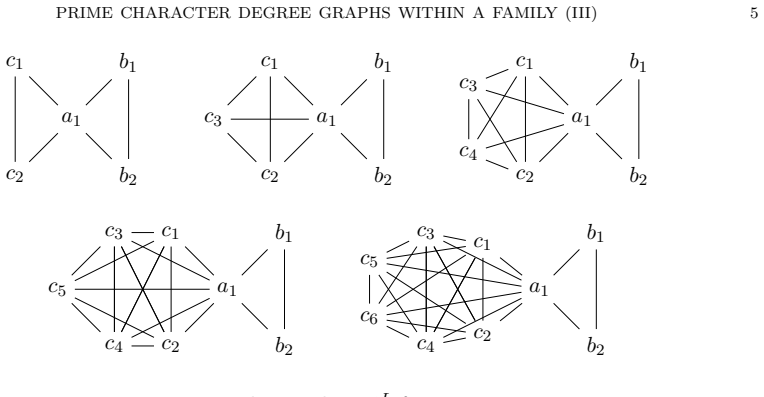
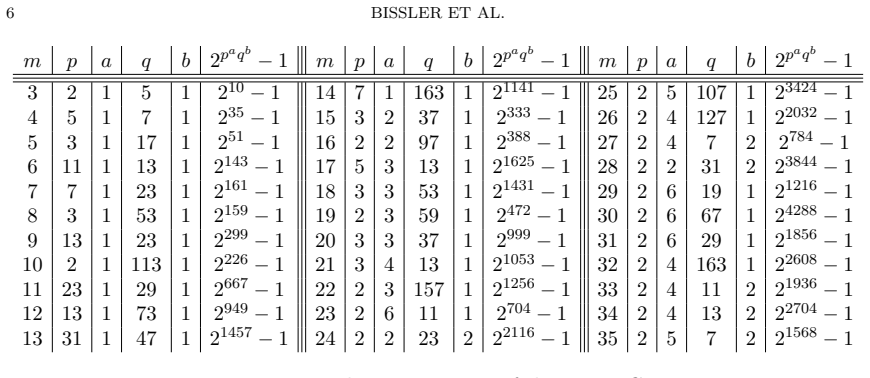
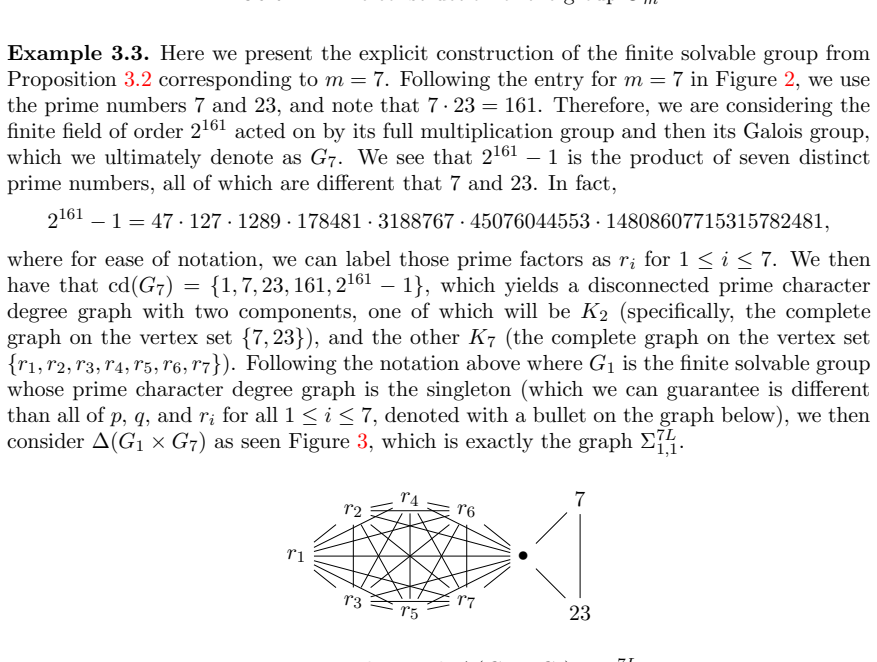
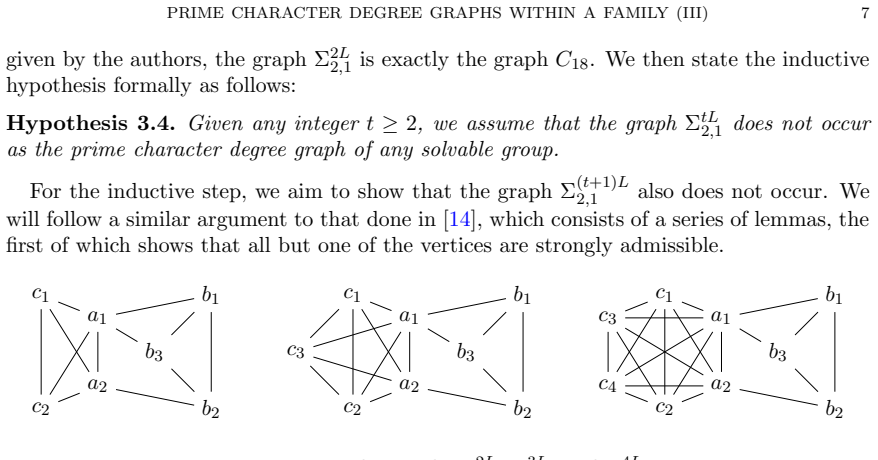
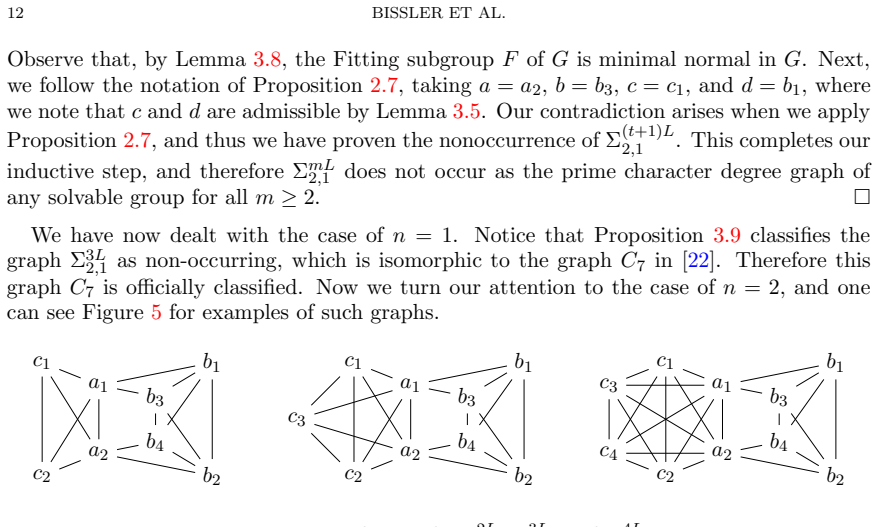
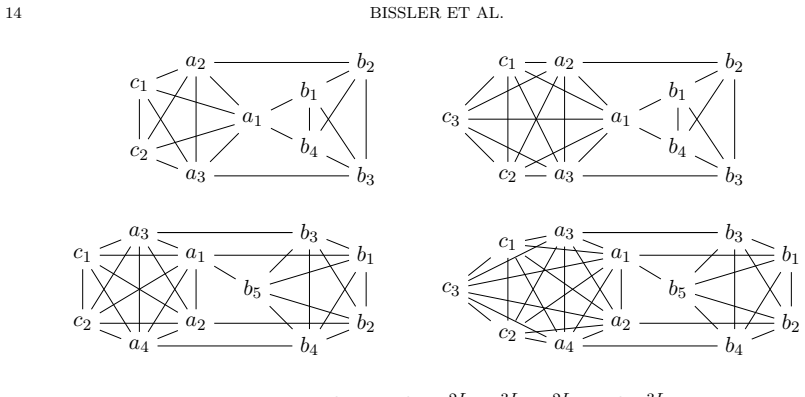
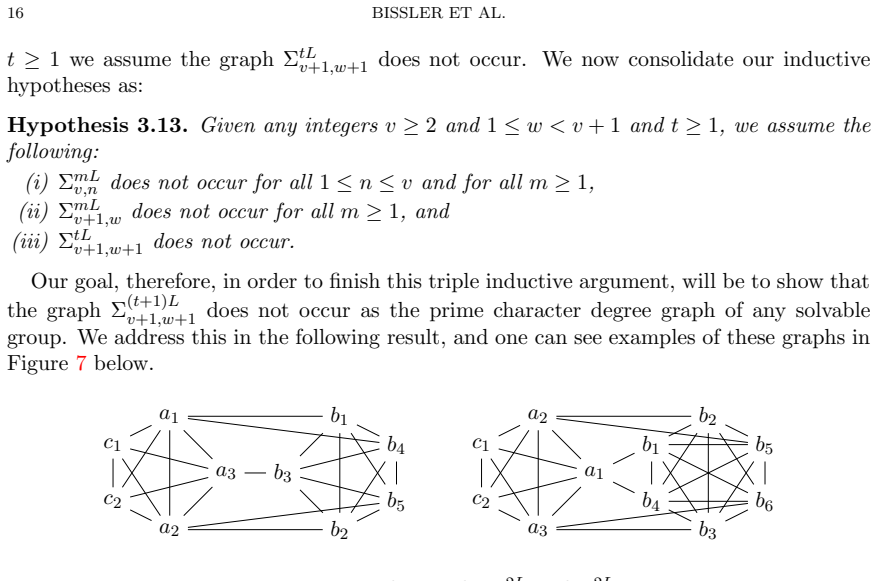
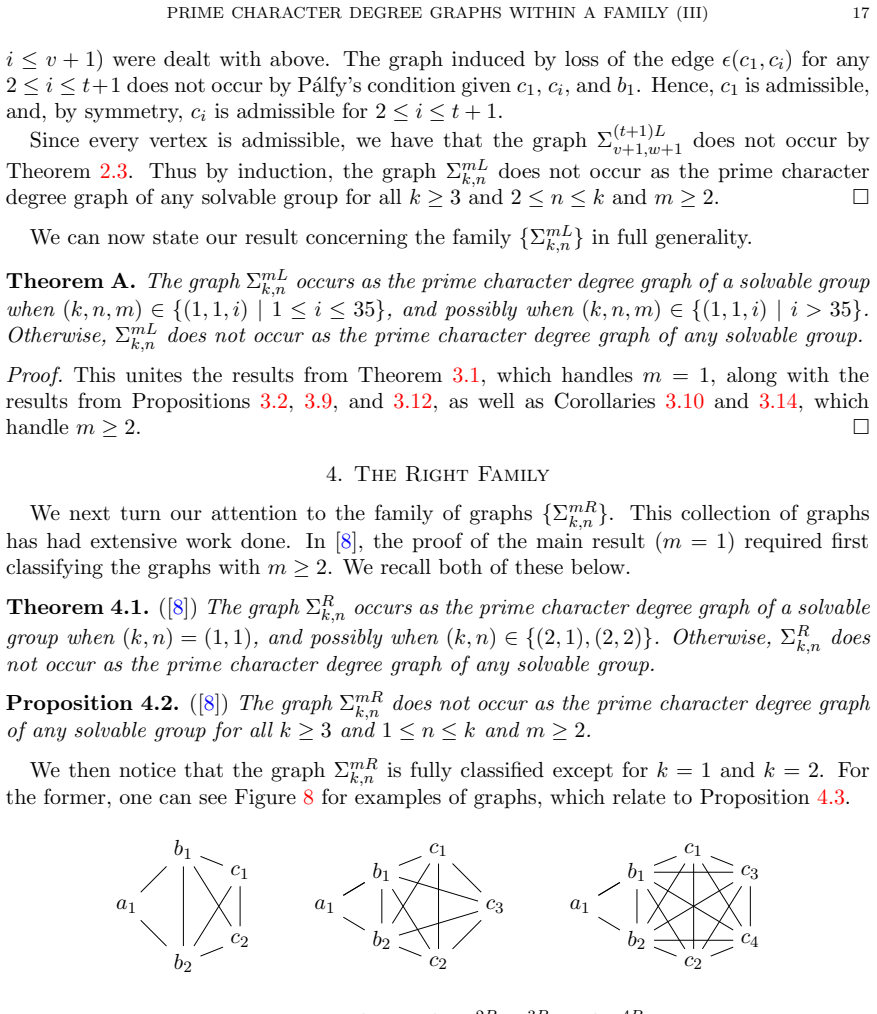
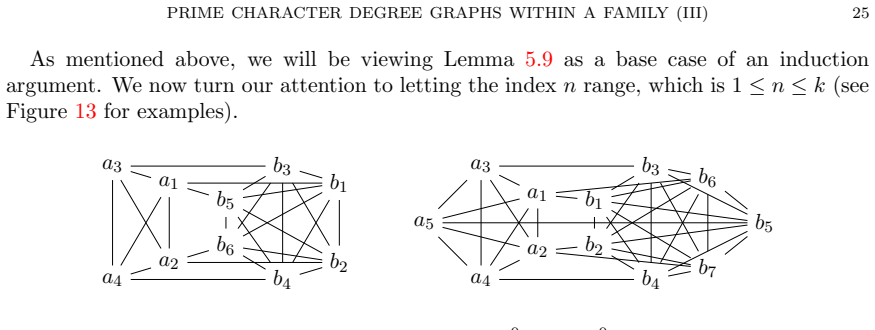
read the original abstract
We conclude the classification work done in the two previous papers of the same name. Here we add flexibility to the construction, thereby viewing the graphs in full generality. Our goal, as ever, is to determine which graphs do or do not occur as the prime character degree graph of a solvable group.
Editorial analysis
A structured set of objections, weighed in public.
Referee Report
Summary. The paper concludes the classification work from the two previous papers in the series on prime character degree graphs occurring within a family of graphs. It adds flexibility to the prior construction in order to view the graphs in full generality, with the goal of determining which graphs do or do not occur as the prime character degree graph of a solvable group.
Significance. If the added flexibility indeed yields a complete and gap-free classification without extraneous cases, the result would provide a definitive characterization of prime character degree graphs for solvable groups, advancing the understanding of constraints on character degrees in finite solvable groups.
major comments (1)
- [Abstract] Abstract: The central claim that the added flexibility achieves full generality and concludes the classification rests on an unverified assumption that the extended construction captures every possible prime character degree graph arising from a solvable group without omissions or extraneous inclusions; no details, definitions, or arguments supporting this sufficiency are provided in the available text.
Simulated Author's Rebuttal
We thank the referee for their comments on the manuscript. We address the single major comment below.
read point-by-point responses
-
Referee: [Abstract] Abstract: The central claim that the added flexibility achieves full generality and concludes the classification rests on an unverified assumption that the extended construction captures every possible prime character degree graph arising from a solvable group without omissions or extraneous inclusions; no details, definitions, or arguments supporting this sufficiency are provided in the available text.
Authors: The full manuscript provides the required details. Building directly on the constructions and results of the two preceding papers in the series, Section 2 introduces the extended family of graphs with the added flexibility parameters, Section 3 defines the corresponding solvable groups via explicit semidirect products, and Sections 4–5 prove that every prime character degree graph arising from a solvable group is realized by one of these groups (or is excluded by the degree-graph constraints established earlier). These arguments establish both completeness and the absence of extraneous cases; the abstract merely summarizes the resulting classification theorem. revision: no
Circularity Check
No significant circularity; classification extends prior construction without reduction to inputs
full rationale
The paper is the third installment in a series and explicitly states it concludes prior classification work by adding flexibility to an existing construction. No equations, fitted parameters, predictions, or self-referential definitions are present in the abstract or stated goal. The central claim is a mathematical classification of which graphs occur as prime character degree graphs of solvable groups; this is achieved by extending a prior construction rather than by any step that reduces by construction to the target result itself. Self-citation to the two previous papers is present but does not serve as the sole justification for a uniqueness theorem or load-bearing premise that would force the outcome. The derivation chain is therefore self-contained as a sequence of group-theoretic constructions and verifications.
Axiom & Free-Parameter Ledger
Reference graph
Works this paper leans on
-
[1]
On the character degree graph of solvable groups.Proc
Zeinab Akhlaghi, Carlo Casolo, Silvio Dolfi, Khatoon Khedri, and Emanuele Pacifici. On the character degree graph of solvable groups.Proc. Amer. Math. Soc., 146(4):1505–1513, 2018
2018
-
[2]
Bissler and Jacob Laubacher
Mark W. Bissler and Jacob Laubacher. Classifying families of character degree graphs of solvable groups. Int. J. Group Theory, 8(4):37–46, 2019
2019
-
[3]
Bissler, Jacob Laubacher, and Mark L
Mark W. Bissler, Jacob Laubacher, and Mark L. Lewis. Classifying character degree graphs with six vertices.Beitr. Algebra Geom., 60(3):499–511, 2019
2019
-
[4]
Bissler, Jacob Laubacher, and Mark L
Mark W. Bissler, Jacob Laubacher, and Mark L. Lewis. A family of graphs that cannot occur as character degree graphs of solvable groups.Beitr. Algebra Geom., 66(3):727–738, 2025
2025
-
[5]
Bissler, Jacob Laubacher, and Corey F
Mark W. Bissler, Jacob Laubacher, and Corey F. Lyons. On the absence of a normal nonabelian Sylow subgroup.Comm. Algebra, 47(3):917–922, 2019
2019
-
[6]
Cameron, G
Peter J. Cameron, G. Sivanesan, C. Selvaraj, T. Tamizh Chelvam, and Jacob Laubacher. On the metric dimension of the character degree graph of a solvable group.Comm. Algebra, 54(5):2039–2049, 2026
2039
-
[7]
Groups whose character degree graph has diameter three.Israel J
Carlo Casolo, Silvio Dolfi, Emanuele Pacifici, and Lucia Sanus. Groups whose character degree graph has diameter three.Israel J. Math., 215:523–558, 2016
2016
-
[8]
On prime character degree graphs occurring within a family of graphs (ii).Comm
Sara DeGroot, Jacob Laubacher, and Mark Medwid. On prime character degree graphs occurring within a family of graphs (ii).Comm. Algebra, 50(8):3307–3319, 2022
2022
-
[9]
On the structure of the character degree graphs having diameter three.J
Silvio Dolfi, Roghayeh Hafezieh, and Pablo Spiga. On the structure of the character degree graphs having diameter three.J. Algebra, 685:337–360, 2025. PRIME CHARACTER DEGREE GRAPHS WITHIN A F AMILY (III) 27
2025
-
[10]
Huppert.Endliche gruppen
B. Huppert.Endliche gruppen. I. Die Grundlehren der Mathematischen Wissenschaften, Band 134. Springer-Verlag, Berlin-New York, 1967
1967
-
[11]
B. Huppert. Research in representation theory at Mainz (1984–1990).Progr. Math., 95:17–36, 1991
1984
-
[12]
Martin Isaacs.Character theory of finite groups
I. Martin Isaacs.Character theory of finite groups. Dover Publications, Inc., New York, 1994. Corrected reprint of the 1976 original [Academic Press, New York; MR0460423 (57 #417)]
1994
-
[13]
On prime character degree graphs occurring within a family of graphs.Comm
Jacob Laubacher and Mark Medwid. On prime character degree graphs occurring within a family of graphs.Comm. Algebra, 49(4):1534–1547, 2021
2021
-
[14]
Classifying character degree graphs with seven vertices.Adv
Jacob Laubacher, Mark Medwid, and Dylan Schuster. Classifying character degree graphs with seven vertices.Adv. Group Theory Appl., 22:79–121, 2025
2025
-
[15]
Mark L. Lewis. Solvable groups whose degree graphs have two connected components.J. Group Theory, 4(3):255–275, 2001
2001
-
[16]
Mark L. Lewis. A solvable group whose character degree graph has diameter 3.Proc. Amer. Math. Soc., 130(3):625–630, 2002
2002
-
[17]
Mark L. Lewis. Solvable groups with character degree graphs having 5 vertices and diameter 3.Comm. Algebra, 30(11):5485–5503, 2002
2002
-
[18]
Mark L. Lewis. Classifying character degree graphs with 5 vertices. InFinite groups 2003, pages 247–265. Walter de Gruyter, Berlin, 2004
2003
-
[19]
Mark L. Lewis. An overview of graphs associated with character degrees and conjugacy class sizes in finite groups.Rocky Mountain J. Math., 38(1):175–211, 2008
2008
-
[20]
Lewis and Qingyun Meng
Mark L. Lewis and Qingyun Meng. Solvable groups whose prime divisor character degree graphs are 1-connected.Monatsh. Math., 190(3):541–548, 2019
2019
-
[21]
Mark L. Lewis and Andrew Summers. On the number of disconnected character degree graphs satisfying P´ alfy’s inequality. arXiv:2504.01158, 6 pp., 2025
-
[22]
Classifying Prime Character Degree Graphs With Eight Vertices
Mark L. Lewis and Andrew Summers. Classifying prime character degree graphs with eight vertices. arXiv:2603.15851, 38 pp., 2026
work page internal anchor Pith review Pith/arXiv arXiv 2026
-
[23]
Character graphs with no complete vertices.J
Claudio Paolo Morresi Zuccari. Character graphs with no complete vertices.J. Algebra, 353:22–30, 2012
2012
-
[24]
Regular character degree graphs.J
Claudio Paolo Morresi Zuccari. Regular character degree graphs.J. Algebra, 411:215–224, 2014
2014
-
[25]
On the character degree graph of solvable groups
P´ eter P´ al P´ alfy. On the character degree graph of solvable groups. I. Three primes.Period. Math. Hungar., 36(1):61–65, 1998
1998
-
[26]
On the character degree graph of solvable groups
P´ eter P´ al P´ alfy. On the character degree graph of solvable groups. II. Disconnected graphs.Studia Sci. Math. Hungar., 38:339–355, 2001
2001
-
[27]
Catherine B. Sass. Character degree graphs of solvable groups with diameter three.J. Group Theory, 19(6):1097–1127, 2016
2016
-
[28]
Sivanesan and C
G. Sivanesan and C. Selvaraj. Laplacian eigenvalues of character degree graphs of solvable groups. Vietnam J. Math., 54(1):117–134, 2026
2026
-
[29]
Sivanesan, C
G. Sivanesan, C. Selvaraj, and T. Tamizh Chelvam. Eulerian character degree graphs of solvable groups. AKCE Int. J. Graphs. Combin., 21(2):161–166, 2024
2024
-
[30]
On a problem by Huppert.Acta Sci
Jiping Zhang. On a problem by Huppert.Acta Sci. Natur. Univ. Pekinensis, 34:143–150, 1998. Mark W. Bissler — Department of General Education, Western Governors University — Salt Lake City, Utah 84107, USA Email address:mark.bissler@wgu.edu Thatcher Debowski — Department of Mathematics, Hillsdale College — Hillsdale, Michi- gan 49242, USA Email address:tde...
1998
discussion (0)
Sign in with ORCID, Apple, or X to comment. Anyone can read and Pith papers without signing in.