Virtual-Array Operational Modal Analysis of Rolling Tires Using a Single Tire Cavity Accelerometer
Pith reviewed 2026-06-27 11:08 UTC · model grok-4.3
The pith
A single tire cavity accelerometer creates a virtual array to identify rolling tire vibration modes using the non-integer drum diameter ratio.
A machine-rendered reading of the paper's core claim, the machinery that carries it, and where it could break.
Core claim
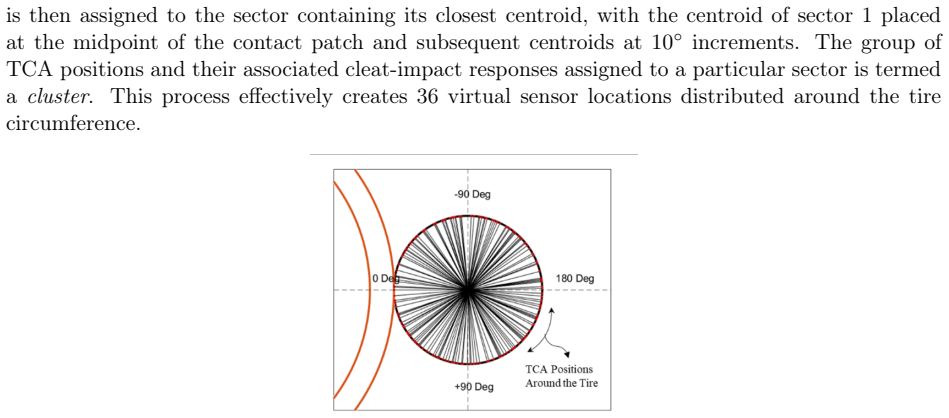
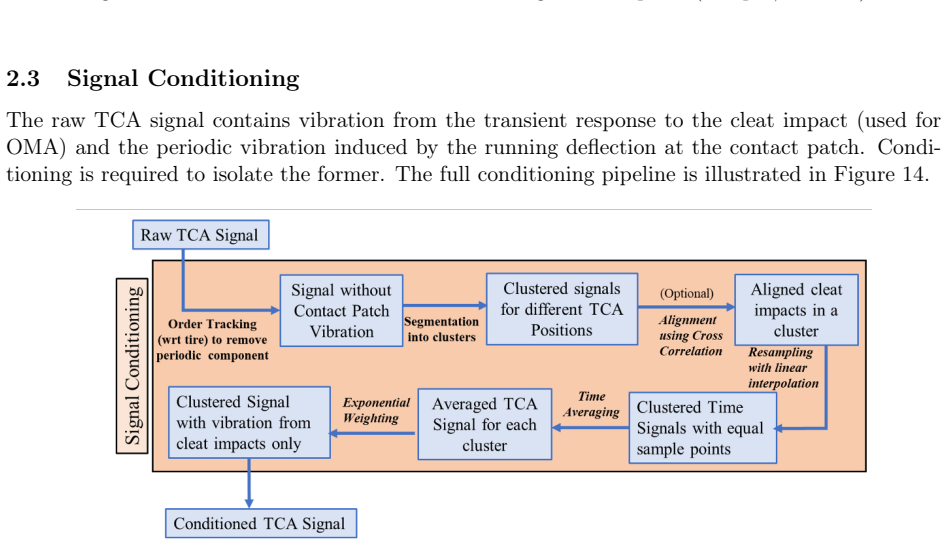
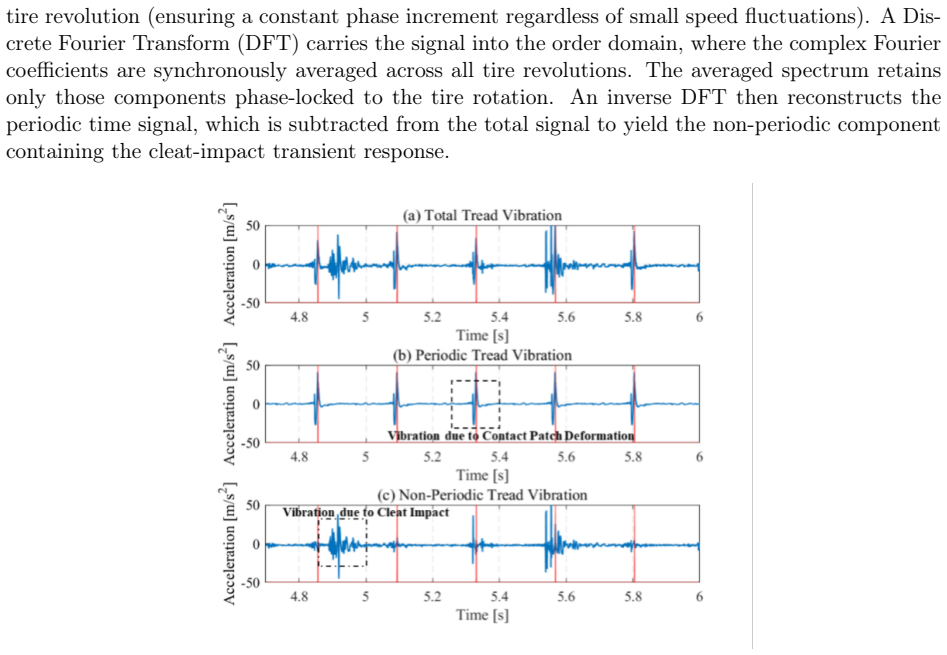
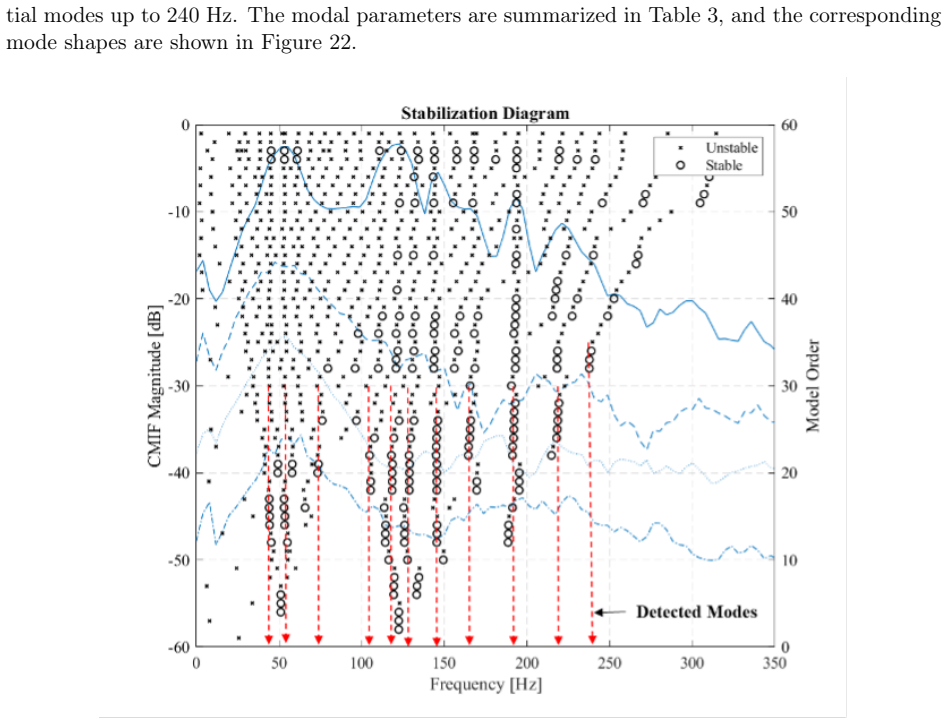
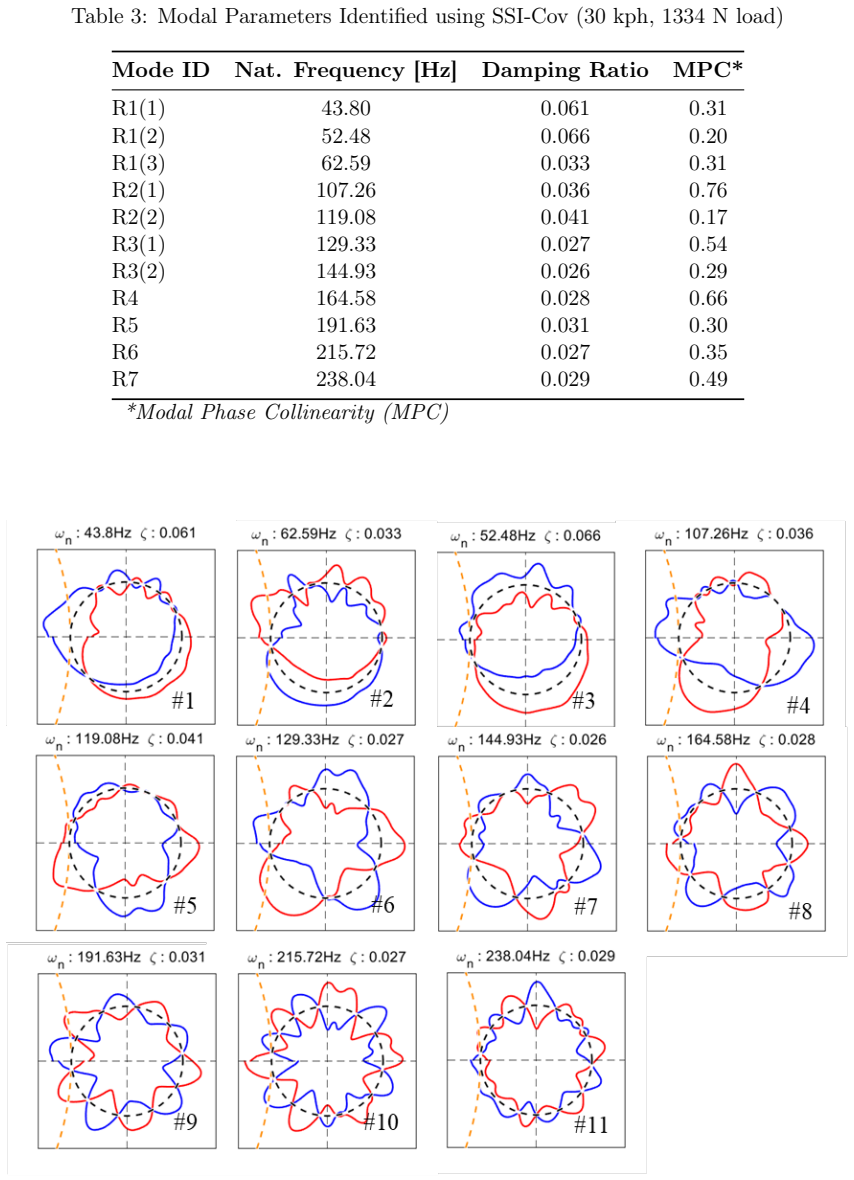
Responses from a single tire cavity accelerometer can be clustered into a virtual circumferential array by leveraging the non-integer ratio of tire to drum diameters together with optical timing of impacts and sensor position; after conditioning by order tracking, frequency domain decomposition and covariance-based stochastic subspace identification are applied, with the latter successfully identifying eleven circumferential modes up to 240 Hz.
What carries the argument
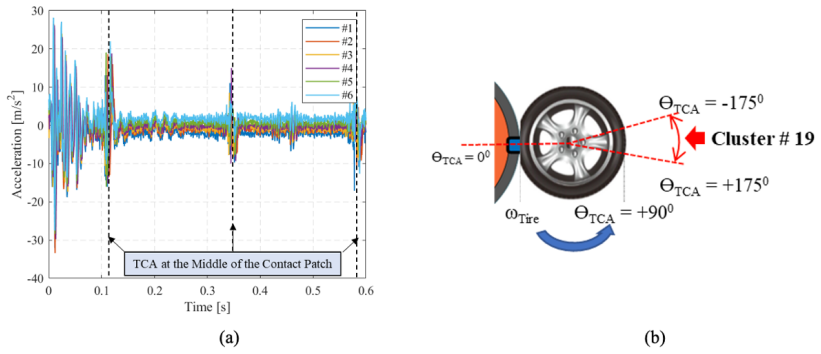
The virtual sensor array synthesized by clustering single TCA responses according to circumferential position at each cleat impact, enabled by the non-integer tire-drum diameter ratio.
If this is right
- Enables modal characterization of rolling tire dynamics under realistic operating conditions without multiple sensors.
- Provides a lower-cost and simpler alternative to laser Doppler vibrometer methods that also works on treaded tires.
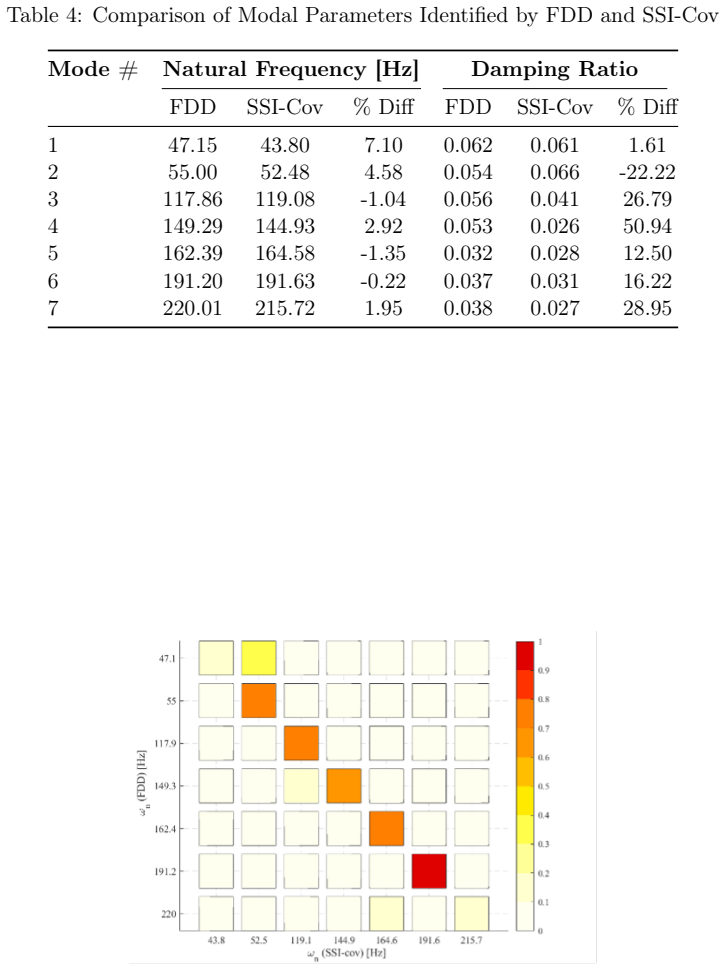
- The covariance-based stochastic subspace identification approach yields more robust results than frequency domain decomposition for this data.
- The method is adaptable to on-road testing of tires in actual vehicle operation.
- Supports better understanding of low-frequency tire vibrations that contribute to structure-borne vehicle noise.
Where Pith is reading between the lines
- The virtual-array idea from diameter mismatch could be tested on other rotating components such as wheels or rotors where adding sensors is difficult.
- If the sampling remains uniform at higher speeds, the frequency range might extend beyond 240 Hz without hardware changes.
- An on-vehicle version could support continuous monitoring of tire structural health during normal driving.
- Similar clustering from repeated passes might reduce sensor count in other vibration studies of cyclic systems.
Load-bearing premise
The non-integer ratio between tire and drum diameters produces sufficiently dense, uniform, and non-repeating circumferential sampling across revolutions so that clustered responses synthesize a true virtual array without spatial aliasing.
What would settle it
A side-by-side test in which mode frequencies or shapes extracted from the single-sensor virtual array diverge from those measured simultaneously with a physical array of multiple accelerometers mounted around the same rolling tire.
Figures
read the original abstract
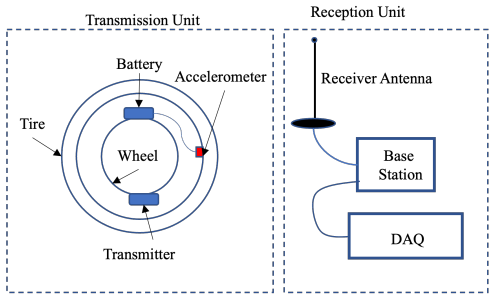
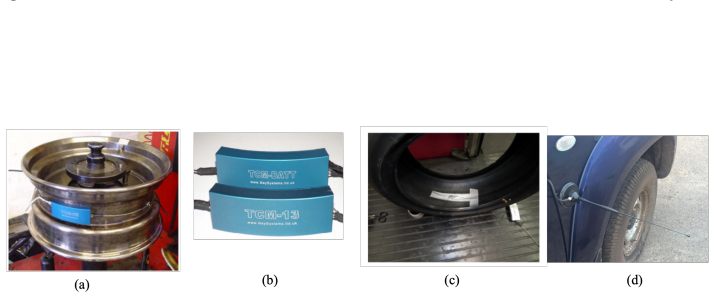
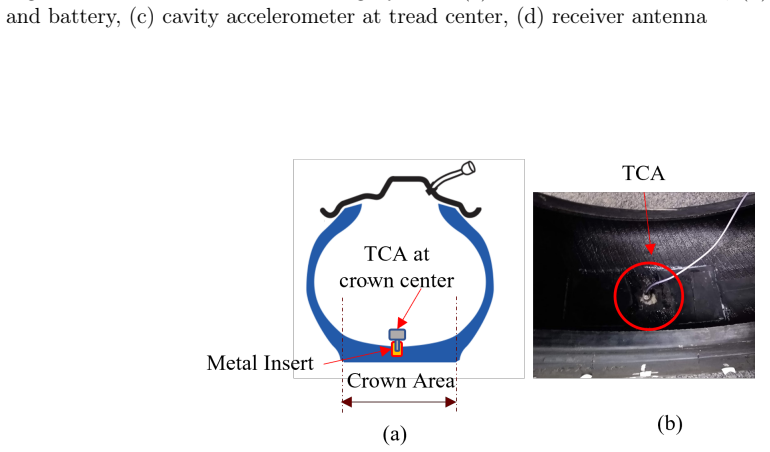
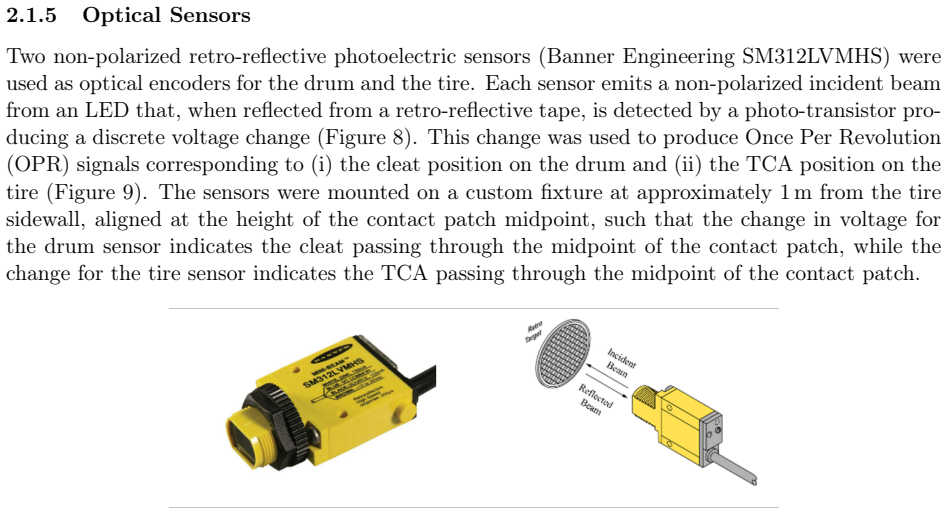
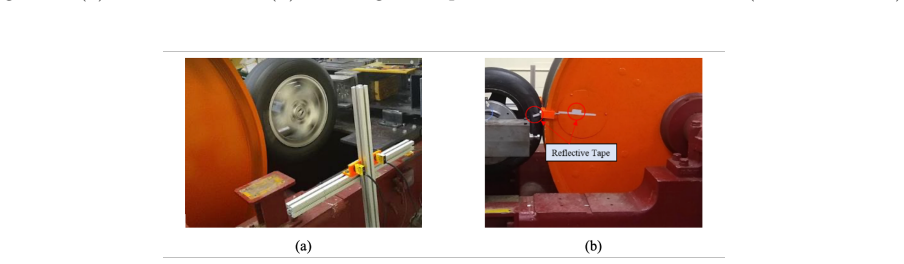
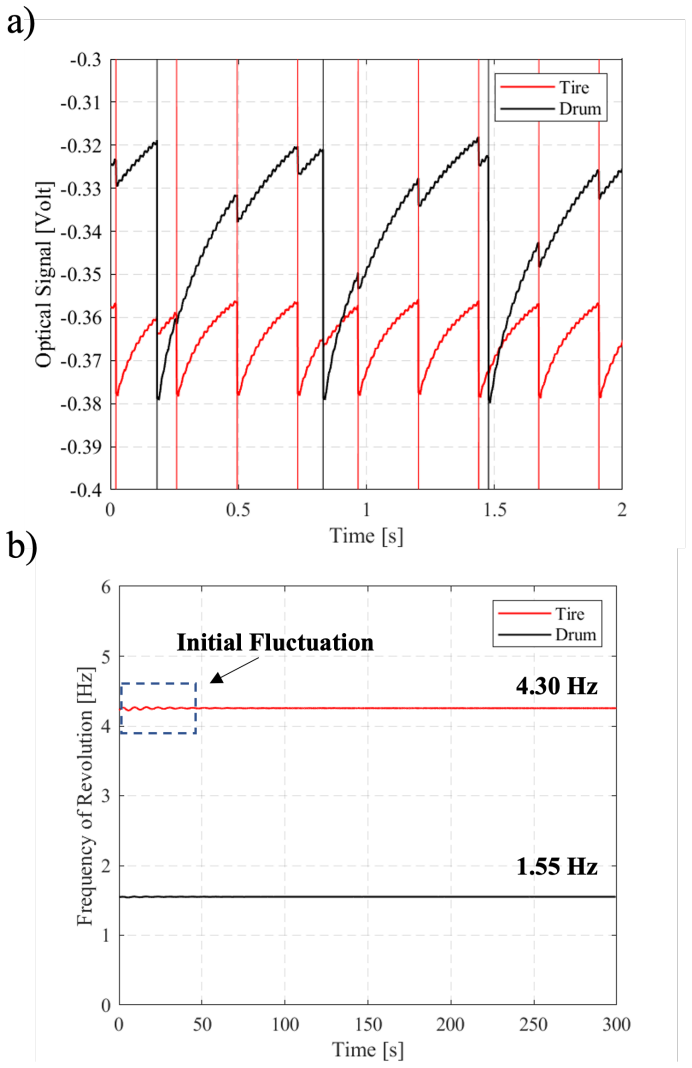
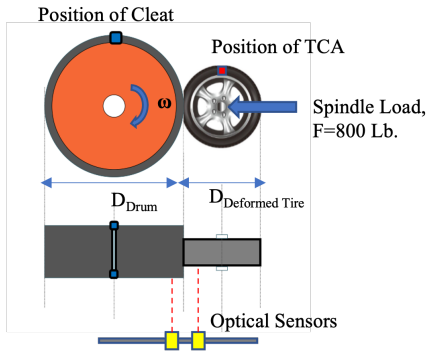
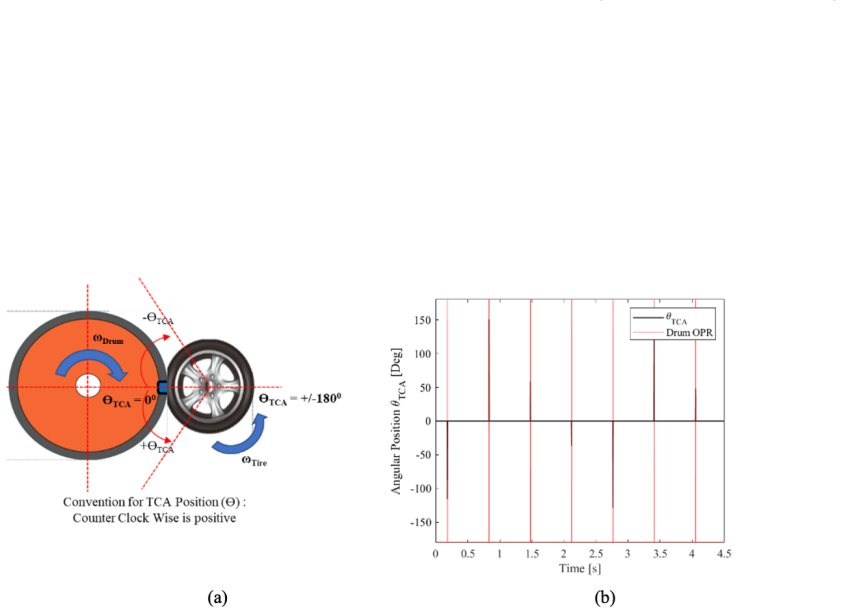
The dynamics of rolling tires significantly influence the low-frequency (0-500 Hz) structure-borne noise within vehicles. Accurately characterizing these dynamics under realistic operating conditions remains challenging. Current state-of-the-art methods, primarily relying on Laser Doppler Vibrometers (LDV), are complex to implement, time-intensive, and generally limited to smooth tires in laboratory environments due to issues with speckle formation on treaded surfaces. This study introduces an innovative strategy for Operational Modal Analysis (OMA) of a rolling tire using a single wireless Tire Cavity Accelerometer (TCA) together with two optical sensors. The methodology leverages the non-integer ratio between the tire and drum diameters in a test rig to create a virtual sensor array. By utilizing optical sensors to time-stamp the cleat impact (on the drum) precisely and the TCA position (on the tire), the vibration responses from multiple revolutions are clustered according to the TCA's circumferential position at the moment of impact. This effectively synthesizes responses from an array of virtual sensors distributed around the tire circumference using data from a single test run. The clustered signals are conditioned using order tracking to remove periodic components arising from contact patch deformation. Both Frequency Domain Decomposition (FDD) and Covariance-based Stochastic Subspace Identification (SSI-Cov) were employed for modal identification. The SSI-Cov method proved more robust, successfully identifying 11 circumferential modes up to 240 Hz. The proposed approach offers a significantly more efficient, cost-effective method for characterizing rolling tire dynamics, which is readily applicable to treaded tires and adaptable for on-road testing.
Editorial analysis
A structured set of objections, weighed in public.
Referee Report
Summary. The manuscript introduces an experimental method for operational modal analysis (OMA) of rolling tires that uses a single wireless tire cavity accelerometer (TCA) together with two optical sensors. By exploiting the non-integer ratio between tire and drum diameters in a test rig, vibration responses from multiple revolutions are clustered by TCA circumferential position at cleat-impact instants to synthesize a virtual sensor array; order tracking removes periodic contact-patch effects, after which both frequency-domain decomposition (FDD) and covariance-driven stochastic subspace identification (SSI-Cov) are applied. The authors report that SSI-Cov robustly identifies 11 circumferential modes up to 240 Hz and claim the approach is more efficient and applicable to treaded tires than laser-Doppler-vibrometer methods.
Significance. If the virtual-array construction is shown to be free of spatial aliasing and the modal identifications are corroborated by spectra, mode shapes, and reference comparisons, the work would supply a low-cost, laboratory-to-road extensible technique for characterizing rolling-tire dynamics in the 0–500 Hz band that is directly relevant to structure-borne noise prediction.
major comments (2)
- [Abstract and §3] Abstract and §3 (virtual-array synthesis): the central claim that the non-integer tire–drum diameter ratio produces a sufficiently dense, uniform, and non-repeating circumferential sampling (spacing ≪ half-wavelength at 240 Hz) without spatial aliasing is asserted but unsupported by any reported diameter ratio, computed position sequence, or explicit aliasing check; this assumption is load-bearing for the validity of all subsequent modal results.
- [Abstract and results section] Abstract and results section: the headline result of 11 identified circumferential modes is stated without accompanying spectra, mode-shape plots, coherence values, stabilization diagrams, or quantitative comparison to any LDV reference data or error metrics, preventing independent assessment of identification quality.
minor comments (1)
- [Abstract] The abstract would benefit from a brief parenthetical mention of the measured diameter ratio or the number of virtual sensors synthesized.
Simulated Author's Rebuttal
We thank the referee for the constructive comments on our manuscript. We address each major point below and agree that additional details and visualizations are needed to strengthen the presentation of the virtual-array method and modal results.
read point-by-point responses
-
Referee: [Abstract and §3] Abstract and §3 (virtual-array synthesis): the central claim that the non-integer tire–drum diameter ratio produces a sufficiently dense, uniform, and non-repeating circumferential sampling (spacing ≪ half-wavelength at 240 Hz) without spatial aliasing is asserted but unsupported by any reported diameter ratio, computed position sequence, or explicit aliasing check; this assumption is load-bearing for the validity of all subsequent modal results.
Authors: We agree that the specific diameter ratio, position sequence, and aliasing verification are essential and were not sufficiently detailed. In the revised manuscript we will report the exact tire and drum diameters, tabulate or plot the computed circumferential positions at successive cleat impacts, and add an explicit spatial-sampling analysis confirming that the effective spacing remains well below the half-wavelength at 240 Hz, thereby satisfying the Nyquist criterion for the identified modes. revision: yes
-
Referee: [Abstract and results section] Abstract and results section: the headline result of 11 identified circumferential modes is stated without accompanying spectra, mode-shape plots, coherence values, stabilization diagrams, or quantitative comparison to any LDV reference data or error metrics, preventing independent assessment of identification quality.
Authors: We acknowledge that the results section requires supporting visualizations. The revision will add representative auto-spectra from the virtual array, the identified circumferential mode shapes, SSI-Cov stabilization diagrams, and coherence or singular-value plots. Direct quantitative LDV comparisons are outside the scope of the present treaded-tire experiments, but we will include a qualitative discussion of consistency with prior LDV literature on smooth tires and any available error metrics from the OMA procedures. revision: yes
Circularity Check
No circularity: purely experimental data collection and standard modal identification
full rationale
The paper presents an experimental technique that clusters single-sensor responses into a virtual array using the physical non-integer tire-drum diameter ratio, then applies off-the-shelf FDD and SSI-Cov algorithms. No equations, fitted parameters, or predictions are defined in terms of the target modal results. The sampling-density assumption is an unverified physical premise rather than a self-referential derivation. No self-citations are load-bearing for the central claim, and the work contains no mathematical reduction of outputs to inputs.
Axiom & Free-Parameter Ledger
axioms (1)
- domain assumption Non-integer tire-to-drum diameter ratio produces dense, uniform circumferential sampling across revolutions
Reference graph
Works this paper leans on
-
[1]
P. P. Dash, Operational modal analysis of rolling tire: A tire cavity accelerometer mediated approach, MS thesis, Virginia Polytechnic Institute and State University, Blacksburg, VA, USA (July 2020). URLhttps://hdl.handle.net/10919/107874
2020
-
[2]
Govindswamy, T
K. Govindswamy, T. Wellmann, G. Eisele, Aspects of nvh integration in hybrid vehicles, SAE International Journal of Passenger Cars-Mechanical Systems 2 (1) (2009) 1396–1405
2009
-
[3]
Chang, W
J. Chang, W. WanYing, J. XiaoXiong, Study on tire noise transfer path identification, in: 2010 IEEE 10th International Conference on Signal Processing, IEEE, 2010
2010
-
[4]
Lopez, R
I. Lopez, R. Blom, N. Roozen, H. Nijmeijer, Modelling vibrations on deformed rolling tyres—a modal approach, Journal of Sound and Vibration 307 (3-5) (2007) 481–494
2007
-
[5]
Sandberg, J
U. Sandberg, J. A. Ejsmont, Tyre/Road Noise Reference Book, Informex, 2002
2002
-
[6]
Pinnington, A
R. Pinnington, A. Briscoe, A wave model for a pneumatic tyre belt, Journal of Sound and Vibration 253 (5) (2002) 941–959
2002
-
[7]
Pinnington, A wave model of a circular tyre
R. Pinnington, A wave model of a circular tyre. part 1: Belt modelling, Journal of Sound and Vibration 290 (1-2) (2006) 101–132
2006
-
[8]
J. S. Bolton, H. J. Song, Y. K. Kim, The wave number decomposition approach to the analysis of tire vibration, in: Proceedings of NOISE-CON 98, 1998
1998
-
[9]
L. H. Yam, D. H. Guan, A. Q. Zhang, Three-dimensional mode shapes of a tire using experi- mental modal analysis, Experimental Mechanics 40 (4) (2000) 369–375. 23
2000
-
[10]
Kindt, F
P. Kindt, F. De Coninck, P. Sas, W. Desmet, Experimental modal analysis of radial tires and the influence of tire modes on vehicle structure borne noise, in: Proceedings of the 31st FISITA World Automotive Congress, 2006
2006
-
[11]
Rocca, P
G. Rocca, P. Kindt, J. M. Middelberg, C. González Díaz, B. Peeters, H. Van der Auweraer, Experimental study for high-frequency modal characterization of tyres, in: 18th International Congress on Sound and Vibration, 2011
2011
-
[12]
Kindt, Structure-borne tyre/road noise due to road surface discontinuities, Ph.D
P. Kindt, Structure-borne tyre/road noise due to road surface discontinuities, Ph.D. thesis, KU Leuven (2009)
2009
-
[13]
Kindt, P
P. Kindt, P. Sas, W. Desmet, Measurement and analysis of rolling tire vibrations, Optics and Lasers in Engineering 47 (3) (2009) 443–453
2009
-
[14]
Kindt, A
P. Kindt, A. de Carri, B. Peeters, H. Van der Auweraer, P. Sas, W. Desmet, Operational modal analysis of a rotating tyre subject to cleat excitation, in: Structural Dynamics, Volume 3, Springer, 2011
2011
-
[15]
Rocca, B
G. Rocca, B. Peeters, C. González Díaz, J. Middelberg, P. Kindt, Indoor vibration testing for high-frequency modal characterization of tyres, in: Proceedings of IMAC-XXIX, 2011, pp. 849–859
2011
-
[16]
J. R. Bell, S. Rothberg, Laser vibrometers and contacting transducers, target rotation and six degree-of-freedom vibration: what do we really measure?, Journal of Sound and Vibration 237 (2) (2000) 245–261
2000
-
[17]
C. B. Burroughs, E. L. Dugan, Measurement and analysis of blank tire tread vibration and radiated noise, Noise Control Engineering Journal 51 (2003) 145–156
2003
-
[18]
Ishihama, K
M. Ishihama, K. Matsumoto, K. Miyoshi, T. Haraguchi, K. Yoshii, Influence of driving force and road surface roughness on tire tread vibration, in: INTER-NOISE 2017, 2017
2017
-
[19]
Feng, Separation of tread pattern noise in tire-pavement interaction noise, Master’s thesis, Virginia Tech (2017)
J. Feng, Separation of tread pattern noise in tire-pavement interaction noise, Master’s thesis, Virginia Tech (2017)
2017
-
[20]
G. H. James, T. G. Carne, J. P. Lauffer, The natural excitation technique (next) for modal parameter extraction from operating wind turbines, Tech. Rep. 4, NASA STI/Recon Technical Report N (1993)
1993
-
[21]
James, T
G. James, T. G. Carne, J. P. Lauffer, The natural excitation technique (next) for modal parameter extraction from operating structures, Modal Analysis-The International Journal of Analytical and Experimental Modal Analysis 10 (4) (1995) 260
1995
-
[22]
Brincker, L
R. Brincker, L. Zhang, P. Andersen, Modal identification of output-only systems using fre- quency domain decomposition, Smart Materials and Structures 10 (3) (2001) 441
2001
-
[23]
Cheynet, J
E. Cheynet, J. B. Jakobsen, J. Snæbjörnsson, Damping estimation of large wind-sensitive structures, Procedia Engineering 199 (2017) 2047–2053
2017
-
[24]
Van Overschee, B
P. Van Overschee, B. De Moor, Subspace Identification for Linear Systems: Theory, Implemen- tation, Applications, Kluwer Academic Publishers, 1996
1996
-
[25]
L. R. Molisani, R. A. Burdisso, D. Tsihlas, A coupled tire structure/acoustic cavity model, International Journal of Solids and Structures 40 (19) (2003) 5125–5138. 24
2003
-
[26]
Sterling, R
A. Sterling, R. Burdisso, P. Tarazaga, Experimental investigation of tire tread vibration and tire pavement interaction noise, in: INTER-NOISE 2019, 2019
2019
-
[27]
R. L. Wheeler, H. R. Dorfi, B. B. Keum, Vibration modes of radial tires: measurement, predic- tion, and categorization under different boundary and operating conditions, SAE Transactions 114 (2005) 2823–2837
2005
-
[28]
R. S. Pappa, K. B. Elliott, A. Schenk, Consistent-mode indicator for the eigensystem realization algorithm, Journal of Guidance, Control, and Dynamics 16 (5) (1993) 852–858
1993
-
[29]
Imregun, D
M. Imregun, D. Ewins, Complex modes-origins and limits, in: Proceedings-SPIE The Interna- tional Society for Optical Engineering, 1995
1995
-
[30]
H. Lee, M. K. Kwak, Free vibration analysis of a circular cylindrical shell using the rayleigh–ritz method and comparison of different shell theories, Journal of Sound and Vibration 353 (2015) 344–377. 25
2015
discussion (0)
Sign in with ORCID, Apple, or X to comment. Anyone can read and Pith papers without signing in.