Towards a Control interpretation of Quantum Advantage
Pith reviewed 2026-06-27 05:52 UTC · model grok-4.3
The pith
Quantum advantage equals a polynomial-in-n upper bound on minimal time for the bilinear controlled Schrödinger equation on SU(N).
A machine-rendered reading of the paper's core claim, the machinery that carries it, and where it could break.
Core claim
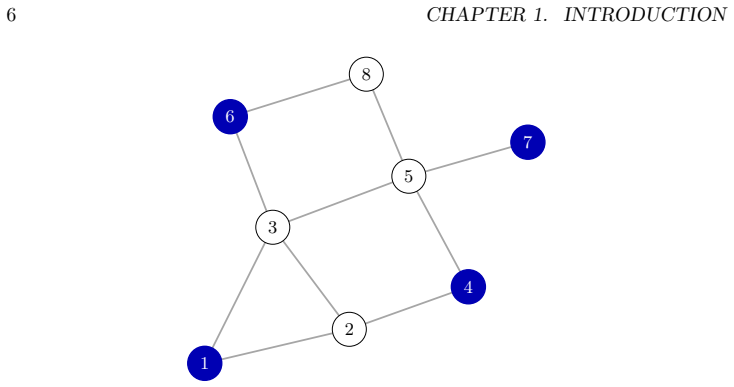
The target quantum computation is recast as an operator controllability problem on SU(N), and QA is identified with a polynomial-in-n upper bound on the associated minimal-time function. For the quantum Fourier transform this yields operator controllability via a Lie-algebraic argument together with an O(n^2) upper bound obtained from a gate-concatenation lemma and the standard circuit decomposition. For the maximum independent set the Rydberg-blockade Hamiltonian is treated as a bilinear control system, QAOA is recast as a continuous-time optimal control problem, and a controllability result shows the problem can be solved on the relevant hardware while supplying a control-based definition
What carries the argument
The bilinear controlled Schrödinger equation on SU(N) and its minimal-time function, which supplies the polynomial bound that defines quantum advantage.
If this is right
- Operator controllability of the quantum Fourier transform on SU(N) follows from a Lie-algebraic argument.
- An O(n^2) upper bound on minimal time holds for the quantum Fourier transform via gate concatenation and standard circuit decomposition.
- The Rydberg-blockade Hamiltonian for maximum independent set is a bilinear control system on which QAOA becomes a continuous-time optimal control problem.
- A controllability result establishes that maximum independent set can be solved on the neutral-atom hardware under the new definition of quantum advantage.
Where Pith is reading between the lines
- The same controllability and minimal-time analysis could be applied to other quantum algorithms to produce explicit polynomial bounds.
- Hardware-specific minimal-time functions might be used to compare control protocols across different quantum platforms.
- The framework opens the possibility of importing numerical optimal-control methods to design shorter quantum circuits.
Load-bearing premise
The bilinear controlled Schrödinger equation on SU(N) together with its minimal-time function provides a faithful model of quantum advantage on superconducting and neutral-atom processors.
What would settle it
An explicit quantum computation shown to deliver advantage on the cited hardware yet requiring superpolynomial minimal time under the bilinear control model on SU(N).
Figures
read the original abstract
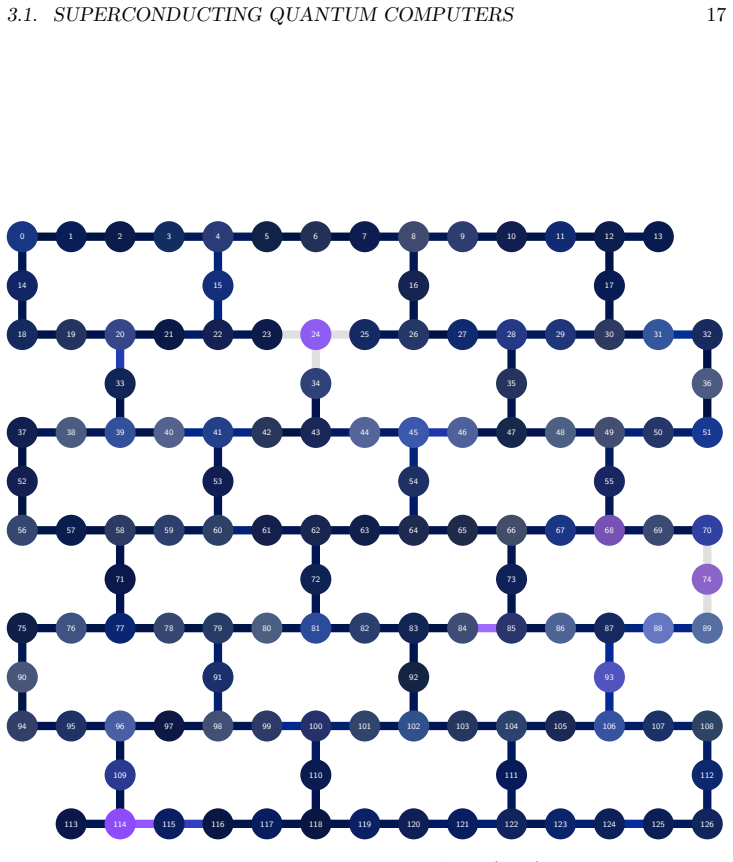
We develop a control-theoretic framework for understanding Quantum Advantage (QA), providing a systematic route to characterize when and how QA can arise. The bilinear controlled Schr\"odinger equation is the common thread: the target quantum computation is recast as an operator controllability problem on the special unitary group $SU(N)$, and QA is identified with a polynomial-in-$n$ upper bound on the associated minimal-time function. We illustrate the framework on two paradigmatic problems: a) the Quantum Fourier Transform (QFT) on superconducting digital quantum processors (such as IBM's ibm_brisbane), for which we prove operator controllability by a Lie-algebraic argument and derive an $O(n^2)$ upper bound on the minimal time via a gate-concatenation lemma combined with the standard QFT circuit decomposition; b) the Maximum Independent Set (MIS) problem on neutral-atom analog quantum processors (such as Pasqal's hardware), for which we analyze the Rydberg-blockade Hamiltonian as a bilinear control system and reformulate the Quantum Approximate Optimization Algorithm (QAOA) as a continuous-time optimal control problem. By a controllability result, we show how the problem can be solved on Pasqal Quantum Computers and we introduce a control-based definition of Quantum Advantage for MIS. We conclude by outlining several open problems that chart directions for future research at the intersection of Control Theory and Quantum Computing.
Editorial analysis
A structured set of objections, weighed in public.
Referee Report
Summary. The paper develops a control-theoretic framework identifying quantum advantage (QA) with a polynomial-in-n upper bound on the minimal-time function for the bilinear controlled Schrödinger equation on SU(N). It illustrates the approach via Lie-algebraic controllability and an O(n²) bound for the QFT on superconducting processors (using gate concatenation on the standard decomposition) and via reformulation of QAOA as an optimal-control problem on the Rydberg-blockade Hamiltonian for the MIS problem on neutral-atom processors, together with a controllability result and a control-based QA definition.
Significance. If the identification of QA with the abstract minimal-time bound can be shown to faithfully capture hardware advantage, the framework would supply a new systematic language for characterizing when continuous-time control yields polynomial scaling. The illustrations, however, largely recover known circuit depths and introduce a definition without direct comparison to classical or hardware-constrained scaling, limiting the immediate impact.
major comments (3)
- [QFT application section] QFT illustration: The O(n²) upper bound is obtained by applying the gate-concatenation lemma to the conventional QFT circuit decomposition after the Lie-algebraic controllability argument. This reproduces the known gate-model complexity rather than furnishing an independent estimate derived from the continuous bilinear dynamics, which is load-bearing for the claim that the control model supplies a distinct characterization of QA.
- [MIS application section] MIS application: The control-based definition of QA is introduced after reformulating QAOA as a continuous-time optimal-control problem on the Rydberg Hamiltonian and stating a controllability result, yet without explicit comparison to classical scaling or incorporation of hardware constraints (Rydberg lifetime, finite pulse amplitudes, blockade radius). This leaves open whether a polynomial bound in the abstract SU(N) model implies advantage on the cited neutral-atom platforms.
- [Framework and conclusion sections] Central identification: The framework equates QA with a polynomial upper bound on the minimal-time function for the bilinear Schrödinger equation on SU(N). The manuscript does not address how hardware-specific restrictions (local microwave controls and connectivity on superconducting devices; interaction constraints and lifetime on neutral atoms) modify the achievable time, so the abstract bound may remain polynomial while the hardware time becomes super-polynomial.
minor comments (1)
- [Introduction] The abstract and introduction use the phrase "gate-concatenation lemma" without an early reference or statement of its precise hypotheses; a short statement of the lemma would improve readability.
Simulated Author's Rebuttal
We thank the referee for the detailed and constructive report. We address each major comment point by point below, indicating where we agree and will revise the manuscript accordingly while defending the core contributions of the control-theoretic framework.
read point-by-point responses
-
Referee: [QFT application section] QFT illustration: The O(n²) upper bound is obtained by applying the gate-concatenation lemma to the conventional QFT circuit decomposition after the Lie-algebraic controllability argument. This reproduces the known gate-model complexity rather than furnishing an independent estimate derived from the continuous bilinear dynamics, which is load-bearing for the claim that the control model supplies a distinct characterization of QA.
Authors: The O(n²) bound is indeed obtained via the gate-concatenation lemma applied to the standard QFT decomposition, following the Lie-algebraic controllability proof. This is intentional within the framework: the controllability result establishes that the bilinear system on SU(N) can realize the target unitary, while the concatenation lemma supplies an explicit (polynomial) upper bound on the minimal time using admissible controls that correspond to the gates. Although the bound references the circuit model, it demonstrates how known decompositions translate into time bounds for the continuous control system, supporting the identification of QA with polynomial minimal-time scaling. The Lie-algebraic step is independent of any particular decomposition. We will revise the QFT section to clarify this connection and the framework's interpretive role more explicitly. revision: partial
-
Referee: [MIS application section] MIS application: The control-based definition of QA is introduced after reformulating QAOA as a continuous-time optimal-control problem on the Rydberg Hamiltonian and stating a controllability result, yet without explicit comparison to classical scaling or incorporation of hardware constraints (Rydberg lifetime, finite pulse amplitudes, blockade radius). This leaves open whether a polynomial bound in the abstract SU(N) model implies advantage on the cited neutral-atom platforms.
Authors: The control-based definition of QA for MIS is presented as a conceptual extension of the framework after the reformulation of QAOA as an optimal-control problem and the controllability analysis on the Rydberg Hamiltonian. Direct comparisons to classical scaling are listed among the open problems in the conclusion. We agree that specific hardware constraints (e.g., Rydberg lifetime, pulse amplitudes, blockade radius) are not incorporated into the time bounds. We will revise the MIS section and conclusion to add a discussion of these constraints and their potential effect on achievable times, while preserving the abstract model's focus. revision: yes
-
Referee: [Framework and conclusion sections] Central identification: The framework equates QA with a polynomial upper bound on the minimal-time function for the bilinear Schrödinger equation on SU(N). The manuscript does not address how hardware-specific restrictions (local microwave controls and connectivity on superconducting devices; interaction constraints and lifetime on neutral atoms) modify the achievable time, so the abstract bound may remain polynomial while the hardware time becomes super-polynomial.
Authors: The central identification is made at the level of the abstract bilinear Schrödinger equation on SU(N) to provide a systematic, hardware-agnostic characterization of when continuous-time control can yield polynomial scaling. We acknowledge that the manuscript does not model device-specific restrictions, which could indeed alter the scaling on actual hardware. This is a limitation of the present work. We will revise the conclusion to explicitly state this caveat and identify the incorporation of hardware constraints as a key direction for future research. revision: yes
Circularity Check
No significant circularity; framework applies external standard results
full rationale
The paper defines QA as a polynomial upper bound on the minimal-time function for the bilinear controlled Schrödinger equation on SU(N). For the QFT example it invokes a standard Lie-algebraic controllability argument followed by a gate-concatenation lemma applied to the conventional QFT circuit decomposition to recover the known O(n²) bound. For MIS it reformulates QAOA as an optimal-control problem on the Rydberg Hamiltonian and invokes a controllability result to introduce a control-based definition. None of these steps reduce by construction to a fitted parameter, a self-referential definition, or a load-bearing self-citation chain; all rest on independently established external results in quantum control and circuit complexity. The derivation chain is therefore self-contained against external benchmarks.
Axiom & Free-Parameter Ledger
axioms (1)
- domain assumption The bilinear controlled Schrödinger equation is the common thread that models the target quantum computation as an operator controllability problem on SU(N).
Reference graph
Works this paper leans on
-
[1]
Agrachev, U
A. Agrachev, U. Boscain, J.-P. Gauthier, and M. Sigalotti , A note on time-zero controllability and density of orbits for quantum systems , in 2017 IEEE 56th annual conference on decision and control (CDC), IEEE, 2017, pp. 5535--5538
2017
-
[2]
Aharonov, W
D. Aharonov, W. Van Dam, J. Kempe, Z. Landau, S. Lloyd, and O. Regev , Adiabatic quantum computation is equivalent to standard quantum computation , SIAM review, 50 (2008), pp. 755--787
2008
-
[3]
Albertini and D
F. Albertini and D. D'Alessandro , The lie algebra structure and controllability of spin systems , Linear algebra and its applications, 350 (2002), pp. 213--235
2002
-
[4]
A. R. Barron, A. Cohen, W. Dahmen, and R. A. DeVore , Approximation and learning by greedy algorithms , The annals of statistics, 36 (2008), pp. 64--94
2008
-
[5]
Beauchard and C
K. Beauchard and C. Laurent , Local controllability of 1d linear and nonlinear schr \"o dinger equations with bilinear control , Journal de math \'e matiques pures et appliqu \'e es, 94 (2010), pp. 520--554
2010
-
[6]
Beauchard and E
K. Beauchard and E. Pozzoli , Small-time controllability on the group of diffeomorphisms for schr " odinger equations , (2024)
2024
-
[7]
height 2pt depth -1.6pt width 23pt, Examples of small-time controllable schr \"o dinger equations , in Annales Henri Poincar \'e , 2025
2025
-
[8]
J. S. Bell , On the einstein podolsky rosen paradox , Physics Physique Fizika, 1 (1964), p. 195
1964
-
[9]
C. H. Bennett, G. Brassard, and N. D. Mermin , Quantum cryptography without bell’s theorem , Physical review letters, 68 (1992), p. 557
1992
-
[10]
Bensoussan, G
A. Bensoussan, G. Da Prato, M. Delfour, and S. Mitter , Representation and Control of Infinite Dimensional Systems , Systems & Control: Foundations & Applications, Birkh \"a user Boston, 2011
2011
-
[11]
Berberich and D
J. Berberich and D. Fink , Quantum computing through the lens of control: A tutorial introduction , IEEE Control Systems, 44 (2024), pp. 24--49
2024
-
[12]
Boscain, M
U. Boscain, M. Sigalotti, and D. Sugny , Introduction to the pontryagin maximum principle for quantum optimal control , PRX Quantum, 2 (2021), p. 030203
2021
-
[13]
Boussaïd, M
N. Boussaïd, M. Caponigro, and T. Chambrion , Controllability of quantum systems with relatively bounded control potentials<sup>*</sup> , pp. 141--148
-
[14]
L. T. Brady, C. L. Baldwin, A. Bapat, Y. Kharkov, and A. V. Gorshkov , Optimal protocols in quantum annealing and quantum approximate optimization algorithm problems , Phys. Rev. Lett., 126 (2021), p. 070505
2021
-
[15]
Carlini, A
A. Carlini, A. Hosoya, T. Koike, and Y. Okudaira , Time-optimal unitary operations , Phys. Rev. A, 75 (2007), p. 042308
2007
-
[16]
A. M. Childs , Lecture 18: CO 781 / CS 867 / QIC 823 Quantum Algorithms . University of Waterloo, Winter 2008 Course Notes, 2008
2008
-
[17]
V. Choi , Beyond stoquasticity: Structural steering and interference in quantum optimization , arXiv preprint arXiv:2509.16263, (2025)
arXiv 2025
-
[18]
Coron , Control and Nonlinearity , Mathematical surveys and monographs, American Mathematical Society, 2007
J. Coron , Control and Nonlinearity , Mathematical surveys and monographs, American Mathematical Society, 2007
2007
-
[19]
Dacorogna , Direct methods in the calculus of variations , vol
B. Dacorogna , Direct methods in the calculus of variations , vol. 78, Springer Science & Business Media, 2007
2007
-
[20]
D. D'Alessandro and Y. Isik , Controllability of the periodic quantum ising spin chain , arXiv preprint:2405.00898, (2024)
arXiv 2024
-
[21]
D. P. DiVincenzo , The physical implementation of quantum computation , Fortschritte der Physik: Progress of Physics, 48 (2000), pp. 771--783
2000
-
[22]
Dong and I
D. Dong and I. R. Petersen , Quantum control theory and applications: a survey , IET control theory & applications, 4 (2010), pp. 2651--2671
2010
-
[23]
D’Alessandro , Introduction to quantum control and dynamics , Chapman and hall/CRC, 2021
D. D’Alessandro , Introduction to quantum control and dynamics , Chapman and hall/CRC, 2021
2021
-
[24]
Ebadi, A
S. Ebadi, A. Keesling, M. Cain, T. T. Wang, H. Levine, D. Bluvstein, G. Semeghini, A. Omran, J.-G. Liu, R. Samajdar, et al. , Quantum optimization of maximum independent set using rydberg atom arrays , Science, 376 (2022), pp. 1209--1215
2022
-
[25]
Einstein, B
A. Einstein, B. Podolsky, and N. Rosen , Can quantum-mechanical description of physical reality be considered complete? , Physical review, 47 (1935), p. 777
1935
-
[26]
A. K. Ekert , Quantum cryptography based on bell’s theorem , Physical review letters, 67 (1991), p. 661
1991
-
[27]
E. Farhi, J. Goldstone, and S. Gutmann , A quantum approximate optimization algorithm , arXiv preprint arXiv:1411.4028, (2014)
Pith/arXiv arXiv 2014
-
[28]
E. Farhi, J. Goldstone, S. Gutmann, and M. Sipser , Quantum computation by adiabatic evolution , arXiv preprint quant-ph/0001106, (2000)
Pith/arXiv arXiv 2000
-
[29]
E. Farhi and A. W. Harrow , Quantum supremacy through the quantum approximate optimization algorithm , arXiv preprint arXiv:1602.07674, (2016)
arXiv 2016
-
[30]
R. P. Feynman , Simulating physics with computers , in Feynman and computation, CRC Press, 1982, pp. 133--153
1982
-
[31]
Fujiwara and N
S. Fujiwara and N. Ishikawa , Grover adaptive search with spin variables , IEEE Transactions on Quantum Engineering, (2025)
2025
-
[32]
Gily \'e n, M
A. Gily \'e n, M. B. Hastings, and U. Vazirani , (sub) exponential advantage of adiabatic quantum computation with no sign problem , in Proceedings of the 53rd Annual ACM SIGACT Symposium on Theory of Computing, 2021, pp. 1357--1369
2021
-
[33]
L. K. Grover , A fast quantum mechanical algorithm for database search , in Proceedings of the twenty-eighth annual ACM symposium on Theory of computing, 1996, pp. 212--219
1996
-
[34]
height 2pt depth -1.6pt width 23pt, Quantum mechanics helps in searching for a needle in a haystack , Physical review letters, 79 (1997), p. 325
1997
-
[35]
A. W. Harrow, A. Hassidim, and S. Lloyd , Quantum algorithm for linear systems of equations , Physical review letters, 103 (2009), p. 150502
2009
-
[36]
Henriet, L
L. Henriet, L. Beguin, A. Signoles, T. Lahaye, A. Browaeys, G.-O. Reymond, and C. Jurczak , Quantum computing with neutral atoms , Quantum , 4 (2020), p. 327
2020
-
[37]
Hern \'a ndez-Santamar \'i a, M
V. Hern \'a ndez-Santamar \'i a, M. Lazar, and E. Zuazua , Greedy optimal control for elliptic problems and its application to turnpike problems , Numerische Mathematik, 141 (2019), pp. 455--493
2019
-
[38]
S. Hou, L. Wang, and X. Yi , Realization of quantum gates by lyapunov control , Physics Letters A, 378 (2014), pp. 699--704
2014
-
[39]
H. B. Hunt III, M. V. Marathe, V. Radhakrishnan, S. S. Ravi, D. J. Rosenkrantz, and R. E. Stearns , Nc-approximation schemes for np- and pspace-hard problems for geometric graphs , in Journal of Algorithms, vol. 26, Elsevier, 1998, pp. 238--274
1998
-
[40]
Jansen, M.-B
S. Jansen, M.-B. Ruskai, and R. Seiler , Bounds for the adiabatic approximation with applications to quantum computation , Journal of Mathematical Physics, 48 (2007), p. 102111
2007
-
[41]
S. Jin, N. Liu, and Y. Yu , Quantum simulation of partial differential equations via schr \"o dingerization , Physical Review Letters, 133 (2024), p. 230602
2024
-
[42]
R. M. Karp , Reducibility among Combinatorial Problems , Springer US, Boston, MA, 1972, pp. 85--103
1972
-
[43]
Kjaergaard, M
M. Kjaergaard, M. E. Schwartz, J. Braum \"u ller, P. Krantz, J. I.-J. Wang, S. Gustavsson, and W. D. Oliver , Superconducting qubits: Current state of play , Annual Review of Condensed Matter Physics, 11 (2020), pp. 369--395
2020
-
[44]
C. P. Koch, U. Boscain, T. Calarco, G. Dirr, S. Filipp, S. J. Glaser, R. Kosloff, S. Montangero, T. Schulte-Herbr \"u ggen, D. Sugny, et al. , Quantum optimal control in quantum technologies. strategic report on current status, visions and goals for research in europe , EPJ Quantum Technology, 9 (2022), p. 19
2022
-
[45]
J. Koch, T. M. Yu, J. Gambetta, A. A. Houck, D. I. Schuster, J. Majer, A. Blais, M. H. Devoret, S. M. Girvin, and R. J. Schoelkopf , Charge-insensitive qubit design derived from the cooper pair box , Physical Review A—Atomic, Molecular, and Optical Physics, 76 (2007), p. 042319
2007
-
[46]
Kochenberger, J.-K
G. Kochenberger, J.-K. Hao, F. Glover, M. Lewis, Z. L \"u , H. Wang, and Y. Wang , The unconstrained binary quadratic programming problem: a survey , Journal of combinatorial optimization, 28 (2014), pp. 58--81
2014
-
[47]
Krantz, M
P. Krantz, M. Kjaergaard, F. Yan, T. P. Orlando, S. Gustavsson, and W. D. Oliver , A quantum engineer's guide to superconducting qubits , Applied physics reviews, 6 (2019), p. 021318
2019
-
[48]
Lazar and E
M. Lazar and E. Zuazua , Greedy controllability of finite dimensional linear systems , Automatica, 74 (2016), pp. 327--340
2016
-
[49]
J. Lions , Optimal Control of Systems Governed by Partial Differential Equations , Grundlehren der mathematischen Wissenschaften in Einzeldarstellungen mit besonderer Ber \"u cksichtigung der Anwendungsgebiete, Springer-Verlag, 1971
1971
-
[50]
Lucas , Ising formulations of many np problems , Frontiers in Physics, Volume 2 - 2014 (2014)
A. Lucas , Ising formulations of many np problems , Frontiers in Physics, Volume 2 - 2014 (2014)
2014
-
[51]
Machtyngier , Exact controllability for the schr \"o dinger equation , SIAM Journal on Control and Optimization, 32 (1994), pp
E. Machtyngier , Exact controllability for the schr \"o dinger equation , SIAM Journal on Control and Optimization, 32 (1994), pp. 24--34
1994
-
[52]
Magesan and J
E. Magesan and J. M. Gambetta , Effective hamiltonian models of the cross-resonance gate , Physical Review A, 101 (2020), p. 052308
2020
-
[53]
Martin, L
A. Martin, L. Lamata, E. Solano, and M. Sanz , Digital-analog quantum algorithm for the quantum fourier transform , Physical Review Research, 2 (2020), p. 013012
2020
-
[54]
J. M. Martyn, Z. M. Rossi, A. K. Tan, and I. L. Chuang , Grand unification of quantum algorithms , PRX quantum, 2 (2021), p. 040203
2021
-
[55]
D. C. McKay, T. Alexander, L. Bello, M. J. Biercuk, L. Bishop, J. Chen, J. M. Chow, A. D. C \'o rcoles, D. Egger, S. Filipp, et al. , Qiskit backend specifications for openqasm and openpulse experiments , arXiv preprint arXiv:1809.03452, (2018)
Pith/arXiv arXiv 2018
-
[56]
Mirrahimi, P
M. Mirrahimi, P. Rouchon, and G. Turinici , Lyapunov control of bilinear schrödinger equations , Automatica, 41 (2005), pp. 1987--1994
2005
-
[57]
T. Monz, D. Nigg, E. A. Martinez, M. F. Brandl, P. Schindler, R. Rines, S. X. Wang, I. L. Chuang, and R. Blatt , Realization of a scalable shor algorithm , Science, 351 (2016), pp. 1068--1070
2016
-
[58]
Nguyen, J.-G
M.-T. Nguyen, J.-G. Liu, J. Wurtz, M. D. Lukin, S.-T. Wang, and H. Pichler , Quantum optimization with arbitrary connectivity using rydberg atom arrays , PRX Quantum, 4 (2023), p. 010316
2023
-
[59]
Nielsen and I
M. Nielsen and I. Chuang , Quantum computation and quantum information, 10th anniversary cambridge university press , 2010
2010
-
[60]
M. A. Nielsen, M. R. Dowling, M. Gu, and A. C. Doherty , Quantum computation as geometry , Science, 311 (2006), pp. 1133--1135
2006
-
[61]
W. D. Oliver , Superconducting qubits , Quantum Information Processing: Lecture Notes of 44th IFF Spring School, (2013)
2013
-
[62]
Ozfidan, C
I. Ozfidan, C. Deng, A. Smirnov, T. Lanting, R. Harris, L. Swenson, J. Whittaker, F. Altomare, M. Babcock, C. Baron, A. Berkley, K. Boothby, H. Christiani, P. Bunyk, C. Enderud, B. Evert, M. Hager, A. Hajda, J. Hilton, S. Huang, E. Hoskinson, M. Johnson, K. Jooya, E. Ladizinsky, N. Ladizinsky, R. Li, A. MacDonald, D. Marsden, G. Marsden, T. Medina, R. Mol...
2020
-
[63]
P. M. Pardalos and S. Jha , Complexity of uniqueness and local search in quadratic 0--1 programming , Operations research letters, 11 (1992), pp. 119--123
1992
-
[64]
Pelofske, A
E. Pelofske, A. B \"a rtschi, L. Cincio, J. Golden, and S. Eidenbenz , Scaling whole-chip qaoa for higher-order ising spin glass models on heavy-hex graphs , npj Quantum Information, 10 (2024), p. 109
2024
-
[65]
H. Pichler, S.-T. Wang, L. Zhou, S. Choi, and M. D. Lukin , Quantum optimization for maximum independent set using rydberg atom arrays , arXiv preprint arXiv:1808.10816, (2018)
Pith/arXiv arXiv 2018
-
[66]
Pighin , The turnpike property in semilinear control , arXiv:2004.03269, (2020)
D. Pighin , The turnpike property in semilinear control , arXiv:2004.03269, (2020)
arXiv 2004
-
[67]
Porretta and E
A. Porretta and E. Zuazua , Long time versus steady state optimal control , SIAM J. Control Optim., 51 (2013), pp. 4242--4273
2013
-
[68]
height 2pt depth -1.6pt width 23pt, Remarks on long time versus steady state optimal control , in Mathematical Paradigms of Climate Science, Springer, 2016, pp. 67--89
2016
-
[69]
Privat, E
Y. Privat, E. Tr \'e lat, and E. Zuazua , Optimal observability of the multi-dimensional wave and schr \"o dinger equations in quantum ergodic domains , Journal of the European Mathematical Society, 18 (2016), pp. 1043--1111
2016
-
[70]
F. A. Quinton, P. A. S. Myhr, M. Barani, P. Crespo del Granado, and H. Zhang , Quantum annealing applications, challenges and limitations for optimisation problems compared to classical solvers , Scientific Reports, 15 (2025), p. 12733
2025
-
[71]
B. W. Reichardt , The quantum adiabatic optimization algorithm and local minima , in Proceedings of the thirty-sixth annual ACM symposium on Theory of computing, 2004, pp. 502--510
2004
-
[72]
Rigetti and M
C. Rigetti and M. Devoret , Fully microwave-tunable universal gates in superconducting qubits with linear couplings and fixed transition frequencies , Physical Review B—Condensed Matter and Materials Physics, 81 (2010), p. 134507
2010
-
[73]
o dinger , Die gegenw \
E. Schr \"o dinger , Die gegenw \"a rtige situation in der quantenmechanik , Naturwissenschaften, 23 (1935), pp. 844--849
1935
-
[74]
P. W. Shor , Polynomial-time algorithms for prime factorization and discrete logarithms on a quantum computer , SIAM review, 41 (1999), pp. 303--332
1999
-
[75]
Sivarajah, S
S. Sivarajah, S. Dilkes, A. Cowtan, W. Simmons, A. Edgington, and R. Duncan , t| ket>: a retargetable compiler for nisq devices , Quantum Science and Technology, 6 (2020), p. 014003
2020
-
[76]
E. D. Sontag , Mathematical control theory: deterministic finite dimensional systems , vol. 6, Springer Science & Business Media, 1998
1998
-
[77]
Tibaldi, L
S. Tibaldi, L. Leclerc, D. Vodola, E. Tignone, and E. Ercolessi , Analog qaoa with bayesian optimisation on a neutral atom qpu , EPJ Quantum Technology, (2025)
2025
-
[78]
Tindall and D
J. Tindall and D. Sels , Confinement in the transverse field ising model on the heavy hex lattice , Physical Review Letters, 133 (2024), p. 180402
2024
-
[79]
Tr \'e lat , Control in finite and infinite dimension , Springer, 2024
E. Tr \'e lat , Control in finite and infinite dimension , Springer, 2024
2024
-
[80]
Tr \'e lat, C
E. Tr \'e lat, C. Zhang, and E. Zuazua , Steady-state and periodic exponential turnpike property for optimal control problems in hilbert spaces , SIAM Journal on Control and Optimization, 56 (2018), pp. 1222--1252
2018
discussion (0)
Sign in with ORCID, Apple, or X to comment. Anyone can read and Pith papers without signing in.