Quantum algorithm for Valiant-Vazirani reduction
Pith reviewed 2026-06-27 00:09 UTC · model grok-4.3
The pith
A filtered oracle enables quantum reduction from SAT to UNIQUE SAT solvable by torsion nonlinearity.
A machine-rendered reading of the paper's core claim, the machinery that carries it, and where it could break.
Core claim
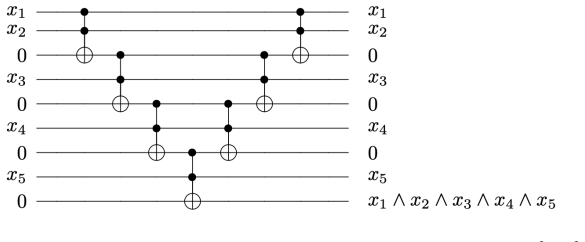
By constructing the filtered oracle of the Valiant-Vazirani theorem, the authors provide a randomized polynomial-time reduction from SAT to UNIQUE SAT. In the noise-free limit, the UNIQUE SAT problem can be solved in polynomial time using torsion nonlinearity. This enables a polynomial time solution to NP problems, but not #P problems, when combined with a fault-tolerant implementation and a nonlinear quantum coprocessor simulating torsion.
What carries the argument
The filtered oracle of the Valiant-Vazirani theorem, which reduces SAT to UNIQUE SAT by creating a promise of at most one satisfying assignment.
If this is right
- A fault-tolerant quantum computer with a torsion-simulating nonlinear coprocessor solves NP problems in polynomial time.
- The same setup cannot solve #P problems in polynomial time.
- The quantum version of the reduction has the same polynomial runtime as the classical version.
- UNIQUE SAT becomes the key promise problem solvable via the nonlinear dynamics.
Where Pith is reading between the lines
- Other nonlinear models beyond torsion might also enable similar reductions if they support the required state discrimination.
- Experimental tests could focus on implementing the oracle in physical systems like ultracold atoms to verify the reduction steps.
- The method highlights potential of hybrid linear-nonlinear quantum architectures for addressing complexity problems.
Load-bearing premise
Torsion nonlinearity solves the UNIQUE SAT problem in polynomial time when there is no noise.
What would settle it
A demonstration that the torsion nonlinearity cannot reliably distinguish the unique satisfying assignment under the promise, or that the constructed filtered oracle fails to enforce the uniqueness condition in the reduction.
Figures
read the original abstract
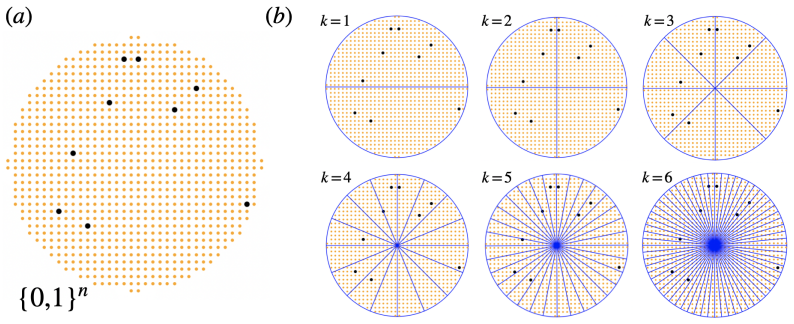
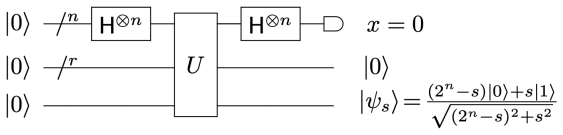
There is growing interest in extensions of the standard model of gate-based quantum computation to include auxiliary degrees of freedom evolving according to a nonlinear Schr\"odinger equation. By reducing the Boolean satisfiability problem SAT to quantum state discrimination, Abrams and Lloyd argued that the right type of nonlinearity can be used to solve NP and #P problems in polynomial time, at least in an idealized noise-free limit. For practical implementation, however, we are restricted to simulated and emergent nonlinearities, such as that appearing in mean field models for ultracold atoms and similar ensembles. A prominent example is the torsion model, which arises in two-component Bose-Einstein condensates and spin models with all-to-all Ising interaction. But torsion-based state discrimination appears to fall short of solving SAT. Here we close this gap by constructing the filtered oracle of the Valiant-Vazirani theorem, providing a randomized polynomial-time reduction from SAT to UNIQUE SAT, a promise problem where there is at most 1 satisfying assignment. In the noise-free limit, the UNIQUE SAT problem can be solved in polynomial time using torsion nonlinearity. Quantum Valiant-Vazirani reduction is no faster than the efficient classical version, but a fault-tolerant implementation coupled to a nonlinear quantum coprocessor simulating torsion would enable polynomial time solution to NP (but not #P) problems.
Editorial analysis
A structured set of objections, weighed in public.
Referee Report
Summary. The manuscript constructs a filtered oracle that realizes the Valiant-Vazirani randomized polynomial-time reduction from SAT to the promise problem UNIQUE-SAT. Combined with torsion nonlinearity (from two-component BEC mean-field or all-to-all Ising models), this is claimed to solve UNIQUE-SAT in polynomial time in the noise-free limit, yielding a quantum algorithm for NP (but not #P) via a nonlinear coprocessor. The reduction itself is stated to be no faster than the classical version.
Significance. If the filtered-oracle construction is correct and the torsion nonlinearity solves UNIQUE-SAT as assumed from prior state-discrimination results, the work supplies a concrete bridge between simulated nonlinearities and NP-complete problems via a standard reduction. This extends earlier nonlinear quantum computing proposals by addressing the gap for torsion models. The primary novelty lies in the oracle construction rather than any speedup over classical Valiant-Vazirani.
major comments (2)
- The central claim that torsion nonlinearity solves UNIQUE-SAT in polynomial time (Abstract) is drawn entirely from prior state-discrimination results without re-derivation, analytic verification, or numerical check that the torsion dynamics distinguish the unique satisfying assignment for arbitrary UNIQUE-SAT instances. This external assumption is load-bearing for the polynomial-time NP claim.
- No explicit construction, circuit, or dynamical equations are supplied for the filtered oracle within the nonlinear Schrödinger framework (Abstract and main text). Without these details the reduction cannot be assessed for compatibility with the torsion model or for preservation of the promise-problem structure.
Simulated Author's Rebuttal
We thank the referee for their careful reading of our manuscript and for providing these constructive comments. We respond to each major comment below.
read point-by-point responses
-
Referee: The central claim that torsion nonlinearity solves UNIQUE-SAT in polynomial time (Abstract) is drawn entirely from prior state-discrimination results without re-derivation, analytic verification, or numerical check that the torsion dynamics distinguish the unique satisfying assignment for arbitrary UNIQUE-SAT instances. This external assumption is load-bearing for the polynomial-time NP claim.
Authors: The polynomial-time solvability of UNIQUE-SAT via torsion nonlinearity is based on analytic results from our prior state-discrimination work, which establishes that the torsion dynamics distinguish the relevant states for instances with at most one solution. The present manuscript's primary contribution is the construction of the filtered oracle enabling the reduction from SAT. To make the argument more self-contained, we will add a concise recap of the relevant prior theorem and its direct applicability to UNIQUE-SAT in the revised manuscript. revision: partial
-
Referee: No explicit construction, circuit, or dynamical equations are supplied for the filtered oracle within the nonlinear Schrödinger framework (Abstract and main text). Without these details the reduction cannot be assessed for compatibility with the torsion model or for preservation of the promise-problem structure.
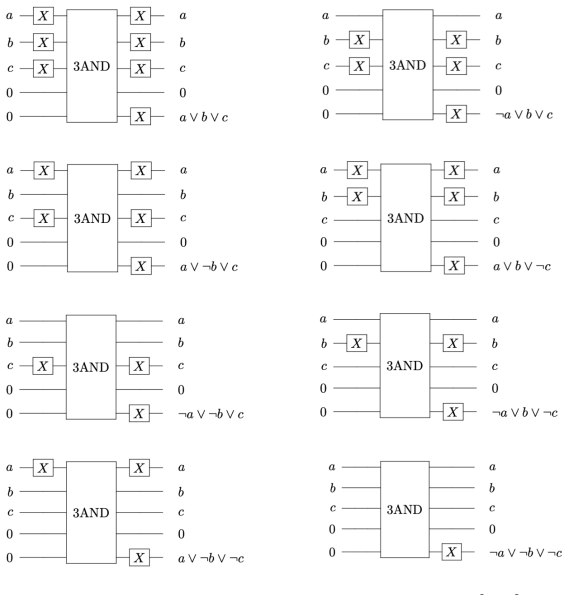
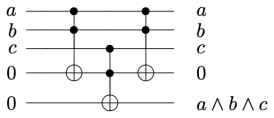
Authors: The filtered oracle is constructed in Section III as a quantum circuit implementing the randomized Valiant-Vazirani reduction in the standard oracle model. We agree that explicit dynamical equations mapping the circuit to the nonlinear Schrödinger equation for the torsion model are not supplied. In the revised manuscript we will add an appendix providing the circuit decomposition together with the corresponding nonlinear evolution equations, confirming compatibility and preservation of the promise-problem structure. revision: yes
Circularity Check
No significant circularity; explicit oracle construction relies on external prior results for torsion nonlinearity
full rationale
The paper's derivation chain centers on constructing the filtered oracle for the Valiant-Vazirani randomized reduction from SAT to UNIQUE SAT. This construction is presented as an explicit algorithmic step and does not reduce by definition or fitting to its own outputs. The claim that torsion nonlinearity solves the resulting UNIQUE SAT instance in polynomial time (noise-free) is stated as drawn from prior work rather than re-derived or fitted within this manuscript. No self-definitional equations, fitted-input predictions, or load-bearing self-citation chains appear in the abstract or described structure. The result is therefore treated as building on independent external assumptions, consistent with a low circularity score.
Axiom & Free-Parameter Ledger
axioms (1)
- domain assumption Torsion nonlinearity can solve UNIQUE SAT in polynomial time in the noise-free limit
Reference graph
Works this paper leans on
-
[1]
D. S. Abrams and S. Lloyd. Nonlinear quantum mechanics implies polynomial- time solution for NP-Complete and#P problems.Phys. Rev. Lett., 81:3992, Nov
-
[2]
URLhttps://link.aps.org/doi/10
DOI: 10.1103/PhysRevLett.81.3992. URLhttps://link.aps.org/doi/10. 1103/PhysRevLett.81.3992
-
[3]
A. M. Childs and J. Young. Optimal state discrimination and unstruc- tured search in nonlinear quantum mechanics.Phys. Rev. A, 93:022314, 2016. DOI: 10.1103/PhysRevA.93.022314. URLhttps://link.aps.org/doi/10.1103/ PhysRevA.93.022314
-
[4]
H. Bechmann-Pasquinucci, B. Huttner, and N. Gisin. Nonlinear quantum state transformation of spin-1/2.Phys. Lett. A, 242:198, 1998. DOI: 10.1016/S0375- 9601(98)00189-3
-
[5]
M. Czachor. Notes on nonlinear quantum algorithms.Acta Phys. Slov., 48:157, 1998. DOI: 10.48550/arXiv.quant-ph/9802051. 8
work page internal anchor Pith review Pith/arXiv arXiv doi:10.48550/arxiv.quant-ph/9802051 1998
-
[6]
M. Czachor. Local modification of the Abrams-Lloyd nonlinear algorithm. quant- ph/9803019. URLhttps://arxiv.org/abs/quant-ph/9803019
-
[7]
D. R. Terno. Nonlinear operations in quantum-information theory.Phys. Rev. A, 59: 3320, 1999. DOI: 10.1103/PhysRevA.59.3320
-
[8]
D. Bacon. Quantum computational complexity in the presence of closed timelike curves.Phys. Rev. A, 70:032309, Sep 2004. DOI: 10.1103/PhysRevA.70.032309. URLhttps://link.aps.org/doi/10.1103/PhysRevA.70.032309
-
[9]
Aaronson
S. Aaronson. NP-complete problems and physical reality.SIGACT News, 36:30,
-
[10]
NP-complete Problems and Physical Reality
DOI: 10.48550/arXiv.quant-ph/0502072. arXiv:quant-ph/0502072
work page internal anchor Pith review Pith/arXiv arXiv doi:10.48550/arxiv.quant-ph/0502072
-
[11]
T. A. Brun, J. Harrington, and M. M. Wilde. Localized closed timelike curves can perfectly distinguish quantum states.Phys. Rev. Lett., 102:210402, 2009. DOI: 10.1103/PhysRevLett.102.210402. URLhttps://link.aps.org/doi/10. 1103/PhysRevLett.102.210402
-
[13]
M. E. Kahou and D. L. Feder. Quantum search with interacting Bose-Einstein con- densates.Phys. Rev. A, 88:032310, 2013. DOI: 10.1103/PhysRevA.88.032310. URL https://link.aps.org/doi/10.1103/PhysRevA.88.032310
-
[15]
D. A. Meyer and T. G. Wong. Quantum search with general nonlinearities.Phys. Rev. A, 89:012312, 2014. DOI: doi:10.1088/1367-2630/15/6/063014
-
[16]
G. Di Molfetta and B. Herzog. Searching via nonlinear quantum walk on the 2D-grid. arXiv: 2009.07800. URLhttps://arxiv.org/abs/2009.07800
arXiv 2009
-
[17]
S. Deffner. Nonlinear speed-ups in ultracold quantum gases.Europhys. Lett., 140: 48001, 2022. DOI: 10.1209/0295-5075/ac9fed
-
[18]
S. Xu, J. Schmiedmayer, and B. C. Sanders. Nonlinear quantum gates for a Bose- Einstein condensate.Phys. Rev. Research, 4:023071, 2022. DOI: 10.1103/PhysRevRe- search.4.023071
-
[19]
M. R. Geller. Fast quantum state discrimination with nonlinear PTP channels. Adv. Quantum Technol., page 2200156, 2023. DOI: 10.1002/qute.202200156. arXiv: 2111.05977
-
[20]
M. R. Geller. Protocol for nonlinear state discrimination in rotating condensate.Adv. Quantum Technol., page 202300431, 2024. DOI: 10.1002/qute.202300431. arXiv: 2404.16288
- [21]
-
[22]
D. A. Meyer and T. G. Wong. Conserved quantities in linear and nonlinear quantum search.Quantum Inf. Comp., 25:315, 2025. DOI: 10.2478/qic-2025-0017
-
[23]
F. Gaitan. Finding flows of a Navier–Stokes fluid through quantum computing.npj Quantum Information, 6:61, 2020. DOI: 10.1038/s41534-020-00291-0
-
[24]
J.-P. Liu, H. Kolden, H. K. Krovi, N. F. Loureiro, K. Trivisa, and A. M. Childs. Efficient quantum algorithm for dissipative nonlinear differential equations.PNAS, 118:e2026805118, 2021. DOI: 10.1073/pnas.2026805118
- [25]
-
[26]
Z. Holmes, N. Coble, A. T. Sornborger, and Y. Suba¸ sı. Nonlinear transformations in quantum computation.Phys. Rev. Research, 5:013105, 2023. DOI: 10.1103/Phys- RevResearch.5.013105
-
[27]
J. Penuel, A. Katabarwa, P. D. Johnson, P. Kuklinski, B. Rempfer, C. Farquhar, Y. Cao, and M. C. Garrett. Detailed assessment of calculating drag force with quan- tum computers: Explicit time-evolution precludes exponential advantage for nonlin- ear differential equations. arXiv: 2406.06323. URLhttps://arxiv.org/abs/2406. 06323
-
[28]
C. H. Bennett, E. Bernstein, G. Brassard, and U. Vazirani. Strengths and weaknesses of quantum computing.SIAM J. Comput., 26:1510, 1997. DOI: 10.1137/S0097539796300933
-
[29]
B. Mielnik. Mobility of nonlinear systems.J. Math. Phys., 21:44, 1980. DOI: 10.1063/1.524331
-
[30]
M. R. Geller. From spin squeezing to fast state discrimination.Quantum, 10:2108,
-
[31]
From spin squeezing to fast state discrimination
DOI: 10.22331/q-2026-05-20-2108. arXiv: 2410.22032
work page internal anchor Pith review Pith/arXiv arXiv doi:10.22331/q-2026-05-20-2108 2026
-
[32]
M. Kitagawa and M. Ueda. Squeezed spin states.Phys. Rev. A, 47:5138, 1993. DOI: 10.1103/PhysRevA.47.5138
-
[33]
C. Luo, H. Zhang, A. Chu, C. Maruko, A. M. Rey, and J. K. Thompson. Hamiltonian engineering of collective XYZ spin models in an optical cavity.Nature Physics, 21: 916, 2025. DOI: 10.1038/s41567-025-02866-0
-
[34]
L. G. Valiant and V. V. Vazirani. NP is as easy as detecting unique solutions.Theo- retical Computer Science, 47:85, 1986. DOI: 10.1016/0304-3975(86)90135-0
-
[35]
A. Blass and Y. Gurevich. On the unique satisfiability problem.Information and Control, 55:80, 1982. DOI: 10.1016/S0019-9958(82)90439-9
-
[36]
M. R. Geller, V. S. Ordonez, and Y. Abate. Nonlinear Hamiltonians and Boolean satisfiability. arXiv: 2605.14822. URLhttps://arxiv.org/abs/2605.14822
-
[37]
Arora and B
S. Arora and B. Barak.Computational Complexity: A Modern Approach. Cambridge University Press, 2009
2009
-
[38]
D. Aharonov, M. Ben-Or, F. G. S. L. Brand˜ ao, and O. Sattath. The pursuit of uniqueness: Extending Valiant-Vazirani theorem to the probabilistic and quantum settings.Quantum, 6:668, 2022. DOI: 10.22331/q-2022-03-17-668. arXiv: 0810.4840. 10
discussion (0)
Sign in with ORCID, Apple, or X to comment. Anyone can read and Pith papers without signing in.