Large-Area Patternable Solar-Powered Bistable Organic Crystalline Film for Nonlinear Optical Communication
Pith reviewed 2026-06-26 07:23 UTC · model grok-4.3
The pith
Sunlight switches an organic crystalline film between SHG-active and inactive states via isomer packing changes.
A machine-rendered reading of the paper's core claim, the machinery that carries it, and where it could break.
Core claim
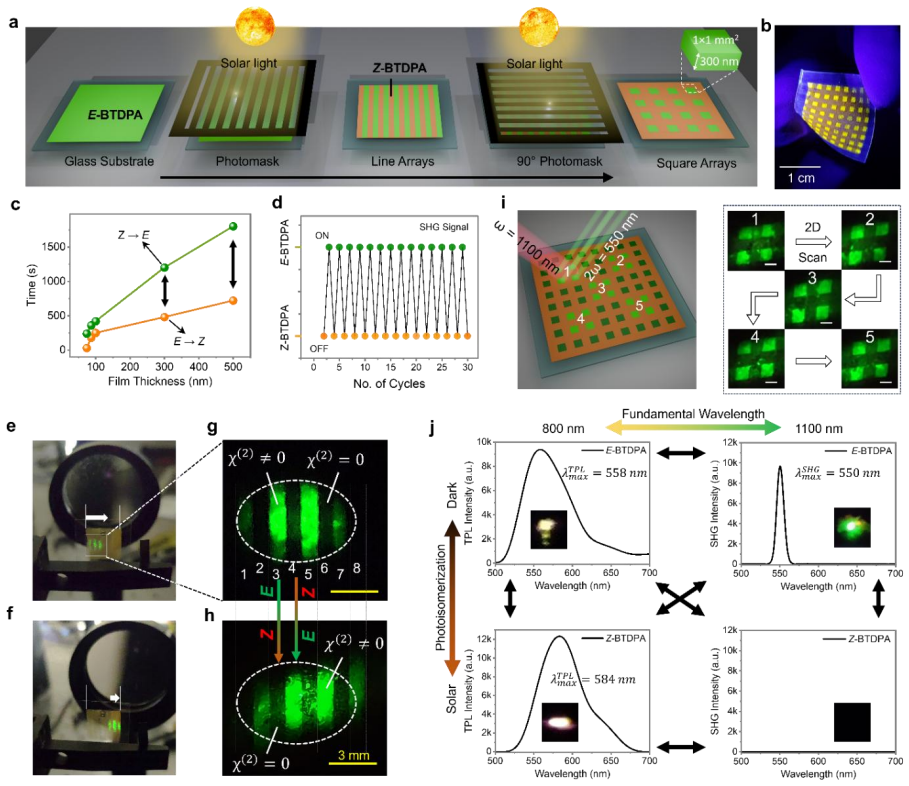
The E- and Z-isomers of BTDPA adopt distinct molecular packing arrangements that reversibly toggle between centrosymmetric and non-centrosymmetric states, controlling second-order NLO activity in flexible thin films via sunlight-driven photoisomerization.
What carries the argument
The E/Z-BTDPA photoisomerizable molecule, whose E-form packs to produce SHG while the Z-form packs centrosymmetrically and shows two-photon luminescence instead.
If this is right
- The bistable behavior persists in flexible thin films, permitting large-area optical patterning.
- Sunlight alone drives reversible control of the second-order susceptibility at telecommunication wavelengths.
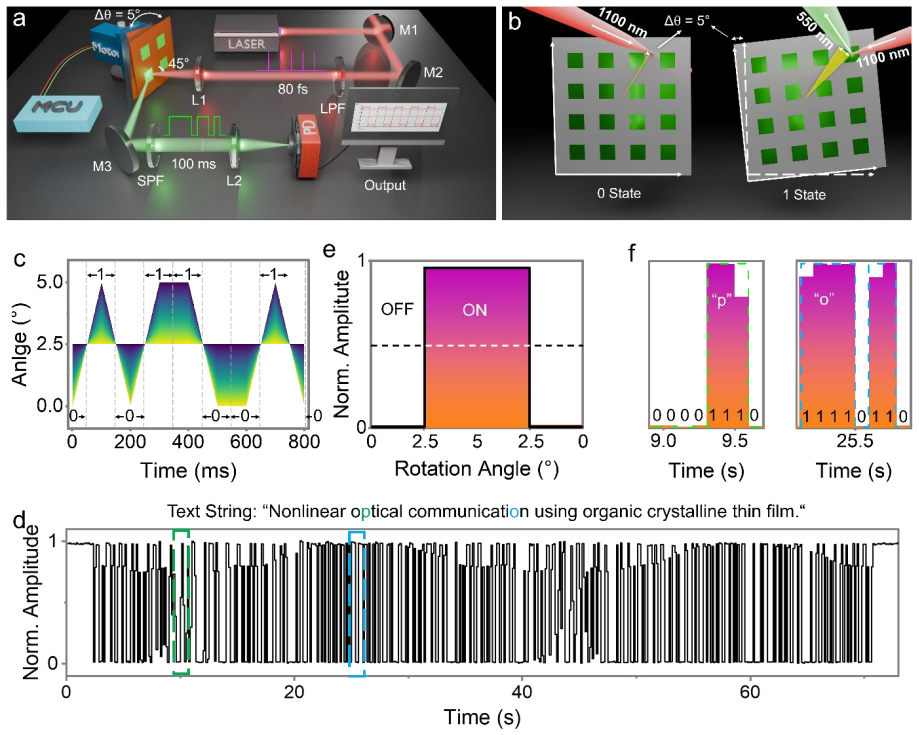
- Waveform generation and text-string transcription are achievable through the resulting NLO communication.
- The material bypasses rigid inorganic architectures for scalable all-optical applications.
Where Pith is reading between the lines
- Combining this film with standard flexible substrates could produce self-powered optical switches for remote sensing.
- The symmetry toggle mechanism may extend to other photoisomerizable compounds if their solid-state packing can be similarly controlled.
- Long-term device prototypes would need to verify retention of contrast after thousands of cycles under varying light conditions.
Load-bearing premise
The photoisomerization reaction proceeds cleanly in the solid-state film without loss of crystallinity, phase separation, or fatigue over multiple cycles.
What would settle it
Repeated sunlight exposure cycles that cause measurable drop in SHG intensity or visible loss of crystalline order in the film.
Figures
read the original abstract
Reversible control of crystal symmetry offers a powerful route to programmable optical functionality. However, achieving solid-state bistability between centrosymmetric and non-centrosymmetric crystalline phases remains a formidable challenge; examples of materials that enable stable switching of second-order nonlinear optical (NLO) responses are exceptionally rare. Here we report a solar-powered, symmetry-bistable organic material based on the photoisomerizable molecule (E/Z)-2-(4-(4-bromophenyl)thiazol-2-yl)-3-(4- (dimethylamino)phenyl)acrylonitrile (E/Z-BTDPA). The crystallizable E- and Z-isomers adopt distinct molecular packing arrangements that reversibly toggle between these states, controlling second-order NLO activity. The E-form exhibits strong second-harmonic generation (SHG), whereas the Z-form is SHG-inactive and displays twophoton luminescence. This bistable behavior is retained in flexible thin films, where sunlight-driven photoisomerization enables reversible photoswitching of the second-order electric susceptibility (\c{hi} 2), large-area optical patterning, and real-time NLO communication via waveform generation and text-string transcription at telecommunication wavelengths. This sustainable strategy bypasses rigid inorganic architectures, establishing photoinduced symmetry bistability as a scalable paradigm for all-optical computing and advanced communication networks.
Editorial analysis
A structured set of objections, weighed in public.
Referee Report
Summary. The manuscript reports a solar-powered bistable organic crystalline film based on the photoisomerizable molecule (E/Z)-BTDPA. The E- and Z-isomers adopt distinct molecular packings that reversibly toggle between centrosymmetric (SHG-inactive, Z) and non-centrosymmetric (SHG-active, E) states via sunlight-driven isomerization. This controls second-order NLO activity (χ^{2}) in flexible thin films, enabling large-area optical patterning and real-time NLO communication (waveform generation and text transcription) at telecommunication wavelengths.
Significance. If the central experimental claims hold, particularly that solid-state photoisomerization cleanly preserves crystallinity and long-range order over cycles without phase separation or fatigue, the work would establish a scalable organic platform for programmable symmetry-bistable NLO devices. This offers a sustainable route to large-area, flexible all-optical computing and communication elements that bypasses rigid inorganic crystal architectures.
major comments (2)
- [Abstract] Abstract: The central claim that bistable switching is retained in flexible films and usable for communication requires that sunlight-driven E/Z isomerization toggles between distinct centrosymmetric and non-centrosymmetric crystalline packings while retaining long-range order. The abstract supplies no quantitative data, error bars, cycling stability numbers, or film-thickness dependence to verify this; without such metrics the attribution of reversible χ^{2} contrast to packing changes cannot be assessed.
- [Abstract] Abstract: Solid-state photoisomerizations are typically constrained by lattice packing and often produce amorphous regions or defects that would destroy the reported SHG contrast. No structural evidence (e.g., XRD, microscopy) is referenced in the abstract to confirm that the transformation remains clean, reversible, and crystallinity-preserving over multiple cycles, which is load-bearing for the symmetry-bistability claim.
minor comments (1)
- The abstract contains the LaTeX fragment '\c{hi} 2'; this should be rendered consistently as χ^{(2)} throughout the manuscript.
Simulated Author's Rebuttal
We thank the referee for their thoughtful review and constructive feedback on our manuscript. We address each major comment below and agree that strengthening the abstract will improve clarity. All requested metrics and structural details are already present in the main text and figures; we will incorporate concise references and quantitative highlights into the abstract.
read point-by-point responses
-
Referee: [Abstract] Abstract: The central claim that bistable switching is retained in flexible films and usable for communication requires that sunlight-driven E/Z isomerization toggles between distinct centrosymmetric and non-centrosymmetric crystalline packings while retaining long-range order. The abstract supplies no quantitative data, error bars, cycling stability numbers, or film-thickness dependence to verify this; without such metrics the attribution of reversible χ^{2} contrast to packing changes cannot be assessed.
Authors: We agree that the abstract would benefit from explicit quantitative support. The main manuscript (Section 3.2 and Figures 3–5) reports >50 reversible cycles with <5% loss in SHG intensity (error bars from n=3 films), typical film thickness of 2–5 μm, and wavelength-dependent χ^{2} values at 1550 nm. We will revise the abstract to include these metrics (e.g., “reversible switching over 50 cycles with retained crystallinity”) while keeping the word limit. revision: yes
-
Referee: [Abstract] Abstract: Solid-state photoisomerizations are typically constrained by lattice packing and often produce amorphous regions or defects that would destroy the reported SHG contrast. No structural evidence (e.g., XRD, microscopy) is referenced in the abstract to confirm that the transformation remains clean, reversible, and crystallinity-preserving over multiple cycles, which is load-bearing for the symmetry-bistability claim.
Authors: We concur that referencing the structural characterization in the abstract will better substantiate the claim. The full paper provides powder XRD patterns (Figure 2) and polarized optical microscopy (Figure 4) demonstrating retention of long-range order and absence of amorphous domains after 50 cycles. We will add a brief clause to the abstract such as “confirmed by in-situ XRD and microscopy to preserve crystallinity.” revision: yes
Circularity Check
No circularity: experimental demonstration with no derivation chain
full rationale
The paper is an experimental materials report focused on synthesis of E/Z-BTDPA isomers, thin-film fabrication, sunlight-driven photoisomerization, and direct optical measurements of SHG activity and bistability. No mathematical derivations, predictions, fitted parameters, or equations are invoked; the central claims rest on empirical observations of packing differences and reversible symmetry switching rather than any self-referential definitions or self-citation load-bearing steps. The work is self-contained against external benchmarks of materials characterization and does not reduce any result to its own inputs by construction.
Axiom & Free-Parameter Ledger
axioms (1)
- domain assumption Photoisomerization of the E/Z-BTDPA molecule proceeds in the crystalline solid state under sunlight without loss of long-range order.
Reference graph
Works this paper leans on
-
[1]
Net Zero by 2050: A Roadmap for the Global Energy Sector (IEA, Paris, 2021)
International Energy Agency (IEA). Net Zero by 2050: A Roadmap for the Global Energy Sector (IEA, Paris, 2021)
2050
-
[2]
International Energy Outlook 2016 (US Energy Information Administration, 2016)
2016
-
[3]
Holechek, J. L. et al. Can renewable energy replace fossil fuels by 2050? Sustainability 14, 4792 (2022)
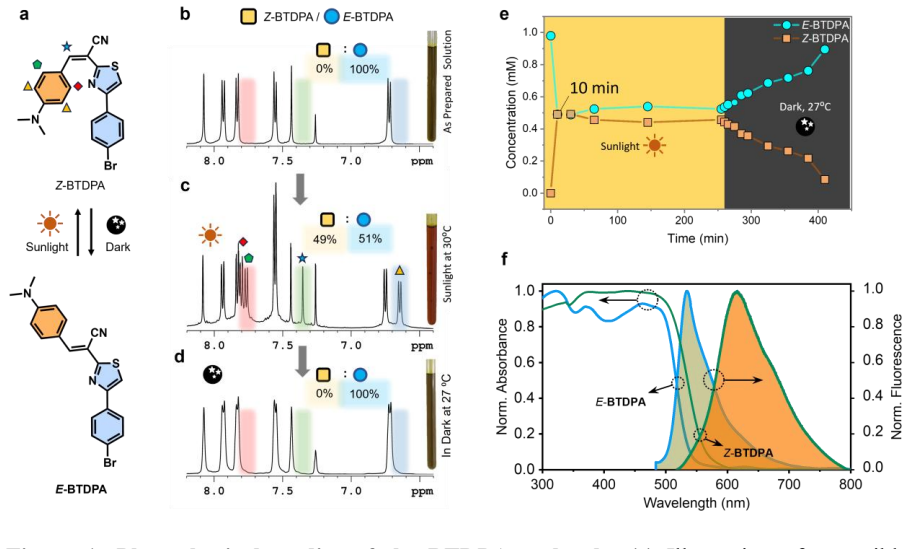
2050
-
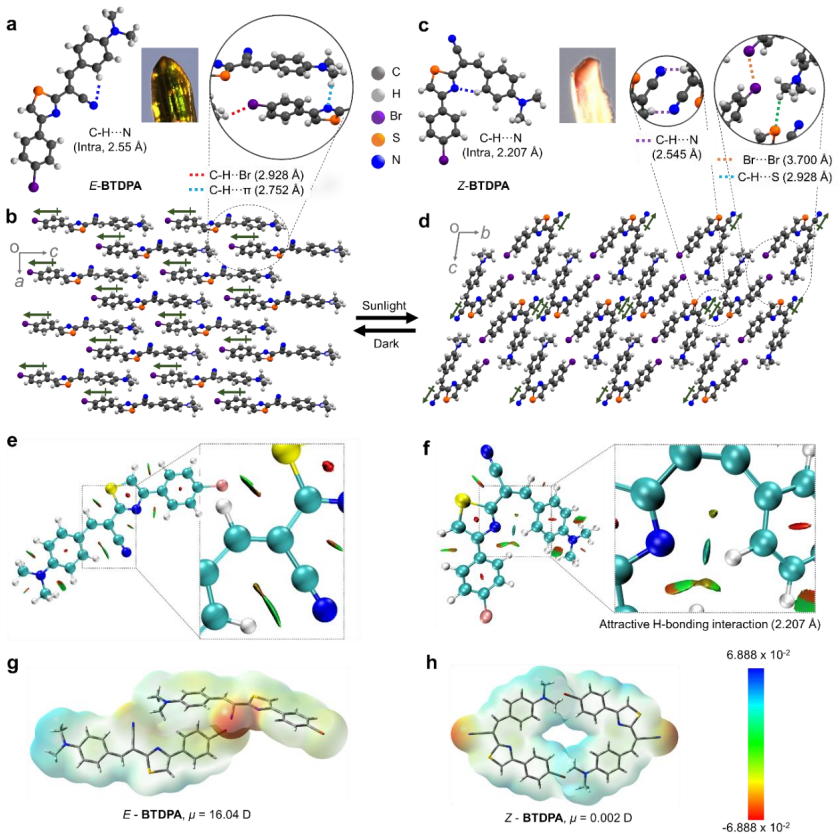
[4]
Peng, J. et al. Mechanical effects of elastic crystals driven by natural sunlight and force. Angew. Chem. Int. Ed. 62, e202311348 (2023)
2023
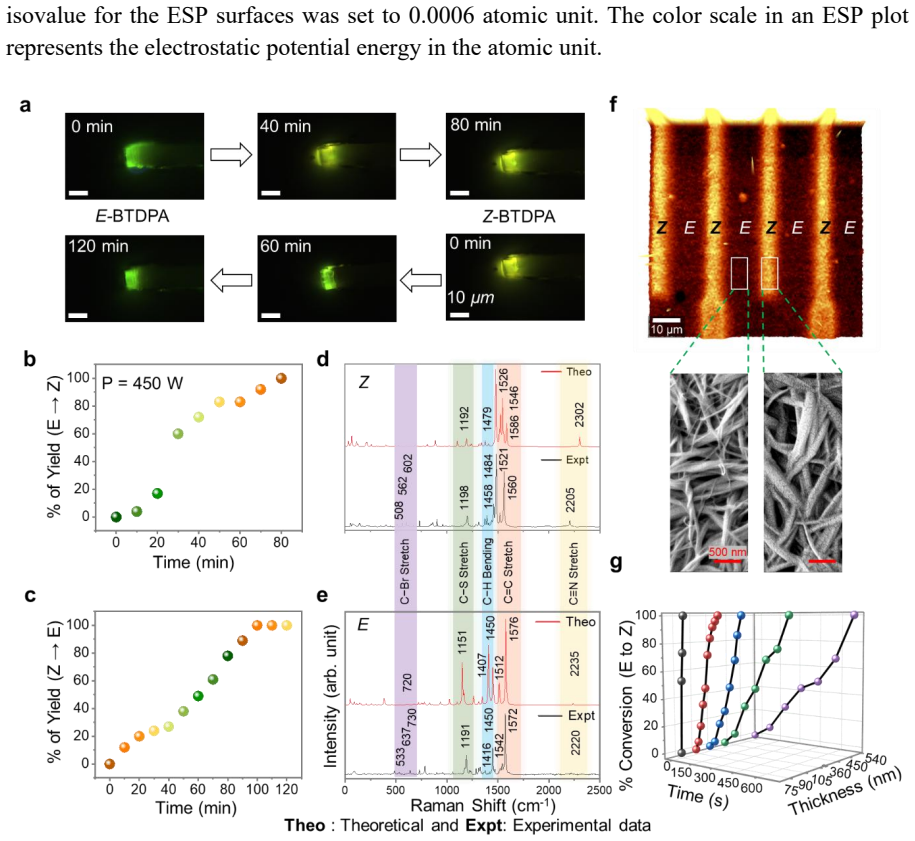
-
[5]
Lam, K. et al. Solar -powered molecular crystal motor based on an anthracene– thiazolidinedione photoisomerization reaction. J. Am. Chem. Soc. 146, 18836 –18840 (2024). 18
2024
-
[6]
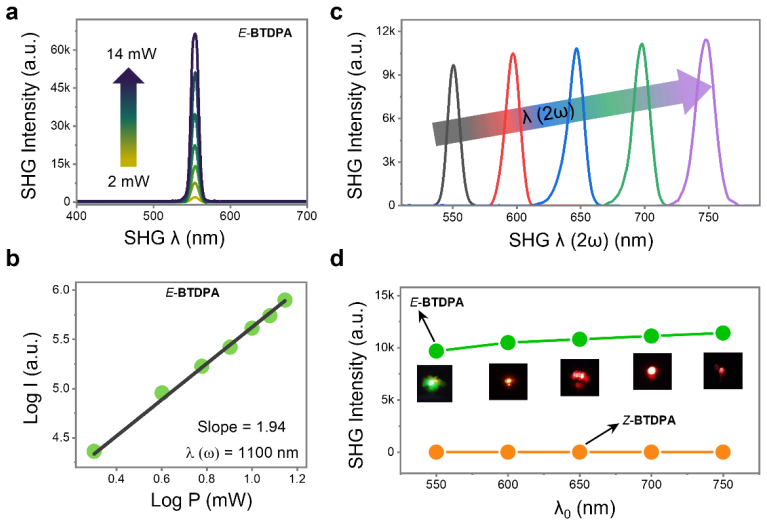
Ren, H. et al. Hierarchical graphene foam for efficient omnidirectional solar -thermal energy conversion. Adv. Mater. 29, 1702590 (2017)
2017
-
[7]
Li, C. et al. Engineering graphene and TMDs based van der Waals heterostructures for photovoltaic and photoelectrochemical solar energy conversion. Chem. Soc. Rev. 47, 4981– 5037 (2018)
2018
-
[8]
Bierman, D. M. et al. Enhanced photovoltaic energy conversion using thermally based spectral shaping. Nat. Energy. 1, 16068 (2016)
2016
-
[9]
Lee, I. et al. Controlling molecular photoisomerization in photonic cavities through polariton funneling. J. Am. Chem. Soc. 146, 9544–9553 (2024)
2024
-
[10]
Baroncini, M. et al. Photoinduced reversible switching of porosity in molecular crystals based on star-shaped azobenzene tetramers. Nat. Chem. 7, 634–640 (2015)
2015
-
[11]
Zhang, Z.-Y. et al. Solar azo-switches for effective E→Z photoisomerization by sunlight. Angew. Chem. Int. Ed. 63, e202404528 (2024)
2024
-
[12]
Zhang, Y . et al. Switchable magnetic bulk photovoltaic effect in the two -dimensional magnet CrI3. Nat. Commun. 10, 3783 (2019)
2019
-
[13]
Xing, L., Wang, R., Ha, Y. & Li, Z. Absorption characteristics and solar thermal conversion of Fe3O4@Au core/shell nanoparticles for a direct -absorption solar collector. Renew. Energy. 216, 119120 (2023)
2023
-
[14]
Dang, T. et al. Visible-light-activated heteroaryl azoswitches: toward a more colorful future. J. Am. Chem. Soc. 146, 19609–19620 (2024)
2024
-
[15]
Peng, J. et al. Crystal engineering-driven sunlight responsiveness and flexible waveguide transmission. J. Phys. Chem. Lett. 15, 7335–7341 (2024). 19
2024
-
[16]
Pan, X. et al. Flexible organic chiral crystals with thermal and excitation modulation of the emission for information transmission, writing, and storage. Angew. Chem. Int. Ed. 63, e202320173 (2024)
2024
-
[17]
Liu, M. et al. Energy‐transfer photocatalysis using lead halide perovskite nanocrystals: sensitizing molecular isomerization and cycloaddition. Angew. Chem. Int. Ed. 61, e202208241 (2022)
2022
-
[18]
& Bakker, E
Xie, X., Mistlberger, G. & Bakker, E. Reversible Photodynamic Chloride-Selective Sensor based on photochromic spiropyran. J. Am. Chem. Soc. 134, 16929–16932 (2012)
2012
-
[19]
Zhang, D., Sun, Y., Wang, Z. et al. Switchable biomimetic nanochannels for on-demand SO2 detection by light-controlled photochromism. Nat. Commun. 14, 1901 (2023)
1901
-
[20]
Kwon, H. et al. Nonlocal metasurfaces for optical signal processing. Phys. Rev. Lett. 121, 173004 (2018)
2018
-
[21]
Chen, Z. et al. Defect-induced helicity dependent terahertz emission in dirac semimetal PtTe2 thin films. Nat. Commun. 15, 2605 (2024)
2024
-
[22]
Khapre, A. et al. Organic crystal active waveguide as an all-angle signal receiver and transmission platform for encrypted visible light communication. Nat. Commun. 16, 10862 (2025)
2025
-
[23]
McMahon, P. L. The physics of optical computing. Nat. Rev. Phys. 5, 717–734 (2023)
2023
-
[24]
Jazbinsek, M. et al. Organic crystals for THz photonics. Appl. Sci. 9, 882 (2019)
2019
-
[25]
Venkataramudu, U. et al. Terahertz radiation and second -harmonic generation from a single-component polar organic ferroelectric crystal. J. Mater. Chem. C 6, 9330 –9335 (2018)
2018
-
[26]
Kang, L. et al. Deep-ultraviolet nonlinear optical crystals: concept development and materials discovery. Light: Sci. Appl. 11, 201 (2022). 20
2022
-
[27]
Kwon, O. et al. Organic phenolic configurationally locked polyene single crystals for electro‐optic and terahertz wave applications. Adv. Funct. Mater. 18, 3242–3250 (2008)
2008
-
[28]
Wang, Z. et al. Thiophene sulfone single crystal as a reversible thermoelastic linear actuator with an extended stroke and second -harmonic generation switching. J. Am. Chem. Soc. 147, 7749–7756 (2025)
2025
-
[29]
Zhan, L.-Y. et al. A high working temperature multiferroic induced by inverse temperature symmetry breaking. J. Am. Chem. Soc. 146, 5414–5422 (2024)
2024
-
[30]
Šmejkal, L. et al. Crystal time-reversal symmetry breaking and spontaneous Hall effect in collinear antiferromagnets. Sci. Adv. 6, eaaz8809 (2020)
2020
-
[31]
Zhang, Z. et al. Remarkable second harmonic generation response in (C5H6NO)+(CH3SO3)−: unraveling the role of hydrogen bond in thermal driven nonlinear optical switch. Angew. Chem. Int. Ed. 63, e202408551 (2024)
2024
-
[32]
Ghosh, I. et al. Fast self-healing in a layered molecular crystal mediated by stress-induced symmetry breaking. Nat. Commun. 17, 2525 (2026)
2026
-
[33]
Jiang, D. et al. Second-harmonic-generation switching via pressure-suppressed dynamical disorder. J. Am. Chem. Soc. 146, 23508–23516 (2024)
2024
-
[34]
Li, Y., Zhao, B., Xue, JP. et al. Giant single -crystal-to-single-crystal transformations associated with chiral interconversion induced by elimination of chelating ligands. Nat Commun 12, 6908 (2021)
2021
-
[35]
Moss, D. et al. New CMOS-compatible platforms based on silicon nitride and Hydex for nonlinear optics. Nat. Photonics 7, 597–607 (2013)
2013
-
[36]
Castet, F . et al. Predicting the second-order nonlinear optical responses of organic materials: The role of dynamics. Acc. Chem. Res. 55, 3716–3726 (2022). 21
2022
-
[37]
Schulze, M. et al. Reversible photoswitching of the interfacial nonlinear optical response. J. Phys. Chem. Lett. 6, 505–509 (2015)
2015
-
[38]
Krainova, N. et al. Vacuum deposition of χ (2) nonlinear organic single crystal films on silicon. Appl. Phys. Lett. 125, 031104 (2024)
2024
-
[39]
Frisch, M. J. et al. Gaussian 16, Revision C.02. (Gaussian, Inc., 2019)
2019
-
[40]
Halsey-Moore, C. et al. Tuning range-separated DFT functionals for modeling the peak absorption of MEH-PPV polymer in various solvents. Comput. Theor. Chem. 1162, 112506 (2019). Acknowledgements R.C. acknowledges SERB -New Delhi [CRG/2023/003911] for financial support. A.K. & B.K.D thank PMRF for the PhD fellowships. Author information These authors contr...
2019
-
[41]
School of Chemistry and Centre for Nanotechnology , University of Hyderabad, Gachibowli, Hyderabad, India Ankur Khapre, Avulu Vinod Kumar, Haseeba Nazreen, Biswajit Kumar Barman & Rajadurai Chandrasekar
-
[42]
p” and “o
School of Physics, University of Hyderabad, Gachibowli, Hyderabad, India Bedanta Kumar Deka, Shilpa Mangalassery & Sri Ram Gopal Naraharishetty Author contribution AK and RC conceived the idea of thin -film fabrication, angular oscillation experiment set -up and NLO communication. AVK and HN synthesized the phase changing material, performed single crysta...
-
[43]
Advanced Photonic Materials and Technology Laboratory, School of Chemistry and Centre for Nanotechnology, University of Hyderabad, Prof. C. R. Rao Road, Gachibowli, Hyderabad 500046, Telangana, India
-
[44]
School of Physics, University of Hyderabad, Prof. C. R. Rao Road, Gachibowli, Hyderabad 500046, Telangana, India
-
[45]
Equal contribution of authors *E-mail: r.chandrasekar@uohyd.ac.in Table of Contents: S. No. Title Page No
-
[46]
Synthesis of BTDPA a
Instrumental Methods S3 2. Synthesis of BTDPA a. Synthesis for BTDPA molecule. (Supplementary Figure 1) b. 1H NMR Spectrum of E-BTDPA. (Supplementary Figure 2) c. 13C NMR spectrum of E-BTDPA. (Supplementary Figure 3) S5
-
[47]
(Supplementary Figure 4) S7 4
Isolation of isomers Solvent based growth of isomers. (Supplementary Figure 4) S7 4. Thermal stability studies TGA data analysis. (Supplementary Figure 5) S7 5. Photoisomerization studies using NMR spectroscopy a. 1H NMR Spectrum of E to Z-BTDPA conversion in CDCl3. (Supplementary Figure 6). b. 13C NMR spectrum of E to Z-BTDPA conversion in CDCl3. (Supple...
-
[48]
(Supplementary Figure 10) S10 7
Solution state optical studies of E/Z-BTDPA. (Supplementary Figure 10) S10 7. Theoretical calculations of E/Z-BTDPA a. Spatial plots of frontier molecular orbital energies of HOMO and LUMO for E /Z- BTDPA. (Supplementary Figure 11) b. Polar vector plots of both E and Z form. (Supplementary Figure 12) S11 8. X-ray diffraction studies of E/Z-BTDPA a. Single...
-
[49]
(Supplementary Figure 15) S15 10
Photoisomerization in single crystal. (Supplementary Figure 15) S15 10. Thin film device fabrications and its linear and nonlinear optical waveguiding studies a. Thin film irradiation in solar simulator and solar spectrum. (Supplementary Figure 16) b. Photographs of the spin coated thin film conversion before and after solar irradiation. (Supplementary Fi...
-
[50]
(Supplementary Figure 29) S21 15
PXRD patterns of E and Z-BTDPA isomers. (Supplementary Figure 29) S21 15. Solid-state optical studies of E-BTDPA and Z-BTDPA a. FLIM studies of E/Z-BTDPA powder. (Supplementary Figure 30) b. FLIM studies of E/Z-BTDPA film. (Supplementary Figure 31) S22 16. NLO studies of BDTPA crystals. a. NLO study setup. (Supplementary Figure 32) b. Schematic of the ref...
-
[51]
Photograph of thin film photoisomerization line and pixel patterning (Supplementary Figure 36)
-
[52]
Photograph of NLO optical study setup (Figure S37)
-
[53]
(Supplementary Figure 38)
Graphical Representation of the transmittance NLO setup. (Supplementary Figure 38)
-
[54]
NLO studies online and pixel patterns of Z and E, and its corresponding SHG spectra (Supplementary Figure 39)
-
[55]
Translational motion of the BTDPA thin film during the SHG imaging (Supplementary Figure 40)
-
[56]
NLO signal for real time signal generation and detection a
Translational motion of the BTDPA thin film during the SHG imaging (Supplementary Figure 41) S25 18. NLO signal for real time signal generation and detection a. NLO (SHG and TPL) switching of thin film with fs laser (Supplementary Figure 42) b. Schematic of thin film setup for NLO gating (Supplementary Figure 43) c. Triggered and feedback volage response ...
-
[57]
Photoisomerization conversion
-
[58]
Angular velocity and acceleration
-
[59]
Binary density calculation S29
-
[60]
Electronic components (Supplementary Table 2) S31
-
[61]
Instrumental Methods a) High Resolution Mass Spectromatry: High-resolution mass spectra (HRMS) were recorded using a Bruker Maxis quadrupole time- of-flight (Q-TOF) mass spectrometer (Bruker Daltonics, Bremen, Germany) operated in electrospray ionization (ESI) mode. The instrument was utilized under the following conditions: a capillary voltage of 4500 V,...
-
[62]
Synthetic process of BTDPA compound
Synthesis of BTDPA: Supplementary Figure 1. Synthetic process of BTDPA compound. 100 mg, (0.358 mmol) of 4-(4-Bromophenyl)-2-thiazoleacetonitrile, NaOMe (29 mg, 1.5 eq.) was added in round bottom flask containing 15mL of dry methanol and stirred for 20mins. To this, 4-(dimethylamino)benzaldehyde 59 mg, (1.1 eq.) was slowly added. The above mixture was sti...
-
[63]
Isolation of Isomers Supplementary Figure 4 . a, Photograph of BTDPA compound solution in dichloromethane: pentane 3:1(left), 1:1(mid) and 1:3(right) solutions to obtain an orangish yellow(left), a mixture of both (mid) and yellowish green(right) isomers, respectively. b,c, Camera photographs in visible light and UV -light of vials containing orangish yel...
-
[64]
Thermal stability studies Supplementary Figure 5: a-b, TGA plots for E-BTDPA and Z-BTDPA isomers (T95 represents the temperature where 5% of compound degrades). S8
-
[65]
1H-NMR spectrum of E →Z conversion BTDPA in CDCl3 Solvent
Photoisomerization studies using NMR spectroscopy Supplementary Figure 6. 1H-NMR spectrum of E →Z conversion BTDPA in CDCl3 Solvent. Supplementary Figure 7. 13C-NMR of E-BTDPA and Z-BTDPA compounds in CDCl3 solvent. Gray star represents CH3CN. impurity. S9 Supplementary Figure 8 . a, Sunlight induced photoisomerization studies from E -BTDPA → (Z+E)-BTDPA ...
-
[66]
b, c, Solvatochromic effect of E-BTDPA molecules in different solvents , b, normalized absorption spectra and c, Normalized emission spectra
Solution-state optical studies of E/Z-BTDPA Supplementary Figure 10: a, Commission Internationale de L’Eclairage (CIE) coordinates of E & Z-BTDPA in solid state. b, c, Solvatochromic effect of E-BTDPA molecules in different solvents , b, normalized absorption spectra and c, Normalized emission spectra. S11
-
[67]
1-2,6 The HOMO-LUMO energy band gap aids in determining the molecule’s stability
Theoretical calculations of E/Z-BTDPA: To further understand the molecular level stability of E/Z- BTDPA, theoretical calculations have been performed using the WB97XD level of theory and 6- 311++g (2d,2p) basis set. 1-2,6 The HOMO-LUMO energy band gap aids in determining the molecule’s stability. The energy gap was determined to be 6.58 eV for the Z isom...
-
[68]
Single crystal X-ray unit cell parameter data for E/Z-BTDPA
X-ray diffraction studies of E/Z-BTDPA Name E-BTDPA Z-BTDPA Molecular name (E)-2-(4-(4- bromophenyl)thiazol-2-yl)-3- (4- (dimethylamino)phenyl)acrylo nitrile (Z)-2-(4-(4-bromophenyl)thiazol-2- yl)-3-(4- (dimethylamino)phenyl)acrylonitrile CCDC 2502331 2504145 Molecular formula C20H16BrN3S C20H16BrN3S Crystal system Monoclinic Triclinic Space group Pn (7) ...
1990
-
[69]
a, Optical waveguiding during the interval of 10 min of sunlight exposure
Photoisomerization in single crystal Supplementary Figure 15. a, Optical waveguiding during the interval of 10 min of sunlight exposure. b, Optical waveguiding under dark condition with interval of 20 min. S15
-
[70]
a , Thin film device pictures during light exposure using a solar simulator
Thin-film device fabrications and its linear and nonlinear optical waveguiding studies Supplementary Figure 16. a , Thin film device pictures during light exposure using a solar simulator. b , Solar light spectrum generated by the solar simulator and sunlight spectrum. Supplementary Figure 17. Spin-coated thin film of BDTPA in IPA (1 mg / 200 µL) conversi...
-
[71]
Supplementary Figure 21
Thin film device pattering using photomask and its characterization. Supplementary Figure 21 . a, Photograph of spin- coated E-BTDPA thin film. b , Photograph of a photomask (line width 100 µm) stacked on thin film. c , Optical image of the E and Z-BTDPA sunlight irradiate induced isomerized pattern. d, PL mapping of the patterned device 532 nm laser. S18...
-
[72]
Supplementary Figure 23
FESEM images of both forms. Supplementary Figure 23. a , FESEM image of spin coated E-BTDPA thin film surface morphology. b , Conversion for E to Z form after irradiation with solar light. a c 100 µm b d S19
-
[73]
a, FL images of PL collection with solar light exposure and dark with time interval
Thickness dependent on photoisomerization and corresponding optical studies Supplementary Figure 24. a, FL images of PL collection with solar light exposure and dark with time interval. b, E→Z BTDPA spectrum collection after irradiation with solar light using confocal microscope. (Excitation wavelength 405nm). c , Z→E BTDPA spectrum collection after irrad...
-
[74]
Calculated and experimental PXRD plot for E-BTDPA (top) → Z-BTDPA (bottom) conversion with sunlight irradiation (inset represents the photograph of their respective forms)
Powder X-ray Diffraction Studies of E/Z-BTDPA Supplementary Figure 29. Calculated and experimental PXRD plot for E-BTDPA (top) → Z-BTDPA (bottom) conversion with sunlight irradiation (inset represents the photograph of their respective forms). S22
-
[75]
The fluorescence decay profiles of a, E-BTDPA powder and b , Z-BTDPA powder were obtained by TCSPC
Solid-state optical studies of E-BTDPA and Z-BTDPA Supplementary Figure 30 . The fluorescence decay profiles of a, E-BTDPA powder and b , Z-BTDPA powder were obtained by TCSPC. The measured photon counts were shown in green (E-BTDPA) and orange (Z-BTDPA) squares on a logarithmic scale. The decays were fitted with a tri-exponential fit (solid line). Inset ...
-
[76]
Supplementary Figure 32
NLO studies of BTDPA crystals. Supplementary Figure 32. Photograph for the power dependent and wavelength tunned the NLO study setup. Supplementary Figure 33. Schematic representation for the power dependent and wavelength tunned the NLO study setup. S24 Supplementary Figure 34. a, TPL optical spectra of Z-BDTPA crystal power-dependent nonlinear study at ...
-
[77]
a, E-BTDPA thin film on 22 mm glass slide
NLO study of patterned thin films Supplementary Figure 3 6. a, E-BTDPA thin film on 22 mm glass slide. b, covering the thin film with the photomask in vertical direction (linewidth ≈1 mm). c, the film slide covered with photomask after irradiation of solar light. d, Photographs of lined patterned on thin film. e, Photograph of the film having the photomas...
-
[78]
a, Photograph of a squared E -form array surrounded by a thin film of the Z -form of BTDPA
NLO signal for real time signal generation and detection Supplementary Figure 42. a, Photograph of a squared E -form array surrounded by a thin film of the Z -form of BTDPA. Under 1100 nm fs excitation, the E-form domains generate a second-harmonic signal at 550 nm, whereas neither SHG nor TPL is detected from the surrounding Z -form. b, Two-photon lumine...
-
[79]
Supplementary Equations
-
[80]
(1) Backward process: %𝐸𝐸= 𝐼𝐼𝐸𝐸 𝐼𝐼𝐸𝐸+𝐼𝐼𝑍𝑍 × 100 ……Supplementary Eq
Photoisomerization conversion: a) Solution state forward process: %𝑍𝑍= 𝐼𝐼𝑍𝑍 𝐼𝐼𝐸𝐸+𝐼𝐼𝑍𝑍 × 100 ……Supplementary Eq. (1) Backward process: %𝐸𝐸= 𝐼𝐼𝐸𝐸 𝐼𝐼𝐸𝐸+𝐼𝐼𝑍𝑍 × 100 ……Supplementary Eq. (2) Where, IE is the intensity (area) of the E and IZ is the intensity of the Z-peak. rate ∝ ∆𝐼𝐼 ∆𝑡𝑡 b) Solid State Emission-based isomerization: Conversion (%) (𝛼𝛼𝑡𝑡) = 𝜆𝜆𝑡𝑡−𝜆𝜆...
discussion (0)
Sign in with ORCID, Apple, or X to comment. Anyone can read and Pith papers without signing in.