Black bounce solutions in a realistic dark matter halo from M60*
Pith reviewed 2026-06-26 13:18 UTC · model grok-4.3
The pith
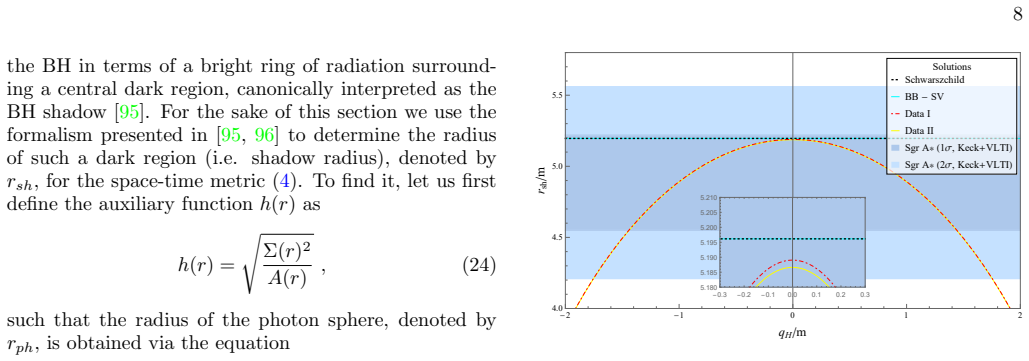
The Sagittarius A* shadow radius constrains black bounce solutions embedded in a realistic dark matter halo to regular black hole configurations.
A machine-rendered reading of the paper's core claim, the machinery that carries it, and where it could break.
Core claim
By embedding the Simpson-Visser black bounce in an empirical dark matter density profile calibrated from M60 observations, the authors obtain a metric depending on mass, asymptotic circular velocity, halo scale radius, and regularization parameter. Comparison of the resulting shadow radius with the Sagittarius A* observational range restricts the parameter space to regular black hole configurations and excludes wormhole solutions.
What carries the argument
Simpson-Visser black bounce solution directly embedded in the empirical dark matter halo density profile calibrated from M60 observations.
If this is right
- The halo changes the event horizon radius and the photon sphere location.
- Curvature invariants receive corrections proportional to the halo parameters.
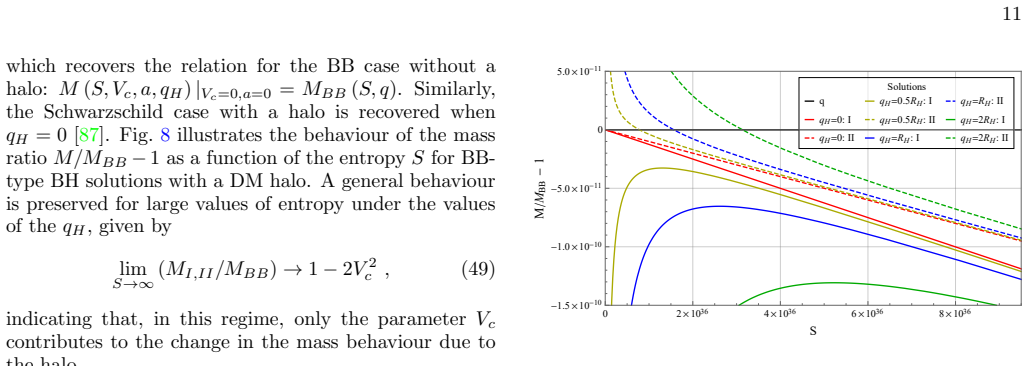
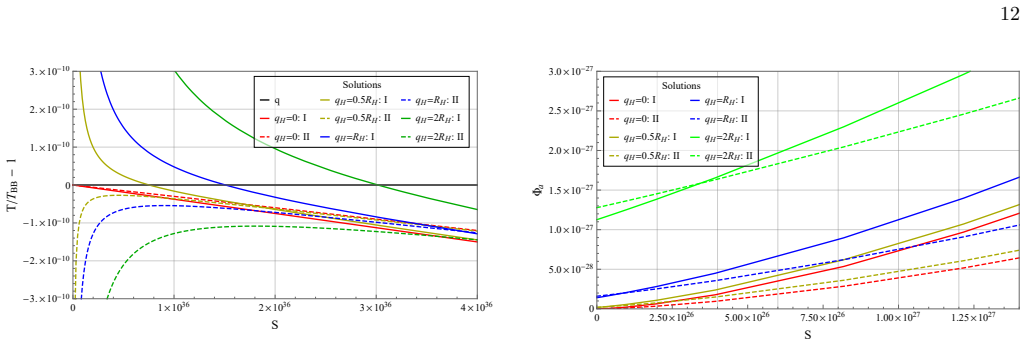
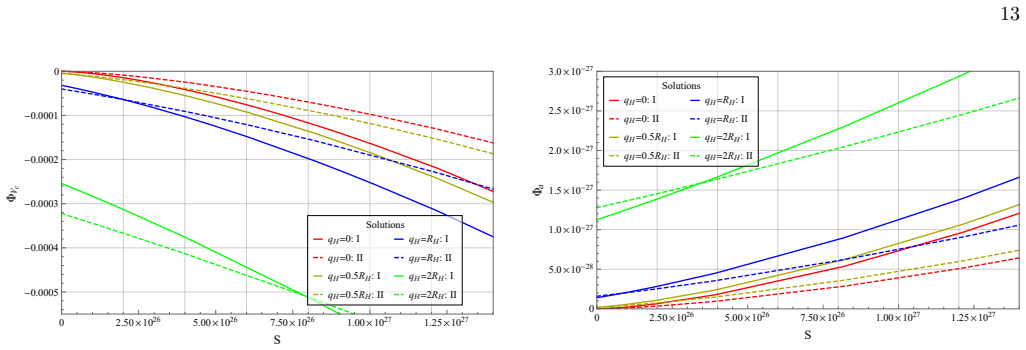
- Thermodynamic potentials, including entropy, are modified by the halo contribution.
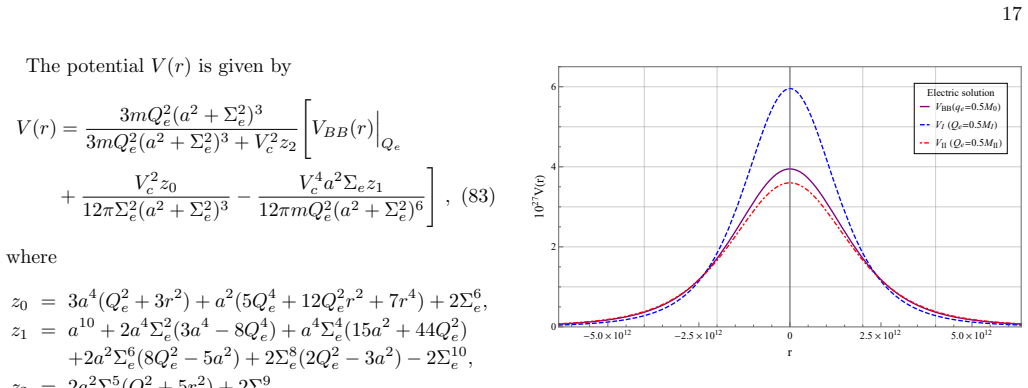
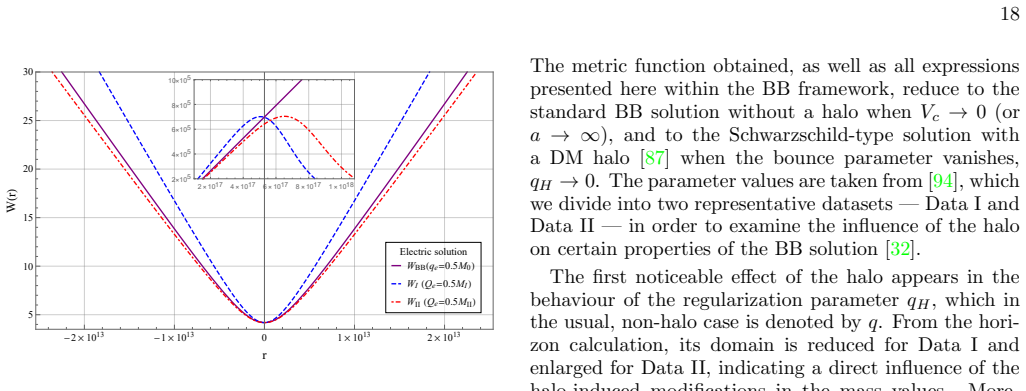
- Non-minimally coupled electromagnetic fields produce charged configurations that are either purely magnetic or purely electric.
- Astrophysical environments therefore impose additional limits on the allowed parameter space of regular black hole models.
Where Pith is reading between the lines
- The same embedding technique could be repeated for other galaxies once their dark matter profiles and shadow sizes are measured.
- Thermodynamic stability and possible phase transitions may differ from the vacuum case when the halo is present.
- Strong-field observations become more powerful tests of regular black holes once realistic galactic environments are included.
Load-bearing premise
The Simpson-Visser black bounce solution can be directly embedded in the empirical dark matter density profile calibrated from M60 observations to form a consistent spacetime metric.
What would settle it
A higher-precision measurement of the Sagittarius A* shadow radius that lies outside the interval permitted by the regular black hole branch of the embedded solution would falsify the claimed constraint.
Figures
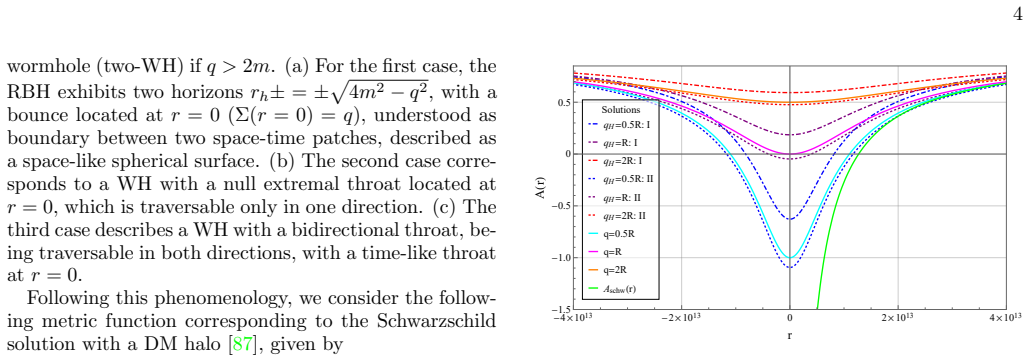
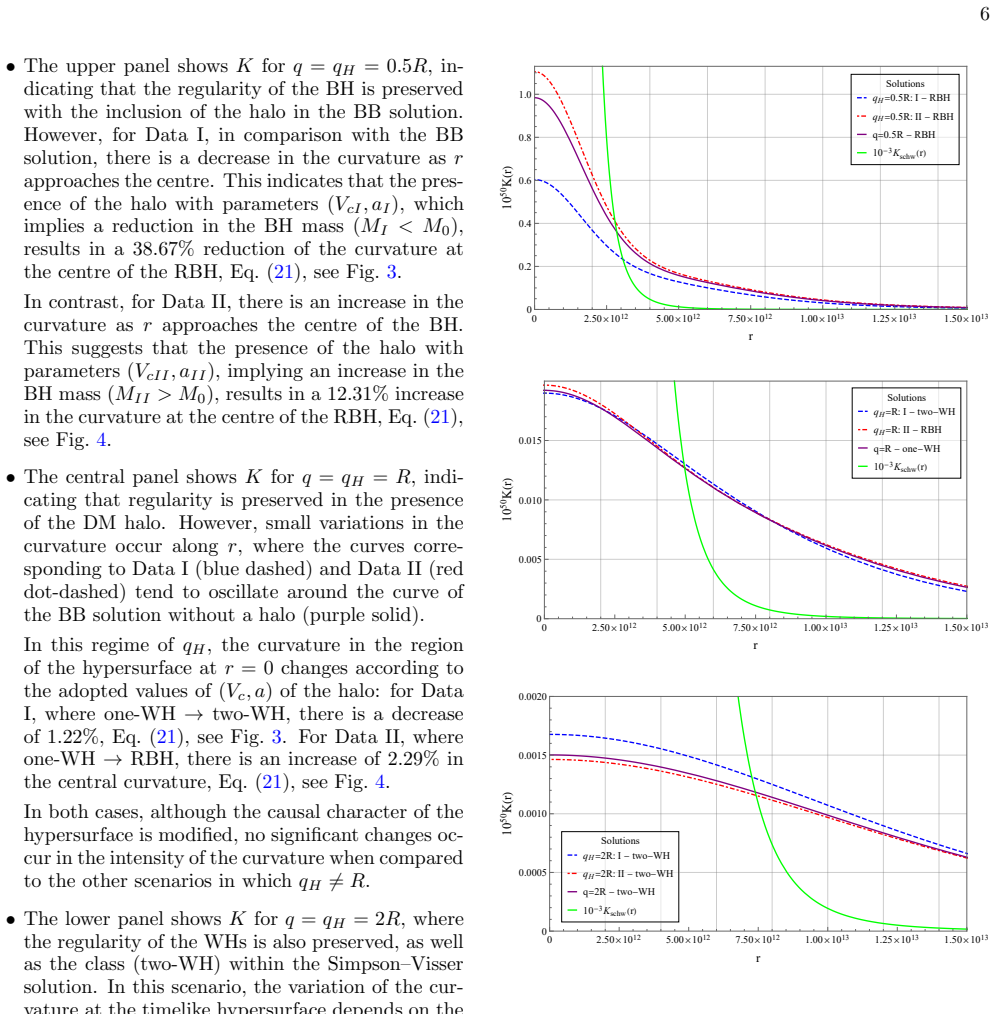
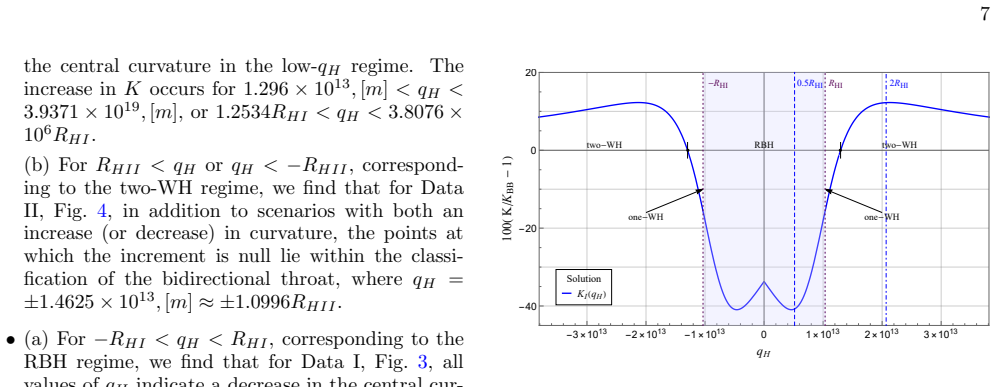
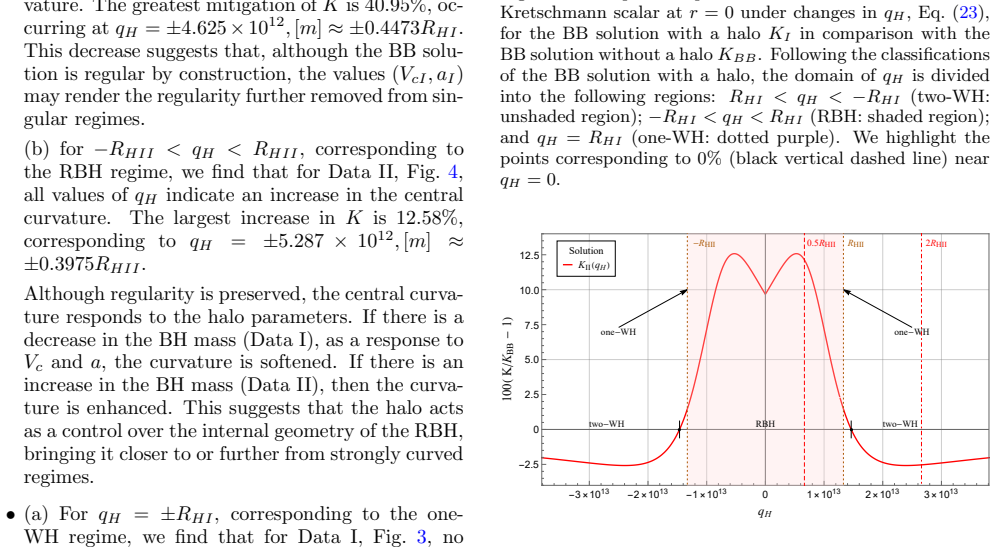
read the original abstract
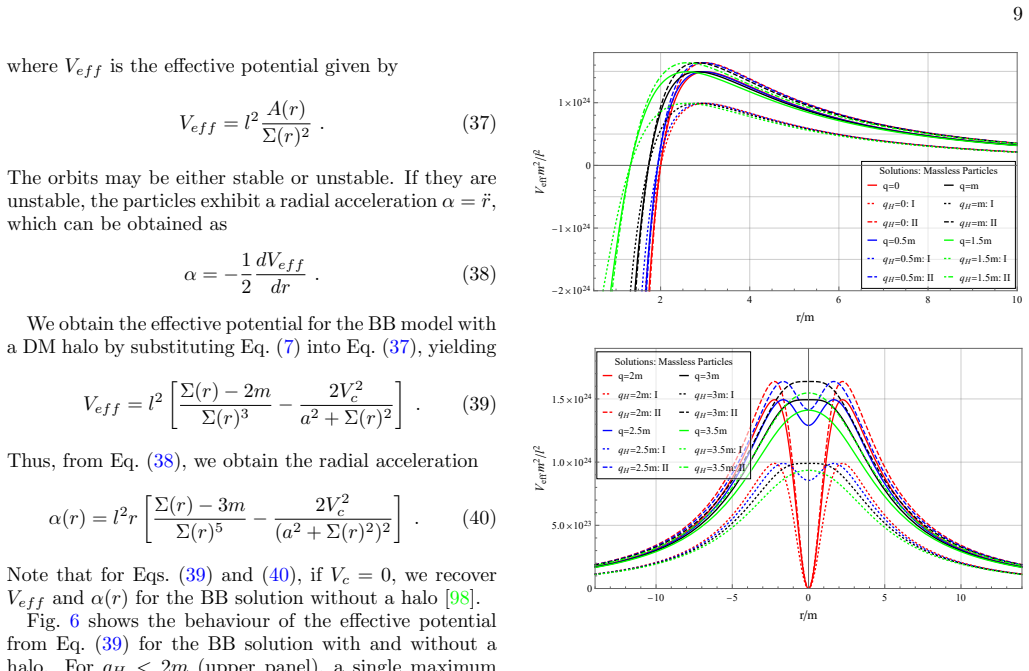
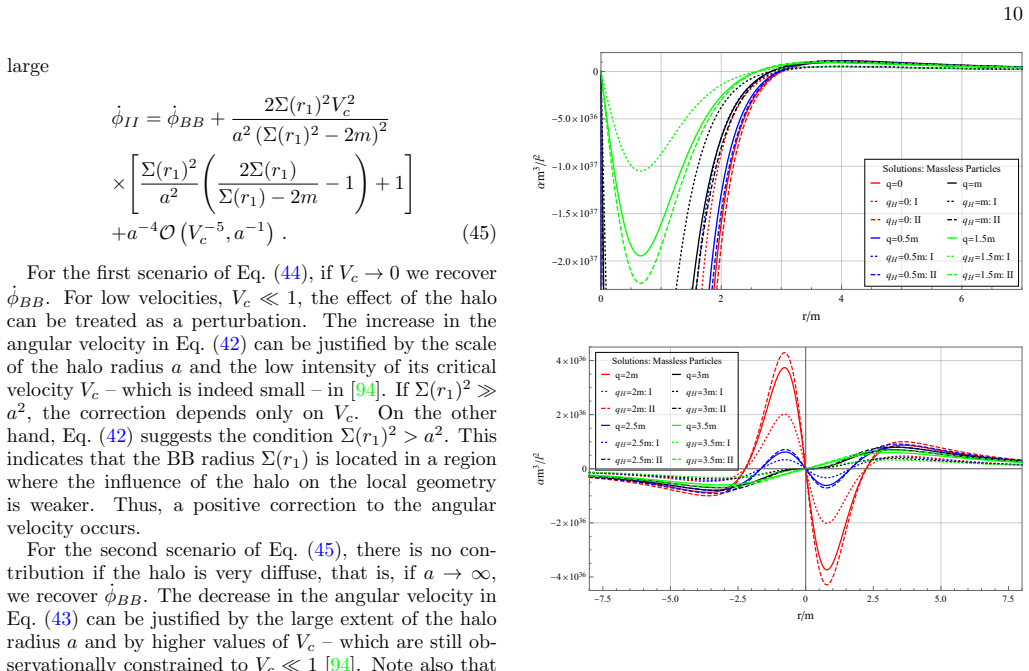
We formulate a Simpson-Visser black bounce solution embedded in a dark matter halo. The latter is modeled using an empirical density profile calibrated from observations of the elliptical galaxy NGC 4649 (M60), based on imaging from the Hubble Space Telescope, stellar velocity dispersion data, and the dynamics of globular clusters. The resulting spacetime metric, in addition to retaining dependence on the mass parameter $m$, the asymptotic circular velocity $V_c$, and the halo scale radius $a$, also depends on the regularization parameter $q_H$. It reduces to the canonical black bounce solution without a halo in the limit $V_c\to0$ (or $a\to\infty$), and to the Schwarzschild solution with a dark matter halo when $q_H\to0$. We analyze the response of fundamental geometrical and physical quantities in the presence of a halo, such as the event horizon radius, the shadow size, and some curvature invariants. In particular, we show the observational range of the shadow radius, from the imaging of Sagittarius A*, constrains the parameter space of the solution to regular black hole configurations, excluding wormhole scenarios. We study the dynamics of massless particles here through the effective potential and examine thermodynamic properties, highlighting the impact on thermodynamic potentials in terms of entropy. Finally, we extend the analysis to scenarios with electromagnetic fields non-minimally coupled to a phantom scalar field, considering configurations with either purely magnetic or purely electric charge. Our results suggest that the dark matter halo influences both the internal geometry and the observational properties of black bounces, imposing constraints on the solution's parameter space from astrophysical data. This highlights the need to include astrophysical environments in modeling regular black holes and wormholes, offering new tests of gravity in the strong-field regime.
Editorial analysis
A structured set of objections, weighed in public.
Referee Report
Summary. The manuscript formulates a Simpson-Visser black-bounce spacetime embedded in an empirical dark-matter halo whose density profile is calibrated to Hubble, stellar-dispersion and globular-cluster data for NGC 4649 (M60). The resulting metric depends on the mass m, halo parameters V_c and a, and regularization parameter q_H; it reduces to the vacuum Simpson-Visser solution when V_c o0 (or a o∞) and to the Schwarzschild-plus-halo metric when q_H o0. The authors compute the event horizon, shadow radius, curvature invariants, null-geodesic effective potential, thermodynamic quantities (including entropy), and extend the construction to non-minimally coupled electromagnetic fields with a phantom scalar (purely magnetic or electric cases). They conclude that the EHT-measured shadow radius of Sgr A* restricts the parameter space to regular black-hole configurations and excludes wormhole solutions.
Significance. If the metric is shown to satisfy the Einstein equations with the empirical halo density plus phantom-scalar stress-energy as source, the work supplies a concrete route for incorporating realistic galactic environments into regular-black-hole phenomenology and for using shadow observations to bound the regularization parameter. The explicit reduction to known limits and the use of an observationally calibrated halo profile are positive features.
major comments (2)
- [§2] §2 (metric construction, presumably around Eq. (3)–(7)): The central claim that the shadow radius constrains the solution to regular black holes requires the line element to be an exact solution of G_{\mu\nu}=8\pi T_{\mu\nu} with T_{\mu\nu} containing the M60-calibrated empirical density plus the phantom-scalar (or electromagnetic) contribution. The text appears to insert V_c and a directly into the Simpson-Visser mass function without deriving the resulting Einstein tensor or verifying consistency with the halo density profile; this step is load-bearing for all subsequent geometric and observational calculations.
- [§4] §4 (shadow analysis): The exclusion of wormhole configurations rests on the photon-sphere radius and critical impact parameter computed from the metric. Because the metric’s validity as a solution has not been established, the numerical bounds on q_H derived from the Sgr A* shadow radius (1.9–2.1 range cited) cannot yet be regarded as physical constraints.
minor comments (2)
- [§2] Notation for the halo density profile and the precise functional form of the mass function m(r) should be stated explicitly once, with all subsequent appearances cross-referenced to the same equation.
- [§4] Figure captions for the shadow-radius plots should include the exact numerical range adopted for the Sgr A* shadow and the value of the impact parameter b_c used.
Simulated Author's Rebuttal
We thank the referee for the careful reading and for identifying the need to strengthen the justification of the metric as an exact solution. We address each major comment below and will revise the manuscript to include the requested derivations.
read point-by-point responses
-
Referee: [§2] §2 (metric construction, presumably around Eq. (3)–(7)): The central claim that the shadow radius constrains the solution to regular black holes requires the line element to be an exact solution of G_{\mu\nu}=8\pi T_{\mu\nu} with T_{\mu\nu} containing the M60-calibrated empirical density plus the phantom-scalar (or electromagnetic) contribution. The text appears to insert V_c and a directly into the Simpson-Visser mass function without deriving the resulting Einstein tensor or verifying consistency with the halo density profile; this step is load-bearing for all subsequent geometric and observational calculations.
Authors: We agree that an explicit verification is required. In the revised manuscript we will compute the non-zero components of the Einstein tensor for the proposed metric and show that they are sourced by the M60-calibrated halo density together with the stress-energy of the phantom scalar (or the non-minimally coupled electromagnetic field in the extended cases). This calculation will be placed immediately after the metric ansatz and will confirm consistency with the Einstein equations in the relevant limits. revision: yes
-
Referee: [§4] §4 (shadow analysis): The exclusion of wormhole configurations rests on the photon-sphere radius and critical impact parameter computed from the metric. Because the metric’s validity as a solution has not been established, the numerical bounds on q_H derived from the Sgr A* shadow radius (1.9–2.1 range cited) cannot yet be regarded as physical constraints.
Authors: We accept that the observational bounds on q_H are conditional on the metric satisfying the field equations. After adding the Einstein-tensor verification in §2, we will restate the shadow-radius constraints as applying to the now-validated family of solutions and will explicitly note that the exclusion of wormhole branches follows from the verified metric. revision: yes
Circularity Check
No significant circularity; derivation applies external halo calibration to independent shadow data
full rationale
The paper takes an empirical DM density profile (with V_c and a) calibrated from M60 observations as an input, embeds the Simpson-Visser metric by modifying the mass function accordingly, and then computes the shadow radius as a function of m, V_c, a, q_H. The central claim applies the observed Sgr A* shadow radius range (an independent dataset) to bound q_H, excluding wormhole regimes. No equation reduces to its own input by construction, no self-citation chain bears the load of the embedding or the constraint, and the halo calibration is not re-derived from the Sgr A* result. The construction is an ansatz whose validity is an assumption, not a circularity.
Axiom & Free-Parameter Ledger
free parameters (3)
- q_H
- V_c
- a
axioms (2)
- domain assumption A Simpson-Visser black bounce solution can be embedded into a dark matter halo whose density follows the empirical M60 profile to produce a consistent spacetime metric
- domain assumption The empirical density profile calibrated from M60 observations accurately represents the dark matter distribution around the central object
invented entities (1)
-
q_H
no independent evidence
Reference graph
Works this paper leans on
-
[1]
For comparison, in the scenario without a halo, we adopt the notation of mag- netic chargeq m, i.e.q=q m
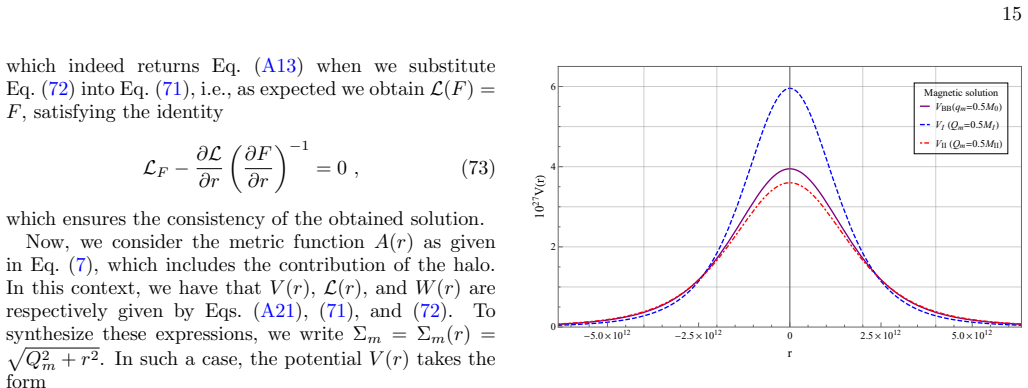
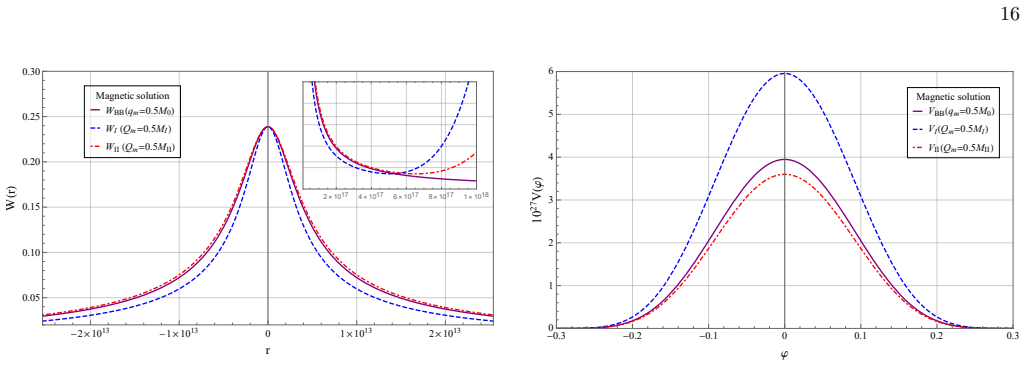
Black Bounce Solution with Dark Matter Halo and Magnetic Charge In this model, we considerq H exclusively as a mag- netic chargeQ m, i.e.q H =Q m. For comparison, in the scenario without a halo, we adopt the notation of mag- netic chargeq m, i.e.q=q m. Substituting Eqs. (69) and ϵ(r) =−1 into the Lagrangian (A17), we obtain its form as a function ofW(r), ...
-
[2]
Black Bounce Solution with Dark Matter Halo and Electric Charge In this model with a halo, we considerq H as an electric chargeQ e, i.e.q H =Q e. For future comparisons, in the scenario without a halo, we adopt the notation of electric chargeq e, i.e.q=q e. Using the definition of the field φ(r) from Eq. (69) andϵ(r) =−1 in the Lagrangian (A27), we obtain...
-
[3]
Magnetic case In the purely magnetic case, where we setq e = 0, the non-vanishing component isF 23 =−F 32, given by F 23 = qm cscθ Σ(r)4 .(A12) Thus, the scalarFis given by F= q2 m 2Σ(r)4 .(A13) We then use Eqs. (4), (A12), and (A13) in the field equa- tions (A3) to obtain the following equations of motion, Gµ ν =κ 2T µ ν, given by: κ2T 0 0 =κ 2 V(r) +L(r...
-
[4]
Electric case In the purely electric case, where we setq m = 0, the non-vanishing component isF 10 =−F 01, given by F 10 = qe W(r)L F (r)Σ(r)2 .(A22) Thus, the scalarFtakes the form F=− q2 e 2W(r) 2LF (r)2Σ(r)4 .(A23) Then, similarly to the purely magnetic case, we substi- tute Eqs. (4), (A22), and (A23) into the field equations (A3), thereby obtaining th...
-
[5]
Einstein, Annalen Phys.49(1916) 769
A. Einstein, Annalen Phys.49(1916) 769
1916
-
[6]
Schwarzschild, Sitzungsber
K. Schwarzschild, Sitzungsber. Preuss. Akad. Wiss. Berlin (Math. Phys.)1916(1916) 189
1916
-
[7]
R. P. Kerr, Phys. Rev. Lett.11(1963) 237
1963
-
[8]
E. T. Newman, E. Couch, K. Chinnapared, A. Exton, A. Prakash and R. Torrence, J. Math. Phys.6(1965) 918
1965
-
[9]
Adamo and E.T
T. Adamo and E.T. Newman, Scholarpedia9(2014) 31791
2014
-
[10]
B. P. Abbottet al.[LIGO Scientific and Virgo], Phys. Rev. Lett.116(2016) 061102
2016
-
[11]
B. P. Abbottet al.(LIGO Scientific and Virgo Collab- orations), Astrophys. J. Lett.848(2017) L12
2017
-
[12]
Akiyamaet al.[Event Horizon Telescope], Astrophys
K. Akiyamaet al.[Event Horizon Telescope], Astrophys. 22 J. Lett.875(2019) L1
2019
-
[13]
Akiyamaet al.[Event Horizon Telescope], Astrophys
K. Akiyamaet al.[Event Horizon Telescope], Astrophys. J. Lett.930(2022) L12
2022
-
[14]
J. M. M. Senovilla and D. Garfinkle, Class. Quant. Grav.32(2015) 124008
2015
- [15]
-
[16]
Non-singular general-relativistic grav- itational collapse,
J.M. Bardeen, “Non-singular general-relativistic grav- itational collapse,” in Proceedings of of International Conference GR5, Tbilisi, USSR (1968), p. 174
1968
-
[17]
Ayon-Beato and A
E. Ayon-Beato and A. Garcia, Phys. Lett. B493(2000) 149
2000
-
[18]
M. E. Rodrigues and M. V. de Sousa Silva, JCAP06 (2018) 025
2018
-
[19]
K. A. Bronnikov, Phys. Rev. D63(2001) 044005
2001
-
[20]
Dymnikova, Class
I. Dymnikova, Class. Quant. Grav.21(2004) 4417
2004
-
[21]
Balart and E
L. Balart and E. C. Vagenas, Phys. Rev. D90(2014) 124045
2014
-
[22]
Culetu, Int
H. Culetu, Int. J. Theor. Phys.54(2015) 2855
2015
-
[23]
Novello, V
M. Novello, V. A. De Lorenci, J. M. Salim and R. Klip- pert, Phys. Rev. D61(2000) 045001
2000
-
[24]
A. S. Habibina and H. S. Ramadhan, Phys. Rev. D101 (2020) 124036
2020
-
[25]
Toshmatov, B
B. Toshmatov, B. Ahmedov and D. Malafarina, Phys. Rev. D103(2021) 024026
2021
-
[26]
M. A. A. de Paula, H. C. D. Lima, Junior., P. V. P. Cunha, C. A. R. Herdeiro and L. C. B. Crispino, Phys. Lett. B866(2025) 139513
2025
-
[27]
Stuchl´ ık and J
Z. Stuchl´ ık and J. Schee, Eur. Phys. J. C79(2019) 44
2019
-
[28]
Allahyari, M
A. Allahyari, M. Khodadi, S. Vagnozzi and D. F. Mota, JCAP02(2020) 003
2020
-
[29]
S. I. Kruglov, Mod. Phys. Lett. A35(2020) 2050291
2020
-
[30]
Breton, Gen
N. Breton, Gen. Rel. Grav.37(2005) 643
2005
-
[31]
Y. S. Myung, Y. W. Kim and Y. J. Park, Phys. Lett. B 659(2008) 832
2008
-
[32]
M. S. Ma, Annals Phys.362(2015) 529
2015
-
[33]
S. I. Kruglov, Phys. Rev. D94(2016) 044026
2016
-
[34]
Z. Y. Fan and X. Wang, Phys. Rev. D94(2016) 124027
2016
- [35]
-
[36]
Simpson and M
A. Simpson and M. Visser, JCAP02(2019) 042
2019
-
[37]
H. G. Ellis, J. Math. Phys.14(1973) 104
1973
-
[38]
K. A. Bronnikov, Acta Phys. Polon. B4(1973) 251
1973
-
[39]
M. S. Morris and K. S. Thorne, Am. J. Phys.56(1988) 395
1988
-
[40]
Barcelo and M
C. Barcelo and M. Visser, Phys. Lett. B466(1999) 127
1999
-
[41]
Barcelo and M
C. Barcelo and M. Visser, Class. Quant. Grav.17(2000) 3843
2000
-
[42]
Visser, S
M. Visser, S. Kar and N. Dadhich, Phys. Rev. Lett.90 (2003) 201102
2003
-
[43]
F. S. N. Lobo, Phys. Rev. D71(2005) 084011
2005
-
[44]
F. S. N. Lobo, [arXiv:0710.4474 [gr-qc]]
-
[45]
Cardoso, E
V. Cardoso, E. Franzin and P. Pani, Phys. Rev. Lett. 116(2016) 171101 [erratum: Phys. Rev. Lett.117 (2016) 089902]
2016
-
[46]
K. A. Bronnikov, Int. J. Mod. Phys. D27(2018) 1841005
2018
-
[47]
Wormholes, Warp Drives and Energy Conditions,
F. S. N. Lobo, “Wormholes, Warp Drives and Energy Conditions,” Fundam. Theor. Phys.189(2017), pp.-279 Springer, 2017
2017
-
[48]
J. L. Bl´ azquez-Salcedo, C. Knoll and E. Radu, Phys. Rev. Lett.126(2021) 101102
2021
-
[49]
M. S. Churilova, R. A. Konoplya, Z. Stuchlik and A. Zhidenko, JCAP10(2021) 010
2021
-
[50]
R. A. Konoplya and A. Zhidenko, Phys. Rev. Lett.128 (2022) 091104
2022
-
[51]
F. S. N. Lobo, M. E. Rodrigues, M. V. de Sousa Silva, A. Simpson and M. Visser, Phys. Rev. D103(2021) 084052
2021
-
[52]
J. R. Nascimento, A. Y. Petrov, P. J. Porfirio and A. R. Soares, Phys. Rev. D102(2020) 044021
2020
-
[53]
Tsukamoto, Phys
N. Tsukamoto, Phys. Rev. D103(2021) 024033
2021
-
[54]
X. T. Cheng and Y. Xie, Phys. Rev. D103(2021) 064040
2021
-
[55]
Tsukamoto, Phys
N. Tsukamoto, Phys. Rev. D104(2021) 064022
2021
-
[56]
Zhang and Y
J. Zhang and Y. Xie, Eur. Phys. J. C82(2022) 471
2022
-
[57]
Mazza, E
J. Mazza, E. Franzin and S. Liberati, JCAP04(2021) 082
2021
-
[58]
Xu and M
Z. Xu and M. Tang, Eur. Phys. J. C81(2021) 863
2021
-
[59]
Alencar, A
G. Alencar, A. Duran-Cabac´ es, D. Rubiera-Garcia and D. S´ aez-Chill´ on G´ omez, Phys. Rev. D111(2025) 104020
2025
-
[60]
K. A. Bronnikov and R. K. Walia, Phys. Rev. D105 (2022) 044039
2022
-
[61]
R. P. Mignani,et. al., Mon. Not. Roy. Astron. Soc.465 (2017) 492
2017
-
[62]
Ejlli, F
A. Ejlli, F. Della Valle, U. Gastaldi, G. Messineo, R. Pengo, G. Ruoso and G. Zavattini, Phys. Rept.871 (2020) 1
2020
-
[63]
D. S. Cordeiro,et. al., JCAP01(2026) 058
2026
-
[64]
Bertone, D
G. Bertone, D. Hooper and J.Silk, Phys. Rep.405 (2005) 279
2005
-
[65]
Freese, EAS Publ
K. Freese, EAS Publ. Ser,36(2009) 119
2009
-
[66]
J. G. de Swart, G. Bertone and J. van Dongen, Nat. Astron.,1, (2017) 0059.]
2017
-
[67]
Wechsler and J.L
R.H. Wechsler and J.L. Tinker, Annu. Rev. Astron. As- trophys.,56(2018) 435
2018
-
[68]
Arbey and F
A. Arbey and F. Mahmoudi, Prog. Part. Nucl. Phys. 119(2021) 103865
2021
-
[69]
Cebri´ an, J
S. Cebri´ an, J. Phys. Conf. Ser.2502(2023) 004
2023
-
[70]
Misiaszeka, N
M. Misiaszeka, N. Rossib, Symmetry16(2024) 201
2024
-
[71]
Aghanim,et al., Plack Collaboration, Astron
N. Aghanim,et al., Plack Collaboration, Astron. Astro- phys.641(2020) A6
2020
-
[72]
Valluri, D
M. Valluri, D. Merritt and E. Emsellem, Astrophy. J. 602(2004) 66
2004
-
[73]
Akiyama,et
K. Akiyama,et. al., Astrophys. J. Lett.875(2019) L1
2019
-
[74]
Akiyama,et al., Event Horizon Telescope Collabo- ration, Astrophys
K. Akiyama,et al., Event Horizon Telescope Collabo- ration, Astrophys. J. Lett.930(2022) L12
2022
-
[75]
Roupas and J
A.El-Zant, Z. Roupas and J. Silk, Mon. Not. R. Astron. Soc.499(2020) 2575
2020
-
[76]
Tormen, F
G. Tormen, F. R. Bouchet and S. D. M. White, Mon. Not. Roy. Astron. Soc.286(1997) 865
1997
-
[77]
Hernquist, The Astrophysical Journal356(1990) 359
L. Hernquist, The Astrophysical Journal356(1990) 359
1990
-
[78]
J. Liu, S. Chen and J. Jing, Chin. Phys. C46(2022) 105104
2022
-
[79]
Z. Shen, A. Wang and S. Yin, Phys. Lett. B862(2025) 139300
2025
-
[80]
Heydari-Fard, M
M. Heydari-Fard, M. Heydari-Fard and N. Riazi, Gen. Rel. Grav.57(2025) 49
2025
discussion (0)
Sign in with ORCID, Apple, or X to comment. Anyone can read and Pith papers without signing in.