REVIEW 3 major objections 40 references
On the generic structures of the protocols for quantum auction and quantum summation and their relation
T0 review · 3 major / 0 minor · reviewed 2026-06-29 · grok-4.3
Pith's one-line read Quantum auction primitives reduce to repeated summation oracle calls on indicator functions.
desk verdict The paper reduces auction primitives to summation-oracle calls on indicators and embeds summation inside auctions, with cost comparisons and a numerical hardware check. read the letter →
The pith
A machine-rendered reading of the paper's core claim, the machinery that carries it, and where it could break.
The reading
What carries the argument
Summation oracle invoked repeatedly on indicator functions that encode bid thresholds or conditions.
What would settle it
An explicit protocol run in which performing an auction via repeated summation oracle calls leaks more private bid information or consumes more qubits and gates than a purpose-built auction protocol on the same hardware.
Extended reading notes
Core claim
The core auction primitives including revenue estimation, maximum bid identification, and winner determination can be reduced to repeated invocations of a summation oracle acting on suitably defined indicator functions. Conversely, summation protocols can be naturally embedded as auxiliary subroutines within auction frameworks, establishing summation as a unifying primitive underlying a broad class of auction mechanisms. Computational, communication and memory costs of these reductions are analyzed and compared with representative existing protocols, revealing additional overhead when summation tasks are implemented through auction protocols.
Load-bearing premise
Repeated calls to the summation oracle on indicator functions introduce no extra security leaks or overhead beyond those already present in standalone auction or summation protocols.
Editorial extensions
If this is right
- Any existing summation protocol can be inserted directly into an auction framework as a subroutine.
- Auction mechanisms can be assembled by defining appropriate indicator functions and invoking the summation oracle a fixed number of times.
- Cost metrics for communication, memory, and computation become comparable across the two families once both are expressed in terms of summation-oracle calls.
- The same reductions apply without change to gate-based circuits and to photonic implementations.
- Numerical validation on IBM and optical hardware shows the equivalence is realizable with current devices.
Reading between the lines
- Other secure multi-party tasks such as secure voting or stable matching may also reduce to the same summation oracle once suitable indicator functions are identified.
- A modular library could treat the summation oracle as the single trusted primitive and generate auction, summation, and related protocols from it.
- Hardware experiments could now focus on optimizing the indicator-function encoding rather than designing entirely new auction circuits.
Editorial analysis
A structured set of objections, weighed in public.
Referee Report
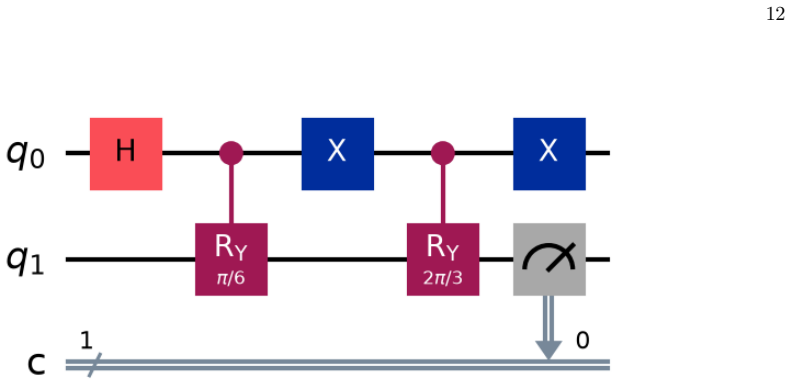
Summary. The paper identifies structural symmetries between existing quantum auction and quantum summation protocols in secure multi-party computation. It claims that core auction primitives (revenue estimation, maximum bid identification, winner determination) reduce to repeated summation-oracle calls on suitably defined indicator functions, that summation protocols embed naturally as subroutines in auction frameworks (making summation a unifying primitive), that the reductions are protocol-agnostic across computational models, that computational/communication/memory costs have been analyzed and compared to representative existing protocols, and that a proof-of-concept numerical/experimental validation of a two-bidder sealed-bid auction has been performed on IBM and optical quantum hardware.
Significance. If the claimed reductions are rigorously defined and the cost comparisons hold, the work would provide a useful unifying lens for quantum SMC, potentially allowing protocol reuse and optimization across auction and summation tasks. The protocol-agnostic framing and the attempt at hardware validation are positive features that could strengthen the result if the supporting derivations and data were present.
major comments (3)
- [Abstract] Abstract: The central claim that auction primitives 'can be reduced to repeated invocations of a summation oracle acting on suitably defined indicator functions' is asserted without any definition of the indicator functions, any explicit reduction mapping, any equation showing the equivalence, or any proof sketch. This absence makes the core technical contribution impossible to evaluate from the provided text.
- [Abstract] Abstract: The statement that 'computational, communication and memory costs of these reductions are analyzed and compared' is made, yet no specific cost expressions, tables, or quantitative comparisons appear. Without these, the claim that the reductions are advantageous or that summation is unifying cannot be assessed.
- [Abstract] Abstract: A 'proof-of-concept experimental realization (numerical validation)' on IBM/optical hardware is asserted to show the equivalence is 'experimentally verifiable,' but no circuit description, input/output data, success metrics, or comparison to the claimed reduction is supplied. This leaves the experimental support for the central claim unsubstantiated.
Simulated Author's Rebuttal
We thank the referee for their careful reading and constructive feedback. We address each major comment below, noting that the full manuscript contains the supporting details while agreeing to strengthen the abstract for clarity.
read point-by-point responses
-
Referee: [Abstract] Abstract: The central claim that auction primitives 'can be reduced to repeated invocations of a summation oracle acting on suitably defined indicator functions' is asserted without any definition of the indicator functions, any explicit reduction mapping, any equation showing the equivalence, or any proof sketch. This absence makes the core technical contribution impossible to evaluate from the provided text.
Authors: The abstract provides a high-level overview. The full manuscript defines the indicator functions (e.g., I(b_i ≥ k) for bid value b_i and threshold k), gives explicit reduction mappings from auction primitives (revenue estimation, max-bid identification, winner determination) to repeated summation-oracle calls, presents the equivalence equations, and includes proof sketches in Sections 3 and 4. We will revise the abstract to include a concise definition of the indicator function and explicit section references. revision: yes
-
Referee: [Abstract] Abstract: The statement that 'computational, communication and memory costs of these reductions are analyzed and compared' is made, yet no specific cost expressions, tables, or quantitative comparisons appear. Without these, the claim that the reductions are advantageous or that summation is unifying cannot be assessed.
Authors: Section 5 derives the cost expressions for the reductions (computational, communication, and memory) and compares them to representative protocols; Table 2 summarizes the quantitative results showing the overhead of using auction protocols for summation. We will revise the abstract to reference Section 5 and Table 2 and note the key comparative findings. revision: yes
-
Referee: [Abstract] Abstract: A 'proof-of-concept experimental realization (numerical validation)' on IBM/optical hardware is asserted to show the equivalence is 'experimentally verifiable,' but no circuit description, input/output data, success metrics, or comparison to the claimed reduction is supplied. This leaves the experimental support for the central claim unsubstantiated.
Authors: The experimental section supplies the two-bidder circuit descriptions, raw input/output data from IBM and optical runs, success probabilities, and direct comparison to the reduction. We will revise the abstract to mention the hardware platforms used and the principal validation metrics. revision: yes
Circularity Check
No significant circularity identified
full rationale
The paper identifies structural symmetries between quantum auction and summation protocols, claiming that auction primitives (revenue estimation, max bid identification, winner determination) reduce to repeated summation-oracle calls on indicator functions, with the converse embedding also possible. This is framed as a protocol-agnostic unification with cost analysis and experimental validation on IBM hardware. No quoted equations, self-citations, or fitted parameters in the provided text reduce the central reductions to definitions or inputs by construction; the claimed equivalences are presented as derived from existing independent protocols rather than self-referential. The derivation chain is therefore self-contained.
Assumptions & free parameters
Cite this review
Pith. "Pith review of On the generic structures of the protocols for quantum auction and quantum summation and their relation." pith.science (2026). https://pith.science/paper/GMJ7CMM7
@misc{pith2026260627693,
  author       = {Pith},
  title        = {Pith review of: On the generic structures of the protocols for quantum auction and quantum summation and their relation},
  year         = {2026},
  howpublished = {\url{https://pith.science/paper/GMJ7CMM7}},
  note         = {Machine review of arXiv:2606.27693}
}
read the original abstract
Secure multi-party computation (SMC) addresses the problem of jointly computing global functions of private inputs while revealing minimal information about individual data. Two prominent examples of SMC tasks are sealed-bid auction and secure multi-party summation. Existing schemes for quantum auction and quantum summation have largely been developed independently, motivated by distinct applications and employing different computational primitives. In this work, structural symmetries in existing protocols for quantum auction and quantum summation are identified. In particular, it is established that the core auction primitives including revenue estimation, maximum bid identification, and winner determination can be reduced to repeated invocations of a summation oracle acting on suitably defined indicator functions. Conversely, summation protocols can be naturally embedded as auxiliary subroutines within auction frameworks, establishing summation as a unifying primitive underlying a broad class of auction mechanisms. Further, computational, communication and memory costs of these reductions are analyzed and compared with some of the representative existing protocols. The analysis has revealed that the process of implementing summation tasks through currently known auction protocols leads to additional overhead associated with bid-space exploration and winner determination. The proposed framework is protocol-agnostic and applicable across diverse computational models, including gate-based and photonic implementations. Finally, a proof-of-concept experimental realization (numerical validation) of a two-bidder sealed-bid auction using IBM (optical quantum) hardware is demonstrated to establish that the claimed equivalence is not merely formal but experimentally verifiable with the available hardware.
Figures


Figures from the paper (2 more)

Reference graph
Works this paper leans on
-
[1]
Grover’s search algorithm applied to the oracle forg, yielding a winning bidder indexi ∗ inO( √ N) oracle queries, or
-
[2]
Thus, both the maximum bid and the identity of a corresponding winner can be obtained using threshold-based summation queries together with a standard search procedure
Classical post-processing when the number of bidders is sufficiently small. Thus, both the maximum bid and the identity of a corresponding winner can be obtained using threshold-based summation queries together with a standard search procedure. The general relationship between quantum summation and sealed-bid quantum auction protocols is illustrated in Fi...
-
[3]
Quantum computing in the NISQ era and beyond,
J. Preskill, “Quantum computing in the NISQ era and beyond,”Quantum, vol. 2, p. 79, 2018
2018
-
[4]
Advances in quantum cryptography,
S. Pirandola, U. L. Andersen, L. Banchi, M. Berta, D. Bunandar, R. Colbeck, D. Englund, T. Gehring, C. Lupo, C. Ot- taviani,et al., “Advances in quantum cryptography,”Advances in optics and photonics, vol. 12, no. 4, pp. 1012–1236, 2020
2020
-
[5]
Polynomial-time algorithms for prime factorization and discrete logarithms on a quantum computer,
P. W. Shor, “Polynomial-time algorithms for prime factorization and discrete logarithms on a quantum computer,”SIAM Journal on Computing, vol. 26, p. 1484–1509, Oct. 1997
1997
-
[6]
A fast quantum mechanical algorithm for database search,
L. K. Grover, “A fast quantum mechanical algorithm for database search,” 1996
1996
-
[7]
A. M. Dalzell, S. McArdle, M. Berta, P. Bienias, C.-F. Chen, A. Gily´ en, C. T. Hann, M. J. Kastoryano, E. T. Khabiboulline, A. Kubica, G. Salton, S. Wang, and F. G. S. L. Brand˜ ao,Quantum Algorithms: A Survey of Applications and End-to-end Complexities. Cambridge University Press, Apr. 2025
2025
-
[8]
Quantum cryptography: Key distribution and beyond,
A. Shenoy-Hejamadi, A. Pathak, and S. Radhakrishna, “Quantum cryptography: Key distribution and beyond,”Quanta, vol. 6, no. 1, pp. 1–47, 2017
2017
Show all 40 references
-
[9]
Security in quantum cryptography,
C. Portmann and R. Renner, “Security in quantum cryptography,”Reviews of Modern Physics, vol. 94, no. 2, p. 025008, 2022
2022
-
[10]
Secure multi-party quantum computation,
C. Cr´ epeau, D. Gottesman, and A. Smith, “Secure multi-party quantum computation,” inProceedings of the thiry-fourth annual ACM symposium on Theory of computing, pp. 643–652, 2002
2002
-
[11]
How to play any mental game,
S. Micali, O. Goldreich, and A. Wigderson, “How to play any mental game,” inProceedings of the Nineteenth ACM Symp. on Theory of Computing, STOC, pp. 218–229, ACM New York, 1987
1987
-
[12]
Protocols for secure computations,
A. C. Yao, “Protocols for secure computations,” in23rd annual symposium on foundations of computer science (sfcs 1982), pp. 160–164, IEEE, 1982
1982
-
[13]
Secure multiparty computation,
Y. Lindell, “Secure multiparty computation,”Communications of the ACM, vol. 60, no. 1, pp. 86–96, 2017
2017
-
[14]
Quantum sealed-bid auction without a trusted third party,
R.-H. Shi, “Quantum sealed-bid auction without a trusted third party,”IEEE Transactions on Circuits and Systems I: Regular Papers, vol. 68, no. 10, pp. 4221–4231, 2021
2021
-
[15]
Quantum sealed-bid auction using a modified scheme for multiparty circular quantum key agreement,
R. D. Sharma, K. Thapliyal, and A. Pathak, “Quantum sealed-bid auction using a modified scheme for multiparty circular quantum key agreement,”Quantum Information Processing, vol. 16, no. 7, p. 169, 2017
2017
-
[16]
Quantum and semi-quantum sealed-bid auction: vulnerabilities and advan- tages,
P. Asagodu, K. Thapliyal, and A. Pathak, “Quantum and semi-quantum sealed-bid auction: vulnerabilities and advan- tages,”Quantum Information Processing, vol. 21, no. 5, p. 185, 2022
2022
-
[17]
Quantum protocols for anonymous voting and surveying,
J. A. Vaccaro, J. Spring, and A. Chefles, “Quantum protocols for anonymous voting and surveying,”Physical Review A, vol. 75, p. 012333, 2007
2007
-
[18]
Protocols for quantum binary voting,
K. Thapliyal, R. D. Sharma, and A. Pathak, “Protocols for quantum binary voting,”International Journal of Quantum Information, vol. 15, no. 01, p. 1750007, 2017
2017
-
[19]
Experimental realization of quantum anonymous veto protocols using ibm quantum computer: S. kumar, a. pathak,
S. Kumar and A. Pathak, “Experimental realization of quantum anonymous veto protocols using ibm quantum computer: S. kumar, a. pathak,”Quantum Information Processing, vol. 21, no. 9, p. 311, 2022
2022
-
[20]
Quantum anonymous veto protocol,
R. Rahaman and G. Kar, “Quantum anonymous veto protocol,”arXiv preprint arXiv:1507.00592, 2015
2015 arXiv
-
[21]
Quantum anonymous veto: a set of new protocols,
S. Mishra, K. Thapliyal, A. Parakh, and A. Pathak, “Quantum anonymous veto: a set of new protocols,”EPJ Quantum Technology, vol. 9, no. 1, p. 14, 2022
2022
-
[22]
Quantum protocols for secure multi-party summation,
Z. Ji, H. Zhang, H. Wang, F. Wu, J. Jia, and W. Wu, “Quantum protocols for secure multi-party summation,”Quantum Information Processing, vol. 18, no. 6, p. 168, 2019
2019
-
[23]
Secure multi-party quantum summation based on quantum fourier transform,
H.-Y. Yang and T.-Y. Ye, “Secure multi-party quantum summation based on quantum fourier transform,”Quantum Information Processing, vol. 17, no. 6, p. 129, 2018
2018
-
[24]
Secure multiparty quantum computation for summation and multipli- cation,
R.-h. Shi, Y. Mu, H. Zhong, J. Cui, and S. Zhang, “Secure multiparty quantum computation for summation and multipli- cation,”Scientific reports, vol. 6, no. 1, p. 19655, 2016
2016
-
[25]
Quantum e-commerce: a comparative study of possible protocols for online shopping and other tasks related to e-commerce: K. thapliyal, a. pathak,
K. Thapliyal and A. Pathak, “Quantum e-commerce: a comparative study of possible protocols for online shopping and other tasks related to e-commerce: K. thapliyal, a. pathak,”Quantum Information Processing, vol. 18, no. 6, p. 191, 2019
2019
-
[26]
Quantum and semi-quantum lottery: strategies and advantages,
S. Mishra and A. Pathak, “Quantum and semi-quantum lottery: strategies and advantages,”Quantum Information Pro- cessing, vol. 22, no. 7, p. 290, 2023
2023
-
[27]
Secure multi-party computation,
O. Goldreich, “Secure multi-party computation,”Foundations and Trends in Theoretical Computer Science, vol. 2, no. 3, pp. 1–150, 2009. 17
2009
-
[28]
Quantum amplitude amplification and estimation,
G. Brassard, P. Høyer, M. Mosca, and A. Tapp, “Quantum amplitude amplification and estimation,”Contemporary Mathematics, vol. 305, pp. 53–74, 2002
2002
-
[29]
Iterative quantum amplitude estimation,
D. Grinko, J. Gacon, C. Zoufal, and S. Woerner, “Iterative quantum amplitude estimation,”npj Quantum Information, vol. 7, no. 1, p. 52, 2021
2021
-
[30]
Quantum secure multi-party summation based on grover’s search algorithm,
X. Zhang, S. Lin, and G.-D. Guo, “Quantum secure multi-party summation based on grover’s search algorithm,”Interna- tional Journal of Theoretical Physics, vol. 60, no. 10, pp. 3711–3721, 2021
2021
-
[31]
Quantum secure multi-party computational geometry based on multi-party summation and multiplication,
Z. Dou, Y. Wang, Z. Liu, J. Bi, X. Chen, and L. Li, “Quantum secure multi-party computational geometry based on multi-party summation and multiplication,”Quantum Science and Technology, vol. 9, no. 2, p. 025023, 2024
2024
-
[32]
Secure multiparty quantum computation for summation and data sorting: X. li et al.,
X. Li, Y. Xiong, and C. Zhang, “Secure multiparty quantum computation for summation and data sorting: X. li et al.,” Quantum Information Processing, vol. 23, no. 9, p. 321, 2024
2024
-
[33]
A new hybrid protocol that simultaneously achieves quantum multiparty summation and ranking,
Y. Zhang, Y. Yao, H. Sun, K. Zhang, and T. Song, “A new hybrid protocol that simultaneously achieves quantum multiparty summation and ranking,”Advanced Quantum Technologies, vol. 7, no. 6, p. 2400078, 2024
2024
-
[34]
A novel quantum multiparty summation protocol based on a cooperative random number mechanism,
K. Zhang, Y. Zhang, X. Zhang, H. Liu, T. Song, and G. Du, “A novel quantum multiparty summation protocol based on a cooperative random number mechanism,”EPJ Quantum Technology, vol. 12, no. 1, p. 57, 2025
2025
-
[35]
T. M. Cover and J. A. Thomas,Elements of Information Theory. Wiley, 2 ed., 2006
2006
-
[36]
Secure multiparty computation,
Y. Lindell, “Secure multiparty computation,”Communications of the ACM, vol. 64, no. 1, pp. 86–96, 2021
2021
-
[37]
Strawberry fields: A software platform for photonic quantum computing,
N. Killoran, J. Izaac, N. Quesada, V. Bergholm, M. Amy, and C. Weedbrook, “Strawberry fields: A software platform for photonic quantum computing,”Quantum, vol. 3, p. 129, 2019
2019
-
[38]
Applications of near-term photonic quantum computers: Software and algorithms,
T. R. Bromley, J. Izaac, M. Schuld, N. Quesada, J. Bergholm, and C. Weedbrook, “Applications of near-term photonic quantum computers: Software and algorithms,”Quantum Science and Technology, vol. 5, no. 3, p. 034010, 2020
2020
-
[39]
Qiskit: An open-source framework for quantum computing,
Qiskit contributors, “Qiskit: An open-source framework for quantum computing,” 2025.https://www.ibm.com/quantum/ qiskit
2025
-
[40]
Quantum auctions using adiabatic evolution: The corrupt auctioneer and circuit implementations,
S. Guha, T. Hogg, D. Fattal, T. Spiller, and R. G. Beausoleil, “Quantum auctions using adiabatic evolution: The corrupt auctioneer and circuit implementations,”International Journal of Quantum Information, vol. 6, no. 04, pp. 815–839, 2008
2008
Reviewed June 29, 2026 · model on record in the stance chip above.
Discussion (0). Continue with ORCID to comment.