Quantum black hole cohomologies
Pith reviewed 2026-06-30 10:08 UTC · model grok-4.3
The pith
1-loop corrections lift many fortuitous cohomologies in the SU(2) theory but leave the lightest ones unlifted.
A machine-rendered reading of the paper's core claim, the machinery that carries it, and where it could break.
Core claim
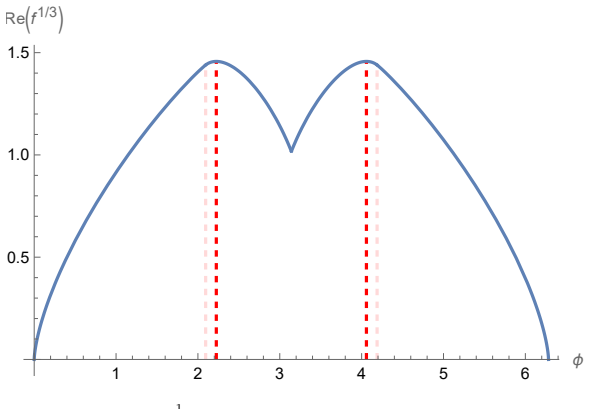
In the SU(2) theory, 1-loop corrections lift many heavier core fortuitous cohomologies, yet the lightest fortuitous cohomology and its hairy versions remain unlifted. The entropy of classical cohomologies in the Cardy limit is therefore larger than the indicial entropy of strictly protected states by at least approximately 1.2%.
What carries the argument
1-loop corrections to fortuitous cohomologies that determine which classical black-hole microstate candidates in SU(2) maximal super-Yang-Mills survive or are lifted.
If this is right
- The lightest fortuitous cohomology and its hairy versions contribute to the quantum microstate count.
- Many heavier core fortuitous cohomologies are removed by quantum effects.
- The minimum entropy excess of classical cohomologies over protected states is at least 1.2% in the Cardy limit.
- Lifting of fortuitous states occurs in both the SU(2) and SO(7) theories.
Where Pith is reading between the lines
- The pattern of which states survive may indicate a selection rule that reduces the effective microstate count toward the protected value.
- Extending the same 1-loop test to other gauge groups could reveal whether the 1.2% excess is universal.
- If the lightest states remain stable at all orders, they would furnish the dominant contribution to the exact quantum entropy.
Load-bearing premise
The 1-loop corrections computed in the SU(2) theory correctly capture the lifting of fortuitous cohomologies and no higher-order or non-perturbative effects alter the survival of the lightest states.
What would settle it
A 2-loop calculation that lifts the lightest fortuitous cohomology would show that the unlifted status claimed at 1-loop order does not hold.
Figures
read the original abstract
Microstates of BPS AdS black holes have been studied from the classical cohomologies of the maximal super-Yang-Mills theories, but their quantum natures have been conjectural. It was recently found that a classical black hole (fortuitous) cohomology in the $SO(7)$ theory is lifted by 1-loop corrections. We show that such lifts also happen in the $SU(2)$ theory, presenting both lifted/unlifted examples. In particular, the lightest fortuitous cohomology and its `hairy' versions are unlifted, while many heavier `core' fortuitous ones are lifted. We argue that the entropy of classical cohomologies in the Cardy limit is larger than the indicial entropy of strictly protected states by at least $\approx 1.2 \%$.
Editorial analysis
A structured set of objections, weighed in public.
Referee Report
Summary. The manuscript studies quantum corrections to classical (fortuitous) cohomologies in maximal super-Yang-Mills theories. It demonstrates that 1-loop corrections lift certain fortuitous states in the SU(2) theory, providing explicit lifted and unlifted examples; the lightest fortuitous cohomology and its hairy versions remain unlifted while many heavier core ones are lifted. It further argues that the Cardy-limit entropy of classical cohomologies exceeds the indicial entropy of strictly protected states by at least ≈1.2%.
Significance. If the 1-loop results prove stable, the work supplies concrete evidence distinguishing surviving microstates and a quantitative entropy gap, directly informing the quantum counting of BPS black-hole states in AdS/CFT.
major comments (1)
- [Abstract, paragraph 3] Abstract, paragraph 3: The central claim that the lightest fortuitous cohomology (and hairy versions) remains unlifted rests on 1-loop computations in the SU(2) theory; the manuscript supplies no independent check (2-loop vanishing, non-perturbative index, or stability argument) that higher-order or non-perturbative terms cannot lift these states, which directly affects both the lifted/unlifted classification and the entropy comparison.
minor comments (1)
- The abstract uses backticks for 'hairy' and 'core'; consistent LaTeX quotation marks would improve readability.
Simulated Author's Rebuttal
We thank the referee for the careful reading of our manuscript and for highlighting this important qualification regarding the perturbative order of our results. We address the comment below and will revise the manuscript accordingly to better reflect the scope of the analysis.
read point-by-point responses
-
Referee: [Abstract, paragraph 3] Abstract, paragraph 3: The central claim that the lightest fortuitous cohomology (and hairy versions) remains unlifted rests on 1-loop computations in the SU(2) theory; the manuscript supplies no independent check (2-loop vanishing, non-perturbative index, or stability argument) that higher-order or non-perturbative terms cannot lift these states, which directly affects both the lifted/unlifted classification and the entropy comparison.
Authors: We agree that the manuscript performs the analysis at one-loop order and does not supply independent checks (such as two-loop vanishing, non-perturbative indices, or stability arguments) that would rule out lifting by higher-order or non-perturbative effects. The central results establish that one-loop corrections lift many heavier core fortuitous states while leaving the lightest fortuitous cohomology and its hairy versions unlifted at this order; the entropy comparison in the Cardy limit is likewise derived within the one-loop framework. We will revise the abstract and the relevant discussion sections to explicitly qualify all statements about unlifted states and the ≈1.2% entropy gap as holding at one-loop order, and we will add a brief remark noting that higher-order corrections remain an open question for future investigation. This revision clarifies the interpretation without altering the one-loop computations themselves. revision: partial
Circularity Check
No significant circularity; computations appear independent
full rationale
The paper reports explicit 1-loop computations distinguishing lifted and unlifted fortuitous cohomologies in the SU(2) theory, with the lightest states remaining unlifted, plus a Cardy-limit entropy comparison to indicial entropy. No quoted step reduces a claimed prediction or result to a fitted input, self-citation chain, or definitional equivalence. The 1-loop results are presented as direct calculations rather than outputs forced by the same data used to define the inputs. The entropy bound is argued from counting in the classical limit and does not reduce to a parameter fit within the paper. This is the normal case of a self-contained computation against external benchmarks.
Axiom & Free-Parameter Ledger
Reference graph
Works this paper leans on
-
[1]
C. M. Chang and Y. H. Lin, JHEP02, 109 (2023) doi:10.1007/JHEP02(2023)109 [arXiv:2209.06728 [hep-th]]
- [2]
- [3]
- [4]
- [5]
-
[6]
K. Budzik, D. Gaiotto, J. Kulp, B. R. Williams, J. Wu and M. Yu, JHEP05, 245 (2024) doi:10.1007/JHEP05(2024)245 [arXiv:2306.01039 [hep-th]]
- [7]
- [8]
- [9]
-
[10]
R. de Mello Koch, M. Kim, S. Kim, J. Lee and S. Lee, [arXiv:2412.08695 [hep-th]]
- [11]
- [12]
- [13]
- [14]
-
[15]
Comments on 1/16 BPS Quantum States and Classical Configurations
L. Grant, P. A. Grassi, S. Kim and S. Minwalla, JHEP05, 049 (2008) doi:10.1088/1126- 6708/2008/05/049 [arXiv:0803.4183 [hep-th]]
work page internal anchor Pith review Pith/arXiv arXiv doi:10.1088/1126- 2008
-
[16]
C. M. Chang and X. Yin, Phys. Rev. D88, no.10, 106005 (2013) doi:10.1103/PhysRevD.88.106005 [arXiv:1305.6314 [hep-th]]
work page internal anchor Pith review Pith/arXiv arXiv doi:10.1103/physrevd.88.106005 2013
-
[17]
Minwalla,Supersymmetric States inN= 4Yang Mills, talk given atStrings 2006, Beijing
S. Minwalla,Supersymmetric States inN= 4Yang Mills, talk given atStrings 2006, Beijing
2006
-
[18]
Counting chiral primaries in N=1 d=4 superconformal field theories
C. Romelsberger, Nucl. Phys. B747, 329-353 (2006) doi:10.1016/j.nuclphysb.2006.03.037 [arXiv:hep-th/0510060 [hep-th]]
work page internal anchor Pith review Pith/arXiv arXiv doi:10.1016/j.nuclphysb.2006.03.037 2006
-
[19]
An Index for 4 dimensional Super Conformal Theories
J. Kinney, J. M. Maldacena, S. Minwalla and S. Raju, Commun. Math. Phys.275, 209-254 (2007) doi:10.1007/s00220-007-0258-7 [arXiv:hep-th/0510251 [hep-th]]
work page internal anchor Pith review Pith/arXiv arXiv doi:10.1007/s00220-007-0258-7 2007
-
[20]
C. M. Chang, Z. Du, S. Duary, K. Liu and Y. X. Tao, [arXiv:2606.05314 [hep-th]]
work page internal anchor Pith review Pith/arXiv arXiv
-
[21]
BPS Non-Renormalization in the BMN Matrix Model
S. Colin-Ellerin and K. Papadodimas, [arXiv:2606.05388 [hep-th]]
work page internal anchor Pith review Pith/arXiv arXiv
-
[22]
A. Gaikwad, T. Kibe, S. van Leuven and K. Mathieson, JHEP05(2026), 133 doi:10.1007/JHEP05(2026)133 [arXiv:2512.02103 [hep-th]]
- [23]
-
[24]
Quantum Black Hole Entropy from 4d Supersymmetric Cardy formula
M. Honda, Phys. Rev. D100, no.2, 026008 (2019) doi:10.1103/PhysRevD.100.026008 [arXiv:1901.08091 [hep-th]]
work page internal anchor Pith review Pith/arXiv arXiv doi:10.1103/physrevd.100.026008 2019
-
[25]
Cardy-like asymptotics of the 4d $\mathcal{N}=4$ index and AdS$_5$ blackholes
A. Arabi Ardehali, JHEP06, 134 (2019) doi:10.1007/JHEP06(2019)134 [arXiv:1902.06619 [hep-th]]
work page internal anchor Pith review Pith/arXiv arXiv doi:10.1007/jhep06(2019)134 2019
-
[26]
J. Kim, S. Kim and J. Song, JHEP01, 025 (2021) doi:10.1007/JHEP01(2021)025 [arXiv:1904.03455 [hep-th]]
-
[27]
A. Cabo-Bizet, D. Cassani, D. Martelli and S. Murthy, JHEP08, 120 (2019) doi:10.1007/JHEP08(2019)120 [arXiv:1904.05865 [hep-th]]
-
[28]
A. Cabo-Bizet, D. Cassani, D. Martelli and S. Murthy, JHEP10, 062 (2019) doi:10.1007/JHEP10(2019)062 [arXiv:1810.11442 [hep-th]]
-
[29]
F. Benini and E. Milan, Phys. Rev. X10, no.2, 021037 (2020) doi:10.1103/PhysRevX.10.021037 [arXiv:1812.09613 [hep-th]]. 23
-
[30]
S. Murthy, Phys. Rev. D105, no.2, L021903 (2022) doi:10.1103/PhysRevD.105.L021903 [arXiv:2005.10843 [hep-th]]
-
[31]
P. Agarwal, S. Choi, J. Kim, S. Kim and J. Nahmgoong, Phys. Rev. D103, no.12, 126006 (2021) doi:10.1103/PhysRevD.103.126006 [arXiv:2005.11240 [hep-th]]
-
[32]
Borosh and A
I. Borosh and A. S. Fraenkel,Math. Comp.20, no. 93, 107–112 (1966)
1966
-
[33]
P. S. Wang, M. J. T. Guy and J. H. Davenport,ACM SIGSAM Bull.16, no. 2, 2–3 (1982)
1982
-
[34]
D. E. Knuth,The Art of Computer Programming, Vol. 2: Seminumerical Algorithms, 3rd ed., Addison-Wesley, Reading, MA (1997) 24
1997
discussion (0)
Sign in with ORCID, Apple, or X to comment. Anyone can read and Pith papers without signing in.