Understanding Color Confinement through Quantum Reference Frames and Relational Observables
Pith reviewed 2026-06-30 05:53 UTC · model grok-4.3
The pith
Color confinement is the absence of any global long-distance color quantum reference frame that could support isolated non-singlet relational observables.
A machine-rendered reading of the paper's core claim, the machinery that carries it, and where it could break.
Core claim
Color confinement is characterized by the absence of a globally well-defined long-distance color QRF capable of supporting isolated non-singlet relational observables. By the Gauss law, local color charge is excluded from the physical bulk algebra, whereas semi-local data such as boundary fluxes and Wilson lines may remain. This formulation preserves the insight of the Kugo-Ojima picture without depending on a covariant gauge, unbroken global BRST symmetry, or a specific infrared criterion.
What carries the argument
Color quantum reference frame (QRF) together with relational observables defined relative to it; the Gauss law acts as the constraint that removes local color charge from the physical algebra.
If this is right
- Isolated colored asymptotic states cannot exist because no supporting long-distance color frame is available.
- Wilson-loop area law, preservation of center one-form symmetry, and restoration of residual gauge symmetry all become different manifestations of the same missing QRF structure.
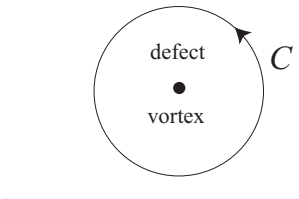
- Topological defects acquire a clear role as obstructions to extending a local color frame to global distances.
- The formulation extends without change to gauge-Higgs theories and to models obtained by dimensional reduction.
Where Pith is reading between the lines
- The same relational logic may organize confinement criteria in four-dimensional Yang-Mills without requiring a new infrared order parameter.
- Boundary observables in lattice formulations could be reinterpreted as the surviving semi-local data once the bulk color frame is absent.
- If a long-distance color QRF can be engineered in a controlled sector, the theory should exhibit deconfined colored states.
Load-bearing premise
The quantum reference frame formalism applies consistently to color degrees of freedom in gauge theories.
What would settle it
An explicit construction, in a confining Yang-Mills theory, of a globally well-defined long-distance color QRF that supports an isolated non-singlet relational observable.
Figures
read the original abstract
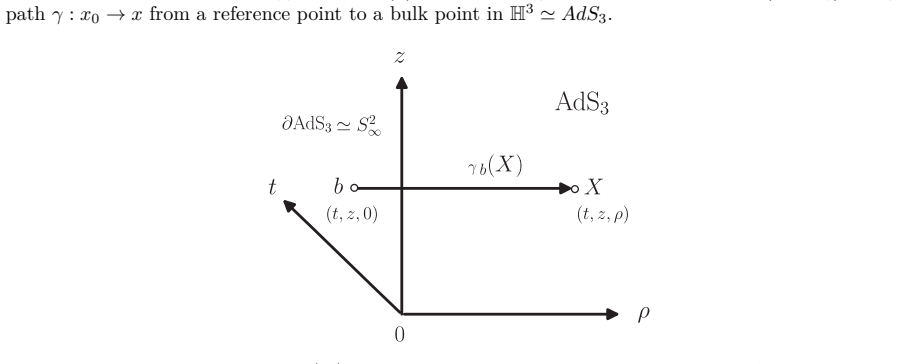
We present a formulation for understanding color confinement on the basis of quantum reference frames (QRFs) and relational observables. In the QRF approach to color confinement, colored quantities are not defined as isolated local fields, but rather as relational observables with respect to a color frame or a dressing field. By the Gauss law, local color charge is excluded from the physical bulk algebra, whereas semi-local data such as boundary fluxes and Wilson lines may remain. Color confinement is characterized by the absence of a globally well-defined long-distance color QRF capable of supporting isolated non-singlet relational observables. This formulation preserves the insight of the Kugo-Ojima type picture, while avoiding dependence on a particular covariant gauge, an unbroken global BRST symmetry, and a specific infrared confinement criterion. As concrete examples, we consider (1+1)-dim. Yang-Mills theory, (1+1)-dim. U(1) gauge-Higgs model, and the two-dim. U(1) gauge-Higgs model on $\mathbb{H}^2$ ($AdS_2$) and three-dim. SU(2) gauge-Higgs model on $\mathbb{H}^3$ ($AdS_3$) obtained by dimensional reduction of four-dim. SU(2) Yang-Mills theory restricted to symmetric-instanton sectors. Through explicit calculations in these examples and in controlled sectors, we provide nontrivial consistency checks for the validity of the present formulation. We also discuss prospects for four-dim. Yang-Mills theory and gauge-Higgs theories. QRF-based color confinement provides a relational formulation of why isolated colored asymptotic sectors are absent. At the same time, it clarifies the role played by topological defects and shows that other confinement criteria -- the Wilson-loop area law, the preservation of generalized symmetry, namely center one-form symmetry, and the restoration of residual gauge symmetry -- can be organized as manifestations of a common QRF structure.
Editorial analysis
A structured set of objections, weighed in public.
Referee Report
Summary. The manuscript proposes a relational formulation of color confinement in gauge theories using quantum reference frames (QRFs) and relational observables. Colored quantities are treated as relational rather than isolated local fields; by the Gauss law, local color charge is excluded from the physical bulk algebra while semi-local data (boundary fluxes, Wilson lines) remain. Confinement is characterized as the absence of a globally well-defined long-distance color QRF supporting isolated non-singlet relational observables. The approach preserves Kugo-Ojima insights without dependence on a specific covariant gauge, unbroken global BRST, or a particular infrared criterion. Consistency is checked via explicit calculations in (1+1)D Yang-Mills, (1+1)D U(1) gauge-Higgs, and dimensionally reduced U(1)/SU(2) gauge-Higgs models on AdS2/AdS3 from symmetric-instanton sectors of 4D theory. Various confinement criteria (Wilson-loop area law, center one-form symmetry, residual gauge symmetry) are organized as manifestations of the same QRF structure.
Significance. If the central claim holds, the work supplies a gauge-independent relational perspective that unifies several standard confinement diagnostics under a common QRF structure and clarifies the role of topological defects in excluding isolated colored asymptotic sectors. The explicit calculations in controlled low-dimensional and reduced models constitute nontrivial consistency checks that strengthen the formulation and could guide extensions to four-dimensional Yang-Mills and gauge-Higgs theories.
minor comments (2)
- The abstract states that the formulation is independent of a particular covariant gauge and unbroken BRST; the main text should include a brief explicit comparison (e.g., in one of the (1+1)D examples) showing how the QRF construction remains unchanged under a change of gauge fixing to make this independence manifest.
- In the discussion of the AdS reductions, the precise mapping between the symmetric-instanton sector of 4D SU(2) YM and the 3D SU(2) gauge-Higgs model on H^3 should be stated with the relevant field identifications or truncation conditions to facilitate reproducibility.
Simulated Author's Rebuttal
We thank the referee for the detailed and positive summary of our manuscript, as well as for recognizing the significance of the QRF-based relational approach to color confinement and the value of the consistency checks in lower-dimensional models. The recommendation for minor revision is noted. No specific major comments were raised in the report.
Circularity Check
No significant circularity; reformulation is self-contained with explicit checks
full rationale
The paper advances a relational characterization of color confinement via QRFs, defining the absence of a global long-distance color QRF as the key feature. This rests on the standard Gauss law excluding local color charge from the physical algebra while retaining semi-local observables (boundary fluxes, Wilson lines). The formulation is tested via explicit calculations in controlled low-dimensional models ((1+1)D YM, U(1) gauge-Higgs, symmetric-instanton sectors on AdS2/AdS3). No steps reduce by construction to fitted parameters, self-citations, or renamed inputs; the central claim organizes existing criteria (Wilson area law, center symmetry) under a common QRF structure without circular reduction. The derivation is independent of specific gauges or unbroken BRST, as stated.
Axiom & Free-Parameter Ledger
axioms (1)
- domain assumption The Gauss law excludes local color charge from the physical bulk algebra, whereas semi-local data such as boundary fluxes and Wilson lines may remain.
invented entities (1)
-
color quantum reference frame (QRF)
no independent evidence
Reference graph
Works this paper leans on
-
[1]
Confinement of quarks,
K. G. Wilson, “Confinement of quarks,” Phys. Rev. D 10 (1974) 2445
1974
-
[2]
Quantum frames of referenc e,
Y. Aharonov and T. Kaufherr, “Quantum frames of referenc e,” Phys. Rev. D 30 (1984) 368–385
1984
-
[3]
Quantum reference systems,
C. Rovelli, “Quantum reference systems,” Class. Quant. Grav. 8 (1991) 317–332
1991
-
[4]
Reference frames, superselection rules, and quantum information
S. D. Bartlett, T. Rudolph and R. W. Spekkens, “Reference frames, superselection rules, and quantum information,” Rev. Mod. Phys. 79 (2007) 555–609, arXiv:quant-ph/0610030
work page internal anchor Pith review Pith/arXiv arXiv 2007
-
[5]
Physics within a quantum reference frame
R. M. Angelo, N. Brunner, S. Popescu, A. J. Short and P. Skr zypczyk, “Physics within a quantum reference frame,” J. Phys. A 44 (2011) 145304, arXiv:1007.2292 [quant-ph]
work page internal anchor Pith review Pith/arXiv arXiv 2011
-
[6]
Symmetry, Reference Frames, and Relational Quantities in Quantum Mechanics
L. Loveridge, T. Miyadera and P. Busch, “Symmetry, refer ence frames, and relational quan- tities in quantum mechanics,” Found. Phys. 48 (2018) 135–198, arXiv:1703.10434 [quant- ph]
work page internal anchor Pith review Pith/arXiv arXiv 2018
-
[7]
Quantum mechanics and the covariance of physical laws in quantum reference frames
F. Giacomini, E. Castro-Ruiz and Č. Brukner, “Quantum me chanics and the covari- ance of physical laws in quantum reference frames,” Nature C ommun. 10 (2019) 494, arXiv:1712.07207 [quant-ph]
work page internal anchor Pith review Pith/arXiv arXiv 2019
-
[8]
A change of perspec- tive: switching quantum reference frames via a perspective -neutral framework,
A. Vanrietvelde, P. A. Höhn, F. Giacomini and E. Castro-R uiz, “A change of perspec- tive: switching quantum reference frames via a perspective -neutral framework,” Quantum 4 (2020) 225, arXiv:1809.00556 [quant-ph]
-
[9]
A.-C. de la Hamette and T. D. Galley, “Quantum reference f rames for general symmetry groups,” Quantum 4 (2020) 367, arXiv:2004.14292 [quant-ph]. 72
-
[10]
Quantum reference frame transformations as symmetries and the paradox of the third particle,
M. Krumm, P. A. Höhn and M. P. Müller, “Quantum reference frame transformations as symmetries and the paradox of the third particle,” Quantum 5 (2021) 530, arXiv:2011.01951 [quant-ph]
-
[11]
Edge modes as reference fram es and boundary actions from post-selection,
S. Carrozza and P. A. Höhn, “Edge modes as reference fram es and boundary actions from post-selection,” JHEP 02 (2022) 172, arXiv:2109.06184 [hep-th]
-
[12]
Quantum reference frames, measurement schemes and the type of local algebras in quantum field theory,
C. J. Fewster, D. W. Janssen, L. D. Loveridge, K. Rejzner and J. Waldron, “Quantum reference frames, measurement schemes and the type of local algebras in quantum field theory,” Commun. Math. Phys. 406 (2025) 19, arXiv:2403.11973 [math-ph]
-
[13]
A. Vanrietvelde, P. A. Höhn and F. Giacomini, “Switchin g quantum reference frames in theN -body problem and the absence of global relational perspect ives,” Quantum 7 (2023) 1088, arXiv:1809.05093 [quant-ph]
-
[14]
Towards relational quantum field theory,
J. Głowacki, “Towards relational quantum field theory, ” arXiv:2405.15455 [quant-ph]
-
[15]
C. J. Fewster, D. W. Janssen and K. Rejzner, “Semi-local observables, edge modes and quantum reference frames in quantum electromagnetism: an algebraic approach,” arXiv:2508.20939 [math-ph]
-
[16]
Relationa l entanglement entropies and quantum reference frames in gauge theories,
G. Araújo-Regado, P. A. Höhn and F. Sartini, “Relationa l entanglement entropies and quantum reference frames in gauge theories,” arXiv:2506.2 3459 [hep-th]
-
[17]
Quantum Reference Frames at the Boundary of Spacetime,
V. Kabel, Č. Brukner and W. Wieland, “Quantum Reference Frames at the Boundary of Spacetime,” Phys. Rev. D 108 (2023) 106022, arXiv:2302.116 29 [gr-qc]
2023
-
[18]
Gauss law codes and vacuum codes from lattice gauge theories,
J. P. Lacambra, A. Chatwin-Davies, M. Honda and P. A. Höh n, “Gauss law codes and vacuum codes from lattice gauge theories,” arXiv:2604.060 87 [quant-ph] (2026)
2026
-
[19]
S. Ali Ahmad, T. D. Galley, P. A. Höhn, M. P. E. Lock and A. R . H. Smith, “Quantum Relativity of Subsystems,” Phys. Rev. Lett. 128 (2022) 1704 01, arXiv:2103.01232 [quant- ph]
-
[20]
Accessibi lity of Global Properties from Internal Quantum Reference Frame Perspectives,
A.-C. de la Hamette, V. Kabel and Č. Brukner, “Accessibi lity of Global Properties from Internal Quantum Reference Frame Perspectives,” arXiv:25 10.09100 [quant-ph]
-
[21]
Local covariant operator formali sm of non-Abelian gauge theories and quark confinement problem,
T. Kugo and I. Ojima, “Local covariant operator formali sm of non-Abelian gauge theories and quark confinement problem,” Prog. Theor. Phys. Suppl. 66 (1979) 1
1979
-
[22]
T. Kugo, “The universal renormalization factors Z1/Z 3 and color confinement condition in non-Abelian gauge theory,” hep-th/9511033
work page internal anchor Pith review Pith/arXiv arXiv
-
[23]
Nakanishi and I
N. Nakanishi and I. Ojima, Covariant Operator Formalism of Gauge Theories and Quantum Gravity, World Scientific, 1990
1990
-
[24]
Quantization of non-Abelian gauge theor ies,
V. N. Gribov, “Quantization of non-Abelian gauge theor ies,” Nucl. Phys. B 139 (1978) 1
1978
-
[25]
Local and renormalizable action from th e Gribov horizon,
D. Zwanziger, “Local and renormalizable action from th e Gribov horizon,” Nucl. Phys. B 323 (1989) 513
1989
-
[26]
Local subsystems in gauge theory and gravity
W. Donnelly and L. Freidel, “Local subsystems in gauge t heory and gravity,” JHEP 09 (2016) 102, arXiv:1601.04744 [hep-th]
work page internal anchor Pith review Pith/arXiv arXiv 2016
-
[27]
A unified geometric framework for boundary charges and dressings: non-Abelian theory and matter
H. Gomes, F. Hopfmüller and A. Riello, “A unified geometr ic framework for boundary charges and dressings: non-Abelian theory and matter,” Nuc l. Phys. B 941 (2019) 249, arXiv:1808.02074 [hep-th]. 73
work page internal anchor Pith review Pith/arXiv arXiv 2019
-
[28]
Gauge-invariant formulation of quantu m electrodynamics,
P. A. M. Dirac, “Gauge-invariant formulation of quantu m electrodynamics,” Can. J. Phys. 33 (1955) 650
1955
-
[29]
Color confinement and res toration of residual local gauge symmetries,
K.-I. Kondo and N. Fukushima, “Color confinement and res toration of residual local gauge symmetries,” PTEP 2022 (2022) 5, 053B05, arXiv:2111.06183 [hep-th]
-
[30]
Residual gauge symmetry and color confinement in the Yang–Mills theory,
N. Fukushima and K.-I. Kondo, “Residual gauge symmetry and color confinement in the Yang–Mills theory,” arXiv:2507.11101 [hep-th]
-
[31]
Restoration of residual gauge symmetries towards color confinement due to topological defects,
N. Fukushima and K.-I. Kondo, “Restoration of residual gauge symmetries towards color confinement due to topological defects,” arXiv:2304.14008 [hep-th]
-
[32]
Phase diagrams of lattice gauge theories with Higgs fields,
E. Fradkin and S. H. Shenker, “Phase diagrams of lattice gauge theories with Higgs fields,” Phys. Rev. D 19 (1979) 3682
1979
-
[33]
Hamiltonian formulation o f Wilson’s lattice gauge theories,
J. B. Kogut and L. Susskind, “Hamiltonian formulation o f Wilson’s lattice gauge theories,” Phys. Rev. D 11 (1975) 395
1975
-
[34]
Nambu, Strings, monopoles, and gauge fields, Phys
Y. Nambu, Strings, monopoles, and gauge fields, Phys. Re v. D 10, 4262–4268 (1974)
1974
-
[35]
’t Hooft, in: High Energy Physics, edited by A
G. ’t Hooft, in: High Energy Physics, edited by A. Zichic hi (Editorice Compositori, Bologna, 1975)
1975
-
[36]
Vortices and quark confinement in non-A belian gauge theories,
S. Mandelstam, “Vortices and quark confinement in non-A belian gauge theories,” Phys. Rept. 23 (1976) 245
1976
-
[37]
Dirac, Quantized Singularities in the Electrom agnetic Field, Proc
P.A.M. Dirac, Quantized Singularities in the Electrom agnetic Field, Proc. Roy. Soc. Lon- don, A 133, 60–72 (1931)
1931
-
[38]
Vortex-line models for dua l strings,
H. B. Nielsen and P. Olesen, “Vortex-line models for dua l strings,” Nucl. Phys. B 61 (1973) 45–61
1973
-
[39]
’t Hooft, Magnetic Monopoles in Unified Gauge Theorie s, Nucl
G. ’t Hooft, Magnetic Monopoles in Unified Gauge Theorie s, Nucl. Phys. B 79, 276–284 (1974). A. M. Polyakov, Particle Spectrum in the Quantum Field Theor y, JETP Lett. 20, 194–195 (1974). Pisma Zh. Eksp. Teor. Fiz. 20, 430–433 (1974)
1974
-
[40]
Magnetic monopoles in hyperbolic spaces ,
M. F. Atiyah, “Magnetic monopoles in hyperbolic spaces ,” in Vector Bundles on Algebraic Varieties, Oxford University Press, 1987; see also “Instantons in two and four dimensions,” Commun. Math. Phys. 93 (1984) 437
1987
-
[41]
Some exact multi-instanton solutions of cl assical Yang–Mills theory,
E. Witten, “Some exact multi-instanton solutions of cl assical Yang–Mills theory,” Phys. Rev. Lett. 38 (1977) 121
1977
-
[42]
Space-time symmetries in g auge theories,
P. Forgacs and N. S. Manton, “Space-time symmetries in g auge theories,” Commun. Math. Phys. 72 (1980) 15
1980
-
[43]
N. S. Manton and P. M. Sutcliffe, Topological Solitons, Cambridge University Press, 2004
2004
-
[44]
Hyperbolic monopoles from hyperbolic vortices
R. Maldonado, “Hyperbolic monopoles from hyperbolic v ortices,” arXiv:1508.07304 [math- ph]
work page internal anchor Pith review Pith/arXiv arXiv
-
[45]
K.-I. Kondo, “Quark confinement consistent with hologr aphy due to hyperbolic mag- netic monopoles and hyperbolic vortices unifiedly reduced f rom symmetric instantons,” arXiv:2507.20372 [hep-th]
-
[46]
Quark confinement and topology of gauge groups,
A. M. Polyakov, “Quark confinement and topology of gauge groups,” Nucl. Phys. B 120 (1977) 429. 74
1977
-
[47]
K.-I. Kondo, S. Kato, A. Shibata and T. Shinohara, “Quar k confinement: Dual supercon- ductor picture based on a non-Abelian Stokes theorem and ref ormulations of Yang–Mills theory,” Phys. Rept. 579 (2015) 1, arXiv:1409.1599 [hep-th]
work page internal anchor Pith review Pith/arXiv arXiv 2015
-
[48]
Restricted gauge theory,
Y. M. Cho, “Restricted gauge theory,” Phys. Rev. D 21 (1980) 1080
1980
-
[49]
SU(2) gauge theory and electrody namics with N magnetic monopoles,
Y. S. Duan and M. L. Ge, “SU(2) gauge theory and electrody namics with N magnetic monopoles,” Sci. Sin. 11 (1979) 1072
1979
-
[50]
Partial duality in SU(N) Yang-Mills theory
L. D. Faddeev and A. J. Niemi, “Partial duality in SU(N) Y ang–Mills theory,” Phys. Lett. B 449 (1999) 214, hep-th/9812090
work page internal anchor Pith review Pith/arXiv arXiv 1999
-
[51]
Wilson loop and magnetic monopole through a non-Abelian Stokes theorem
K.-I. Kondo, “A gauge-independent magnetic monopole d ominance for quark confinement in SU(2) Yang–Mills theory,” Phys. Rev. D 77 (2008) 085029, arXiv:0801.1274 [hep-th]
work page internal anchor Pith review Pith/arXiv arXiv 2008
-
[52]
Elitzur, Impossibility of spontaneously breaking l ocal symmetries, Phys
S. Elitzur, Impossibility of spontaneously breaking l ocal symmetries, Phys. Rev. D 12, 3978– 3982 (1975). G. F. De Angelis, D. de Falco, and F. Guerra, Note on the Abelia n Higgs-Kibble Model on a Lattice: Absence of Spontaneous Magnetization, Phys. Rev . D 17, 1624–1628 (1978)
1975
-
[53]
A. Shibata and K.-I. Kondo, “Gauge-independent transi tion dividing the confinement phase in the lattice SU(2) gauge-adjoint scalar model,” Phy s. Rev. D 110 (2024) 034508, arXiv:2307.15953 [hep-lat]
-
[54]
Confineme nt-Higgs complementarity and gauge-independent separation in SU(2) gauge-scalar model s,
Y. Ikeda, S. Kato, K.-I. Kondo and A. Shibata, “Confineme nt-Higgs complementarity and gauge-independent separation in SU(2) gauge-scalar model s,” Phys. Rev. D 109 (2024) 054505
2024
-
[55]
On the phase transition towards permanent quark confinement,
G. ’t Hooft, “On the phase transition towards permanent quark confinement,” Nucl. Phys. B 138 (1978) 1
1978
-
[56]
Greensite, An Introduction to the Confinement Problem , Springer, 2011
J. Greensite, An Introduction to the Confinement Problem , Springer, 2011
2011
-
[57]
D. Gaiotto, A. Kapustin, N. Seiberg and B. Willett, “Gen eralized global symmetries,” JHEP 02 (2015) 172, arXiv:1412.5148 [hep-th]
work page internal anchor Pith review Pith/arXiv arXiv 2015
-
[58]
Symmetries and Strings in Field Theory and Gravity
T. Banks and N. Seiberg, “Symmetries and strings in field theory and gravity,” Phys. Rev. D 83 (2011) 084019, arXiv:1011.5120 [hep-th]
work page internal anchor Pith review Pith/arXiv arXiv 2011
-
[59]
Coupling a QFT to a TQFT and Duality
A. Kapustin and N. Seiberg, “Coupling a QFT to a TQFT and d uality,” JHEP 04 (2014) 001, arXiv:1401.0740 [hep-th]
work page internal anchor Pith review Pith/arXiv arXiv 2014
-
[60]
The Surface Te rm in Gauge Theories,
J.-L. Gervais, B. Sakita and S. R. Wadia, “The Surface Te rm in Gauge Theories,” Phys. Lett. B 63 (1976) 55–58
1976
-
[61]
Hamiltonian Formulation of Nonabelian Ga uge Theory with Surface Terms: Applications to the Dyon Solution,
S. R. Wadia, “Hamiltonian Formulation of Nonabelian Ga uge Theory with Surface Terms: Applications to the Dyon Solution,” Phys. Rev. D 15 (1977) 3615–3628
1977
-
[62]
Role of surface integrals i n the Hamiltonian formulation of general relativity,
T. Regge and C. Teitelboim, “Role of surface integrals i n the Hamiltonian formulation of general relativity,” Annals of Physics 88 (1974) 286–318
1974
-
[63]
Henneaux and C
M. Henneaux and C. Teitelboim, Quantization of Gauge Systems , Princeton University Press, 1992
1992
-
[64]
Local symmetries and constraints ,
J. Lee and R. M. Wald, “Local symmetries and constraints ,” Journal of Mathematical Physics 31 (1990) 725–743. 75
1990
-
[65]
Canonical Structure of Field Theories with Boundaries and Applications to Gauge Theories
C. Troessaert, “Canonical Structure of Field Theories with Boundaries and Applications to Gauge Theories,” arXiv:1312.6427
work page internal anchor Pith review Pith/arXiv arXiv
-
[66]
Asymptotic symmetries of electromagnetism at spatial infinity
M. Henneaux and C. Troessaert, “Asymptotic symmetries of electromagnetism at spatial infinity,” JHEP 05 (2018) 137, arXiv:1803.10194 [hep-th]
work page internal anchor Pith review Pith/arXiv arXiv 2018
-
[67]
A. Riello, “Symplectic reduction of Yang–Mills theory with boundaries: from superselection sectors to edge modes, and back,” SciPost Phys. 10 (2021) 125, arXiv:2010.15894. 76
discussion (0)
Sign in with ORCID, Apple, or X to comment. Anyone can read and Pith papers without signing in.