Velocity of a Quantum Particle in a Classically Forbidden Region
Pith reviewed 2026-07-02 19:03 UTC · model grok-4.3
The pith
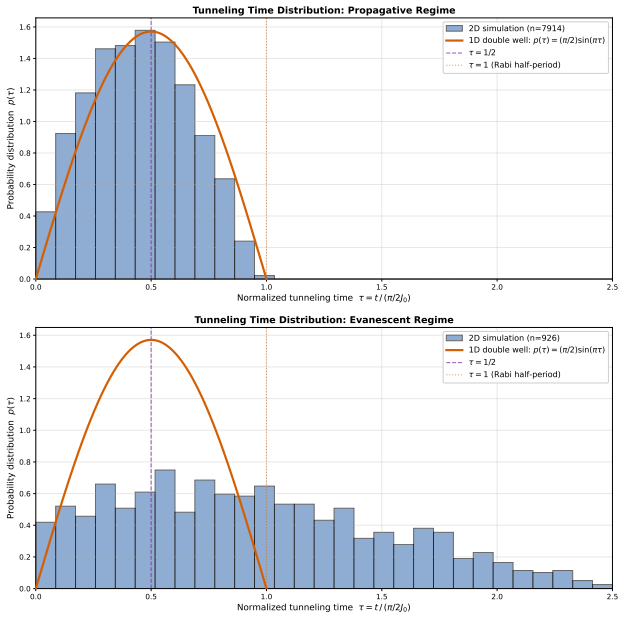
The speed inference in a recent waveguide experiment on particles in forbidden regions rests on an assumption that fails according to both Bohmian mechanics and standard quantum mechanics.
A machine-rendered reading of the paper's core claim, the machinery that carries it, and where it could break.
Core claim
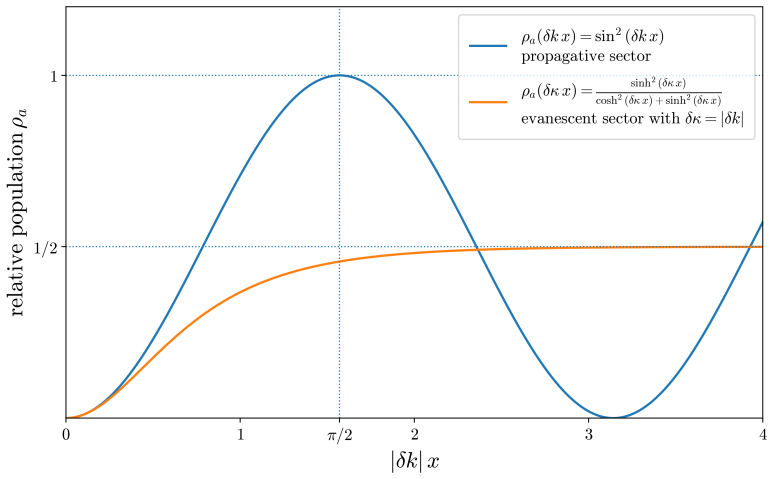
The speed inference rests on an assumption that fails in the relevant evanescent regime according to both Bohmian mechanics and standard quantum mechanics, namely that the inter-waveguide tunneling time is set by the transverse coupling and is not affected by entanglement with the longitudinal degree of freedom; a correct application of the Büttiker dwell time formula yields exact agreement with the predictions of Bohmian mechanics.
What carries the argument
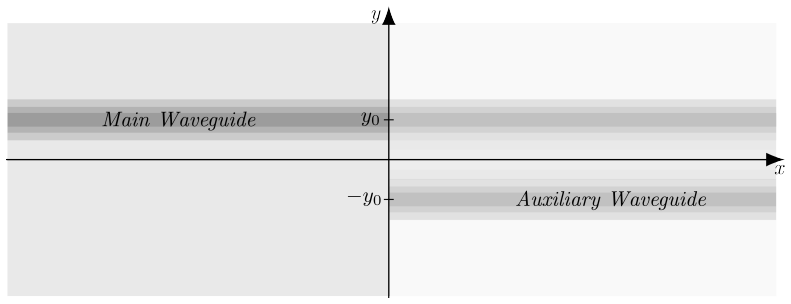
The two-dimensional waveguide model together with explicit calculations of Bohmian trajectories, dwell times, and longitudinal speeds.
If this is right
- The experimental populations are predicted identically by Bohmian mechanics and standard quantum mechanics.
- The reported disagreement with Bohmian velocities does not constitute a challenge to the theory.
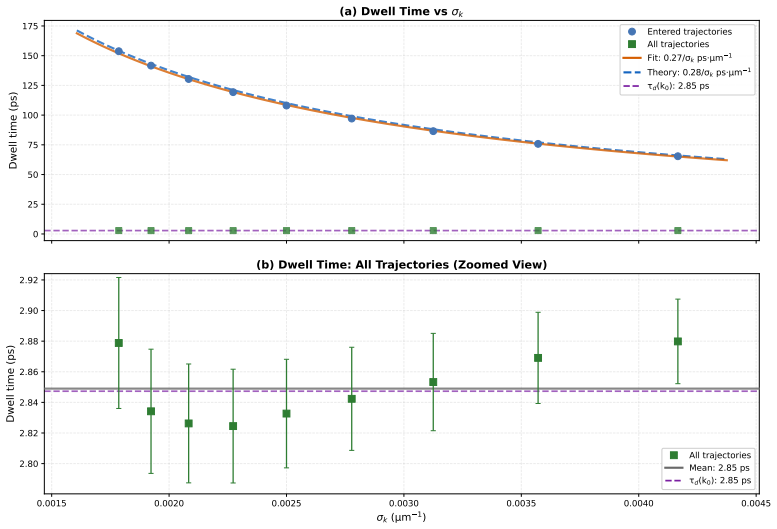
- Correct use of the Büttiker dwell-time formula in the two-dimensional geometry reproduces the Bohmian longitudinal speeds inside the forbidden region.
- Any speed estimate extracted from waveguide populations must incorporate the full entangled dynamics rather than a one-dimensional transverse approximation.
Where Pith is reading between the lines
- Similar tunneling-time experiments will need to account for longitudinal-transverse entanglement when extracting velocities from population data.
- The resolution suggests that apparent superluminal or anomalous speeds reported in other evanescent-wave setups may also trace to incomplete modeling of the longitudinal degree of freedom.
- The two-dimensional waveguide geometry provides a concrete test bed for comparing different tunneling-time definitions under controlled entanglement conditions.
Load-bearing premise
The inter-waveguide tunneling time is set solely by the transverse coupling strength and is unaffected by entanglement with the longitudinal degree of freedom.
What would settle it
Direct measurement of whether the effective inter-waveguide tunneling time changes when the longitudinal wave packet is altered in a way that changes the degree of entanglement with the transverse motion.
Figures
read the original abstract
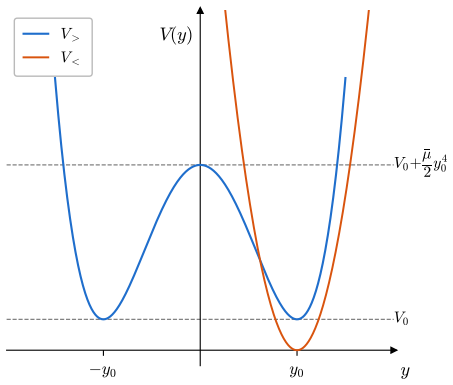
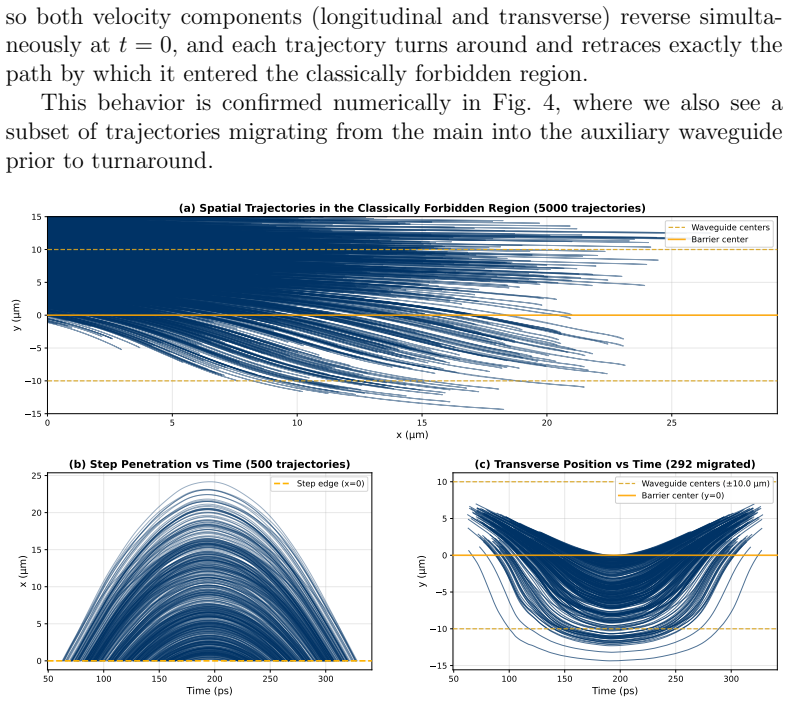
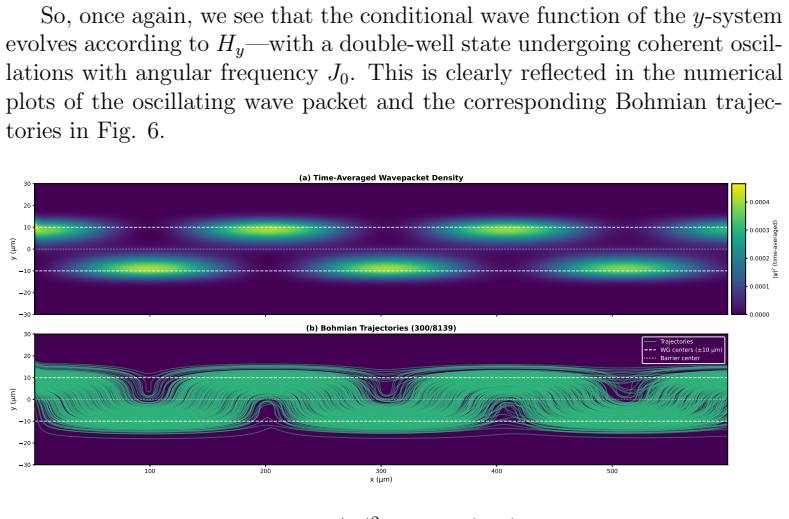
Recently, Sharoglazova et al. [Nature 643, 67 (2025)] proposed a procedure for determining the speed of a quantum particle in the classically forbidden region of a potential step, and implemented it in a beautiful experiment. The inferred speeds disagree significantly with the Bohmian velocities, which the authors presented as an experimental challenge to Bohmian mechanics. This is puzzling because the speeds are inferred from particle populations in coupled waveguides for which Bohmian mechanics and standard quantum mechanics make identical predictions. We resolve the puzzle by a detailed theoretical analysis of the experimental setup. We show that the speed inference rests on an assumption that fails in the relevant (evanescent) regime according to both Bohmian mechanics and standard quantum mechanics -- namely that the inter-waveguide tunneling time is set by the transverse coupling and is not affected by entanglement with the longitudinal degree of freedom. We also consider a second speed estimate suggested by Sharoglazova et al., which is based on the B\"uttiker dwell time formula for particles in the forbidden region. We show that the authors applied the formula incorrectly, and that a correct application yields exact agreement with the predictions of Bohmian mechanics. Our analysis includes explicit calculations of Bohmian trajectories, dwell times, and longitudinal speeds in the two-dimensional waveguide model of the experiment.
Editorial analysis
A structured set of objections, weighed in public.
Referee Report
Summary. The manuscript analyzes the speed-inference procedure of Sharoglazova et al. (Nature 643, 67 (2025)) for a quantum particle in a classically forbidden region, implemented via coupled waveguides. It shows that the inference rests on the assumption that inter-waveguide tunneling time is fixed by transverse coupling alone and unaffected by entanglement with the longitudinal degree of freedom; this assumption fails in the evanescent regime according to both standard quantum mechanics and Bohmian mechanics. The authors supply explicit calculations of Bohmian trajectories, dwell times, and longitudinal speeds in a two-dimensional waveguide model of the experiment. They further demonstrate that a correct application of the Büttiker dwell-time formula produces exact agreement with the Bohmian predictions.
Significance. If the derivations hold, the work resolves an apparent experimental challenge to Bohmian mechanics by identifying a regime-specific failure of the population-based speed inference and by establishing consistency between standard QM, Bohmian trajectories, and the corrected Büttiker formula. The provision of explicit, model-specific calculations without free parameters or ad-hoc adjustments constitutes a clear strength, offering a falsifiable resolution within the waveguide geometry.
minor comments (2)
- [§3] §3, paragraph following Eq. (7): the notation for the longitudinal wave number k_z in the evanescent region could be clarified by explicitly distinguishing it from the propagating-region definition used earlier in the section.
- [Figure 4] Figure 4 caption: the labeling of the two panels (population vs. dwell time) would benefit from an explicit statement that both curves are computed from the same 2D wave function.
Simulated Author's Rebuttal
We thank the referee for their positive assessment of the manuscript, accurate summary of our analysis, and recommendation to accept. No revisions are required.
Circularity Check
No significant circularity; derivation self-contained via explicit model calculations
full rationale
The paper resolves the discrepancy by performing explicit calculations of Bohmian trajectories, dwell times, and longitudinal speeds directly in the two-dimensional waveguide model. These computations demonstrate that the inter-waveguide tunneling time is modified by longitudinal entanglement in the evanescent regime, using standard quantum mechanics and Bohmian mechanics without any fitted parameters, self-definitional assumptions, or renaming of known results. The corrected Büttiker dwell-time application is shown to agree exactly with the model predictions through direct derivation from the waveguide equations, independent of the critiqued speed inference. No load-bearing self-citations, uniqueness theorems, or ansatzes are invoked; the central claims rest on independent model outputs that can be verified externally.
Axiom & Free-Parameter Ledger
axioms (1)
- domain assumption Bohmian mechanics and standard quantum mechanics make identical predictions for particle populations in the coupled waveguides.
Reference graph
Works this paper leans on
-
[1]
Sharoglazova, M
V. Sharoglazova, M. Puplauskis, C. Mattschas, C. Toebes, and J. Klaers: Energy-speed relationship of quantum particles challenges Bohmian me- chanics.Nature643: 67–72 (2025)
2025
-
[2]
Klaers, V
J. Klaers, V. Sharoglazova, and C. Toebes: Particle Motion Associ- ated with Wave-Function Density Gradients.Physical Review A107(5): 052201 (2023)
2023
-
[3]
D¨ urr, S
D. D¨ urr, S. Goldstein, and N. Zangh` ı: Quantum equilibrium and the origin of absolute uncertainty.Journal of Statistical Physics67(5-6): 843–907 (1992)
1992
-
[4]
D¨ urr, S
D. D¨ urr, S. Goldstein, and N. Zangh` ı: Quantum Equilibrium and the Role of Operators as Observables in Quantum Theory.Journal of Sta- tistical Physics116: 959–1055 (2004) 43
2004
-
[5]
A. Drezet, D. Lazarovici, and B. M. Nabet: Bohmian mechanics remains unchallenged by tunnelling experiment.Nature653: E13–E15 (2026) doi:10.1038/s41586-026-10450-6
-
[6]
F. Daem, T. Durt, and A. Matzkin: Trajectories in coupled waveguides: an application to a recent experiment and Hiley’s lessons on the falsi- fication of the Bohmian model.Journal of Physics: Conference Series 3189: 012010 (2026)
2026
- [7]
-
[8]
Cohen-Tannoudji, B
C. Cohen-Tannoudji, B. Diu, and F. Lalo¨ e:Quantum Mechanics, Vol. I, Wiley, New York (1977)
1977
-
[9]
L. D. Landau and E. M. Lifshitz:Quantum Mechanics: Non-Relativistic Theory, Course of Theoretical Physics, Vol. 3, 3rd ed., Pergamon Press, Oxford (1977)
1977
-
[10]
How and why to think about scattering in terms of wave packets instead of plane waves
T. Norsen, J. Lande, S.B. McKagan: How and why to think about scat- tering in terms of wave packets instead of plane waves. arXiv:0808.3566 [quant-ph] (2008)
work page internal anchor Pith review Pith/arXiv arXiv 2008
-
[11]
B¨ uttiker: Larmor precession and the traversal time for tunneling
M. B¨ uttiker: Larmor precession and the traversal time for tunneling. Physical Review B27: 6178–6188 (1983)
1983
-
[12]
C. R. Leavens and G. C. Aers: Dwell Time and Phase Times for Trans- mission and Reflection.Physical Review B39: 1202–1206 (1989)
1989
-
[13]
E. H. Hauge, J. P. Falck, and T. A. Fjeldly: Transmission and reflec- tion times for scattering of wave packets off tunneling barriers.Physical Review B36: 4203–4214 (1987)
1987
-
[14]
C. R. Leavens: Transmission, Reflection and Dwell Times within Bohm’s Causal Interpretation of Quantum Mechanics.Solid State Communica- tions74: 923–928 (1990) 44
1990
discussion (0)
Sign in with ORCID, Apple, or X to comment. Anyone can read and Pith papers without signing in.