Quantum advantage prediction in turbulent free-space quantum illumination
Pith reviewed 2026-07-02 12:48 UTC · model grok-4.3
The pith
Kolmogorov-Arnold networks map standard meteorological data to the temporal evolution of quantum advantage under turbulence.
A machine-rendered reading of the paper's core claim, the machinery that carries it, and where it could break.
Core claim
The framework integrates Kolmogorov-Arnold networks to create a physically consistent mapping from macroscopic meteorological observations to the temporal evolution of quantum advantage in free-space quantum illumination under turbulence. Trained on 105120 samples from 12 climatically diverse sites and validated on 26280 unseen samples from three extreme boundary conditions, the end-to-end system dynamically quantifies the degradation of quantum advantage across diverse turbulence conditions without direct turbulence measurements.
What carries the argument
Kolmogorov-Arnold networks bridging macroscopic meteorological observations with microscopic quantum channel dynamics
If this is right
- The system quantifies quantum advantage degradation across diverse turbulence conditions using only standard meteorological inputs.
- It supplies a data-driven pathway for environmental adaptation in quantum radar networks.
- The mapping supports the shift from laboratory demonstrations to all-weather operational quantum illumination systems.
Where Pith is reading between the lines
- Real-time weather feeds could feed the same networks to forecast short-term changes in quantum channel quality and trigger system adjustments.
- The same meteorological-to-quantum mapping might extend to other free-space quantum tasks such as entanglement distribution or quantum key distribution.
- Deployment on mobile platforms would require testing whether the trained mapping remains accurate when the receiver moves through varying turbulence layers.
Load-bearing premise
Training on 105120 samples from 12 climatically diverse sites plus validation on 26280 unseen extreme-condition samples produces a physically consistent mapping that generalizes without direct turbulence measurements or post-hoc adjustments.
What would settle it
Side-by-side comparison of the network's predicted quantum advantage values against direct experimental measurements of quantum illumination detection performance collected in controlled free-space channels while recording the corresponding meteorological variables.
Figures
read the original abstract
Quantum illumination offers a significant theoretical advantage for target detection in high background noise environments. However, its practical deployment in free-space channels is hindered by atmospheric turbulence. Stochastic fluctuations in atmospheric turbulence inevitably degrade the quantum signature, rendering the real-time evaluation of quantum advantage under such dynamic conditions a critical yet unresolved challenge. To circumvent the reliance on costly direct turbulence measurements, we propose a physics-driven framework that integrates Kolmogorov-Arnold networks directly bridge macroscopic meteorological observations with microscopic quantum channel dynamics. Trained on 105,120 samples from 12 climatically diverse sites and validated on 26,280 unseen samples from three extreme boundary conditions (arid continental, tropical maritime, high-altitude plateau), our approach establishes a physically consistent mapping from standard meteorological variables to the temporal evolution of the quantum advantage. This end-to-end system dynamically quantifies the degradation of quantum advantage across diverse turbulence conditions. Our results provide a rigorous theoretical and data-driven pathway for environmental adaptation, facilitating the transition of quantum radar networks from proof-of-principle demonstrations to all-weather operational systems.
Editorial analysis
A structured set of objections, weighed in public.
Referee Report
Summary. The manuscript proposes a framework integrating Kolmogorov-Arnold networks (KAN) to map standard meteorological variables directly to the temporal evolution of quantum advantage in turbulent free-space quantum illumination. It reports training on 105120 samples from 12 climatically diverse sites and validation on 26280 unseen samples from three extreme boundary conditions, claiming this establishes a physically consistent end-to-end mapping that quantifies quantum-advantage degradation without requiring direct turbulence measurements.
Significance. If the claimed mapping is shown to be physically faithful and generalizable, the work would provide a practical route to real-time environmental adaptation for quantum illumination systems, moving them closer to operational all-weather use by leveraging readily available weather data instead of specialized turbulence sensors.
major comments (2)
- [Abstract] Abstract: the central claim that the KAN produces a 'physically consistent mapping' from meteorological inputs to quantum-channel dynamics is unsupported by any described enforcement of physical constraints (e.g., correct scaling of decoherence rate with C_n^2, beam wander, or scintillation index) or post-training validation against analytic Kolmogorov-turbulence or quantum-illumination models; the 105k/26k site split only demonstrates statistical generalization across locations.
- [Abstract] Abstract: no performance metrics, error bars, loss curves, or physical-consistency diagnostics (such as residual checks against known turbulence scaling laws) are supplied, rendering it impossible to assess whether the learned function respects the underlying quantum illumination physics rather than site-specific correlations.
minor comments (1)
- The abstract would be strengthened by a brief statement of achieved accuracy or a key quantitative result from the validation set.
Simulated Author's Rebuttal
We thank the referee for their thorough review and constructive feedback. We agree that the abstract and current presentation require strengthening to better substantiate the physical consistency of the KAN mapping and to include quantitative diagnostics. We will revise the manuscript accordingly, as detailed in the point-by-point responses below.
read point-by-point responses
-
Referee: [Abstract] Abstract: the central claim that the KAN produces a 'physically consistent mapping' from meteorological inputs to quantum-channel dynamics is unsupported by any described enforcement of physical constraints (e.g., correct scaling of decoherence rate with C_n^2, beam wander, or scintillation index) or post-training validation against analytic Kolmogorov-turbulence or quantum-illumination models; the 105k/26k site split only demonstrates statistical generalization across locations.
Authors: We acknowledge that the abstract does not describe explicit enforcement of physical constraints or post-training analytic validations. The training data is generated from established physical models linking meteorological variables to turbulence parameters (C_n^2, beam wander, scintillation) via Kolmogorov theory and quantum illumination channel models; the KAN then learns the resulting mapping. However, to make this explicit and address the concern, we will add a methods subsection detailing the data-generation pipeline, any physics-informed regularization used, and direct comparisons of KAN outputs against analytic expressions for decoherence scaling and scintillation index. This will demonstrate fidelity beyond the reported site-based statistical generalization. revision: yes
-
Referee: [Abstract] Abstract: no performance metrics, error bars, loss curves, or physical-consistency diagnostics (such as residual checks against known turbulence scaling laws) are supplied, rendering it impossible to assess whether the learned function respects the underlying quantum illumination physics rather than site-specific correlations.
Authors: We agree that the abstract and summary omit these quantitative elements. The full manuscript reports validation performance on the 26,280 unseen samples, but we will expand the results section to include training/validation loss curves, prediction error bars, and residual analyses against known scaling laws (e.g., decoherence rate vs. C_n^2). These additions will allow readers to evaluate physical fidelity versus site-specific correlations and will be incorporated in the revised version. revision: yes
Circularity Check
No significant circularity; mapping learned from external data
full rationale
The paper trains a Kolmogorov-Arnold network on 105120 meteorological samples from 12 sites to produce a mapping to quantum advantage, then validates on 26280 unseen samples. The abstract and described pipeline present this as a data-driven bridge from independent meteorological inputs to channel dynamics, with no quoted equations, self-citations, or procedures that reduce the claimed prediction to a fitted input or self-definition by construction. The 'physically consistent' label is an empirical claim about generalization rather than a definitional equivalence, leaving the derivation self-contained against the provided inputs.
Axiom & Free-Parameter Ledger
Reference graph
Works this paper leans on
-
[1]
Lloyd, Enhanced Sensitivity of Photodetection via Quantum Illumination, Science321, 1160627 (2008)
S. Lloyd, Enhanced Sensitivity of Photodetection via Quantum Illumination, Science321, 1160627 (2008)
2008
-
[2]
S.-H. Tan, B. I. Erkmen, V . Giovannetti, S. Guha, S. Lloyd, L. Maccone, S. Pirandola, and J. H. Shapiro, Quantum Illumination with Gaussian States, Phys. Rev. Lett.101, 253601 (2008), arXiv:0810.0534 [quant-ph]
work page internal anchor Pith review Pith/arXiv arXiv 2008
-
[3]
Microwave Quantum Illumination
S. Barzanjeh, S. Guha, C. Weedbrook, D. Vitali, J. H. Shapiro, and S. Pirandola, Microwave Quantum Illumination, Phys. Rev. Lett.114, 080503 (2015), arXiv:1503.00189 [quant-ph]
work page internal anchor Pith review Pith/arXiv arXiv 2015
- [4]
- [5]
-
[6]
E. D. Lopaeva, I. R. Berchera, I. P. Degiovanni, S. Olivares, G. Brida, and M. Genovese, Experimental Realization of Quantum Illumination, Phys. Rev. Lett.110, 153603 (2013), arXiv:1303.4304 [quant- ph]
work page internal anchor Pith review Pith/arXiv arXiv 2013
-
[7]
Continuous variable quantum cryptography using coherent states
F. Grosshans and P. Grangier, Continuous Variable Quantum Cryptography Using Coherent States, Phys. Rev. Lett.88, 057902 (2002), arXiv:quant-ph/0109084
work page internal anchor Pith review Pith/arXiv arXiv 2002
-
[8]
Quantum key distribution using gaussian-modulated coherent states
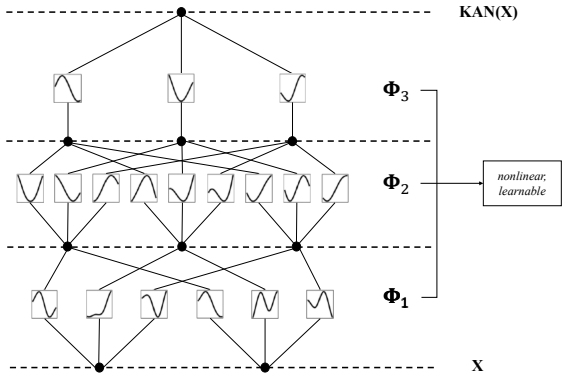
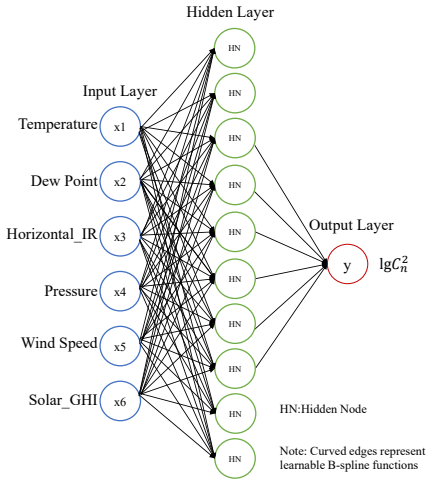
F. Grosshans, G. Van Assche, J. Wenger, R. Brouri, N. J. Cerf, and P. Grangier, Quantum key dis- tribution using gaussian-modulated coherent states, Nature421, 238 (2003), arXiv:quant-ph/0312016
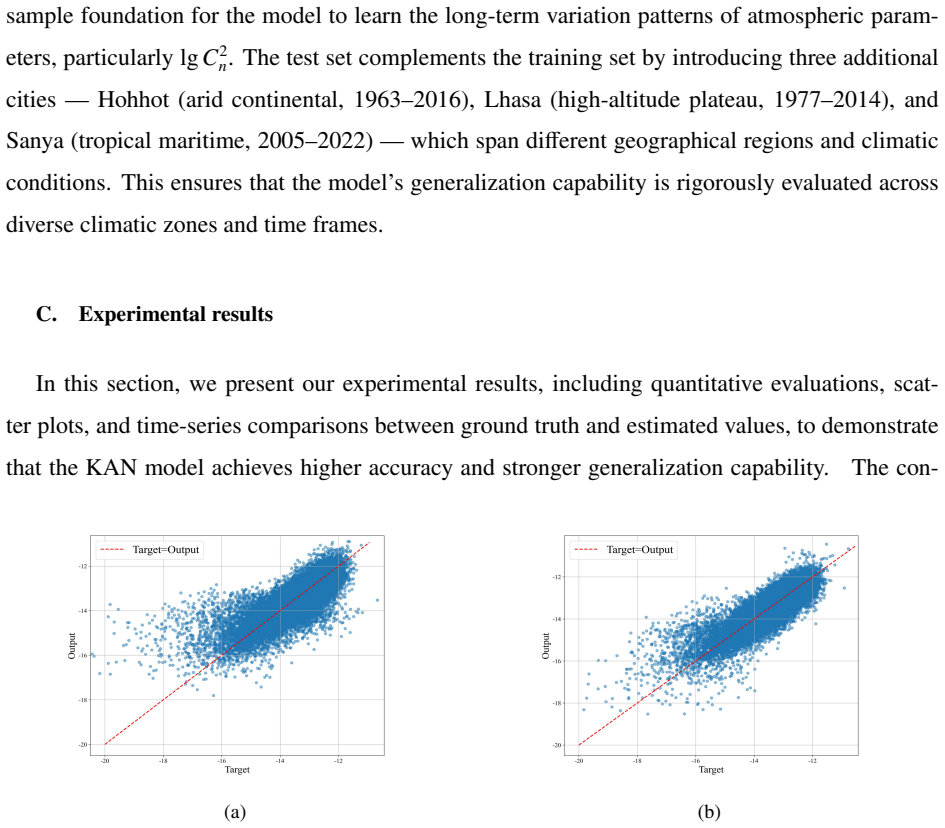
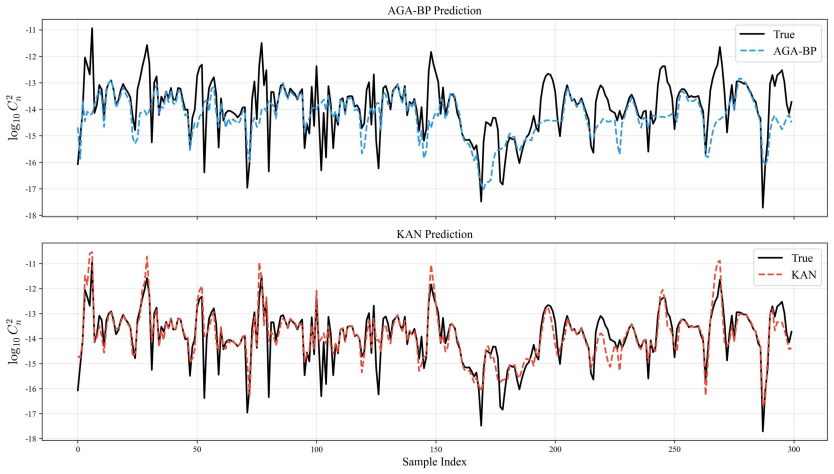
work page internal anchor Pith review Pith/arXiv arXiv 2003
-
[9]
C. H. Bennett, G. Brassard, C. Crepeau, R. Jozsa, A. Peres, and W. K. Wootters, Teleporting an unknown quantum state via dual classical and Einstein-Podolsky-Rosen channels, Phys. Rev. Lett.70, 1895 (1993). 13
1993
-
[10]
Advances in Quantum Teleportation
S. Pirandola, J. Eisert, C. Weedbrook, A. Furusawa, and S. L. Braunstein, Advances in quantum teleportation, Nature Photon.9, 641 (2015), arXiv:1505.07831 [quant-ph]
work page internal anchor Pith review Pith/arXiv arXiv 2015
-
[11]
R. Assouly, R. Dassonneville, T. Peronnin, A. Bienfait, and B. Huard, Quantum advantage in mi- crowave quantum radar, Nature Phys.19, 1418 (2023), arXiv:2211.05684 [quant-ph]
-
[12]
Zhuang, Quantum advantage on the radar, Nature Phys.19, 1384 (2023)
Q. Zhuang, Quantum advantage on the radar, Nature Phys.19, 1384 (2023)
2023
-
[13]
Free-Space distribution of entanglement and single photons over 144 km
R. Ursinet al., Entanglement-based quantum communication over 144 km, Nature Phys.3, 481 (2007), arXiv:quant-ph/0607182
work page internal anchor Pith review Pith/arXiv arXiv 2007
-
[14]
Feasibility of 300 km Quantum Key Distribution with Entangled States
T. Scheidlet al., Feasibility of 300 km quantum key distribution with entangled states, New J. Phys. 11, 085002 (2009), arXiv:1007.4645 [quant-ph]
work page internal anchor Pith review Pith/arXiv arXiv 2009
-
[15]
High-fidelity transmission of entanglement over a high-loss freespace channel
A. Fedrizzi, R. Ursin, T. Herbst, M. Nespoli, R. Prevedel, T. Scheidl, F. Tiefenbacher, T. Jennewein, and A. Zeilinger, High-fidelity transmission of entanglement over a high-loss free-space channel, Na- ture Phys.5, 389 (2009), arXiv:0902.2015 [quant-ph]
work page internal anchor Pith review Pith/arXiv arXiv 2009
-
[16]
Impact of turbulence in long range quantum and classical communications
I. Capraro, A. Tomaello, A. Dall’Arche, F. Gerlin, R. Ursin, G. Vallone, and P. Villoresi, Impact of turbulence in long range quantum and classical communications, Phys. Rev. Lett.109, 200502 (2012), arXiv:1207.6931 [quant-ph]
work page internal anchor Pith review Pith/arXiv arXiv 2012
-
[17]
Quantum teleportation and entanglement distribution over 100-kilometre free-space channels
J. Yinet al., Quantum teleportation and entanglement distribution over 100-kilometre free-space chan- nels, Nature488, 185 (2012), arXiv:1205.2024 [quant-ph]
work page internal anchor Pith review Pith/arXiv arXiv 2012
-
[18]
Quantum teleportation using active feed-forward between two Canary Islands
X.-S. Maet al., Quantum teleportation over 143 kilometres using active feed-forward, Nature489, 269 (2012), arXiv:1205.3909 [quant-ph]
work page internal anchor Pith review Pith/arXiv arXiv 2012
-
[19]
Distribution of squeezed states through an atmospheric channel
C. Peuntinger, B. Heim, C. R. M ¨uller, C. Gabriel, C. Marquardt, and G. Leuchs, Distribu- tion of Squeezed States through an Atmospheric Channel, Phys. Rev. Lett.113, 060502 (2014), arXiv:1402.6290 [quant-ph]
work page internal anchor Pith review Pith/arXiv arXiv 2014
-
[20]
A. A. Semenov and W. V ogel, Quantum light in the turbulent atmosphere, Phys. Rev. A80, 021802 (2009), arXiv:0902.4187 [quant-ph]
work page internal anchor Pith review Pith/arXiv arXiv 2009
-
[21]
D. Y . Vasylyev, A. A. Semenov, and W. V ogel, Toward Global Quantum Communication: Beam Wandering Preserves Nonclassicality, Phys. Rev. Lett.108, 220501 (2012), arXiv:1110.1440 [quant- ph]
work page internal anchor Pith review Pith/arXiv arXiv 2012
-
[22]
Free-space quantum links under diverse weather conditions
D. Vasylyev, A. A. Semenov, W. V ogel, K. G ¨unthner, A. Thurn, ¨O. Bayraktar, and C. Marquardt, Free-space quantum links under diverse weather conditions, Phys. Rev. A96, 043856 (2017), arXiv:1707.04932 [quant-ph]
work page internal anchor Pith review Pith/arXiv arXiv 2017
-
[23]
Atmospheric Quantum Channels with Weak and Strong Turbulence
D. Vasylyev, A. Semenov, and W. V ogel, Atmospheric Quantum Channels with Weak and Strong 14 Turbulence, Phys. Rev. Lett.117, 090501 (2016), arXiv:1604.01373 [quant-ph]
work page internal anchor Pith review Pith/arXiv arXiv 2016
-
[24]
Theory of atmospheric quantum channels based on the law of total probability
D. Vasylyev, W. V ogel, and A. A. Semenov, Theory of atmospheric quantum channels based on the law of total probability, Phys. Rev. A97, 063852 (2018), arXiv:1804.00172 [quant-ph]
work page internal anchor Pith review Pith/arXiv arXiv 2018
-
[25]
V . C. Usenko, B. Heim, C. Peuntinger, C. Wittmann, C. Marquardt, G. Leuchs, and R. Filip, Entangle- ment of Gaussian states and the applicability to quantum key distribution over fading channels, New J. Phys.14, 093048 (2012), arXiv:1208.4307 [quant-ph]
work page internal anchor Pith review Pith/arXiv arXiv 2012
-
[26]
A. A. Semenov, F. T ¨oppel, D. Y . Vasylyev, H. V . Gomonay, and W. V ogel, Homodyne detection for atmosphere channels, Phys. Rev. A85, 013826 (2012), arXiv:1111.0734 [quant-ph]
work page internal anchor Pith review Pith/arXiv arXiv 2012
-
[27]
Quantum illumination for enhanced detection of Rayleigh-fading targets
Q. Zhuang, Z. Zhang, and J. H. Shapiro, Quantum illumination for enhanced detection of Rayleigh- fading targets, Phys. Rev. A96, 020302 (2017), arXiv:1706.05561 [quant-ph]
work page internal anchor Pith review Pith/arXiv arXiv 2017
-
[28]
X. Chen and Q. Zhuang, Entanglement-assisted detection of fading targets via correlation-to- displacement conversion, Phys. Rev. A107, 062405 (2023), arXiv:2212.08190 [quant-ph]
-
[29]
Gaussian Entanglement Distribution via Satellite
N. Hosseinidehaj and R. Malaney, Gaussian Entanglement Distribution via Satellite, Phys. Rev. A91, 022304 (2015), arXiv:1410.1319 [quant-ph]
work page internal anchor Pith review Pith/arXiv arXiv 2015
-
[30]
Optimum mixed-state discrimination for noisy entanglement-enhanced sensing
Q. Zhuang, Z. Zhang, and J. H. Shapiro, Optimum Mixed-State Discrimination for Noisy Entanglement-Enhanced Sensing, Phys. Rev. Lett.118, 040801 (2017), arXiv:1609.01968 [quant-ph]
work page internal anchor Pith review Pith/arXiv arXiv 2017
-
[31]
Cheinet, A
S. Cheinet, A. Beljaars, K. Weiss-Wrana, and Y . Hurtaud, The use of weather forecasts to characterise near-surface optical turbulence, Boundary-Layer Meteor.138, 453 (2011)
2011
-
[32]
C. Qing, X. Wu, H. Huang, Q. Tian, W. Zhu, R. Rao, and X. Li, Estimating the surface layer refrac- tive index structure constant over snow and sea ice using Monin-Obukhov similarity theory with a mesoscale atmospheric model, Opt. Express24, 20424 (2016)
2016
-
[33]
C. Qing, X. Wu, X. Li, W. Zhu, C. Qiao, R. Rao, and H. Mei, Use of weather research and forecasting model outputs to obtain near-surface refractive index structure constant over the ocean, Opt. Express 24, 13303 (2016)
2016
-
[34]
Quatresooz, R
F. Quatresooz, R. Griffiths, L. Bardou, R. Wilson, J. Osborn, D. Vanhoenacker-Janvier, and C. Oestges, Continuous daytime and nighttime forecast of atmospheric optical turbulence from numerical weather prediction models, Opt. Express31, 33850 (2023)
2023
-
[35]
Hegde, N
R. Hegde, N. Anand, S. Satheesh, and K. Krishna Moorthy, Modeling the atmospheric refractive index structure parameter using macrometeorological observations, Appl.Opt.63, E10 (2024)
2024
-
[36]
Wang and S
Y . Wang and S. Basu, Using an artificial neural network approach to estimate surface-layer optical 15 turbulence at Mauna Loa, Hawaii, Opt. Lett.41, 2334 (2016)
2016
-
[37]
C. Su, X. Wu, T. Luo, S. Wu, and C. Qing, Adaptive niche-genetic algorithm based on backpropagation neural network for atmospheric turbulence forecasting, Appl. Opt.59, 3699 (2020)
2020
-
[38]
Butterley, J
T. Butterley, J. Osborn, M. Sarazin, and R. Wilson, Nowcasting of the surface layer of turbulence at Paranal Observatory, Proc. AO4ELT5 (2017)
2017
-
[39]
J. J. Rudiger, K. Book, J. S. deGrassie, S. Hammel, and B. Baker, A machine learning approach for forecasting the refractive index structure parameter, Proc. SPIE10770, 187 (2018)
2018
-
[40]
Lionis, G
A. Lionis, G. Chaskakis, K. Cohn, J. Blau, K. Peppas, H. E. Nistazakis, and A. Tsigopoulos, Optical turbulence measurements and modeling over Monterey Bay, Opt. Commun.520, 128508 (2022)
2022
-
[41]
Lionis, K
A. Lionis, K. Peppas, H. E. Nistazakis, A. Tsigopoulos, K. Cohn, and K. R. Drexler, Supervised machine learning for refractive index structure parameter modeling, Quantum Beam Sci.7, 18 (2023)
2023
-
[42]
B. N. Campbell, K. McBryde, E. Walter, and K. Drexler, Machine learning for optical turbulence prediction in geographically similar regions, Proc. SPIE12691, 215 (2023)
2023
-
[43]
Jellen, J
C. Jellen, J. Burkhardt, C. Brownell, and C. Nelson, Machine learning informed predictor importance measures of environmental parameters in maritime optical turbulence, Appl. Opt.59, 6379 (2020)
2020
-
[44]
Jellen, M
C. Jellen, M. Oakley, C. Nelson, J. Burkhardt, and C. Brownell, Machine-learning informed macro- meteorological models for the near-maritime environment, Appl. Opt.60, 2938 (2021)
2021
-
[45]
Bolbasova, A
L. Bolbasova, A. Andrakhanov, and A. Y . Shikhovtsev, The application of machine learning to predic- tions of optical turbulence in the surface layer at Baikal Astrophysical Observatory, Monthly Notices Roy. Astronomical Soc.504, 6008 (2021)
2021
-
[46]
Jellen, C
C. Jellen, C. Nelson, J. Burkhardt, and C. Brownell, Hybrid optical turbulence models using machine- learning and local measurements, Appl. Opt.62, 4880 (2023)
2023
-
[47]
C. Su, X. Wu, S. Wu, Q. Yang, Y . Han, C. Qing, T. Luo, and Y . Liu, In situ measurements and neural network analysis of the profiles of optical turbulence over the Tibetan Plateau, Monthly Notices Roy. Astronomical Soc.506, 3430 (2021)
2021
-
[48]
C. Bi, C. Qing, P. Wu, X. Jin, Q. Liu, X. Qian, W. Zhu, and N. Weng, Optical turbulence profile in marine environment with artificial neural network model, Remote Sens.14, 2267 (2022)
2022
-
[49]
M. Xu, S. Shao, Q. Liu, G. Sun, Y . Han, and N. Weng, Optical turbulence profile forecasting and verification in the offshore atmospheric boundary layer, Appl. Sci.11, 8523 (2021)
2021
-
[50]
Pierzyna, R
M. Pierzyna, R. Saathof, and S. Basu,Π-ML: a dimensional analysis-based machine learning param- eterization of optical turbulence in the atmospheric surface layer, Opt. Lett.48, 4484 (2023). 16
2023
-
[51]
R. B. Stull,An introduction to boundary layer meteorology(Springer Science & Business Media, 2012)
2012
-
[52]
Z. Liu, Y . Wang, S. Vaidya, F. Ruehle, J. Halverson, M. Soljai, T. Y . Hou, and M. Tegmark, Kan: Kolmogorov-arnold networks (2024)
2024
-
[53]
R. Hill, S. F. Clifford, and R. S. Lawrence, Refractive-index and absorption fluctuations in the infrared caused by temperature, humidity, and pressure fluctuations, J. Opt. Soc. Am.70, 1192 (1980)
1980
-
[54]
Roddier, V the effects of atmospheric turbulence in optical astronomy, inProgress in optics, V ol
F. Roddier, V the effects of atmospheric turbulence in optical astronomy, inProgress in optics, V ol. 19 (Elsevier, 1981) pp. 281–376
1981
-
[55]
L. C. Andrews and R. L. Phillips, Laser beam propagation through random media, Laser Beam Prop- agation Through Random Media: Second Edition 10.1117/3.626196 (2005)
-
[56]
Department of Energy, EnergyPlus Weather Data, https://energyplus.net/weather
U.S. Department of Energy, EnergyPlus Weather Data, https://energyplus.net/weather
-
[57]
M. I. Skolniket al.,Introduction to radar systems, V ol. 3 (McGraw-hill New York, 1980)
1980
-
[58]
R. G. Allen, L. S. Pereira, D. Raes, M. Smith,et al., Crop evapotranspiration-Guidelines for computing crop water requirements-FAO Irrigation and drainage paper 56, Fao, rome300, D05109 (1998)
1998
-
[59]
Brutsaert,Evaporation into the atmosphere: theory, history and applications(Springer Science & Business Media, 2013)
W. Brutsaert,Evaporation into the atmosphere: theory, history and applications(Springer Science & Business Media, 2013)
2013
-
[60]
Brutsaert and H
W. Brutsaert and H. Stricker, An advection-aridity approach to estimate actual regional evapotranspi- ration, Water resources research15, 443 (1979)
1979
-
[61]
C. H. B. Priestley and R. J. Taylor, On the assessment of surface heat flux and evaporation using large-scale parameters, Monthly weather review100, 81 (1972)
1972
-
[62]
H. L. Penman, Natural evaporation from open water, bare soil and grass, Proceedings of the royal society of London. Series A. Mathematical and physical sciences193, 120 (1948)
1948
-
[63]
J. A. Businger, J. C. Wyngaard, Y . Izumi, and E. F. Bradley, Flux-profile relationships in the atmo- spheric surface layer, Journal of Atmospheric Sciences28, 181 (1971)
1971
-
[64]
R. H. Clarke, The wangara experiment: Boundary layer data., Div. Meteor. Phys. Tech. Pap. , 13 (1971)
1971
-
[65]
E. K. Webb, Profile relationships: The log-linear range, and extension to strong stability, Quarterly Journal of the Royal Meteorological Society96, 67 (1970)
1970
-
[66]
E. L. Andreas, EstimatingC 2 n over snow and sea ice from meteorological data, J. Opt. Soc. Amer. A 5, 481 (1988). 17
1988
-
[67]
C. A. Paulson, The mathematical representation of wind speed and temperature profiles in the unstable atmospheric surface layer, Journal of Applied Meteorology (1962-1982) , 857 (1970)
1962
-
[68]
V . I. Tatarskii, The effects of the turbulent atmosphere on wave propagation, Jerusalem: Israel Program for Scientific Translations, 1971 (1971)
1971
-
[69]
Mahrt, Stratified atmospheric boundary layers, Boundary-Layer Meteorology90, 375 (1999)
L. Mahrt, Stratified atmospheric boundary layers, Boundary-Layer Meteorology90, 375 (1999)
1999
-
[70]
A. A. Grachev, C. W. Fairall, P. O. G. Persson, E. L. Andreas, and P. S. Guest, Stable boundary-layer scaling regimes: The sheba data, Boundary-layer meteorology116, 201 (2005)
2005
-
[71]
Van de Wiel, A
B. Van de Wiel, A. Moene, and H. Jonker, The cessation of continuous turbulence as precursor of the very stable nocturnal boundary layer, Journal of the Atmospheric Sciences69, 3097 (2012)
2012
-
[72]
J. Sun, L. Mahrt, R. M. Banta, and Y . L. Pichugina, Turbulence regimes and turbulence intermittency in the stable boundary layer during cases-99, Journal of the Atmospheric Sciences69, 338 (2012) . VI. APPENDIX A. From meteorological parameters toC 2 n In this section, we detail the analytical derivation of the optical turbulence profileC 2 n based on th...
2012
-
[73]
Derivation of thermodynamic state variables The initiation of the mathematical framework requires the translation of the observed, bulk meteorological parameters into the fundamental thermodynamic state variables that govern energy exchange, buoyancy, and density within the atmospheric surface layer. The observed atmospheric pressurePis routinely recorded...
-
[74]
The second step of the derivation defines this surface en- ergy budget, utilizing the provided GHI and downward longwave radiationL↓
Surface energy balance closure The generation of atmospheric turbulence in the boundary layer is driven by the partitioning of available energy at the Earth’s surface. The second step of the derivation defines this surface en- ergy budget, utilizing the provided GHI and downward longwave radiationL↓. The Earth’s surface continuously emits longwave radiati...
-
[75]
In humid, well-watered environ- ments, latent heat consumes the vast majority of available energy
The Advection-Aridity evapotranspiration model To determine the sensible heat flux, which directly scales the temperature fluctuations causing optical turbulence, one must first solve for the latent heat flux. In humid, well-watered environ- ments, latent heat consumes the vast majority of available energy. In arid environments, sensible heat dominates. T...
-
[76]
MOST iterative resolution Having derived the bulk sensible heat fluxHand mass fluxE, we now transition from macro- scale thermodynamics to the micro-scale dynamics of the atmospheric boundary layer. This tran- sition is mediated by MOST [51], which posits that within the surface layer, dimensionless turbu- lence statistics—such as velocity and temperature...
1968
-
[77]
Optical turbulence mapping and refractive index derivation Finally, we project the resolved dynamic and thermodynamic structure of the boundary layer onto the atmosphere’s optical properties. Within the inertial subrange of the turbulence spec- trum, the scale at which energy cascades from larger anisotropic eddies to smaller isotropic eddies without visc...
-
[78]
The overall architecture of KAN is illustrated in Fig
Network architecture In this section, we provide the detailed architecture of the KAN model and parameters of our network. The overall architecture of KAN is illustrated in Fig. 5, Its design philosophy differs fun- damentally from that of MLP: MLP performs information transformation through linear weight matrices between layers and applies fixed nonlinea...
-
[79]
1+2.96σ2 RΩ 5 6 2 Ω2 r 1+2.96σ2 RΩ 5 6 2 +1.2σ2 RΩ 5 6 # ln
Details of experiment In this section, we present the formulas for the quantitative experimental evaluation metrics and a comprehensive description of the experimental data, including the specific sites and detailed time information. The correlation coefficient (Rxy), mean squared error (MS E), mean absolute error (MAE), and bias are four core metrics for...
2018
discussion (0)
Sign in with ORCID, Apple, or X to comment. Anyone can read and Pith papers without signing in.