Development and Characterization of Low-Scattering Vanadium Nanoparticle Targets for Short-Range Interaction Searches
Pith reviewed 2026-06-26 02:56 UTC · model grok-4.3
The pith
Vanadium nanoparticle targets achieve coherent scattering lengths comparable to natural vanadium, enabling low-background neutron searches for short-range interactions.
A machine-rendered reading of the paper's core claim, the machinery that carries it, and where it could break.
Core claim
Vanadium and V-Ni nanoparticles fabricated by the RF thermal plasma method provide reproducible targets with quantified oxygen content and an evaluated minimum average coherent scattering length of 0.719(23) fm, comparable to natural vanadium, thereby demonstrating that such targets can be systematically designed and fabricated to suppress nuclear scattering backgrounds for coherent neutron scattering measurements.
What carries the argument
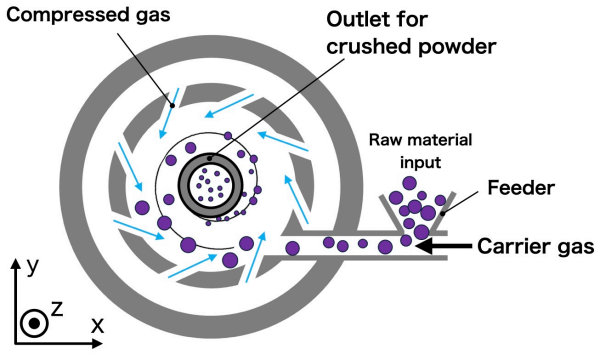
RF thermal plasma fabrication method with quantitative characterization via SEM-EDS, ICP-AES, NDIR and SAXS to control composition, radius dispersion, metallic contamination and oxygen incorporation for minimizing effective coherent scattering length.
If this is right
- Controlled fabrication suppresses nuclear scattering to make coherent neutron measurements experimentally viable in the submicron regime.
- RF thermal plasma method yields targets with low metallic contamination and reproducible radius dispersion.
- Oxygen content can be quantified and its impact on scattering length evaluated to optimize target performance.
- Systematic design of nanoparticle composition and nanostructure becomes possible for background reduction.
Where Pith is reading between the lines
- Similar fabrication and characterization approaches could be tested on other low-scattering materials to expand the range of usable targets.
- The targets might enable higher-precision limits on short-range interactions if scaled to larger sample masses.
- Surface effects in dispersed nanoparticles could be probed separately to refine scattering length calculations.
Load-bearing premise
The quantified oxygen incorporation and measured particle properties fully determine the effective coherent scattering length in actual neutron experiments without extra effects from dispersion, surface oxidation or clustering.
What would settle it
Conduct a neutron scattering measurement on the fabricated targets and check whether the observed coherent scattering length matches the calculated 0.719 fm value or shows significant deviation from uncharacterized sample effects.
Figures
read the original abstract
We developed high-purity vanadium-based nanoparticle targets for neutron scattering experiments aimed at exploring gravity-like short-range new interactions in the submicron regime. Vanadium and V-Ni nanoparticles were fabricated using top-down and bottom-up methods and quantitatively characterized by SEM-EDS, ICP-AES, NDIR and SAXS. Through the performance tests, an RF thermal plasma method was found to be the best from viewpoints of the reproducibility, dispersion of the radius, and contamination of metallic elements. The oxygen incorporation during fabrication was quantified, and its impact on the effective coherent scattering length was evaluated, leading to a minimum average coherent scattering length of $\mathrm{0.719(23)\,fm}$, comparable to that of natural vanadium. These results demonstrate that vanadium-based nanoparticle targets with controlled composition and nanostructure can be systematically designed and fabricated to suppress nuclear scattering backgrounds, thereby enabling experimentally viable coherent neutron scattering measurements for short-range interaction searches.
Editorial analysis
A structured set of objections, weighed in public.
Referee Report
Summary. The manuscript reports the development of vanadium-based nanoparticle targets for neutron scattering experiments searching for short-range new interactions. Various fabrication methods were tested, with RF thermal plasma identified as optimal for reproducibility, dispersion, and low contamination. Characterization using SEM-EDS, ICP-AES, NDIR, and SAXS quantified oxygen incorporation, leading to a calculated minimum coherent scattering length of 0.719(23) fm after correction, comparable to natural vanadium. The work concludes that such targets can be designed to suppress nuclear scattering backgrounds.
Significance. If the composition-based calculation of the coherent scattering length is representative of the actual neutron scattering performance, this work provides a valuable approach for reducing backgrounds in precision neutron experiments. The systematic comparison of fabrication methods and quantitative assessment of oxygen effects strengthens the case for controlled target production in this field. The reported value being comparable to natural vanadium is a positive indicator.
major comments (1)
- [Abstract] The evaluation of the effective coherent scattering length is based solely on composition measurements and a correction for oxygen. The manuscript does not report any direct neutron scattering or transmission experiments on the fabricated nanoparticle targets to verify that nanoparticle-specific effects (e.g., surface-to-volume ratio, clustering, or incomplete dispersion) do not modify the effective b_coh beyond the bulk average used in the calculation. This is central to the claim that the targets suppress nuclear backgrounds in actual experiments.
minor comments (1)
- Clarify the exact method used to calculate the coherent scattering length from the composition data, including any assumptions about the form of the nanoparticles.
Simulated Author's Rebuttal
We thank the referee for the careful review and constructive feedback. We address the single major comment below.
read point-by-point responses
-
Referee: [Abstract] The evaluation of the effective coherent scattering length is based solely on composition measurements and a correction for oxygen. The manuscript does not report any direct neutron scattering or transmission experiments on the fabricated nanoparticle targets to verify that nanoparticle-specific effects (e.g., surface-to-volume ratio, clustering, or incomplete dispersion) do not modify the effective b_coh beyond the bulk average used in the calculation. This is central to the claim that the targets suppress nuclear backgrounds in actual experiments.
Authors: The manuscript scope is the systematic comparison of fabrication routes, quantitative multi-technique characterization (SEM-EDS, ICP-AES, NDIR, SAXS), and the resulting composition-based calculation of the minimum average coherent scattering length. The value 0.719(23) fm is obtained by applying tabulated nuclear scattering lengths to the measured elemental fractions after oxygen correction; this is the standard predictive approach used in target development prior to beam-time allocation. Coherent scattering length is an atomic/nuclear property and is not altered by surface-to-volume ratio or mesoscopic clustering at the length scales characterized here. We have added explicit language in the revised text stating that the reported figure is a composition-derived estimate and noting that direct neutron transmission measurements on the assembled targets are planned for a follow-on study. The revision is therefore partial. revision: partial
Circularity Check
No circularity; coherent scattering length is a direct composition-based calculation from independent measurements
full rationale
The paper reports fabrication of V and V-Ni nanoparticles via RF thermal plasma and other methods, followed by characterization with SEM-EDS, ICP-AES, NDIR (for oxygen), and SAXS. The reported minimum average coherent scattering length of 0.719(23) fm is obtained by evaluating the impact of quantified oxygen incorporation on the effective b_coh using standard nuclear data for elemental scattering lengths. This is a straightforward weighted average from measured composition fractions, not a fitted model whose output is then renamed as a prediction, nor any self-definitional loop. No load-bearing self-citations, uniqueness theorems, or ansatzes are invoked. The central claim rests on experimental reproducibility and dispersion control, which are independent of the b_coh calculation step.
Axiom & Free-Parameter Ledger
Reference graph
Works this paper leans on
-
[1]
Arkani-Hamed, S
N. Arkani-Hamed, S. Dimopoulos, and G. Dvali. The hierarchy problem and new dimensions at a millimeter.Phys. Lett. B, 429:263–272, 1998
1998
-
[2]
Bogorad, P
Z. Bogorad, P. W. Graham, and G. Gratta. Detecting nanometer-scale new forces with coherent neutron scattering.Phys. Rev. D, 108:055005, 2023
2023
-
[3]
Frank, P
A. Frank, P. Van Isacker, and J. G´ omez-Camacho. Probing additional dimensions in the universe with neutron experiments.Phys. Lett. B, 582:15–20, 2004
2004
-
[4]
Y. Fujii. Dilaton and possible non-newtonian gravity.Nature, 234:5–7, 1971
1971
-
[5]
Fujiie, M
T. Fujiie, M. Hino, T. Hosobata, G. Ichikawa, M. Kitaguchi, K. Mishima, Y. Seki, H. M. Shimizu, and Y. Yamagata. Development of neutron interferometer using multilayer mirrors and measurements of neutron-nuclear scattering length with pulsed neutron source.Phys. Rev. Lett., 132:023402, 2024. 23
2024
-
[6]
C. C. Haddock, N. Oi, K. Hirota, T. Ino, M. Kitaguchi, S. Matsumoto, K. Mishima, T. Shima, H. M. Shimizu, W. M. Snow, and T. Yoshioka. Search for deviations from the inverse square law of gravity at nm range using a pulsed neutron beam.Phys. Rev. D, 97:062002, 2018
2018
-
[7]
M. He, C. Wang, H. Yang, D.-Y. Wu, J.-J. Lee, F. Wang, M. Avdeev, and W. H. Kan. A family of v-based null matrix alloys with atomic and mesoscopic homogeneity.ACS Appl. Eng. Mater., 2:2468–2477, 2024
2024
-
[8]
Heacock, T
B. Heacock, T. Fujiie, R. W. Haun, A. Henins, K. Hirota, T. Hosobata, M. G. Huber, M. Kitaguchi, D. A. Pushin, H. Shimizu, M. Takeda, R. Valdillez, Y. Yamagata, and A. R. Young. Pendell¨ osung interferometry probes the neutron charge radius, lattice dynamics, and fifth forces.Science, 373:123–127, 2021
2021
-
[9]
Hiromoto, T
M. Hiromoto, T. Hori, R. Kondo, S. Hara, T. Shima, R. Nakabe, N. Oi, H. M. Shimizu, K. Hirota, M. Kitaguchi, C. C. Haddock, W. M. Snow, T. Yoshioka, K. Mishima, and T. Ino. Proof-of-principle experiment for the study of a new intermediate-range interaction using coherent neutron scattering. InJPS Conf. Proc., volume 33, page 011118, 2021
2021
-
[10]
Kamiya, K
Y. Kamiya, K. Itagaki, M. Tani, G. N. Kim, and S. Komamiya. Constraints on new gravitylike forces in the nanometer range.Phys. Rev. Lett., 114:161101, 2015
2015
-
[11]
Kopecky, J
S. Kopecky, J. A. Harvey, N. W. Hill, M. Krenn, M. Pernicka, P. Riehs, and S. Steiner. Neutron charge radius determined from the energy dependence of the neutron transmission of liquid 208pb and 209bi.Phys. Rev. C, 56:2229–2237, 1997
1997
-
[12]
Okuchi, A
T. Okuchi, A. Hoshikawa, and T. Ishigaki. Forge-hardened tizr null-matrix alloy for neutron scattering under extreme conditions.Metals, 5:2340–2350, 2015
2015
-
[13]
Schwinger
J. Schwinger. On the polarization of fast neutrons.Phys. Rev., 73:407–409, 1948
1948
-
[14]
V. F. Sears. Electromagnetic neutron-atom interactions.Phys. Rep., 141:281–317, 1986
1986
-
[15]
V. F. Sears. Neutron scattering lengths and cross sections.Neutron News, 3:26–37, 1992
1992
-
[16]
J. H. Smith, E. R. Vance, and D. A. Wheeler. A null-matrix alloy for neutron diffraction.J. Phys. E, 1:945, 1968
1968
-
[17]
Sponar, R
S. Sponar, R. I. P. Sedmik, M. Pitschmann, H. Abele, and Y. Hasegawa. Tests of fundamental quantum mechanics and dark interactions with low-energy neutrons.Nat. Rev. Phys., 3:309– 327, 2021. 24
2021
-
[18]
Sugimoto
N. Sugimoto. Aichi-sr wide-angle and small-scale x-ray scattering experiment beamline bl8s3. InResearch Group on Evaluation Technology Development Using Small-Angle X-ray Scatter- ing, 2017. in Japanese
2017
-
[19]
R. L. Workman and Others. Review of particle physics.Prog. Theor. Exp. Phys., 2022:083C01, 2022
2022
-
[20]
Yasui and M
M. Yasui and M. Shimizu. Calculations of orbital paramagnetic susceptibility for vanadium, chromium and iron.J. Phys. Soc. Jpn., 31:378–381, 1971. 25
1971
discussion (0)
Sign in with ORCID, Apple, or X to comment. Anyone can read and Pith papers without signing in.