Deep Learning for Semen Analysis in Male Infertility: Computer Vision, Multimodal Fusion, and Clinical Translation
Reviewed by Pith2026-07-07 18:01 UTCglm-5.2pith:3ROBRH52open to challenge →
The pith
Reframing sperm analysis as multimodal reproductive intelligence
A machine-rendered reading of the paper's core claim, the machinery that carries it, and where it could break.
Core claim
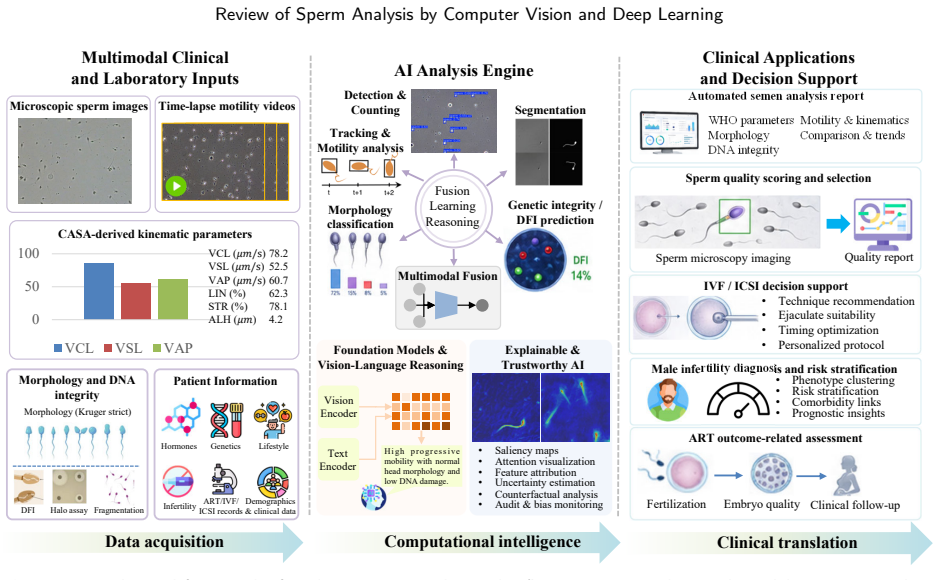
The paper's organizing claim is that sperm quality assessment is inherently multimodal, and that the field's prevailing task-by-task approach, while individually mature for detection, tracking, segmentation, and classification, cannot by itself produce clinically actionable reproductive decisions. The authors formalize this by casting sperm assessment as an explicit information-fusion problem over M heterogeneous modalities, where a fusion operator combines modality-specific encodings into a shared representation, and task-specific heads predict endpoints ranging from image-level labels to patient-level ART outcomes. They distinguish three evidence tiers (directly validated on sperm data,转移自
What carries the argument
Multimodal fusion framework: modality-specific encoders map each input (images, videos, CASA kinematics, DFI assays, clinical metadata) into latent representations; a fusion operator (early/data-level, intermediate/feature-level, or late/decision-level) combines them; task heads predict clinical endpoints. Missing-modality robustness and uncertainty-aware weighting are identified as essential clinical properties.
If this is right
- If the multimodal fusion framing is correct, the next generation of clinically useful sperm-analysis systems will be judged not by image-level metrics (mAP, Dice, MOTA) but by their ability to improve downstream ART outcomes such as fertilization rate, embryo quality, and live-birth rate.
- The staged translation roadmap implies that regulatory pathways (EU IVDR, EU AI Act, FDA PCCP) will require sperm-analysis AI to demonstrate cross-center generalization, uncertainty calibration, and post-market drift monitoring before clinical adoption, not just benchmark accuracy.
- The five-level domain ontology (cellular, sample, population, temporal, technical) implies that current single-center benchmarks systematically overestimate real-world performance and that future datasets must document demographic composition to support population-level generalization claims.
- Foundation models and vision-language architectures, if adapted to sperm microscopy, could reduce annotation burden and enable report-oriented clinical reasoning, but require domain-specific fine-tuning and validation before deployment.
Where Pith is reading between the lines
- If the five-level domain ontology is taken seriously, then the absence of demographic metadata in every existing public sperm dataset means that no current benchmark can support a population-level generalization claim, and any reported accuracy is conditional on an undisclosed population.
- The tension between continual learning (which the authors advocate for handling temporal drift) and regulatory lock-down (which the FDA PCCP framework requires) suggests that clinically deployable sperm-analysis AI may need a hybrid governance model: locked inference with bounded, audited adaptation, rather than fully autonomous continual learning.
- The formalization of missing-modality robustness as a core property of the fusion operator implies that late-fusion or gated-fusion architectures, which can gracefully degrade when modalities are absent, may be more clinically practical than fully end-to-end multimodal networks in the near term, even if the latter achieve higher ceiling performance on complete data.
- The paper's distinction between image-level metrics and patient-level endpoints implies that the field currently lacks the longitudinal datasets needed to validate any claim of clinical utility; creating such linked datasets (connecting sperm images to ART outcomes) is a prerequisite the authors identify but do not themselves fill.
Load-bearing premise
The review assumes that heterogeneous data streams (images, videos, CASA kinematics, DNA assays, clinical metadata) can be meaningfully aligned and fused for the same patient in routine clinical settings, even though the authors themselves acknowledge that no externally validated system integrating all these modalities yet exists.
What would settle it
If multimodal fusion of sperm-related data streams does not improve prediction of clinically meaningful endpoints (fertilization, embryo quality, live birth) beyond what single-modality models already achieve, then the central claim that sperm analysis should be reconceived as a multimodal problem would lose its practical motivation.
Figures



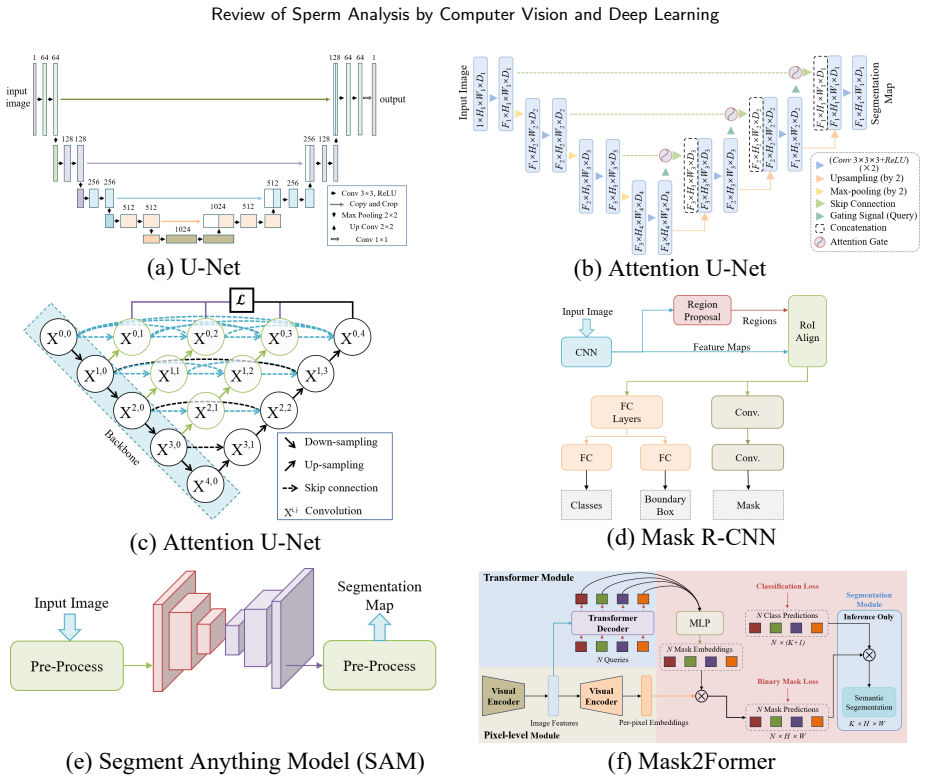
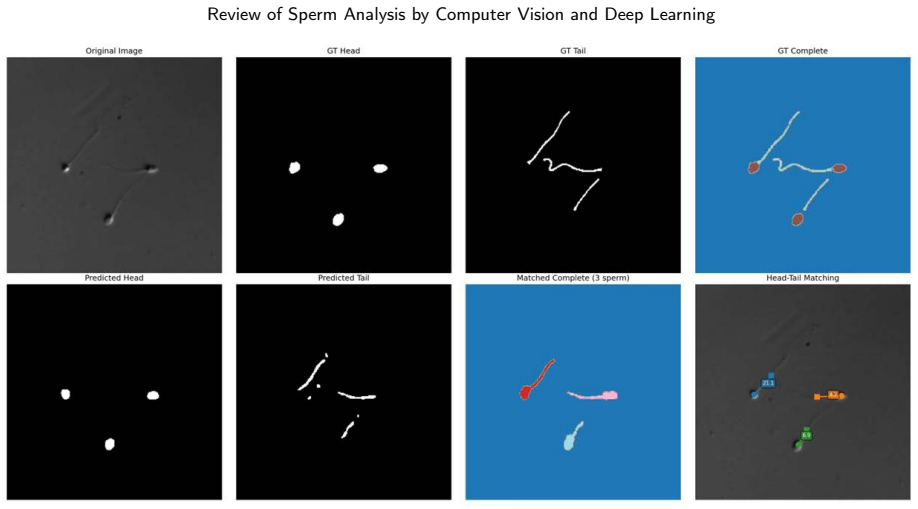
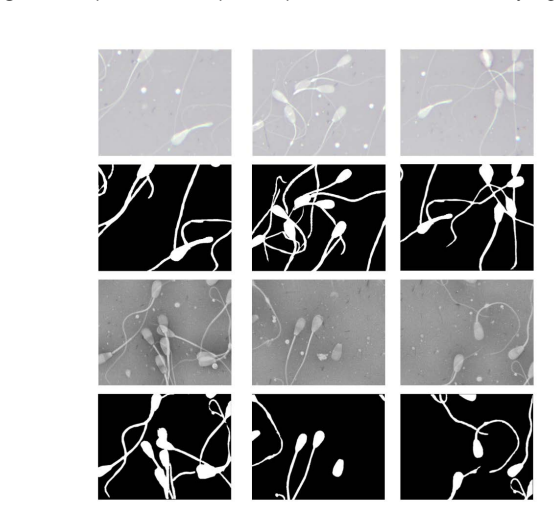


read the original abstract
Male infertility contributes substantially to the global infertility burden, and sperm analysis remains central to diagnosis, treatment planning, and assisted reproductive technology. Conventional semen evaluation, however, is labor-intensive, operator-dependent, and limited by inter- and intra-observer variability, motivating the development of objective and reproducible computational approaches. This review provides a comprehensive and perspective-oriented synthesis of artificial intelligence-driven sperm analysis, with a focus on computer vision, deep learning, multimodal fusion, robustness, and clinical translation. We first review task-specific methods for sperm detection and counting, tracking-based motility assessment, semantic and instance segmentation, morphology and defect classification, functional assessment, and genetic integrity evaluation. We then summarize public datasets, benchmarks, evaluation metrics, and emerging multimodal strategies that integrate microscopic images, time-lapse videos, CASA-derived parameters, DNA integrity assays, and clinical metadata. Beyond algorithmic performance, we discuss key barriers to real-world deployment, including data scarcity, cross-center domain shift, annotation inconsistency, interpretability, uncertainty calibration, privacy-preserving learning, and workflow integration. Finally, we outline a staged clinical translation roadmap spanning technical standardization, multicenter retrospective validation, silent prospective evaluation, human-in-the-loop clinical testing, ART outcome validation, regulatory approval, and post-market monitoring. By organizing the field from task-specific visual recognition to trustworthy multimodal reproductive intelligence, this review highlights both the progress and the unresolved challenges required to translate AI-driven sperm analysis into clinically meaningful decision support.
Editorial analysis
A structured set of objections, weighed in public.
Referee Report
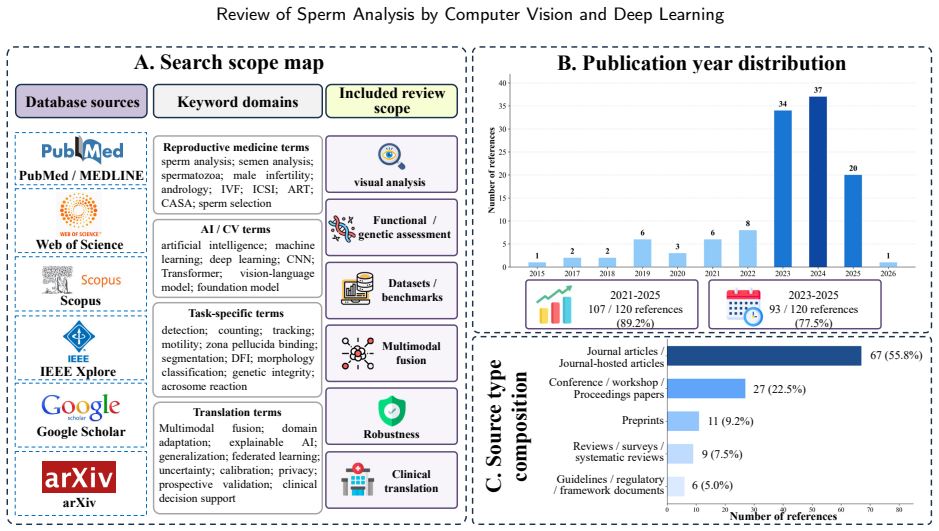
Summary. This manuscript presents a comprehensive narrative review of deep learning methods for semen/sperm analysis, covering detection, tracking, segmentation, morphology classification, functional and genetic integrity assessment, public datasets, evaluation metrics, multimodal fusion, robustness/domain adaptation, and a staged clinical translation roadmap. The central organizing claim is that AI-driven sperm analysis should be reconceptualized from isolated computer-vision tasks into an integrated multimodal reproductive-intelligence problem. The review is notably self-critical: it repeatedly cautions that reported accuracies are bounded by noisy expert labels (Fleiss' kappa = 0.36 on SCIAN, Section 5), that datasets are small and single-center (Section 7), and that tracking metrics like MOTA are detection-dominated (Section 8.4). The literature coverage is broad (120 references, 89.2% from 2021-2025) and the evidence-tiering throughout (Table 8, Section 9.1) is a genuine strength.
Significance. The review makes a useful contribution to the field by consolidating a fragmented literature into a single task-oriented framework with a curated dataset index (Table 5), model-evolution timeline (Figure 4), and formalized multimodal fusion perspective (Eqs. 14-16). The staged clinical translation roadmap (Figure 13) and the multi-scale domain ontology proposed in Section 12.1-12.2 are valuable perspective contributions. The consistent evidence-tiering — distinguishing 'Direct,' 'Transferable,' and 'Prospective' strategies (Table 8) — is a commendable practice that many reviews in this area lack. The review's transparency about label noise, dataset limitations, and metric misuse (Section 8.4 reporting pitfalls) adds genuine methodological value. The multimodal fusion formalization (Eqs. 14-16) is standard but appropriately applied. The clinical translation roadmap is falsifiable in its staged structure.
major comments (2)
- Section 9.1 and Table 8: The central organizing principle of the review — that AI-driven sperm analysis should be reconceptualized as an 'integrated multimodal reproductive-intelligence problem' — rests on a very thin direct-evidence base. The paper cites only one study [33] (Goh et al. 2024) as direct evidence for multimodal learning in sperm analysis, and that study combines only two modalities (images + video) for two endpoints (motility + concentration). Every other fusion strategy in Table 8 is labeled 'Transferable' or 'Prospective.' The paper is transparent about this gap (Section 9.1 explicitly states 'robust evidence for integrating microscopic imaging, time-lapse motility videos, CASA parameters, DNA integrity assays, clinical metadata, and ART outcomes within a single externally validated system is still lacking'), but the architectural prominence of the multimodal framing —结构
- Section 9.1 and Table 8: The central organizing principle of the review — that AI-driven sperm analysis should be reconceptualized as an 'integrated multimodal reproductive-intelligence problem' — rests on a very thin direct-evidence base. The paper cites only one study [33] (Goh et al. 2024) as direct evidence for multimodal learning in sperm analysis, and that study combines only two modalities (images + video) for two endpoints (motility + concentration). Every other fusion strategy in Table 8 is labeled 'Transferable' or 'Prospective.' The paper is transparent about this gap (Section 9.1 explicitly states 'robust evidence for integrating microscopic imaging, time-lapse motility videos, CASA parameters, DNA integrity assays, clinical metadata, and ART outcomes within a single externally validated system is still lacking'), but the architectural prominence of the multimodal framing —结构
minor comments (8)
- Reference [64] (Liang/Guan et al.) is a self-citation to a clinical decision support system for EGFR-TKIs in oncology, not sperm analysis. Its inclusion in Section 9.3 appears tangential; the authors should either clarify its relevance to sperm analysis XAI or replace it with a more directly relevant reference.
- Table 1: The 'Depth (author-assessed)' ratings are acknowledged as subjective, but the footnote does not specify the criteria used. A brief sentence describing how depth was judged (e.g., number of pages devoted to a topic, number of methods surveyed) would strengthen credibility.
- Section 5.1: The AIOM platform [10] is discussed with the caveat that it is 'currently reported as a conference abstract.' This caveat appears mid-paragraph after the ICC results are presented. Moving the caveat earlier, before the results are cited, would improve the reader's ability to contextualize the evidence level.
- Section 6.1: The DFI clinical utility discussion is well-balanced, but the phrase 'still-debated biomarker' could be sharpened by citing the specific ESHRE guideline position [26] more explicitly rather than deferring to a general characterization.
- Figure 12 contains a typo: 'Integartes' should be 'Integrates' in the late fusion box.
- Section 3.2: The discussion of acquisition physics (frame rate, calibration, temperature) is excellent and could be foregrounded earlier, perhaps as a callout box, since it affects interpretation of all tracking results surveyed in Sections 3-4.
- Table 5: The SVIA entry states '~278,000 annotated objects' but the detailed breakdown in the text gives different per-subset numbers (125,000 + 26,000 + 125,000). A footnote reconciling the aggregate with the per-subset counts would help.
- Section 12.3-12.9: Several subsections are quite long and could benefit from sub-headings or paragraph-leading topic sentences to improve readability.
Simulated Author's Rebuttal
We thank the referee for the careful reading and the constructive assessment. The referee raises one substantive point (duplicated in the report due to what appears to be a formatting artifact): the multimodal framing that organizes the review rests on a very thin direct-evidence base — only one study [33] (Goh et al. 2024) provides direct evidence for multimodal learning in sperm analysis, and it combines only two modalities for two endpoints. The referee acknowledges our transparency about this gap but questions whether the architectural prominence of the multimodal framing is proportionate to the evidence.
read point-by-point responses
-
Referee: Section 9.1 and Table 8: The central organizing principle — that AI-driven sperm analysis should be reconceptualized as an 'integrated multimodal reproductive-intelligence problem' — rests on a very thin direct-evidence base. Only one study [33] is cited as direct evidence, combining only two modalities (images + video) for two endpoints (motility + concentration). Every other fusion strategy in Table 8 is labeled 'Transferable' or 'Prospective.' The paper is transparent about this gap, but the architectural prominence of the multimodal framing may be disproportionate to the evidence.
Authors: The referee is correct on the facts, and we accept that the manuscript should be revised to better calibrate the prominence of the multimodal framing against the thinness of the direct evidence base. We address this in three parts. First, we agree that the current framing — particularly in the Introduction, Abstract, and Section 9 — gives the multimodal perspective more architectural weight than the direct evidence warrants. The only direct-evidence study [33] is a two-modality, two-endpoint proof of concept, and we should not present the multimodal framing as though it reflects an established research paradigm. We will revise the Abstract, Introduction, and Section 9.1 to explicitly characterize the multimodal framing as a prospective organizing perspective rather than a synthesis of existing validated practice. Second, we note that the review already contains substantial hedging: Section 9.1 states that 'robust evidence for integrating microscopic imaging, time-lapse motility videos, CASA parameters, DNA integrity assays, clinical metadata, and ART outcomes within a single externally validated system is still lacking,' and Table 8's evidence-tiering labels every non-[33] fusion strategy as 'Transferable' or 'Prospective.' We will strengthen this by adding an explicit caveat at the point where the multimodal framing is first introduced (Introduction, paragraph 4), making clear that the framing is a forward-looking proposal motivated by the clinical observation that semen assessment already involves heterogeneous signals in routine practice, not by a body of validated multimodal AI studies. Third, we will add a brief paragraph at the end of Section 9.1 quantifying the evidence gap: of the studies surveyed, only [33] directly evaluates multimodal learning on sperm data, revision: no
Circularity Check
No significant circularity: the review is self-contained, with minor self-citation that is not load-bearing.
full rationale
This is a narrative review paper, not a derivation chain. The central claim—that AI-driven sperm analysis should be reconceptualized as an integrated multimodal problem—is an organizational framing, not a mathematical derivation. The multimodal fusion framework (Eqs. 14-16) is a standard formulation (modality-specific encoders, fusion operator, task heads) with no fitted parameters and no self-referential definitions. No equation reduces to its inputs by construction. Self-citation exists (e.g., Guan et al. [64] for clinical decision support, Liang et al. [64]) but is minor and contextual, not load-bearing: the review's arguments rest on external literature (120 references), and the paper is transparent about evidence gaps (e.g., 'robust evidence for integrating... within a single externally validated system is still lacking'). The skeptic's concern about thin evidence for the multimodal framing is a correctness/maturity concern, not a circularity concern—the paper does not claim the framework is validated, only that it is the right organizing principle. No prediction reduces to a fit, no uniqueness theorem is invoked, and no ansatz is smuggled through self-citation.
Axiom & Free-Parameter Ledger
axioms (4)
- domain assumption Deep learning models can learn clinically meaningful representations from microscopic sperm images and videos.
- domain assumption Heterogeneous data modalities (images, videos, CASA parameters, DFI assays, clinical metadata) contain complementary information that, when fused, improves sperm quality assessment.
- domain assumption Expert-annotated morphology labels, despite known inter-observer variability, are a sufficient training target for automated classification.
- domain assumption A staged clinical translation roadmap (technical standardization -> retrospective validation -> silent prospective -> human-in-the-loop -> outcome validation) is the appropriate path for AI sperm analysis deployment.
Reference graph
Works this paper leans on
-
[1]
Transfer-gan: data augmentation using a fine-tuned gan for sperm morphology classification
Abbasi, A., Bahrami, S., Hemmati, T., Mirroshandel, S.A., 2023. Transfer-gan: data augmentation using a fine-tuned gan for sperm morphology classification. Computer Methods in Biomechanics and Biomedical Engineering: Imaging & Visualization 11, 2440–2456
work page 2023
-
[2]
Artificial intelligence in andrology: from semen analysis to image diagnostics
AbouGhayda,R.,Cannarella,R.,Calogero,A.E.,Shah,R.,Rambhatla,A.,Zohdy,W.,Kavoussi,P.,Avidor-Reiss,T.,Boitrelle,F.,Mostafa, T., et al., 2023. Artificial intelligence in andrology: from semen analysis to image diagnostics. The World Journal of Men’s Health 42, 39
work page 2023
-
[3]
Evaluationofspermcountingaccuracyoncomputer-assistedspermanalysiswithgoldcyto®slidesandglassslides
Akal,E.,2023. Evaluationofspermcountingaccuracyoncomputer-assistedspermanalysiswithgoldcyto®slidesandglassslides. Frontiers in Veterinary Science 10, 1283128
work page 2023
-
[4]
Aktas, A., Serbes, G., Ilhan, H.O., 2023. The performance analysis of convolutional neural networks and vision transformers in the classification of sperm morphology, in: 2023 8th International Conference on Computer Science and Engineering (UBMK), IEEE. pp. 330–335
work page 2023
-
[5]
Aktas, A., Serbes, G., Ilhan, H.O., 2025. Unveiling the capabilities of vision transformers in sperm morphology analysis: a comparative evaluation. PeerJ Computer Science 11, e3173
work page 2025
-
[6]
Butola, A., Hellberg, S., Nystad, M., Agarwal, K., 2024. Quantitative phase imaging and machine learning for spermatozoa analysis, in: Imaging Systems and Applications, Optica Publishing Group. pp. JM4A–6
work page 2024
-
[7]
Butola, A., Popova, D., Prasad, D.K., Ahmad, A., Habib, A., Tinguely, J.C., Basnet, P., Acharya, G., Senthilkumaran, P., Mehta, D.S., et al.,
-
[8]
High spatially sensitive quantitative phase imaging assisted with deep neural network for classification of human spermatozoa under stressed condition. Scientific reports 10, 13118. Runwei Guan et al.:Preprint submitted to ElsevierPage 41 of 46 Review of Sperm Analysis by Computer Vision and Deep Learning
-
[9]
Diffusionmodel-basedmedicalimagegenerationasapotentialdataaugmentationstrategyforAIapplications
Cao,Z.,etal.,2025. Diffusionmodel-basedmedicalimagegenerationasapotentialdataaugmentationstrategyforAIapplications. Current Medical Imaging
work page 2025
-
[10]
Carloni, G., Tsaftaris, S.A., Colantonio, S., 2024. CROCODILE: Causality aids robustness via contrastive disentangled learning, in: International Workshop on Uncertainty for Safe Utilization of Machine Learning in Medical Imaging (UNSURE), MICCAI, Springer. pp. 105–116. doi:10.1007/978-3-031-73158-7_10
-
[11]
Chang,A.,Yang,Y.C.,Henthorn,D.,Cheng,Y.S.,2024. P-034revolutionizingspermmorphologyassessment:Anovelartificialintelligence optic microscope (aiom)-powered platform for consistent and reliable analysis in male infertility diagnosis. Human Reproduction 39, deae108–411
work page 2024
-
[12]
Gold-standard for computer-assisted morphological sperm analysis
Chang, V., Garcia, A., Hitschfeld, N., Härtel, S., 2017. Gold-standard for computer-assisted morphological sperm analysis. Computers in biology and medicine 83, 143–150
work page 2017
-
[13]
Chang, W., You, T., Seo, S., Kwak, S., Han, B., 2019. Domain specific batch normalization for unsupervised domain adaptation, in: Proceedings of the IEEE/CVF Conference on Computer Vision and Pattern Recognition (CVPR), pp. 3597–3606
work page 2019
-
[14]
Feddag: Federated domain adversarial generation towards generalizable medical image analysis
Che, H., Wu, Y., Jin, H., Xia, Y., Chen, H., 2025. Feddag: Federated domain adversarial generation towards generalizable medical image analysis. IEEE Transactions on Medical Imaging
work page 2025
-
[15]
Chen, A., Fan, F.L., Zhang, J., Rahaman, M.M., Li, R., Tao, J., Zeng, T., Grzegorzek, M., Li, C., 2024. Active: A deep network for sperm and impurity detection in microscopic videos, in: 2024 IEEE International Conference on Bioinformatics and Biomedicine (BIBM), IEEE. pp. 5247–5256
work page 2024
-
[16]
Svia dataset: a new dataset of microscopic videos and images for computer-aided sperm analysis
Chen, A., Li, C., Zou, S., Rahaman, M.M., Yao, Y., Chen, H., Yang, H., Zhao, P., Hu, W., Liu, W., et al., 2022. Svia dataset: a new dataset of microscopic videos and images for computer-aided sperm analysis. Biocybernetics and Biomedical Engineering 42, 204–214
work page 2022
-
[17]
ACTIVE: A Deep Model for Sperm and Impurity Detection in Microscopic Videos
Chen, A., Zhang, J., Rahaman, M.M., Sun, H., Zeng, T., Grzegorzek, M., Fan, F.L., Li, C., et al., 2023. Active: A deep model for sperm and impurity detection in microscopic videos. arXiv preprint arXiv:2301.06002
work page internal anchor Pith review Pith/arXiv arXiv 2023
-
[18]
Artificial intelligence for sperm selection—a systematic review
Cherouveim, P., Velmahos, C., Bormann, C.L., 2023. Artificial intelligence for sperm selection—a systematic review. Fertility and Sterility 120, 24–31
work page 2023
-
[19]
Collins,G.S.,Moons,K.G.M.,Dhiman,P.,Riley,R.D.,Beam,A.L.,VanCalster,B.,Ghassemi,M.,Liu,X.,Reitsma,J.B.,vanSmeden,M., etal.,2024. Tripod+aistatement:updatedguidanceforreportingclinicalpredictionmodelsthatuseregressionormachinelearningmethods. BMJ 385, e078378. doi:10.1136/bmj-2023-078378
-
[20]
D.,P.,V.,K.A.,2023. Trackingtheswimmingofself-propellingspermatozoausingcomputerassistedsemenanalysistechniquestodetermine the effect of vibration on spermatozoids. Interactive science , 66–73URL:https:/doi.org/10.21661/r-559395, doi:10.21661/ r-559395
-
[21]
Advances in sperm analysis: techniques, discoveries and applications
Dai, C., Zhang, Z., Shan, G., Chu, L.T., Huang, Z., Moskovtsev, S., Librach, C., Jarvi, K., Sun, Y., 2021. Advances in sperm analysis: techniques, discoveries and applications. Nature Reviews Urology 18, 447–467
work page 2021
-
[22]
Dang,T.D.Q.,Nguyen,H.H.,Tiulpin,A.,2024. LoG-VMamba:Local-globalvisionmambaformedicalimagesegmentation,in:Proceedings of the Asian Conference on Computer Vision (ACCV), pp. 548–565
work page 2024
-
[23]
Dobrovolny,M.,Benes,J.,Krejcar,O.,Selamat,A.,2022. Sperm-celldetectionusingyolov5architecture,in:InternationalWork-Conference on Bioinformatics and Biomedical Engineering, Springer. pp. 319–330
work page 2022
-
[24]
Study on sperm-cell detection using yolov5 architecture with labaled dataset
Dobrovolny, M., Benes, J., Langer, J., Krejcar, O., Selamat, A., 2023. Study on sperm-cell detection using yolov5 architecture with labaled dataset. Genes 14, 451
work page 2023
-
[25]
Drukker,K.,Sahiner,B.,Hu,T.,Kim,G.H.,Whitney,H.M.,Baughan,N.,Myers,K.J.,Giger,M.L.,McNitt-Gray,M.,2024.Midrc-metrictree: adecisiontree-basedtoolforrecommendingperformancemetricsinartificialintelligence-assistedmedicalimageanalysis.JournalofMedical Imaging 11, 024504–024504
work page 2024
-
[26]
Elenkov, A., 2024. O-260 identifying seminiferous tubules for sperm retrieval during microdissection testicular sperm extraction (m-tese) using deep learning. Human Reproduction 39, deae108–307
work page 2024
-
[27]
Male infertility evidence-based guideline: the role of sperm DNA fragmentation testing
ESHRE Working Group on Male Infertility, 2025. Male infertility evidence-based guideline: the role of sperm DNA fragmentation testing. Human Reproduction Open Guideline on the clinical utility and limitations of sperm DNA fragmentation testing
work page 2025
-
[28]
Artificial intelligence in healthcare
European Commission, 2024. Artificial intelligence in healthcare. European Commission Public Health Policy Page
work page 2024
-
[29]
Regulation(eu)2017/746oftheeuropeanparliamentandofthecounciloninvitrodiagnosticmedicaldevices(ivdr)
EuropeanUnion,2017. Regulation(eu)2017/746oftheeuropeanparliamentandofthecounciloninvitrodiagnosticmedicaldevices(ivdr). Official Journal of the European Union
work page 2017
-
[30]
EuropeanUnion,2024. Regulation(eu)2024/1689oftheeuropeanparliamentandofthecouncillayingdownharmonisedrulesonartificial intelligence. Official Journal of the European Union
work page 2024
-
[31]
Farshad, A., Makarevich, A., Belagiannis, V., Navab, N., 2022. MetaMedSeg: Volumetric meta-learning for few-shot organ segmentation, in: Domain Adaptation and Representation Transfer: 4th MICCAI Workshop (DART), Springer. pp. 45–55
work page 2022
-
[32]
Fayezi, S., Schoepper, B., Schultze-Mosgau, A., Depenbusch, M., Cerniavskaja, E., Hiller, R., Kamalyan, L., Wetzel, B., Münchow, B., Griesinger, G., 2025. P-060 sperm cation channel dysfunction as a hidden cause of infertility and in vitro fertilisation failure in a couple. Human Reproduction 40, deaf097–369
work page 2025
-
[33]
An efficient method for automatic morphological abnormality detection from human sperm images
Ghasemian, F., Mirroshandel, S.A., Monji-Azad, S., Azarnia, M., Zahiri, Z., 2015. An efficient method for automatic morphological abnormality detection from human sperm images. Computer methods and programs in biomedicine 122, 409–420
work page 2015
-
[34]
Multimodalconvolutionalneuralnetworksforspermmotilityandconcentration predictions
Goh,V.H.,Mansor,M.A.,As’ari,M.A.,Ismail,L.H.,2024. Multimodalconvolutionalneuralnetworksforspermmotilityandconcentration predictions. Malaysian Journal of Fundamental and Applied Sciences 20, 347–359
work page 2024
-
[35]
Gongora,A.,2025. Anewperspectiveonspermanalysisthroughartificialintelligence:Thepathtowardpersonalizedreproductivemedicine. Ann Clin Med Case Rep 14, 1–10
work page 2025
-
[36]
Guo, T., Chen, X., Wang, Y., Chang, R., Pei, S., Chawla, N.V., Wiest, O., Zhang, X., 2024. Large language model based multi-agents: A survey of progress and challenges, in: Proceedings of the Thirty-Third International Joint Conference on Artificial Intelligence, pp. 8048–
work page 2024
-
[37]
doi:10.24963/ijcai.2024/890. Runwei Guan et al.:Preprint submitted to ElsevierPage 42 of 46 Review of Sperm Analysis by Computer Vision and Deep Learning
-
[38]
Haghighi,F.,Taher,M.R.H.,Gotway,M.B.,Liang,J.,2024. Self-supervisedlearningformedicalimageanalysis:Discriminative,restorative, or adversarial? Medical Image Analysis 94, 103086
work page 2024
-
[39]
Hao, J., 2023a. Deep learning-based medical image analysis with explainable transfer learning, in: 2023 International Conference on Computer Engineering and Distance Learning (CEDL), IEEE. pp. 106–109
work page 2023
-
[40]
Hao, J., 2023b. Towards reliable medical image analysis based on deep learning with xai, in: International Conference on Image, Signal Processing, and Pattern Recognition (ISPP 2023), SPIE. pp. 1281–1286
work page 2023
-
[41]
Haugen, T.B., Hicks, S.A., Andersen, J.M., Witczak, O., Hammer, H.L., Borgli, R., Halvorsen, P., Riegler, M., 2019. Visem: A multimodal video dataset of human spermatozoa, in: Proceedings of the 10th ACM Multimedia Systems Conference, pp. 261–266
work page 2019
-
[42]
Spermmotilityassessedbydeepconvolutional neural networks into who categories
Haugen,T.B.,Witczak,O.,Hicks,S.A.,Björndahl,L.,Andersen,J.M.,Riegler,M.A.,2023. Spermmotilityassessedbydeepconvolutional neural networks into who categories. Scientific Reports 13, 14777
work page 2023
-
[43]
Hernández-Ferrándiz, D., Oliva-Wilkinson, I., Pantrigo, J.J., Cabido, R., 2023. Recasa: real-time computer-assisted sperm analysis, in: Real-time Processing of Image, Depth and Video Information 2023, SPIE. pp. 22–30
work page 2023
-
[44]
Hernández-Herrera, P., Abonza, V., Sanchez-Contreras, J., Darszon, A., Guerrero, A., 2023. Deep learning-based classification and segmentation of sperm head and flagellum for image-based flow cytometry. Computación y Sistemas 27, 1133–1145
work page 2023
-
[45]
Machine learning-based analysis of sperm videos and participant data for male fertility prediction
Hicks, S.A., Andersen, J.M., Witczak, O., Thambawita, V., Halvorsen, P., Hammer, H.L., Haugen, T.B., Riegler, M.A., 2019. Machine learning-based analysis of sperm videos and participant data for male fertility prediction. Scientific reports 9, 16770
work page 2019
-
[46]
MitigatingtheCleverHanseffectinmedicalimagingAI:Strategiesforrobustandgeneralizablemodels
Hooper,C.,etal.,2024. MitigatingtheCleverHanseffectinmedicalimagingAI:Strategiesforrobustandgeneralizablemodels. Journalof Imaging Informatics in Medicine
work page 2024
-
[47]
Hsu, C.T., Lee, C.I., Lin, F.S., Wang, F.Z., Chang, H.C., Wang, T.E., Huang, C.C., Tsao, H.M., Lee, M.S., Agarwal, A., 2023. Live motile sperm sorting device for enhanced sperm-fertilization competency: Comparative analysis with density-gradient centrifugation and microfluidic sperm sorting. Journal of Assisted Reproduction and Genetics 40, 1855–1864
work page 2023
-
[48]
MambaMIR: Arbitrary- masked mamba for medical image reconstruction with uncertainty estimation
Huang, J., Yang, L., Wang, F., Wu, Y., Nan, Y., Aviles-Rivero, A.I., Schönlieb, C.B., Zhang, D., Yang, G., 2024. MambaMIR: Arbitrary- masked mamba for medical image reconstruction with uncertainty estimation. arXiv preprint
work page 2024
-
[49]
Hwang, J.Y., 2024. Analysis of ca2+-mediated sperm motility to evaluate the functional normality of the sperm-specific ca2+ channel, catsper. Frontiers in Cell and Developmental Biology 12, 1284988
work page 2024
-
[50]
Ilhan, H.O., Sigirci, I.O., Serbes, G., Aydin, N., 2020. A fully automated hybrid human sperm detection and classification system based on mobile-net and the performance comparison with conventional methods. Medical & biological engineering & computing 58, 1047–1068
work page 2020
-
[51]
Jankowski, M.,Lewandowska, E., Talbot, H., Wesierski,D., Jezierska, A., 2024. Learning sperm cellspart segmentation with class-specific data augmentation, in: 2024 16th International Conference on Human System Interaction (HSI), IEEE. pp. 1–6
work page 2024
-
[52]
Anoveldeeplearningmethodforautomaticassessmentofhumanspermimages
Javadi,S.,Mirroshandel,S.A.,2019. Anoveldeeplearningmethodforautomaticassessmentofhumanspermimages. Computersinbiology and medicine 109, 182–194
work page 2019
-
[53]
Guidelines and Evaluation of Clinical Explainable AI in Medical Image Analysis
Jin,W.,Li,X.,Fatehi,M.,Hamarneh,G.,2022. Guidelinesandevaluationofclinicalexplainableaiinmedicalimageanalysis. arXivpreprint arXiv:2202.10553 doi:10.48550/arXiv.2202.10553
work page internal anchor Pith review Pith/arXiv arXiv doi:10.48550/arxiv.2202.10553 2022
-
[54]
Specificsetupandmethodologyforcomputer-assistedspermanalysis(casa)inevaluatingelasmobranch sperm
Jorge-Neto,P.N.,deMoraesFrancisco,F.,Carneiro,M.D.D.,Santos,S.R.B.,Requena,L.A.,Ramos,S.D.,deGoés,M.F.,Valle,R.F.,Padilha, F.L.A.,Colbachini,H.,etal.,2024. Specificsetupandmethodologyforcomputer-assistedspermanalysis(casa)inevaluatingelasmobranch sperm. Theriogenology Wild 4, 100091
work page 2024
-
[55]
Deep learning classification method for boar sperm morphology analysis
Keller, A., Maus, M., Keller, E., Kerns, K., 2025. Deep learning classification method for boar sperm morphology analysis. Andrology 13, 1615–1625
work page 2025
-
[56]
Deep feature engineering for accurate sperm morphology classification using cbam-enhanced resnet50
Kılıç, Ş., 2025. Deep feature engineering for accurate sperm morphology classification using cbam-enhanced resnet50. Plos one 20, e0330914
work page 2025
-
[57]
MedCLIP-SAMv2: Towards Universal Text-Driven Medical Image Segmentation
Koleilat, T., Asgariandehkordi, H., Rivaz, H., Xiao, Y., 2024. Medclip-samv2: Towards universal text-driven medical image segmentation. arXiv preprint arXiv:2409.19483
work page internal anchor Pith review Pith/arXiv arXiv 2024
-
[58]
Kuipers,T.P.,Bekkers,E.J.,2023. Regularse(3)groupconvolutionsforvolumetricmedicalimageanalysis,in:InternationalConferenceon Medical Image Computing and Computer-Assisted Intervention, Springer. pp. 252–261
work page 2023
-
[59]
Deep learning-based robust automated system for predicting human sperm dna fragmentation index
Kumar, R.S., Sharma, S., Halder, A., Gupta, V., 2023. Deep learning-based robust automated system for predicting human sperm dna fragmentation index. Journal of Human Reproductive Sciences 16, 16–21
work page 2023
-
[60]
Lafuente, R., López Granollers, G., Hernando, A., Carballo, E., Canals, J., Pujol, A., Popovic, M., Miguel-Escalada, I., Mataró, D., 2024. O-308 is ai the future of sperm quality assessment? a comparative study of ai-enhanced and conventional semen analysis systems. Human Reproduction 39, deae108–365
work page 2024
-
[61]
Lei, P., Saadat, M., Hassani, M.G., Shu, C., 2025. Deep learning models for multi-part morphological segmentation and evaluation of live unstained human sperm. Sensors 25, 3093
work page 2025
-
[62]
Leung, E.T., Mei, X., Lee, B.K., Lam, K.K., Lee, C.L., Li, R.H., Ng, E.H., Yeung, W.S., Yu, L., Chiu, P.C., 2025. Automatic identification of human spermatozoa with zona pellucida-binding capability using deep learning. Human reproduction open 2025, hoaf024
work page 2025
-
[63]
P-049 identification of human spermatozoa with zona pellucida-binding ability using deep learning
Leung, T.Y., Chiu, P.C., 2024. P-049 identification of human spermatozoa with zona pellucida-binding ability using deep learning. Human Reproduction 39, deae108–426
work page 2024
-
[64]
Ensembling noisy segmentation masks of blurred sperm images
Lewandowska, E., Węsierski, D., Mazur-Milecka, M., Liss, J., Jezierska, A., 2023. Ensembling noisy segmentation masks of blurred sperm images. Computers in Biology and Medicine 166, 107520
work page 2023
-
[65]
Lewis,P.,Perez,E.,Piktus,A.,Petroni,F.,Karpukhin,V.,Goyal,N.,Küttler,H.,Lewis,M.,Yih,W.t.,Rocktäschel,T.,etal.,2020. Retrieval- augmented generation for knowledge-intensive nlp tasks, in: Advances in Neural Information Processing Systems, pp. 9459–9474
work page 2020
-
[66]
Liang,X., Guan,R.,Zhu,J., Meng,Y.,Zhu, J.,Yang,Y., Cui,Y.,Dai,J., Mao,W.,Lv, L.,etal., 2023. Aclinical decisionsupportsystem to predict the efficacy for egfr-tkis based on artificial neural network. Journal of Cancer Research and Clinical Oncology 149, 12265–12274
work page 2023
-
[67]
Liu,B.,Yu,L.,Che,C.,Lin,Q.,Hu,H.,Zhao,X.,2023a. Integrationandperformanceanalysisofartificialintelligenceandcomputervision based on deep learning algorithms. arXiv preprint arXiv:2312.12872 . Runwei Guan et al.:Preprint submitted to ElsevierPage 43 of 46 Review of Sperm Analysis by Computer Vision and Deep Learning
work page internal anchor Pith review Pith/arXiv arXiv
-
[68]
A medical multimodal large language model for future pandemics
Liu, F., Zhu, T., Wu, X., Yang, B., You, C., Wang, C., Lu, L., Liu, Z., Zheng, Y., Sun, X., Yang, Y., 2023b. A medical multimodal large language model for future pandemics. npj Digital Medicine 6, 226. doi:10.1038/s41746-023-00952-2
-
[69]
Lopuran, F., Gikunda, P., Moso, J., 2025. Hybrid deep learning model for spermatozoa movement analysis and male infertility diagnosis using u-net, yolov8, and deepsort, in: 2025 IST-Africa Conference (IST-Africa), IEEE. pp. 1–11
work page 2025
-
[70]
Louis, C.M., Erwin, A., Handayani, N., Polim, A.A., Boediono, A., Sini, I., 2021. Review of computer vision application in in vitro fertilization: the application of deep learning-based computer vision technology in the world of ivf. Journal of assisted reproduction and genetics 38, 1627–1639
work page 2021
-
[71]
A multimodal generative ai copilot for human pathology
Lu, M.Y., Chen, B., Williamson, D.F.K., Chen, R.J., Zhao, M., Chow, A.K., Ikemura, K., Kim, A., Pouli, D., Patel, A., et al., 2024. A multimodal generative ai copilot for human pathology. Nature doi:10.1038/s41586-024-07618-3
-
[72]
HOTA: A higher order metric for evaluating multi- object tracking
Luiten, J., Ošep, A., Dendorfer, P., Torr, P., Geiger, A., Leal-Taixé, L., Leibe, B., 2021. HOTA: A higher order metric for evaluating multi- object tracking. International Journal of Computer Vision 129, 548–578
work page 2021
-
[73]
An improved u-net for human sperm head segmentation
Lv, Q., Yuan, X., Qian, J., Li, X., Zhang, H., Zhan, S., 2022. An improved u-net for human sperm head segmentation. Neural Processing Letters 54, 537–557
work page 2022
-
[74]
Implementationofcomputervisiontechnologybasedonartificialintelligenceformedical image analysis
Ma,D.,Dang,B.,Li,S.,Zang,H.,Dong,X.,2023. Implementationofcomputervisiontechnologybasedonartificialintelligenceformedical image analysis. International Journal of Computer Science and Information Technology 1, 69–76
work page 2023
-
[75]
U-Mamba: Enhancing Long-range Dependency for Biomedical Image Segmentation
Ma, J., Li, F., Wang, B., 2024. U-Mamba: Enhancing long-range dependency for biomedical image segmentation. arXiv preprint arXiv:2401.04722
work page internal anchor Pith review Pith/arXiv arXiv 2024
-
[76]
Maalej, R., Abdelkefi, O., Daoud, S., 2025. Advancements in automated sperm morphology analysis: A deep learning approach with comprehensive classification and model evaluation. Multimedia Tools and Applications 84, 27345–27378
work page 2025
-
[77]
Impact of transfer learning for human sperm segmentation using deep learning
Marín, R., Chang, V., 2021. Impact of transfer learning for human sperm segmentation using deep learning. Computers in Biology and Medicine 136, 104687
work page 2021
-
[78]
Deep learning-based selection of human sperm with high dna integrity
McCallum, C., Riordon, J., Wang, Y., Kong, T., You, J.B., Sanner, S., Lagunov, A., Hannam, T.G., Jarvi, K., Sinton, D., 2019. Deep learning-based selection of human sperm with high dna integrity. Communications biology 2, 250
work page 2019
-
[79]
Melendez, R., Castañón, C.B., Medina-Rodríguez, R., 2021. Sperm cell segmentation in digital micrographs based on convolutional neural networks using u-net architecture, in: 2021 IEEE 34th International Symposium on Computer-Based Medical Systems (CBMS), IEEE. pp. 91–96
work page 2021
-
[80]
Mohammadi,H.,Serbes,G.,Ilhan,H.O.,2024. Comparativeanalysisofconventionalandmodifiedcapsulenetworksforspermmorphology assessment, in: 2024 10th International Conference on Signal Processing and Intelligent Systems (ICSPIS), IEEE. pp. 121–125
work page 2024
discussion (0)
Sign in with ORCID, Apple, or X to comment. Anyone can read and Pith papers without signing in.