REVIEW 5 major objections 5 minor 15 references
Real-World fNIRS-Based Brain-Computer Interfaces: Benchmarking Deep Learning and Classical Models in Interactive Gaming
T0 review · 5 major / 5 minor · reviewed 2026-08-15 · deepseek-v4-flash
Pith's one-line read In an interactive tennis game, fNIRS signals can be classified as task or rest with above-97% accuracy, and a ResNet CNN reaches 95% accuracy with a 99.2% AUC, the paper claims.
desk verdict The benchmark's headline accuracies are confounded by a fully synthetic rest class—the authors' own control collapses to chance—but the dataset, transparent reporting, and instructive negative control make it a viable cautionary-methods paper. read the letter →
The pith
A machine-rendered reading of the paper's core claim, the machinery that carries it, and where it could break.
The reading
What carries the argument
The load-bearing mechanism is a hybrid upsampling pipeline that equalizes trial durations: each 30-second rest segment is extended to 60 seconds by randomly assigning, per channel, either Fourier-based resampling or nonlinear time warping, with low-amplitude band-limited noise injected, so that deep networks receive equal-length inputs without truncating the 60-second task trials. The other central component is the Gramian Angular Field transform, which converts each channel's time series into a 224-pixel image and arranges the channel images in a 4×3 RGB grid; this composite image is what the ResNet50 and EfficientNet classifiers see. Together the pipeline and image encoding allow the CNNs to operate on spatially arranged temporal-correlation patterns, while the classical models instead consume engineered time-domain features such as slope, RMS, and higher moments.
What would settle it
Collect a dataset with real 60-second rest recordings and real 60-second task recordings under the same protocol, train the same models, and check whether accuracy stays near 95–97%; the paper's own control with mixed real-plus-synthetic inputs in both classes already drops accuracy to roughly chance.
Extended reading notes
Core claim
On the paper's own account, rest and task states during realistic tennis gameplay are separable from six-channel prefrontal fNIRS recordings with near-ceiling performance, and deep models are the strongest decoders. The ResNet50 CNN, trained on composite Gramian Angular Field images of the multichannel signals, reaches 95.0% mean accuracy and 99.2% mean AUC; Extra Trees and Gradient Boosting reach 97.3–97.6% accuracy; the LSTM-attention model reaches 93.1%. The paper attributes the high separability to genuine hemodynamic differences, noting that both HbO and HbR slopes and RMS features matter, and that the augmentation preserves the canonical HbO–HbR anti-correlation. It also reports a control experiment in which rest and task inputs each combine 30 seconds of real signal with 30 seconds of synthetic signal, and accuracy falls to roughly chance, a result it interprets as showing that synthetic data cannot replace real neural signal content.
Load-bearing premise
The rest class is built by stretching 30-second real rest recordings to 60 seconds with Fourier resampling, time warping, and injected noise, so the classifiers may be learning to separate real signals from synthetic ones rather than true rest from task states.
Editorial extensions
If this is right
- If the claimed accuracies hold under fully real, equal-length recordings, fNIRS-based BCIs could operate reliably in interactive gaming and other naturalistic environments without restricting users to short, scripted trials.
- ResNet on Gramian Angular Field images would be a preferred architecture for decoding fNIRS when spatial layout matters, while Extra Trees and Gradient Boosting remain competitive when only engineered features are available.
- Including both oxygenated and deoxygenated hemoglobin, and especially slope and RMS features, becomes a recommended practice for fNIRS state classification.
- The data-augmentation pipeline would allow researchers to keep full-length task trials while still training duration-sensitive deep models, increasing usable data in fNIRS studies.
- Leave-subject-out validation at comparable accuracy would support cross-participant generalization of the classifiers.
Reading between the lines
- The paper's own mixed-real/synthetic control hints that the headline accuracies may reflect a real-versus-synthetic distinction rather than a rest-versus-task distinction; a definitive test would require real 60-second rest recordings collected under the same protocol.
- If the augmentation confound is confirmed, the GAF/CNN results would still be informative about signal-level discriminability, but the ecological-validity conclusion would need to be scaled back.
- A natural extension would be to train the same classifiers on fully real equal-length segments—for example, by collecting 60-second rest blocks or by comparing the first 30 seconds of task with a real 30-second rest block—and check whether accuracy survives.
- The feature-importance findings (HbO slope dominating) could be tested in a closed-loop BCI where the classifier's confidence is used to drive game difficulty, providing a direct behavioral validation.
Signed reviews
Editorial analysis
A structured set of objections, weighed in public.
Referee Report
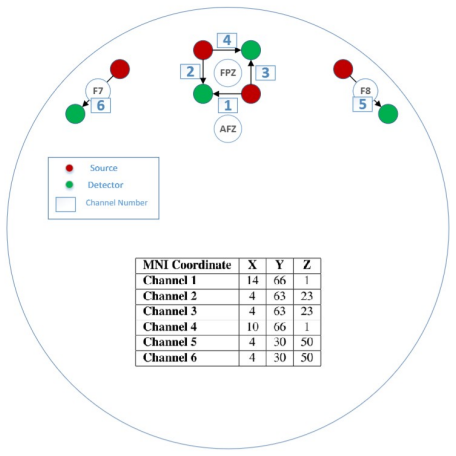
Summary. The manuscript reports a benchmark of classical machine-learning classifiers, an LSTM-attention network, and CNN architectures (ResNet50, EfficientNet-B0) for binary classification of rest versus task states from 6-channel fNIRS recordings acquired during an interactive tennis video game. After quality exclusion, 45 samples were analyzed. Because task trials lasted 60 s and rest trials 30 s, the authors synthesized 60 s rest trials from the 30 s recordings using Fourier resampling, nonlinear time warping, and injected noise (Section 2.7). The paper reports near-ceiling accuracy for Extra Trees (97.6%), Gradient Boosting (97.3%), and ResNet (95.0%, AUC 99.2%), interprets these as evidence that fNIRS can decode cognitive state in dynamic real-world environments, and includes feature-importance analyses and a leave-participants-out check. Section 4.5 reports a control experiment with 30 s real plus 30 s synthetic input in both classes in which classification performance falls to chance.
Significance. The study has useful elements: the interactive gaming paradigm is ecologically motivated, the benchmark covers several model families, and the paper includes a leave-participants-out validation and three interpretability analyses. However, the central claim is not supported because the rest class is entirely synthetic while the task class is real 60 s data; the classifiers can separate the classes using the real-versus-synthetic structure rather than authentic neural states. The authors' own control (Table 6) shows chance-level performance when both classes are mixtures of 30 s real and 30 s synthetic data, which is strong evidence for this confound. The reported accuracies are therefore not trustworthy as neural-decoding benchmarks, and the issue cannot be repaired without real 60 s rest recordings.
major comments (5)
- [§2.7] The rest class is not real data. Each 30 s rest recording is extended to 60 s by Fourier-based resampling, nonlinear time warping, and injected noise, while each task trial is a genuine 60 s recording. This construction introduces a learnable real-versus-synthetic cue into the two classes, so the high accuracies in Tables 1-4 and Table 5 and the near-perfect AUC in the Abstract cannot be attributed to discrimination of rest and task brain states.
- [§4.5, Table 6] The control experiment is the decisive evidence: when both classes are 30 s real plus 30 s synthetic, accuracy drops to approximately chance (mean accuracy about 0.51, mean AUC about 0.48). The authors interpret this as showing that synthetic data cannot replace real data, but the more direct reading is that the original classifiers relied on the difference between real 60 s task signals and synthetic 60 s rest signals. Even though this control also shortens the real task content, it does not resolve the ambiguity, because real 60 s rest recordings were never collected.
- [Robustness Check (Table 5)] The leave-participants-out analysis does not address the confound: the real-versus-synthetic distinction is independent of participant identity, so high accuracy on unseen participants is equally compatible with a model that has learned an artifact. The surrounding text argues that the model learns rest- and task-related patterns, but no control with real 60 s rest data is offered, so Table 5 does not validate neural decoding.
- [§4.4] The feature-importance analyses do not resolve the problem. Slope, RMS, maximum, and mean are exactly the summary statistics that Fourier resampling, time warping, and noise injection can modify, so the coefficient-, SHAP-, and tree-based rankings of these features are consistent with a classifier that separates real from synthetic signals rather than rest from task states.
- [Challenges and Future Perspectives] The Discussion states that synthetic signals 'may still lack the nuanced temporal dynamics present in genuine neural activity' and that 'careful validation is necessary.' This acknowledged limitation directly contradicts the Abstract's claim that the augmentation strategy 'preserved physiological integrity' and further undermines the conclusion that the benchmark measures neural-state decoding.
minor comments (5)
- [§3.2] The LSTM section describes a softmax output with categorical cross-entropy although the task is binary and the rest of the paper uses sigmoid activation with binary cross-entropy; please reconcile the description.
- [Figure 1] There are formatting inconsistencies such as 'as shown in figure.1'; the caption referencing should be cleaned up.
- [§2.2/§2.5] Please clarify whether the '45 samples' after quality exclusion are participants, sessions, or individual trials, since the cross-validation unit is otherwise ambiguous.
- [§3.1] The 10-fold cross-validation description does not state whether the StandardScaler and other preprocessing steps were fit on the training folds only; this should be specified to avoid hidden data leakage.
- [Table 5] The precision in Table 5 is inconsistent (e.g., 0.925 versus 0.920792079); please standardize the number of decimals and include standard deviations as in Table 1.
Circularity Check
Synthetic rest class is the construction-level confound: main experiments compare real 60-s task recordings against 30-s rest recordings upsampled to 60 s, and the paper's own mixed real+synthetic control (Table 6) drops to chance.
-
other
[Section 2.7 Preprocessing; control in Section 4.5, Table 6]
"we developed a hybrid upsampling pipeline to extend the duration of the 30-second rest signals to 60 seconds. This approach combines two augmentation techniques: Fourier-based resampling [Rasche et al., 1999] and nonlinear time-warping [Zhang et al., 2023]. Each rest trial is randomly assigned one of these methods per channel, allowing the transformed signals to retain realistic physiological variability. In addition, low-amplitude, band-limited noise is injected to simulate natural fluctuations in hemodynamic responses and prevent overfitting."
In the main experiments, task samples are real 60-s recordings, whereas every rest sample is a real 30-s recording extended to 60 s by Fourier resampling, nonlinear time-warping, and injected noise. The binary classification problem is therefore, by construction, "real 60-s signals versus synthetically upsampled 60-s signals," not authentic task versus rest hemodynamics. The paper's own control in Section 4.5 (Table 6) removes this real-versus-synthetic asymmetry by making both classes 30 s real plus 30 s synthetic, and accuracy collapses to roughly chance (0.467-0.581). That demonstrates that the headline accuracies and near-perfect AUC are largely forced by the construction of the rest input rather than by an independently learned neural-state boundary.
full rationale
The paper is self-contained against external benchmarks and does not rely on load-bearing self-citations: the only self-citation (Ghalavand et al., 2024) concerns a previous comparison of AI versus human opponents and is not the basis for the classification claims. The central circularity is not a citation chain but a construction-level reduction. The main experiments classify rest versus task when the task class is real 60-s data and the rest class is real 30-s data synthetically upsampled to 60 s. Thus the decision boundary can, and by the paper's own Table 6 control does, exploit a learnable real-versus-synthetic difference rather than a physiological rest-versus-task difference. When both classes contain the same 30 s real plus 30 s synthetic structure, accuracy drops to chance, which indicates that the high accuracies reported in Tables 1-5 were substantially forced by the unbalanced real-versus-synthetic construction. This is partial circularity rather than full equivalence: the control also shortens the real task content from 60 s to 30 s, so it does not perfectly isolate the synthetic cue, and the real 30-s portions may carry some genuine signal. Still, the paper's own methodological reflection explicitly asks whether "synthetic augmentation [is] contributing to its performance" and answers that synthetic data cannot replace real signals, undercutting the claim that the near-perfect AUC reflects robust decoding of authentic brain states. Accordingly, the score is 6: one or more headline predictions reduce in part by construction, but the paper includes an explicit control that is itself an honest admission of the limitation.
Assumptions & free parameters
free parameters (4)
- Injected noise amplitude in augmentation =
unspecified
- Bandpass filter cutoffs =
0.01-0.09 Hz
- GAF image size and grid layout =
224 pixels, 4x3 grid
- Fourier resampling and time-warping parameters =
unspecified
assumptions (4)
- domain assumption Hemodynamic signals (HbO/HbR) reflect neural activity through neurovascular coupling.
- standard math The Beer-Lambert law converts raw optical attenuation into hemoglobin concentration changes.
- domain assumption After preprocessing, the only systematic difference between the two classes is the rest-versus-task brain state.
- domain assumption Deep learning models require uniform input lengths, motivating duration equalization.
Cite this review
Pith. "Pith review of Real-World fNIRS-Based Brain-Computer Interfaces: Benchmarking Deep Learning and Classical Models in Interactive Gaming." pith.science (2026). https://pith.science/paper/4BHJSIMI
@misc{pith2026250510536,
  author       = {Pith},
  title        = {Pith review of: Real-World fNIRS-Based Brain-Computer Interfaces: Benchmarking Deep Learning and Classical Models in Interactive Gaming},
  year         = {2026},
  howpublished = {\url{https://pith.science/paper/4BHJSIMI}},
  note         = {Machine review of arXiv:2505.10536}
}
read the original abstract
Brain-Computer Interfaces enable direct communication between the brain and external systems, with functional Near-Infrared Spectroscopy emerging as a portable and non-invasive method for capturing cerebral hemodynamics. This study investigates the classification of rest and task states during a realistic, interactive tennis simulation using fNIRS signals and a range of machine learning approaches. We benchmarked traditional classifiers based on engineered features, Long Short-Term Memory networks on raw time-series data, and Convolutional Neural Networks applied to Gramian Angular Field-transformed images. Ensemble models like Extra Trees and Gradient Boosting achieved accuracies above 97 percent, while the ResNet-based CNN reached 95.0 percent accuracy with a near-perfect AUC of 99.2 percent, outperforming both LSTM and EfficientNet architectures. A novel data augmentation strategy was employed to equalize trial durations while preserving physiological integrity. Feature importance analyses revealed that both oxygenated and deoxygenated hemoglobin signals, particularly slope and RMS metrics, were key contributors to classification performance. These findings demonstrate the strong potential of fNIRS-based BCIs for deployment in dynamic, real-world environments and underscore the advantages of deep learning models in decoding complex neural signals.
Figures


Figures from the paper (5 more)


Reference graph
Works this paper leans on
-
[4]
Effects of padding on lstms and cnns.arXiv preprint arXiv:1903.07288,
Mahidhar Dwarampudi and NV Reddy. Effects of padding on lstms and cnns.arXiv preprint arXiv:1903.07288,
arXiv 1903
-
[5]
Agency Perception and Brain Synchrony: A Hyperscanning Study of Human-Human and Human-AI Interaction
Mohammad Ghalavand, Javad Hatami, Seyed Kamaledin Setarehdan, Fatimah Nosrati, Hananeh Ghalavand, and Ali Nikhalat-Jahromi. Comparison of the effects of inter- action with intentional agent and artificial intelligence using fnirs.arXiv preprint arXiv:2402.17650,
-
[8]
Assessing gener- alization of sgd via disagreement.arXiv preprint arXiv:2106.13799,
Yiding Jiang, Vaishnavh Nagarajan, Christina Baek, and J Zico Kolter. Assessing gener- alization of sgd via disagreement.arXiv preprint arXiv:2106.13799,
-
[9]
Mehshan Ahmed Khan, Houshyar Asadi, Mohammad Reza Chalak Qazani, Adetokunbo Arogbonlo, Siamak Pedrammehr, Adnan Anwar, Asim Bhatti, Saeid Nahavandi, and 30 CheePengLim. Enhancingcognitiveworkloadclassificationusingintegratedlstmlayers and cnns for fnirs data analysis.arXiv preprint arXiv:2407.15901,
-
[10]
News Recommendation with Attention Mechanism
Tianrui Liu, Changxin Xu, Yuxin Qiao, Chufeng Jiang, and Weisheng Chen. News rec- ommendation with attention mechanism.arXiv preprint arXiv:2402.07422,
-
[14]
Imaging time-series to improve classification and impu- tation.arXiv preprint arXiv:1506.00327,
Zhiguang Wang and Tim Oates. Imaging time-series to improve classification and impu- tation.arXiv preprint arXiv:1506.00327,
-
[15]
Amad Zafar, Karam Dad Kallu, M Atif Yaqub, Muhammad Umair Ali, Jong Hyuk Byun, Min Yoon, and Kwang Su Kim. A hybrid gcn and filter-based framework for channel and feature selection: An fnirs-bci study.International Journal of Intelligent Systems, 2023(1):8812844,
work page 2023
-
[2004]
Nima Hemmati Berivanlou, Seyed Kamaledin Setarehdan, and Hossein Ahmadi Noubari. Quantifying mental workload of operators performing n-back working memory task: 28 Toward fnirs based passive bci system. In2016 23rd Iranian Conference on Biomedical Engineering and 2016 1st International Iranian Conference on Biomedical Engineering (ICBME), pages 140–145. IEEE,
work page 2016
Show all 15 references
-
[2006]
Large brain model for learning generic representations with tremendous eeg data in bci.arXiv preprint arXiv:2405.18765,
Wei-Bang Jiang, Li-Ming Zhao, and Bao-Liang Lu. Large brain model for learning generic representations with tremendous eeg data in bci.arXiv preprint arXiv:2405.18765,
-
[2015]
A survey on the robustness of feature importance and counterfactual explanations.arXiv preprint arXiv:2111.00358,
Saumitra Mishra, Sanghamitra Dutta, Jason Long, and Daniele Magazzeni. A survey on the robustness of feature importance and counterfactual explanations.arXiv preprint arXiv:2111.00358,
-
[2018]
Understanding adam op- timizer via online learning of updates: Adam is ftrl in disguise.arXiv preprint arXiv:2402.01567,
Kwangjun Ahn, Zhiyu Zhang, Yunbum Kook, and Yan Dai. Understanding adam op- timizer via online learning of updates: Adam is ftrl in disguise.arXiv preprint arXiv:2402.01567,
-
[2019]
Random forest algorithm overview.Babylonian Journal of Machine Learning, 2024:69–79,
32 Hasan Ahmed Salman, Ali Kalakech, and Amani Steiti. Random forest algorithm overview.Babylonian Journal of Machine Learning, 2024:69–79,
2024
-
[2021]
Deep learning using rectified linear units (relu).arXiv preprint arXiv:1803.08375,
Abien Fred Agarap. Deep learning using rectified linear units (relu).arXiv preprint arXiv:1803.08375,
-
[2023]
Understanding softmax confidence and uncertainty.arXiv preprint arXiv:2106.04972,
Tim Pearce, Alexandra Brintrup, and Jun Zhu. Understanding softmax confidence and uncertainty.arXiv preprint arXiv:2106.04972,
-
[2024]
Knn model-based approach in classification
29 Gongde Guo, Hui Wang, David Bell, Yaxin Bi, and Kieran Greer. Knn model-based approach in classification. InOn The Move to Meaningful Internet Systems 2003: CoopIS, DOA, and ODBASE: OTM Confederated International Conferences, CoopIS, DOA, and ODBASE 2003, Catania, Sicily, I...
2003
Reviewed August 15, 2026 · model on record in the stance chip above.
Discussion (0). Continue with ORCID to comment.