REVIEW 1 major objections 41 references
A single statistical framework models both blocking loss and inter-symbol interference in SPAD array receivers for PAM optical wireless links at any speed.
Reviewed by Pith at T0; open to challenge. T0 means a machine referee read the full paper against a public rubric. the ladder, T0–T4 →
T0 review · grok-4.3
2026-06-29 10:09 UTC pith:6DYIYA5K
load-bearing objection The paper supplies closed-form photon-count distributions for SPAD arrays under dead time and ISI in PAM-OWC, but the high-speed Markov model uses steady-state probabilities that likely fail for the first symbols after an idle period. the 1 major comments →
Unified Analytical Framework for SPAD Array Receivers with Dead-Time-Induced Blocking Loss and Inter-Symbol Interference in PAM-OWC Systems
The pith
A machine-rendered reading of the paper's core claim, the machinery that carries it, and where it could break.
Core claim
A unified analytical framework captures both dead-time-induced blocking loss and inter-symbol interference in SPAD array receivers for PAM-OWC across all operational speed regimes by establishing comprehensive statistical models: exact closed-form photon-count distributions via renewal theory for symbol durations longer than dead time, and a Markov-chain steady-state model integrated with trigger probability for the binomial distribution when symbol duration is shorter than dead time, together with low-complexity near-optimal threshold detectors derived from these models.
What carries the argument
Renewal theory for low- and medium-speed exact distributions and Markov-chain steady-state states for high-speed binomial photon-count distributions, each incorporating blocking loss and ISI.
Load-bearing premise
The statistical models derived from renewal theory and Markov chains accurately represent the physical dead time behavior of SPAD arrays without unaccounted effects.
What would settle it
Direct comparison of the derived photon-count probability mass functions against histograms collected from a physical SPAD array transmitting PAM symbols at rates both above and below the inverse dead time.
Editorial analysis
A structured set of objections, weighed in public.
Referee Report
Summary. The paper proposes a unified analytical framework for modeling SPAD array receivers in PAM-based optical wireless communication systems, capturing dead-time-induced blocking loss and inter-symbol interference across all speed regimes. For symbol durations longer than dead time (low/medium speeds), it derives exact closed-form photon-count distributions via renewal theory. For shorter durations (high speeds), it introduces a Markov chain model of steady-state operational states integrated with trigger probability to yield exact binomial distributions, and proposes low-complexity threshold detectors based on these models.
Significance. If the derivations hold, the work supplies closed-form statistical models and detection schemes that directly address nonlinear distortions limiting data rates in photon-starving SPAD-OWC links. The renewal-theory expressions and Markov integration could serve as design tools for PAM systems, enabling optimization without simulation for the regimes covered.
major comments (1)
- [High-speed systems Markov chain model] High-speed regime (Markov chain section): The claim of an 'exact binomial photon counts distribution' relies on the steady-state distribution of the Markov chain. However, communication packets typically begin from an idle state after a long idle period; the photon-count statistics for the first several symbols therefore deviate from the steady-state distribution until mixing occurs. This directly undermines the 'exact' and 'unified' claims for the high-speed regime where ISI is strongest, and affects the proposed threshold detection performance.
Simulated Author's Rebuttal
We thank the referee for the constructive comment on the high-speed Markov chain model. We address the concern point-by-point below and outline the planned revisions.
read point-by-point responses
-
Referee: [High-speed systems Markov chain model] High-speed regime (Markov chain section): The claim of an 'exact binomial photon counts distribution' relies on the steady-state distribution of the Markov chain. However, communication packets typically begin from an idle state after a long idle period; the photon-count statistics for the first several symbols therefore deviate from the steady-state distribution until mixing occurs. This directly undermines the 'exact' and 'unified' claims for the high-speed regime where ISI is strongest, and affects the proposed threshold detection performance.
Authors: We appreciate this observation. The high-speed analysis explicitly employs the steady-state distribution of the Markov chain to obtain the exact binomial photon-count distribution under the assumption that the system has reached equilibrium. This is appropriate for long packets or continuous transmission, where mixing occurs rapidly in the high-speed regime due to frequent photon arrivals and dead-time events. We agree that the first few symbols after an idle period follow transient statistics, which are not captured by the steady-state model; this represents a limitation to the 'exact' claim at the very beginning of a packet. The low/medium-speed renewal-theory results remain exact and unaffected. To address the comment, we will revise the manuscript to: (i) explicitly state the steady-state assumption in the high-speed section and abstract, (ii) add a brief discussion of the mixing time and its dependence on photon rate, and (iii) note that the proposed threshold detectors are derived for steady-state operation and may require adjustment for the initial symbols of short packets. These clarifications will be incorporated without altering the core derivations. revision: partial
Circularity Check
No circularity: derivations use standard renewal theory and Markov chains as external tools
full rationale
The provided abstract and description outline derivations of photon-count distributions via renewal theory (low/medium speed) and Markov chain steady-state models (high speed) integrated with trigger probability. These are standard stochastic modeling techniques applied to the physical system; no equations or steps are shown that reduce a claimed result to a fitted parameter, self-definition, or self-citation chain. The steady-state choice is a modeling assumption open to correctness critique but does not constitute circularity by construction. No load-bearing self-citations or ansatz smuggling are referenced. The framework is self-contained against external benchmarks.
Axiom & Free-Parameter Ledger
Cite this review
Pith. "Pith review of Unified Analytical Framework for SPAD Array Receivers with Dead-Time-Induced Blocking Loss and Inter-Symbol Interference in PAM-OWC Systems." pith.science (2026). https://pith.science/paper/6DYIYA5K
@misc{pith2026260528560,
  author       = {Pith},
  title        = {Pith review of: Unified Analytical Framework for SPAD Array Receivers with Dead-Time-Induced Blocking Loss and Inter-Symbol Interference in PAM-OWC Systems},
  year         = {2026},
  howpublished = {\url{https://pith.science/paper/6DYIYA5K}},
  note         = {Machine review of arXiv:2605.28560}
}
read the original abstract
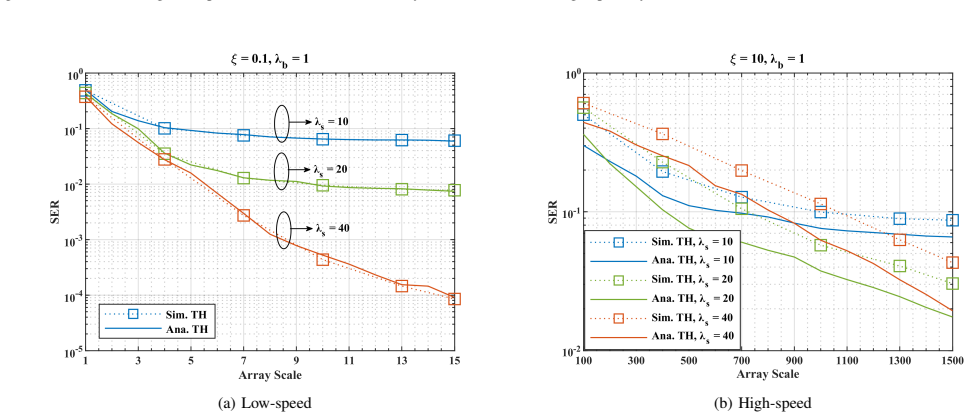
Optical wireless communication (OWC) leveraging single-photon avalanche diode (SPAD) arrays offers exceptional sensitivity for photon-starving links. However, the inherent dead time of SPADs critically limits achievable data rates by introducing non-linear photon-counting distortions: blocking loss within a symbol duration and inter-symbol interference (ISI) across durations. This paper proposes a unified analytical framework capturing both distortions across all operational speed regimes for pulse-amplitude modulation (PAM), by establishing comprehensive statistical models for SPAD array receivers. For low and medium-speed systems (symbol duration longer than dead time), we derive exact closed-form expressions for the photon counts probability distribution using renewal theory, explicitly incorporating blocking loss and ISI. For high-speed systems (symbol duration shorter than dead time), we develop a Markov chain model characterizing the steady-state operational states and integrate it with trigger probability to obtain the exact binomial photon counts distribution. Furthermore, we propose low-complexity, near-optimal threshold detection schemes based on these models. This work provides essential theoretical tools for designing and optimizing high-performance SPAD-based OWC systems employing PAM.
Figures



Reference graph
Works this paper leans on
-
[1]
G. Park, V . Mai, H. Lee, S. Lee, and H. Kim, ”Free-Space Optical Com- munication Technologies for Next-Generation Cellular Wireless Commu- nications,”IEEE Communications Magazine, vol. 62, no. 3, pp. 24-30, 2024
2024
-
[2]
Zhang et al., ”Long-term and Real-time High-speed Underwater Wireless Optical Communications in Deep Sea,”IEEE Communications Magazine, vol
J. Zhang et al., ”Long-term and Real-time High-speed Underwater Wireless Optical Communications in Deep Sea,”IEEE Communications Magazine, vol. 62, no. 3, pp. 96-101, 2023
2023
-
[3]
Huang and M
S. Huang and M. Safari, ”Hybrid SPAD/PD Receiver for Reliable Free- Space Optical Communication,”IEEE Open Journal of the Communica- tions Society, vol. 1, pp. 1364-1373, 2020
2020
-
[4]
Zimmermann, ”APD and SPAD Receivers : Invited Paper,”in 2019 15th International Conference on Telecommunications (ConTEL), 2019, pp. 1-5
2019
-
[5]
R. B. Benjamin et al., ”photon counting camera for the NASA deep space optical communication demonstration on the PSYCHE mission,” in Proc.SPIE, 2019, vol. 10978, p. 1097809
2019
-
[6]
Jiang, M
X. Jiang, M. A. Itzler, R. Ben-Michael, and K. Slomkowski, ”In- GaAsP–InP Avalanche Photodiodes for Single Photon Detection,”IEEE Journal of Selected Topics in Quantum Electronics, vol. 13, no. 4, pp. 895-905, 2007
2007
-
[7]
R. J. Cesarone, D. S. Abraham, S. Shambayati, and J. Rush, ”Deep-space optical communications,”in 2011 International Conference on Space Optical Systems and Applications (ICSOS), 2011, pp. 410-423
2011
-
[8]
M. F. Ali, D. N. K. Jayakody, Y . A. Chursin, S. Affes, and S. Dmitry, ”Recent Advances and Future Directions on Underwater Wireless Com- munications,”Archives of Computational Methods in Engineering, vol. 27, no. 5, pp. 1379-1412, 2020
2020
-
[9]
Huang et al., ”Single-photon counting Receivers for Optical Wireless Communications in Future 6G Networks,”IEEE Communications Mag- azine, vol
S. Huang et al., ”Single-photon counting Receivers for Optical Wireless Communications in Future 6G Networks,”IEEE Communications Mag- azine, vol. 62, no. 3, pp. 54-60, 2024
2024
-
[10]
Zhang, X
Y . Zhang, X. Wang, Z. Du, Y . Gao, and J. Xu, ”A High-Speed Photon-Counting UWOC System With Multiple Channels to Suppress the Randomness in Detection,”Journal of Lightwave Technology, vol. 42, no. 20, pp. 7185-7192, 2024
2024
-
[11]
J. P. Donnelly et al., ”Design Considerations for 1.06µm InGaAsP–InP Geiger-Mode Avalanche Photodiodes,”IEEE Journal of Quantum Elec- tronics, vol. 42, no. 8, pp. 797-809, 2006
2006
-
[12]
M. A. Itzler et al., ”Single photon avalanche diodes (SPADs) for 1.5 µm photon counting applications,”Journal of Modern Optics, vol. 54, no. 2-3, pp. 283-304, 2007
2007
-
[13]
Dervi ´c, M
A. Dervi ´c, M. Hofbauer, B. Goll, and H. Zimmermann, ”Integrated Fast- Sensing Triple-V oltage SPAD Quenching/Resetting Circuit for Increasing PDP,”IEEE Photonics Technology Letters, vol. 33, no. 3, pp. 139-142, 2021
2021
-
[14]
Teich and B
M. Teich and B. Cantor, ”Information, error, and imaging in deadtime- JOURNAL OF LATEX CLASS FILES, VOL. XX, NO. XX, MAY 2026 18 perturbed doubly stochastic Poisson counting systems,”IEEE Journal of Quantum Electronics, vol. 14, no. 12, pp. 993-1003, 1978
2026
-
[15]
Chen, ”Effect of Detector Dead Time on the Performance of Optical Direct-Detection Communication Links,”JPL TDA Progress Report, vol
C.-C. Chen, ”Effect of Detector Dead Time on the Performance of Optical Direct-Detection Communication Links,”JPL TDA Progress Report, vol. 46-53, pp. 146-154, 1988
1988
-
[16]
Li et al., ”Enhanced photon communication through Bayesian es- timation with an SNSPD array,”Photonics Research, vol
X. Li et al., ”Enhanced photon communication through Bayesian es- timation with an SNSPD array,”Photonics Research, vol. 8, no. 5, pp. 637-641, 2020
2020
-
[17]
J. Li, D. Ye, K. Fu, L. Wang, J. Piao, and Y . Wang, ”Single-photon detection for MIMO underwater wireless optical communication enabled by arrayed LEDs and SiPMs,”Optics Express, vol. 29, no. 16, pp. 25922- 25944, 2021
2021
-
[18]
X. Li, D. Li, C. Tang, and S. Liu, ”Fully-Integrated SPAD-Based Receiver With Nanosecond Dead Time for Optical Wireless Communi- cation,”Journal of Lightwave Technology, vol. 41, no. 2, pp. 653-661, 2023
2023
-
[19]
Lapidoth and S
A. Lapidoth and S. M. Moser, ”On the Capacity of the Discrete-Time Poisson Channel,”IEEE Transactions on Information Theory, vol. 55, no. 1, pp. 303-322, 2009
2009
-
[20]
Lapidoth, J
A. Lapidoth, J. H. Shapiro, V . Venkatesan, and L. Wang, ”The Discrete- Time Poisson Channel at Low Input Powers,”IEEE Transactions on Information Theory, vol. 57, no. 6, pp. 3260-3272, 2011
2011
-
[21]
Chitnis and S
D. Chitnis and S. Collins, ”A SPAD-Based Photon Detecting System for Optical Communications,”Journal of Lightwave Technology, vol. 32, no. 10, pp. 2028-2034, 2014
2028
-
[22]
Gnecchi et al., ”A Simulation Model for Digital Silicon Photomulti- pliers,”IEEE Transactions on Nuclear Science, vol
S. Gnecchi et al., ”A Simulation Model for Digital Silicon Photomulti- pliers,”IEEE Transactions on Nuclear Science, vol. 63, no. 3, pp. 1343- 1350, 2016
2016
-
[23]
Zhang et al., ”A Comparison of APD- and SPAD-Based Receivers for Visible Light Communications,”Journal of Lightwave Technology, vol
L. Zhang et al., ”A Comparison of APD- and SPAD-Based Receivers for Visible Light Communications,”Journal of Lightwave Technology, vol. 36, no. 12, pp. 2435-2442, 2018
2018
-
[24]
C. Wang, H. Yu, Y . Zhu, and T. Wang, ”Blind Detection for SPAD- Based Underwater VLC System Under P–G Mixed Noise Model,”IEEE Communications Letters, vol. 21, no. 12, pp. 2602-2605, 2017
2017
-
[25]
S. Hu, L. Mi, T. Zhou, and W. Chen, ”35.88 attenuation lengths and 3.32 bits/photon underwater optical wireless communication based on photon- counting receiver with 256-PP M,”Optics Express, vol. 26, no. 17, pp. 21685-21699, 2018
2018
-
[26]
J. H. Lee, I. J. Kim, and H. D. Choi, ”On the dead time problem of a GM counter,”Applied Radiation and Isotopes, vol. 67, no. 6, pp. 1094-1098, 2009
2009
-
[27]
Kitichotkul, J
R. Kitichotkul, J. Rapp, and V . K. Goyal, ”The Role of Detection Times in Reflectivity Estimation With Single-Photon Lidar,”IEEE Journal of Selected Topics in Quantum Electronics, vol. 30, no. 1: Single-Photon Technologies and Applications, pp. 1-14, 2024
2024
-
[28]
Sarbazi, M
E. Sarbazi, M. Safari, and H. Haas, ”Statistical Modeling of Single- Photon Avalanche Diode Receivers for Optical Wireless Communica- tions,”IEEE Transactions on Communications, vol. 66, no. 9, pp. 4043- 4058, 2018
2018
-
[29]
Sarbazi, M
E. Sarbazi, M. Safari, and H. Haas, ”The Bit Error Performance and Information Transfer Rate of SPAD Array Optical Receivers,”IEEE Transactions on Communications, vol. 68, no. 9, pp. 5689-5705, 2020
2020
-
[30]
Huang and M
S. Huang and M. Safari, ”Time-Gated photon counting Receivers for Optical Wireless Communication,”Journal of Lightwave Technology, vol. 39, no. 22, pp. 7113-7123, 2021
2021
-
[31]
Huang, S
S. Huang, S. M. Patanwala, J. Kosman, R. K. Henderson, and M. Safari, ”Optimal photon counting Receiver for Sub-Dead-Time Signal Transmission,”Journal of Lightwave Technology, vol. 38, no. 18, pp. 5225-5235, 2020
2020
-
[32]
Z. Shi, X. Wu, L. Yang, Y . Zhan, D. W. K. Ng, and Q. Wang, ”Performance Analysis of PPM-SNSPD System for Deep Space Optical Communications,”IEEE Transactions on Communications, vol. 73, no. 8, pp. 6221-6235, 2025
2025
-
[33]
B. I. Cantor and M. C. Teich, ”Dead-time-corrected photocounting dis- tributions for laser radiation,”Journal of the Optical Society of America, vol. 65, no. 7, pp. 786-791, 1975
1975
-
[34]
R. M. Gagliardi and S. Karp,Optical Communications. 2nd ed. New York, NY , USA: Wiley, 1995
1995
-
[35]
D. R. Cox,Renewal Theory. New York, NY , USA: Wiley, 1962
1962
-
[36]
G. A. Pavliotis,Stochastic Processes and Applications. London, UK: Springer, 2014
2014
-
[37]
Wang et al., ”Performance analysis of photon-limited free-space optical communications with practical photon-counting receivers,”Optics Express, vol
C. Wang et al., ”Performance analysis of photon-limited free-space optical communications with practical photon-counting receivers,”Optics Express, vol. 33, no. 5, pp. 10741-10758, 2025
2025
-
[38]
Wang et al., ”Performance analysis and experimental verification of SPAD receivers without photon counting for optical wireless communi- cations,”Optics&Laser Technology, vol
C. Wang et al., ”Performance analysis and experimental verification of SPAD receivers without photon counting for optical wireless communi- cations,”Optics&Laser Technology, vol. 156, p. 108605, 2022
2022
-
[39]
Q. Gao, S. Hu, C. Gong, and Z. Xu, ”Modulation Designs for Visible Light Communications With Signal-Dependent Noise,”Journal of Light- wave Technology, vol. 34, no. 23, pp. 5516-5525, 2016
2016
-
[40]
L. H. Si-Ma, H. Y . Yu, J. Zhang, G. Xin, C. Wang, and R. H. Chen, ”Multidimensional Multilayer Modulation for Broadcast UVLC With Photon Detectors,”IEEE Transactions on V ehicular Technology, vol. 69, no. 6, pp. 6437-6451, 2020
2020
-
[41]
Q. Gao, K. Qaraqe, and E. Serpedin, ”Improving the Modulation Designs for Visible Light Communications with Signal-Dependent Noise,”IEEE Communications Magazine, vol. 58, no. 5, pp. 26-32, 2020
2020
discussion (0)
Sign in with ORCID, Apple, or X to comment. Anyone can read and Pith papers without signing in.