REVIEW 3 major objections 4 minor 1 cited by
Homology, Hopf Algebras and Quantum Code Surgery
T0 review · 3 major / 4 minor · reviewed 2026-08-06 · deepseek-v4-flash
Pith's one-line read This thesis establishes that lattice surgery is a universal construction in the category of chain complexes over $\mathbb{F}_2$: every CSS code merge is a pushout (equivalently a coequaliser) along a shared logical operator, and splitting…
desk verdict A useful thesis that recasts lattice surgery as colimits and ships working software, but its central fault-tolerance claim leans on an unproved distance-preservation assertion. read the letter →
The pith
A machine-rendered reading of the paper's core claim, the machinery that carries it, and where it could break.
The reading
What carries the argument
The central object is the category $\mathrm{Ch}(\mathrm{Mat}_{\mathbb{F}_2})$, whose objects are chain complexes over $\mathbb{F}_2$ and whose morphisms are chain maps; because this category is abelian, it has all finite colimits, including the pushouts and coequalisers used for surgery. The load-bearing ingredients are: the logical operator subcomplex $V_\bullet$, which encodes an irreducible logical operator and its supporting X-checks; the path-graph complex $P_\bullet$, whose tensor product $W_\bullet = (P \otimes V)_\bullet$ supplies the intermediate ancilla region; and the two-pushout 'sandwich' construction that merges two codes while keeping the ancilla between them. The Hopf-algebra reading, in which a merge acts as multiplication in $\mathbb{C}\mathbb{Z}_2$ and a split as comultiplication, is what ties the homological surgery to the ZX-calculus and to the Kitaev quantum double models treated in the second half of the thesis.
What would settle it
Take two equal-distance qLDPC codes sharing an irreducible logical operator, perform the thesis's sandwich merge at depth equal to the code distance, and exactly compute the minimum dressed distance of the resulting subsystem code; if it is below the original distance, the main fault-tolerance guarantee collapses. A single such counterexample, or even an explicit construction like the non-distance-preserving Z-merge sketched in the thesis's appendix, would settle the matter.
Extended reading notes
Core claim
On the paper's own terms, lattice surgery is a colimit in $\mathrm{Ch}(\mathrm{Mat}_{\mathbb{F}_2})$, the category of bounded chain complexes of based vector spaces over $\mathbb{F}_2$. A CSS code is a length-2 chain complex $C_2 \xrightarrow{P_Z^\top} C_1 \xrightarrow{P_X} C_0$, and a code map is a chain map; an irreducible logical operator $v$ generates a logical operator subcomplex $V_\bullet$, and two codes sharing such a $V_\bullet$ are merged by a pushout (equivalently a coequaliser) that quotients the two logical operators together. To make the merge error-corrected, the thesis interposes an ancillary tensor-product code $W_\bullet = (P \otimes V)_\bullet$ built from a path graph and then takes two pushouts, a 'sandwich', so that the resulting code has distance bounded below and the procedure implements a logical $Z \otimes Z$ measurement (with the dual $X \otimes X$ version by transposition). The thesis proves that such merges preserve the LDPC property, automates the search for valid merges in software, and reports that on a bivariate bicycle code of parameters $[[144,12,12]]$ all logical qubits can be measured in either basis while maintaining subsystem distance $12$, using at most 150 ancillary qubits in total.
Load-bearing premise
The whole error-corrected protocol rests on the assumption that the merged code's distance is not smaller than the original codes' distance, a condition the thesis admits it does not know how to check easily, together with an unproved assertion that a depth-$d$ merge always preserves subsystem code distance.
Editorial extensions
If this is right
- Any two CSS codes with a compatible irreducible logical operator can be merged or split by the same universal recipe, so logical parity measurements are not restricted to topological codes.
- Because merges of qLDPC codes are again qLDPC, surgery becomes a viable low-overhead logical-gate primitive for near-term qLDPC architectures, not just for surface codes.
- The automated software benchmarks indicate that parallel logical measurements on a bivariate bicycle code can be performed with a small fraction of the previously reported ancilla overhead (about 150 extra qubits instead of 1380 for the $[[144,12,12]]$ gross code).
- The Hopf-algebra interpretation implies that sequences of merges and splits compose like algebraic operations, so logical circuits built from surgery can be reasoned about and potentially optimised using the equational theory of the ZX-calculus.
- The colimit construction is a general recipe for new codes: balanced product codes themselves arise as coequalisers, so families of balanced-product codes can be viewed as iterated surgeries.
Reading between the lines
- Beyond the paper: if surgery is genuinely a universal colimit, the main bottleneck for fault-tolerant compilation shifts to finding and certifying matching logical operators, and an automated search over logical subspaces could make the protocol fully general in practice.
- Beyond the paper: the unproved assertion that a depth-$r=d$ merge always preserves subsystem code distance is testable as a structural conjecture, and proving it via the 'cleaning' argument would convert an empirical benchmark into a theorem.
- Beyond the paper: the Hopf-algebra viewpoint suggests that the 'what is lattice surgery' answer may extend beyond chain-complex CSS codes to any stabiliser code carrying Hopf-algebraic data, such as quantum double models with non-Abelian groups.
- Beyond the paper: viewing CSS codes as objects of a monoidal category whose morphisms are surgeries would make logical circuits into string diagrams, allowing known diagrammatic rewriting tools to compile and optimise fault-tolerant protocols.
Editorial analysis
A structured set of objections, weighed in public.
Referee Report
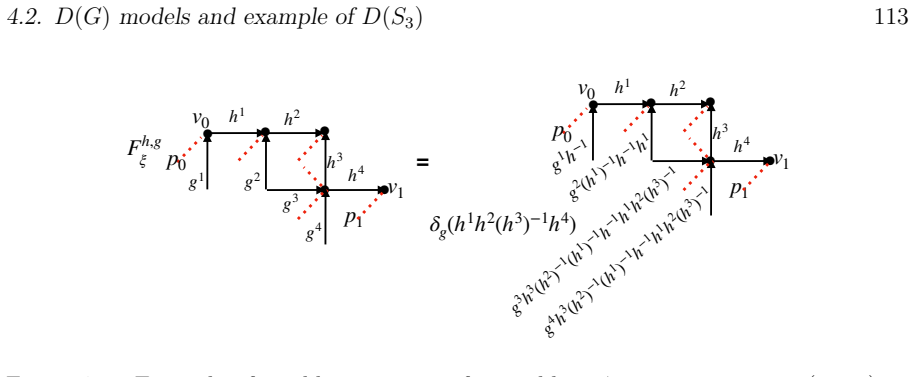
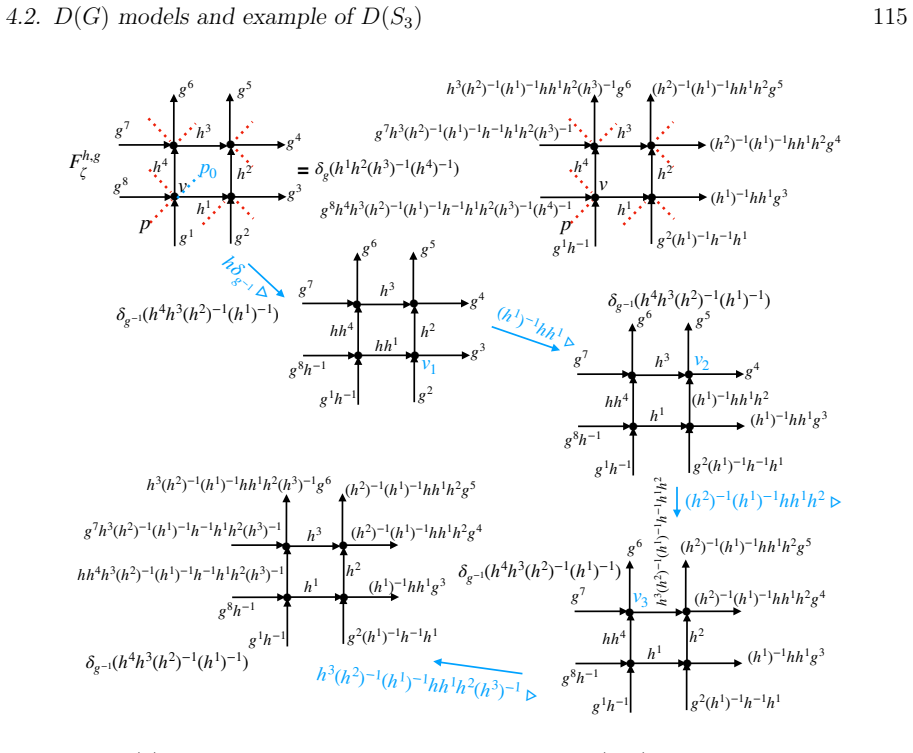
Summary. The thesis develops an algebraic and categorical framework for CSS code surgery. Its central proposal is to define CSS code merges as colimits—specifically coequalisers/pushouts—in the category of chain complexes over F2, thereby generalising lattice surgery to arbitrary CSS codes. The first part proves that irreducible Z- and X-merges preserve qLDPC-ness, introduces a tensor-product 'sandwich' construction for error-corrected logical parity measurements, and presents SSIP, open-source software that automates the search for and execution of such surgeries on qLDPC codes such as lift-connected surface codes and the gross code. The second part treats Kitaev quantum double models from a Hopf-algebra perspective, including ribbon operators, boundary subalgebras, and lattice-surgery interpretations, with emphasis on the quasi-Hopf structure of boundary algebras. The main fault-tolerance claim is that certain depth-r merges preserve code distance when the merged code is viewed as a subsystem code.
Significance. If the central claims hold, this is a substantial unification: lattice surgery is shown to be an instance of a universal categorical construction, and the framework yields a concrete algorithmic tool for performing logical parity measurements on qLDPC codes without the large ancilla overheads of earlier proposals. The manuscript has notable strengths: the colimit formulation is parameter-free and not fitted to examples; Lemma 2.3.19 gives a genuine LDPC-preservation guarantee; the SSIP software is open source and the numerical claims are reproducible from the repository; and the Kitaev-model boundary analysis is extensive and connects to quasi-Hopf algebra theory. The significance is, however, conditional on the unproven distance-preservation assertion discussed below, because fault tolerance requires a lower bound on the minimum dressed distance of the merged code, and qLDPC-ness alone does not supply such a bound.
major comments (3)
- [§3.2.3] The load-bearing distance-preservation claim is asserted, not proved. The text states: 'When the depth r = d, the minimum distance of the codes beforehand, we assert that an external merge always maintains the code distance, when viewed as a subsystem code. For brevity we do not prove this here, but claim that it can be done by converting to the Tanner graph formalism and using similar arguments as in [CKBB22, Sec. IV] pertaining to cleaning.' The same assertion is repeated for internal merges. This is the central fault-tolerance guarantee of Chapter 3: without it, the advertised logical measurements are not shown to preserve the minimum dressed distance. The cited cleaning argument is not supplied, and it is not immediate that the cleaning hypotheses of [CKBB22] transfer to pushout-based merges that identify qubits and checks homologically. This issue should be fixed either by providing the proof or by explicitly reframing the main claims as conditional on a stated conjecture.
- [§2.4, Proposition 2.4.10 and Definition 2.4.8] The error-corrected Z⊗Z measurement procedure is conditional on the condition that the merged code has 'distance bounded below' (Definition 2.4.8), while Remark 2.4.9 concedes that this condition is 'quite a tricky one, as we do not know of a way to check this easily.' Proposition 2.4.10 therefore does not establish an unconditional error-corrected logical measurement; it establishes one under a hypothesis that is neither proved nor supplied with a verification method. Since the abstract and introduction present the error-corrected procedure as a main result, this gap should be closed or the claims should be qualified throughout.
- [§2.3.4, Lemmas 2.3.14 and 2.3.17] The distance analysis is incomplete for merged codes that acquire new logical qubits. Lemma 2.3.14 allows H1(Q•) to contain new equivalence classes, and Lemma 2.3.17 bounds dX_Q only when kQ = kC + kD - 1, i.e. when no new logicals appear. The possibility of new low-weight logicals is acknowledged in Appendix 5, but the proposed remedy—switching to a subsystem code and treating new logicals as gauge qubits—does not by itself bound the dressed distance. Lemma 2.4.7 similarly bounds dX_T but not dZ_T, and Remark 2.4.9 restricts the problem to Z operators only without resolving it. Thus the manuscript's own lemmas stop short of the distance-preservation claim that the later chapters rely on.
minor comments (4)
- [§3.2.3] The phrase 'we assert that an external merge always maintains the code distance' and its internal analogue should be explicitly labelled as a conjecture or theorem, with a precise statement of the hypotheses, rather than appearing as prose assertions.
- [Definition 1.2.4 and throughout] The symbol d is used both for code distance and for qudit dimension; although the text says the distinction will be clear from context, several later passages would benefit from a disambiguating subscript, e.g. d_Q versus d_Z, d_X.
- [Figure 3.1] Figure 3.1 is a table of values, not a plot or diagram; it should be relabelled as a table or converted to a graphical figure.
- [§2.3.5, Shor code example] In the first Shor-code merge, the logical Z used has support on all nine qubits and is explicitly said not to be irreducible; the example would be clearer if it stated up front that the later, irreducible logical Z1⊗Z4⊗Z7 is the one relevant to the error-corrected protocol.
Circularity Check
No significant circularity: the surgery construction and qLDPC preservation lemma are derived from independent algebraic definitions; the main unproven distance-preservation claim is a validity gap, not a circular reduction.
full rationale
The thesis's central construction defines CSS merges as pushouts/coequalisers in Ch(MatF2) and derives properties from that definition. The LDPC-preservation result (Lemma 2.3.19 and its Chapter 3 counterpart) is proved by explicit bounds on generator weights; it does not assume the conclusion. The error-corrected logical measurement protocol (Proposition 2.4.10) is explicitly conditional on the merged code having distance bounded below (Definition 2.4.8), with Remark 2.4.9 conceding this is not easily checkable; stating a theorem under a hypothesis is not circularity. The Chapter 3 assertion that depth r=d merges always preserve subsystem distance is presented as an unproved assertion and referred to an external cleaning argument in [CKBB22]; this is a correctness/fault-tolerance gap, not a reduction of the conclusion to the premise. Benchmarks using SSIP and QDistRnd are empirical checks of the implemented construction rather than fitted predictions. Self-citations to [CB24] and [Cow24] point to the same arguments restated in the thesis, so they are not load-bearing in a circular way. No step in the derivation is equivalent by definition to its own output.
Assumptions & free parameters
assumptions (4)
- domain assumption CSS codes are represented by length-2 chain complexes over F2 with differentials PZ^T and PX.
- standard math Ch(MatF2) is Abelian and has all finite colimits.
- ad hoc to paper The merged code has distance bounded below (Definition 2.4.8).
- ad hoc to paper For depth r=d, external merges preserve subsystem code distance.
invented entities (1)
-
Boundary subalgebra Ξ(R,K)
independent evidence
Cite this review
Pith. "Pith review of Homology, Hopf Algebras and Quantum Code Surgery." pith.science (2026). https://pith.science/paper/7WAUCUO3
@misc{pith2026250801496,
  author       = {Pith},
  title        = {Pith review of: Homology, Hopf Algebras and Quantum Code Surgery},
  year         = {2026},
  howpublished = {\url{https://pith.science/paper/7WAUCUO3}},
  note         = {Machine review of arXiv:2508.01496}
}
read the original abstract
This thesis is a study of quantum error-correction codes from an algebraic perspective. We concern ourselves not only with quantum codes but also protocols to perform logical quantum computation using such codes. We derive new methods of performing fault-tolerant quantum computation, rooted in abstract algebra and category theory. We also generalise known constructions of quantum codes and rigorously formalise existing constructions. At its core, this thesis asks: what is lattice surgery?
Figures


Figures from the paper (15 more)




Forward citations
Cited by 1 Pith paper
-
Parallel Logical Measurements via Quantum Code Surgery
A new code surgery protocol measures t logically disjoint Pauli products on any LDPC code using O(t ω (log t + log³ω)) ancillas in O(d) time while preserving LDPC property and fault distance.
Reference graph
Works this paper leans on
-
[1]
Let ACC be the category of abstract cubical complexes
Graphs and cell complexes 235 Definition 1.7. Let ACC be the category of abstract cubical complexes. A morphism f : Ω → Υ in ACC is a function f : V (Ω)→ V (Υ), such that {x,··· ,y}∈ Ωd =⇒ {f(x),··· ,f (y)}∈ Υd, i.e. incidence is preserved at each dimension. Similar to Grph, ACC has coproduct given by (Ω + Υ)i = Ωi⊔ Υi and an initial object I =∅, and does...
-
[2]
We now relate the above cell complexes to chain complexes by way of functors
Graphs and cell complexes 237 One can define quantum codes using abstract cell complexes more generally, but abstract cubical complexes are the specific type which we make use of in examples in Section 2.2 and onwards. We now relate the above cell complexes to chain complexes by way of functors. Definition 1.15. Given an abstract cubical complex Ω we can ...
-
[3]
Octagonal surface code patch 239 edges each (and weight 1) and the apex with m vertices (and weight 0) then the pushout graph will have maximal weight m + 1. As a consequence the family of pushout graphs as m scales is not bounded above by a constant, and so the corresponding family of codes is not LDPC. Conjecture 2.1. Let A• D• C• g• f• be a basis-prese...
-
[4]
We say the∗-quasi bialgebra is strong if (γ⊗γ)∆γ−1 = ((θ⊗θ)(G21))G. (3) Next, if we have a quasi-Hopf algebra then S is antimultiplicative and hence θ =∗S defines an antimultiplicative antilinear map∗. However,S is not unique for a quasi-Hopf algebra and specifying θ directly is more canonical. Lemma 24.1. Let ( )R be bijective. Then Ξ has an antilinear a...
-
[5]
As a consequence, each patch has 2 logical qubits
A merged code with larger logical space 241 edges around it. As a consequence, each patch has 2 logical qubits. We can assign Z logical operators u2 and v2, representatives of each equivalence class [ u2] and [v2] from which all other classes can be composed, like so: u2 v2 and the same for [u1], [v1] on the other patch. We quotient out a Z operator in [v...
-
[6]
Let∂A :A1→A0 be a matrix over F2
Irreducibility is gauge-fixability 243 Lemma 6.2. Let∂A :A1→A0 be a matrix over F2. Then for any v∈ ker(∂A), either for any pair of basis vectors of A1 (ei,ej)∈ supp(v) there is a vector b∈ im(∂⊺ A) such that v⊙b =ei+ej or there is another non-zero vectoru∈ ker(∂A) such that supp(u)⊂ supp(v). Proof. Define the vector space S ={w⊙v :w∈ ker(∂A)⊥}. Observe t...
-
[7]
Error-corrected Z-merge with the Shor code 245 with ∂W• 2 = 1 0 0 0 1 0 0 0 1 1 0 0 0 1 0 0 0 1 1 1 0 1 0 1 ; ∂W• 1 = 1 1 0 0 0 0 1 0 1 0 1 0 0 0 0 1 0 0 0 1 1 0 1 0 0 0 0 1 0 1 0 1 ForT• we take the two pushouts from Definition 2.4.6. First, we have V• C• W• R• g• f• q• p• Giving R• = F9 2 F14 2 F4 2 ∂R• 2 ∂R• 1 wi...
-
[8]
Subsystem code distance calculation 247 8 Subsystem code distance calculation Given a CSS code C• defined by two parity-check matricesPX∈ FmX×n 2 ,PZ∈ FmZ×n 2 and a function f which calculates or estimates the distance of a CSS code, we show that the same function f can be called to calculate or estimate the distance of a subsystem CSS code. For simplicit...
Show all 30 references
-
[10]
Generalised bicycle codes 249 ℓ ⟨r⟩ ⟨nancilla/ninitial⟩ ⟨ω⟩ 23 1 0.23 9 24 1 0.19 9 63 1.29 0.35 11 90 1.14 0.24 9 127 1 0.24 11 ℓ ⟨r⟩ ⟨nancilla/ninitial⟩ ⟨ω⟩ 23 1 0.22 9 24 1.17 0.3 9 63 1 0.25 11 90 1 0.18 9 127 1 0.23 11 Figure 1: Figures of merit for individual X and Z mer...
-
[11]
and it is possible that QDistRnd is giving an upper bound on distance which isn’t tight, which would lead to merges which appear more efficient than they are
Detailed SSIP results 251 ℓ ⟨r⟩ ⟨nancilla/ninitial⟩ ⟨ω⟩ 23 1.5 0.85 9 24 1.7 0.77 9 63 1.29 0.7 11 90 1.57 0.74 9 127 1 0.47 11 ℓ ⟨r⟩ ⟨nancilla/ninitial⟩ ⟨ω⟩ 23 2 1.12 9 24 1.5 0.86 9 63 1 0.49 11 90 1.71 0.8 9 127 1 0.47 11 Figure 5: Figures of merit for individual single-qub...
-
[12]
The first row uses the method described in Section 3.2.3
The vacuum space of D(G) models 253 ℓ ninitial nancilla ntotal 23 46 53 99 290 0 290 46 551 597 24 48 295 343 678 0 678 48 1600 1648 63 126 430 556 3164 0 3164 126 5316 5442 90 180 877 1057 6130 0 6130 180 13439 13619 Figure 8: Comparison of GB code parallel single-qubit logic...
-
[13]
The vacuum space of D(G) models 255 L ℓ i r nancilla/ninitial ω 1 3 0 1 0.17 6 1 3 1 1 0.2 6 1 3 2 1 0.1 6 1 4 0 1 0.15 6 1 4 1 1 0.125 6 1 4 2 1 0.2 6 1 4 3 1 0.075 6 1 5 0 1 0.14 6 1 5 1 1 0.12 6 1 5 2 1 0.1 6 1 5 3 1 0.2 6 1 5 4 1 0.06 6 2 4 0 1 0.096 7 2 4 1 1 0.14 7 2 4 2...
-
[14]
The vacuum space of D(G) models 257 L ℓ i r nancilla/ninitial ω 1 3 0 2 1.0 6 1 3 1 2 1.2 6 1 3 2 1 0.2 6 1 4 0 2 0.9 6 1 4 1 2 0.75 6 1 4 2 2 1.2 6 1 4 3 1 0.15 6 1 5 0 2 0.84 6 1 5 1 2 0.72 6 1 5 2 2 0.6 6 1 5 3 2 1.2 6 1 5 4 1 0.12 6 2 4 0 1 0.19 7 2 4 1 2 0.81 7 2 4 2 3 1....
-
[15]
The vacuum space of D(G) models 259 ℓ i r nancilla/ninitial ω 23 0 1 0.24 9 23 1 1 0.22 9 24 0 1 0.2 9 24 1 1 0.2 9 24 2 1 0.2 9 24 3 1 0.2 9 24 4 1 0.17 9 24 5 1 0.17 9 63 0 1 0.23 11 63 1 1 0.23 11 63 2 1 0.25 11 63 3 1 0.25 11 63 4 2 0.63 11 63 5 1 0.23 11 63 6 2 0.63 11 90...
-
[16]
262 Appendix Clearly,S is invariant under change of orientation of γ
The vacuum space of D(G) models 261 ℓ i r nancilla/ninitial ω 23 0 2 1.26 9 23 1 1 0.43 9 24 0 2 1.0 9 24 1 2 1.0 9 24 2 2 1.0 9 24 3 1 0.4 9 24 4 1 0.33 9 24 5 2 0.88 9 63 0 1 0.47 11 63 1 1 0.47 11 63 2 1 0.5 11 63 3 1 0.49 11 63 4 2 1.25 11 63 5 1 0.47 11 63 6 2 1.25 11 90 ...
-
[17]
By construction ofT , the group elementϵ(g) associated to ϵ is uniquely fixed by the group elements γu(g) and γv(g)
Proof of part (2) of Proposition 4.2.10 263 whereγ−1 v is the reverse path ofγv. By construction ofT , the group elementϵ(g) associated to ϵ is uniquely fixed by the group elements γu(g) and γv(g). Conversely, given edge ϵ each group element ϵ(g) may be acquired by |G|m choice...
-
[18]
Proof of part (2) of Proposition 4.2.10 265 The last triangle in the ribbon ξ must be either direct or dual, so we cover a similar splitting of cases into direct and dual as in (i). First we consider the direct non-adjacent case, ξ =τ◦ξ′, for example s0 s2 s1 v τ ξ′ Assume tha...
-
[19]
Fourier basis for patches 267 In terms of ribbon operators, this is: Ka,b = 1 2(ida⊗ idb +Wσ ξ′′a ⊗ idb + ida⊗Wσ ξ′′ b −Wσ ξ′′a ⊗Wσ ξ′′ b ) by straighforward substitution. Note that, while Ka,b is an entangling operation between the two logical qubits, it only acts along ribbo...
-
[20]
Proof of lattice counits 269 Then initialise two new edges between, each in the |δ0⟩ state. P a,b,c,d,i,j,k,l,w,x,y,zqig+jh |a⟩ |c⟩|a−c⟩ |i +b−a⟩|b−d⟩|i +d−c⟩ |− b⟩ |− d⟩ |w⟩ |y⟩|w−y⟩ |j +x−w⟩|x−z⟩|j +z−y⟩ |− x⟩ |− z⟩ |k⟩ |l⟩ where we have exaggerated the length of the new edg...
-
[21]
The antipodes included here are responsible for the antipodes in the CX gate in Section 5.2.1
The logical block depiction 271 for the cup, and the vertically flipped version for the cap. The antipodes included here are responsible for the antipodes in the CX gate in Section 5.2.1. Then we have the Fourier exchange rule: n † † = ··· ··· n ··· ··· n which encodes Lemma 5...
-
[22]
We see that red and green spiders correspond to rough and smooth operations respectively
The logical block depiction 273 choose to use the multiplicative fragment to highlight the visual connection between the columns. We see that red and green spiders correspond to rough and smooth operations respectively. We have no new results or proofs in this section, but we ...
-
[23]
Generalisations and Hopf algebras 275 Then we can perform a sequence of rewrites between all four diagrams, labelled below: = S= = SSS = = where at each stage we have either used the spider rule, inserted duals, or swapped between duals and spiders; see Appendix 18. 21 General...
-
[24]
For the dual triangle operators, we have k′▷vi◦ X k Yr⊗δk τ∗ =Y (k′▷r)⊗δk τ∗ ◦k′▷vi again fori∈{ 1, 2} andk∈ CK
Boundary ribbon operators with Ξ(R,K )⋆ 277 and [δr′▷si,Y r⊗δk τ ] = 0 for i∈{ 1, 2}. For the dual triangle operators, we have k′▷vi◦ X k Yr⊗δk τ∗ =Y (k′▷r)⊗δk τ∗ ◦k′▷vi again fori∈{ 1, 2} andk∈ CK. However, there are not similar commutation relations for the actions of C(R) o...
-
[25]
The measurement outcome n informs which corrections to make
Measurements and nonabelian lattice surgery 279 where we have measured the edge to be deleted in theCG basis. The measurement outcome n informs which corrections to make. The last arrow implies corrections made using ribbon operators. These corrections are all unitary, and if ...
-
[26]
There are no factors of π as the edges around each vertex already satisfy A(v)|ψ⟩ =|ψ⟩
Measurements and nonabelian lattice surgery 281 we then measure at sites which include the top and bottom faces, giving: for some conjugacy classesC,C′. There are no factors of π as the edges around each vertex already satisfy A(v)|ψ⟩ =|ψ⟩. WhenC =C′ ={e}, we may proceed, but ...
-
[27]
an antilinear algebra map θ :H→H
-
[28]
an invertible element γ∈H such that θ(γ) =γ and θ2 =γ( )γ−1
-
[29]
Ξ(R,K ) as a∗-quasi-Hopf algebra 283
-
[30]
an invertible element G∈ H⊗H such that ∆θ =G−1(θ⊗θ)(∆op( ))G, (ϵ⊗ id)(G) = (id⊗ϵ)(G) = 1, (1) (θ⊗θ⊗θ)(ϕ321)(1⊗G )((id⊗ ∆)G)ϕ = (G⊗ 1)((∆⊗ id)G). (2)
-
[31]
In this case τ(p,q )((x◁s)◁t) =τ(x▷s, (x◁s)▷t)((x◁s)◁t) = (x◁s·t)τ(s,t ) by the cocycle axiom
Ξ(R,K ) as a∗-quasi-Hopf algebra 285 where we first note that for the δ-functions to connect, we need p =x▷s, ((x◁s)◁t)▷tR =qR, which is equivalent to q = (x◁s)▷t since e = (x◁s)▷(t·tR) = ((x◁s)▷t)· (((x◁s)◁t)▷tR). In this case τ(p,q )((x◁s)◁t) =τ(x▷s, (x◁s)▷t)((x◁s)◁t) = (x◁s...
Reviewed August 6, 2026 · model on record in the stance chip above.
Discussion (0). Sign in to comment.