LCAi: Life Cycle Assessment with big data fusion and retrieval-augmented generation-assisted interpretation
Pith reviewed 2026-06-26 05:10 UTC · model grok-4.3
The pith
A perspective-conditioned retrieval-augmented generation framework translates life cycle assessment results into actionable strategic pathways under uncertainty.
A machine-rendered reading of the paper's core claim, the machinery that carries it, and where it could break.
Core claim
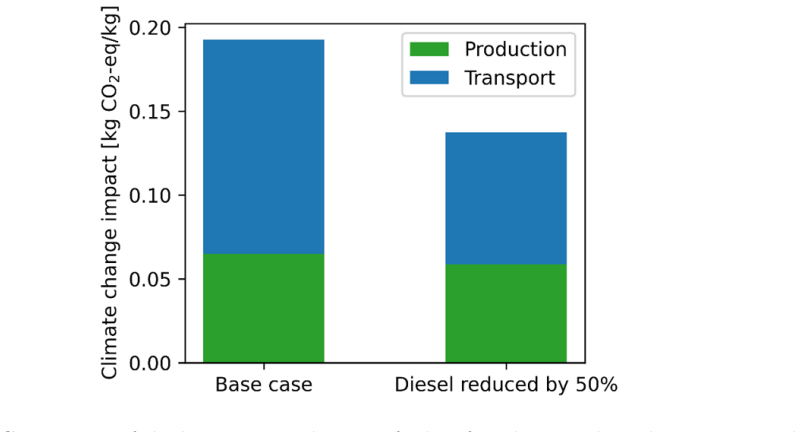
The paper claims that a perspective fusion RAG architecture operationalizes large language models for LCA interpretation through multi-perspective retrieval and controlled synthesis, enabling the translation of impact results into strategic pathways while mitigating hallucination risks and preserving cross-domain diversity, as shown in the hydrogen-enabled diesel reduction use case.
What carries the argument
The perspective fusion RAG architecture, which combines a scenario anchor, perspective-specific micro-queries with constrained retrieval from academic, industry, public discourse, and EU funding datasets, and a neutral synthesis step that integrates only ledger-stored outputs.
Load-bearing premise
That the chosen academic, industry, public discourse, and EU funding datasets, combined with perspective-specific micro-queries and a neutral synthesis step, will produce unbiased, actionable strategic pathways without missing critical uncertainties or introducing new errors.
What would settle it
Expert review of the generated pathways reveals either factual hallucinations traceable to the retrieval sources or major uncertainties and biases omitted from the neutral synthesis step.
Figures
read the original abstract
The interpretation phase of life cycle assessment often lacks structured mechanisms for translating quantified improvement opportunities addressing environmental hotspots into actionable strategic pathways under technological, social, and policy uncertainty. To overcome this limitation, this study introduces a perspective-conditioned retrieval-augmented generation framework for LCA interpretation, where a multi-perspective retrieval and controlled synthesis is incorporated in the artificial intelligence (AI)-assisted LCA. To operationalise large language models in LCA interpretation, a perspective fusion RAG architecture was developed, covering academic, industry, public discourse, and European union (EU) funding datasets. Our approach comprises three steps: (1) a scenario anchor defining system boundaries and decarbonization targets, (2) a set of perspective-specific micro-queries with constrained retrieval, and (3) a neutral synthesis step integrating only ledger-stored outputs without further retrieval. The framework is demonstrated through a hydrogen-enabled diesel reduction use case in an Italian apple production facility using GPT-5 nano as the reasoning model. Overall, the structured retrieval and constrained synthesis are designed to mitigate the risk of hallucination while preserving cross-domain diversity. The approach presented can support more disciplined translation of impact results into strategic pathways and opens up new avenues for the use of advanced AI tools in LCA studies, particularly those focused on technologies that could be deployed at scale. This proof-of-concept demonstrates how AI-assisted, evidence-grounded interpretation can support implementation-oriented decision-making beyond conventional LCA studies.
Editorial analysis
A structured set of objections, weighed in public.
Referee Report
Summary. The paper presents LCAi, a framework for AI-assisted life cycle assessment interpretation using perspective-conditioned retrieval-augmented generation. It fuses data from academic, industry, public discourse, and EU funding sources through a three-step process: (1) scenario anchor for system boundaries and targets, (2) perspective-specific micro-queries with constrained retrieval, and (3) neutral synthesis integrating only ledger-stored outputs. The framework is demonstrated on a hydrogen-enabled diesel reduction use case in an Italian apple production facility using GPT-5 nano, with the claim that it mitigates hallucination risk while preserving cross-domain diversity.
Significance. If empirically validated, the multi-perspective RAG architecture could address a real gap in LCA by providing structured, evidence-grounded translation of quantified hotspots into strategic pathways under uncertainty, extending AI tools beyond conventional quantification in environmental assessments.
major comments (2)
- [Abstract] Abstract: the claim that 'the structured retrieval and constrained synthesis are designed to mitigate the risk of hallucination while preserving cross-domain diversity' lacks any supporting quantitative validation, baseline comparisons, error metrics, or sensitivity analysis on the four datasets; the demonstration is described only as a single qualitative case study.
- [Methods (three-step process)] Three-step process description: the neutral synthesis step is asserted to integrate 'only ledger-stored outputs without further retrieval' to avoid new errors, but no details are supplied on ledger construction, output validation, or how perspective-specific results are weighted or checked for completeness, leaving the bias-mitigation claim untested.
minor comments (1)
- [Abstract] Abstract: 'GPT-5 nano' is referenced without clarification of its status, training cutoff, or relation to publicly available models.
Simulated Author's Rebuttal
We thank the referee for the constructive comments on our manuscript. We address each major comment below, indicating planned revisions where appropriate.
read point-by-point responses
-
Referee: [Abstract] Abstract: the claim that 'the structured retrieval and constrained synthesis are designed to mitigate the risk of hallucination while preserving cross-domain diversity' lacks any supporting quantitative validation, baseline comparisons, error metrics, or sensitivity analysis on the four datasets; the demonstration is described only as a single qualitative case study.
Authors: We agree that the current demonstration consists of a single qualitative case study and does not include quantitative validation, baselines, or error metrics. The manuscript is framed as a proof-of-concept for the perspective-conditioned RAG architecture rather than an empirical benchmarking study. The claim in the abstract refers to the design rationale of the three-step process. We will revise the abstract to clarify the illustrative nature of the demonstration and add a dedicated limitations subsection discussing the absence of quantitative evaluation and the scope for future work on metrics and sensitivity analysis across the datasets. revision: yes
-
Referee: [Methods (three-step process)] Three-step process description: the neutral synthesis step is asserted to integrate 'only ledger-stored outputs without further retrieval' to avoid new errors, but no details are supplied on ledger construction, output validation, or how perspective-specific results are weighted or checked for completeness, leaving the bias-mitigation claim untested.
Authors: The manuscript describes the neutral synthesis step at a high level to emphasize avoidance of additional retrieval. We acknowledge that explicit details on ledger construction, validation procedures, weighting of perspective outputs, and completeness checks are not provided. We will expand the Methods section with implementation specifics from the demonstration, including how ledger entries are generated and stored from the micro-query outputs, any cross-checks performed, and the rationale for treating the ledger as the sole input to synthesis. This will allow readers to assess the bias-mitigation approach more directly. revision: yes
Circularity Check
No derivation chain; architecture proposal has no equations or fitted quantities
full rationale
The paper describes a three-step perspective-conditioned RAG framework (scenario anchor, perspective-specific micro-queries with constrained retrieval, neutral ledger-only synthesis) for LCA interpretation and demonstrates it qualitatively on one Italian apple/hydrogen case. No equations, parameters, predictions, or first-principles derivations appear in the provided text. The contribution is an architectural proposal whose claims rest on design intent rather than any reduction of outputs to inputs by construction. No self-citations or uniqueness theorems are invoked as load-bearing elements. This is the normal non-circular outcome for a methods/architecture paper without a mathematical derivation chain.
Axiom & Free-Parameter Ledger
axioms (1)
- domain assumption Large language models guided by constrained, perspective-specific retrieval and neutral synthesis can reduce hallucination while maintaining cross-domain diversity in domain-specific interpretation tasks.
Reference graph
Works this paper leans on
-
[3]
V., Fleischmann, M., Wasserman, J., McBride, J., Gerard, J., \ & Leblanc, F
Jordahl, K., den Bossche, J. V., Fleischmann, M., Wasserman, J., McBride, J., Gerard, J., \ & Leblanc, F. (2020). geopandas/geopandas: v0.8.1. Zenodo. https://doi.org/10.5281/zenodo.3946761
-
[5]
Li, B., Jiang, Y., Gadepally, V., & Tiwari, D. (2024). LLM Inference Serving: Survey of Recent Advances and Opportunities. 2024 IEEE High Performance Extreme Computing Conference (HPEC), 1--8. https://doi.org/10.1109/HPEC62836.2024.10938426
-
[6]
Neural Comput Appl 37:28191--28267
Abo El-Enen M, Saad S, Nazmy T (2025) A survey on retrieval-augmentation generation (RAG) models for healthcare applications. Neural Comput Appl 37:28191--28267. https://doi.org/10.1007/s00521-025-11666-9
-
[7]
Algunaibet IM, Guill\' e n-Gos\' a lbez G (2019) Life cycle burden-shifting in energy systems designed to minimise greenhouse gas emissions. J Clean Prod 229:886--901. https://doi.org/10.1016/j.jclepro.2019.04.276
-
[8]
Arslan M, Munawar S, Cruz C (2024) Business insights using RAG--LLMs: a review and case study. J Decis Syst 1--30. https://doi.org/10.1080/12460125.2024.2410040
-
[9]
Chemical Engineering Journal 73:1--21
Azapagic A (1999) Life cycle assessment and its application to process selection, design and optimisation. Chemical Engineering Journal 73:1--21. https://doi.org/10.1016/S1385-8947(99)00042-X
-
[10]
Balaguer A, Benara V, Cunha RL de F, et al (2024) RAG vs Fine-tuning: Pipelines, Tradeoffs, and a Case Study on Agriculture
2024
-
[11]
In: Proceedings of the 63rd Annual Meeting of the Association for Computational Linguistics
Bang Y, Ji Z, Schelten A, et al (2025) HalluLens: LLM Hallucination Benchmark. In: Proceedings of the 63rd Annual Meeting of the Association for Computational Linguistics. pp 24128--24156
2025
-
[12]
IEEE Trans Big Data 12:346--361
Douze M, Guzhva A, Deng C, et al (2026) The Faiss Library. IEEE Trans Big Data 12:346--361. https://doi.org/10.1109/TBDATA.2025.3618474
-
[13]
https://doi.org/10.1016/J.PROCIR.2024.01.131
Goridkov N, Wang Y, Goucher-Lambert K (2024) What's in this LCA Report? Procedia CIRP 122:964--969. https://doi.org/10.1016/J.PROCIR.2024.01.131
-
[14]
pp 143--158
Hasan MdT, Waseem M, Kemell K-K, et al (2026) Engineering RAG Systems for Real-World Applications. pp 143--158
2026
-
[15]
ISO 14044 (2014) Environmental management -- Life cycle assessment -- Requirement and guidelines
2014
-
[16]
J MR, VM K, Warrier H, Gupta Y (2024) Fine Tuning LLM for Enterprise: Practical Guidelines and Recommendations
2024
-
[17]
In: Findings of the Association for Computational Linguistics: EMNLP 2023
Ji Z, Yu T, Xu Y, et al (2023) Towards Mitigating LLM Hallucination via Self Reflection. In: Findings of the Association for Computational Linguistics: EMNLP 2023. pp 1827--1843
2023
-
[18]
Keoleian GA (1993) The application of life cycle assessment to design. J Clean Prod 1:143--149. https://doi.org/10.1016/0959-6526(93)90004-U
-
[19]
In: Streamlit for Web Development
Khorasani M, Abdou M, Hern\' a ndez Fern\' a ndez J (2025) Streamlit Basics. In: Streamlit for Web Development. Apress, Berkeley, CA, pp 31--66
2025
-
[20]
Kumar A, Kim S, Bakshi B. R. (2026). Role of artificial intelligence in the chemical industry transition to a sustainable, circular, and net-zero future. Current Opinion in Chemical Engineering, 51, 101234. https://doi.org/10.1016/j.coche.2026.101234
-
[21]
Int J Life Cycle Assess 16:247--257
Lewandowska A, Matuszak-Flejszman A, Joachimiak K, Ciroth A (2011) Environmental life cycle assessment as a tool for identification of environmental aspects in EMS. Int J Life Cycle Assess 16:247--257. https://doi.org/10.1007/s11367-011-0252-3
-
[22]
Lewis P, Perez E, Piktus A, et al (2021) Retrieval-Augmented Generation for Knowledge-Intensive NLP Tasks
2021
-
[23]
In: Proceedings of the 47th ACM SIGIR Conference
Lin X, Wang W, Li Y, et al (2024) Data-efficient Fine-tuning for LLM-based Recommendation. In: Proceedings of the 47th ACM SIGIR Conference. ACM, New York, NY, USA, pp 365--374
2024
-
[24]
Results in Engineering 29:109568
Luan K, Jing Y (2026) AI-enabled integration of life cycle assessment in building retrofitting. Results in Engineering 29:109568. https://doi.org/10.1016/j.rineng.2026.109568
-
[25]
Mohammadi Kashka F, Tahmasebi Sarvestani Z, Pirdashti H, et al (2023) Sustainable Systems Engineering Using LCA: Application of AI for Predicting Agro-Environmental Footprint. Sustainability 15:6326. https://doi.org/10.3390/su15076326
-
[26]
Muder A, Garming H, Dreisiebner-Lanz S, et al (2022) Apple production and apple value chains in Europe. Eur J Hortic Sci 87:1--22. https://doi.org/10.17660/eJHS.2022/059
-
[27]
Mutel C (2017) Brightway: An open source framework for Life Cycle Assessment. J Open Source Softw 2:236. https://doi.org/10.21105/joss.00236
-
[28]
Neha F, Bhati D, Shukla DK (2025) Retrieval-Augmented Generation (RAG) in Healthcare: A Comprehensive Review. AI 6:226. https://doi.org/10.3390/ai6090226
-
[29]
Journal of Sustainable Metallurgy 11:3590--3605
Nwagwu CC, Ogorodnyk O, S lvsberg E, et al (2025) Integrating Artificial Intelligence into Life Cycle Assessment. Journal of Sustainable Metallurgy 11:3590--3605. https://doi.org/10.1007/s40831-025-01305-x
-
[30]
Discover Sustainability 6:1237
Petrosa D, Haverkamp P, Backes JG, et al (2025) Development of a BIM-based AI-driven matching tool for LCA datasets. Discover Sustainability 6:1237. https://doi.org/10.1007/s43621-025-02203-8
-
[31]
Int J Life Cycle Assess 27:1164--1169
Prado V, Seager TP, Guglielmi G (2022) Challenges and risks when communicating comparative LCA results to management. Int J Life Cycle Assess 27:1164--1169. https://doi.org/10.1007/s11367-022-02090-5
-
[32]
Preuss N, Alshehri A. S., You F. (2024). Large language models for life cycle assessments: Opportunities, challenges, and risks. Journal of Cleaner Production, 466, 142824. https://doi.org/10.1016/j.jclepro.2024.142824
-
[33]
Preuss N, You F (2026) Automating Life Cycle Assessments through Artificial Intelligence Agents. Environ Sci Technol 60:33--48. https://doi.org/10.1021/acs.est.5c14493
-
[34]
In: Proceedings of EMNLP 2023
Rawte V, Chakraborty S, Pathak A, et al (2023) The Troubling Emergence of Hallucination in Large Language Models. In: Proceedings of EMNLP 2023. pp 2541--2573
2023
-
[35]
Ren Y, Sutherland DJ (2025) Learning Dynamics of LLM Finetuning
2025
-
[36]
Ross S, Evans D (2002) Use of Life Cycle Assessment in Environmental Management. Environ Manage 29:132--142. https://doi.org/10.1007/s00267-001-0046-7
-
[37]
In: The Illusion Engine
S ekrst K (2025) Hallucinations. In: The Illusion Engine. Springer Nature Switzerland, Cham, pp 211--226
2025
-
[38]
Shafiq M, Ayub S, Muthevi A kumar, Prabhu MR (2024) AI-driven Life Cycle Assessment for sustainable hybrid manufacturing and remanufacturing. Int J Adv Manuf Technol. https://doi.org/10.1007/s00170-024-14930-9
-
[39]
Swacha J, Gracel M (2025) Retrieval-Augmented Generation (RAG) Chatbots for Education: A Survey. Applied Sciences 15:4234. https://doi.org/10.3390/app15084234
-
[40]
Environ Innov Soc Transit 45:154--169
Verrier B, Li P-H, Pye S, Strachan N (2022) Incorporating social mechanisms in energy decarbonisation modelling. Environ Innov Soc Transit 45:154--169. https://doi.org/10.1016/j.eist.2022.10.003
-
[41]
Wernet G, Bauer C, Steubing B, et al (2016) The ecoinvent database version 3 (part I): overview and methodology. Int J Life Cycle Assess 21:1218--1230. https://doi.org/10.1007/s11367-016-1087-8
-
[42]
pp 102--120
Yu H, Gan A, Zhang K, et al (2025) Evaluation of Retrieval-Augmented Generation: A Survey. pp 102--120
2025
-
[43]
Zhang J (2025) Small Language Models Offer Significant Potential for Science Community
2025
-
[44]
Zhang X, Guo X, Zhao J, et al (2025) Intelligent application of large language model to life cycle assessment methodology. J Clean Prod 529:146776. https://doi.org/10.1016/J.JCLEPRO.2025.146776
discussion (0)
Sign in with ORCID, Apple, or X to comment. Anyone can read and Pith papers without signing in.