pith. sign in

arxiv: 2410.01223 · v22 · pith:CA5CPFJGnew · submitted 2024-10-02 · 📊 stat.CO · cs.LG

Statistical Taylor Expansion: A New and Path-Independent Method for Uncertainty Analysis

Pith reviewed 2026-05-23 20:34 UTC · model grok-4.3

classification 📊 stat.CO cs.LG
keywords statistical Taylor expansionuncertainty propagationpath independencevariance arithmeticnumerical computationerror analysisrandom variables
0
0 comments X

The pith

Statistical Taylor expansion produces path-independent results by tracking uncertainty propagation from random inputs.

A machine-rendered reading of the paper's core claim, the machinery that carries it, and where it could break.

The paper presents statistical Taylor expansion as a method that extends the usual Taylor series by modeling input variables as random variables with specified distributions and sample counts. This allows calculation of the mean, deviation, and reliable factor for outputs while following how uncertainties move through every intermediate operation. Because uncertainty is tracked at each step, the final result for any expression stays the same no matter which order of operations is chosen. The approach also introduces variance arithmetic as its implementation and shows test results on many mathematical cases, while noting that library functions should carry their own uncertainty values.

Core claim

Statistical Taylor expansion replaces precise input variables with random variables of known distributions and sample counts to compute the mean, the deviation, and the reliable factor of each result. It tracks the propagation of the input uncertainties through intermediate steps, so that the final analytic result becomes path independent. This differs from methods that seek to optimize the computational path for each calculation.

What carries the argument

Statistical Taylor expansion, which replaces inputs with random variables and tracks uncertainty propagation step by step to enforce path independence.

If this is right

  • Analytic results for expressions become independent of the order of operations.
  • Numerical computations of analytic expressions can be standardized without path optimization.
  • Library functions should return uncertainty deviations along with each value.
  • The method may connect to principles in quantum physics through its handling of uncertainty.

Where Pith is reading between the lines

These are editorial extensions of the paper, not claims the author makes directly.

  • The approach could be tested on expressions with high numbers of operations to check practical scaling.
  • It might reduce inconsistencies when the same formula is implemented in different software.
  • Integration into computer algebra systems could automate uncertainty tracking during symbolic manipulation.

Load-bearing premise

Modeling inputs as random variables with known distributions and tracking uncertainty through every step will automatically produce path-independent results for arbitrary expressions.

What would settle it

Applying the method to the same expression along two different sequences of operations and obtaining different means or deviations.

Figures

Figures reproduced from arXiv: 2410.01223 by Chengpu Wang.

Figure 1
Figure 1. Figure 1: The probability density function for ˜y = ˜x 2 , for different µ as shown in the legend. The ˜x is Gaussian distributed with the distributional mean µ and deviation 1. The horizontal axis is scaled as √ y˜ [PITH_FULL_IMAGE:figures/full_fig_p007_1.png] view at source ↗
Figure 2
Figure 2. Figure 2: The probability density function for ˜y = √ x˜, for different µ as shown in the legend. The ˜x is Gaussian distributed with the distributional mean µ and deviation 1. The horizontal axis is scaled as ˜y 2 [PITH_FULL_IMAGE:figures/full_fig_p007_2.png] view at source ↗
Figure 3
Figure 3. Figure 3: The result variance ratio δ 2f /δd2f (as shown by the y-axis on the left) and the bounding leakage (as shown by the y-axis on the right) for the different bounding range κ (as shown by the x-axis) for the selected f(x) (as shown by the legend), in which δd2f is the corresponding variance for κ = 5 [PITH_FULL_IMAGE:figures/full_fig_p013_3.png] view at source ↗
Figure 4
Figure 4. Figure 4: The ratio of adjusted δd2f to the original δd2f (as shown by the y-axis) for the different bounding range κ (as shown by the x-axis) for the selected f(x) (as shown by the legend), in which δd2f is approximated by normalizing the input variance with ζ(2, κ) so that δ 2x = (δx) 2 [PITH_FULL_IMAGE:figures/full_fig_p013_4.png] view at source ↗
Figure 5
Figure 5. Figure 5: The measured bounding leakage (as shown by the y-axis) for the [PITH_FULL_IMAGE:figures/full_fig_p014_5.png] view at source ↗
Figure 6
Figure 6. Figure 6: The measured bounding range κ (as shown by the y-axis on the left) and the corresponding measured bounding leakage ϵ(κ) (as shown by the y-axis on the right) for the different sample count N (as shown by the x-axis) when the underlying distribution is either uniform or normal (as shown by the legend, with different measuring bounding range for the normal distribution) [PITH_FULL_IMAGE:figures/full_fig_p01… view at source ↗
Figure 7
Figure 7. Figure 7: The measured upper bound δx for (1 ± δx) c for different c as shown by the x-axis, using the y-axis on the left. Also shown are the corresponding uncertainty bias and uncertainty, using the y-axis on the right. When c is a natural number, δx has no upper bound, and such results are omitted in the figure [PITH_FULL_IMAGE:figures/full_fig_p019_7.png] view at source ↗
Figure 8
Figure 8. Figure 8: The measured upper bound δx for sin(x±δx) for different x as shown by the x-axis, using the y-axis on the left. Also shown are the corresponding uncertainty bias and uncertainty, using the y-axis on the right. The unit of x-axis is π [PITH_FULL_IMAGE:figures/full_fig_p019_8.png] view at source ↗
Figure 9
Figure 9. Figure 9: The histogram of result uncertainty for ( [PITH_FULL_IMAGE:figures/full_fig_p021_9.png] view at source ↗
Figure 10
Figure 10. Figure 10: The residual error of P224 j=0 x j − 1 1−x vs x. The y-axis to the left shows the value and uncertainty of residual errors. The uncertainty calculated by P224 j=0 x j overlaps with that by 1 1−x . The y-axis to the right shows the expansion order needed to reach stable value for each x [PITH_FULL_IMAGE:figures/full_fig_p021_10.png] view at source ↗
Figure 11
Figure 11. Figure 11: The result deviation of ’P∞ n=0((−1)n ± δy)y n vs δy for difference δx in the legend, in which 1 1+y = P∞ n=0(−1)ny n is the Taylor expansion without added uncertainty δy to each Taylor coefficients. and 1 1−x . Detailed analysis shows that the max residual error is 4-fold of the LSV of 1 1−x . The calculated uncertainty bounds the residual error nicely for all x ∈ [−0.73, 0.75]. • When x ̸∈ [−0.74, +0.75… view at source ↗
Figure 12
Figure 12. Figure 12: The calculated uncertainties vs the measured value deviations as [PITH_FULL_IMAGE:figures/full_fig_p026_12.png] view at source ↗
Figure 13
Figure 13. Figure 13: The calculated uncertainties vs the measured value deviations as well [PITH_FULL_IMAGE:figures/full_fig_p026_13.png] view at source ↗
Figure 14
Figure 14. Figure 14: The calculated uncertainties vs the measured value deviations as [PITH_FULL_IMAGE:figures/full_fig_p027_14.png] view at source ↗
Figure 15
Figure 15. Figure 15: The calculated uncertainties vs the measured value deviations as well [PITH_FULL_IMAGE:figures/full_fig_p027_15.png] view at source ↗
Figure 16
Figure 16. Figure 16: The error deviation for sin(x ± δx) vs. x and δx. The x-axis is x between −π and +π. The y-axis is δx between −10−16 and 1. The z-axis is the error deviation. Gaussian noises are used to produce the input noise δx [PITH_FULL_IMAGE:figures/full_fig_p028_16.png] view at source ↗
Figure 17
Figure 17. Figure 17: The error deviation for sin(x ± δx) vs. x and δx. The x-axis is x between −π and +π. The y-axis is δx between −10−16 and 1. The z-axis is the error deviation. Uniform noises are used to produce the input noise δx [PITH_FULL_IMAGE:figures/full_fig_p028_17.png] view at source ↗
Figure 18
Figure 18. Figure 18: The values and uncertainties of log(e x )−x and e log(x) −x vs x, with 0.1 as x intervals [PITH_FULL_IMAGE:figures/full_fig_p029_18.png] view at source ↗
Figure 19
Figure 19. Figure 19: The normalized errors of (x p ) 1 p − x vs x and p [PITH_FULL_IMAGE:figures/full_fig_p029_19.png] view at source ↗
Figure 20
Figure 20. Figure 20: The result uncertainty means vs. input noise precision and matrix [PITH_FULL_IMAGE:figures/full_fig_p033_20.png] view at source ↗
Figure 21
Figure 21. Figure 21: The result error deviations vs. input noise precision and matrix size [PITH_FULL_IMAGE:figures/full_fig_p033_21.png] view at source ↗
Figure 22
Figure 22. Figure 22: The result error deviations vs. input noise precision and matrix size [PITH_FULL_IMAGE:figures/full_fig_p034_22.png] view at source ↗
Figure 23
Figure 23. Figure 23: The result error deviations vs. input noise precision and matrix size [PITH_FULL_IMAGE:figures/full_fig_p034_23.png] view at source ↗
Figure 24
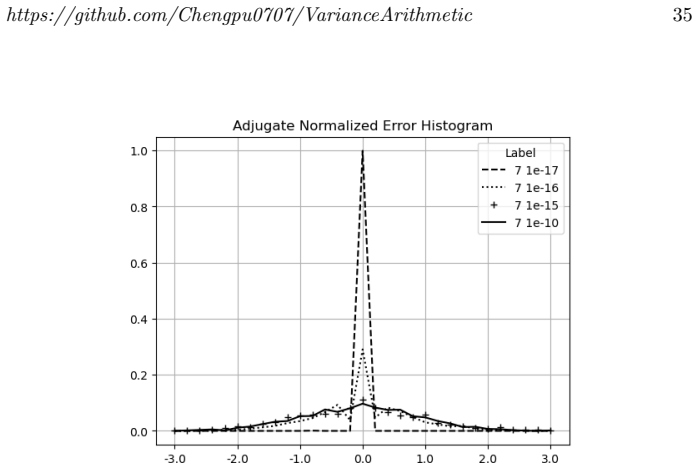
Figure 24. Figure 24: The result histograms for the normalized errors of the adjugate [PITH_FULL_IMAGE:figures/full_fig_p035_24.png] view at source ↗
Figure 25
Figure 25. Figure 25: The result histograms for the normalized errors of the adjugate [PITH_FULL_IMAGE:figures/full_fig_p035_25.png] view at source ↗
Figure 26
Figure 26. Figure 26: The linear correlation between the precision of a matrix determinant [PITH_FULL_IMAGE:figures/full_fig_p039_26.png] view at source ↗
Figure 27
Figure 27. Figure 27: The error deviation of the first approximation calculation of [PITH_FULL_IMAGE:figures/full_fig_p039_27.png] view at source ↗
Figure 28
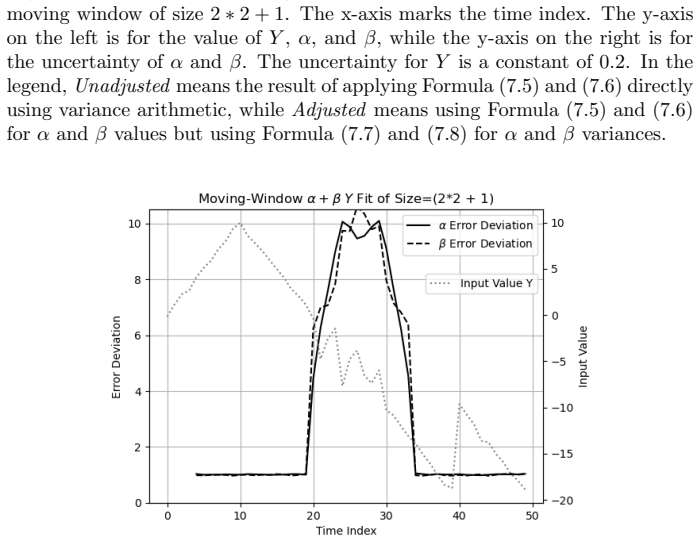
Figure 28. Figure 28: The result of fitting α + β Y to a time-series input Y within a moving window of size 2 ∗ 2 + 1. The x-axis marks the time index. The y-axis on the left is for the value of Y , α, and β, while the y-axis on the right is for the uncertainty of α and β. The uncertainty for Y is a constant of 0.2. In the legend, Unadjusted means the result of applying Formula (7.5) and (7.6) directly using variance arithmeti… view at source ↗
Figure 29
Figure 29. Figure 29: The error deviations of the α + β Y fit vs time index. The x-axis marks the time index. The y-axis on the left is for error deviation. An input time-series signal Y is also provided for reference, whose value is marked by the y-axis on the right [PITH_FULL_IMAGE:figures/full_fig_p040_29.png] view at source ↗
Figure 30
Figure 30. Figure 30: The difference between the library sin(x) and the indexed sin(x), for all integer input to the indexed sine functions used in the FFT of FFT order 4. The uncertainties of the sin(x) values are also displayed, to mark the periodicity of π [PITH_FULL_IMAGE:figures/full_fig_p044_30.png] view at source ↗
Figure 31
Figure 31. Figure 31: The value error deviation of sin(x) and cos(x) checked by sin(x) 2 + cos(x) 2 − 1 for different FFT order as shown in the x-axis, and for the indexed and library versions as shown in the legend. Also shown is the corresponding normalized error deviation for the indexed and library sin(x). The y-axis on the left is for value error deviation, while the y-axis on the right is for normalized error deviation … view at source ↗
Figure 32
Figure 32. Figure 32: The difference between the library cos(x)/ sin(x) and the indexed cos(x)/ sin(x), for x ∈ (0, π), for different FFT order as shown in the legend. In the legend, Uncertainty is the calculated uncertainty assuming that both cos(x) and sin(x) are imprecise in their least significant values, and Value Error is the difference between the library cos(x)/ sin(x) and the indexed cos(x)/ sin(x) [PITH_FULL_IMAGE:f… view at source ↗
Figure 33
Figure 33. Figure 33: Comparing library sin(x) and cos(x)/ sin(x) for different FFT orders as shown by x-axis, and for either value error deviations or normalized error deviations, as shown in the legend. The y-axis on the left is for value error deviations, while the y-axis on the right is for normalized error deviations [PITH_FULL_IMAGE:figures/full_fig_p045_33.png] view at source ↗
Figure 34
Figure 34. Figure 34: The FFT spectrum of sin(j3/2 6π) using the indexed sine functions after the forward transformation calculated by variance arithmetic, with the uncertainty and the value errors shown in the legend. The x-axis is for index frequency. The y-axis is for uncertainty and absolute value error [PITH_FULL_IMAGE:figures/full_fig_p047_34.png] view at source ↗
Figure 35
Figure 35. Figure 35: The FFT waveform of sin(j3/2 6π) using the indexed sine functions after the reverse transformation calculated by variance arithmetic, with the uncertainty and the value errors shown in the legend. The x-axis is for index time. The y-axis is for uncertainty and absolute value error [PITH_FULL_IMAGE:figures/full_fig_p047_35.png] view at source ↗
Figure 36
Figure 36. Figure 36: The result error deviation and uncertainty mean of Sin/Cos sig [PITH_FULL_IMAGE:figures/full_fig_p048_36.png] view at source ↗
Figure 37
Figure 37. Figure 37: The histograms of the normalized errors of Sin/Cos signals using the [PITH_FULL_IMAGE:figures/full_fig_p048_37.png] view at source ↗
Figure 38
Figure 38. Figure 38: The FFT spectrum of sin(j3/2 6π) using the library sine functions after the forward transformation calculated by variance arithmetic, with the uncertainties and the value errors shown in the legend. Also included are the corresponding result value errors using SciPy. The x-axis is for index frequency. The y-axis is for uncertainties or absolute value errors [PITH_FULL_IMAGE:figures/full_fig_p050_38.png] view at source ↗
Figure 39
Figure 39. Figure 39: The FFT waveform of sin(j3/2 6π) using the library sine functions after the reverse transformation calculated by variance arithmetic, with the uncertainties and the value errors shown in the legend. Also included are the corresponding result value errors using SciPy. The x-axis is for index time. The y-axis is for uncertainties or absolute value errors [PITH_FULL_IMAGE:figures/full_fig_p050_39.png] view at source ↗
Figure 40
Figure 40. Figure 40: The result error deviation and uncertainty mean of Sin/Cos signals [PITH_FULL_IMAGE:figures/full_fig_p051_40.png] view at source ↗
Figure 41
Figure 41. Figure 41: The result error deviation and uncertainty mean of Sin/Cos signals [PITH_FULL_IMAGE:figures/full_fig_p051_41.png] view at source ↗
Figure 42
Figure 42. Figure 42: The waveform of sin(j4/2 6π) using the indexed sine functions after the reverse transformation calculated by variance arithmetic, with the uncer￾tainties and the value errors shown in the legend. Also included are the cor￾responding result value errors using SciPy. The x-axis is for index time. The y-axis is for uncertainties or absolute value errors [PITH_FULL_IMAGE:figures/full_fig_p052_42.png] view at source ↗
Figure 43
Figure 43. Figure 43: The waveform of sin(j1/2 6π) using the indexed sine functions after the reverse transformation calculated by variance arithmetic, with the uncer￾tainties and the value errors shown in the legend. Also included are the cor￾responding result value errors using SciPy. The x-axis is for index time. The y-axis is for uncertainties or absolute value errors [PITH_FULL_IMAGE:figures/full_fig_p052_43.png] view at source ↗
Figure 41
Figure 41. Figure 41: • [PITH_FULL_IMAGE:figures/full_fig_p053_41.png] view at source ↗
Figure 36
Figure 36. Figure 36: The much faster uncertainty increase of the forward transformation [PITH_FULL_IMAGE:figures/full_fig_p053_36.png] view at source ↗
Figure 44
Figure 44. Figure 44: The result error deviation and uncertainty mean of Linear signal vs. [PITH_FULL_IMAGE:figures/full_fig_p054_44.png] view at source ↗
Figure 45
Figure 45. Figure 45: The histograms of the normalized errors of Linear signal using the [PITH_FULL_IMAGE:figures/full_fig_p054_45.png] view at source ↗
Figure 46
Figure 46. Figure 46: The result error deviation and uncertainty mean of Linear signal vs. [PITH_FULL_IMAGE:figures/full_fig_p055_46.png] view at source ↗
Figure 47
Figure 47. Figure 47: The histograms of the normalized errors of Linear signal using the [PITH_FULL_IMAGE:figures/full_fig_p055_47.png] view at source ↗
Figure 48
Figure 48. Figure 48: The histograms of the normalized errors of Linear signal with 10 [PITH_FULL_IMAGE:figures/full_fig_p057_48.png] view at source ↗
Figure 49
Figure 49. Figure 49: The result error deviation and uncertainty mean of Linear signal with [PITH_FULL_IMAGE:figures/full_fig_p057_49.png] view at source ↗
Figure 50
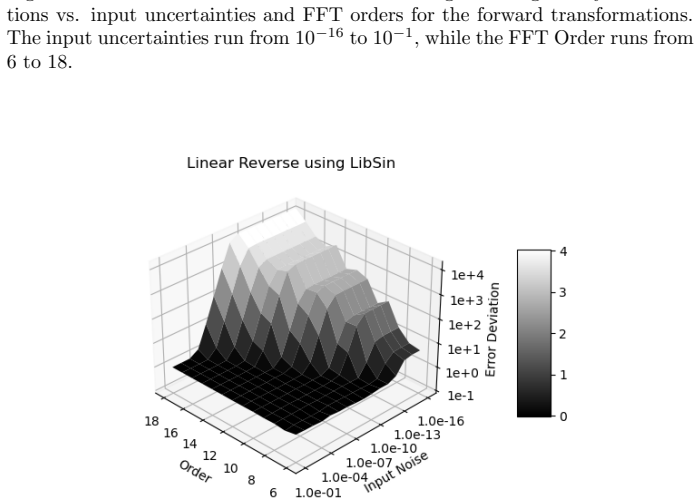
Figure 50. Figure 50: The result error deviations for Linear signals using library sine func [PITH_FULL_IMAGE:figures/full_fig_p058_50.png] view at source ↗
Figure 51
Figure 51. Figure 51: The result error deviations for Linear signals using library sine func [PITH_FULL_IMAGE:figures/full_fig_p058_51.png] view at source ↗
Figure 52
Figure 52. Figure 52: The result error deviations for Linear signals using indexed sine func [PITH_FULL_IMAGE:figures/full_fig_p059_52.png] view at source ↗
Figure 53
Figure 53. Figure 53: The result error deviations for Linear signals using indexed sine func [PITH_FULL_IMAGE:figures/full_fig_p059_53.png] view at source ↗
Figure 54
Figure 54. Figure 54: The error deviation and mean for sin(x) 2 + cos(x) 2 − 1, x ∈ [0, π/4], for different regression order as shown by the x-axis. In the legend, Value Error means the values of sin(x) 2 + cos(x) 2 − 1, Normalized Error means the value errors normalized by the calculated uncertainty, Regression means the sin(x) and cos(x) generated by regression, and Library means library sin(x) and cos(x). The y-axis on the … view at source ↗
read the original abstract

As a rigorous statistical approach, statistical Taylor expansion extends the conventional Taylor expansion by replacing precise input variables with random variables of known distributions and sample counts to compute the mean, the deviation, and the reliable factor of each result. It tracks the propagation of the input uncertainties through intermediate steps, so that the final analytic result becomes path independent. Therefore, it differs fundamentally from common approaches in applied mathematics that optimize computational path for each calculation. Statistical Taylor expansion may standardize numerical computations for analytic expressions. This study also introduces the implementation of statistical Taylor expansion termed variance arithmetic and presents corresponding test results across a wide range of mathematical applications. Another important conclusion of this study is that numerical errors in library functions can significantly affect results. It is desirable that each value from library functions be accomplished by an uncertainty deviation. The possible link between statistical Taylor expansion and quantum physics is discussed as well.

Editorial analysis

A structured set of objections, weighed in public.

Desk editor's note, referee report, simulated authors' rebuttal, and a circularity audit. Tearing a paper down is the easy half of reading it; the pith above is the substance, this is the friction.

Referee Report

2 major / 0 minor

Summary. The manuscript proposes 'statistical Taylor expansion' as an extension of conventional Taylor expansion in which input variables are replaced by random variables with known distributions and sample counts. This is used to compute means, deviations, and reliable factors while tracking uncertainty propagation through intermediate steps, with the asserted outcome that final analytic results become path-independent. The paper introduces an implementation called 'variance arithmetic,' reports test results across mathematical applications, notes that numerical errors in library functions can affect results (suggesting each library value should carry an uncertainty deviation), and discusses a possible link to quantum physics.

Significance. If the path-independence property and the associated variance-arithmetic rules could be rigorously derived and shown to be consistent under algebraic rearrangement, the method would offer a standardized approach to uncertainty propagation that avoids the need to optimize computational order. The empirical tests across applications and the emphasis on library-function uncertainties would constitute practical contributions to computational statistics. No machine-checked proofs, parameter-free derivations, or falsifiable predictions are described in the available text.

major comments (2)
  1. [Abstract] Abstract: The central claim that 'the final analytic result becomes path independent' by tracking mean, deviation, and reliable factor through every intermediate step is asserted without any explicit update rules for the basic arithmetic operations (addition, multiplication, composition) or any demonstration that the resulting algebra is associative or commutative up to the retained order. Standard first-order uncertainty propagation is already path-independent when applied consistently; the manuscript supplies neither the moment-closure scheme nor a consistency proof that would distinguish the proposed method.
  2. [Abstract] Abstract: No derivation, equations, or supporting evidence is provided for the claimed extension of Taylor expansion or for the variance-arithmetic implementation. The abstract states the method 'extends the conventional Taylor expansion' and 'presents corresponding test results' yet contains neither the propagation formulas nor any numerical examples, data, or verification details that would allow evaluation of the path-independence assertion.

Simulated Author's Rebuttal

2 responses · 1 unresolved

We thank the referee for the detailed review and feedback on our manuscript. We respond point-by-point to the major comments below, focusing on the abstract's role as a summary and the content provided in the full text. We acknowledge limitations in the current presentation of theoretical foundations.

read point-by-point responses
  1. Referee: [Abstract] Abstract: The central claim that 'the final analytic result becomes path independent' by tracking mean, deviation, and reliable factor through every intermediate step is asserted without any explicit update rules for the basic arithmetic operations (addition, multiplication, composition) or any demonstration that the resulting algebra is associative or commutative up to the retained order. Standard first-order uncertainty propagation is already path-independent when applied consistently; the manuscript supplies neither the moment-closure scheme nor a consistency proof that would distinguish the proposed method.

    Authors: The abstract is a concise overview and does not contain the explicit update rules or formal algebraic proofs. The full manuscript defines variance arithmetic rules for addition, multiplication, and composition in the methods section and demonstrates path-independence through empirical test cases where alternative computational orders produce consistent results. We agree that no moment-closure scheme or consistency proof is supplied to rigorously distinguish the method from standard first-order propagation, and a formal demonstration of associativity/commutativity is absent. We can partially revise the abstract to reference the rules and tests in the main text. revision: partial

  2. Referee: [Abstract] Abstract: No derivation, equations, or supporting evidence is provided for the claimed extension of Taylor expansion or for the variance-arithmetic implementation. The abstract states the method 'extends the conventional Taylor expansion' and 'presents corresponding test results' yet contains neither the propagation formulas nor any numerical examples, data, or verification details that would allow evaluation of the path-independence assertion.

    Authors: Abstracts are limited in length and typically omit detailed derivations, equations, or examples. The manuscript body provides the extension of Taylor expansion by modeling inputs as random variables, introduces the variance arithmetic implementation, and includes test results across mathematical applications with numerical verification of path-independence. We can revise the abstract to indicate that these elements appear in the main text. revision: partial

standing simulated objections not resolved
  • The manuscript does not provide a rigorous consistency proof, moment-closure scheme, machine-checked proofs, or parameter-free derivations for the path-independence property under algebraic rearrangement.

Circularity Check

0 steps flagged

No circularity; path-independence asserted as consequence of propagation tracking without self-referential reduction or fitted inputs.

full rationale

The abstract presents statistical Taylor expansion as an extension that replaces inputs with random variables and tracks uncertainty to yield path-independent results, then introduces variance arithmetic as its implementation. No equations, update rules for arithmetic operations, or derivations appear in the provided text that would make the path-independence claim equivalent to its own inputs by construction. No self-citations, uniqueness theorems, or ansatzes are referenced that reduce the central claim to prior author work or tautology. The derivation is therefore self-contained as a definitional proposal rather than a circular loop; any weakness lies in lack of explicit rules or verification, not in circularity per the enumerated patterns.

Axiom & Free-Parameter Ledger

0 free parameters · 1 axioms · 1 invented entities

Review performed on abstract only; full text unavailable, so ledger entries are inferred from stated claims with low detail.

axioms (1)
  • domain assumption Input variables can be replaced by random variables possessing known distributions and finite sample counts while preserving analytic tractability.
    Directly invoked in the description of how statistical Taylor expansion operates.
invented entities (1)
  • variance arithmetic no independent evidence
    purpose: Practical implementation of statistical Taylor expansion for computing means, deviations, and reliability factors.
    Introduced in the abstract as the concrete realization of the new method.

pith-pipeline@v0.9.0 · 5669 in / 1276 out tokens · 28449 ms · 2026-05-23T20:34:17.821571+00:00 · methodology

discussion (0)

Sign in with ORCID, Apple, or X to comment. Anyone can read and Pith papers without signing in.

Reference graph

Works this paper leans on

38 extracted references · 38 canonical work pages

  1. [1]

    C. P. Wang. A new uncertainty-bearing floating-point arithmetic.Reliable Com- puting, 16:308–361, 2012

  2. [2]

    Littauer.Introduction to Statistical Methods

    Sylvain Ehrenfeld and Sebastian B. Littauer.Introduction to Statistical Methods. McGraw-Hill, 1965

  3. [3]

    Taylor.Introduction to Error Analysis: The Study of Output Precisions in Physical Measurements

    John R. Taylor.Introduction to Error Analysis: The Study of Output Precisions in Physical Measurements. University Science Books, 1997

  4. [4]

    Springer, 1992

    Jurgen Bortfeldt, editor.Fundamental Constants in Physics and Chemistry. Springer, 1992

  5. [5]

    Evans and Jeffrey S

    Michael J. Evans and Jeffrey S. Rosenthal.Probability and Statistics: The Science of Uncertainty. W. H. Freeman, 2003

  6. [6]

    Some relations between extended and unscented kalman filters.IEEE Transactions on Signal Processing, 60-2:545–555, 2012

    Fredrik Gustafsson and Gustaf Hendeby. Some relations between extended and unscented kalman filters.IEEE Transactions on Signal Processing, 60-2:545–555, 2012

  7. [7]

    McGraw-Hill, 1988

    John P Hayes.Computer Architecture. McGraw-Hill, 1988

  8. [8]

    What every computer scientist should know about floating-point arithmetic.ACM Computing Surveys, March 1991

    David Goldberg. What every computer scientist should know about floating-point arithmetic.ACM Computing Surveys, March 1991

  9. [9]

    Institute of Electrical and Electronics Engineers.ANSI/IEEE 754-2008 Standard for Binary Floating-Point Arithmetic, 2008

  10. [10]

    Kulish and W.M

    U. Kulish and W.M. Miranker. The arithmetic of digital computers: A new approach.SIAM Rev., 28(1), 1986

  11. [11]

    J. H. Wilkinson.Rounding Errors in Algebraic Processes. SIAM, 1961

  12. [12]

    Higham.Accuracy and Stability of Numerical Algorithms

    Nicholas J. Higham.Accuracy and Stability of Numerical Algorithms. SIAM, 2002

  13. [13]

    Press, Saul A Teukolsky, William T

    William H. Press, Saul A Teukolsky, William T. Vetterling, and Brian P. Flannery. Numerical Recipes in C. Cambridge University Press, 1992

  14. [14]

    Academic Press, 1998

    Oliver Aberth.Precise Numerical Methods Using C++. Academic Press, 1998

  15. [15]

    Higham†and Theo Mary

    Nicholas J. Higham†and Theo Mary. A new approach to probabilistic rounding error analysis.SIAM Journal on Scientific Computing, 41(5):A2815–A2835, 2019

  16. [16]

    Liu and T

    B. Liu and T. Kaneko. Error analysis of digital filters realized with floating-point arithmetic.Proc. IEEE, 57:p1735–1747, 1969. https://github.com/Chengpu0707/VarianceArithmetic65

  17. [17]

    B. D. Rao. Floating-point arithmetic and digital filters.IEEE, Transations on Signal Processing, 40:85–95, 1992

  18. [18]

    Baker and Jerry P

    Gregory L. Baker and Jerry P. Gollub.Chaotic Dynamics: An Introduction. Cambridge University Press, 1990

  19. [19]

    Accu- racy of mathematical functions in single, double, double extended, and quadruple precision

    Brian Gladman, Vincenzo Innocente, John Mather, and Paul Zimmermann. Accu- racy of mathematical functions in single, double, double extended, and quadruple precision. 2024

  20. [20]

    Moore.Interval Analysis

    R.E. Moore.Interval Analysis. Prentice Hall, 1966

  21. [21]

    W. Kramer. A prior worst case error bounds for floating-point computations. IEEE Trans. Computers, 47:750–756, 1998

  22. [22]

    Alefeld and G

    G. Alefeld and G. Mayer. Interval analysis: Theory and applications.Journal of Computational and Applied Mathematics, 121:421–464, 2000

  23. [23]

    W. Kramer. Generalized intervals and the dependency problem.Proceedings in Applied Mathematics and Mechanics, 6:685–686, 2006

  24. [24]

    Neumaier S.M

    A. Neumaier S.M. Rump S.P. Shary B. Kearfott, M. T. Nakao and P. Van Hen- tenryck. Standardized notation in interval analysis.Computational Technologies, 15:7–13, 2010

  25. [25]

    W. T. Tucker and S. Ferson.Probability bounds analysis in environmental risk assessments. Applied Biomathmetics, 100 North Country Road, Setauket, New York 11733, 2003

  26. [26]

    Stolfi and L

    J. Stolfi and L. H. de Figueiredo. An introduction to affine arithmetic.TEMA Tend. Mat. Apl. Comput., 4:297–312, 2003

  27. [27]

    Alt and J.-L

    R. Alt and J.-L. Lamotte. Some experiments on the evaluation of functional ranges using a random interval arithmetic.Mathematics and Computers in Simulation, 56:17–34, 2001

  28. [28]

    Stolfi and L

    J. Stolfi and L. H. de Figueiredo.Self-validated numerical methods and applica- tions. ftp:// ftp.tecgraf.puc-rio.br/pub/lhf/doc/cbm97.ps.gz, 1997

  29. [29]

    wikipedia, the free encyclopedia

    Propagation of uncertainty.http://en.wikipedia.org/wiki/Propagation_of_ uncertainty, 2011. wikipedia, the free encyclopedia

  30. [30]

    Ferson H

    S. Ferson H. M. Regan and D. Berleant. Equivalence of methods for uncertainty propagation of real-valued random variables.International Journal of Approxi- mate Reasoning, 36:1–30, 2004

  31. [31]

    wikipedia, the free encyclopedia

    Significance arithmetic.http://en.wikipedia.org/wiki/Significance_ arithmetic, 2011. wikipedia, the free encyclopedia

  32. [32]

    Goldstein

    M. Goldstein. Significance arithmetic on a digital computer.Communications of the ACM, 6:111–117, 1963

  33. [33]

    R. L. Ashenhurst and N. Metropolis. Unnormalized floating-point arithmetic. Journal of the ACM, 6:415–428, 1959

  34. [34]

    Spaletta M

    G. Spaletta M. Sofroniou. Precise numerical computation.The Journal of Logic and Algebraic Programming, 65:113–134, 2005

  35. [35]

    J. Vignes. A stochastic arithmetic for reliable scientific computation.Mathematics and Computers in Simulation, 35:233–261, 1993. 66CP Wang,Statistical Taylor Expansion

  36. [36]

    C. Denis N. S. Scott, F. Jezequel and J. M. Chesneaux. Numerical ’health’ check for scientific codes: the cadna approach.Computer Physics Communications, 176(8):501–527, 2007

  37. [37]

    Hefferon

    J. Hefferon. Linear algebra.http://joshua.smcvt.edu/linearalgebra/, 2011

  38. [38]

    Cambridge Univ Press, 1995

    Paul Horowitz and Hill Winfield.Art of Electronics. Cambridge Univ Press, 1995