Calculating phase diagrams with ATAT
Pith reviewed 2026-05-24 17:51 UTC · model grok-4.3
The pith
Collected notes from personal experimentation offer guidance on using ATAT tools for phase diagram calculations.
A machine-rendered reading of the paper's core claim, the machinery that carries it, and where it could break.
Core claim
This document is a short and informal tutorial on some aspects of calculating phase diagrams with the ATAT-tools emc2 and phb and on creating cluster expansions with maps. It is neither complete, nor in any way an official document, but mainly a set of collected notes taken during experimentation with ATAT.
What carries the argument
The ATAT tools emc2 and phb for phase diagram calculations together with maps for cluster expansions, described through the author's collected usage notes.
If this is right
- Users can apply the described steps with emc2 and phb to generate phase diagrams from cluster expansions.
- The notes on maps can assist in setting up cluster expansions that feed into the phase diagram tools.
- The informal format allows readers to adapt the guidance to their own computational setups without requiring complete official documentation.
Where Pith is reading between the lines
- Community contributions of similar notes could fill documentation gaps for other specialized materials-science codes.
- Cross-checking the notes against current versions of ATAT would test whether the guidance remains valid after software updates.
- Readers might combine these notes with official manuals to create more complete personal workflows.
Load-bearing premise
The author's personal experimentation produced accurate and transferable guidance for other users of the same software tools.
What would settle it
A reader who follows the provided notes step by step obtains phase diagrams or cluster expansions that differ systematically from independently verified results for the same input systems.
Figures


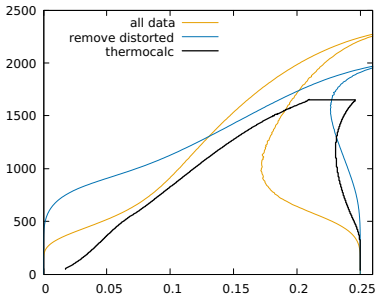


read the original abstract
This document is a short and informal tutorial on some aspects of calculating phase diagrams with the ATAT-tools emc2 and phb and on creating cluster expansions with maps. It is neither complete, nor in any way an official document, but mainly a set of collected notes I took during experimentation with ATAT.
Editorial analysis
A structured set of objections, weighed in public.
Referee Report
Summary. The manuscript is a short informal set of personal notes on aspects of using the ATAT tools emc2 and phb to calculate phase diagrams and maps to create cluster expansions. It explicitly disclaims completeness or official status and presents itself solely as collected notes from the author's experimentation.
Significance. If the notes accurately capture the author's runs with the named tools, they could offer anecdotal practical guidance to other ATAT users. However, the absence of any formal claims, derivations, validation, or systematic coverage limits any potential significance to the computational engineering literature.
major comments (1)
- The manuscript contains no scientific claims, equations, data, or derivations (as stated in the abstract and confirmed by the document's self-description), rendering it outside the scope of a peer-reviewed journal article in cs.CE.
Simulated Author's Rebuttal
We thank the referee for the review. The manuscript is explicitly framed as informal collected notes, as stated in the abstract.
read point-by-point responses
-
Referee: The manuscript contains no scientific claims, equations, data, or derivations (as stated in the abstract and confirmed by the document's self-description), rendering it outside the scope of a peer-reviewed journal article in cs.CE.
Authors: We agree that the manuscript presents no new scientific claims, equations, data, or derivations, consistent with its description as a short informal tutorial of personal notes on using the ATAT tools. Its intended contribution is practical guidance based on the author's experimentation, which may assist other users of these established codes in computational phase diagram calculations. While we acknowledge this format differs from a standard research article, similar user-oriented notes on specialized software have appeared in the computational engineering literature to fill gaps not covered by official documentation. revision: no
Circularity Check
No significant circularity: informal notes without derivations or claims
full rationale
The manuscript is explicitly an informal collection of personal notes from the author's experimentation with ATAT tools (emc2, phb, maps), with no formal derivations, equations, predictions, fitted parameters, or assertions of general accuracy. No load-bearing steps exist that could reduce to self-definition, fitted inputs, or self-citations; the document requires only that the notes reflect the author's runs, which is self-contained by construction.
Axiom & Free-Parameter Ledger
Reference graph
Works this paper leans on
-
[1]
Axel Van De Walle and Mark Asta. Self-driven lattice-model Monte Carlo simulations of alloy thermodynamic properties and phase diagrams.Mod- elling and Simulation in Materials Science and Engineering , 10(5):521–538, 2002
work page 2002
-
[2]
Axel Van De Walle. Multicomponent multisublattice alloys, nonconfigura- tionalentropyandotheradditionstotheAlloyTheoreticAutomatedToolkit. pages 1–25, 2009
work page 2009
-
[3]
Daan Frenkel and Berend Smit.Understanding molecular simulation: from algorithms to applications , volume 1. Elsevier, 2001
work page 2001
-
[4]
Dane Morgan. Computational Laboratory : Monte Carlo for Phase Stability Calculations Atomistic Modeling Toolbox ( AMTB ). 2005
work page 2005
-
[5]
Automatic first-principles phase diagrams calculations
A. van de Walle, M. Asta, and G. Ceder. Talk "Automatic first-principles phase diagrams calculations". https://www.brown.edu/Departments/ Engineering/Labs/avdw/atat/atattalk.pdf, 2002
work page 2002
-
[6]
Gnuplot 4.5: An interactive plotting program
T Williams, C Kelley, HB Bröker, J Campbell, R Cunningham, D Denholm, E Elber, R Fearick, C Grammes, and L Hart. Gnuplot 4.5: An interactive plotting program. 2011. http://www.gnuplot.info, 2017
work page 2011
-
[7]
F. Soisson and G. Martin. Monte Carlo simulations of the decomposition of metastable solid solutions: Transient and steady-state nucleation kinetics. Physical Review B - Condensed Matter and Materials Physics , 62(1):203– 214, 2000. 27
work page 2000
-
[8]
David A Porter, Kenneth E Easterling, and Mohamed Sherif.Phase Trans- formations in Metals and Alloys, (Revised Reprint) . CRC press, 2009
work page 2009
-
[9]
Vasp meets atat.http://www.jespertoftkristensen
Jesper Kristensen. Vasp meets atat.http://www.jespertoftkristensen. com/JTK/Blog/Entries/2013/11/7_Converting_str.out_to_POSCAR_ and_vice_versa.html, 2014
work page 2013
-
[10]
The atomic simulation environment– a python library for working with atoms
Ask Hjorth Larsen, Jens Jørgen Mortensen, Jakob Blomqvist, Ivano E Castelli, Rune Christensen, Marcin Dułak, Jesper Friis, Michael N Groves, Bjørk Hammer, Cory Hargus, et al. The atomic simulation environment– a python library for working with atoms. Journal of Physics: Condensed Matter, 29(27):273002, 2017
work page 2017
-
[11]
How to visualize the clusters found in atat
Jesper Kristensen. How to visualize the clusters found in atat. http://www.jespertoftkristensen.com/JTK/Blog/Entries/2013/ 11/8_How_to_visualize_the_clusters_found_in_ATAT.html, 2014
work page 2013
-
[12]
Woodward, Axel Van De Walle, Mark Asta, and D.R
C. Woodward, Axel Van De Walle, Mark Asta, and D.R. Trinkle. First- principles study of interfacial boundaries in Ni–Ni3Al. Acta Materialia , 75:60–70, 2014
work page 2014
-
[13]
Springer Science & Business Media, 2007
Joachim Rösler, Harald Harders, and Martin Bäker.Mechanical behaviour of engineering materials: metals, ceramics, polymers, and composites . Springer Science & Business Media, 2007
work page 2007
-
[14]
Thermo-calc & dictra, computational tools for materials sci- ence
Jan-Olof Andersson, Thomas Helander, Lars Höglund, Pingfang Shi, and Bo Sundman. Thermo-calc & dictra, computational tools for materials sci- ence. Calphad, 26(2):273–312, 2002. 28
work page 2002
discussion (0)
Sign in with ORCID, Apple, or X to comment. Anyone can read and Pith papers without signing in.