Optimal semiconcavity with fractional modulus for Hamilton-Jacobi equations with Neumann boundary conditions
Pith reviewed 2026-05-25 04:02 UTC · model grok-4.3
The pith
Viscosity solutions to Hamilton-Jacobi equations with Neumann boundary conditions are globally semiconcave with an optimal fractional modulus.
A machine-rendered reading of the paper's core claim, the machinery that carries it, and where it could break.
Core claim
Viscosity solutions to the Neumann boundary value problem for Hamilton-Jacobi equations are globally semiconcave with a fractional modulus; the result is obtained by investigating a regularity property of solutions to the Skorokhod problem, and the fractional exponent is shown to be optimal.
What carries the argument
Regularity property of solutions to the Skorokhod problem, which transfers to the viscosity solutions of the Neumann problem to produce the global fractional-modulus semiconcavity.
If this is right
- Global semiconcavity holds uniformly up to the boundary despite the Neumann condition.
- The fractional exponent is sharp, so no modulus with a larger exponent works for all solutions.
- The Skorokhod-problem route supplies an explicit way to obtain the modulus without relying on interior estimates alone.
Where Pith is reading between the lines
- The same Skorokhod regularity may adapt to time-dependent or obstacle problems with similar boundary conditions.
- Quantitative error bounds for numerical approximations could be derived directly from the fractional modulus.
- Higher-dimensional or nonconvex Hamiltonians might admit the same transfer argument once the Skorokhod property is verified.
Load-bearing premise
The regularity property established for Skorokhod problem solutions is strong enough to pass to the viscosity solutions of the PDE and produce the claimed fractional modulus globally.
What would settle it
A concrete viscosity solution of a Neumann Hamilton-Jacobi problem whose second derivatives fail to satisfy the claimed fractional modulus of continuity, or for which a strictly better exponent holds in every case.
Figures
read the original abstract
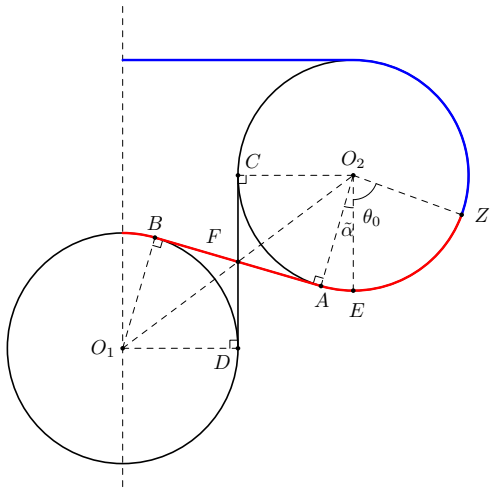
Here, we study the generalized semiconcavity property of viscosity solutions of the Neumann boundary value problem for Hamilton-Jacobi equations. In particular, we establish the global semiconcavity with a fractional modulus by investigating a regularity property of solutions to the Skorokhod problem, and show the optimality of the fractional exponent.
Editorial analysis
A structured set of objections, weighed in public.
Referee Report
Summary. The manuscript establishes the global semiconcavity with a fractional modulus for viscosity solutions of Hamilton-Jacobi equations with Neumann boundary conditions. This is done by investigating a regularity property of solutions to the Skorokhod problem and proving the optimality of the fractional exponent.
Significance. If the transfer argument holds, the result supplies a sharp global regularity estimate for Neumann problems that improves on local interior semiconcavity results and has potential applications to reflected processes and boundary-value theory for first-order PDEs.
major comments (2)
- [Abstract, paragraph 2] Abstract, paragraph 2 and the section containing the main transfer argument: the regularity property proved for Skorokhod solutions is asserted to produce the stated fractional modulus globally for the viscosity solution, but the manuscript must explicitly verify that the boundary reflection does not degrade the exponent or destroy uniformity near the boundary; this step is load-bearing for the central claim.
- [Optimality section] The section proving optimality of the fractional exponent: the counter-example or construction showing sharpness must be checked to confirm it respects the Neumann condition and does not rely on interior-only data.
minor comments (2)
- Notation for the fractional modulus should be introduced with an explicit formula or reference to its definition early in the paper.
- A short comparison table or remark contrasting the new fractional modulus with classical C^{1,1} or Lipschitz moduli would improve readability.
Simulated Author's Rebuttal
We thank the referee for the detailed review and valuable suggestions. We address each major comment below and plan to revise the manuscript to incorporate clarifications where needed.
read point-by-point responses
-
Referee: [Abstract, paragraph 2] Abstract, paragraph 2 and the section containing the main transfer argument: the regularity property proved for Skorokhod solutions is asserted to produce the stated fractional modulus globally for the viscosity solution, but the manuscript must explicitly verify that the boundary reflection does not degrade the exponent or destroy uniformity near the boundary; this step is load-bearing for the central claim.
Authors: We agree that an explicit verification is important for clarity. In the transfer argument section, the proof already accounts for the Skorokhod reflection by using estimates that control the boundary term without degrading the fractional exponent. However, to make this more transparent, we will add a remark or subsection explicitly bounding the reflection contribution and confirming uniformity up to the boundary. This will strengthen the presentation without altering the result. revision: yes
-
Referee: [Optimality section] The section proving optimality of the fractional exponent: the counter-example or construction showing sharpness must be checked to confirm it respects the Neumann condition and does not rely on interior-only data.
Authors: The counterexample in the optimality section is constructed on a domain with Neumann boundary conditions in mind. The initial data and Hamiltonian are chosen so that the solution satisfies the boundary condition, and the singularity or lack of better modulus occurs globally, including near the boundary. We will add a brief explanation in the section to explicitly verify that the construction respects the Neumann condition and is not limited to interior points. revision: yes
Circularity Check
No circularity: derivation rests on independent regularity result for Skorokhod problem
full rationale
The abstract states that global semiconcavity with fractional modulus is established by investigating a regularity property of solutions to the Skorokhod problem and transferring it to viscosity solutions of the Neumann problem, with optimality of the exponent shown separately. No quoted equations or steps reduce the claimed modulus to a self-definition, fitted parameter renamed as prediction, or self-citation chain. The transfer is presented as a proved implication rather than an identity by construction, and the paper is self-contained against external benchmarks with no load-bearing self-citations identified in the provided text.
Axiom & Free-Parameter Ledger
Reference graph
Works this paper leans on
-
[1]
G. Barles, P.-L. Lions,Fully nonlinear Neumann type boundary conditions for first-order Hamilton- Jacobi equations, Nonlinear Analysis, Theory, Methods & Applications, 16 (1991), 143 – 153
work page 1991
- [2]
-
[3]
P. Cannarsa, R. Capuani,Existence and uniqueness for mean field games with state constraints. In: PDE Models for Multi-Agent Phenomena, Springer INdAM Ser., vol. 28. Springer, Cham (2018)
work page 2018
-
[4]
P. Cannarsa, R. Capuani, P. Cardaliaguet,C 1,1-smoothness of constrained solutions in the calculus of variations with application to mean field games. Math. Eng. 1(1), 174–203 (2018). 36
work page 2018
-
[5]
P. Cannarsa, R. Capuani, P. Cardaliaguet,Mean field games with state constraints: from mild to pointwise solutions of the PDE system. Calc. Var. Part. Differ. Equ. 60(3), 33 (2021)
work page 2021
-
[6]
P. Cannarsa, W. Cheng, C. Mendico, and K. Wang,Weak KAM Approach to First-Order Mean Field Games with State Constraints, J. Dyn. Diff. Equat., 35, 1885–1916 (2023)
work page 1916
-
[7]
P. Cardaliaguet, C. Marchi,Regularity of the eikonal equation with Neumann boundary conditions in the plane: application to fronts with nonlocal terms, SIAM J. Control Optim. 45(3), 1017–1038 (2006)
work page 2006
-
[8]
P. Cannarsa, C. Sinestrari,Semiconcave Functions, Hamilton–Jacobi Equations and Optimal Control, Progress in Nonlinear Differential Equations and their Applications, vol. 58. Birkh¨ auser Boston Inc., Boston (2004)
work page 2004
-
[9]
M. Crandall, H. Ishii, P.-L. Lions,User’s guide to viscosity solutions of second order partial differential equations, Bull. Am. Math. Soc. (N.S.) 27 (1992) 1 – 67
work page 1992
-
[10]
Day,Neumann-type boundary conditions for Hamilton-Jacobi equations in smooth domains, Appl
M. Day,Neumann-type boundary conditions for Hamilton-Jacobi equations in smooth domains, Appl. Math. Optim. 53 (2006), no. 3, 359–381
work page 2006
-
[11]
A. Douglis,The continuous dependence of generalized solutions of non-linear partial differential equations upon initial data, Comm. Pure Appl. Math. 14 (1961), 267–284
work page 1961
-
[12]
Y. Han,Global semiconcavity of solutions to first-order Hamilton-Jacobi equations with state con- straints, Adv. Cont. Discr. Mod., 2025, 106 (2025)
work page 2025
-
[13]
Ishii,Weak KAM aspects of convex Hamilton–Jacobi equations with Neumann type boundary conditions, J
H. Ishii,Weak KAM aspects of convex Hamilton–Jacobi equations with Neumann type boundary conditions, J. Math. Pures Appl., 95 (2011), 99 – 135
work page 2011
-
[14]
H. Ishii,Long-time asymptotic solutions of convex Hamilton–Jacobi equations with Neumann type boundary conditions, Calc. Var. Part. Differ. Equ., 42 (2011), 189 – 209
work page 2011
-
[15]
J. Jost, X. Li-Jost, Calculus of variations. Cambridge Studies in Advanced Mathematics, 64. Cam- bridge University Press, Cambridge, 1998
work page 1998
-
[16]
S. N. Kruˇ zkov,Generalized solutions of Hamilton-Jacobi equations of eikonal type. I. Statement of the problems; existence, uniqueness and stability theorems; certain properties of the solutions(Russian), Mat. Sb. (N.S.) 98(140) (1975), no. 3(11), 450–493, 496
work page 1975
-
[17]
P.-L. Lions, A.-S. Sznitman,Stochastic differential equations with reflecting boundary conditions, Comm. Pure Appl. Math. 37 (1984), no. 4, 511–537
work page 1984
-
[18]
Lions.Neumann type boundary conditions for Hamilton-Jacobi equations, Duke Math
P.-L. Lions.Neumann type boundary conditions for Hamilton-Jacobi equations, Duke Math. J., 52(4):793–820, 1985
work page 1985
- [19]
- [20]
-
[21]
Y. Matsukawa,Crystallography of Precipitates in Metals and Alloys: (2) Impact of Crystallography on Precipitation Hardening, Crystallography, Chapter 3, IntechOpen, London, 2019. (H. Mitake)Department of Mathematics, F aculty of Science and Engineering, W aseda University, 3-4-1 Okubo, Shinjuku-ku, Tokyo, 169-8555, Japan Email address:mitake@waseda.jp (P....
work page 2019
discussion (0)
Sign in with ORCID, Apple, or X to comment. Anyone can read and Pith papers without signing in.