Electron Paramagnetic Resonance Study of Radical Species on NaNbO3@CeO2-Modified Carbon Vulcan XC72 Gas Diffusion Electrode for Electrochemical Degradation of Paracetamol via Electro-Fenton
Pith reviewed 2026-06-27 14:37 UTC · model grok-4.3
The pith
Boron-doped diamond anodes paired with NaNbO3@CeO2 gas diffusion electrodes achieve complete paracetamol degradation in 15 minutes by generating 65 percent hydroxyl and 35 percent aryl radicals.
A machine-rendered reading of the paper's core claim, the machinery that carries it, and where it could break.
Core claim
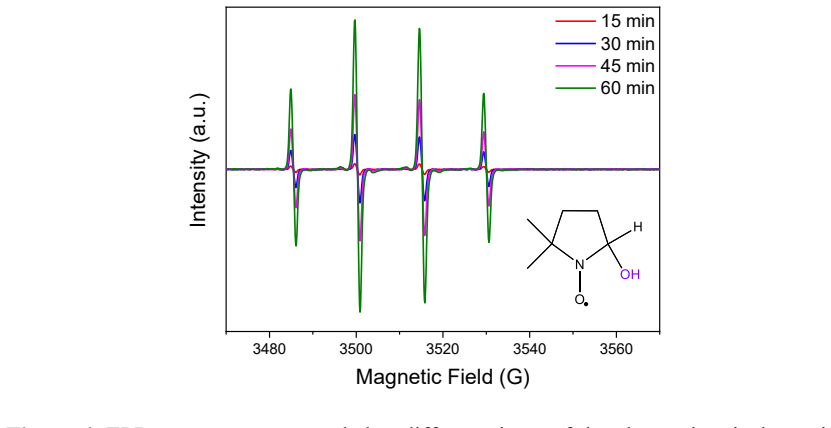
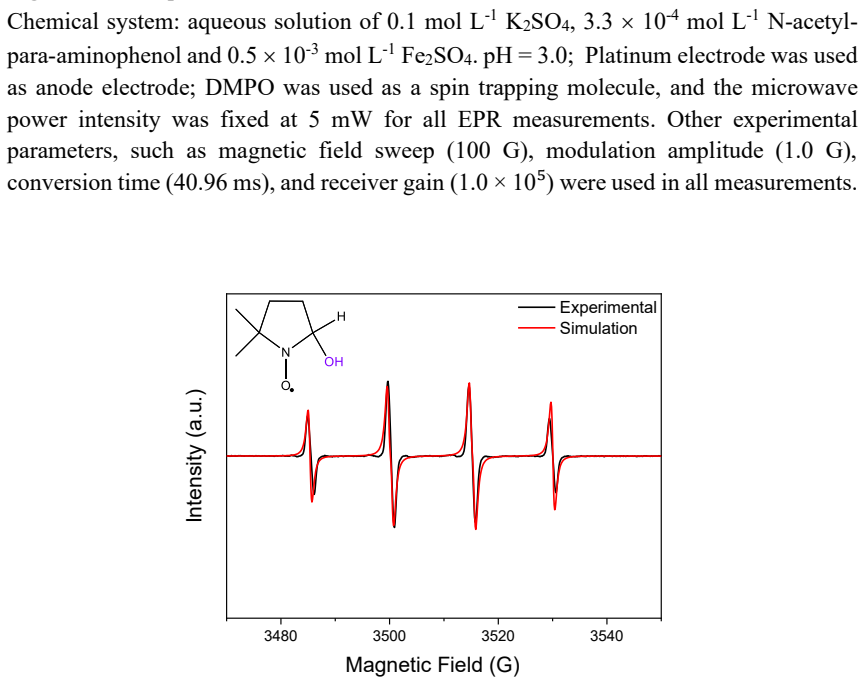
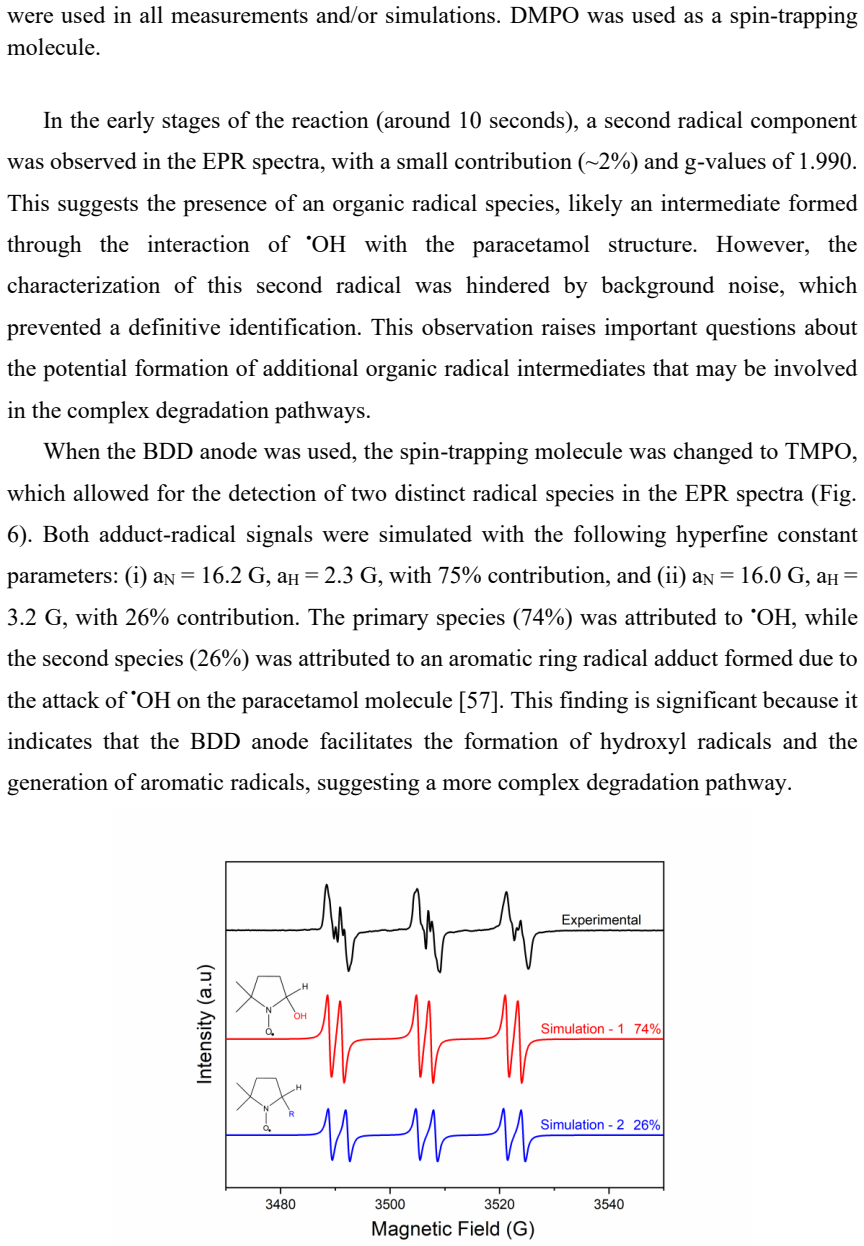
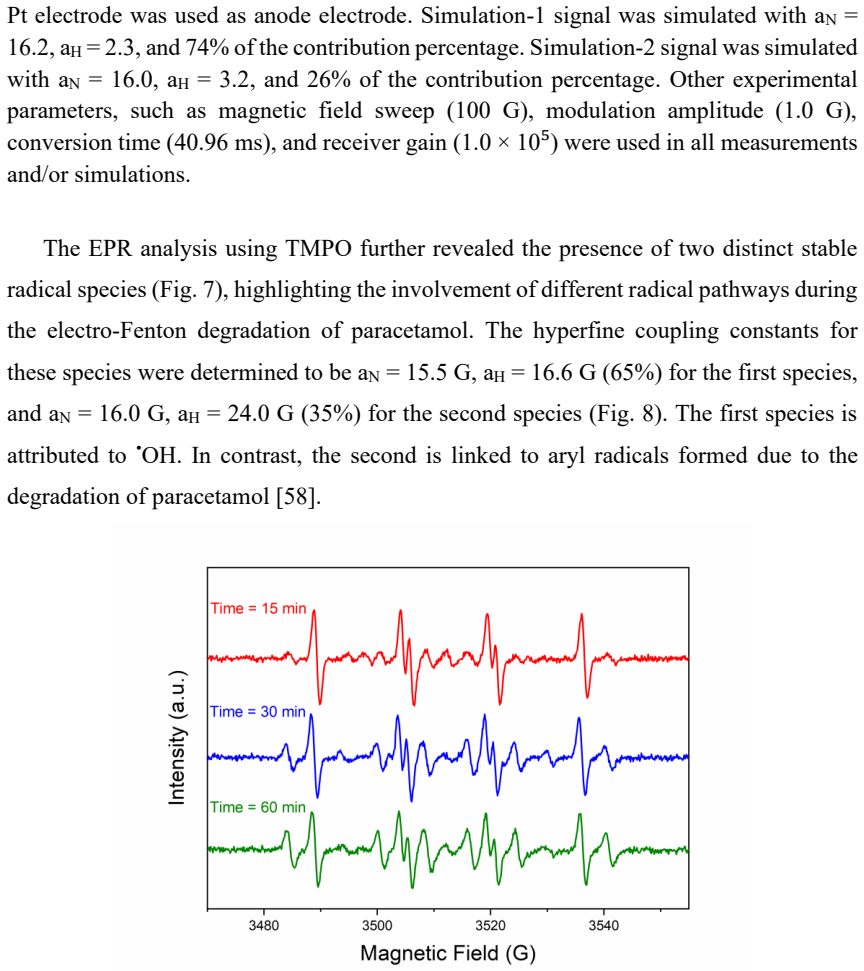
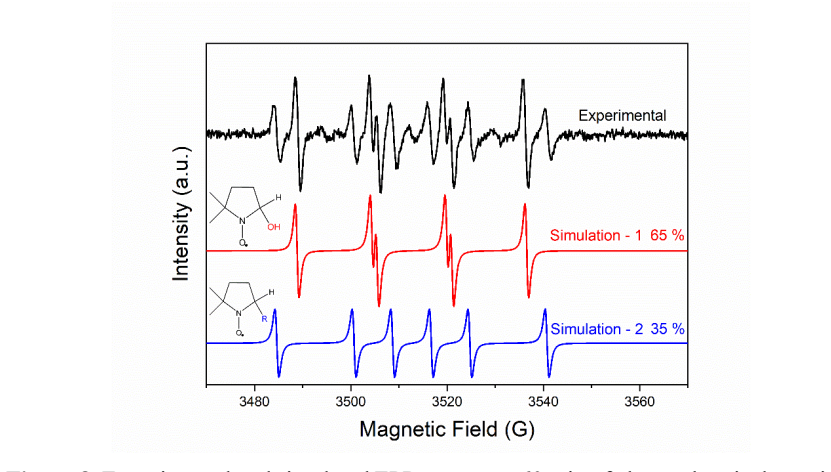
Electron paramagnetic resonance spectroscopy directly measures that the BDD anode generates 65 percent OH radicals and 35 percent aryl radicals while the Pt anode generates 74 percent OH radicals and 26 percent aryl radicals; these ratios correlate with complete paracetamol removal in 15 minutes and 81.6 percent total organic carbon removal for BDD versus 45 minutes and 67.8 percent for Pt when using the same NaNbO3@CeO2-modified GDE cathode.
What carries the argument
Electron paramagnetic resonance spectroscopy to quantify the relative fractions of hydroxyl and aryl radicals generated at the anode during electro-Fenton operation with a NaNbO3 nanocube and CeO2 nanorod modified gas diffusion electrode.
If this is right
- Anode materials can be screened and ranked by the aryl-to-hydroxyl radical ratio they produce rather than by total current efficiency alone.
- The BDD/NaNbO3@CeO2-GDE combination supplies a concrete electrode pair for rapid removal of paracetamol and similar aromatic pharmaceuticals from water.
- Quantitative radical speciation data enables targeted adjustment of operating conditions to favor the more effective radical pathway.
- Higher mineralization percentages reduce the formation of partially oxidized intermediates that may retain biological activity.
Where Pith is reading between the lines
- The same EPR protocol could be used to test whether other anode materials shift the aryl radical fraction and thereby improve performance on additional pharmaceuticals.
- Differences in radical mix may alter the distribution of toxic or persistent byproducts even when overall mineralization appears similar.
- If the GDE modification improves oxygen reduction to hydrogen peroxide, combining it with anodes that favor aryl radicals may yield additive gains in treatment speed.
Load-bearing premise
The EPR-measured differences in radical type percentages between anodes are the main driver of the observed differences in degradation speed and mineralization extent.
What would settle it
An experiment that holds mass transport, electrode surface area, and applied current fixed while swapping only the anode material and finds identical degradation kinetics despite the reported EPR radical ratios would falsify the central claim.
Figures
read the original abstract
While electrochemical oxidation is a promising technology for water treatment, a fundamental understanding of the specific radical mechanisms involved in pharmaceutical degradation has remained limited. This study addresses this gap by employing Electron Paramagnetic Resonance (EPR) spectroscopy to directly quantify the radical species generated during the degradation of paracetamol using a novel gas diffusion electrode (GDE) modified with NaNbO3 nanocubes and CeO2 nanorods. This approach provides a critical advancement beyond prior literature by moving from indirect inference to direct, quantitative analysis of reactive species. Results demonstrated that a boron-doped diamond (BDD) anode (65% OH radical, 35% aryl radicals) drastically outperformed a Platinum (Pt) anode (74% OH radical, 26% aryl radicals), achieving complete degradation in 15 minutes versus 45 minutes and 81.6% versus 67.8% mineralization. Consequently, this work provides a foundational mechanistic framework that fundamentally advances the field, offering not just a more effective material system (BDD/NaNbO3@CeO2-GDE) but also a validated methodology for rationally designing and optimizing electrochemical water treatment processes based on quantifiable radical pathways.
Editorial analysis
A structured set of objections, weighed in public.
Referee Report
Summary. The manuscript reports an EPR spectroscopy study of radical species generated at a NaNbO3@CeO2-modified carbon Vulcan XC72 gas diffusion electrode during electro-Fenton degradation of paracetamol. It claims that a BDD anode produces 65% OH radicals and 35% aryl radicals, achieving complete degradation in 15 min and 81.6% mineralization, while a Pt anode produces 74% OH and 26% aryl radicals, requiring 45 min for complete degradation and yielding only 67.8% mineralization. The work positions the direct, quantitative EPR analysis as an advance over indirect methods for mechanistic understanding and material optimization in electrochemical water treatment.
Significance. If the EPR-derived radical percentages are shown to be the dominant variable controlling the observed kinetic and mineralization differences (rather than total flux, mass transport, or cathode performance), the study would supply a concrete, quantifiable basis for anode selection in electro-Fenton systems. The direct spectroscopic approach is in principle stronger than purely kinetic inference, but the current presentation supplies only relative percentages without supporting controls or absolute intensities.
major comments (1)
- [Abstract] Abstract: The performance gap (15 min vs 45 min complete degradation; 81.6% vs 67.8% mineralization) is attributed to the reported radical composition difference (BDD 65% OH/35% aryl vs Pt 74% OH/26% aryl). Because only relative percentages are stated and no absolute EPR intensities, spin-trap calibration, or matched total radical production rates are provided, the attribution remains unverified; other unmeasured factors (H2O2 generation at the shared GDE cathode, mass transport, or side reactions) could account for the observed differences.
Simulated Author's Rebuttal
We thank the referee for the detailed and constructive review. The central concern is that the performance differences are attributed to radical composition without absolute EPR quantification, leaving open the possibility that other factors explain the results. We respond to this point below and indicate planned revisions.
read point-by-point responses
-
Referee: [Abstract] Abstract: The performance gap (15 min vs 45 min complete degradation; 81.6% vs 67.8% mineralization) is attributed to the reported radical composition difference (BDD 65% OH/35% aryl vs Pt 74% OH/26% aryl). Because only relative percentages are stated and no absolute EPR intensities, spin-trap calibration, or matched total radical production rates are provided, the attribution remains unverified; other unmeasured factors (H2O2 generation at the shared GDE cathode, mass transport, or side reactions) could account for the observed differences.
Authors: We agree that the manuscript reports only relative radical percentages obtained via EPR under identical experimental conditions (same GDE cathode, electrolyte, and applied current) for the two anodes. Absolute intensities and spin-trap calibration were not performed, so total radical flux cannot be directly compared. Because the cathode is unchanged, differences in H2O2 generation are minimized, but we acknowledge that mass transport or side reactions could contribute. The observed correlation between the shift toward a higher aryl-radical fraction with BDD and the faster kinetics/mineralization provides supporting evidence for the mechanistic interpretation. We will revise the abstract to state that radical composition is a key differentiating factor rather than claiming it as the sole cause, and we will add a dedicated paragraph in the discussion section explicitly addressing the limitations of relative EPR quantification and the need for future absolute measurements. revision: yes
Circularity Check
No circularity; purely experimental measurements with no derivation chain
full rationale
The paper reports direct EPR spectroscopy measurements of relative radical percentages (OH vs aryl) on BDD and Pt anodes, along with observed degradation and mineralization outcomes. No equations, fitted parameters, predictions, or derivations are presented that reduce to inputs by construction. The central claims rest on experimental data rather than self-referential logic, self-citations as load-bearing premises, or renaming of known results. The reader's noted distinction between relative percentages and absolute rates concerns interpretive validity, not circularity in any derivation.
Axiom & Free-Parameter Ledger
axioms (1)
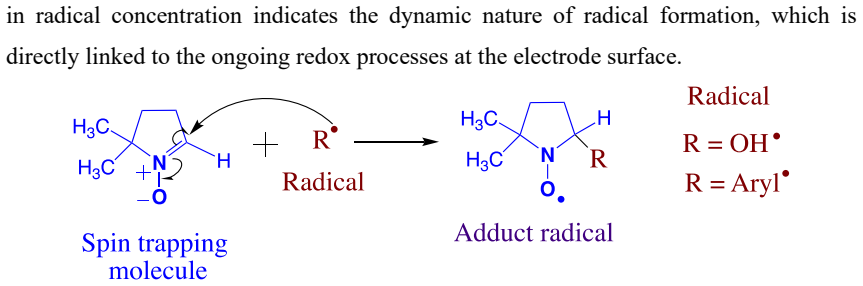
- domain assumption EPR spectroscopy can selectively detect, identify, and quantify hydroxyl and aryl radicals in aqueous reaction mixtures during electro-Fenton processes.
Reference graph
Works this paper leans on
-
[1]
Introduction N-acetyl-p-aminophenol, pharmaceutically known as acetaminophen or Paracetamol, is extensively used for analgesic and antipyretic purposes. The extensive use of this substance leads to significant environmental contamination due to human excretion, improper disposal practices, and effluents from wastewater treatment plants. This widespread re...
-
[2]
Experimental and Methods 2.1. Synthesis of the NaNbO3/CeO2 based nanomaterial The NaNbO3 microcubes were prepared and decorated with CeO2 nanorods according to a previous work published in our research group [26]. 1 g of Nb2O5 and 12 g of NaOH were dispersed in 30 mL of water and stirred for 30 minutes at room temperature (~ 300 K). The mixture was then t...
-
[3]
Results and discussion 3.1. Electro-Fenton degradation of paracetamol The electro-Fenton degradation of paracetamol aqueous solution (50 mg L-1) was investigated by use of GDE composed of Vulcan XC72 carbon modified with NaNbO3@CeO2 as a cathode. Pt or BDD was used as an anode electrode. The electrochemical experiment was carried out at pH 3.0 with the su...
-
[4]
TMPO was used as a spin trap (110-4 mol L-1). Microwave power (5 mW), magnetic field sweep (100 G), modulation amplitude (1.0 G), conversion time (40.96 ms), and receiver gain (1.0 × 10⁵) were used in all measurements and/or simulations. A key observation from the comparison between the Pt and BDD anodes is the shift in radical distribution. With the Pt ...
-
[5]
Conclusions This study successfully demonstrates the electrochemical degradation of paracetamol using a novel gas diffusion electrode (GDE) modified with NaNbO3 nanocubes and CeO2 nanorods, comparing Platinum (Pt) and boron-doped diamond (BDD) anodes. This work fundamentally advances the field by moving beyond simple performance comparisons to provide a q...
2021
-
[6]
Pinheiro, E.C
V.S. Pinheiro, E.C. Paz, L.R. Aveiro, L.S. Parreira, F.M. Souza, P.H.C. Camargo, M.C. Santos, Mineralization of paracetamol using a gas diffusion electrode modified with ceria high aspect ratio nanostructures, Electrochimica Acta 295 (2019) 39
2019
-
[7]
Nagles, M
E. Nagles, M. Ceroni, J.J. Hurtado -Murillo, J.J. Hurtado, Electrochemical determination of paracetamol in a pharmaceutical dose by adsorptive voltammetry with a carbon paste/La2O3 microcomposite, Analytical Methods 12 (2020) 2608
2020
-
[8]
Periyasamy, M
S. Periyasamy, M. Muthuchamy, Electrochemical oxidation of paracetamol in water by graphite anode: Effect of pH, electrolyte concentration and current density, Journal of Environmental Chemical Engineering 6 (2018) 7358
2018
-
[9]
Pacheco -Álvarez, R
M. Pacheco -Álvarez, R. Picos Benítez, O.M. Rodríguez -Narváez, E. Brillas, J.M. Peralta-Hernández, A critical review on paracetamol removal from different aqueous matrices by Fenton and Fenton -based processes, and their combined methods, Chemosphere 303 (2022) 134883
2022
-
[10]
Machado Fernandes, G.A
C. Machado Fernandes, G.A. Cerron -Calle, E. Brillas, M.C. Santos, S. Garcia - Segura, Optimization of fipronil removal via electro-Fenton using a carbon cloth air- diffusion electrode, Separation and Purification Technology 367 (2025) 132955
2025
-
[11]
Machado Fernandes, E
C. Machado Fernandes, E. Brillas, M.C. Santos, S. Garcia -Segura, Electro - Fenton treatment of benzophenone -4 solutions: A sustainable approach for its removal using an air -diffusion cathode, Process Safety and Environmental Protection 199 (2025) 107342
2025
-
[12]
X. Sun, W. Du, Y. Zu, Spinel sulfide with hierarchical porous structure for efficient degradation of metronidazole in electro -Fenton process, Colloids and Surfaces A: Physicochemical and Engineering Aspects 722 (2025) 137257
2025
-
[13]
Trench, C.M
A.B. Trench, C.M. Fernandes, J.P.C. Moura, L.E.B. Lucchetti, T.S. Lima, V.S. Antonin, J.M. de Almeida, P. Autreto, I. Robles, A.J. Motheo, M.R.V. Lanza, M.C. Santos, Hydrogen peroxide electrogeneration from O(2) electroreduction: A review focusing on c arbon electrocatalysts and environmental applications, Chemosphere 352 (2024) 141456
2024
-
[14]
Lozano, P
I. Lozano, P. Cervantes -Aviles, A. Keller, C.L. Aguilar, Removal of pharmaceuticals and personal care products from wastewater via anodic oxidation and electro -Fenton processes: current status and needs regarding their application, Water Science and Technology 88 (2023) 1143
2023
-
[15]
F. Deng, H. Olvera-Vargas, M. Zhou, S. Qiu, I. Sirés, E. Brillas, Critical Review on the Mechanisms of Fe2+ Regeneration in the Electro -Fenton Process: Fundamentals and Boosting Strategies, Chemical Reviews 123 (2023) 4635
2023
-
[16]
J. Hu, B. Wu, L. Chen, C. Song, H. Yang, F. Long, J. Sun, R. Chi, Influences of CeO2 morphology on enhanced performance of electro -Fenton for wastewater treatment, Journal of Rare Earths 40 (2022) 1870
2022
-
[17]
Brillas, I
E. Brillas, I. Sirés, M.A. Oturan, Electro -Fenton Process and Related Electrochemical Technologies Based on Fenton’s Reaction Chemistry, Chemical Reviews 109 (2009) 6570
2009
-
[18]
Moura, L.E.B
J.P.C. Moura, L.E.B. Lucchetti, C.M. Fernandes, A.B. Trench, C.N. Lange, B.L. Batista, J.M. Almeida, M.C. Santos, Experimental and theoretical studies of WO3/Vulcan XC -72 electrocatalyst enhanced H2O2 yield ORR performed in acid and alkaline medium, Journa l of Environmental Chemical Engineering 12 (2024) 113182
2024
-
[19]
X. Cao, D. Jiang, M. Huang, J. Pan, J. Lin, W. Chan, Iron oxide nanoparticles wrapped in graphene aerogel composite: Fabrication and application in electro - fenton at a Wide pH, Colloids and Surfaces A: Physicochemical and Engineering Aspects 587 (2020) 124269
2020
-
[20]
Y. Sun, S. Tu, Y. Li, X. Sui, S. Geng, H. Wang, X. Duan, L. Chang, Degradation mechanism of methylene blue by heterogenous electro -Fenton with CeO2/rGO composite cathode, Colloids and Surfaces A: Physicochemical and Engineering Aspects 690 (2024) 133861
2024
-
[21]
S. Tu, Z. Ning, X. Duan, X. Zhao, L. Chang, Efficient electrochemical hydrogen peroxide generation using TiO2/rGO catalyst and its application in electro -Fenton degradation of methyl orange, Colloids and Surfaces A: Physicochemical and Engineering Aspects 651 (2022) 129657
2022
-
[22]
Huang, X
H. Huang, X. Zou, R. Ji, J. Zhang, Z. Yuan, M. Zhao, H. Zhang, J. Geng, J. Li, Inducing three -phase interface to enhance hydroxyl radical production via green atomic H* -mediated electro -Fenton process for highly -efficient tetracycline degradation, Colloids and Surfaces A: Physicochemical and Engineering Aspects 698 (2024) 134577
2024
-
[23]
Assumpção, A
M.H.M.T. Assumpção, A. Moraes, R.F.B. De Souza, I. Gaubeur, R.T.S. Oliveira, V.S. Antonin, G.R.P. Malpass, R.S. Rocha, M.L. Calegaro, M.R.V. Lanza, M.C. Santos, Low content cerium oxide nanoparticles on carbon for hydrogen peroxide electrosynthesis, Applied Catalysis A: General 411-412 (2012) 1-6
2012
-
[24]
Assumpção, A
M.H.M.T. Assumpção, A. Moraes, R.F.B. De Souza, M.L. Calegaro, M.R.V. Lanza, E.R. Leite, M.A.L. Cordeiro, P. Hammer, M.C. Santos, Influence of the preparation method and the support on H2O2 electrogeneration using cerium oxide nanoparticles, Electrochimica Acta 111 (2013) 339-343
2013
-
[25]
Machado Fernandes, A.O
C. Machado Fernandes, A.O. Santos, V.S. Antonin, J.P.C. Moura, A.B. Trench, O.C. Alves, Y. Xing, J.C.M. Silva, M.C. Santos, Magnetic field -enhanced oxygen reduction reaction for electrochemical hydrogen peroxide production with different cerium oxide nanostructures, Chemical Engineering Journal 488 (2024) 150947
2024
-
[26]
Machado Fernandes, J.P.C
C. Machado Fernandes, J.P.C. Moura, A.B. Trench, O.C. Alves, Y. Xing, M.R.V. Lanza, J.C.M. Silva, M.C. Santos, Magnetic field -enhanced two -electron oxygen reduction reaction using CeMnCo nanoparticles supported on different carbonaceous matrices, Materials Today Nano 28 (2024) 100524
2024
-
[27]
Trench, J
A.B. Trench, J. Paulo C. Moura, V.S. Antonin, C. Machado Fernandes, L. Liu, M.C. Santos, Improvement of H2O2 electrogeneration using a Vulcan XC72 carbon- based electrocatalyst modified with Ce -doped Nb2O5, Advanced Powder Technology 35 (2024) 104404
2024
-
[28]
W. Sun, Y. Zhou, H. Zou, G. Liu , Synergistic spatial confinement and electron penetration for ultrafast Fenton decontamination of micro pollutants and nanoplastics, Journal of Hazardous Materials 495 (2025) 139150
2025
-
[29]
W. Sun, G. Liu, H. Zou, S. Wang, X. Duan, Site-designed dual -active-center catalysts for co -catalysis in advanced oxidation processes, npj Materials Sustainability 3 (2025) 2
2025
-
[30]
J. Teng, Y. Zhang, P. Li, G. Liu, Hydroxyl radical in anodic oxidation -based electrochemical advanced oxidation processes: Critical understanding and a new perspective, Sustainable Horizons 16 (2025) 100156
2025
-
[31]
Antonin, L.E.B
V.S. Antonin, L.E.B. Lucchetti, F.M. Souza, V.S. Pinheiro, J.P.C. Moura, A.B. Trench, J.M. de Almeida, P.A.S. Autreto, M.R.V. Lanza, M.C. Santos, Sodium niobate microcubes decorated with ceria nanorods for hydrogen peroxide electrogeneration: An experiment al and theoretical study, Journal of Alloys and Compounds 965 (2023) 171363
2023
-
[32]
Antonin, F.M
V.S. Antonin, F.M. Souza, V.S. Pinheiro, J.P.C. Moura, A.B. Trench, C.M. Fernandes, M.R.V. Lanza, M.C. Santos, Electrocatalytic hydrogen peroxide generation using WO3 nanoparticle -decorated sodium niobate microcubes, Journal of Electroanalytical Chemistry 959 (2024) 118190
2024
-
[33]
C. -C. Su, A. -T. Chang, L.M. Bellotindos, M. -C. Lu, Degradation of acetaminophen by Fenton and electro -Fenton processes in aerator reactor, Separation and Purification Technology 99 (2012) 8
2012
-
[35]
K. Shi, Y. Wang, A. Xu, H. Zhu, L. Gu, X. Liu, J. Shen, W. Han, K. Wei, Integrated electro-Fenton system based on embedded U-tube GDE for efficient degradation of ibuprofen, Chemosphere 311 (2023) 137196
2023
-
[36]
Cruz -Rizo, S
A. Cruz -Rizo, S. Gutiérrez -Granados, R. Salazar, J.M. Peralta -Hernández, Application of electro -Fenton/BDD process for treating tannery wastewaters with industrial dyes, Separation and Purification Technology 172 (2017) 296
2017
-
[37]
Sennaoui, S
A. Sennaoui, S. Alahiane, F. Sakr, M. Tamimi, E.H. Ait Addi, M. Hamdani, A. Assabbane, Comparative degradation of benzoic acid and its hydroxylated derivatives by electro -Fenton technology using BDD/carbon -felt cells, Journal of Environmental Chemical Engineering 7 (2019) 103033
2019
-
[38]
M.A. Oturan, Outstanding performances of the BDD film anode in electro - Fenton process: Applications and comparative performance, Current Opinion in Solid State and Materials Science 25 (2021) 100925
2021
-
[39]
Mbaye, P.A
M. Mbaye, P.A. Diaw, O.M.A. Mbaye, N. Oturan, M.D. Gaye Seye, C. Trellu, A. Coly, A. Tine, J.-J. Aaron, M.A. Oturan, Rapid removal of fungicide thiram in aqueous medium by electro -Fenton process with Pt and BDD anodes, Separation and Purification Technology 281 (2022) 119837
2022
-
[40]
H. Chen, G. Yoshida, F.J. Andriamanohiarisoamanana, I. Ihara, Electro - oxidation combined with electro -Fenton for decolorization of caramel colorant aqueous solution using BDD electrodes, Journal of Water Process Engineering 47 (2022) 102672
2022
-
[41]
García, E
O. García, E. Isarain -Chávez, S. Garcia -Segura, E. Brillas, J.M. Peralta - Hernández, Degradation of 2,4 -Dichlorophenoxyacetic Acid by Electro -oxidation and Electro -Fenton/BDD Processes Using a Pre -pilot Plant, Electrocatalysis 4 (2013) 224
2013
-
[42]
Cruz-González, O
K. Cruz-González, O. Torres-Lopez, A.M. García-León, E. Brillas, A. Hernández- Ramírez, J.M. Peralta-Hernández, Optimization of electro -Fenton/BDD process for decolorization of a model azo dye wastewater by means of response surface methodology, Desalination 286 (2012) 63
2012
-
[43]
K. Zuo, S. Garcia -Segura, G.A. Cerrón -Calle, F. -Y. Chen, X. Tian, X. Wang, X. Huang, H. Wang, P.J.J. Alvarez, J. Lou, M. Elimelech, Q. Li, Electrified water treatment: fundamentals and roles of electrode materials, Nature Reviews Materials 8 (2023) 472
2023
-
[44]
G. Song, X. Du, Y. Zheng, P. Su, Y. Tang, M. Zhou, A novel electro-Fenton process coupled with sulfite: Enhanced Fe3+ reduction and TOC removal, Journal of Hazardous Materials 422 (2022) 126888
2022
-
[46]
Ghanbari, A
F. Ghanbari, A. Hassani, S. Wacławek, Z. Wang, G. Matyszczak, K. -Y.A. Lin, M. Dolatabadi, Insights into paracetamol degradation in aqueous solutions by ultrasound-assisted heterogeneous electro -Fenton process: Key operating parameters, mineralization and toxicity assessment, Separation and Purification Technology 266 (2021) 118533
2021
-
[47]
Ganzenko, C
O. Ganzenko, C. Trellu, N. Oturan, D. Huguenot, Y. Péchaud, E.D. van Hullebusch, M.A. Oturan, Electro -Fenton treatment of a complex pharmaceutical mixture: Mineralization efficiency and biodegradability enhancement, Chemosphere 253 (2020) 126659
2020
-
[48]
Olvera-Vargas, J.-C
H. Olvera-Vargas, J.-C. Rouch, C. Coetsier, M. Cretin, C. Causserand, Dynamic cross-flow electro -Fenton process coupled to anodic oxidation for wastewater treatment: Application to the degradation of acetaminophen, Separation and Purification Technology 203 (2018) 143-151
2018
-
[49]
W. Yang, N. Oturan, J. Liang, M.A. Oturan, Synergistic mineralization of ofloxacin in electro -Fenton process with BDD anode: Reactivity and mechanism, Separation and Purification Technology 319 (2023) 124039
2023
-
[50]
J. Cai, M. Zhou, Y. Pan, X. Lu, Degradation of 2,4-dichlorophenoxyacetic acid by anodic oxidation and electro -Fenton using BDD anode: Influencing factors and mechanism, Separation and Purification Technology 230 (2020) 115867
2020
-
[51]
Olvera-Vargas, N
H. Olvera-Vargas, N. Gore-Datar, O. Garcia-Rodriguez, S. Mutnuri, O. Lefebvre, Electro-Fenton treatment of real pharmaceutical wastewater paired with a BDD anode: Reaction mechanisms and respective contribution of homogeneous and heterogeneous OH, Chemical Engineering Journal 404 (2021) 126524
2021
-
[52]
Titchou, H
F.E. Titchou, H. Zazou, H. Afanga, J. El Gaayda, R. Ait Akbour, M. Hamdani, M.A. Oturan, Electro-Fenton process for the removal of Direct Red 23 using BDD anode in chloride and sulfate media, Journal of Electroanalytical Chemistry 897 (2021) 115560
2021
-
[53]
Midassi, A
S. Midassi, A. Bedoui, N. Bensalah, Efficient degradation of chloroquine drug by electro-Fenton oxidation: Effects of operating conditions and degradation mechanism, Chemosphere 260 (2020) 127558
2020
-
[54]
García-Montoya, S
M.F. García-Montoya, S. Gutiérrez-Granados, A. Alatorre-Ordaz, R. Galindo, R. Ornelas, J.M. Peralta -Hernández, Application of electrochemical/BDD process for the treatment wastewater effluents containing pharmaceutical compounds, Journal of Industrial and Engineering Chemistry 31 (2015) 238
2015
-
[55]
Oturan, C.T
N. Oturan, C.T. Aravindakumar, H. Olvera -Vargas, M.M. Sunil Paul, M.A. Oturan, Electro-Fenton oxidation of para-aminosalicylic acid: degradation kinetics and mineralization pathway using Pt/carbon -felt and BDD/carbon -felt cells, Environmental Science and Pollution Research 25 (2018) 20363
2018
-
[56]
García, E
O. García, E. Isarain-Chávez, A. El-Ghenymy, E. Brillas, J.M. Peralta-Hernández, Degradation of 2,4 -D herbicide in a recirculation flow plant with a Pt/air -diffusion and a BDD/BDD cell by electrochemical oxidation and electro -Fenton process, Journal of Electroanalytical Chemistry 728 (2014) 1
2014
-
[57]
El -Ghenymy, R.M
A. El -Ghenymy, R.M. Rodríguez, E. Brillas, N. Oturan, M.A. Oturan, Electro - Fenton degradation of the antibiotic sulfanilamide with Pt/carbon -felt and BDD/carbon-felt cells. Kinetics, reaction intermediates, and toxicity assessment, Environmental Science and Pollution Research 21 (2014) 8368
2014
-
[58]
Zazou, N
H. Zazou, N. Oturan, M. Sönmez -Çelebi, M. Hamdani, M.A. Oturan, Mineralization of chlorobenzene in aqueous medium by anodic oxidation and electro-Fenton processes using Pt or BDD anode and carbon felt cathode, Journal of Electroanalytical Chemistry 774 (2016) 22
2016
-
[59]
Huang, D
A. Huang, D. Zhi, Y. Zhou. A novel modified Fe –Mn binary oxide graphite felt (FMBO-GF) cathode in a neutral electro -Fenton system for ciprofloxacin degradation, Environmental Pollutiton 286 (2021) 117310
2021
-
[60]
Z. Wang, D. Ren, S. Shang, S. Zhang, X. Zhang, W. Chen, Novel synthesis of Cu- HAP/SiO2@carbon nanocomposites as heterogeneous catalysts for Fenton -like oxidation of 2,4-DCP, Advanced Powder Technology 33 (2022) 103509
2022
-
[61]
Buettner, Spin Trapping: ESR parameters of spin adducts 1474 1528V, Free Radical Biology and Medicine 3 (1987) 259
G.R. Buettner, Spin Trapping: ESR parameters of spin adducts 1474 1528V, Free Radical Biology and Medicine 3 (1987) 259
1987
-
[62]
Santos, D.S
W.G. Santos, D.S. Budkina, S.H. Santagneli, A.N. Tarnovsky, J. Zukerman - Schpector, S.J.L. Ribeiro, Ion-Pair Complexes of Pyrylium and Tetraarylborate as New Host –Guest Dyes: Photoinduced Electron Transfer Promoting Radical Polymerization, The Journal of Physical Chemistry A 123 (2019) 7374. S.B. Hammouda, C. Salazar, F. Zhao, D.L. Ramasamy, E. Laklova,...
2019
-
[63]
Santos, D.S
W.G. Santos, D.S. Budkina, P.F.G.M. da Costa, D .R. Cardoso, A.N. Tarnovsky, M.D.E. Forbes , Inverse photochromism in viologen –tetraarylborate ion -pair complexes: optical write/microwave erase switching in polymer matrices, Materials Advances 3 (2022) 3862
2022
-
[64]
Reszka, C.F
K.J. Reszka, C.F. Chignell, One -electron reduction of arenediazonium compounds by physiological electron donors generates aryl radicals. An EPR and spin trapping investigation, Chemico-Biological Interactions 96 (1995) 223
1995
-
[65]
Fernandez -Saez, D.E
N. Fernandez -Saez, D.E. Villela -Martinez, F. Carrasco -Marin, A.F. Perez - Cadenas, L.M. Pastrana -Martinez, Heteroatom-doped graphene aerogels and carbon-magnetite catalysts for the heterogeneous electro -Fenton degradation of acetaminophen in aqueous solution, Journal of Catalysis 378 (2019) 68
2019
-
[66]
T.X.H. Le, C. Charmette, M. Bechelany, M. Cretin, Facile Preparation of Porous Carbon Cathode to Eliminate Paracetamol in Aqueous Medium Using Electro - Fenton System, Electrochimica Acta 188 (2016) 378
2016
-
[67]
Q. Zhang, Y.-bo Yu, J.-ming Hong, Mechanism and efficiency research of P- and N-codoped graphene for enhanced paracetamol electrocatalytic degradation, Environmental Science and Pollution Research 29 (2022) 80281
2022
-
[68]
T.X.H. Le, T.V. Nguyen, Z.A. Yacouba, L. Zoungrana, F. Avril , D.L. Nguyen, E . Petit, J. Mendret, V. Bonniol, M . Bechelany, S. Lacour, G . Lesage, M . Cretin, Correlation between degradation pathway and toxicity of acetaminophen and its by-products by using the electro-Fenton process in aqueous media, Chemosphere 172 (2017) 1
2017
-
[69]
Öztürk, S
H. Öztürk, S. Barışçı, O. Turkay, Paracetamol degradation and kinetics by advanced oxidation processes (AOPs): Electro -peroxone, ozonation, goethite catalyzed electro -fenton and electro -oxidation, Environmental Engineering Research 26 (2021) 180332
2021
-
[70]
Herrera-Chávez, S
S. Herrera-Chávez, S. Gutierrez, M.A. Sandoval, E. Brillas, M. Pacheco-Álvarez, J.M. Peralta -Hernández, Sustainable Degradation of Acetaminophen by a Solar - Powered Electro -Fenton Process: A Green and Energy -Efficient Approach, Processes 13 (2025) 2633
2025
-
[71]
Bavasso, C
I. Bavasso, C. Poggi, E. Petrucci, Enhanced degradation of paracetamol by combining UV with electrogenerated hydrogen peroxide and ozone, Journal of Water Process Engineering 34 (2020) 101102
2020
discussion (0)
Sign in with ORCID, Apple, or X to comment. Anyone can read and Pith papers without signing in.