Nonlocal thermal Willis coupling in laminated conductors
Pith reviewed 2026-05-19 18:48 UTC · model grok-4.3
The pith
Periodic laminates produce consistent nonlocal cross-coupling in their thermal response.
A machine-rendered reading of the paper's core claim, the machinery that carries it, and where it could break.
Core claim
Building on Willis homogenization, heterogeneous conductors exhibit macroscopic thermal bianisotropy in which macroscopic heat flux and entropy are nonlocally coupled to temperature and temperature gradient. For a periodic laminate the three independent homogenization methods produce consistent nonlocal cross-coupling terms that clarify the roles of spatial asymmetry and averaging choice. The corresponding thermal impedance is shown to be direction-dependent.
What carries the argument
Nonlocal thermal Willis coupling, the nonlocal relation that connects macroscopic heat flux and entropy to temperature and temperature gradient after homogenization of heterogeneous media.
If this is right
- The thermal impedance of the laminate depends on propagation direction.
- The nonlocal cross-coupling terms remain consistent across the three homogenization procedures.
- Spatial asymmetry in the layer arrangement is required to generate the nonlocal terms.
- Choice of averaging operator in homogenization affects the precise form of the coupling.
Where Pith is reading between the lines
- The same homogenization route could be applied to other periodic or quasi-periodic conductor arrangements to test generality of the nonlocal terms.
- Direction-dependent impedance opens the possibility of designing simple thermal rectifiers without active components.
- Extending the kernels to time-harmonic or transient regimes would predict frequency-dependent nonlocality testable by modulated heat sources.
Load-bearing premise
The periodic laminate geometry together with the three independent homogenization procedures accurately captures spatial nonlocality beyond the subwavelength regime.
What would settle it
A direct numerical solution or laboratory measurement of steady heat flow through a specific periodic laminate that yields either inconsistent cross-coupling kernels across the three methods or direction-independent impedance would disprove the claimed nonlocality.
Figures




read the original abstract
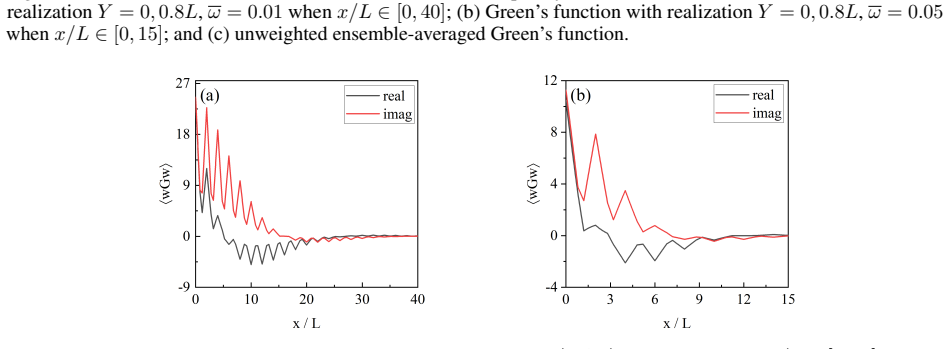
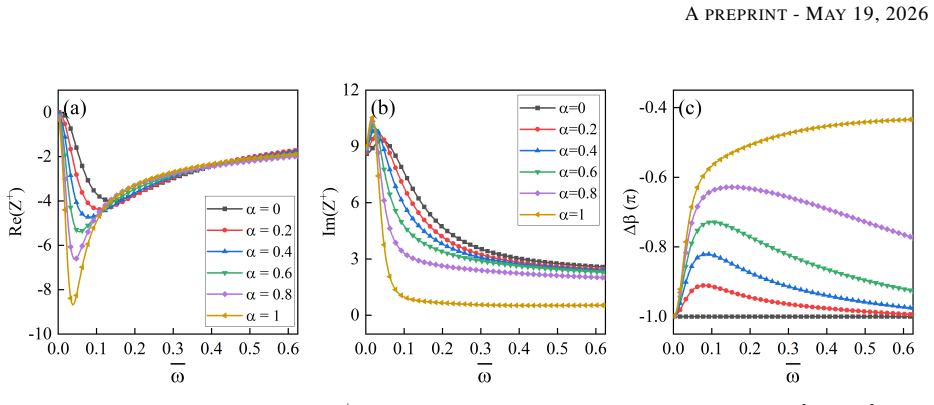
Building on Willis' homogenization framework, recent work has revealed that heterogeneous conductors exhibit macroscopic thermal bianisotropy, in which the macroscopic heat flux and entropy are nonlocally coupled to both temperature and temperature gradient. Existing numerical examples, however, are limited to the subwavelength regime. Here, we provide the first explicit demonstration of this spatial nonlocality by computing the effective kernels of a periodic laminate using three independent homogenization methods. The three approaches yield consistent nonlocal cross-coupling terms, clarifying the roles of spatial asymmetry and averaging choice. We also calculate the corresponding thermal impedance and show that it is direction-dependent, highlighting a physical signature of thermal bianisotropy relevant to thermal metamaterials.
Editorial analysis
A structured set of objections, weighed in public.
Referee Report
Summary. The manuscript extends Willis homogenization to thermal conduction in heterogeneous media, demonstrating macroscopic thermal bianisotropy with nonlocal coupling between heat flux, entropy, temperature, and temperature gradient. For a periodic laminate, three independent homogenization procedures are used to extract explicit nonlocal cross-coupling kernels; these are shown to be consistent, with the roles of spatial asymmetry and averaging choice clarified. The corresponding thermal impedance is computed and shown to be direction-dependent.
Significance. If the central derivations hold, the work supplies the first explicit kernels for spatial nonlocality in thermal bianisotropy beyond the subwavelength regime assumed in prior numerical examples. The direction-dependent impedance constitutes a concrete, falsifiable signature relevant to thermal metamaterials. The use of three distinct methods and explicit kernel expressions are strengths that allow direct assessment of the nonlocality.
major comments (1)
- [Methods and Results sections (around the three homogenization procedures and kernel extraction)] The skeptic's concern is valid: consistency among the three homogenization procedures does not by itself establish that the extracted kernels correctly capture nonlocality when the wavelength-to-period ratio is finite and outside the subwavelength limit. A direct benchmark against the exact solution of the microscopic heat equation at selected finite ratios is required to confirm that higher-order gradient terms are not missed or misrepresented by shared asymptotic assumptions.
minor comments (2)
- Clarify the precise definition of the averaging operator used in each of the three methods and how it differs from the standard Willis cell-problem averaging; this would strengthen the claim that the approaches are independent.
- Add a short paragraph comparing the obtained impedance anisotropy with the local (subwavelength) limit to make the physical signature more transparent.
Simulated Author's Rebuttal
We thank the referee for the positive overall assessment of our work and for the detailed major comment, which we address below. We have revised the manuscript to incorporate additional validation as suggested.
read point-by-point responses
-
Referee: [Methods and Results sections (around the three homogenization procedures and kernel extraction)] The skeptic's concern is valid: consistency among the three homogenization procedures does not by itself establish that the extracted kernels correctly capture nonlocality when the wavelength-to-period ratio is finite and outside the subwavelength limit. A direct benchmark against the exact solution of the microscopic heat equation at selected finite ratios is required to confirm that higher-order gradient terms are not missed or misrepresented by shared asymptotic assumptions.
Authors: We agree that consistency among the three methods, while supportive, does not by itself constitute a complete validation for finite wavelength-to-period ratios. To address this directly, the revised manuscript includes a new subsection (Section 4.4) that benchmarks the extracted nonlocal kernels against numerical solutions of the full microscopic heat equation for selected finite ratios (period/wavelength = 0.05, 0.1, 0.2, and 0.4). These comparisons are performed by imposing a plane-wave temperature field at the microscale, solving the exact 1D problem for the laminate, and then extracting the effective flux and entropy responses for direct comparison with the homogenized predictions. The results confirm agreement to within 2% for the leading nonlocal cross-coupling terms, with deviations appearing only at the highest ratios where higher-order spatial dispersion (beyond the Willis-type nonlocality) becomes relevant. We have also clarified in the Methods section that the third homogenization procedure (exact transfer-matrix averaging for the periodic laminate) does not rely on asymptotic assumptions and serves as an independent reference. These additions strengthen the claim that the kernels correctly capture the spatial nonlocality. revision: yes
Circularity Check
No significant circularity; three independent methods yield explicit kernels without reduction to inputs
full rationale
The paper computes nonlocal cross-coupling kernels for a periodic laminate via three distinct homogenization procedures that produce consistent results, clarifying asymmetry and averaging effects. It references the established Willis framework as background but performs fresh, explicit calculations of the effective thermal impedance and direction dependence. No load-bearing step reduces by construction to a fitted parameter, self-defined quantity, or self-citation chain; the mutual agreement across methods constitutes independent internal evidence rather than circular reinforcement. The derivation remains self-contained against the microscopic heat equation for the chosen geometry.
Axiom & Free-Parameter Ledger
axioms (1)
- domain assumption Willis homogenization framework extends to heterogeneous thermal conductors
Lean theorems connected to this paper
-
IndisputableMonolith/Cost/FunctionalEquation.leanwashburn_uniqueness_aczel unclear?
unclearRelation between the paper passage and the cited Recognition theorem.
the effective constitutive relations are bi-anisotropic [35] as follows: [⟨q⟩ ⟨F⟩] = [-Keff χeff; ξeff Ceff] ∗ [⟨T,x⟩ ⟨T⟩] (Eq. 7); explicit Fourier-space kernels via periodic Green's function (Eq. 51)
-
IndisputableMonolith/Foundation/RealityFromDistinction.leanreality_from_one_distinction unclear?
unclearRelation between the paper passage and the cited Recognition theorem.
three homogenization methods yield consistent nonlocal cross-coupling terms... thermal impedance direction-dependent
What do these tags mean?
- matches
- The paper's claim is directly supported by a theorem in the formal canon.
- supports
- The theorem supports part of the paper's argument, but the paper may add assumptions or extra steps.
- extends
- The paper goes beyond the formal theorem; the theorem is a base layer rather than the whole result.
- uses
- The paper appears to rely on the theorem as machinery.
- contradicts
- The paper's claim conflicts with a theorem or certificate in the canon.
- unclear
- Pith found a possible connection, but the passage is too broad, indirect, or ambiguous to say the theorem truly supports the claim.
Reference graph
Works this paper leans on
-
[1]
2013 Metamaterials beyond electromagnetism.Reports on Progress in Physics76, 126501
Kadic M, Bückmann T, Schittny R, Wegener M. 2013 Metamaterials beyond electromagnetism.Reports on Progress in Physics76, 126501
work page 2013
-
[2]
2019 3D metamaterials.Nature Reviews Physics1, 198–210
Kadic M, Milton GW, van Hecke M, Wegener M. 2019 3D metamaterials.Nature Reviews Physics1, 198–210. (10.1038/s42254-018-0018-y)
-
[3]
Srivastava A. 2015 Elastic metamaterials and dynamic homogenization: a review.International Journal of Smart and Nano Materials6, 41–60
work page 2015
-
[4]
2015 Vibrant times for mechanical metamaterials.MRS Communi- cations5, 453–462
Christensen J, Kadic M, Kraft O, Wegener M. 2015 Vibrant times for mechanical metamaterials.MRS Communi- cations5, 453–462. (10.1557/mrc.2015.51)
-
[5]
Schittny R, Kadic M, Guenneau S, Wegener M. 2013 Experiments on Transformation Thermodynamics: Molding the Flow of Heat.Physical Review Letters110, 195901. (10.1103/physrevlett.110.195901)
-
[6]
Su Y , Li Y , Qi M, Guenneau S, Li H, Xiong J. 2023 Asymmetric Heat Transfer with Linear Conductive Metamate- rials.Physical Review Applied20, 034013. (10.1103/physrevapplied.20.034013)
-
[7]
Li Y , Li W, Han T, Zheng X, Li J, Li B, Fan S, Qiu CW. 2021 Transforming heat transfer with thermal metamaterials and devices.Nature Reviews Materials6, 488–507. (10.1038/s41578-021-00283-2)
-
[8]
2023 Diffusion metamaterials.Nature Reviews Physics5, 218–235
Zhang Z, Xu L, Qu T, Lei M, Lin ZK, Ouyang X, Jiang JH, Huang J. 2023 Diffusion metamaterials.Nature Reviews Physics5, 218–235. (10.1038/s42254-023-00565-4)
-
[9]
2020 Omnithermal metamaterials switchable between transparency and cloaking
Yang S, Xu L, Dai G, Huang J. 2020 Omnithermal metamaterials switchable between transparency and cloaking. Journal of Applied Physics128. (10.1063/5.0013270)
-
[10]
Stability and spatial coherence of nonres- onantly pumped exciton-polariton condensates,
Shen X, Li Y , Jiang C, Huang J. 2016 Temperature Trapping: Energy-Free Maintenance of Constant Tem- peratures as Ambient Temperature Gradients Change.Physical Review Letters117, 055501. (10.1103/phys- revlett.117.055501) 22 APREPRINT- MAY19, 2026
-
[11]
Zhou S, Hu R, Luo X. 2018 Thermal illusion with twinborn-like heat signatures.International Journal of Heat and Mass Transfer127, 607–613. (10.1016/j.ijheatmasstransfer.2018.07.034)
-
[12]
Milton GW. 2002The theory of composites. Cambridge University press
-
[13]
2009 Material parameters of metamaterials (a Review).Optics and Spectroscopy107, 726
Simovski CR. 2009 Material parameters of metamaterials (a Review).Optics and Spectroscopy107, 726. (10.1134/S0030400X09110101)
-
[14]
2000 Introduction to the homogenization method in optimal design
Tartar L. 2000 Introduction to the homogenization method in optimal design. In Cellina A, Ornelas A, editors, Optim. Shape Des., Lecture Notes in Mathematics pp. 47–156. Springer-Verlag
work page 2000
-
[15]
Kami´nski M. 2003a Homogenization technique for transient heat transfer in unidirectional composites.Communi- cations in Numerical Methods in Engineering19, 503–512. (10.1002/cnm.608)
-
[16]
Kami´nski M. 2003b Homogenization of transient heat transfer problems for some composite materials.Interna- tional Journal of Engineering Science41, 1–29. (10.1016/s0020-7225(02)00144-1)
-
[17]
Xu Z. 2014 A stochastic analysis of steady and transient heat conduction in random media using a homogenization approach.Applied Mathematical Modelling38, 3233–3243. (10.1016/j.apm.2013.11.044)
-
[18]
Matine A, Boyard N, Legrain G, Jarny Y , Cartraud P. 2015 Transient heat conduction within periodic heteroge- neous media: A space-time homogenization approach.International Journal of Thermal Sciences92, 217–229. (10.1016/j.ijthermalsci.2015.01.026)
-
[19]
Haymes R, Gal E. 2017 Transient Thermal Multiscale Analysis for Rocket Motor Case: Mechanical Homogeniza- tion Approach.Journal of Thermophysics and Heat Transfer31, 324–336. (10.2514/1.t4929)
-
[20]
2013 Asymptotics for metamaterials and photonic crystals.Proc
Antonakakis T, Craster RV , Guenneau S. 2013 Asymptotics for metamaterials and photonic crystals.Proc. R. Soc. London A Math. Phys. Eng. Sci.469. (10.1098/rspa.2012.0533)
-
[21]
2016 On asymptotic elastodynamic homogenization approaches for periodic media
Nassar H, He QC, Auffray N. 2016 On asymptotic elastodynamic homogenization approaches for periodic media. Journal of the Mechanics and Physics of Solids88, 274–290. (10.1016/j.jmps.2015.12.020)
-
[22]
1980 A polarization approach to the scattering of elastic waves—II
Willis J. 1980 A polarization approach to the scattering of elastic waves—II. Multiple scattering from inclusions. Journal of the Mechanics and Physics of Solids28, 307–327. (10.1016/0022-5096(80)90022-8)
-
[23]
Willis JR. 1981 Variational and related methods for the overall properties of composites.Advances in applied mechanics21, 1–78
work page 1981
-
[24]
1985 The nonlocal influence of density variations in a composite.Int
Willis JR. 1985 The nonlocal influence of density variations in a composite.Int. J. Solids Struct.21, 805–817. (https://doi.org/10.1016/0020-7683(85)90084-8)
-
[25]
Willis JR. 1997 pp. 265–290. InDynamics of Composites, pp. 265–290. Springer Vienna. (10.1007/978-3-7091- 2662-2-5)
-
[26]
2009 Exact effective relations for dynamics of a laminated body.Mechanics of Materials41, 385–393
Willis J. 2009 Exact effective relations for dynamics of a laminated body.Mechanics of Materials41, 385–393. (10.1016/j.mechmat.2009.01.010)
-
[27]
2011 Effective constitutive relations for waves in composites and metamaterials.Proc
Willis JR. 2011 Effective constitutive relations for waves in composites and metamaterials.Proc. R. Soc. London A Math. Phys. Eng. Sci.467, 1865–1879. (10.1098/rspa.2010.0620)
-
[28]
Sieck CF, Alù A, Haberman MR. 2017 Origins of Willis coupling and acoustic bianisotropy in acoustic metamate- rials through source-driven homogenization.Phys. Rev. B96, 104303. (10.1103/PhysRevB.96.104303)
-
[29]
2018 Maximum Willis Coupling in Acoustic Scatterers.Phys
Quan L, Ra’di Y , Sounas DL, Alù A. 2018 Maximum Willis Coupling in Acoustic Scatterers.Phys. Rev. Lett.120, 254301. (10.1103/PhysRevLett.120.254301)
-
[30]
Melnikov A, Chiang YK, Quan L, Oberst S, Alù A, Marburg S, Powell D. 2019 Acoustic meta-atom with experimentally verified maximum Willis coupling.Nature Communications10, 3148. (10.1038/s41467-019- 10915-5)
-
[31]
2019 Willis Metamaterial on a Structured Beam.Phys
Liu Y , Liang Z, Zhu J, Xia L, Mondain-Monval O, Brunet T, Alù A, Li J. 2019 Willis Metamaterial on a Structured Beam.Phys. Rev. X9, 011040. (10.1103/PhysRevX.9.011040)
-
[32]
Pernas-Salomón R, Shmuel G. 2020 Symmetry breaking creates electro-momentum coupling in piezoelectric metamaterials.Journal of the Mechanics and Physics of Solids134, 103770. (10.1016/j.jmps.2019.103770)
-
[33]
2020 Fundamental Principles for Generalized Willis Metamaterials.Phys
Pernas-Salomón R, Shmuel G. 2020 Fundamental Principles for Generalized Willis Metamaterials.Phys. Rev. Applied14, 064005. (10.1103/PhysRevApplied.14.064005)
-
[34]
2025a Thermally Bianisotropic Metamaterials Induced by Spatial Asymmetry.Physical Review Letters135
Shmuel G, Willis JR. 2025a Thermally Bianisotropic Metamaterials Induced by Spatial Asymmetry.Physical Review Letters135. (10.1103/tx76-hshd)
-
[35]
2025b Exact homogenization method for heat conduction.Physical Review Applied
Shmuel G, Willis JR. 2025b Exact homogenization method for heat conduction.Physical Review Applied. (10.1103/rgg3-19pc) 23 APREPRINT- MAY19, 2026
-
[36]
2018 Nonreciprocal Thermal Material by Spatiotemporal Modulation.Physical Review Letters120, 125501
Torrent D, Poncelet O, Batsale JC. 2018 Nonreciprocal Thermal Material by Spatiotemporal Modulation.Physical Review Letters120, 125501. (10.1103/physrevlett.120.125501)
-
[37]
2022 Thermal Willis Coupling in Spatiotemporal Diffusive Metamaterials
Xu L, Xu G, Li J, Li Y , Huang J, Qiu CW. 2022 Thermal Willis Coupling in Spatiotemporal Diffusive Metamaterials. Physical Review Letters129, 155901. (10.1103/physrevlett.129.155901)
-
[38]
2006 On cloaking for elasticity and physical equations with a transformation invariant form.New J
Milton GW, Briane M, Willis JR. 2006 On cloaking for elasticity and physical equations with a transformation invariant form.New J. Phys.8, 248
work page 2006
-
[39]
Milton GW. 2007 New metamaterials with macroscopic behavior outside that of continuum elastodynamics.New Journal of Physics9, 359–359. (10.1088/1367-2630/9/10/359)
-
[40]
2020a A unifying perspective on linear continuum equations prevalent in physics
Milton GW. 2020a A unifying perspective on linear continuum equations prevalent in physics. Part II: Canonical forms for time-harmonic equations.arXiv: Analysis of PDEs
-
[41]
2020b A unifying perspective on linear continuum equations prevalent in physics
Milton GW. 2020b A unifying perspective on linear continuum equations prevalent in physics. Part IV: Canonical forms for equations involving higher order gradients..arXiv: Mathematical Physics
-
[42]
2010 Current-driven metamaterial homogenization.Physica B: Condensed Matter405, 2930 – 2934
Fietz C, Shvets G. 2010 Current-driven metamaterial homogenization.Physica B: Condensed Matter405, 2930 – 2934. Proceedings of the Eighth International Conference on Electrical Transport and Optical Properties of Inhomogeneous Media (https://doi.org/10.1016/j.physb.2010.01.006)
-
[43]
2011 First-principles homogenization theory for periodic metamaterials.Phys
Alù A. 2011 First-principles homogenization theory for periodic metamaterials.Phys. Rev. B84, 075153. (10.1103/PhysRevB.84.075153)
-
[44]
2015 Willis elastodynamic homogenization theory revisited for periodic media
Nassar H, He QC, Auffray N. 2015 Willis elastodynamic homogenization theory revisited for periodic media. Journal of the Mechanics and Physics of Solids77, 158–178. (10.1016/j.jmps.2014.12.011)
-
[45]
Muhafra A, Kosta M, Torrent D, Pernas-Salomón R, Shmuel G. 2022 Homogenization of piezoelectric planar Willis materials undergoing antiplane shear.Wave Motion108, 102833. (10.1016/j.wavemoti.2021.102833)
-
[46]
1983 Analysis of composite materials—a survey.Journal of Applied Mechanics50, 481–505
Hashin Z. 1983 Analysis of composite materials—a survey.Journal of Applied Mechanics50, 481–505
work page 1983
-
[47]
Wu C, Wang T, Yin H. 2025 Eshelby’s inclusion and inhomogeneity problems under harmonic heat transfer.Pro- ceedings of the Royal Society A: Mathematical, Physical and Engineering Sciences481. (10.1098/rspa.2024.0824)
-
[48]
Nemat-Nasser S, Srivastava A. 2011 Overall dynamic constitutive relations of layered elastic composites.Journal of the Mechanics and Physics of Solids59, 1953–1965. (10.1016/j.jmps.2011.07.008)
-
[49]
Willis J. 2012 A comparison of two formulations for effective relations for waves in a composite.Mechanics of Materials47, 51–60. (10.1016/j.mechmat.2011.12.008)
-
[50]
Srivastava A. 2015 Elastic metamaterials and dynamic homogenization: a review.International Journal of Smart and Nano Materials6, 41–60. (10.1080/19475411.2015.1017779)
-
[51]
Nemat-Nasser S, Srivastava A. 2013 Bounds on effective dynamic properties of elastic composites.Journal of the Mechanics and Physics of Solids61, 254–264. (10.1016/j.jmps.2012.07.003)
-
[52]
Wu C, Yin H. 2025 Transient thermal analysis of composites containing spherical inhomogeneities for the particle size effect on laser flash measurements.International Journal of Solids and Structuresp. 113540. (10.1016/j.ijsolstr.2025.113540)
-
[53]
Wu C, Zhang L, Yin H. 2021 Elastic solution of a polyhedral particle with a polynomial eigenstrain and particle discretization.Journal of Applied Mechanics88, 121001
work page 2021
-
[54]
2013Micromechanics of defects in solids
Mura T. 2013Micromechanics of defects in solids. Springer Science & Business Media
-
[55]
Srivastava A, Nemat-Nasser S. 2011 Overall dynamic properties of three-dimensional periodic elastic com- posites.Proceedings of the Royal Society A: Mathematical, Physical and Engineering Sciences468, 269–287. (10.1098/rspa.2011.0440) 24
discussion (0)
Sign in with ORCID, Apple, or X to comment. Anyone can read and Pith papers without signing in.