Smart Cities: The Hopes and Hypes
Pith reviewed 2026-05-24 22:18 UTC · model grok-4.3
The pith
Some of the promises made about smart cities are over-hyped and do not hold up under technological scrutiny.
A machine-rendered reading of the paper's core claim, the machinery that carries it, and where it could break.
Core claim
Smart cities promise many new services through sensor based systems which operate in a self-organizing manner without much human intervention, but some of these promises are over hyped. The paper analyses the realities based on technological aspects and clarifies the hypes with logical explanations.
What carries the argument
Logical analysis of technological feasibility of sensor-based self-organizing systems in smart cities to distinguish real capabilities from hyped promises.
If this is right
- City planners should base projects on feasible technological realities rather than hyped promises.
- Expectations for quality of life improvements must be tempered by practical limitations of sensor systems.
- False promises around complete autonomy need clarification to avoid public disillusionment.
- Focus should shift to achievable applications in smart city frameworks.
Where Pith is reading between the lines
- This analysis suggests that policy makers might use it to prioritize funding for proven technologies over speculative ones.
- Future empirical studies could test these logical explanations against real-world smart city deployments to validate or refute them.
- Similar hype-clarification approaches could apply to other emerging tech initiatives like the Internet of Things in urban settings.
Load-bearing premise
The assumption that the authors' logical explanations drawn from technological aspects are sufficient to identify and refute false promises without needing empirical case studies or quantitative data.
What would settle it
A documented smart city project that achieves full self-organizing operation of all essential services with no human intervention would challenge the identification of these as hypes.
Figures
read the original abstract
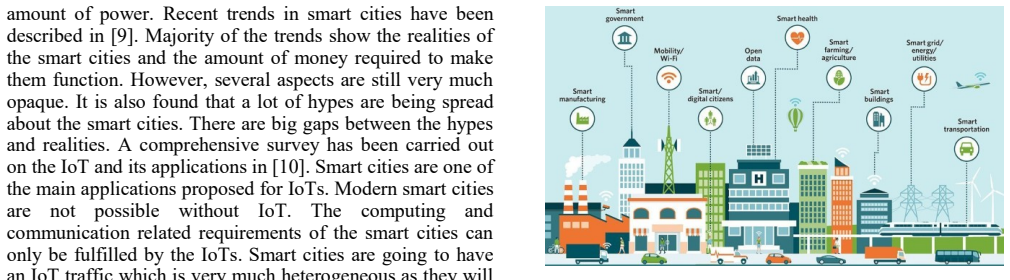
Smart cities are being planned for several advanced applications and services for the inhabitants. Smart cities initiative promise many new services which are not possible in the traditional city frameworks. In the smart city framework, the basic aim is to provide all the essential services through sensor based systems which does not need much human intervention. This system is designed to operate on its own in a self-organizing manner. Therefore, the hopes are really big from the smart cities to enhance the quality of lives and the economy. However, some of the promises in the smart cities are very much over hyped. In this article, we analyse the realities of the smart cities and their practical significances based on the technological aspects of these projects. We also address the false promises that are around which are just the hypes. We clarify these hypes with appropriate logical explanations.
Editorial analysis
A structured set of objections, weighed in public.
Referee Report
Summary. The paper claims that smart city initiatives promise advanced sensor-based, self-organizing services with minimal human intervention to improve quality of life and the economy, but that some of these promises are over-hyped; it states that it will analyze the realities and practical significances based on technological aspects and clarify the hypes with logical explanations.
Significance. If the logical explanations were substantiated, the paper could offer a useful cautionary perspective on smart-city deployments in signal-processing contexts. However, the purely qualitative framing without data, case studies, or verifiable mappings from technological constraints to outcomes limits its contribution to a high-level discussion.
major comments (2)
- [Abstract] Abstract: the claim that 'some of the promises in the smart cities are very much over hyped' and will be 'clarif[ied] ... with appropriate logical explanations' is load-bearing for the entire manuscript, yet the text supplies no concrete examples of specific hypes, no technological constraints, and no derivations or references that would allow the explanations to be evaluated.
- [Abstract] Abstract and body: the assertion that analysis 'based on the technological aspects of these projects' suffices to refute false promises rests on the untested assumption that logical arguments alone can map sensor-system limitations to real-world outcomes without empirical checks; no case studies, deployed metrics, or project references are provided to support this.
minor comments (1)
- The manuscript would benefit from explicit section headings and a clearer structure to separate the discussion of hopes from the analysis of hypes.
Simulated Author's Rebuttal
We thank the referee for the constructive feedback. The comments highlight the need for greater substantiation of the logical explanations in our perspective paper. We address each point below and indicate revisions.
read point-by-point responses
-
Referee: [Abstract] Abstract: the claim that 'some of the promises in the smart cities are very much over hyped' and will be 'clarif[ied] ... with appropriate logical explanations' is load-bearing for the entire manuscript, yet the text supplies no concrete examples of specific hypes, no technological constraints, and no derivations or references that would allow the explanations to be evaluated.
Authors: We agree that the abstract and body would benefit from explicit examples to make the logical arguments more concrete and evaluable. The explanations in the manuscript are derived from well-established technological constraints (e.g., bandwidth limits in dense IoT deployments and real-time processing bottlenecks in sensor networks). In revision we will insert specific hype examples, such as claims of fully autonomous zero-intervention urban services, together with references to the underlying signal-processing and systems literature. revision: yes
-
Referee: [Abstract] Abstract and body: the assertion that analysis 'based on the technological aspects of these projects' suffices to refute false promises rests on the untested assumption that logical arguments alone can map sensor-system limitations to real-world outcomes without empirical checks; no case studies, deployed metrics, or project references are provided to support this.
Authors: The manuscript is framed as a high-level technological perspective rather than an empirical study; the logical mapping follows directly from known limits of self-organizing sensor systems. Nevertheless, the referee is correct that additional anchoring would strengthen the contribution. We will add references to documented smart-city deployments and their published technological shortcomings in the revised version. revision: yes
Circularity Check
No circularity; qualitative discussion with no derivations or fitted quantities
full rationale
The paper is a purely qualitative commentary on smart-city promises versus realities. It advances claims via logical explanations drawn from technological aspects but contains no equations, predictions, parameter fits, or derivation chains that could reduce to their own inputs. No self-citations are invoked as load-bearing uniqueness theorems or ansatzes. The work is therefore self-contained as an opinion piece; its soundness can be assessed externally without any internal circular reduction.
Axiom & Free-Parameter Ledger
Reference graph
Works this paper leans on
-
[1]
Internet of Things for Smart Cities ,
A. Z anella, N . Bui, A. Castellani, L. Vangelista, and M. Zorzi, "Internet of Things for Smart Cities ," IEEE Internet of Things Journal, vol. 1, no. 1, pp. 22-32, Feb. 2014
work page 2014
-
[2]
Smart cities: Definitions, dimensions, performance, and initiatives,
V. Albino, U. Berardi, R. M. Dangelico, “Smart cities: Definitions, dimensions, performance, and initiatives,” Journal of Urban Technology, vol. 22, no. 1, pp.1–19, Jan. 2015
work page 2015
-
[3]
A. Glasmeier, and S. Christopherson, “Thinking about smart cities,” Cambridge Journal of Regions, Economy and Society, vol. 22, no. 1, pp.3–12, Feb. 2015
work page 2015
-
[4]
N. Komninos, “The architecture of intelligent cities: integrating human, collective and artifcial intelligence to enhance knowledge and innovation,” in Proceedings of Second IEEE International Conference on Intelligent Environments, pp. 13–20, 2006
work page 2006
-
[5]
The construction of the digital city,
H. Couclelis, “The construction of the digital city,” Planning and Design, vol.31, no. 1, pp. 5–19, Jan. 2004
work page 2004
-
[6]
The Effects of Successful ICT -based Smart City Services: From Citizens‟ Perspective,
H. Yeh, “The Effects of Successful ICT -based Smart City Services: From Citizens‟ Perspective,” Government Information Quarterly , vol. 34, no. 3, pp. 556-565, Sep. 2017
work page 2017
-
[7]
N. Bui et al., “A survey of anticipatory mobile networking: Context based classification, prediction methodologies, and optimization techniques,” IEEE Commun. Surveys Tuts., vol. 19, no. 3, pp. 1790 – 1821, 3rd Quart., 2017
work page 2017
-
[8]
S. K. Routray, K. P. Sharmila, “Green Initiatives in IoT,” in Proceedings of Third IEEE International Conference on Advances in Electrical, Electronics, Information, Communication and Bio - Informatics (AEEICB), pp. 454-457, Feb. 2017
work page 2017
-
[9]
Current trends in smart city initiatives: Some stylised facts,
P. Neirotti, A. De Mar co, A. C. Cagliano, G. Mangano, and F. Scorrano, “Current trends in smart city initiatives: Some stylised facts,” Cities, vol. 38, pp. 25–36, Jun. 2014
work page 2014
-
[10]
The I nternet of things: A survey,
L. Atzori, A. Iera, and G. Morabito, “The I nternet of things: A survey,” Computer Networks, vol. 54, no. 15, pp. 2787–2805, 2010
work page 2010
-
[11]
H. Yao, P. Gao, J. Wang, P. Zhang, C. Jiang, and Z. Han, Capsule Network Assisted IoT Traffic Classification Mechanism for Smart Cities. IEEE Internet of Things Journal, vol. 6, no. 1, Feb. 2019
work page 2019
-
[12]
Quantum Cryptography for IoT: A Perspective,
S. K. Routray, M. K. Jha, L. S harma, R. Nymangoudar, A. Javali, and S. Sarkar, “Quantum Cryptography for IoT: A Perspective,” in Proc. of IEEE International Conference on IoT and its Applications, Nagapattinam, India, May, 2017
work page 2017
-
[13]
IoT Based Localization and Tracking,
S. Ramnath, A. Javali, B. Narang, P. Mishra, S, K, Routra y, “IoT Based Localization and Tracking,” in Proc. of IEEE International Conference on IoT and its Applications, Nagapattinam, India, May, 2017
work page 2017
-
[14]
Urban sensing: Out of the woods,
D. Cuff, M. Hansen, and J. Kang, “Urban sensing: Out of the woods,” Communications of ACM , vol. 51, no. 3, pp. 24–33, Mar. 2008
work page 2008
-
[15]
Towards knowledge cities: conceptual analysis and success stories,
M. Ergazakis, M. Metaxiotis, and J. Psarras, “Towards knowledge cities: conceptual analysis and success stories,” Journal of Knowledge Management, vol. 8, no. 5, pp. 5–15, May 2004
work page 2004
-
[16]
Narrowband IoT for Healthcare ,
S. K. Routray, S. Anand, “Narrowband IoT for Healthcare ,” in Proc. of 5th IEEE International conference on Information, Communication and Embedded Systems (ICICES), Coimbatore, Mar. 11 – 12, 2017
work page 2017
-
[17]
Moving Towards Smart Cities: Solutions that lead to the Smart City Transformation Framework,
H. Kumar, M. K. Singh, M. P. Gupta, and J. Madaan, “Moving Towards Smart Cities: Solutions that lead to the Smart City Transformation Framework,” Technological Forecasting and Social Change, vol. 130, pp. 1-16, Apr. 2018
work page 2018
-
[18]
Smart and Digital City: A Systematic Literature Review,
A. Cocchia, “Smart and Digital City: A Systematic Literature Review,” in Smart City, Chapter 2, Springer, Jun. 2014
work page 2014
- [19]
discussion (0)
Sign in with ORCID, Apple, or X to comment. Anyone can read and Pith papers without signing in.