REVIEW 4 major objections 5 minor 21 references
Variational modeling adapted to the medium with gradient properties
T0 review · 4 major / 5 minor · reviewed 2026-08-01 · deepseek-v4-flash
Pith's one-line read A two-step homogenization scheme claims to capture the elastic energy of porosity-gradient plates within 10% of full-field FFT simulations, at roughly 1/50th the compute time.
desk verdict A plausible fast approximate homogenization scheme for gradient porous plates, but the accuracy and speedup claims are not backed by the data actually reported. read the letter →
The pith
A machine-rendered reading of the paper's core claim, the machinery that carries it, and where it could break.
The reading
What carries the argument
The variational sum is the engine: the domain is cut into n thin plates of thickness 1/n; each slice's 2D plate energy uses membrane and bending tensors obtained from Hashin–Shtrikman estimates on the local porosity; a regularization term γ_n penalizes energy jumps between neighboring slices and vanishes as n→∞, so the discrete sum Γ-converges to the integral energy ψ0 in equation 14. The passage from slice-wise estimates to a continuous thickness-dependent stiffness A(x3), D(x3) is what lets the model keep the gradient information that constant-porosity bounds discard.
What would settle it
Generate a graded-porosity plate where the porosity changes substantially within a single slice, or where pores cluster or percolate across slices, run the FFT full-field solver and equation 14 on the same microstructure, and check whether the normalized energy difference stays below the claimed 10%; finding the gap widen past 10% in those regimes would falsify the claim's scope. A simpler arithmetic check: set the porosity constant, θ(x3)=θ0; then Eq. 14 should reduce exactly to the classical plate stiffness from a single Hashin–Shtrikman homogenization.
Extended reading notes
Core claim
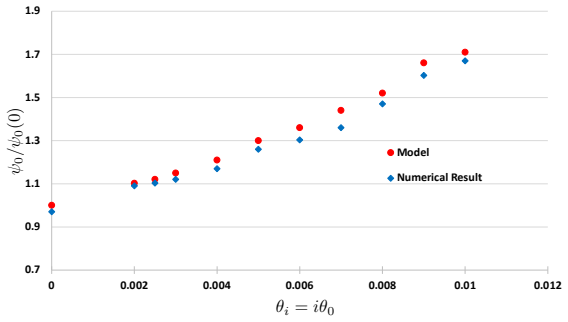
The central claim is that the macroscopic energy of a porosity-gradient plate is captured by ψ0 = (1/|O|) ∫_O [ (1/2) d A(x3) d + x3^2 (1/2) κ D(x3) κ ] dV, where A and D are membrane and bending stiffness tensors obtained by Hashin–Shtrikman homogenization of each slice and the integral over the volume reassembles the layers. The authors treat this as a two-step scale transition: first reduce each 3D sliced layer to a homogeneous 2D plate, then let the slice thickness go to zero so the discrete plate energies converge to a single variational energy. They test the formula against an FFT full-field solver on a 400×400×400 voxel porous plate with linearly and quadratically graded porosity and
Load-bearing premise
The load-bearing premise is that, within each thin slice, the pore distribution is statistically homogeneous (ergodic) and the Hashin–Shtrikman slice estimate is representative; the paper states that if this fails the macroscopic behavior will deviate, and steep gradients, clustering, or connected pores would break it.
Editorial extensions
If this is right
- For unidirectional porosity gradients, the membrane and bending response of a thin plate can be evaluated from slice-wise Hashin–Shtrikman estimates without building a 3D mesh of the pores.
- The same variational-sum pipeline should apply to other physical behaviors (the paper notes linear elasticity is one example), as long as the slice energy is convex and Lipschitz.
- A 400×400×400 voxel comparison completes in about 10 s on one CPU versus 500 s on 32 cores for the FFT solver, opening the door to routine parametric studies of graded plates.
- Because the formula reproduces lamination theory, it connects classical laminate calculations to microstructure-informed estimates in a single expression.
Reading between the lines
- If equation 14 holds, the same slice-then-sum structure should transfer to thermal, electrical, or diffusion transport through graded media, where the variational assumptions are even easier to satisfy than in elasticity.
- The ergodicity boundary is testable: generate microstructures with clustered or connected pores at the same overall porosity and compare Eq. 14 to FFT; the reported <10% error should degrade as slice-level representativeness fails.
- The closing suggestion to make θ a tensor points at a concrete extension: replace the scalar porosity profile by a direction-dependent or spatially varying one, which would widen the method toward additively manufactured parts with oriented pore textures.
- Since the variational sum equals laminate theory, the practical value may lie in giving designers a closed-form energy they can differentiate for stiffness, which makes gradient-property optimization (e.g., tailoring porosity profiles) computationally cheap.
Editorial analysis
A structured set of objections, weighed in public.
Referee Report
Summary. The manuscript proposes a two-step homogenization scheme for a heterogeneous stratified medium whose properties vary along one direction. In the first step, the 3D domain is sliced into thin layers and each layer is homogenized using Hashin–Shtrikman estimates; in the second step, a 'variational sum' reassembles the layer energies into a macroscopic plate energy, culminating in Eq. (14). The method is applied to a plate with a porosity gradient, for linear and quadratic porosity profiles, and the results are compared with FFT full-field simulations, with a claimed error below 10% and a 50-fold CPU-time reduction. The Γ-convergence basis of the variational sum is imported from the authors' earlier papers [10,11,13] rather than derived in this manuscript.
Significance. If Eq. (14) is valid and the numerical accuracy claim holds, the proposed scheme is a fast approximate homogenization tool for graded plates. The paper has real strengths: the two-step logic is clear, the FFT comparison is an appropriate external benchmark, no constants are fitted to the FFT data, and the philosophy of preserving the gradient in the macroscopic law is sensible. However, the central formula is not derived here, and the quantitative validation that would make the headline claim credible is not reported. Therefore the significance cannot be assessed from the manuscript as it stands; the paper is more a programmatic presentation than a verified method.
major comments (4)
- [§3.1.2, Figures 4–6] The central claim that the model error is 'still less than (<10%)' is not quantitatively supported. No error metric is defined (e.g., relative L2 energy error, pointwise error, or component-wise error), no numerical values or tables are given, and no error bars or statistical variability are reported. The plotted curves are visually close, but visual inspection is not a measurement. Furthermore, the exact loading / macroscopic strain used in the FFT calculation and the precise energy quantity plotted (the caption says normalized energy density, but the normalization denominator is not specified) are not stated. This is load-bearing because the practical value of the method rests on the accuracy claim. The concluding sentence 'uncertain about including Fig.6' reinforces that the numerical section is not in a finished state.
- [§2 and §3, Eq. (14)] Equation (14) is not derived in this manuscript; it is asserted via Γ-convergence from the authors' own prior work [10,11,13], and Eq. (11) is invoked rather than proved. The paper itself states in §3 'the variational sum, resulting in (14), allows us to find the same result as that obtained from the laminate theory.' This raises two issues: (i) the central derivation is not independently established here; (ii) if Eq. (14) is equivalent to classical laminate theory, the novelty of the variational-sum route needs to be articulated. The authors should either provide a self-contained proof or a clear derivation of (14) in the present setting, and state precisely what is added beyond standard lamination.
- [§3 and §3.1.1] The ergodicity hypothesis is load-bearing and is not verified. The manuscript states that without this assumption the macroscopic behavior will deviate from the actual behavior, but the microstructure generation is described only as a random n×n cell assembly with 'slight perturbation from the center of the inclusion' and no quantitative statistical characterization. No number of realizations, two-point correlation functions, or sensitivity analyses are reported. Since the FFT reference is generated from the same class of microstructures, the comparison may be self-consistent but does not establish that the slice-level Hashin–Shtrikman estimate is representative for steep gradients, clustered pores, or connected pores, all of which the paper mentions as future extensions.
- [§3.1.2 and Conclusions] The 50-fold CPU-time reduction is presented without a profiling methodology. The paper states 'parallelized computation on 32 cores in 500 seconds CPU' versus 'our script completes the computation in less than 10 seconds CPU,' but it is not clear whether these are wall-clock times or CPU-seconds, what hardware/software versions were used, how many runs were averaged, or what operations are included in the 'script' time. Without this information, the speed-up claim cannot be reproduced or assessed. The same section also does not report the values of n, θ0, or the number of inclusions used in the comparison, which are needed to interpret the figures.
minor comments (5)
- [Eq. (2)] The regularization parameter λ is introduced but never specified or discussed. If λ is a fixed constant, the term γn tends to zero in the limit, but the rate of convergence depends on λ; a sentence on its role and typical value would help.
- [References [3] and [19]] Reference [3] is cited both for non-local approaches and for the variational sum of 2D energy, but the reference is Eringen's nonlocal polar continua; this appears to be a citation error. Reference [19] lists Mechanics of Materials but the DOI points to a Journal of Materials Processing Technology article, which is inconsistent with the bibliographic entry.
- [Figures and captions] Fig. 3 caption states '2.2% of porosity' while the text discusses varying porosity fractions; the relationship is unclear. Also, the solver name is spelled 'FoXtroT' in one place and 'FoxTrot' in another.
- [Conclusion, §4] The wording 'in the non-linear case' is misleading: the paper treats linear elasticity with nonlinear (quadratic) porosity variation, not a materially nonlinear problem. Replacing 'non-linear case' with 'quadratic porosity profile' would avoid confusion.
- [Eqs. (15)–(16)] The notation A_i and D_i is used for layer quantities, but in Eq. (13) the same symbols appear with a different meaning; the difference between 'homogenized layer tensors' and 'integrals over the thickness' should be made explicit.
Circularity Check
No significant circularity: final energy is benchmarked against an independent FFT solver and reduces to known laminate theory, not to fitted inputs.
full rationale
The derivation chain is not circular. The final energy (14) is obtained from an in-paper construction: layer-wise Hashin-Shtrikman homogenization (17)-(20), followed by a variational sum/Γ-limit passage from (12) to (13) to (14). No parameter is fitted to the FFT results, and the FFT comparison is an independent full-field solver using the standard Moulinec-Suquet scheme ([14]-[18]). The self-citations ([10], [11], [13]) supply the size-reduction and volumic-summation framework, but they are prior published results with their own assumptions, used as external support rather than as a restatement of Eq. (14); the paper also quotes the textbook [12] for Γ-convergence. The paper explicitly acknowledges that (14) reproduces classical laminate theory, which is a consistency check against a known result, not a hidden input. The stated ergodicity assumption is a limitation on applicability, not a circular definition. The manuscript's own caution about Fig. 6 and the absence of tabulated error metrics bear on the quantitative support for the "<10%" claim, which is an evidence/reporting issue rather than circular reasoning. Thus no load-bearing step reduces by construction to its own inputs.
Assumptions & free parameters
free parameters (4)
- lambda (regularization parameter)
- p (growth exponent)
- theta_0 (initial porosity fraction)
- n (number of layers)
assumptions (5)
- domain assumption The variational sum of 2D energies Gamma-converges to the integral energy (11) under convexity/Lipschitz/growth assumptions; this theorem is taken from the authors' prior work [11,13] and not proved or restated here.
- domain assumption The 3D-to-2D size reduction of each slice to a homogeneous Kirchhoff plate is valid; layer behavior is represented by 2D tensors A_i and D_i.
- domain assumption Ergodicity/statistical homogeneity of the pore distribution within each slice; a periodic cell with slight perturbation suffices.
- domain assumption Hashin-Shtrikman bounds give the correct layer stiffness for random spherical voids in an isotropic matrix; the lower bound is 0 and the upper bound returns the Mori-Tanaka estimate.
- domain assumption The layer energy satisfies the convexity and growth conditions (9)-(10) with some p > 1, alpha, beta.
Cite this review
Pith. "Pith review of Variational modeling adapted to the medium with gradient properties." pith.science (2026). https://pith.science/paper/J36R2WKW
@misc{pith2026260716005,
  author       = {Pith},
  title        = {Pith review of: Variational modeling adapted to the medium with gradient properties},
  year         = {2026},
  howpublished = {\url{https://pith.science/paper/J36R2WKW}},
  note         = {Machine review of arXiv:2607.16005}
}
read the original abstract
This study aims to develop a numerical homogenization method that can be applied to a heterogeneous stratified medium. Traditional scale transition methods are inadequate in capturing the essential gradient properties of some materials. Therefore, the focus of this work is to construct a homogenized model that considers the material property gradient. To achieve this, a two-step homogenization scheme is proposed. Firstly, the 3D model is decomposed into multiple 2D heterogeneous layers, and the behavior of each layer is estimated using a micro-mechanical model such as the Hashin-Shtrikman bounds. Secondly, a variational sum method is used to rebuild the behavior of the 3D environment. Finally, the method is applied to homogenize a thin plate with a porosity gradient.
Figures


Figures from the paper (3 more)


Reference graph
Works this paper leans on
-
[1]
C. H. Ng, M. J. Bermingham, M. S. Dargusch, Eliminating poros- ity defects, promoting equiaxed grains and improving the mechanical properties of additively manufactured Ti-22V-4Al with super-transus hot isostatic pressing, Additive Manufacturing 72 (January) (2023). doi:10.1016/j.addma.2023.103630
arXiv 2023
-
[3]
A. C. Eringen, Nonlocal polar elastic continua, Int. J. Eng. Sci. 10 (1) (1972) 1–16
1972
-
[4]
Nait-ali, Nonlocal modeling of a randomly distributed and aligned long- fiber composite material, Comptes Rendus M´ ecanique 345 (3) (2017) 192– 207
A. Nait-ali, Nonlocal modeling of a randomly distributed and aligned long- fiber composite material, Comptes Rendus M´ ecanique 345 (3) (2017) 192– 207
2017
-
[5]
R. D. Mindlin, N. N. Eshel, On first strain-gradient theories in linear elas- ticity, Int. J. Solids Struct. 4 (1) (1968) 109–124
1968
-
[6]
K. Pham, H. Amor, J.-J. Marigo, C. Maurini, Gradient damage models and their use to approximate brittle fracture, Int. J. Damage Mech. 20 (4) (2011) 618–652
2011
-
[7]
K. E. Aifantis, J. R. Willis, Scale effects induced by strain-gradient plas- ticity and interfacial resistance in periodic and randomly heterogeneous media, Mech. Mat. 38 (2006) 702–716. doi:10.1016/j.mechmat.2005.06.010
-
[8]
G. Francfort, J.-J. Marigo, Une approche variationnelle de la m´ ecanique du d´ efaut, ESAIM Proc. 6 (1999) 57–74. doi:10.1051/proc:1999046
-
[9]
Hashin, S
Z. Hashin, S. Shtrikman, A variational approach to the theory of the elastic behaviour of multiphase materials, J. Mech. Phys. Solids 11 (2) (1963) 127– 140
1963
Show all 21 references
-
[10]
Michaille, A
G. Michaille, A. Nait-Ali, S. Pagano, Two dimensional deter- ministic model of a thin body with randomly distributed high conductivity fibers, Appl. Math. Res. eXpress 1 (2012) 122–156. doi:https://doi.org/10.1093/amrx/abt007
2012 doi
-
[11]
Nait-Ali, Volumic method for the variational sum of a 2D discrete model, Comptes Rendus - Mec
A. Nait-Ali, Volumic method for the variational sum of a 2D discrete model, Comptes Rendus - Mec. (2014). doi:10.1016/j.crme.2014.07.002
2014 doi
-
[12]
Braides, Gamma-Convergence for Beginners, Oxford University Press,
A. Braides, Gamma-Convergence for Beginners, Oxford University Press,
-
[13]
Nait-Ali, Volumic method for the variational sum of a 2D discrete model, Comptes Rendus M´ ecanique 342 (12) (2014) 726–731
A. Nait-Ali, Volumic method for the variational sum of a 2D discrete model, Comptes Rendus M´ ecanique 342 (12) (2014) 726–731. 12
2014
-
[14]
H´ emery, A
S. H´ emery, A. Nait-Ali, P. Villechaise, Combination of in-situ SEM ten- sile test and FFT-based crystal elasticity simulations of Ti-6Al-4V for an improved description of the onset of plastic slip, Mech. Mater. (2017). doi:10.1016/j.mechmat.2017.03.013
2017 doi
-
[15]
URLhttps://sourcesup.renater.fr/www/foxtrot/html/
FoXTRoT: FFT-solver (2016). URLhttps://sourcesup.renater.fr/www/foxtrot/html/
2016
-
[16]
Moulinec, P
H. Moulinec, P. Suquet, Computer methods in applied mechanics and en- glneerlng A numerical method for computing the overall response of non- linear composites with complex microstructure, Tech. rep., lma (1998)
1998
-
[17]
Moulinec, P
H. Moulinec, P. Suquet, A FFT-Based Numerical Method for Computing the Mechanical Properties of Composites from Images of their Microstruc- tures, in: R. Pyrz (Ed.), IUTAM Symp. Microstruct. Interact. Compos. Mater., Springer Netherlands, Dordrecht, 1995, pp. 235–246
1995
-
[18]
T.-H. Tran, V. Monchiet, G. Bonnet, A micromechanics-based approach for the derivation of constitutive elastic coefficients of strain-gradient media, Int. J. Solids Struct. 49 (5) (2012) 783–792
2012
-
[19]
ElhajSalah, A
S. ElhajSalah, A. Nait-Ali, M. Gueguen, C. Nadot-Martin, Asymp- totic analysis,Heterogeneous material,Homogenization theory,Non-local phenomenon,Second gradient theory, Mechanics of Materials 147 (June
-
[20]
G´ erard-Varet, A
D. G´ erard-Varet, A. Girodroux-Lavigne, Homogenization of Stiff Inclu- sions Through Network Approximation, Networks and Heterogeneous Me- dia 17 (2) (2022) 163–202. doi:10.3934/nhm.2022002. 13
2022 doi
-
[2007]
doi:10.1093/acprof:oso/9780198507840.001.0001
-
[2020]
doi:10.1016/j.jmatprotec.2020.117006
(2020). doi:10.1016/j.jmatprotec.2020.117006
2020
Reviewed August 1, 2026 · model on record in the stance chip above.
Discussion (0). Continue with ORCID to comment.