REVIEW 3 major objections 5 minor 2 cited by
Transfer Learning in Physics-Informed Neural Networks: Full Fine-Tuning, Lightweight Fine-Tuning, and Low-Rank Adaptation
T0 review · 3 major / 5 minor · reviewed 2026-08-09 · deepseek-v4-flash
Pith's one-line read This paper claims that a PINN trained on one problem can be adapted to a related problem—different boundary conditions, materials, or geometries—through full fine-tuning or Low-Rank Adaptation, cutting convergence time and slightly…
desk verdict Useful systematic benchmark of transfer learning in PINNs, but the speed claim ignores source pretraining cost and the LoRA parameter counts don't add up; deserves a serious referee after major revision. read the letter →
The pith
A machine-rendered reading of the paper's core claim, the machinery that carries it, and where it could break.
The reading
What carries the argument
The central machinery is parameter-based transfer learning: a network pretrained on a source problem provides the initial weights for a target problem, and adaptation follows one of three schemes. The named identity is LoRA, the low-rank update $W^* = W + \alpha AB$, which keeps pretrained weights fixed and trains a product of two low-rank matrices $A \in \mathbb{R}^{d \times r}$ and $B \in \mathbb{R}^{r \times m}$; rank $r$ acts as a dial interpolating between lightweight and full fine-tuning. The paper's efficiency analysis then shows why the expected savings are muted: since PINN losses require derivatives of the network output with respect to inputs, automatic differentiation rebuilds a computation graph of size growing with the PDE's derivative order, so freezing parameters or decomposing weight updates adds little wall-time benefit per epoch.
What would settle it
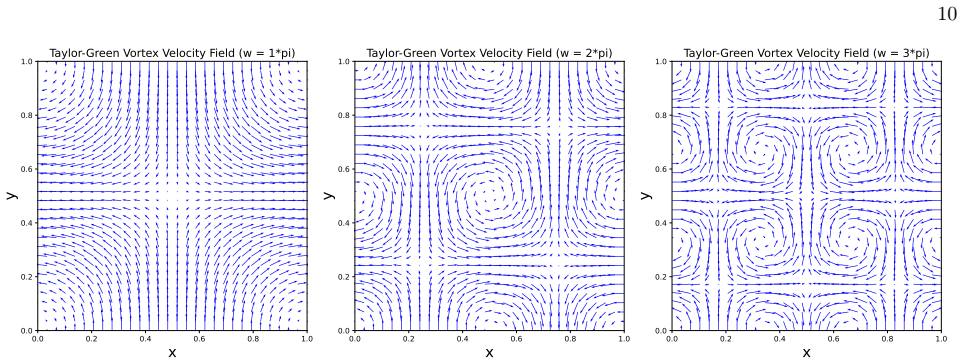
Run both pipelines end-to-end on identical hardware for one transfer pair (say Taylor-Green $\pi \to 2\pi$): train the source model to its reported stopping point, fine-tune to a fixed target error, and compare total wall time against training the target from scratch to the same error. If the transferred run is not faster, the paper's central convergence-speed claim is falsified.
Extended reading notes
Core claim
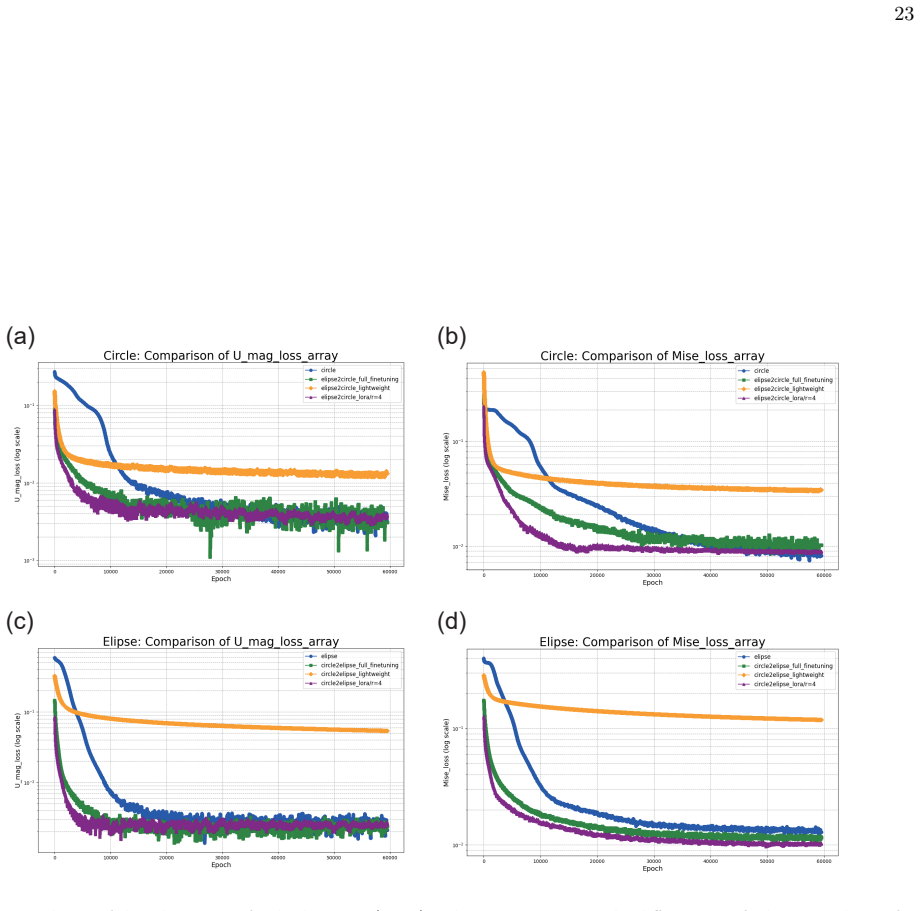
In the paper's own terms, the discovery is that parameter-based transfer learning generalizes across problem instances in both formulations of PINNs: initializing the target network with the source-domain weights and then applying either full fine-tuning or a LoRA low-rank update "significantly improve convergence speed while providing a slight enhancement in accuracy" across most scenarios. Lightweight fine-tuning—freezing the early layers and training only the last layer—performs worst in all three test groups, which the authors attribute to fully connected PINN networks not possessing the hierarchical feature extraction of CNNs. They also report that transferring from a high-frequency to a low-frequency Taylor-Green vortex works better than the reverse, and that LoRA's optimal rank increases as the source-target similarity decreases; with rank equal to the full matrix dimension, LoRA reduces to full fine-tuning.
Load-bearing premise
The load-bearing assumption is that the comparison should count only target-domain fine-tuning iterations and treat the source pretraining as free; if pretraining epochs are included in the total cost, the claimed speed advantage may narrow or disappear.
Editorial extensions
If this is right
- Full fine-tuning should be the default transfer baseline for PINNs; in the tested cases it consistently reached a given target error in fewer iterations than training from scratch, and usually matched or beat the no-transfer error.
- LoRA with a moderate rank (around 4) matches or exceeds full fine-tuning on the energy-form problems while training far fewer parameters, making it attractive when per-task storage or parameter efficiency matters.
- Lightweight fine-tuning that freezes early layers is not a viable transfer strategy for PINNs; its measured error is often worse than no transfer at all.
- The LoRA rank should be set according to source-target similarity: the paper's rank sweep suggests larger gaps call for larger ranks (up to around 56 when transferring from $\pi$ to $3\pi$), which a proposed cosine-similarity rule could eventually automate.
- Training sequentially through source problems before the target—termed "scenario fusion"—can beat direct training at equal total iteration counts, implying that intermediate tasks act as useful warm starts.
- The high-to-low frequency transfer asymmetry hints at a practical scheduling rule the authors leave implicit: when facing a family of problems ordered by difficulty, training on the hardest instance first and transferring down may compress total effort; a direct test would compare curricula ordered by increasing versus decreasing frequency.
- The scenario-fusion result effectively describes a curriculum over tasks, and the paper's proposed cosine-similarity rank rule could be tested immediately by encoding a few hand-chosen problem features and comparing the predicted rank to the empirically optimal rank found in the paper's rank sweep.
- The claim that transfer learning 'significantly improve convergence speed' has not been established on a total-compute basis; a fair end-to-end comparison would need to include the source pretraining epochs.
Signed reviews
Editorial analysis
A structured set of objections, weighed in public.
Referee Report
Summary. The manuscript reports a systematic comparison of transfer learning strategies—full fine-tuning, lightweight fine-tuning, and Low-Rank Adaptation (LoRA)—applied to two flavors of physics-informed neural networks: the strong-form PINN for the Taylor-Green vortex with varying frequency parameter (boundary/initial conditions) and the energy-form Deep Energy Method for functionally graded beams (material property variation) and square plates with holes (geometry variation). The main reported findings are that full fine-tuning and LoRA substantially reduce the number of target-domain training epochs needed to reach a given accuracy and often yield slightly lower relative L2 and H1 errors, whereas lightweight fine-tuning performs poorly. The paper also discusses LoRA rank selection based on source-target similarity and proposes a scenario-fusion idea for improving PINN accuracy under a fixed total iteration budget.
Significance. The paper addresses a practically relevant question: whether pretraining on a related source PDE and adapting via full fine-tuning or LoRA can replace from-scratch training when boundary conditions, material fields, or geometries change. Its scope is broader than most prior studies because it covers both strong-form and energy-form formulations and three adaptation strategies. The positive features include a transparent experimental setup (architectures, optimizers, loss weights, and integration rules), per-epoch timing analysis in Tables 1–3, and an explicit total-iteration comparison in Section 5.2 for accuracy. If the speed claims survive a total-compute analysis, the paper would be a useful reference for practitioners considering transfer learning in PINNs. However, as written, the central speed claim is not yet supported by the reported data because source pretraining cost is excluded, and the absence of repeated-run statistics leaves the conclusions vulnerable to stochastic variation.
major comments (3)
- [§4.1–4.3, Tables 1–3] The headline claim that full fine-tuning and LoRA can significantly improve convergence speed is measured only by target-domain epochs or iterations. Transfer runs consume extra source pretraining: Section 4.2 states 100,000 source epochs, Section 4.3 states 60,000 source epochs, and Section 4.1 shows source training to 80,000 epochs, while Table 1 reports nearly identical per-epoch wall-clock times across methods (14.6–14.9 s per 1,000 epochs for the Navier-Stokes case). Under total-compute accounting (source pretraining plus target fine-tuning versus target-only training), the reported speed advantage can shrink or disappear. The paper should report time-to-threshold including source training, or an explicit amortization argument when one source is reused for multiple targets, before claiming 'significantly improve convergence speed'.
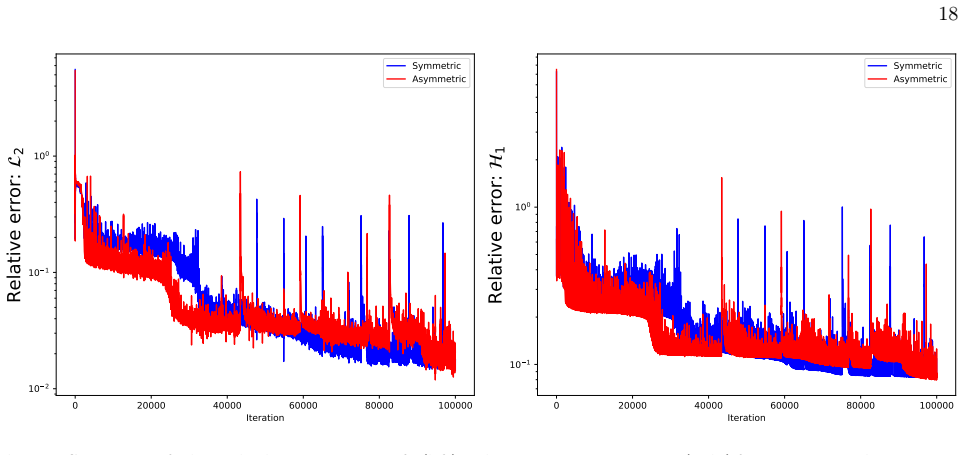
- [§4, Tables 1–3, Figures 9–20] All accuracy and convergence comparisons are single-run values with no error bars, seed counts, or significance tests. Statements such as 'significantly improve convergence speed' and the rank comparison in Figure 21 need repeated-run statistics (at least 3–5 independent runs) to separate systematic effects from initialization and sampling noise.
- [§4.1 and Table 1] The LoRA configuration is internally inconsistent. The text says LoRA 'only trains the layers [100, 100, 100, 100]' (four 100-dimensional layers), but the reported trainable-parameter counts (900, 2,700, and 60,300 for r=1, 4, and 100) correspond to three square layers including biases (3 × [r(100+100)+100]). This inconsistency affects the efficiency comparison and the claim that LoRA's parameter count is much smaller than full fine-tuning; please state exactly which weight matrices and biases LoRA modifies and recompute the parameter counts.
minor comments (5)
- [§4.1] The sentence 'Full finetuning refers to fully fine-tuning the pre-trained parameters' is duplicated.
- [Tables 2 and 3] The header 'Epoches' should be 'Epochs'.
- [§5.1 and Figure 21] The claim that the optimal LoRA rank correlates with source-target similarity is presented without a quantitative similarity measure; consider marking this as an observation rather than a concluded design rule.
- [§2.2 and §4.1] The text around Eq. (25) refers to 'solving Eq. (8)' when the pressure Poisson equation is meant, and the pressure variable is not included in the loss function Eq. (27); please clarify which equations are actually being solved.
- [Appendix D] The code is promised only 'after accepted'; for a reproducibility-focused empirical study, make the code available with the submission or provide a permanent repository link.
Circularity Check
No circular steps: the paper is an empirical transfer-learning benchmark whose measurements are compared against independent reference solutions; self-citations are methodological background only.
full rationale
The paper does not contain a derivation chain in which an output quantity is constructed from the quantity it claims to predict. The central claims, that full finetuning and LoRA improve convergence speed and slightly improve accuracy, are supported by direct, independently measured comparisons. For the Taylor-Green case, L2 errors are computed against the analytical solution of Eq. (26); for the DEM cases, errors are computed against IGA and Abaqus reference solutions (Figs. 12 and 17). Transfer and no-transfer runs use the same network, optimizer, and target-domain iteration counts (Tables 1-3), and the paper reports wall-clock times and trainable-parameter counts per method. No fitted parameter is renamed as a prediction: the LoRA rank r=4 is an explicitly studied hyperparameter, with rank sensitivity shown in Fig. 21, rather than a derived value. The numerous self-citations (DEM [1], integration choices [26,37], and the statement that the NS equations cannot be solved by the energy form [26]) are used for methodological motivation or experimental design; the present benchmarks validate the choices externally, and none of these citations is a uniqueness theorem or an unverified premise that forces the transfer-learning conclusion. The one notable weakness, that the convergence-speed claim counts only target-domain fine-tuning epochs and does not debit source pretraining cost, is a benchmarking fairness issue rather than circularity: the measured convergence curves are not defined in terms of the conclusion. No circular step can be exhibited under the required standard.
Assumptions & free parameters
free parameters (5)
- LoRA rank r =
r=4
- LoRA scaling factor alpha =
1
- Loss weights lambda =
1
- Adam learning rate =
0.001
- LoRA A/B initialization standard deviation =
0.02
assumptions (4)
- standard math The strong-form PINN loss in Eq. (5) is a valid weighted residual discretization of the target PDE system.
- domain assumption The Deep Energy Method minimizes the potential energy L in Eq. (15), and the admissible functions in Eqs. (16), (34), and (36) satisfy the essential boundary conditions in advance.
- domain assumption Reference solutions from isogeometric analysis (functionally graded beam) and Abaqus (plate with hole) are accurate enough to serve as ground truth for relative error computation.
- ad hoc to paper Transfer learning gains measured by target-domain iterations are the appropriate metric for convergence speed.
Cite this review
Pith. "Pith review of Transfer Learning in Physics-Informed Neural Networks: Full Fine-Tuning, Lightweight Fine-Tuning, and Low-Rank Adaptation." pith.science (2026). https://pith.science/paper/JYP6K7TZ
@misc{pith2026250200782,
  author       = {Pith},
  title        = {Pith review of: Transfer Learning in Physics-Informed Neural Networks: Full Fine-Tuning, Lightweight Fine-Tuning, and Low-Rank Adaptation},
  year         = {2026},
  howpublished = {\url{https://pith.science/paper/JYP6K7TZ}},
  note         = {Machine review of arXiv:2502.00782}
}
read the original abstract
AI for PDEs has garnered significant attention, particularly Physics-Informed Neural Networks (PINNs). However, PINNs are typically limited to solving specific problems, and any changes in problem conditions necessitate retraining. Therefore, we explore the generalization capability of transfer learning in the strong and energy form of PINNs across different boundary conditions, materials, and geometries. The transfer learning methods we employ include full finetuning, lightweight finetuning, and Low-Rank Adaptation (LoRA). The results demonstrate that full finetuning and LoRA can significantly improve convergence speed while providing a slight enhancement in accuracy.
Figures


Figures from the paper (21 more)







Forward citations
Cited by 2 Pith papers
-
IP-Basis PINNs: Efficient Multi-Query Inverse Parameter Estimation
A pre-trained basis network enables fast multi-query inverse parameter estimation by fitting only a linear readout online, demonstrated on harmonic oscillators, Lotka-Volterra, and quantum harmonic oscillator.
-
Physics-Informed Neural Networks in Clean Combustion: A Pathway to Sustainable Aerospace Propulsion
A review article argues physics-informed neural networks are a faster, more data-efficient route to clean combustion modeling, but its 'transformative' thesis is undercut by its own scaling caveats and duplicated sections.
Reference graph
Works this paper leans on
-
[1]
E. Samaniego, C. Anitescu, S. Goswami, V. M. Nguyen-Thanh, H. Guo, K. Hamdia, X. Zhuang, T. Rabczuk, An energy approach to the solution of partial differential equations in computational mechanics via machine learning: Concepts, imple- mentation and applications, Computer Methods in Applied Mechanics and Engineering 362 (2020) 112790
work page 2020
-
[2]
G. E. Karniadakis, I. G. Kevrekidis, L. Lu, P. Perdikaris, S. Wang, L. Yang, Physics-informed machine learning, Nature Reviews Physics 3 (6) (2021) 422–440.doi:10.1038/s42254-021-00314-5
-
[3]
S. Wang, H. Wang, P. Perdikaris, Learning the solution operator of parametric partial differential equations with physics- informed deeponets, Science advances 7 (40) (2021) eabi8605
work page 2021
-
[4]
Y. Wang, J. Bai, Z. Lin, Q. Wang, C. Anitescu, J. Sun, M. S. Eshaghi, Y. Gu, X.-Q. Feng, X. Zhuang, et al., Artificial intelligence for partial differential equations in computational mechanics: A review, arXiv preprint arXiv:2410.19843 (2024)
arXiv 2024
-
[5]
W. Yizheng, Z. Xiaoying, T. Rabczuk, L. Yinghua, Ai for pdes in solid mechanics: A review, Advances in Mechanics 54 (3) (2024) 1–57
work page 2024
-
[6]
Raissi, P
M. Raissi, P. Perdikaris, G. E. Karniadakis, Physics-informed neural networks: A deep learning framework for solving forward and inverse problems involving nonlinear partial differential equations, Journal of Computational Physics 378 (2019) 686–707
2019
-
[7]
L. Lu, P. Jin, G. Pang, Z. Zhang, G. E. Karniadakis, Learning nonlinear operators via deeponet based on the universal approximation theorem of operators, Nature Machine Intelligence 3 (3) (2021) 218–229.doi:10.1038/s42256-021-00302-5
-
[8]
Z. Li, N. Kovachki, K. Azizzadenesheli, B. Liu, K. Bhattacharya, A. Stuart, A. Anandkumar, Fourier neural operator for parametric partial differential equations, arXiv preprint arXiv:2010.08895 (2020)
arXiv 2020
Show all 39 references
-
[9]
Z. Li, H. Zheng, N. Kovachki, D. Jin, H. Chen, B. Liu, K. Azizzadenesheli, A. Anandkumar, Physics-informed neural operator for learning partial differential equations, ACM/JMS Journal of Data Science 1 (3) (2024) 1–27
2024
-
[10]
M. S. Eshaghi, C. Anitescu, M. Thombre, Y. Wang, X. Zhuang, T. Rabczuk, Variational physics-informed neural operator (vino) for solving partial differential equations, arXiv preprint arXiv:2411.06587 (2024). 30
2024 arXiv
-
[11]
L. Yang, S. Liu, T. Meng, S. J. Osher, In-context operator learning with data prompts for differential equation problems, Proceedings of the National Academy of Sciences 120 (39) (2023) e2310142120
2023
-
[12]
Desai, M
S. Desai, M. Mattheakis, H. Joy, P. Protopapas, S. Roberts, One-shot transfer learning of physics-informed neural networks, arXiv preprint arXiv:2110.11286 (2021)
2021 arXiv
-
[13]
Y. Gao, K. C. Cheung, M. K. Ng, Svd-pinns: Transfer learning of physics-informed neural networks via singular value decomposition, in: 2022 IEEE Symposium Series on Computational Intelligence (SSCI), IEEE, 2022, pp. 1443–1450
2022
-
[14]
Zhuang, Z
F. Zhuang, Z. Qi, K. Duan, D. Xi, Y. Zhu, H. Zhu, H. Xiong, Q. He, A comprehensive survey on transfer learning, Proceedings of the IEEE 109 (1) (2020) 43–76
2020
-
[15]
C. Xu, B. T. Cao, Y. Yuan, G. Meschke, Transfer learning based physics-informed neural networks for solving inverse problems in engineering structures under different loading scenarios, Computer Methods in Applied Mechanics and Engineering 405 (2023) 115852
2023
-
[16]
H. Guo, X. Zhuang, P. Chen, N. Alajlan, T. Rabczuk, Analysis of three-dimensional potential problems in non-homogeneous media with physics-informed deep collocation method using material transfer learning and sensitivity analysis, Engineering with Computers 38 (6) (2022) 5423–5444
2022
-
[17]
Chakraborty, C
A. Chakraborty, C. Anitescu, X. Zhuang, T. Rabczuk, Domain adaptation based transfer learning approach for solving pdes on complex geometries, Engineering with Computers 38 (5) (2022) 4569–4588
2022
-
[18]
X. Chen, C. Gong, Q. Wan, L. Deng, Y. Wan, Y. Liu, B. Chen, J. Liu, Transfer learning for deep neural network-based partial differential equations solving, Advances in Aerodynamics 3 (2021) 1–14
2021
-
[19]
Haghighat, M
E. Haghighat, M. Raissi, A. Moure, H. Gomez, R. Juanes, A physics-informed deep learning framework for inversion and surrogate modeling in solid mechanics, Computer Methods in Applied Mechanics and Engineering 379 (2021) 113741.doi: 10.1016/j.cma.2021.113741
2021
-
[20]
Goswami, C
S. Goswami, C. Anitescu, S. Chakraborty, T. Rabczuk, Transfer learning enhanced physics informed neural network for phase-field modeling of fracture, Theoretical and Applied Fracture Mechanics 106 (2020) 102447
2020
-
[21]
Chakraborty, Transfer learning based multi-fidelity physics informed deep neural network, Journal of Computational Physics 426 (2021) 109942
S. Chakraborty, Transfer learning based multi-fidelity physics informed deep neural network, Journal of Computational Physics 426 (2021) 109942
2021
-
[22]
E. J. Hu, Y. Shen, P. Wallis, Z. Allen-Zhu, Y. Li, S. Wang, L. Wang, W. Chen, Lora: Low-rank adaptation of large language models, arXiv preprint arXiv:2106.09685 (2021)
2021 arXiv
-
[23]
Majumdar, V
R. Majumdar, V. Jadhav, A. Deodhar, S. Karande, L. Vig, V. Runkana, Hyperlora for pdes, arXiv preprint arXiv:2308.09290 (2023)
2023 arXiv
-
[24]
W. Cho, K. Lee, D. Rim, N. Park, Hypernetwork-based meta-learning for low-rank physics-informed neural networks, Advances in Neural Information Processing Systems 36 (2023) 11219–11231
2023
-
[25]
Fung, Foundations of solid mechanics
Y. Fung, Foundations of solid mechanics. 1965, Englewood Cliffs, NJ 436 (2010)
2010
-
[26]
Y. Wang, J. Sun, J. Bai, C. Anitescu, M. S. Eshaghi, X. Zhuang, T. Rabczuk, Y. Liu, Kolmogorov arnold informed neural network: A physics-informed deep learning framework for solving forward and inverse problems based on kolmogorov–arnold networks, Computer Methods in Applied M...
2025
-
[27]
Zhang, L
X. Zhang, L. Wang, J. Helwig, Y. Luo, C. Fu, Y. Xie, M. Liu, Y. Lin, Z. Xu, K. Yan, et al., Artificial intelligence for science in quantum, atomistic, and continuum systems, arXiv preprint arXiv:2307.08423 (2023)
2023 arXiv
-
[28]
Y. Wang, J. Sun, W. Li, Z. Lu, Y. Liu, Cenn: Conservative energy method based on neural networks with subdomains for solving variational problems involving heterogeneous and complex geometries, Computer Methods in Applied Mechanics and Engineering 400 (2022) 115491
2022
-
[29]
J. He, C. Zhou, X. Ma, T. Berg-Kirkpatrick, G. Neubig, Towards a unified view of parameter-efficient transfer learning, arXiv preprint arXiv:2110.04366 (2021)
2021 arXiv
-
[30]
Radford, J
A. Radford, J. Wu, R. Child, D. Luan, D. Amodei, I. Sutskever, et al., Language models are unsupervised multitask learners, OpenAI blog 1 (8) (2019) 9
2019
-
[31]
S. V. Patankar, D. B. Spalding, A calculation procedure for heat, mass and momentum transfer in three-dimensional parabolic flows, in: Numerical prediction of flow, heat transfer, turbulence and combustion, Elsevier, 1983, pp. 54–73
1983
-
[32]
S. Wang, Y. Teng, P. J. S. J. o. S. C. Perdikaris, Understanding and mitigating gradient flow pathologies in physics-informed neural networks, SIAM Journal on Scientific Computing 43 (5) (2021) A3055–A3081
2021
-
[33]
S. Wang, H. Wang, P. Perdikaris, On the eigenvector bias of fourier feature networks: From regression to solving multi-scale pdes with physics-informed neural networks, Computer Methods in Applied Mechanics and Engineering 384 (2021) 113938. doi:10.1016/j.cma.2021.113938
2021
-
[34]
S.Wang, X.Yu, P.Perdikaris, Whenandwhypinnsfailtotrain: Aneuraltangentkernelperspective, JournalofComputational Physics 449 (2022) 110768
2022
-
[35]
M. D. Zeiler, R. Fergus, Visualizing and understanding convolutional networks, in: Computer Vision–ECCV 2014: 13th European Conference, Zurich, Switzerland, September 6-12, 2014, Proceedings, Part I 13, Springer, 2014, pp. 818–833
2014
-
[36]
M. S. Eshaghi, M. Bamdad, C. Anitescu, Y. Wang, X. Zhuang, T. Rabczuk, Applications of scientific machine learning for the analysis of functionally graded porous beams, Neurocomputing 619 (2025) 129119
2025
-
[37]
V. M. Nguyen-Thanh, X. Zhuang, T. Rabczuk, A deep energy method for finite deformation hyperelasticity, European Journal of Mechanics-A/Solids 80 (2020) 103874
2020
-
[38]
Y. Wang, J. Sun, T. Rabczuk, Y. Liu, Dcem: A deep complementary energy method for solid mechanics, International Journal for Numerical Methods in Engineering (2024).doi:10.1002/nme.7585
2024 doi
-
[39]
Paszke, S
A. Paszke, S. Gross, S. Chintala, G. Chanan, E. Yang, Z. DeVito, Z. Lin, A. Desmaison, L. Antiga, A. Lerer, Automatic differentiation in pytorch (2017)
2017
Reviewed August 9, 2026 · model on record in the stance chip above.
Discussion (0). Continue with ORCID to comment.