The Optimal Knight Exchange Puzzle is NP-Hard
Pith reviewed 2026-06-30 02:30 UTC · model grok-4.3
The pith
Knight's Tour on connected boards is NP-hard, and optimal Knight Exchange reduces from it in polynomial time.
A machine-rendered reading of the paper's core claim, the machinery that carries it, and where it could break.
Core claim
We show that Knight's Tour is NP-hard for connected boards. We also give a short polynomial-time reduction between the two problems, showing that the optimality version of Knight Exchange is NP-hard.
What carries the argument
A short polynomial-time reduction from connected-board Knight's Tour instances to optimal Knight Exchange instances that preserves hardness.
If this is right
- Knight's Tour is NP-hard on every connected board shape.
- Optimal Knight Exchange cannot be solved in polynomial time unless P equals NP.
- The two problems are computationally equivalent under polynomial reductions.
Where Pith is reading between the lines
- Similar reductions could establish hardness for knight movement puzzles with other objectives on connected boards.
- Any practical program that claims to solve these puzzles quickly must fail on some inputs.
- The same technique might apply to tours or exchanges using other chess pieces on connected regions.
Load-bearing premise
The constructed exchange instances remain hard precisely when the connected tour instances are hard.
What would settle it
Either a polynomial-time algorithm that solves optimal Knight Exchange on every connected board, or an explicit connected board on which Knight's Tour is solvable in polynomial time.
Figures
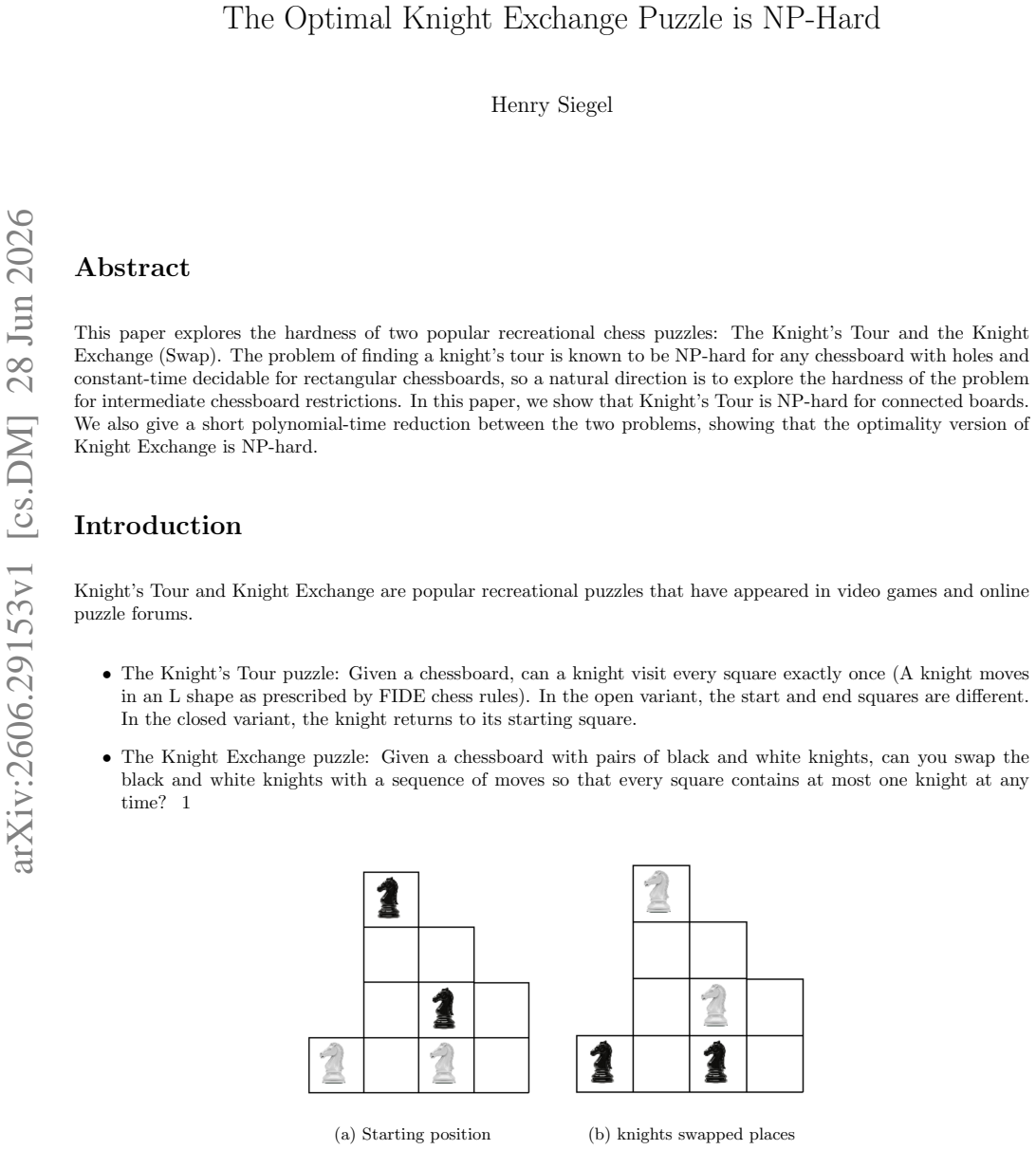
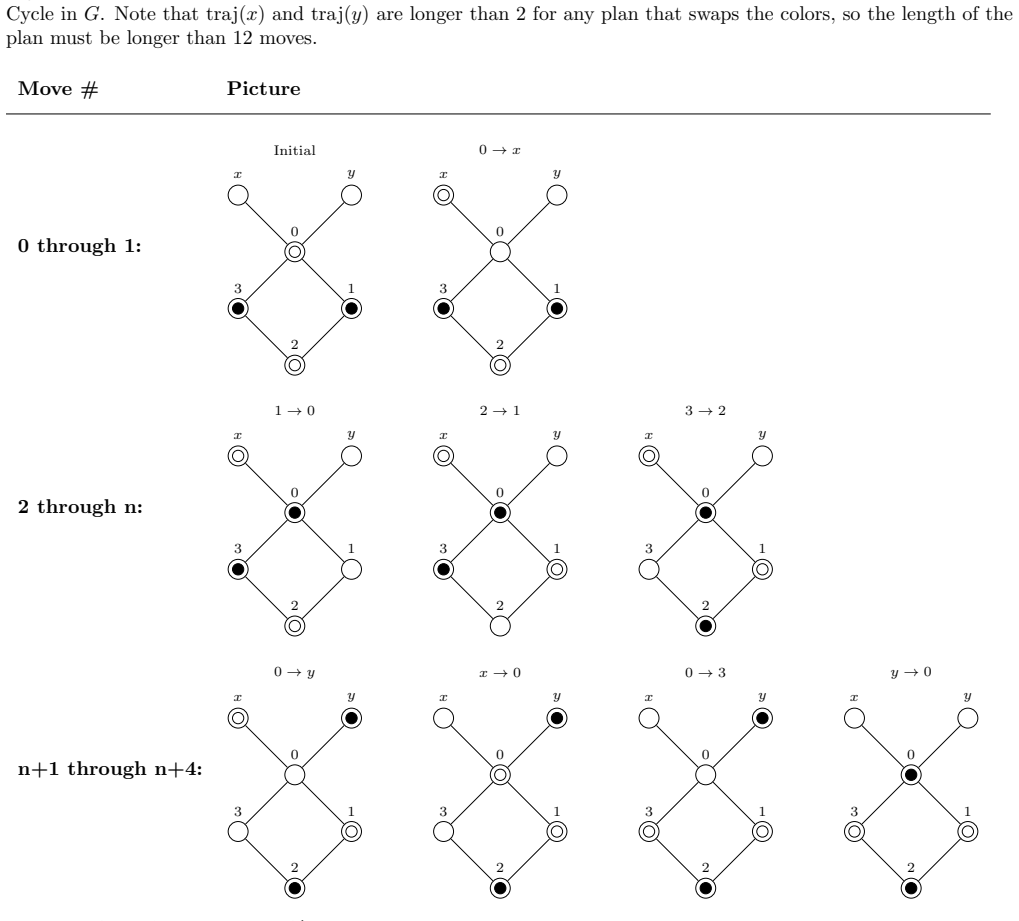
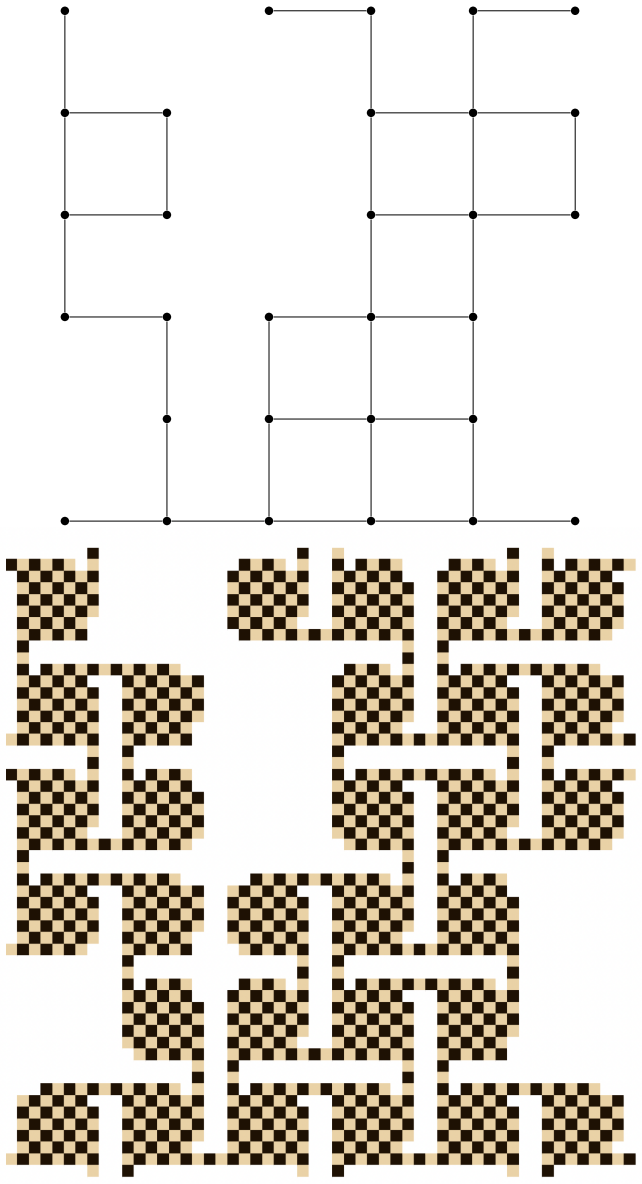
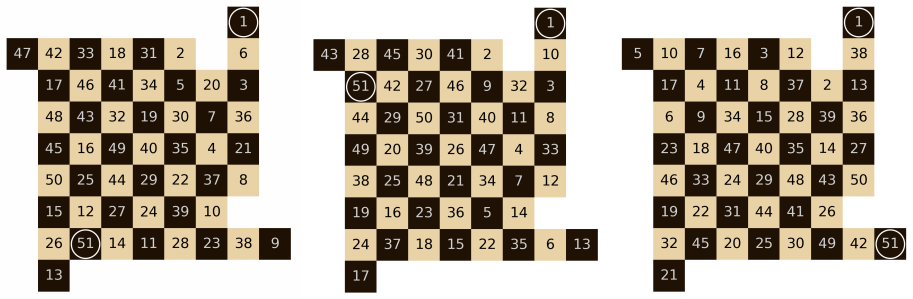
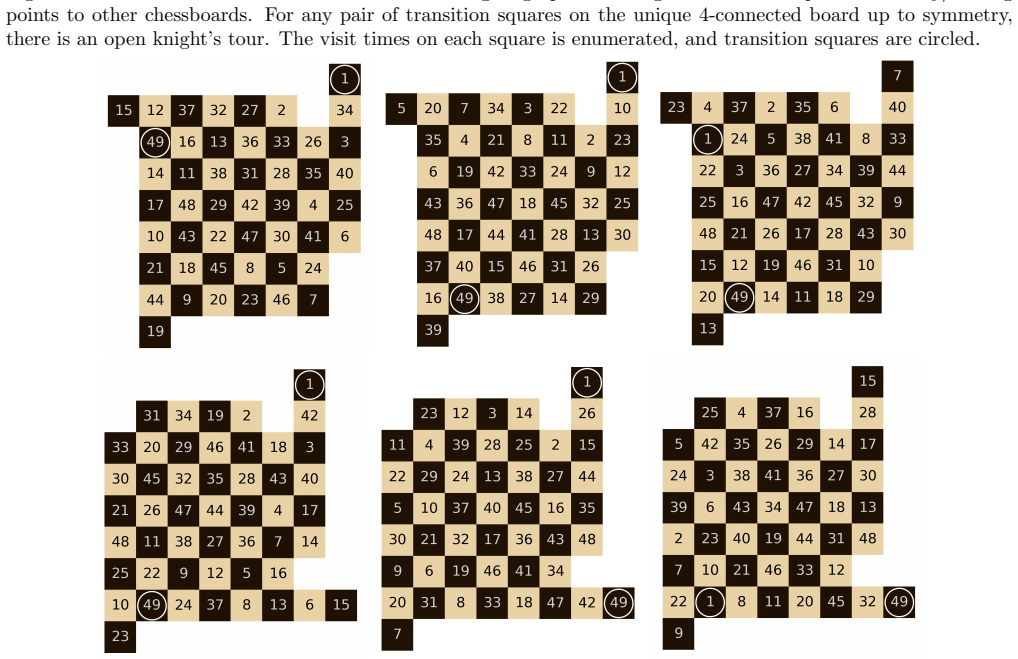
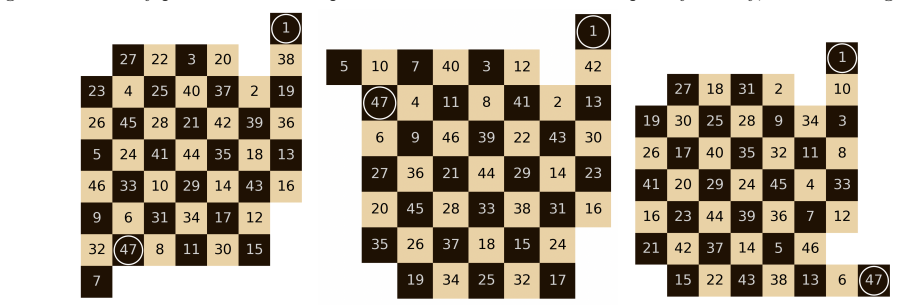
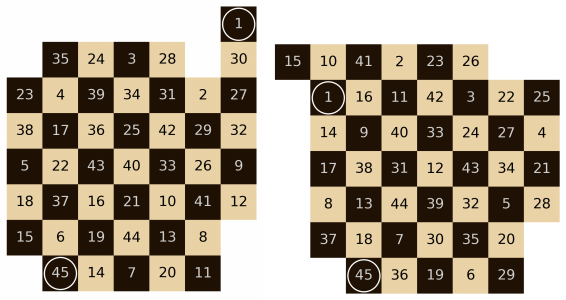
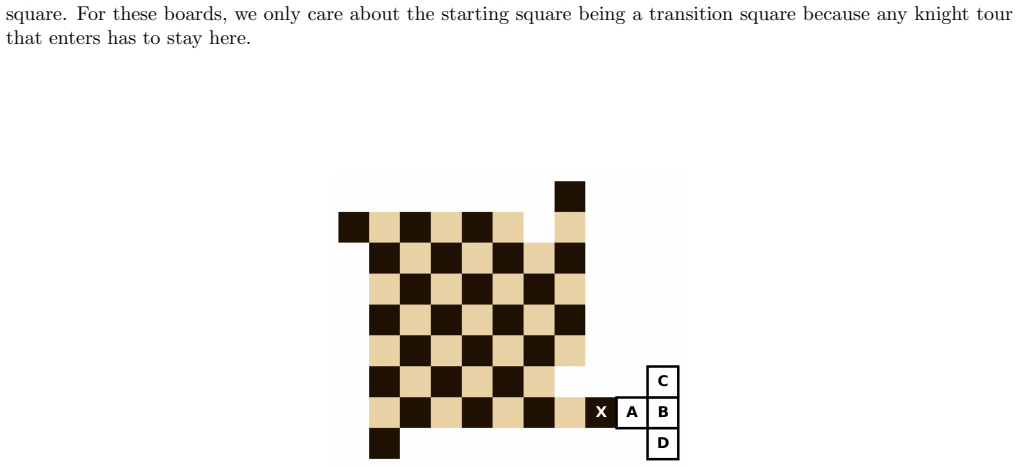
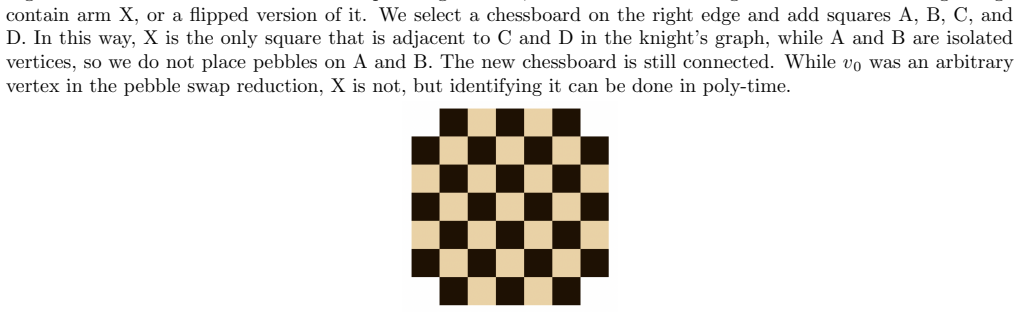
read the original abstract
This paper explores the hardness of two popular recreational chess puzzles: The Knight's Tour and the Knight Exchange (Swap). The problem of finding a Knight's Tour is known to be NP-hard for any chessboard with holes and constant-time decidable for rectangular chessboards, so a natural direction is to explore the hardness of the problem for intermediate chessboard restrictions. In this paper, we show that Knight's Tour is NP-hard for connected boards. We also give a short polynomial-time reduction between the two problems, showing that the optimality version of Knight Exchange is NP-hard.
Editorial analysis
A structured set of objections, weighed in public.
Referee Report
Summary. The paper claims that the Knight's Tour problem is NP-hard even when restricted to connected boards (extending prior results for boards with holes) and provides an explicit short polynomial-time reduction from connected-board Knight's Tour instances to optimal Knight Exchange instances, establishing NP-hardness for the optimality version of the latter problem.
Significance. If the constructions hold, the result fills an intermediate case in the complexity of knight's tour variants and directly transfers hardness to the optimization version of Knight Exchange. The manuscript supplies both the connected-board construction and the explicit reduction, which is a strength for verifiability in a complexity paper.
minor comments (2)
- [Abstract] Abstract: the phrase 'constant-time decidable for rectangular chessboards' would benefit from a brief parenthetical reference to the known result (e.g., the polynomial-time algorithm) to orient readers unfamiliar with the background.
- The reduction is described as 'short'; including a high-level pseudocode or diagram of the instance mapping (even if the full proof is in the text) would improve readability without lengthening the paper substantially.
Simulated Author's Rebuttal
We thank the referee for the positive summary and recommendation of minor revision. The assessment correctly captures the paper's contributions on NP-hardness for connected-board Knight's Tour and the explicit reduction to optimal Knight Exchange.
Circularity Check
No significant circularity; derivation builds on external known result with explicit new constructions
full rationale
The paper cites an external result (Knight's Tour NP-hard on boards with holes) and then supplies its own constructions: a proof that the problem remains NP-hard on connected boards, plus an explicit polynomial-time reduction to the optimality version of Knight Exchange. Neither step reduces by definition or self-citation to the paper's own inputs; the reduction is described as direct and hardness-preserving. No fitted parameters, self-definitional loops, or load-bearing self-citations appear in the claimed chain. This is the normal case of a reduction proof that remains independent of its target result.
Axiom & Free-Parameter Ledger
axioms (1)
- standard math Standard definitions of NP-completeness and polynomial-time reductions from prior literature on Knight's Tour hardness
Reference graph
Works this paper leans on
-
[1]
Schwenk (1991).Which Rectangular Chessboards Have a Knight’s Tour? Mathematics Magazine, 64, 325–332
A. Schwenk (1991).Which Rectangular Chessboards Have a Knight’s Tour? Mathematics Magazine, 64, 325–332. https://doi.org/10.1080/0025570x.1991.11977627
-
[2]
Goraly and R
G. Goraly and R. Hassin.Multi-Color Pebble Motion on Graphs.Algorithmica, 2010
2010
-
[3]
Calinescu, A
G. Calinescu, A. Dumitrescu, and J. Pach.Reconfigurations in graphs and grids.SIAM Journal on Discrete Mathematics, 22(1):124–138, 2008
2008
-
[4]
Iordan.Optimal Solutions for the Knight Exchange on4n×4nChessboards
M. Iordan.Optimal Solutions for the Knight Exchange on4n×4nChessboards. 2019
2019
-
[5]
Iranpoor.Knights Exchange Puzzle—Teaching the Efficiency of Modeling.INFORMS Transactions on Edu- cation, 2021
R. Iranpoor.Knights Exchange Puzzle—Teaching the Efficiency of Modeling.INFORMS Transactions on Edu- cation, 2021
2021
-
[6]
Goldreich.Finding the Shortest Move-Sequence in the Graph-Generalized 15-Puzzle Is NP-Hard
O. Goldreich.Finding the Shortest Move-Sequence in the Graph-Generalized 15-Puzzle Is NP-Hard. 1984
1984
-
[7]
Geft.On the Hardness of Optimal Motion on Trees
T. Geft.On the Hardness of Optimal Motion on Trees. arXiv preprint arXiv:2606.00000, June 2026
-
[8]
McGown and A
K. McGown and A. Leininger.Knight’s Tour. Oregon State University REU Proceedings, August 15, 2002
2002
-
[9]
A. Itai, C. H. Papadimitriou, and J. L. Szwarcfiter.Hamiltonian Paths in Grid Graphs. SIAM Journal on Computing, 11(4):676–686, November 1982
1982
-
[10]
E. D. Demaine and M. Rudoy.Hamiltonicity is Hard in Thin or Polygonal Grid Graphs, but Easy in Thin Polygonal Grid Graphs. arXiv preprint arXiv:1706.10046, June 2017
work page internal anchor Pith review Pith/arXiv arXiv 2017
-
[11]
Conrad, T
A. Conrad, T. Hindrichs, H. Morsy, and I. Wegener.Solution of the knight’s Hamiltonian path problem on chessboards.Discrete Applied Mathematics, 50(2):125–134, 1994. 6
1994
-
[12]
D. M. Kornhauser, G. L. Miller, and P. G. Spirakis.Coordinating Pebble Motion on Graphs, the Diameter of Permutation Groups, and Applications. MIT Laboratory for Computer Science Technical Report MIT-LCS-TR- 320, 1984
1984
-
[13]
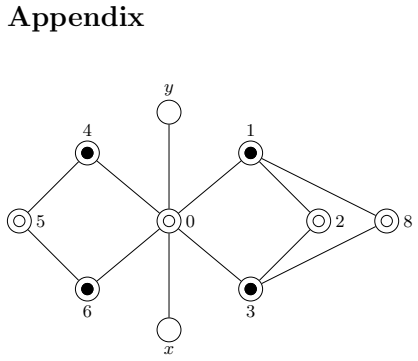
S. Ardizzoni, I. Saccani, L. Consolini, M. Locatelli, and B. Nebel. An algorithm with improved complexity for pebble motion/multi-agent path finding on trees. Journal of Artificial Intelligence Research, 79:483–514, 2024. https://doi.org/10.1613/jair.1.15249 7 Appendix 0 4 5 6 1 2 3 8 y x Figure 2: One can check that it is possible to swap the black and w...
discussion (0)
Sign in with ORCID, Apple, or X to comment. Anyone can read and Pith papers without signing in.