REVIEW 4 major objections 4 minor 59 references
Transfer Learning-Based Label Proportions Method with Data of Uncertainty
T0 review · 4 major / 4 minor · reviewed 2026-08-14 · deepseek-v4-flash
Pith's one-line read The paper proposes TL-LLP, a transfer-learning method for learning with label proportions that models each input's uncertainty as a bounded perturbation and, on nine text datasets, reports higher accuracy and lower noise sensitivity than…
desk verdict Readable transfer-LLP package whose stated noise robustness is undermined by a min-min formulation that fits training noise rather than defending against it. read the letter →
The pith
A machine-rendered reading of the paper's core claim, the machinery that carries it, and where it could break.
The reading
What carries the argument
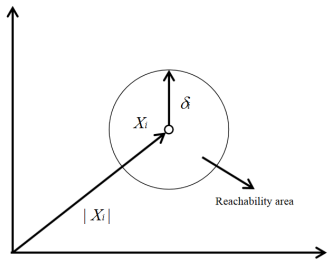
The load-bearing objects are the weight decomposition $w_t = w_0 + v_t$ and the reachability area of each instance. The decomposition is what makes transfer possible: $w_0$ is the common direction learned from both tasks, and $v_1, v_2$ are small task-specific corrections, so the target classifier $f_2$ inherits structure from the source. The reachability area is the set of possible true inputs $\{x_i + \Delta x_i : \|\Delta x_i\| \le \delta_i\}$; by making $\Delta x_i$ a variable in problem (5), the model lets the optimizer choose perturbations that reduce the training slack, which is the mechanism behind the claimed noise insensitivity. Lemmas 2 and 3 are the workhorses: Lemma 2 dualizes the QP after fixing $\Delta x$, giving closed-form expressions for $w_0, v_1, v_2$; Lemma 3 solves the $\Delta x$-update in closed form using the gradient direction of the kernel, effectively pushing each noisy point back inside the $\varepsilon$-tube at cost $O(|D_1|+|D_2|)$ per iteration.
What would settle it
The paper's noise experiments corrupt the training data (Figure 5). The decisive check is to corrupt only the target test set after training, with training data clean, and compare TL-LLP with a version whose $\Delta x$ machinery is disabled; if the accuracy gap vanishes or reverses, the reported noise insensitivity is an artifact of training-time perturbation rather than genuine robustness to input uncertainty.
Extended reading notes
Core claim
The paper's central claim is that label-proportion learning can be made transferable and noise-tolerant at the same time by solving a single objective over two coupled SVR problems. For source task $T_1$ and target task $T_2$, the classifier planes are $f_1(x) = (w_0 + v_1)^T x + b_1$ and $f_2(x) = (w_0 + v_2)^T x + b_2$; the shared vector $w_0$ is what carries knowledge from source to target, while $v_1$ and $v_2$ absorb task-specific deviations. To handle uncertainty, each instance $x_i$ is assumed to be observed with additive noise $\Delta x_i$ satisfying $\|\Delta x_i\| \le \delta_i$, so the true input lies in a reachability area; the optimization (problem (5)) uses the perturbed inputs in the bag-average constraints and includes the $\Delta x_i$ as decision variables. The alternating Algorithm 1 fixes the noise vectors and solves a convex QP dual (Lemma 2) to update all hyperplane parameters, then fixes the hyperplanes and updates each $\Delta x_i$ by the closed form of Lemma 3, which moves a perturbed point toward the correct side of the classifier whenever it falls outside the $\varepsilon$-insensitive zone. The paper takes the resulting $f_2$ as the target classifier and reports, in Table 2 and Figure 5, that it beats the four baselines in accuracy and in robustness to added Gaussian noise over nine transfer dataset pairs.
Load-bearing premise
The load-bearing premise is that letting the learner move each noisy input to a nearby point that reduces its training error is a faithful model of uncertainty; if real noise does not behave that way, the claimed robustness need not transfer to test time.
Editorial extensions
If this is right
- If TL-LLP works as reported, LLP practitioners with noisy text data can improve target-task accuracy by adding a related source task and estimating a per-sample noise bound $\delta_i$, without needing instance labels in either task.
- The shared $w_0$ means the target classifier is not trained from scratch: the source task contributes the common decision direction, which is why the method can outperform single-task LLP baselines that see only the target bags.
- The closed-form $\Delta x$ update in Lemma 3 keeps the added computational cost linear per iteration, so total training time stays at $m \cdot O((|D_1|+|D_2|)^2)$, dominated by the QP solve.
- The reported lower standard deviations across bag sizes suggest that transfer plus uncertainty modeling stabilizes predictions, not just raises mean accuracy.
Reading between the lines
- Extension: Lemma 3 chooses $\Delta x_i$ that shrink training slack, an optimistic perturbation; if noise is adversarial or present only at test time, the robustness claim may not carry over, since at test time the model evaluates $f_2(x)$ on the observed, unperturbed point.
- Extension: The weight decomposition assumes the source and target tasks share a common direction $w_0$; on unrelated task pairs the transferred component could hurt, a regime the paper does not test.
- Extension: A decisive comparison would be TL-LLP with the $\Delta x$ terms removed; this would isolate whether the reported gains come from transfer, from uncertainty modeling, or from their interaction.
- Extension: Because the derivation uses kernel evaluations and a Taylor expansion in Lemma 3, the same transfer-and-perturb strategy extends to nonlinear kernels, although the experiments use a linear kernel.
Signed reviews
Editorial analysis
A structured set of objections, weighed in public.
Referee Report
Summary. This paper proposes TL-LLP, a transfer learning method for learning with label proportions where both source and target data are subject to bounded additive uncertainty. The model introduces a shared parameter w0 and task-specific increments v1 and v2, and it represents uncertainty by allowing each input x to be shifted by a vector Δx with ||Δx|| ≤ δ_i. An alternating algorithm is proposed: for fixed Δx, a dual QP is solved; for fixed hyperplanes, Δx is updated via a closed-form expression. Experiments on nine text classification tasks compare TL-LLP with four LLP baselines and include a noise-sensitivity study.
Significance. If the central claims were valid, the paper would make a useful contribution by combining transfer learning with LLP under input uncertainty. The dual derivation for fixed Δx is standard, and the experimental study is fairly extensive. However, the central robustness mechanism is a minimization over the noise variables, which reduces training slack rather than providing worst-case robustness; this is a fundamental mismatch with the paper's stated claim. In addition, the experiments do not isolate the uncertainty-handling benefit from the use of additional source data. The paper includes a complete derivation of the dual and a reproducible experimental protocol, but the load-bearing noise-robustness claim is not supported by the formulation as written.
major comments (4)
- [Section 3.2, problem (5) and Lemma 3] The uncertainty model is not robust. For a fixed hyperplane, the slack constraints are relaxed by choosing Δx that moves each training point toward the margin, as made explicit by Lemma 3, Eq. (11). The joint optimization over (w,b,ξ,Δx) is a min-min problem that selects the most favorable perturbation for each training example. A robust treatment of bounded input uncertainty would require the constraints to hold for every Δx with ||Δx|| ≤ δ_i, i.e., a min-max formulation. Since Algorithm 1 returns only f1 and f2 and the deployed classifier has no access to Δx at test time, the training procedure fits the training noise rather than learning invariance to it. Consequently, the 'less sensitive to noise' claim in the abstract and Section 4.4 is not supported by the formulation as written.
- [Section 4.3 and 4.4, Tables 2 and Figure 5] The reported accuracy gains over MeanMap, InvCal, alter-∝SVM and conv-∝SVM are confounded by the fact that TL-LLP has access to source-task data while the baselines are trained only on the target task. The higher accuracy in Table 2 and the more moderate degradation in Figure 5 could be entirely due to the additional source data. An ablation that disables the Δx update (i.e., fixes Δx = 0 in the same transfer model) is required to attribute the robustness to the uncertainty mechanism. Without such a comparison, Section 4.4 does not demonstrate that TL-LLP 'reduces the effect of noises in the data.'
- [Equation (11) and Section 6.3] The expression 'δti−ut||ut||' in Eq. (11) and in the proof is dimensionally inconsistent (δ is a scalar, ut/||ut|| is a unit vector) and should presumably read −δti·ut/||ut||. As written, the update rule is not well-defined, which affects the core alternating step in Algorithm 1 and the reproducibility of the method.
- [Algorithm 1 and Section 6.3] No convergence guarantee is given for the alternating procedure. The update of Δx uses a first-order Taylor expansion of the kernel and fixes the Lagrange multipliers, so it is not shown that the objective in problem (5) decreases monotonically or that the stopping criterion reflects convergence to a stationary point. This leaves the algorithm's behavior unspecified and is a load-bearing gap for a method whose main contribution is the iterative framework.
minor comments (4)
- [Section 3.2, after Algorithm 1] The sentence 'For the instance x1i in target task, if f1(x1i) = w^T_2·x1i + b2 > 0' appears to use the wrong function name; it should presumably be f2(x1i) = (w0+v2)^T x1i + b2.
- [Lemma 3, definitions of u1 and u2] The index notation in the definitions of u1 and u2 is inconsistent, e.g., 'xmn' and 'BTm' appear in the main text while the appendix uses different target-task indices. This makes the formulas hard to follow and should be unified.
- [Section 4.4] The abstract claims the method is 'less sensitive to noise,' but the experiments only report accuracy at different noise percentages; a direct measure of sensitivity (e.g., the slope of accuracy versus noise level) would be more directly aligned with the claim.
- [Global] There are several typos, including 'bond score δi' (should be 'bound score') and 'standard derivation' (should be 'standard deviation'). References [2] and [3] are the same work in different venues and should be cross-referenced.
Circularity Check
No circularity: the derivation is a standard regularized transfer-SVR objective, and the empirical claims are tested on held-out data; the noise-robustness concern is a modeling flaw, not a circular argument.
full rationale
The TL-LLP objective (problem 5) is a regularized multi-task SVR with bag-level proportion constraints; the dual in Lemma 2 follows from a standard Lagrangian derivation, and the Delta-x update in Lemma 3 is an explicit optimization step, not a 'prediction' from fitted values. The reported accuracies in Table 2 and the noise experiments in Figure 5 are external evaluations on held-out data. Self-citations to the authors' prior work ([19,40,46,53]) appear in related work and as citations for standard techniques such as alternating optimization; they are not invoked to force the central conclusion. The strongest concern—that problem (5) minimizes over Delta-x rather than taking a worst case, so the 'less sensitive to noise' claim is not supported—is a correctness/robustness issue, not a circularity: the paper does not define robustness as the amount by which slack can be reduced, nor does it hide a fitted parameter under the name 'prediction'. No circular step can be exhibited from the paper's equations, so the score is 0.
Assumptions & free parameters
free parameters (4)
- delta_i (per-sample reachability bound) =
0.01
- lambda_1 and lambda_2 (task-regularization weights) =
Not reported exactly; lambda_1 > lambda_2, with C1, C2 in [2^-2, 2^7] and epsilon in [0,1]
- C1 and C2 (margin-loss trade-offs) =
Tuned in [2^-2, 2^7]
- epsilon (epsilon-insensitive zone) =
Tuned in [0,1]
assumptions (4)
- domain assumption Platt scaling y = -log(1/p - 1) maps each bag's positive proportion to a real-valued target that a linear function should predict on average.
- domain assumption The source and target classifiers share a common direction w0 with task-specific deviations v1 and v2.
- ad hoc to paper Uncertainty can be represented as x + Delta x with ||Delta x|| <= delta_i, and choosing Delta x during training is a valid way to model uncertainty.
- domain assumption Source and target positive classes are related because they are drawn from subcategories of the same top-level Newsgroups or Reuters category.
Cite this review
Pith. "Pith review of Transfer Learning-Based Label Proportions Method with Data of Uncertainty." pith.science (2026). https://pith.science/paper/MGKWTNXN
@misc{pith2026190806603,
  author       = {Pith},
  title        = {Pith review of: Transfer Learning-Based Label Proportions Method with Data of Uncertainty},
  year         = {2026},
  howpublished = {\url{https://pith.science/paper/MGKWTNXN}},
  note         = {Machine review of arXiv:1908.06603}
}
read the original abstract
Learning with label proportions (LLP), which is a learning task that only provides unlabeled data in bags and each bag's label proportion, has widespread successful applications in practice. However, most of the existing LLP methods don't consider the knowledge transfer for uncertain data. This paper presents a transfer learning-based approach for the problem of learning with label proportions(TL-LLP) to transfer knowledge from source task to target task where both the source and target tasks contain uncertain data. Our approach first formulates objective model for the uncertain data and deals with transfer learning at the same time, and then proposes an iterative framework to build an accurate classifier for the target task. Extensive experiments have shown that the proposed TL-LLP method can obtain the better accuracies and is less sensitive to noise compared with the existing LLP methods.
Figures


Figures from the paper (2 more)


Reference graph
Works this paper leans on
-
[1]
Learning about individuals from group statistics
Hendrik Kuck and Nando de Freitas. Learning about individuals from group statistics. In Uncer- tainty in Artificial Intelligence (UAI) . AUAI Press, 2005
work page 2005
-
[2]
Estimating labels from label proportions
N Quadrianto, AJ Smola, TS Caetano, and QV Le. Estimating labels from label proportions. In Proceedings of the 25th International Conference on Machine Learning , pages 776–783, 2008
work page 2008
-
[3]
Estimating labels from label proportions
Novi Quadrianto, Alex J Smola, Tiberio S Caetano, and Quoc V Le. Estimating labels from label proportions. Journal of Machine Learning Research , 10(Oct):2349–2374, 2009
work page 2009
-
[4]
On learning from label proportions
Felix X Yu, Krzysztof Choromanski, Sanjiv Kumar, Tony Jebara, and Shih-Fu Chang. On learning from label proportions. arXiv preprint arXiv:1402.5902 , 2014
arXiv 2014
-
[5]
Multi-class learning from class proportions
Zilei Wang and Jiashi Feng. Multi-class learning from class proportions. Neurocomputing, 119:273– 280, 2013
work page 2013
-
[6]
Modeling attributes from category-attribute proportions
Felix X Yu, Liangliang Cao, Michele Merler, Noel Codella, Tao Chen, John R Smith, and Shih-Fu Chang. Modeling attributes from category-attribute proportions. In Proceedings of the 22nd ACM international conference on Multimedia, pages 977–980. ACM, 2014
work page 2014
-
[7]
Video event detection by inferring temporal instance labels
Kuan-Ting Lai, Felix X Yu, Ming-Syan Chen, and Shih-Fu Chang. Video event detection by inferring temporal instance labels. In Proceedings of the ieee conference on computer vision and pattern recognition, pages 2243–2250, 2014
work page 2014
-
[8]
Mining the Demographics of Political Sentiment from Twitter Using Learning from Label Proportions
Ehsan Mohammady Ardehaly and Aron Culotta. Mining the demographics of political sentiment from twitter using learning from label proportions. arXiv preprint arXiv:1708.08000 , 2017
work page Pith review arXiv 2017
Show all 59 references
-
[9]
∝svm for learning with label proportions
Felix X Yu, Dong Liu, Sanjiv Kumar, Tony Jebara, and Shih-Fu Chang. ∝svm for learning with label proportions. arXiv preprint arXiv:1306.0886 , 2013
2013 arXiv
-
[10]
Linear twin svm for learning from label proportions
Bo Wang, Zhensong Chen, and Zhiquan Qi. Linear twin svm for learning from label proportions. In Web Intelligence and Intelligent Agent Technology (WI-IAT), 2015 IEEE/WIC/ACM International Conference on, volume 3, pages 56–59. IEEE, 2015
2015
-
[11]
Learning naive bayes models for multiple-instance learning with label proportions
Jer´ onimo Hern´ andez and I˜ naki Inza. Learning naive bayes models for multiple-instance learning with label proportions. In Conference of the Spanish Association for Artificial Intelligence , pages 134–144. Springer, 2011
2011
-
[12]
Learning a generative classifier from label proportions
Kai Fan, Hongyi Zhang, Songbai Yan, Liwei Wang, Wensheng Zhang, and Jufu Feng. Learning a generative classifier from label proportions. Neurocomputing, 139:47–55, 2014
2014
-
[13]
Transfer learning by structural analogy
Hua-Yan Wang and Qiang Yang. Transfer learning by structural analogy. In AAAI, 2011
2011
-
[14]
A survey on transfer learning
Sinno Jialin Pan, Qiang Yang, et al. A survey on transfer learning. IEEE Transactions on knowledge and data engineering , 22(10):1345–1359, 2010
2010
-
[15]
Transitive transfer learning
Ben Tan, Yangqiu Song, Erheng Zhong, and Qiang Yang. Transitive transfer learning. InProceedings of the 21th ACM SIGKDD International Conference on Knowledge Discovery and Data Mining , pages 1155–1164. ACM, 2015. 15
2015
-
[16]
Regularized multi–task learning
Theodoros Evgeniou and Massimiliano Pontil. Regularized multi–task learning. In Tenth Acm Sigkdd International Conference on Knowledge Discovery & Data Mining , 2004
2004
-
[17]
A survey of uncertain data algorithms and applications
Charu C Aggarwal and S Yu Philip. A survey of uncertain data algorithms and applications. IEEE Transactions on Knowledge and Data Engineering , 21(5):609–623, 2009
2009
-
[18]
Uncertain data clustering in distributed peer-to-peer networks
Jin Zhou, Long Chen, CL Philip Chen, Yingxu Wang, and Han-Xiong Li. Uncertain data clustering in distributed peer-to-peer networks. IEEE transactions on neural networks and learning systems , 29(6):2392–2406, 2018
2018
-
[19]
A robust one-class transfer learning method with uncertain data
Yanshan Xiao, Bo Liu, S Yu Philip, and Zhifeng Hao. A robust one-class transfer learning method with uncertain data. Knowledge and Information Systems , 44(2):407–438, 2015
2015
-
[20]
Takagi–sugeno–kang transfer learning fuzzy logic system for the adaptive recognition of epileptic electroencephalogram signals
Changjian Yang, Zhaohong Deng, Kup-Sze Choi, and Shitong Wang. Takagi–sugeno–kang transfer learning fuzzy logic system for the adaptive recognition of epileptic electroencephalogram signals. IEEE Transactions on Fuzzy Systems , 24(5):1079–1094, 2016
2016
-
[21]
Enhanced knowledge-leverage-based tsk fuzzy system modeling for inductive transfer learning
Zhaohong Deng, Yizhang Jiang, Hisao Ishibuchi, Kup Sze Choi, and Shitong Wang. Enhanced knowledge-leverage-based tsk fuzzy system modeling for inductive transfer learning. Acm Transac- tions on Intelligent Systems & Technology , 8(1):11, 2016
2016
-
[22]
Svm classifier estimation from group probabilities
Stefan Rueping. Svm classifier estimation from group probabilities. In Proceedings of the 27th international conference on machine learning (ICML-10) , pages 911–918, 2010
2010
-
[23]
Laplacian svm for learning from label proportions
Limeng Cui, Zhensong Chen, Fan Meng, and Yong Shi. Laplacian svm for learning from label proportions. In Data Mining Workshops (ICDMW), 2016 IEEE 16th International Conference on , pages 847–852. IEEE, 2016
2016
-
[24]
Learning with label proportions based on nonparallel support vector machines
Zhensong Chen, Zhiquan Qi, Bo Wang, Limeng Cui, Fan Meng, and Yong Shi. Learning with label proportions based on nonparallel support vector machines. Knowledge-Based Systems, 119:126–141, 2017
2017
-
[25]
Learning with label proportions via npsvm
Zhiquan Qi, Bo Wang, Fan Meng, and Lingfeng Niu. Learning with label proportions via npsvm. IEEE transactions on cybernetics , 47(10):3293–3305, 2017
2017
-
[26]
A probabilistic approach for learning with label pro- portions applied to the us presidential election
Tao Sun, Dan Sheldon, and Brendan OConnor. A probabilistic approach for learning with label pro- portions applied to the us presidential election. In Data Mining (ICDM), 2017 IEEE International Conference on, pages 445–454. IEEE, 2017
2017
-
[27]
Learning from label proportions by optimizing cluster model se- lection
Marco Stolpe and Katharina Morik. Learning from label proportions by optimizing cluster model se- lection. In Joint European Conference on Machine Learning and Knowledge Discovery in Databases, pages 349–364. Springer, 2011
2011
-
[28]
On the complexity of learning from label proportions
Benjamin Fish and Lev Reyzin. On the complexity of learning from label proportions. In Proceedings of the Twenty-Sixth International Joint Conference on Artificial Intelligence, IJCAI , pages 19–25, 2017
2017
-
[29]
Learning from label proportions on high- dimensional data
Yong Shi, Jiabin Liu, Zhiquan Qi, and Bo Wang. Learning from label proportions on high- dimensional data. Neural Networks, 103:9–18, 2018
2018
-
[30]
Hierarchical density-based clustering of uncertain data
H-P Kriegel and Martin Pfeifle. Hierarchical density-based clustering of uncertain data. In Data Mining, Fifth IEEE International Conference on , pages 4–pp. IEEE, 2005
2005
-
[31]
Effi- cient clustering of uncertain data
Wang Kay Ngai, Ben Kao, Chun Kit Chui, Reynold Cheng, Michael Chau, and Kevin Y Yip. Effi- cient clustering of uncertain data. In Data Mining, 2006. ICDM’06. Sixth International Conference on, pages 436–445. IEEE, 2006
2006
-
[32]
On density based transforms for uncertain data mining
Charu C Aggarwal. On density based transforms for uncertain data mining. In Data Engineering,
-
[33]
Large margin clustering on uncertain data by considering probability distribution similarity
Lei Xu, Qinghua Hu, Edward Hung, Baowen Chen, Xu Tan, and Changrui Liao. Large margin clustering on uncertain data by considering probability distribution similarity. Neurocomputing, 158:81–89, 2015. 16
2015
-
[34]
Support vector classification with input data uncertainty
Jinbo Bi and Tong Zhang. Support vector classification with input data uncertainty. In Advances in neural information processing systems , pages 161–168, 2005
2005
-
[35]
Direct mining of discriminative patterns for classifying un- certain data
Chuancong Gao and Jianyong Wang. Direct mining of discriminative patterns for classifying un- certain data. In Proceedings of the 16th ACM SIGKDD international conference on Knowledge discovery and data mining , pages 861–870. ACM, 2010
2010
-
[36]
Decision trees for uncertain data
Smith Tsang, Ben Kao, Kevin Y Yip, Wai-Shing Ho, and Sau Dan Lee. Decision trees for uncertain data. IEEE transactions on knowledge and data engineering , 23(1):64–78, 2011
2011
-
[37]
Classification of uncertain data streams based on extreme learning machine
Keyan Cao, Guoren Wang, Donghong Han, Jingwei Ning, and Xin Zhang. Classification of uncertain data streams based on extreme learning machine. Cognitive Computation, 7(1):150–160, 2015
2015
-
[38]
Two birds with one stone: Classifying positive and unlabeled examples on uncertain data streams
Donghong Han, Shuoru Li, Fulin Wei, Yuying Tang, Feida Zhu, and Guoren Wang. Two birds with one stone: Classifying positive and unlabeled examples on uncertain data streams. Neurocomputing, 277:149–160, 2018
2018
-
[39]
Maximum likelihood estimation from uncertain data in the belief function frame- work
Thierry Denoeux. Maximum likelihood estimation from uncertain data in the belief function frame- work. IEEE Transactions on knowledge and data engineering , 25(1):119–130, 2013
2013
-
[40]
Svdd-based outlier detection on uncertain data
Bo Liu, Yanshan Xiao, Longbing Cao, Zhifeng Hao, and Feiqi Deng. Svdd-based outlier detection on uncertain data. Knowledge and information systems , 34(3):597–618, 2013
2013
-
[41]
A novel anomaly detection algorithm for sensor data under uncertainty
Raihan Ul Islam, Mohammad Shahadat Hossain, and Karl Andersson. A novel anomaly detection algorithm for sensor data under uncertainty. Soft Computing, 22(5):1623–1639, 2018
2018
-
[42]
A simple method for estimating conditional probabilities for svms
Stefan R¨ uping. A simple method for estimating conditional probabilities for svms. Technical re- port, Technical Report/Universit¨ at Dortmund, SFB 475 Komplexit¨ atsreduktion in Multivariaten Datenstrukturen, 2004
2004
-
[43]
Probabilistic outputs for support vector machines and comparisons to regularized likelihood methods
John Platt et al. Probabilistic outputs for support vector machines and comparisons to regularized likelihood methods. Advances in large margin classifiers , 10(3):61–74, 1999
1999
-
[44]
The total least squares problem: Computational aspects and analysis
Sabine Van Huffel and Joos Vandewalle. The total least squares problem: Computational aspects and analysis. Mathematics of Computation , 59(200):724, 1991
1991
-
[45]
Support vector machines with input data uncertainty
J Bi and T Zhang. Support vector machines with input data uncertainty. Proc. Advances in Neural Information Processing Systems, 2004 , 2004
2004
-
[46]
Uncertain one- class learning and concept summarization learning on uncertain data streams
Bo Liu, Yanshan Xiao, S Yu Philip, Longbing Cao, Yun Zhang, and Zhifeng Hao. Uncertain one- class learning and concept summarization learning on uncertain data streams. IEEE Transactions on Knowledge and Data Engineering , 26(2):468–484, 2014
2014
-
[47]
Statistical learning theory
Edwin PD Pednault. Statistical learning theory. Citeseer, 1997
1997
-
[48]
Linear time maximum margin clustering
Fei Wang, Bin Zhao, and Changshui Zhang. Linear time maximum margin clustering. IEEE Transactions on Neural Networks , 21(2):319–332, 2010
2010
-
[49]
Transferring naive bayes classifiers for text classification
Wenyuan Dai, Gui-Rong Xue, Qiang Yang, and Yong Yu. Transferring naive bayes classifiers for text classification. In AAAI, volume 7, pages 540–545, 2007
2007
-
[50]
Cross domain distribution adaptation via kernel mapping
Erheng Zhong, Wei Fan, Jing Peng, Kun Zhang, Jiangtao Ren, Deepak Turaga, and Olivier Ver- scheure. Cross domain distribution adaptation via kernel mapping. In Proceedings of the 15th ACM SIGKDD international conference on Knowledge discovery and data mining, pages 1027–1036. ...
2009
-
[51]
M3miml: A maximum margin method for multi-instance multi- label learning
Min-Ling Zhang and Zhi-Hua Zhou. M3miml: A maximum margin method for multi-instance multi- label learning. In 2008 Eighth IEEE International Conference on Data Mining, pages 688–697. IEEE, 2008
2008
-
[52]
Multi-instance learning by treating instances as non- iid samples
Zhi-Hua Zhou, Yu-Yin Sun, and Yu-Feng Li. Multi-instance learning by treating instances as non- iid samples. In Proceedings of the 26th annual international conference on machine learning , pages 1249–1256. ACM, 2009. 17
2009
-
[53]
A selective multiple instance transfer learning method for text categorization problems
Bo Liu, Yanshan Xiao, and Zhifeng Hao. A selective multiple instance transfer learning method for text categorization problems. Knowledge-Based Systems, 141:178–187, 2018
2018
-
[54]
Machine learning in automated text categorization
Fabrizio Sebastiani. Machine learning in automated text categorization. ACM computing surveys (CSUR), 34(1):1–47, 2002
2002
-
[55]
Outlier detection with uncertain data
Charu C Aggarwal and Philip S Yu. Outlier detection with uncertain data. In Proceedings of the 2008 SIAM International Conference on Data Mining , pages 483–493. SIAM, 2008
2008
-
[56]
An efficient approach for outlier detection with imperfect data labels
Bo Liu, Yanshan Xiao, S Yu Philip, Zhifeng Hao, and Longbing Cao. An efficient approach for outlier detection with imperfect data labels. IEEE transactions on knowledge and data engineering , 26(7):1602–1616, 2014
2014
-
[57]
Calculus: An intuitive and physical approach
Morris Kline. Calculus: An intuitive and physical approach . Courier Corporation, 1998
1998
-
[58]
A survey on cauchy-bunyakovsky-schwarz type discrete inequalities
Sever S Dragomir. A survey on cauchy-bunyakovsky-schwarz type discrete inequalities. J. Inequal. Pure Appl. Math , 4(3):1–142, 2003. 18
2003
-
[2007]
IEEE 23rd International Conference on , pages 866–875
ICDE 2007. IEEE 23rd International Conference on , pages 866–875. IEEE, 2007
2007
Reviewed August 14, 2026 · model on record in the stance chip above.
Discussion (0). Continue with ORCID to comment.