REVIEW 3 major objections 4 minor 78 references
Meta-Learning-Based Delayless Subband Adaptive Filter using Complex Self-Attention for Active Noise Control
T0 review · 3 major / 4 minor · reviewed 2026-08-11 · deepseek-v4-flash
Pith's one-line read A neural network trained as a meta-learning update rule outperforms classical adaptive filters in active noise control.
desk verdict A promising learned-update-rule ANC paper whose headline claim outpaces its evidence because the baselines are only two linear FxLMS variants. read the letter →
The pith
A machine-rendered reading of the paper's core claim, the machinery that carries it, and where it could break.
The reading
What carries the argument
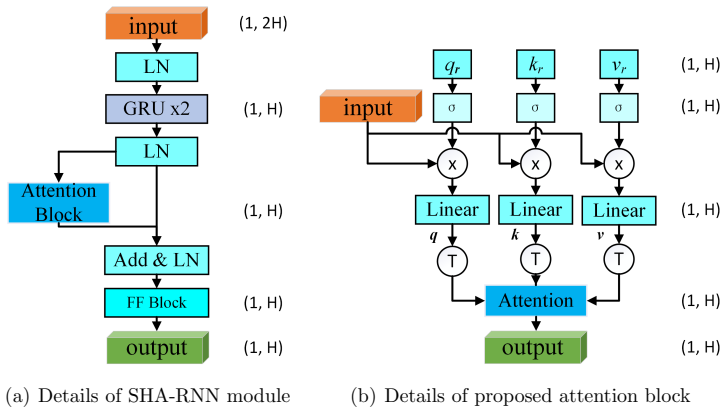
The central object is a neural network used as the adaptive filter's update rule. The network is a single-headed attention recurrent network (SHA-RNN) whose attention block uses learnable feature embeddings to weight the elements of the input vector, and its output is a complex-valued gradient that is amplitude-limited to act like a normalized step. This update rule is embedded in a modified delayless subband architecture: the filtered reference and error signals are split into subbands by an analysis filter bank, each subband weight is updated in the frequency domain, and the fullband filter is reconstructed by weight stacking and IFFT. The architecture also includes a skip-updating factor that reduces how often the network runs, relaxing the real-time constraint.
What would settle it
Run the trained MDSAF model on a real single-channel ANC setup with a physical loudspeaker, reference microphone, and error microphone, and compare its noise reduction against NFxLMS with a properly tuned step size; if the learned rule does not beat or match the baseline on real recorded noise, the simulation-to-real transfer claim fails. Alternatively, measure whether the model remains stable when the secondary path is replaced by a measured impulse response with a different delay than in training.
Extended reading notes
Core claim
In the paper's own terms, the authors establish that a meta-learning-based delayless subband adaptive filter, using a single-headed attention recurrent network with learnable feature embedding as the update rule, can adapt an ANC filter from noisy observations alone. The network predicts a frequency-domain gradient that updates the adaptive filter weights, and the delayless subband architecture plus a skip-updating strategy let the update happen less frequently without adding signal delay. Simulations with the fNSE loudspeaker saturation model show the learned rule achieves lower NMSE than NFxLMS and DSNFxLMS in all tested conditions, including when the primary path changes suddenly mid-test. A variant trained with only the main delay of the secondary path still outperforms the classical baselines, indicating the rule does not need exact secondary-path knowledge.
Load-bearing premise
The learned update rule transfers from the specific simulated room, noise set, and loudspeaker saturation model used in training to real acoustic environments and hardware.
Editorial extensions
If this is right
- ANC controllers can be trained end-to-end from noisy data without clean reference signals, removing a major obstacle to deep learning in practical noise control.
- The delayless subband and skip-updating design mean the learned update can run in real time on moderate hardware, since the update frequency drops by the downsampling factor.
- The model's ability to adapt to sudden primary-path changes suggests learned update rules generalize to nonstationary acoustic environments better than fixed-linear algorithms.
- Training with only the main delay of the secondary path indicates the approach can work when exact secondary-path identification is unavailable, easing deployment.
Reading between the lines
- A natural next step is to test the trained update rule on real measured impulse responses and a physical loudspeaker; the biggest risk is that the simulation's room geometry and saturation model do not cover real acoustic variability.
- The same meta-learning formulation could be applied to other adaptive filtering tasks, such as echo cancellation or feedback control, wherever a linear update rule is the bottleneck.
- The reported 1–5 dB gain is over fixed-step-size classical baselines; an even more direct comparison would tune the baselines' step sizes per condition.
Editorial analysis
A structured set of objections, weighed in public.
Referee Report
Summary. The paper proposes a meta-learning-based delayless subband adaptive filter (MDSAF) for single-channel feedforward active noise control. The adaptive filter weights are updated by a recurrent neural network with a complex self-attention module, and the update rule is trained end-to-end from noisy error observations without oracle labels. A modified delayless subband architecture and a skip-updating strategy reduce the required update rate, and a variant (MDSAF-MD) is trained using only the main delay of the secondary path. The experiments compare MDSAF and MDSAF-MD with NFxLMS and DSNFxLMS on four NOISEX-92 noise types at SNRs of 5, 15, and 25 dB and nonlinearity levels eta^2 = 0.5, 2, and infinity, with a mid-test primary path change. The proposed methods consistently achieve lower NMSE than the two linear baselines by roughly 1-5 dB.
Significance. If the reported results hold, the idea of learning an adaptive-filter update rule for ANC from noisy observations is a valuable contribution, particularly for nonlinear loudspeaker saturation and nonstationary noise. The evaluation has genuine strengths: the update rule is trained on separate data (ESC-50 and Nonspeech) and tested on held-out NOISEX-92 noises and unseen primary-path changes; the method does not require true labels; and the paper includes a real-time complexity analysis with measured inference time. The main weakness is that the empirical claim of superiority over 'traditional methods' is broader than the baseline set actually tested. With additional baselines and a correction to the gradient post-processing formula, the central idea would be well supported.
major comments (3)
- [Section 4.3, Tables 2 and 3] The claimed superiority over 'traditional methods' is not supported by the baseline set. The only adaptive-filter competitors are NFxLMS and DSNFxLMS, both linear filters, and their step sizes are fixed at 0.01 for all noise types, SNRs, and nonlinearity levels. Since the paper's motivation is the failure of linear updating rules under loudspeaker saturation, and Section 1 surveys nonlinear traditional alternatives (Volterra FxLMS [18-20], tanh-based FxLMS [21-22], functional-link ANN [24-26]), the experiments need at least one nonlinear classical baseline with a tuned or per-condition step size. As it stands, Tables 2 and 3 demonstrate superiority over linear FxLMS with a fixed step size, not over the broader class of traditional nonlinear adaptive filters invoked in the abstract.
- [Section 3.3, Eq. (20)] Equation (20) does not implement the stated amplitude clamp and appears to be independent of g(n). For every |g| < exp(10), the expression max[min(|g|, exp(-10)), exp(10)] evaluates to exp(10), and for |g| >= exp(10) it also evaluates to exp(10); hence |~g(n)| is the constant ln(exp(10)/10)+1, approximately 8.7, not a value in [0,2] as claimed in the surrounding text. This makes the exact gradient post-processing used in training and testing ambiguous. Please correct the formula or the description and verify that the reported experiments use the corrected version.
- [Sections 3.1-3.3 and 4.3] The closest learned-update-rule baselines, the meta-learning adaptive filters of [48] and [49] from which the present architecture is directly derived, are not evaluated. Because the contribution is positioned as a meta-learning-based adaptive filter, a comparison with Meta-AF or an equivalent learned optimizer is necessary to show that the proposed self-attention and delayless subband modifications improve over the prior learned update rule, rather than only over classical linear FxLMS. Without this comparison, the novelty claim relative to [48,49] remains unquantified.
minor comments (4)
- [Tables 2 and 3] The tables report averaged NMSE over 50 independent runs but do not report standard deviations or confidence intervals; for differences that are sometimes around 1 dB, please add variability measures or a significance test.
- [Section 4.2] The abstract and contribution list claim robustness to 'various environments,' but all simulations use the same 5 m x 4 m x 3 m room and the same fNSE loudspeaker model; please temper the claim or add a second room geometry or a real-world recording.
- [Section 3.3] The text states that the compression in (17) 'does not improve performance' but is still applied; either remove it or provide an ablation, since as written this is contradictory.
- [Section 1, contribution list] The contribution bullet says the source code is available, but no URL appears in the manuscript; please include the link for reproducibility.
Circularity Check
No significant circularity: the proposed NN update rule is trained on separate simulated data and its NMSE is measured on held-out noises, paths, and nonlinearity levels, so the central result is an empirical outcome rather than a restatement of the training objective.
full rationale
The paper's derivation chain is self-contained with respect to its empirical claim. The meta-learner in (8)-(9) predicts a gradient-like update from noisy observations, and the network parameters are optimized on the meta-loss (24), which is an accumulated squared-error over training batches drawn from ESC-50 and Nonspeech recordings in a simulated room. Evaluation in Tables 2 and 3 uses NOISEX-92 noise types, different primary-path geometries, held-out nonlinearity factors η2 = 0.5, 2, and ∞, and SNR values 5/15/25 dB, so the reported NMSE is a measured generalization outcome, not a fitted quantity. The fact that the training loss (23) and the evaluation metric (29) are both squared-error-based reflects standard objective alignment, not circularity: no test NMSE value is used to set any model parameter, and no equation is assumed and then re-derived. The meta-learning framework is adopted from the external prior work [49] by Casebeer et al., not from the present authors, so this is a normal literature dependency rather than a load-bearing self-citation. Likewise, the delayless subband structure ([58]) and SHA-RNN ([61]) are independent external building blocks. The remaining concerns—only two linear baselines with a fixed step size of 0.01 are compared, and all testing occurs in the same simulated room with the same fNSE model—affect the strength and generality of the empirical comparison, but they are correctness/fairness risks, not circularity, under the quoted-evidence standard.
Assumptions & free parameters
free parameters (2)
- Step size mu for the update rule in Eq. (14) =
0.4
- Output amplitude clamp bounds in Eq. (20) =
0 to 2
assumptions (4)
- domain assumption Image method RIR generation accurately represents the acoustic environment.
- domain assumption Loudspeaker saturation is modeled by fNSE in Eq. (3).
- domain assumption The differentiable simulator permits backpropagation through acoustic paths and nonlinearity.
- ad hoc to paper The training noise set (ESC-50 and Nonspeech) is representative enough for generalization to NOISEX-92.
Cite this review
Pith. "Pith review of Meta-Learning-Based Delayless Subband Adaptive Filter using Complex Self-Attention for Active Noise Control." pith.science (2026). https://pith.science/paper/OTUPXXPL
@misc{pith2026241219471,
  author       = {Pith},
  title        = {Pith review of: Meta-Learning-Based Delayless Subband Adaptive Filter using Complex Self-Attention for Active Noise Control},
  year         = {2026},
  howpublished = {\url{https://pith.science/paper/OTUPXXPL}},
  note         = {Machine review of arXiv:2412.19471}
}
read the original abstract
Active noise control typically employs adaptive filtering to generate secondary noise, where the least mean square algorithm is the most widely used. However, traditional updating rules are linear and exhibit limited effectiveness in addressing nonlinear environments and nonstationary noise. To tackle this challenge, we reformulate the active noise control problem as a meta-learning problem and propose a meta-learning-based delayless subband adaptive filter with deep neural networks. The core idea is to utilize a neural network as an adaptive algorithm that can adapt to different environments and types of noise. The neural network will train under noisy observations, implying that it recognizes the optimized updating rule without true labels. A single-headed attention recurrent neural network is devised with learnable feature embedding to update the adaptive filter weight efficiently, enabling accurate computation of the secondary source to attenuate the unwanted primary noise. In order to relax the time constraint on updating the adaptive filter weights, the delayless subband architecture is employed, which will allow the system to be updated less frequently as the downsampling factor increases. In addition, the delayless subband architecture does not introduce additional time delays in active noise control systems. A skip updating strategy is introduced to decrease the updating frequency further so that machines with limited resources have more possibility to board our meta-learning-based model. Extensive multi-condition training ensures generalization and robustness against various types of noise and environments. Simulation results demonstrate that our meta-learning-based model achieves superior noise reduction performance compared to traditional methods.
Figures


Figures from the paper (5 more)




Reference graph
Works this paper leans on
-
[48]
J. Casebeer, N. J. Bryan, P. Smaragdis, Auto-DSP: Learning to optimize acoustic echo cancellers, in: 2021 IEEE Workshop on Applications of Signal Processing to Audio and Acoustics, (2021), pp. 291–295
work page 2021
-
[49]
J. Casebeer, N. J. Bryan, P. Smaragdis, Meta-AF: Meta-learning for adaptive filters, IEEE/ACM Trans. Audio Speech Lang. Process 31 (2022) 355–370
work page 2022
-
[1]
S. M. Kuo, D. R. Morgan, Active Noise Control Systems, Wiley, New York, (1996)
work page 1996
-
[2]
Elliott, Signal Processing for Active Control, Academic Press, San Diego, (2000)
S. Elliott, Signal Processing for Active Control, Academic Press, San Diego, (2000)
work page 2000
-
[3]
G. C. Goodwin, E. I. Silva, D. E. Quevedo, Analysis and design of networked control systems using the additive noise model methodology, Asian J. Control 12 (4) (2010) 443–459
work page 2010
-
[4]
J. Lee, G. W. Swenson, Compact sound absorbers for low frequencies, Noise Control Eng. J. 38 (3) (1992) 109–117
work page 1992
-
[5]
Y. Tao, M. Ren, H. Zhang, T. Peijs, Recent progress in acoustic materi- als and noise control strategies–a review, Appl. Mater. Today 24 (2021) 101141
work page 2021
-
[6]
D. Shi, B. Lam, W.-S. Gan, J. Cheer, S. J. Elliott, Active noise control in the new century: The role and prospect of signal processing, in: INTER- NOISE and NOISE-CON Congress and Conference Proceedings, Vol. 268, Institute of Noise Control Engineering, 2023, pp. 5141–5151
work page 2023
Show all 78 references
-
[7]
Zhang, M
Z. Zhang, M. Wu, L. Yin, C. Gong, J. Wang, S. Zhou, J. Yang, Robust feedback controller combined with the remote microphone method for broadband active noise control in headrest, Appl. Acoust. 195 (2022) 108815
2022
-
[8]
Cheng, Z
C. Cheng, Z. Liu, X. Li, C. Lu, W. Chen, An optimal sensor layout method based on noise reduction estimation for active road noise control, Mech. Syst. Signal Process. 220 (2024) 111668
2024
-
[9]
S. M. Kuo, D. R. Morgan, Active noise control: A tutorial review, Pro- ceedings of the IEEE 87 (6) (1999) 943–973
1999
-
[10]
Y. Song, Y. Gong, S. M. Kuo, A robust hybrid feedback active noise cancellation headset, IEEE Trans. Speech Audio Process. 13 (4) (2005) 607–617
2005
-
[11]
Ingle, S
V. Ingle, S. Kogon, D. Manolakis, Statisical and Adaptive Signal Pro- cessing, Artech, (2005). 24
2005
-
[12]
Haykin, Adaptive Filter Theory, Pearson, San Francisco, 2002
S. Haykin, Adaptive Filter Theory, Pearson, San Francisco, 2002
2002
-
[13]
S. Gaur, V. Gupta, A review on filtered-x LMS algorithm, Int. J. Signal Process. Syst. 4 (2) (2016) 172–176
2016
-
[14]
G. Chen, T. Sone, N. Saito, M. Abe, S. Makino, The stability and con- vergence characteristics of the delayed-x LMS algorithm in ANC sys- tems, J. Sound Vib. 216 (4) (1998) 637–648
1998
-
[15]
E. A. Manzano, J. Tafur, Optimal step size for a delayed FxLMS algorithm applied in a prototype of active noise control system, in: 2018 IEEE 14th International Conference on Control and Automation, (2018), pp. 935–940
2018
-
[16]
O. J. Tobias, R. Seara, Performance comparison of the FXLMS, non- linear FXLMS and leaky FXLMS algorithms in nonlinear active con- trol applications, in: 2002 11th European Signal Processing Conference, (2002), pp. 1–4
2002
-
[17]
O. J. Tobias, R. Seara, Leaky-FXLMS algorithm: Stochastic analysis for Gaussian data and secondary path modeling error, IEEE Trans. on Speech and Audio process. 13 (6) (2005) 1217–1230
2005
-
[18]
L.-Z. Tan, J. Jiang, Filtered-x second-order Volterra adaptive algo- rithms, Electronics Lett. 33 (8) (1997) 671–672
1997
-
[19]
L. Tan, J. Jiang, Adaptive Volterra filters for active control of nonlinear noise processes, IEEE Trans. Signal Process. 49 (8) (2001) 1667–1676
2001
-
[20]
H. Zhao, X. Zeng, X. Zhang, Z. He, T. Li, W. Zhao, Adaptive ex- tended pipelined second-order Volterra filter for nonlinear active noise controller, IEEE Trans. Audio Speech Language Process. 20 (4) (2011) 1394–1399
2011
-
[21]
M. A. Sahib, R. Kamil, M. H. Marhaban, Nonlinear FXLMS algo- rithm for active noise control systems with saturation nonlinearity, IEEJ Trans. Electr. Electr. 7 (6) (2012) 598–606
2012
-
[22]
Ghasemi, R
S. Ghasemi, R. Kamil, M. H. Marhaban, Nonlinear Thf-FxLMS algo- rithm for active noise control with loudspeaker nonlinearity, Asian J. Control 18 (2) (2016) 502–513. 25
2016
-
[23]
Zhou, Q.-Z
Y.-L. Zhou, Q.-Z. Zhang, X.-D. Li, W.-S. Gan, Analysis and DSP im- plementation of an ANC system using a filtered-error neural network, J. Sound Vib. 285 (1-2) (2005) 1–25
2005
-
[24]
S. K. Behera, D. P. Das, B. Subudhi, Functional link artificial neural network applied to active noise control of a mixture of tonal and chaotic noise, Appl. Soft Comput. 23 (2014) 51–60
2014
-
[25]
D. C. Le, J. Zhang, Y. Pang, A bilinear functional link artificial neural network filter for nonlinear active noise control and its stability condi- tion, Appl. Acoust. 132 (2018) 19–25
2018
-
[26]
Y. Zhu, H. Zhao, S. S. Bhattacharjee, M. G. Christensen, Quantized information-theoretic learning based Laguerre functional linked neural networks for nonlinear active noise control, Mech. Syst. Signal Process. 213 (2024) 111348
2024
-
[27]
S. D. Snyder, N. Tanaka, Active control of vibration using a neural network, IEEE Trans. Neural Netw. 6 (4) (1995) 819–828
1995
-
[28]
Bouchard, B
M. Bouchard, B. Paillard, C. T. Le Dinh, Improved training of neural networks for the nonlinear active control of sound and vibration, IEEE Trans. Neural Netw. 10 (2) (1999) 391–401
1999
-
[29]
Zhang, W.-S
Q.-Z. Zhang, W.-S. Gan, Y.-l. Zhou, Adaptive recurrent fuzzy neural networks for active noise control, J. Sound Vib. 296 (4-5) (2006) 935– 948
2006
-
[30]
Kumar, S
K. Kumar, S. S. Bhattacharjee, N. V. George, Modified Champernowne function based robust and sparsity-aware adaptive filters, IEEE Trans. Circuits Syst. II Express Briefs 68 (6) (2020) 2202–2206
2020
-
[31]
J. Yang, Q. Zhang, Y. Luo, S. Yan, A fractional-order gradient-descent total least mean p-norm adaptive filtering algorithm in impulsive noise environments, IEEE Trans. Circuits Syst. II Express Briefs 70 (3) (2022) 1204–1208
2022
-
[32]
Patel, S
V. Patel, S. S. Bhattacharjee, M. G. Christensen, Generalized soft-root- sign based robust sparsity-aware adaptive filters, IEEE Signal Process. Lett. 30 (2023) 200–204. 26
2023
-
[33]
P. Feng, L. Zhang, D. Meng, X. Pi, An active noise control algorithm based on fractional lower order covariance with on-line characteristics estimation, Mech. Syst. Sig. Process. 186 (2023) 109835
2023
-
[34]
V. Zue, S. Seneff, J. Glass, Speech database development at MIT: TIMIT and beyond, Speech Commun. 9 (4) (1990) 351–356
1990
-
[35]
Kapitanov, K
A. Kapitanov, K. Kvanchiani, A. Nagaev, R. Kraynov, A. Makhliarchuk, HaGRID–Hand gesture recognition image dataset, in: Proceedings of the IEEE/CVF Winter Conference on Applications of Computer Vision, (2024), pp. 4572–4581
2024
-
[36]
L. Deng, D. Yu, et al., Deep learning: methods and applications, Foun- dations and trends ® in signal processing 7 (3–4) (2014) 197–387
2014
-
[37]
Z. Li, F. Liu, W. Yang, S. Peng, J. Zhou, A survey of convolutional neural networks: Analysis, applications, and prospects, IEEE Trans. Neural Netw. Learn. Syst. 33 (12) (2021) 6999–7019
2021
-
[38]
Graves, A
A. Graves, A. Graves, Long short-term memory, Supervised Sequence Labelling with Recurrent Neural Networks (2012) 37–45
2012
-
[39]
R. Fu, Z. Zhang, L. Li, Using LSTM and GRU neural network meth- ods for traffic flow prediction, in: 2016 31st Youth Academic Annual Conference of Chinese Association of Automation, IEEE, (2016), pp. 324–328
2016
-
[40]
Y. Duan, L. Yisheng, F.-Y. Wang, Travel time prediction with LSTM neural network, in: 2016 IEEE 19th International Conference on Intel- ligent Transportation Systems, (2016), pp. 1053–1058
2016
-
[41]
S. Park, E. Patterson, C. Baum, Long short-term memory and convolu- tional neural networks for active noise control, in: 2019 5th International Conference on Frontiers of Signal Processing, (2019), pp. 121–125
2019
-
[42]
Zhang, D
H. Zhang, D. Wang, Deep ANC: A deep learning approach to active noise control, Neural Netw. 141 (2021) 1–10
2021
-
[43]
Zhang, D
H. Zhang, D. Wang, Deep MCANC: A deep learning approach to multi- channel active noise control, Neural Netw. 158 (2023) 318–327. 27
2023
-
[44]
Z. Luo, D. Shi, X. Shen, J. Ji, W.-S. Gan, Deep generative fixed-filter ac- tive noise control, in: 2023 IEEE International Conference on Acoustics, Speech and Signal Processing, 2023, pp. 1–5
2023
-
[45]
Z. Luo, D. Shi, W.-S. Gan, Q. Huang, Delayless generative fixed-filter ac- tive noise control based on deep learning and bayesian filter, IEEE/ACM Trans. Audio. Speech. Lang. Process. (2023)
2023
-
[46]
J. Y. Oh, H. W. Jung, M. H. Lee, K. H. Lee, Y. J. Kang, Enhancing active noise control of road noise using deep neural network to update secondary path estimate in real time, Mech. Syst. Signal Process. 206 (2024) 110940
2024
-
[47]
Zhang, S
H. Zhang, S. Kandadai, H. Rao, M. Kim, T. Pruthi, T. Kristjansson, Deep adaptive AEC: Hybrid of deep learning and adaptive acoustic echo cancellation, in: 2022 IEEE International Conference on Acous- tics, Speech and Signal Processing, (2022), pp. 756–760
2022
-
[50]
F. Yang, Y. Cao, M. Wu, F. Albu, J. Yang, Frequency-domain filtered-x LMS algorithms for active noise control: A review and new insights, Appl. Sci. 8 (11) (2018) 2313
2018
-
[51]
F. Yang, J. Guo, J. Yang, Stochastic analysis of the filtered-x LMS algorithm for active noise control, IEEE/ACM Trans. Audio Speech. Lang. Process. 28 (2020) 2252–2266
2020
-
[52]
O. J. Tobias, R. Seara, On the LMS algorithm with constant and variable leakage factor in a nonlinear environment, IEEE Trans. Signal Process. 54 (9) (2006) 3448–3458
2006
-
[53]
G. Sun, T. Feng, M. Li, T. C. Lim, Convergence analysis of FxLMS- based active noise control for repetitive impulses, Appl. Acoust. 89 (2015) 178–187. 28
2015
-
[54]
I. T. Ardekani, W. H. Abdulla, Theoretical convergence analysis of FxLMS algorithm, Signal Process. 90 (12) (2010) 3046–3055
2010
-
[55]
Hospedales, A
T. Hospedales, A. Antoniou, P. Micaelli, A. Storkey, Meta-learning in neural networks: A survey, IEEE Trans. Pattern Anal. Mach. Intell. 44 (9) (2021) 5149–5169
2021
-
[56]
C. Finn, A. Rajeswaran, S. Kakade, S. Levine, Online meta-learning, in: Proc. Int. Conf. Mach. Learn., PMLR, (2019), pp. 1920–1930
2019
-
[57]
Tokhi, R
M. Tokhi, R. Wood, Active noise control using multi-layered perceptron neural networks, J. Low. Freq. Noise V. A 16 (2) (1997) 109–144
1997
-
[58]
D. R. Morgan, J. C. Thi, A delayless subband adaptive filter architec- ture, IEEE Trans Signal Process. 43 (8) (1995) 1819–1830
1995
-
[59]
X. Li, C. Lu, W. Chen, Z. Liu, C. Cheng, Y. Wang, S. Du, Enhanced se- lective delayless subband algorithm independent of primary disturbance configuration for multi-channel active noise control system in vehicles, Mech. Syst. Signal Process. 216 (2024) 111456
2024
-
[60]
Andrychowicz, M
M. Andrychowicz, M. Denil, S. Gomez, M. W. Hoffman, D. Pfau, T. Schaul, B. Shillingford, N. De Freitas, Learning to learn by gradient descent by gradient descent, Adv. Neural Inf. Process. Syst. 29 (2016)
2016
-
[61]
Merity, Single headed attention RNN: Stop thinking with your head, arXiv preprint arXiv:1911.11423 (2019)
S. Merity, Single headed attention RNN: Stop thinking with your head, arXiv preprint arXiv:1911.11423 (2019)
2019 arXiv
-
[62]
Vaswani, N
A. Vaswani, N. Shazeer, N. Parmar, J. Uszkoreit, L. Jones, A. N. Gomez, L. Kaiser, I. Polosukhin, Attention is all you need, Adv. Neural Inf. Process. Syst. 30 (2017)
2017
-
[63]
K. He, X. Zhang, S. Ren, J. Sun, Delving deep into rectifiers: Surpassing human-level performance on ImageNet classification, in: Proc. IEEE Int. Confe. Computer Vision, (2015), pp. 1026–1034
2015
-
[64]
M. Wu, G. Chen, X. Qiu, An improved active noise control algorithm without secondary path identification based on the frequency-domain subband architecture, IEEE Trans. Audio Speech Language Process. 16 (8) (2008) 1409–1419. 29
2008
-
[65]
M. Gao, J. Lu, X. Qiu, A simplified subband ANC algorithm without secondary path modeling, IEEE/ACM Trans. Audio Speech Language Process. 24 (7) (2016) 1164–1174
2016
-
[66]
Duchi, E
J. Duchi, E. Hazan, Y. Singer, Adaptive subgradient methods for online learning and stochastic optimization, J. Mach. Learn. Res. 12 (7) (2011)
2011
-
[67]
Tieleman, Lecture 6.5-rmsprop: Divide the gradient by a running av- erage of its recent magnitude, COURSERA: Neural Netw
T. Tieleman, Lecture 6.5-rmsprop: Divide the gradient by a running av- erage of its recent magnitude, COURSERA: Neural Netw. Mach. Learn. 4 (2) (2012) 26
2012
-
[68]
D. P. Kingma, J. Ba, Adam: A method for stochastic optimization, arXiv preprint arXiv:1412.6980 (2014)
2014 arXiv
-
[69]
O. R. developers, ONNX runtime, https://onnxruntime.ai/, version: x.y.z (2021)
2021
-
[70]
K. J. Piczak, ESC: Dataset for environmental sound classification, in: Proc. 23rd ACM Int. Conf. Multimedia, 2015, pp. 1015–1018
2015
-
[71]
G. Hu, D. Wang, Segregation of unvoiced speech from nonspeech inter- ference, J. Acoust. Soc. Am. 124 (2) (2008) 1306–1319
2008
-
[72]
Varga, H
A. Varga, H. J. Steeneken, Assessment for automatic speech recognition: II. NOISEX-92: A database and an experiment to study the effect of additive noise on speech recognition systems, Speech Commun. 12 (3) (1993) 247–251
1993
-
[73]
C. D. Kestell, Active control of sound in a small single engine aircraft cabin with virtual error sensors, Ph.D. thesis, University of Adelaide (2000)
2000
-
[74]
Cheer, Active control of the acoustic environment in an automobile cabin, Ph.D
J. Cheer, Active control of the acoustic environment in an automobile cabin, Ph.D. thesis, University of Southampton (2012)
2012
-
[75]
J. B. Allen, D. A. Berkley, Image method for efficiently simulating small- room acoustics, J. Acoust. Soc. Am. 65 (4) (1979) 943–950
1979
-
[76]
Y.-J. Cha, A. Mostafavi, S. S. Benipal, Dnoisenet: Deep learning-based feedback active noise control in various noisy environments, Eng. Appl. Artif. Intel. 121 (2023) 105971. 30
2023
-
[77]
S. J. Park, J. H. Yun, Y. C. Park, D. H. Youn, A delayless subband active noise control system for wideband noise control, IEEE Trans. Speech Audio Process. 9 (8) (2001) 892–899
2001
-
[78]
P. N. Samarasinghe, W. Zhang, T. D. Abhayapala, Recent advances in active noise control inside automobile cabins: Toward quieter cars, IEEE Signal Process. Mag. 33 (6) (2016) 61–73. 31
2016
Reviewed August 11, 2026 · model on record in the stance chip above.
Discussion (0). Continue with ORCID to comment.