REVIEW 3 major objections 5 minor 8 references
Sensitivity Improvements of Very-High-Energy Gamma-Ray Detection with the Upgraded H.E.S.S. I Cameras using Full Waveform Processing
T0 review · 3 major / 5 minor · reviewed 2026-08-14 · deepseek-v4-flash
Pith's one-line read Reading full 1 GHz camera waveforms instead of a fixed 16 ns window improves H.E.S.S.'s detection sensitivity at low and high gamma-ray energies, by cutting night-sky noise and preventing truncation of long Cherenkov images.
desk verdict Honest and useful technical write-up of H.E.S.S. sample-mode charge extraction; the simulated effective-area and Hillas-length results are solid, but the title overclaims — the sensitivity gain still depends on an analysis re-optimization that is explicitly underway. read the letter →
The pith
A machine-rendered reading of the paper's core claim, the machinery that carries it, and where it could break.
The reading
What carries the argument
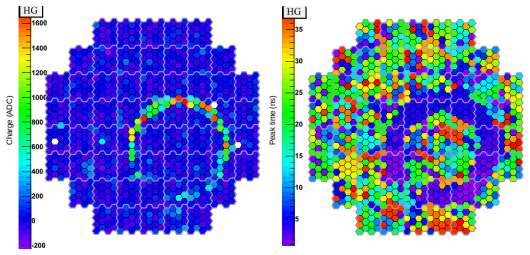
The mechanism is the parallel full-waveform readout of the upgraded H.E.S.S. I cameras, which stores up to 40 samples at 1 GHz per pixel alongside the old 16 ns integrated charge. The charge extraction that carries the argument is the next-neighbour peak-finding algorithm: for each pixel it sums the waveforms of adjacent pixels, takes the time of that sum's maximum as the pixel's peak time, and integrates the signal in a 9 ns window placed 3 ns before the peak, a quantity the paper calls SMMax9. This extraction feeds the same calibration, simulation, and analysis chains as before, so the readout and the integration window are the only new ingredients. The algorithm does two jobs at once: summing neighbours suppresses uncorrelated night-sky photons, and the 9 ns window keeps long Cherenkov pulses from being truncated.
What would settle it
Compare the retrained sample-mode analysis with charge mode on the existing Crab Nebula data: if the low-energy gamma-ray rate or effective area is not higher, or if high-impact-distance TeV images do not show longer Hillas lengths, the central sensitivity claim is contradicted.
Extended reading notes
Core claim
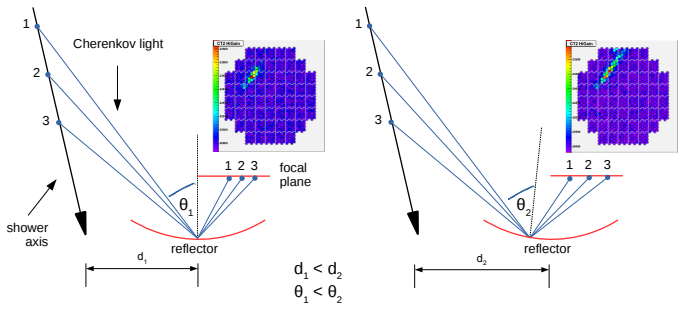
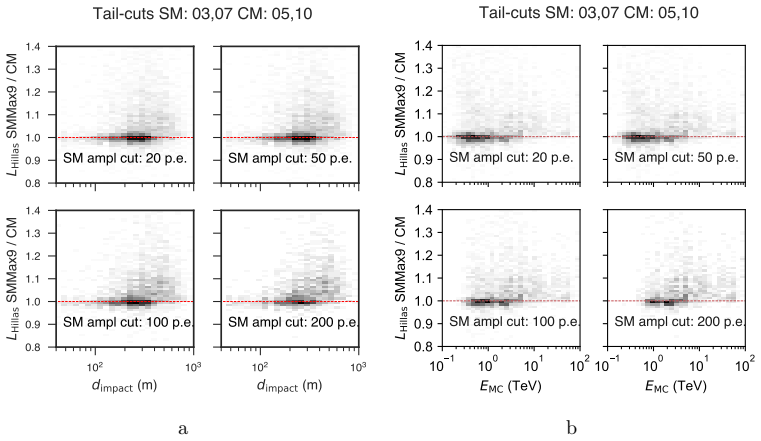
The central claim is that the new sample mode, in which full 1 GHz waveforms are stored for all pixels and charge is extracted by integrating 9 ns around a peak time found with a next-neighbour algorithm, captures the Cherenkov signal more faithfully than the legacy 16 ns window. In simulations, the recovered Hillas length, the length of the ellipse fitted to the shower image, is systematically larger in sample mode for high-impact-distance events, and the same waveform can look truncated in charge mode but complete in sample mode, as illustrated for a 223 TeV gamma ray at 925 m impact distance. Because the integration window is shorter, the noise contribution drops by a factor $\sqrt{16/9}$, and the tail-cut thresholds can be lowered from 5/10 to 3/7 photoelectrons after accounting for the 0.91 gain ratio. With only an image-amplitude cut applied, the simulated effective area is higher in sample mode at low energies, and the paper argues that retraining the full analysis will extend the gain to high energies. These results are presented as performance expectations, since the full cut optimisation, boosted decision trees, and new ImPACT templates are still being produced.
Load-bearing premise
The predicted sensitivity gain assumes the simulation chain faithfully models the upgraded cameras and that the analysis cuts, boosted decision trees, and ImPACT templates can all be retrained for sample mode without eroding the advantage seen with only a single image-amplitude cut.
Editorial extensions
If this is right
- Low-energy gamma-ray events should be detected at a higher rate because the shorter 9 ns window integrates less night-sky background than the old 16 ns window.
- High-energy events with large impact distances should reconstruct with longer, less truncated shower images, improving direction and energy reconstruction.
- Angular resolution is expected to improve for gamma rays above about 10 TeV at offset angles near $2^\circ$, where sample-mode images can be roughly twice as long as charge-mode images.
- Once boosted decision trees and ImPACT templates are retrained for sample mode, sensitivity gains are expected at the high-energy end as well, supporting searches for spectral cutoffs in PeVatron candidates such as Westerlund I.
- Sample mode can become the default readout without giving up standard charge-mode data, because the two readouts run in parallel and remain backwards-compatible.
Reading between the lines
- If the retrained analysis preserves the simulated gains, the same peak-window waveform processing could be applied to future imaging atmospheric Cherenkov arrays, where full-waveform readout is already available.
- The $\sqrt{16/9}$ noise-reduction factor suggests a quantitative check: the low-energy effective-area gain should track the ratio of integrated noise, a prediction that can be tested on the Crab dataset once the final cuts are in place.
- Going beyond the fixed 9 ns window, integrating each pixel's charge along the local time gradient of the image, which the paper names as motivation but does not implement, could push the sensitivity gain further by tracking the shower image as it sweeps across the camera.
Signed reviews
Editorial analysis
A structured set of objections, weighed in public.
Referee Report
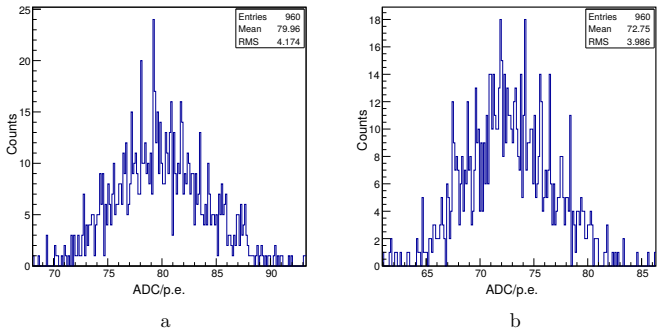
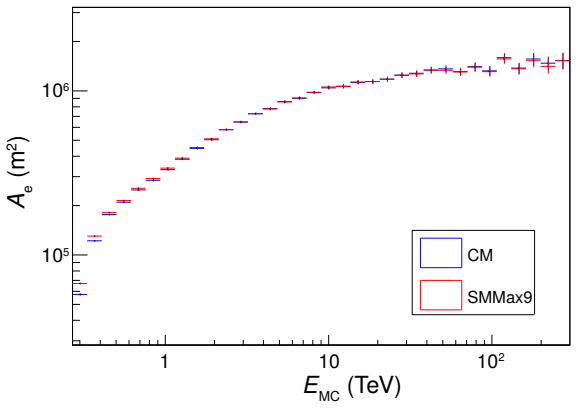
Summary. The paper reports on the sample mode (SM) of the upgraded H.E.S.S. I cameras, which reads out full 1 GHz-sampled waveforms in parallel to the nominal charge mode (CM). The authors introduce a next-neighbour peak-finding algorithm and extract charges by integrating over a fixed 9 ns window around the peak (SMMax9). They describe the integration of SM into the simulation, calibration, and analysis chains, and compare SM and CM on simulated events. The main quantitative results are: a CM/SM gain ratio of about 0.91; SM images that are generally longer in Hillas length, especially for high-impact-distance and low-energy events; and an effective area comparison (Fig. 7) with only a lower-image-amplitude cut applied, showing a higher effective area for SM at low energies and a similar effective area at high energies. The paper also reports first indications of improved angular resolution for high-offset, high-energy events. The abstract and title claim sensitivity improvements from full waveform processing, with the low-energy gain described as shown and the high-energy gain as expected once the full analysis chain is retrained.
Significance. If the claimed improvements hold, full waveform processing with SMMax9 extraction could lower the energy threshold of H.E.S.S. and improve the reconstruction of multi-TeV gamma-ray events, which is directly relevant to the study of PeVatron candidates. The paper's strengths include a plausible and well-motivated charge-extraction algorithm, its integration into the simulation chain via a gain ratio consistent with the SPE pulse shape, and validation on LED and observation runs. The qualitative claims about reduced noise integration and increased Hillas lengths are supported by the presented simulations. However, the central sensitivity claim is currently supported only by an effective-area comparison with a single amplitude cut, and the paper explicitly states that the optimization of the full analysis chain is underway. Thus the significance of the paper as a demonstration of a sensitivity improvement is not yet established.
major comments (3)
- [Section 4, Fig. 7] The effective area comparison in Fig. 7 applies only a lower-image-amplitude cut (60 p.e. for CM and ~54 p.e. for SM) with all other cuts released, as stated in the text. Section 3 explicitly says that an optimisation study to define new cuts, new Hillas settings, and new ImPACT templates for SM is underway. Because gamma-hadron separation and direction/energy reconstruction are not applied, this comparison alone cannot support the abstract's claim of increased sensitivity. The additional faint images that raise the low-energy effective area are also the ones most likely to be rejected by a boosted decision tree, and the high-energy improvement is not visible in the effective area at all. The paper should either provide an end-to-end sensitivity estimate (including background rejection and reconstruction performance) or explicitly restrict the claim to an expected improvement based on effective area.
- [Section 5 (Summary) and title/abstract] The title and abstract claim 'sensitivity improvements' from full waveform processing, but the body of the paper states that the optimization of the full analysis chain is still underway and that the high-energy gain is 'expected' once new cuts and boosted decision trees are retrained. The Summary states that increased statistics at the lower energy end 'was shown', which is stronger than what Fig. 7 demonstrates, since that figure uses only an amplitude cut and no background rejection. This mismatch between the headline claim and the presented evidence is load-bearing. The authors should either add a sensitivity calculation using the currently available effective area and a background model, or soften the title and abstract to 'expected sensitivity improvements' or 'improved effective area and image reconstruction in sample mode'.
- [Section 4, tail-cut rescaling] The SM image-cleaning tail cuts are set to 3 and 7 p.e. from the CM values of 5 and 10 p.e. using a scaling of sqrt(16/9) x 0.91, under the assumption that the noise is reduced by the shorter integration window and scaled by the gain ratio. This is a reasonable first estimate, but the paper does not demonstrate that these cut values preserve the same background rejection as the CM cuts. If the 3/7 p.e. cuts accept more night-sky-background or hadronic events, the increase in effective area could be offset by a larger background acceptance after gamma-hadron separation. The authors should validate this tail-cut choice with background simulations or with a comparison of background rates on data, or state explicitly that the final sensitivity depends on a re-optimization that is not yet complete.
minor comments (5)
- [Figure 5 caption] The caption of Figure 5 refers to 'SMMax16' while the rest of the paper uses a 9 ns integration window (SMMax9). If the figure intentionally uses a 16 ns window to illustrate the full signal, this should be stated; otherwise it is an inconsistency that should be corrected.
- [Section 2] The text contains a typo: 'SM data readout is planed to be enabled' should be 'planned'.
- [Section 3] The phrase 'mis-identification of an night-sky-background photon' should read 'a night-sky-background photon'.
- [Section 4, Fig. 6] The Hillas length ratio plots in Fig. 6 are 2D histograms with a color scale, but the text would be clearer if the average ratio and its uncertainty in each bin were given, particularly because the number of events per bin is not shown. This would help quantify the claim that images are 'in general' longer in SM.
- [Section 5] The sentence 'A study about an improvement of energy and angular resolution is on-going' would read better as 'A study of the improvement in energy and angular resolution is ongoing'.
Circularity Check
No circularity: SM-vs-CM comparison is self-contained, and the cut rescaling is derived from integration-window and gain physics, not fitted to the headline improvement.
full rationale
The paper's central comparison is between two charge-extraction modes within the same simulation and analysis chain. The SMMax9 charge is defined by construction as a 9 ns integration window around a next-neighbour peak time, and the noise reduction relative to the fixed 16 ns CM window is quantified by the stated sqrt(16/9) factor. The tail-cut scaling for SM (3 and 7 p.e. versus 5 and 10 p.e.) is explicitly derived from this noise factor and from the simulated CM-to-SM gain ratio (~0.91), which is itself obtained from single-photoelectron simulations using the pulse shape already in the simulation chain. This is a parameter rescaling from stated physical inputs, not a fit to the effective-area result. The effective-area plot (Fig. 7) applies only an amplitude cut and releases all other cuts, and the paper explicitly says that the optimisation of new cuts, Hillas settings, and ImPACT templates 'is underway'; the high-energy improvement is labelled as 'expected' rather than demonstrated. Thus the load-bearing quantitative claims are either directly simulated comparisons or explicit extrapolations, not reductions of the target result to its own inputs. The only self-citations (e.g., the H.E.S.S. camera upgrade reference) describe hardware status and are not used to justify the physics derivation. No self-definitional, fitted-input-as-prediction, uniqueness-imported, or ansatz-smuggling loop is present.
Assumptions & free parameters
free parameters (4)
- SMMax9 integration window width =
9 ns
- SMMax9 integration window shift =
3 ns left of peak time
- SM image cleaning tail cuts =
3 and 7 p.e.
- SM amplitude cut for effective area comparison =
54 p.e. (scaled from 60 p.e.)
assumptions (4)
- domain assumption CORSIKA and sim_telarray accurately model the upgraded H.E.S.S. I cameras and the Cherenkov shower development.
- domain assumption The next-neighbor peak finding algorithm correctly identifies Cherenkov signals and separates them from night-sky background.
- domain assumption Noise in the 9 ns window scales as sqrt(16/9) relative to the 16 ns window.
- domain assumption The single photoelectron pulse shape used in the simulation is accurate, and the resulting gain ratio of 0.91 between SM and CM is correct.
Cite this review
Pith. "Pith review of Sensitivity Improvements of Very-High-Energy Gamma-Ray Detection with the Upgraded H.E.S.S. I Cameras using Full Waveform Processing." pith.science (2026). https://pith.science/paper/S5G6KOEX
@misc{pith2026190804620,
  author       = {Pith},
  title        = {Pith review of: Sensitivity Improvements of Very-High-Energy Gamma-Ray Detection with the Upgraded H.E.S.S. I Cameras using Full Waveform Processing},
  year         = {2026},
  howpublished = {\url{https://pith.science/paper/S5G6KOEX}},
  note         = {Machine review of arXiv:1908.04620}
}
read the original abstract
The High Energy Stereoscopic System (H.E.S.S.) is an array of five imaging atmospheric Cherenkov telescopes in Namibia observing gamma-rays in the energy range from a few tens of GeV to a few tens of TeV. The Cherenkov signal detected by photomultiplier tubes is sampled at 1 GHz. In nominal data acquisition (charge) mode, this signal is integrated over a fixed window of 16 ns in case trigger conditions are met. Thanks to the electronics upgrade of the four H.E.S.S. I cameras in spring 2017, full 1 GHz-sampled waveforms can be read out in parallel to the nominal charge mode. This allows for a higher flexibility in data analysis like signal integration along the signal time gradient, thereby increasing the signal-to-noise ratio and thus the sensitivity at the lower end of the energy range. Furthermore, it prevents the truncation of Cherenkov events lasting longer than 16 ns, enhancing the shower reconstruction of gamma-ray events with TeV energies and high impact distances. Observations of PeVatron candidates may profit a lot from this new data acquisition mode since precise reconstruction of the rare multi-TeV gamma-ray events is improved - a crucial aspect to investigate a potential spectral cut-off. Performance studies of the upgraded H.E.S.S. I cameras with a focus on sample mode data analysis and comparison to nominal charge mode data are presented in this contribution.
Figures

Figures from the paper (4 more)

Reference graph
Works this paper leans on
-
[1]
Aharonian, et al., Observations of the Crab Nebula with H.E.S.S., A
F. Aharonian, et al., Observations of the Crab Nebula with H.E.S.S., A. & A. 457 (2006) 899
work page 2006
-
[2]
Vincent, et al., Performance of the H.E.S.S
P. Vincent, et al., Performance of the H.E.S.S. cameras, Proc. 28th ICRC, 2003
work page 2003
-
[3]
Giavitto, et al., The upgrade of the H.E.S.S
G. Giavitto, et al., The upgrade of the H.E.S.S. cameras, Proc. 35th ICRC, 2007
work page 2007
-
[4]
Ashton, et al., A NECTAr-based upgrade for the Cherenkov cameras of the H.E.S.S
T. Ashton, et al., A NECTAr-based upgrade for the Cherenkov cameras of the H.E.S.S. 12-meter telescopes, Manuscript submitted for publication, 2017
work page 2017
-
[5]
R. Brun and F. Rademakers, ROOT -- An Object Oriented Data Analysis Framework, Proc. AIHENP'96 Workshop, Lausanne, Sep. 1996, Nucl. Inst. & Meth. in Phys. Res. A 389 (1997) 81-86
work page 1997
-
[6]
D. Heck, et al., CORSIKA: a Monte Carlo code to simulate extensive air showers, Forschungszentrum Karlsruhe GmbH, Karlsruhe (Germany), 1998, V + 90 p., TIB Hannover, D-30167 Hannover (Germany)
work page 1998
-
[7]
K. Bernl\"ohr, Simulation of Imaging Atmospheric Cherenkov Telescopes with CORSIKA and sim\_telarray, Astropart. Phys. 30 (2008) 149-158
work page 2008
-
[8]
R. D. Parsons and J. A. Hinton, A Monte Carlo Template based analysis for Air-Cherenkov Arrays, Astropart. Phys. 56 (2014) 26-34
work page 2014
Reviewed August 14, 2026 · model on record in the stance chip above.
Discussion (0). Continue with ORCID to comment.