Lost in Translation: Moduli Stabilization from EFT to Eleven Dimensions
Pith reviewed 2026-06-25 22:04 UTC · model grok-4.3
The pith
Eleven-dimensional M-theory solutions show that effective field theory descriptions of moduli stabilization can be misleading.
A machine-rendered reading of the paper's core claim, the machinery that carries it, and where it could break.
Core claim
By relating the compactification to microstate geometries, explicit solutions are presented in which fully backreacted fluxes stabilize three of the T^4/Z2 compactification moduli. A one-parameter family of supersymmetric eleven-dimensional solutions breaks Lorentz invariance and the warped-product structure; away from the Lorentz-invariant locus the fluxes include fields absent from the EFT and stabilize a different modulus combination. The results extend to Type IIB on orientifolds of T^2 times K3.
What carries the argument
The Gibbons-Hawking approximation of the K3 metric, which permits construction of fully backreacted flux solutions that relate the compactification to microstate geometries and allow explicit stabilization of T^4/Z2 moduli.
Load-bearing premise
The Gibbons-Hawking approximation of the K3 metric is sufficient to construct fully backreacted flux solutions that relate the compactification to microstate geometries and allow explicit stabilization of the T^4/Z2 moduli.
What would settle it
An explicit eleven-dimensional solution in which the stabilized modulus matches the one predicted by the EFT without breaking Lorentz invariance or introducing non-self-dual fluxes would falsify the claim that the EFT description is misleading.
Figures
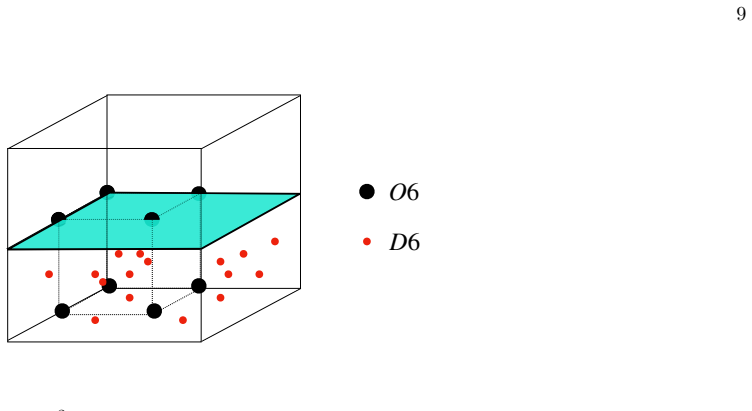
read the original abstract
We explicitly show how moduli stabilization is realized geometrically in M-theory compactified on $T^4/\mathbb{Z}_2\, \times\, $K3, by using the Gibbons-Hawking approximation of the K3 metric. By relating this compactification to certain microstate geometries, we present the explicit solutions in which fully backreacted fluxes on certain four-cycles stabilize three of the $T^4/\mathbb{Z}_2$ compactification moduli. The minimal tadpole contribution of these fluxes is linear in the number of stabilized moduli, and we argue that this linear relation holds for more general fluxes. We also construct a one-parameter family of supersymmetric eleven-dimensional solutions that break Lorentz invariance and the warped-product structure of the compactification. These solutions are a continuous deformation of the warped-product Lorentz-invariant compactification, to which they reduce when the moduli reach their stabilized values. Away from the Lorentz-invariant locus, the fluxes are no longer self-dual in the internal space, and include fields that do not exist in the corresponding EFT. Remarkably, although these fluxes still stabilize a modulus, it is not the $T^4/\mathbb{Z}_2$ modulus that appears stabilized in the Lorentz-invariant solution, but rather a nontrivial combination of the $T^4$ volume and K3 shape moduli. The existence of these solutions suggests that the EFT description of moduli stabilization can be misleading and does not reflect the moduli-stabilization dynamics of the full eleven-dimensional theory. Our results extend straightforwardly to Type IIB String Theory compactified on orientifolds of $T^2 \times K3$.
Editorial analysis
A structured set of objections, weighed in public.
Referee Report
Summary. The paper claims to explicitly construct moduli stabilization in M-theory on T^4/Z2 × K3 using the Gibbons-Hawking approximation of the K3 metric. By relating the setup to microstate geometries, it presents solutions with fully backreacted fluxes that stabilize three T^4/Z2 moduli, with the minimal tadpole contribution linear in the number of stabilized moduli (and argues this linearity holds more generally). It further constructs a one-parameter family of supersymmetric 11D solutions that break Lorentz invariance and the warped-product structure; these reduce to the Lorentz-invariant case at the stabilized moduli values but stabilize a nontrivial combination of T^4 volume and K3 shape moduli instead. The existence of these solutions is used to argue that the EFT description of moduli stabilization is misleading and does not capture the dynamics of the full eleven-dimensional theory. The results are stated to extend to Type IIB on orientifolds of T^2 × K3.
Significance. If the constructions are shown to yield exact solutions to the 11D equations of motion, the work would be significant for providing concrete geometric examples where higher-dimensional backreaction and non-EFT fields alter the stabilization picture relative to the effective theory. The explicit relation to microstate geometries, the linear tadpole relation, and the one-parameter Lorentz-breaking family are strengths that offer falsifiable predictions and extend the discussion beyond standard warped-product compactifications.
major comments (1)
- [Abstract] Abstract: The central claim that the EFT description is misleading rests on the existence of fully backreacted 11D flux solutions that stabilize the moduli via the Gibbons-Hawking approximation. This approximation imposes a specific multi-center harmonic form on the K3 metric, which may not permit arbitrary flux backreaction while exactly satisfying the 11D equations of motion or capturing the full hyperkähler moduli space; explicit verification that the constructed solutions obey the 11D EOM (beyond the approximation) is required to support the mismatch with EFT.
minor comments (1)
- [Abstract] Abstract: The statement that the linear tadpole relation 'holds for more general fluxes' is asserted without a supporting derivation or example; a brief sketch or reference to the relevant section would clarify the scope.
Simulated Author's Rebuttal
We are grateful to the referee for their insightful comments, which have helped us improve the clarity of our manuscript. Below we address the major comment point by point.
read point-by-point responses
-
Referee: [Abstract] Abstract: The central claim that the EFT description is misleading rests on the existence of fully backreacted 11D flux solutions that stabilize the moduli via the Gibbons-Hawking approximation. This approximation imposes a specific multi-center harmonic form on the K3 metric, which may not permit arbitrary flux backreaction while exactly satisfying the 11D equations of motion or capturing the full hyperkähler moduli space; explicit verification that the constructed solutions obey the 11D EOM (beyond the approximation) is required to support the mismatch with EFT.
Authors: We thank the referee for this observation. Our solutions are explicitly constructed within the Gibbons-Hawking approximation of the K3 metric, which permits us to find fully backreacted flux configurations that satisfy the eleven-dimensional equations of motion by design. This is achieved through the relation to microstate geometries, where the supersymmetry conditions and Bianchi identities are solved explicitly in the approximated metric. The approximation is standard in this context and allows for the necessary control to compare with the EFT. We argue that the mismatch with the EFT is already evident and robust within this framework, as the EFT does not account for the backreacted fluxes or the additional fields present in the full theory. While a treatment without the approximation would be interesting, it is not required to establish the central claim, as the approximation captures the relevant physics for demonstrating the discrepancy. No revision is needed on this point. revision: no
Circularity Check
No significant circularity; claims rest on explicit geometric constructions
full rationale
The paper establishes its results via direct construction of 11D solutions that stabilize moduli using the Gibbons-Hawking approximation and explicit flux backreaction on T^4/Z2 × K3, together with a one-parameter family of Lorentz-breaking deformations. These steps rely on solving the equations of motion in the approximated metric and verifying the reduction to the stabilized locus, without any reduction of a claimed prediction to a fitted input, self-definition of the target quantity, or load-bearing reliance on unverified self-citations. The mismatch with EFT follows from the additional fields and non-self-dual fluxes present only in the 11D solutions, which are independent of the input assumptions.
Axiom & Free-Parameter Ledger
axioms (1)
- domain assumption The Gibbons-Hawking approximation of the K3 metric is accurate enough to capture the backreacted flux solutions and moduli stabilization.
Reference graph
Works this paper leans on
-
[1]
Since no such fields are observed in nature, they must be made massive in any realistic com- pactification
INTRODUCTION Generic compactifications of string theory to four di- mensions give rise to a large number of massless scalar fields (moduli) which parametrize the shape and size of the internal space. Since no such fields are observed in nature, they must be made massive in any realistic com- pactification. Fluxes threading the internal space gener- ate a ...
-
[2]
for a complete discussion of moduli and cycles of K3 in this approximation). In this Letter we compactify four of theR 1,6 direc- tions onT 4/Z2 and add to the resultingR 1,2 ×T 4/Z2× K3 geometry four-form fluxes that wrap two-cycles of T 4/Z2 as well as two-cycles on K3 that stretch between two Taub-NUT centers. The full supergravity solution is a restri...
Pith/arXiv arXiv 2026
-
[3]
Similarly, in the M-theory uplift of an O6 plane, the metricds 2 4,B is the smooth Atiyah-Hitchin metric [19]
K3 IN THE GIBBONS-HAWKING APPROXIMATION In M-theory, the uplift of multiple D6-branes is de- scribed by a multi-center Gibbons-Hawking (GH) metric ds2 11 =ds 2 6,1 +ds 2 4,B =ds 2 6,1 + 1 V dψ+ ⃗A·d⃗ y 2 +V d⃗ y 2 , (1) whereVis a harmonic function with poles at the positions of the D6 branes on any locally-flat three- dimensional base-space with coordina...
-
[4]
rotation one-form
BUBBLING SOLUTIONS In this section we briefly review the smooth horizonless bubbling solutions [22, 23] constructed in M-theory on a CY three-fold, which we choose to be the (non-compact) T 4/Z2 ×R 2 spanned by (x5,6,7,8, x9, x10). All supersymmetric solutions [28–31] are a time fi- bration over a hyper-K¨ ahler base space, which we take to be K3, and we ...
-
[5]
Although the argument can be made very generally, we focus on a rectangularT 4 = (S 1)4, whose lengths areL 5, L6, L7, L8, that we quotient byZ 2
FIXING MODULI OFT 4/Z2 ×K3 We now show more explicitly how turning on fluxes sta- bilizes some of the moduli of aT 4/Z2×K3 compactifica- tion, paving the way to the general solution where moduli are not fixed at their stabilized value, and Lorentz invari- ance is broken. Although the argument can be made very generally, we focus on a rectangularT 4 = (S 1...
-
[6]
This equation has several important physics conse- quences
See Appendix B for a longer discussion. This equation has several important physics conse- quences. The first is that the quantization condi- tions imply that the shortest allowed nonzero vector hasP i(nI i )2 = 2. Substituting such a vector in (18) gives a tadpole of 1. The smallest tadpole is obtained by choos- ing then I i to be±1 at two centers3. For ...
-
[7]
RELAXING LORENTZ INVARIANCE AND MODULI DESTABILIZATION In the previous section we imposed 2+1 dimensional Lorentz invariance along the non-compact directions, and we have seen that this is obtained by demanding that the four-form field strength be (anti) self-dual in the eight- dimensional compact space. However, we have also seen that there are many solu...
-
[8]
stabilized
DISCUSSION We have constructed a fully back-reacted M-theory compactification onT 4/Z2×K3 with four-form fluxes, and shown explicitly how fluxes stabilize some of the T 4/Z2 shape moduli in a warped-product compactifica- tion that preserves 2+1 dimensional Lorentz invariance. From the perspective of the 2+1 dimensional effective theory, which is obtained ...
-
[9]
stabi- lize
both for Lorentz-invariant and for Lorentz-breaking compactifications. Although the nature of the stabilized moduli is different, the minimal tadpole of the fluxes that need to be turned ongrows linearly with the num- ber of stabilized moduli in both cases. It would be very interesting to relate our construction with the Lorentz- invariant K3×K3 analysis ...
-
[10]
bubble equation
TheZ 2 action flips the orientation of M-theory circle, and therefore imposes that the K I andMharmonic functions (corresponding to D4 and D0 charges) are odd under theZ 2 flip. Hence,k I 0 =m 0 = 0, 10 kI i =−k I i′ andm i =−m i′. Furthermore, the coefficientsl I i andm i should satisfy certain constraints that ensure that ZI andµhave no poles at any cen...
-
[11]
CFT’s from Calabi-Yau four folds,
S. Gukov, C. Vafa, and E. Witten, “CFT’s from Calabi-Yau four folds,”Nucl. Phys. B584(2000) 69–108,arXiv:hep-th/9906070. [Erratum: Nucl.Phys.B 608, 477–478 (2001)]
Pith/arXiv arXiv 2000
-
[12]
K. Becker and M. Becker, “M theory on eight manifolds,”Nucl. Phys. B477(1996) 155–167, arXiv:hep-th/9605053
Pith/arXiv arXiv 1996
-
[13]
De Sitter vacua in string theory,
S. Kachru, R. Kallosh, A. D. Linde, and S. P. Trivedi, “De Sitter vacua in string theory,”Phys. Rev.D68 (2003) 046005,arXiv:hep-th/0301240 [hep-th]
Pith/arXiv arXiv 2003
-
[14]
Flux compactifications in string theory: A Comprehensive review,
M. Grana, “Flux compactifications in string theory: A Comprehensive review,”Phys. Rept.423(2006) 91–158, arXiv:hep-th/0509003
Pith/arXiv arXiv 2006
-
[15]
Systematics of moduli stabilisation in Calabi-Yau flux compactifications,
V. Balasubramanian, P. Berglund, J. P. Conlon, and F. Quevedo, “Systematics of moduli stabilisation in Calabi-Yau flux compactifications,”JHEP03(2005) 007,arXiv:hep-th/0502058
Pith/arXiv arXiv 2005
-
[16]
M. R. Douglas and S. Kachru, “Flux compactification,” Rev. Mod. Phys.79(2007) 733–796, arXiv:hep-th/0610102
Pith/arXiv arXiv 2007
-
[17]
Moduli Stabilization in String Theory,
L. McAllister and F. Quevedo, “Moduli Stabilization in String Theory,”arXiv:2310.20559 [hep-th]
-
[18]
F-theory flux vacua at large complex structure,
F. Marchesano, D. Prieto, and M. Wiesner, “F-theory flux vacua at large complex structure,”JHEP08(2021) 077,arXiv:2105.09326 [hep-th]
Pith/arXiv arXiv 2021
-
[19]
Flux Compactifications of Type IIB String Theory and M-Theory – Habilitation ` a diriger des recherches,
S. L¨ ust, “Flux Compactifications of Type IIB String Theory and M-Theory – Habilitation ` a diriger des recherches,” 2025
2025
-
[20]
Moduli-dependent Calabi-Yau and SU(3)-structure metrics from Machine Learning,
L. B. Anderson, M. Gerdes, J. Gray, S. Krippendorf, N. Raghuram, and F. Ruehle, “Moduli-dependent Calabi-Yau and SU(3)-structure metrics from Machine Learning,”JHEP05(2021) 013,arXiv:2012.04656 [hep-th]
arXiv 2021
-
[21]
Machine-learned Calabi–Yau metrics and curvature,
P. Berglund, G. Butbaia, T. H¨ uubsch, V. Jejjala, D. Mayorga Pe˜ na, C. Mishra, and J. Tan, “Machine-learned Calabi–Yau metrics and curvature,” Adv. Theor. Math. Phys.27no. 4, (2023) 1107–1158, arXiv:2211.09801 [hep-th]
arXiv 2023
-
[22]
Numerical Calabi-Yau metrics from holomorphic networks,
M. R. Douglas, S. Lakshminarasimhan, and Y. Qi, “Numerical Calabi-Yau metrics from holomorphic networks,”arXiv:2012.04797 [hep-th]
arXiv 2012
-
[23]
Machine learning for complete intersection Calabi-Yau manifolds: a methodological study,
H. Erbin and R. Finotello, “Machine learning for complete intersection Calabi-Yau manifolds: a methodological study,”Phys. Rev. D103no. 12, (2021) 126014,arXiv:2007.15706 [hep-th]
arXiv 2021
-
[24]
Learning Size and Shape of Calabi-Yau Spaces,
M. Larfors, A. Lukas, F. Ruehle, and R. Schneider, “Learning Size and Shape of Calabi-Yau Spaces,” arXiv:2111.01436 [hep-th]
-
[25]
Data science applications to string theory,
F. Ruehle, “Data science applications to string theory,” Phys. Rept.839(2020) 1–117
2020
-
[26]
What to do with a Ricci-flat Calabi–Yau metric?,
P. Berglund, T. H¨ ubsch, and V. Jejjala, “What to do with a Ricci-flat Calabi–Yau metric?,” 5, 2026. arXiv:2605.23900 [hep-th]
Pith/arXiv arXiv 2026
-
[27]
A Note on enhanced gauge symmetries in M and string theory,
A. Sen, “A Note on enhanced gauge symmetries in M and string theory,”JHEP09(1997) 001, arXiv:hep-th/9707123
Pith/arXiv arXiv 1997
-
[28]
IR dynamics on branes and space-time geometry,
N. Seiberg, “IR dynamics on branes and space-time geometry,”Phys. Lett. B384(1996) 81–85, arXiv:hep-th/9606017
Pith/arXiv arXiv 1996
-
[29]
Low-Energy Scattering of Nonabelian Monopoles,
M. F. Atiyah and N. J. Hitchin, “Low-Energy Scattering of Nonabelian Monopoles,”Phys. Lett. A 107(1985) 21–25. 13
1985
-
[30]
Classical and Quantum Dynamics of BPS Monopoles,
G. W. Gibbons and N. S. Manton, “Classical and Quantum Dynamics of BPS Monopoles,”Nucl. Phys. B 274(1986) 183–224
1986
-
[31]
M-theory/type IIA duality and K3 in the Gibbons-Hawking approximation,
M. B. Schulz and E. F. Tammaro, “M-theory/type IIA duality and K3 in the Gibbons-Hawking approximation,”arXiv:1206.1070 [hep-th]
-
[32]
Bubbling supertubes and foaming black holes,
I. Bena and N. P. Warner, “Bubbling supertubes and foaming black holes,”Phys. Rev.D74(2006) 066001, arXiv:hep-th/0505166
Pith/arXiv arXiv 2006
-
[33]
Supergravity microstates for BPS black holes and black rings,
P. Berglund, E. G. Gimon, and T. S. Levi, “Supergravity microstates for BPS black holes and black rings,”JHEP0606(2006) 007, arXiv:hep-th/0505167 [hep-th]
Pith/arXiv arXiv 2006
-
[34]
Black holes, black rings and their microstates,
I. Bena and N. P. Warner, “Black holes, black rings and their microstates,”Lect. Notes Phys.755(2008) 1–92, arXiv:hep-th/0701216
Pith/arXiv arXiv 2008
-
[35]
Lectures on Microstate Geometries,
N. P. Warner, “Lectures on Microstate Geometries,” arXiv:1912.13108 [hep-th]
arXiv 1912
-
[36]
I. Bena, J. Bl˚ ab¨ ack, M. Gra˜ na, and S. L¨ ust, “The tadpole problem,”JHEP11(2021) 223, arXiv:2010.10519 [hep-th]
arXiv 2021
-
[37]
Algorithmically Solving the Tadpole Problem,
I. Bena, J. Bl˚ ab¨ ack, M. Gra˜ na, and S. L¨ ust, “Algorithmically Solving the Tadpole Problem,”Adv. Appl. Clifford Algebras32no. 1, (2022) 7, arXiv:2103.03250 [hep-th]
arXiv 2022
-
[38]
All supersymmetric solutions of minimal supergravity in five- dimensions,
J. P. Gauntlett, J. B. Gutowski, C. M. Hull, S. Pakis, and H. S. Reall, “All supersymmetric solutions of minimal supergravity in five- dimensions,”Class. Quant. Grav.20(2003) 4587–4634, arXiv:hep-th/0209114
Pith/arXiv arXiv 2003
-
[39]
General supersymmetric AdS(5) black holes,
J. B. Gutowski and H. S. Reall, “General supersymmetric AdS(5) black holes,”JHEP04(2004) 048,arXiv:hep-th/0401129
Pith/arXiv arXiv 2004
-
[40]
One ring to rule them all ... and in the darkness bind them?,
I. Bena and N. P. Warner, “One ring to rule them all ... and in the darkness bind them?,”Adv. Theor. Math. Phys.9(2005) 667–701,arXiv:hep-th/0408106
Pith/arXiv arXiv 2005
-
[41]
Adding new hair to the 3-charge black ring,
S. Giusto and R. Russo, “Adding new hair to the 3-charge black ring,”Class.Quant.Grav.29(2012) 085006,arXiv:1201.2585 [hep-th]
Pith/arXiv arXiv 2012
-
[42]
Habemus Superstratum! A constructive proof of the existence of superstrata,
I. Bena, S. Giusto, R. Russo, M. Shigemori, and N. P. Warner, “Habemus Superstratum! A constructive proof of the existence of superstrata,”JHEP05(2015) 110, arXiv:1503.01463 [hep-th]
Pith/arXiv arXiv 2015
-
[43]
I. Bena, H. Triendl, and B. Vercnocke, “Black Holes and Fourfolds,”JHEP1208(2012) 124,arXiv:1206.2349 [hep-th]
Pith/arXiv arXiv 2012
-
[44]
Gravitational couplings and Z(2) orientifolds,
K. Dasgupta, D. P. Jatkar, and S. Mukhi, “Gravitational couplings and Z(2) orientifolds,”Nucl. Phys. B523(1998) 465–484,arXiv:hep-th/9707224
Pith/arXiv arXiv 1998
-
[45]
Exact solutions for supersymmetric stationary black hole composites,
B. Bates and F. Denef, “Exact solutions for supersymmetric stationary black hole composites,” JHEP1111(2011) 127,arXiv:hep-th/0304094 [hep-th]
Pith/arXiv arXiv 2011
-
[46]
A. Butti, M. Grana, R. Minasian, M. Petrini, and A. Zaffaroni, “The Baryonic branch of Klebanov-Strassler solution: A supersymmetric family of SU(3) structure backgrounds,”JHEP03(2005) 069, arXiv:hep-th/0412187
Pith/arXiv arXiv 2005
-
[47]
Bubbles on Manifolds with a U(1) Isometry,
I. Bena, N. Bobev, and N. P. Warner, “Bubbles on Manifolds with a U(1) Isometry,”JHEP08(2007) 004, arXiv:0705.3641 [hep-th]
Pith/arXiv arXiv 2007
-
[48]
Seiberg-Witten prepotential from instanton counting,
N. A. Nekrasov, “Seiberg-Witten prepotential from instanton counting,”Adv. Theor. Math. Phys.7(2003) 831–864,arXiv:hep-th/0206161
Pith/arXiv arXiv 2003
-
[49]
J. P. Gauntlett and J. B. Gutowski, “Concentric black rings,”Phys. Rev. D71(2005) 025013, arXiv:hep-th/0408010
Pith/arXiv arXiv 2005
-
[50]
I. Bena, P. Kraus, and N. P. Warner, “Black rings in Taub-NUT,”Phys. Rev.D72(2005) 084019, arXiv:hep-th/0504142
Pith/arXiv arXiv 2005
-
[51]
Global structure of five-dimensional fuzzballs,
G. Gibbons and N. Warner, “Global structure of five-dimensional fuzzballs,”Class.Quant.Grav.31 (2014) 025016,arXiv:1305.0957 [hep-th]
Pith/arXiv arXiv 2014
-
[52]
I. R. Klebanov and M. J. Strassler, “Supergravity and a confining gauge theory: Duality cascades and chi SB resolution of naked singularities,”JHEP0008(2000) 052,arXiv:hep-th/0007191 [hep-th]
Pith/arXiv arXiv 2000
discussion (0)
Sign in with ORCID, Apple, or X to comment. Anyone can read and Pith papers without signing in.